
电商

Search documents
氪星晚报|亚马逊暂停在意大利开展无人机配送计划;比亚迪辟谣将推出飞行汽车;金价跌破4500美元
Sou Hu Cai Jing· 2025-12-29 11:21
Major Companies - L&F, a South Korean battery materials manufacturer, announced a significant reduction in its supply agreement with Tesla for 2023, from an initial estimate of $2.9 billion to $7,386 [1] - NIO delivered its 40,000th unit of the new ES8 model, achieving this milestone in just 100 days since deliveries began on September 21, setting a record for vehicles priced above 400,000 yuan in China [2] - Coupang, a major e-commerce company in South Korea, is under investigation by a special prosecutor's team regarding allegations of unpaid severance for some employees and potential interference by senior prosecutors [2] New Products - Tencent Yuanbao announced the launch of a "task" feature, allowing users to set reminders for their schedules and self-discipline habits [4] Investment and Financing - Kunlun Yuan AI completed a 30 million yuan angel round financing, with a post-investment valuation of 530 million yuan, aimed at developing its TransformerX architecture and expanding into international markets along the Belt and Road [5] - Borui Biological announced over 100 million yuan in Series A financing, led by Qianji Capital, to enhance its global presence and expand its biosafety testing platform [5] Other Noteworthy News - The Korea Ministry of Trade, Industry and Energy reported that South Korea's export value has surpassed $700 billion for the first time this year [8] - The Chicago Mercantile Exchange announced an increase in margin requirements for various metal futures, including gold and silver, due to recent price volatility [8]

互联网电商板块12月29日跌0.56%,华凯易佰领跌,主力资金净流出1.14亿元
Zheng Xing Xing Ye Ri Bao· 2025-12-29 09:06
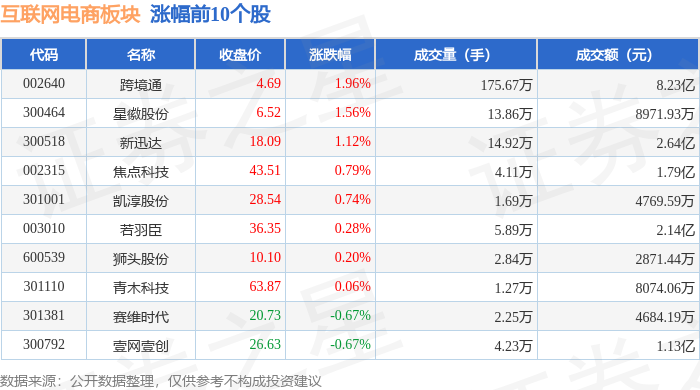
Core Viewpoint - The internet e-commerce sector experienced a decline of 0.56% on December 29, with Huakai Yibai leading the drop. The Shanghai Composite Index closed at 3965.28, up 0.04%, while the Shenzhen Component Index closed at 13537.1, down 0.49% [1]. Group 1: Stock Performance - The following stocks in the internet e-commerce sector showed notable performance: - Kuaijingtong (002640) closed at 4.69, up 1.96% with a trading volume of 1.7567 million shares and a transaction value of 8.23 billion [1]. - Lianghui Co., Ltd. (300464) closed at 6.52, up 1.56% with a trading volume of 138,600 shares and a transaction value of 89.7193 million [1]. - Xinxunda (300518) closed at 18.09, up 1.12% with a trading volume of 149,200 shares and a transaction value of 264 million [1]. - Huakai Yibai (300592) closed at 10.45, down 2.15% with a trading volume of 102,600 shares and a transaction value of 108 million [2]. Group 2: Capital Flow - The internet e-commerce sector saw a net outflow of 114 million from main funds, while retail investors experienced a net inflow of 81.33 million [2]. - The following stocks had significant capital flow: - Ruoyuchen (003010) had a main fund net inflow of 11.45 million, while retail investors had a net outflow of 9.14 million [3]. - Xinxunda (300518) had a main fund net inflow of 5.83 million, with retail investors experiencing a net outflow of 17.84 million [3]. - Kuaijingtong (002640) had a main fund net inflow of 4.92 million, while retail investors had a net outflow of 17.13 million [3].



“惠民生 促消费”鲁浙数字消费创新合作活动取得多项落地成果
Sou Hu Cai Jing· 2025-12-29 09:03
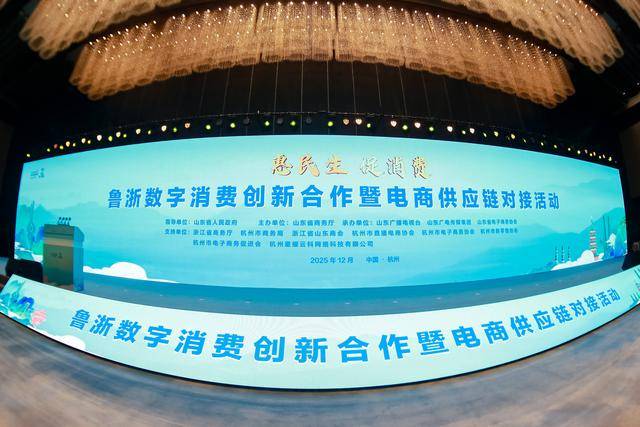
为深入贯彻党中央、国务院决策部署,落实商务部关于品质电商与数字消费工作要求,12月14日,山东 省商务厅联合浙江省商务厅在浙江杭州成功举办了"惠民生 促消费"鲁浙数字消费创新合作暨电商供应 链对接活动。本次活动搭建了政策、产业、平台与市场的全方位协作桥梁,取得了一系列实质性成果。 本次活动共吸引超过200家电商平台及渠道企业、300余家山东源头企业参与,现场展示产品2000余款。 据统计,活动期间企业与渠道方累计开展对接交流万余次,展现出强烈的合作意愿与市场潜力。山东菏 泽海迪科医用制品、山东盛源香业有限公司等多家企业现场与京东京喜等平台达成入驻意向,枣庄特色 产业走进"交个朋友"直播间,产业带与头部平台对接取得积极成效。在此基础之上,全省300家企业与 107家省外电商渠道达成明确合作意向,意向金额总计1.37亿元,为"山东好品"拓展全国市场提供了有 力支撑。目前,除已签约项目外,仍有大量合作洽谈在有序推进中。 活动现场共完成六轮签约,33个重点合作项目,签约总额超过10亿元。覆盖省、市、县(区)及企业多 个层级,既有山东在浙投资合作与济南市引入六大平台的落地项目,也包含多地商务系统、县区政府与 浙江机构间 ...
正式封关后的海南,其实救了经济走入死胡同的新加坡?
3 6 Ke· 2025-12-29 08:57
Core Viewpoint - The official launch of the Hainan Free Trade Port marks a significant milestone in China's new phase of opening up to the world, positioning Hainan as a pivotal gateway to the Pacific and Indian Oceans [1] Group 1: Hainan's Competitive Edge - Hainan is establishing a new customs regulatory model characterized by "one line open, two lines controlled, and free flow within the island," allowing for high levels of freedom in trade and logistics [2] - The "zero tariff" policy has expanded from 1,900 to 6,637 items, covering 74% of goods, significantly reducing operational costs for businesses and making imported goods more affordable for residents [2] Group 2: Infrastructure Development - The capacity of Yangpu Port is projected to exceed 3 million TEUs by December 2025, with a remarkable growth rate from 1.61 million TEUs, and it has opened 59 shipping routes covering major economies [3][5] - Yangpu Port handles over 70% of the island's import volume, becoming a crucial node in the new western land-sea corridor, with ongoing expansion efforts to increase its throughput capacity [5] Group 3: Economic Benefits for Residents - The policy allowing for duty-free status on goods with over 30% value-added has generated significant economic benefits, with a total of 11.42 billion yuan in sales and 878 million yuan in tax exemptions by November 2025 [6] - The influx of new businesses, averaging over 1,000 daily, is expected to create numerous job opportunities across various sectors, including logistics, trade, and cross-border e-commerce [9] Group 4: Hainan vs. Singapore - While Hainan still lags behind Singapore in terms of port scale and financial depth, it is positioned to leverage its unique advantages, such as a large domestic market and a strategic location, to create a dual-engine growth model alongside Singapore [10][11] - The collaboration between Hainan and Singapore could enhance global supply chain efficiency, with potential for shared shipping routes and mutual recognition of standards [11] Group 5: Long-term Implications - The full closure of Hainan is seen as a strategic move by China to embrace globalization and promote institutional openness, with implications for national economic development and improvements in citizens' quality of life [11]

京东七鲜小厨全国扩张 深圳、广州、上海等地门店下月开业
Nan Fang Du Shi Bao· 2025-12-29 08:21
Group 1 - The core point of the article is that JD's quality dining brand, Qixian Xiaochu, has officially launched a nationwide partner recruitment plan, focusing on key regions such as Beijing-Tianjin-Hebei, the Yangtze River Delta, and the Pearl River Delta [2][3] - Qixian Xiaochu has opened its first store in Harbin and plans to launch new stores in cities like Shenzhen, Guangzhou, Shanghai, and Tianjin in January 2026, aiming to complete its layout in all first- and second-tier cities in China within the same year [2] - The brand emphasizes three core initiatives: fresh cooking, transparent ingredients, and live kitchen broadcasts, with pricing set around 10-20 yuan [2] Group 2 - The partner recruitment will focus on major cities including Beijing, Tianjin, Shanghai, Suzhou, Hangzhou, Guangzhou, Shenzhen, Foshan, Dongguan, Zhuhai, and Zhongshan, providing a mature supply chain system and smart kitchen equipment [3] - Qixian Xiaochu has successfully opened 30 stores in Beijing, covering major areas within the Fifth Ring Road, and a promotional event led to a daily order volume exceeding 20,000 in the Beijing area [2] - The promotional activity also positively impacted nearby quality restaurants, increasing their delivery orders by nearly 10% in some business districts [2]

无棣县商务局:消费外贸外资量质齐升 擘画多元融合强链新蓝图
Sou Hu Cai Jing· 2025-12-29 06:12
Core Insights - The news highlights the significant progress made by Wudi County in consumption, foreign trade, and foreign investment during the "14th Five-Year Plan" period [3] Consumption - E-commerce empowerment has been deepened, with Xinyang Town and Haifeng Street selected as national Taobao towns in 2021 and 2022, respectively [4] - The county has implemented a county-level commercial construction action, successfully applying for four central projects with a total funding of 12.16 million yuan from 2022 to 2024 [4] - The social retail sales of consumer goods reached 10.162 billion yuan in 2023, a year-on-year increase of 14.8%, with a total of 1.613 million yuan in consumption vouchers issued [4] - The projected social retail sales for 2024 are 10.980 billion yuan, with a growth rate of 8.0% [4] Foreign Trade - The total import and export volume has shown continuous growth, reaching 16.09 billion yuan in 2023, with a forecast of 19 billion yuan for 2025, quadrupling since the end of 2020 [5] - The county has supported local leading enterprises and cultivated new material companies to become ten-billion-level export leaders [5] Foreign Investment - The actual utilization of foreign capital is expected to reach 32.2037 million USD during the "14th Five-Year Plan," which is 6.2 times that of the "13th Five-Year Plan" period [5] - The county has introduced several foreign investment projects, enhancing the foreign capital industrial structure [5] Future Plans for the "15th Five-Year Plan" - The focus will be on consumption upgrades, creating a diverse consumption ecosystem, and enhancing commercial infrastructure [6] - Plans include promoting market diversification in foreign trade, supporting high-tech enterprises, and optimizing service guarantees for foreign trade [7] - Strategies for foreign investment will involve expanding manufacturing projects, promoting county resources, and enhancing service for foreign enterprises [8]
商场冷清真相!1.6万亿消费大转移,中产的钱都涌向了这里
Sou Hu Cai Jing· 2025-12-29 05:20
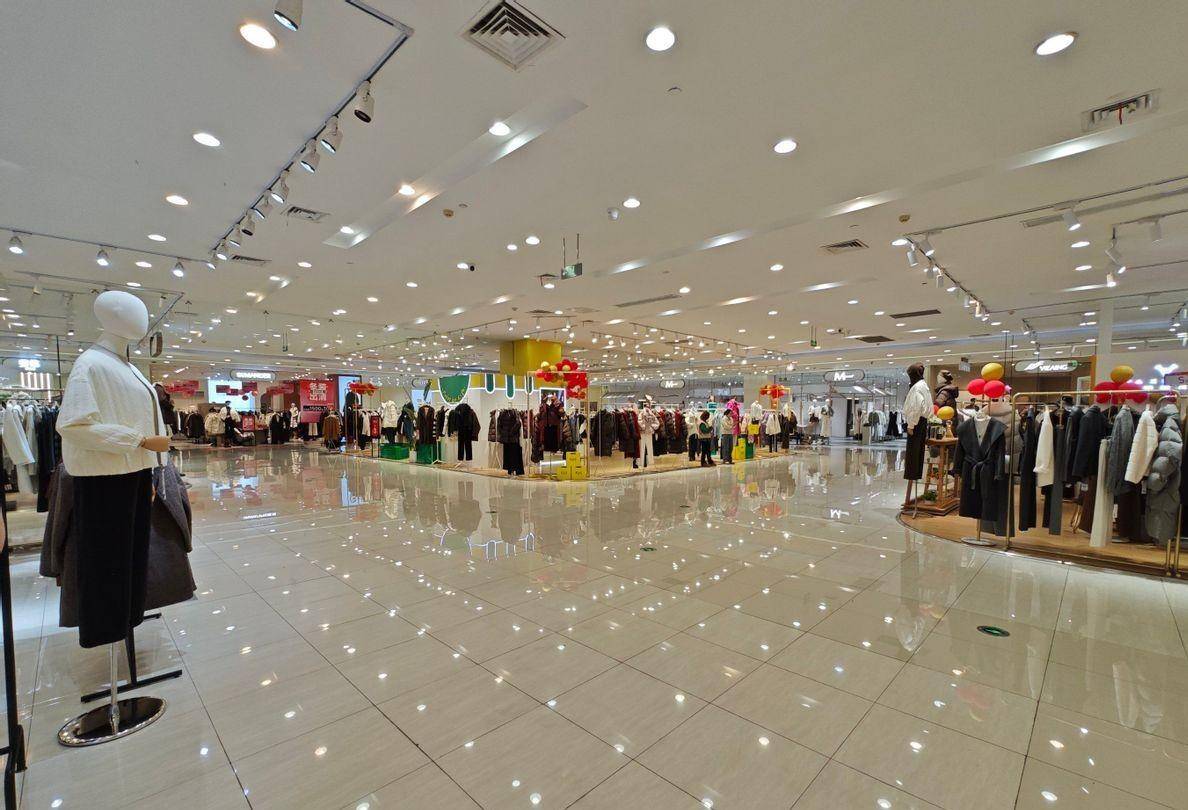
Core Insights - The luxury retail market in China is experiencing a significant shift, with high-end malls seeing declining foot traffic and sales, while outlets and online platforms are thriving [1][3][15] Group 1: Market Trends - High-end malls like SKP and Shanghai's Isetan are facing declining sales, with some reporting drops of up to 23% in tenant sales [3][15] - In contrast, outlet malls, particularly in suburban areas, are witnessing a surge in popularity, with sales reaching 61.7 billion yuan in 2023, marking a 9.5% growth in the outlet sector [1][5] - The overall sales for outlet malls in China are projected to be around 230 billion yuan in 2023, making it the fastest-growing retail format [1] Group 2: Consumer Behavior - Consumers are becoming more price-conscious, questioning the value of high-end products and opting for better price-to-value ratios [3][15] - The trend of "consumption awakening" is leading consumers to prefer outlets and online platforms that offer significant discounts and better value [3][5] - The shift in consumer spending is not about reducing expenditure but reallocating funds towards experiences and quality products that enhance life quality [13][15] Group 3: Retail Strategies - High-end malls are resorting to aggressive pricing strategies to attract customers, including significant discounts on luxury items [3][5] - Online platforms like Pinduoduo are gaining traction by eliminating middlemen and offering direct factory pricing, resulting in a 93.9% year-on-year revenue increase in Q3 2023 [7][9] - The evolution of outlets into experiential shopping destinations is attracting consumers looking for both brand prestige and affordability [5][11] Group 4: Industry Implications - The shift in consumer preferences is forcing traditional retail models to adapt, as reliance on location and brand prestige alone is no longer sufficient [15] - The high-end consumption market, valued at 1.6 trillion yuan, is undergoing a silent reconstruction as consumers seek transparency and value [15] - This transformation is indicative of a broader movement towards consumer empowerment and demand for fair pricing across the retail landscape [9][15]

国新证券每日晨报-20251229
Guoxin Securities Co., Ltd· 2025-12-29 05:15
Domestic Market Overview - The domestic market experienced a slight increase with the Shanghai Composite Index closing at 3963.68 points, up 0.1%, and the Shenzhen Component Index at 13603.89 points, up 0.54% [1][4][9] - Among the 30 sectors, 19 saw gains, with non-ferrous metals, consumer services, and steel showing significant increases, while electronics, communications, and retail sectors faced declines [1][4][9] - The total trading volume for the A-share market reached 21,811 billion yuan, reflecting an increase from the previous day [1][4][9] Overseas Market Overview - The US stock market saw a slight decline, with the Dow Jones down 0.04%, S&P 500 down 0.03%, and Nasdaq down 0.09% [2][4] - Notable declines included McDonald's and Disney, both dropping nearly 1%, while Tesla fell over 2% [2][4] - Chinese concept stocks mostly rose, with Xpeng Motors increasing over 6% and Dingdong Maicai rising more than 5% [2][4] Key News Highlights - The National Fiscal Work Conference was held in Beijing, emphasizing the continuation of a proactive fiscal policy in 2026 [3][10][12] - From January to November, the total profit of industrial enterprises above designated size reached 66,268.6 billion yuan, a year-on-year increase of 0.1% [3][13] - The National Venture Capital Guidance Fund was launched, with a total investment of 100 billion yuan aimed at leveraging over a trillion yuan in social capital [3][15] - The Shanghai Stock Exchange issued guidelines to support quality commercial rocket companies in listing on the Sci-Tech Innovation Board [3][16][17]
拼多多的宠物赛道,小商品制造业的“第二人生”
Tai Mei Ti A P P· 2025-12-29 04:57
Core Insights - The Chinese manufacturing industry is undergoing a slow yet profound structural change, with traditional production models losing certainty in growth and profit margins being continuously compressed [2] - A wave of manufacturers, previously entrenched in traditional industries, are making bold decisions to enter unfamiliar new markets, exemplified by the rise of the pet economy [2][26] - The emergence of new consumer demands is driving the transformation of traditional manufacturing through agile adaptation via new e-commerce platforms [2][28] Group 1: Structural Challenges in Traditional Industries - Traditional industries face three structural bottlenecks, including declining profit margins and increasing organizational complexity [3][5] - The experience that once served as a competitive advantage is rapidly being diluted in a highly transparent supply chain environment [6] - The shift in demand structure, driven by demographic changes and emotional consumption, is leading to pets being viewed as family members rather than mere companions [7][8] Group 2: Entrepreneurial Shifts and Market Adaptation - Entrepreneurs are not abandoning their past but are instead re-evaluating their capabilities and transferring them to new applications, such as pet products [9][26] - Successful entrepreneurs in the pet industry, like those from 卡屋 and 喵享家, have leveraged their previous experiences in traditional manufacturing to innovate in the pet product space [12][20] - The iterative process of product development, driven by user feedback, has become crucial for success in the pet market [16][17] Group 3: Role of E-commerce Platforms - Platforms like 拼多多 are not merely sales channels but act as incubators for new industries, allowing manufacturers to test products and gather user insights quickly [21][28] - The platform's feedback mechanism enables rapid identification of product issues, facilitating low-risk iterations for entrepreneurs [21][24] - 拼多多's operational model simplifies the process for merchants, allowing them to focus on product development rather than complex logistics [25][24] Group 4: Future of Traditional Manufacturing - The future of traditional industries lies not in scale expansion but in quality, differentiation, and long-term strategies [27][28] - The transition of traditional manufacturing capabilities to new markets represents a significant opportunity for growth and innovation [27][26] - The narrative of these entrepreneurs illustrates a broader potential for the transformation of traditional industries, emphasizing the importance of adaptability and user-centric design [27][28]

别再将AI比作互联网 AI有没有泡沫? 2026AI投资关键还看AI大模型的“迭代力”和“落地力”
Zheng Quan Shi Bao Wang· 2025-12-29 04:45
Core Viewpoint - The AI technology industry is poised for unprecedented development opportunities as it transitions from being merely an "information connection tool" to a profound "productivity revolution" by 2026, with significant advancements in model capabilities and multi-modal technologies leading to large-scale applications in various sectors [1][2]. Group 1: Transition from Tool to Productivity Enhancement - The evolution of AI models in 2026 is likened to a "growing process," indicating a continuous and solid improvement in model capabilities [2]. - AI is now viewed as a key tool for enhancing productivity across industries, moving beyond concerns of market bubbles to practical applications, particularly in code generation and multi-modal capabilities [2]. - The advancements in AI will enable the generation of more realistic and coherent content, with improved reasoning speed and memory functions, enhancing applications in image and video generation [2]. Group 2: Industry Applications and Investment Opportunities - Investment opportunities in 2026 will be concentrated in sectors such as advertising, AI hardware, and autonomous driving, driven by enhanced model capabilities, particularly in memory and personalization [3]. - The advertising industry is expected to undergo revolutionary changes due to improved multi-modal generation capabilities, which will boost performance in the e-commerce sector [3]. - The maturity of the autonomous driving industry is anticipated to accelerate, with significant developments in L3 autonomous driving models and ongoing advancements from companies like Tesla, Huawei, and XPeng Motors [3]. Group 3: AI Infrastructure and Hardware - The demand for AI infrastructure is expected to grow as AI needs increase, making it a long-term investment opportunity [4]. - The complexity of AI models will drive the need for enhanced storage and computing capabilities, with data centers and cloud computing infrastructure becoming critical investment areas in 2026 [4]. - AI hardware, including AI glasses, smartphones, and PCs, will face significant market tests, with growth dependent on the integration of multi-modal capabilities [4]. Group 4: Market Dynamics and Investment Strategies - In the U.S. market, AI remains a core theme driving technology stocks, with major tech companies' AI revenues beginning to cover depreciation costs, allowing for effective valuation management [5]. - The Hong Kong market is supported by expectations of global liquidity easing, with AI model companies entering the IPO phase, indicating strong investment opportunities in AI infrastructure and applications [6]. - In the A-share market, the focus is on industry chain collaboration and specific application scenarios, with domestic model companies seeking monetization paths in vertical sectors like manufacturing and finance [6]. Group 5: Market Sentiment and Future Outlook - Concerns about excessive market gains are mitigated by the understanding that as technology becomes integral to productivity, performance improvements will naturally address valuation bubbles [7]. - The first half of 2026 is seen as a critical observation window, with stronger and more practical AI models expected to reshape market consensus, establishing AI as a genuine growth driver rather than just an investment theme [7].