外卖

Search documents
外卖竞争,主动权已在淘宝闪购手上
雷峰网· 2025-08-15 11:24
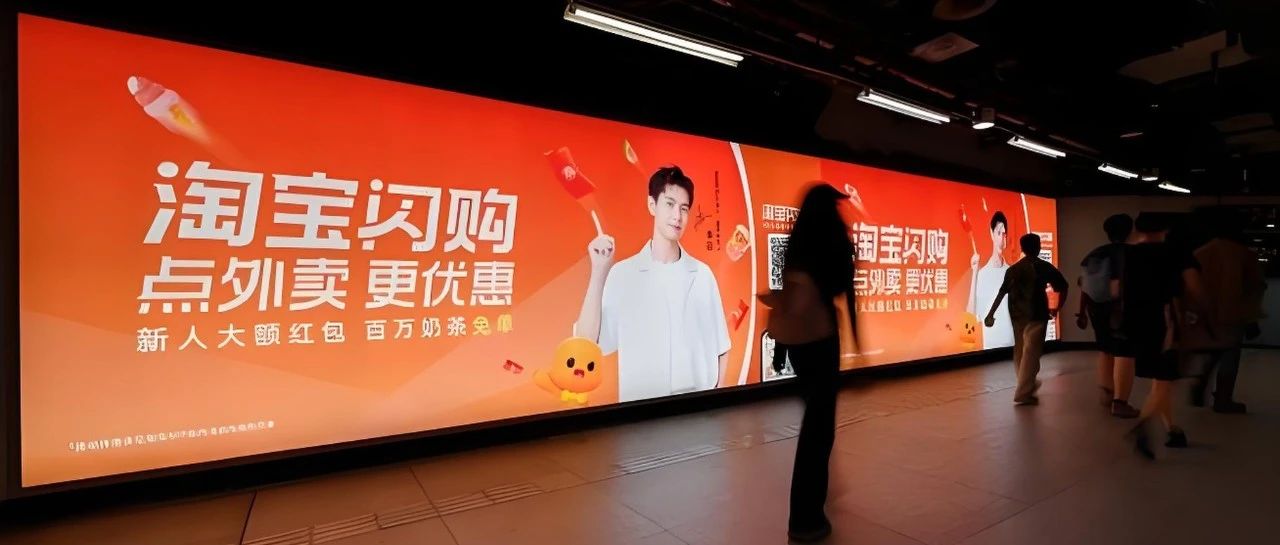
Core Viewpoint - Taobao Flash Purchase has rapidly gained market share in the food delivery sector, surpassing Meituan in daily order volume within just three months of its launch, indicating a significant shift in competitive dynamics in the industry [2][4][12]. Group 1: Market Performance - In August, Taobao Flash Purchase achieved a peak daily order volume exceeding 100 million, with its market share surpassing Meituan for the first time on August 8 and 9 [2][9]. - The market share distribution has shifted from a previous ratio of 1:2 between Ele.me and Meituan to a more competitive landscape where Taobao Flash Purchase and Ele.me together could capture 45% of the market, while Meituan holds a similar share [3][12]. Group 2: Strategic Moves - Taobao Flash Purchase's success can be attributed to its strategic entry timing, coinciding with increased competition from JD.com, which had previously disrupted the market [6][7]. - The platform's marketing strategy included a substantial budget of over 100 billion yuan for promotional activities, which is considered rare in the internet industry [6][8]. - Taobao Flash Purchase employed a three-pronged strategy: focusing on tea drinks as a low-barrier entry point, leveraging the Alibaba ecosystem for customer retention, and protecting partnerships with merchants and delivery personnel [10][11][15]. Group 3: User Engagement and Retention - The introduction of a new membership system on August 6, which integrates various Alibaba services, aims to enhance user engagement and retention across platforms [16]. - The "Autumn Milk" campaign significantly boosted order volumes, particularly in lower-tier cities, demonstrating the effectiveness of targeted regional subsidies [14][17]. Group 4: Industry Implications - The competition between Taobao Flash Purchase and Meituan has not only altered market shares but has also expanded the overall market size, creating new opportunities in instant retail and other segments [19][20]. - The ongoing battle is seen as a catalyst for healthier industry dynamics, with rationalized subsidies benefiting consumers, merchants, and delivery personnel alike [19].


京东外卖账单出炉:二季度外卖所在新业务收入近139亿,同比增长198%
Sou Hu Cai Jing· 2025-08-15 11:13
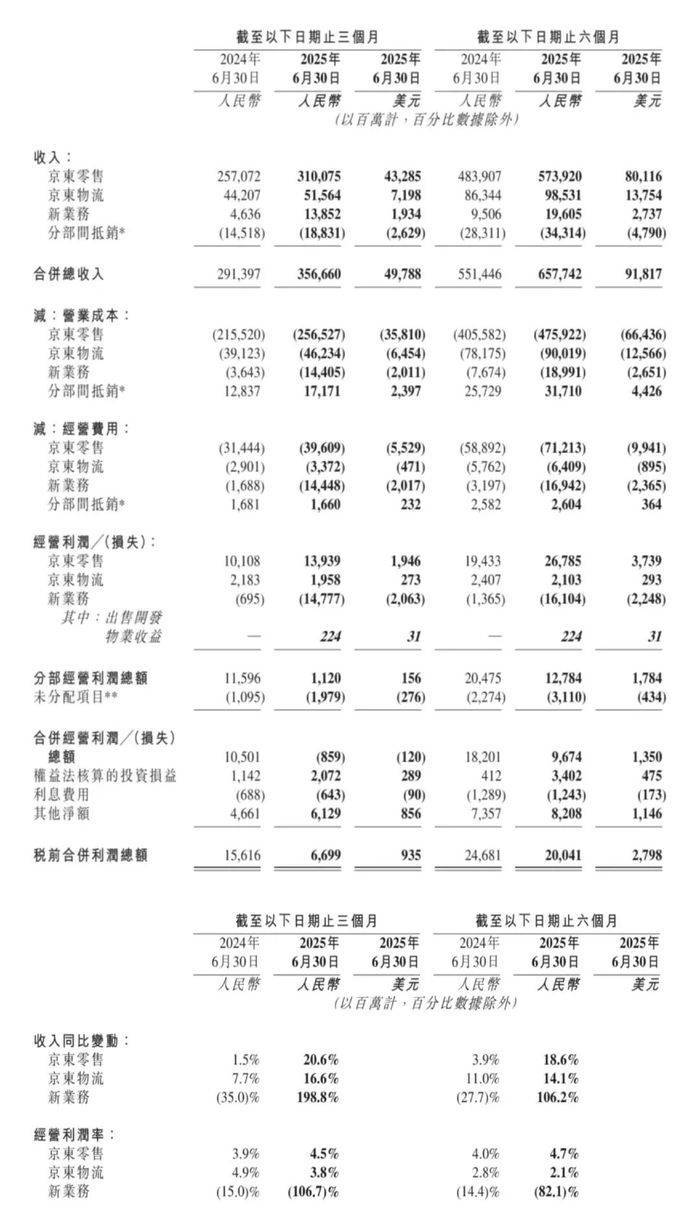
Core Insights - JD Group reported Q2 2025 revenue of 356.66 billion yuan, a year-on-year increase of 22.4%, while net profit attributable to ordinary shareholders fell by 51% to 6.2 billion yuan [1] - The new business segment, which includes food delivery, generated revenue of 13.852 billion yuan in Q2, marking a significant year-on-year growth of 198.8%, but incurred an operating loss of 14.777 billion yuan [3][4] - Marketing expenses saw the highest year-on-year growth among costs, increasing by 127.6% from 11.9 billion yuan in Q2 2024 to 27 billion yuan in Q2 2025, primarily due to increased spending on new business promotions [3] Business Strategy - JD's CEO emphasized that food delivery and instant retail are crucial long-term strategic directions for the company, with ongoing investments in operational and system capabilities [3] - JD's founder stated that the cost of acquiring customers through food delivery is more economical than purchasing traffic from platforms like Douyin and Tencent, as 40% of food delivery customers also purchase e-commerce products [4] - The company aims for long-term success in the food delivery business, planning to invest 10 billion yuan in building a new supply chain and establish 10,000 "Seven Fresh Kitchens" across the country within three years [4] User Engagement - JD reported a year-on-year increase of over 40% in both active user numbers and shopping frequency in Q2 [4] - The core retail business generated revenue of 310.075 billion yuan, reflecting a year-on-year growth of 20.62%, with an operating profit margin of 4.5% [4] Financial Position - As of the end of June, JD Group had cash and cash equivalents amounting to 116.547 billion yuan [4]

京东(JD.US/9618.HK)Q2:零售基本盘稳增,外卖业务破局行业生态
Ge Long Hui· 2025-08-15 10:59
8月14日晚间,京东发布2025年第二季度财报。报告期内,尽管外卖业务的百亿级投入拉低了整体利润表现,但公司整体收入仍保持双位数增长,用户规模 和活跃度呈现显著提升。 在看似矛盾的数据背后,一个更加清晰的战略图景正在浮现:京东正以坚实的零售基本盘为根基,通过高频外卖业务突破流量天花板,同时重构行业生态规 则。 一、零售引擎:基本盘的稳固与进化 整体来看,京东在2025年第二季度的营收呈现出稳健上升的趋势,再次彰显了其在电商行业的强大实力。Q2,京东集团实现营收3567亿元人民币,同比增 长22.4%,远高于市场预期的15%,实际营收比预期高出近220亿,并创下近三年收入增速的新高。经营利润率提升至4.5%,创下京东历史上所有大促季度的 最高纪录。 其中,零售业务作为京东的核心与根基,在本季度继续发挥着中流砥柱的作用。数据显示,报告期内京东该项业务的收入达到3101亿元,同比增长20.6%。 这些数字背后,是京东在零售基础设施上的持续深耕。 其中最为关键的就是京东基于平台积淀的供应链能力。当前,供应链效率已成为京东最坚固的护城河。今年上半年,京东物流继续围绕对快时效、高品质的 快递业务拓展,持续通过时效能力建设 ...
京东外卖的三笔账|智氪
36氪· 2025-08-15 10:44
Core Viewpoint - JD Group's Q2 2025 financial report shows strong retail performance but significant losses in the new food delivery business due to high marketing expenditures and subsidies [5][21][35]. Group 1: Financial Performance - JD Group achieved Q2 2025 revenue of 356.66 billion RMB, a year-on-year increase of 22.4%, while net profit dropped by approximately 51% to 6.178 billion RMB [5][22]. - The retail segment alone saw revenue of 310.075 billion RMB, growing 20.6% year-on-year, with operating profit increasing by 37.9% to 13.939 billion RMB [22][32]. - New business revenue, including food delivery, surged nearly 200% year-on-year to 13.852 billion RMB, but operating losses expanded to 14.777 billion RMB [10][12]. Group 2: Impact of Food Delivery Business - The food delivery business has been categorized under new business metrics, which previously included JD's other ventures [9]. - The rapid increase in operating expenses, particularly marketing costs, which rose by 128% to 27.013 billion RMB, is the primary driver of losses in the food delivery segment [15][19]. - The food delivery business is expected to continue incurring high marketing expenses in the short term due to competitive pressures in the market [35]. Group 3: User Engagement and Ecosystem Synergy - The food delivery service has positively impacted user engagement, with active user growth exceeding 40% year-on-year and increased shopping frequency on the platform [19][36]. - JD plans to enhance cross-category shopping capabilities, integrating food delivery with traditional retail to optimize user experience [20][26]. Group 4: Future Outlook - To mitigate the financial impact of the food delivery business, JD needs to scale operations to cover rider costs and gradually reduce subsidies [35]. - The company is investing in its self-operated food delivery service "Seven Fresh Kitchen" to differentiate itself from competitors, although this will be a long-term process [35][36]. - Despite short-term profit volatility, the long-term synergy between food delivery and retail could yield significant benefits for JD's ecosystem [36].
京东外卖的三笔账
3 6 Ke· 2025-08-15 10:30
8月14日晚,京东集团公布了2025年第二季度业绩报告。 (原标题:京东外卖的三笔账) 作者 | 范亮 编辑 | 丁卯 根据财报数据,京东集团二季度实现营业收入3566.6亿元,同比增长22.4%;归母净利润为61.78亿元, 同比下滑约51%。 毫无疑问,利润同比下滑主要是受到了外卖业务补贴的影响,资本市场对此也已有一定预期。如果不考 虑外卖业务的影响,本季度京东零售仍实现了远超预期的增长,营业收入同比增长20.6%,经营利润同 比增长达到37.9%,核心业务厚实也是京东发力外卖业务的底气所在。 那么,外卖业务究竟通过怎样的路径影响京东的业绩,其核心基本面表现究竟如何? 外卖投入百亿,冲击利润表现 随着外卖大战的愈演愈烈,京东二季度财报中外卖业务对其业务的具体影响是市场最为关注的焦点。 从财报披露看,京东将外卖业务归类到了新业务口径中。此前,新业务口径主要包括京东产发、京喜和 海外业务,本季度则增加了京东外卖。 因此,从新业务口径的营业收入、营业成本、经营费用、经营利润等财务数据,就可以把握京东外卖业 务的财务变化。 下图为京东2024年至今,新业务营业收入、经营利润的季度变化数据。可以看到,其新业务营收从 ...
电厂 | 京东增收不增利,责任都在外卖?
Sou Hu Cai Jing· 2025-08-15 10:20
京东对外卖业务的投入在其最新财报中得到了充分体现。 8月14日,京东发布2025年第二季度业绩,总收入为3567亿元,同比增长22.4%,为近三年以来最快增幅;但经营利润变成了经营亏损,为9亿 元;非美国通用会计准则下,京东经营利润和归属于上市公司普通股股东的净利润分别为9亿元、74亿元,同比均出现大幅下滑。 在叠加618大促和国补政策效应的第二季度,京东的收入涨了,利润却降了,增收不增利的原因已经写在了财报里——对于新业务的战略投入增 加,而这里的"新业务",主要是指外卖。 从收入结构来看,零售板块收入的增长,依然是京东收入增长的主要动力。来自零售、物流、新业务三个板块的收入分别同比增长了20.6%、 16.6%、198.8%——新业务收入虽然成倍增长,但基数较低。具体到收入占比最大的零售板块,商品收入为2824亿元,同比增长20.7%。其中,大 头的带电品类表现突出,收入同比增长23.4%;日用百货品类的增速为16.9%,增速有所加快,但逊色于前者。 | | | 截至以下日期止三個月 | | | 截至以下日期止六個月 | | | --- | --- | --- | --- | --- | --- | -- ...
京东外卖业务:品质为王,不恋价格战,着眼长远布局
Sou Hu Cai Jing· 2025-08-15 09:44
Core Viewpoint - JD.com reported a revenue of 356.7 billion RMB for the second quarter, representing a year-on-year growth of 22.4%, emphasizing its commitment to long-term strategic development in the competitive food delivery industry [1] Group 1: Financial Performance - The revenue for the second quarter reached 356.7 billion RMB, marking a 22.4% increase compared to the same period last year [1] Group 2: Strategic Focus - JD.com management highlighted the importance of food delivery and instant retail in the overall strategy, aiming to build a sustainable business model that can endure for five, ten, or even twenty years [1][3] - The company introduced the concept of "quality food delivery" as a differentiation strategy, focusing on enhancing platform systems and user experience rather than engaging in price wars [3] Group 3: User Engagement and Cross-Selling - There is an observed increase in cross-buying behavior among users of JD.com's food delivery service, indicating growing user stickiness and laying a solid foundation for long-term development [3] Group 4: Investment Strategy - While new business investments may impact short-term profit margins, management believes these will open up greater growth potential and create synergies with core businesses in the long run [3] - JD.com will maintain investment discipline and closely monitor return on investment (ROI) to ensure effective allocation of resources [3]
平台反“内卷”,停止高额补贴应是第一步
Jing Ji Guan Cha Wang· 2025-08-15 09:24
今年以来,外卖领域的竞争此起彼伏。一组数据和一项倡议引发了社会的广泛关注:今年上半年,北京餐饮收入达672.6亿元,同比下降3.6%;北京市餐饮 行业协会发布倡议书,呼吁行业抵制"内卷式"恶意竞争,维护公平的市场秩序。其他省市的餐饮情况也与之类似,大多在外卖大战中被迫陷入了"内卷"的泥 潭。 我们该如何反"内卷"?停止高额补贴或许是第一步。 二是自我牺牲,甚至不计代价。从哲学角度看,"内卷"可解释为一种"退化"的演化,其结果必然是付出很多,收获很少,甚至各方均受损。具体表现 为,"内卷"压低了部分商品的价格,导致商家利润下降、消费者消费品质降低、骑手劳动时长增加以及交通安全性下降。高盛预计,在今年7月到明年6月的 12个月内,阿里的外卖业务将亏损410亿元,京东亏损260亿元,美团利润减少250亿元。 三是给予高额补贴,抢占市场份额。这与地方政府招商引资过程中出现的逐底竞争类似,即为了争夺市场份额或资源,通过不断降低标准(如劳工权益、环 保要求、价格等),陷入恶性循环的竞争模式,最终导致整体利益受损。 对于平台而言,其主要手段就是通过补贴降价。尤其是外卖大战中出现了浪费现象,这与第一次工业革命时期的"倒牛奶" ...

核心零售和新业务协同助推用户活跃度飙升,京东集团二季度营收增速创近三年新高
Jing Ji Wang· 2025-08-15 08:49
Group 1 - JD Group reported Q2 2025 revenue of 356.7 billion yuan, a year-on-year increase of 22.4%, marking the highest growth rate in nearly three years [1] - Core retail business showed strong performance with a 20.6% year-on-year growth and an operating profit margin of 4.5%, the highest in promotional quarters [1] - New business revenue surged by 199%, primarily driven by JD's food delivery services [1] Group 2 - User traffic, active user count, and purchase frequency all saw significant growth, with active user count increasing by over 40% year-on-year for seven consecutive quarters [1] - During the "618" shopping festival, JD's overall order volume exceeded 2.2 billion, with daily active users reaching a historical high [1] - JD Supermarket launched new products and enhanced user experience through supply chain innovations, including the introduction of "JD label" products [2] Group 3 - JD's food delivery service achieved over 25 million daily orders, covering 350 cities with over 1.5 million quality restaurant partners [2] - The company has invested over 150 billion yuan in R&D since 2017, with supply chain infrastructure assets nearing 170 billion yuan [2] - JD plans to recruit 35,000 positions in 2026 and has invested 7 billion yuan in youth apartments in Beijing [3] Group 4 - JD has employed over 4,000 disabled individuals and supports their employment through training and operational guidance [3] - The company aims to introduce 1,000 overseas brands within three years, targeting a cumulative sales growth of 10 billion yuan [2]
外卖业务拖累,京东第二季度净利润“腰斩”
Di Yi Cai Jing Zi Xun· 2025-08-15 08:37
Core Viewpoint - JD Group reported a net profit of 6.178 billion yuan for Q2 2025, a 50.8% decrease year-on-year, primarily due to losses from its new food delivery business [2][4]. Financial Performance - JD's Q2 2025 operating loss was 859 million yuan, compared to an operating profit of 10.501 billion yuan in Q2 2024 [4]. - Total revenue for Q2 2025 was 356.66 billion yuan, a 22.4% increase year-on-year, while operating costs rose by 22.2% to 300.02 billion yuan [4][6]. - Marketing expenses surged to 27.013 billion yuan, nearly a 129% increase year-on-year [4][6]. Business Segments - The food delivery segment generated 13.852 billion yuan in revenue but had an operating profit margin of -106.7% [7]. - The strategic investment in new businesses, including food delivery, has led to significant short-term losses, impacting overall profitability [4][7]. Market Reaction - JD's stock price fell over 4% during trading on August 15, dropping below 120 HKD, reflecting investor concerns over the impact of the food delivery business on profits [3][9]. - Analysts predict that losses in the food delivery segment may continue to expand in Q3 2025, further affecting JD's overall financial performance [9][12]. Cash Flow and Share Buyback - JD repurchased approximately 80.7 million Class A ordinary shares for about 1.5 billion USD in the first half of 2025, with a remaining buyback amount of 3.5 billion USD as of August 14 [8]. - Free cash flow decreased significantly from 49.555 billion yuan in Q2 2024 to 22.018 billion yuan in Q2 2025, indicating potential future funding needs [10][11]. Competitive Landscape - The CEO of JD noted intensified competition in the food delivery market since July, which has disrupted pricing structures and created unsustainable business practices [7]. - Other companies in the sector, such as Meituan and Alibaba, are expected to face similar challenges, although their prior investments may mitigate the impact compared to JD [12].