
银行

Search documents
Bank of Japan Tests Blockchain Settlement for Bank Deposits in New Sandbox
FinanceFeeds· 2026-03-03 18:22
Core Insights - The Bank of Japan (BOJ) has initiated a sandbox study to explore the use of blockchain for settling reserves held by commercial banks at the central bank [1] - The primary objective is to assess how blockchain technology can integrate with Japan's existing settlement mechanisms [2] Group 1: Blockchain and Settlement Mechanisms - The experiments will focus on connecting blockchain systems with Japan's current settlement infrastructure, including the Bank of Japan Financial Network System (BOJ-NET) [2] - Use cases under consideration include domestic interbank settlement and securities settlement, aimed at improving transaction efficiency [3] Group 2: Technical Exercise and Expert Involvement - The BOJ's initiative is described as a technical exercise supported by external experts, with no immediate policy changes anticipated [3] - The results of the sandbox study could enhance the functionality of BOJ-NET, facilitating smoother transactions [3] Group 3: Integration with AI and Financial Services - The potential merging of blockchain with artificial intelligence (AI) could lead to improved financial services by utilizing transaction and settlement data from distributed systems [4] Group 4: Regulatory and Economic Context - The sandbox is part of Japan's broader strategy to modernize its digital finance landscape, aligning with the government's "New Capitalism 2025" initiative [5] - The Financial Services Agency is seeking public input on classifying certain tokens under the Financial Instruments and Exchange Act, which may impose securities rules on these tokens [5] Group 5: Private Sector Developments - JPYC has launched Japan's first yen-backed stablecoin, compliant with the amended Payment Services Act, which recognizes stablecoins as electronic payment methods [6] - A memorandum of understanding between Sony Bank and JPYC aims to facilitate real-time transactions, allowing customers to purchase yen-backed stablecoins directly from their accounts [6] Group 6: Future Implications - Japan's systematic approach to integrating blockchain while ensuring regulatory oversight is evident, with the BOJ still in the testing phase and no set timeline for broader deployment [7] - The outcomes of these tests are expected to influence the interaction between central bank money and emerging digital technologies in the future [7]


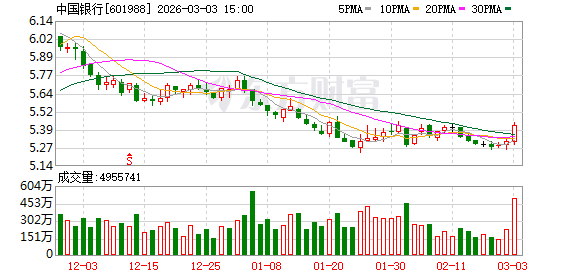
中国银行迎来新任副行长
Zhong Guo Ji Jin Bao· 2026-03-03 16:20
Core Viewpoint - China Bank has appointed Huang Xueling, born in 1977, as its youngest vice president, pending approval from the National Financial Regulatory Administration, marking a significant addition to the leadership team of state-owned banks [2][3]. Group 1: Appointment Details - Huang Xueling is the first executive directly promoted from the Central Huijin Investment Co. to a vice president position in a state-owned bank, indicating deep involvement of major shareholders in governance structures [3]. - Huang has a master's degree in economics from Peking University and has held various positions within Central Huijin, including Director of the Equity Management Department and Chairman of Central Huijin Asset Management [2]. Group 2: Current Management Team - With Huang's appointment, China Bank now has the youngest vice president among its current executive team, joining two other female vice presidents in state-owned banks [4]. - The current senior management team of China Bank includes Chairman Ge Haijiao, Vice Chairman and President Zhang Hui, and several other executive directors and vice presidents [4]. Group 3: Financial Performance - As of the end of Q3 2025, China Bank's total assets reached 37.55 trillion yuan, an increase of approximately 2.49 trillion yuan, representing a growth of 7.10% [4]. - For the first three quarters of 2025, the bank reported total operating income of 491.204 billion yuan, a year-on-year increase of 2.69%, and a net profit attributable to shareholders of 177.66 billion yuan, up 1.08% [4]. - The bank's non-performing loan ratio was 1.24%, a decrease of 0.01 percentage points from the end of the previous year, while the provision coverage ratio was 196.60%, down by 4.00 percentage points [4].

A spike in energy prices should really prompt the Fed to cut rates, says Ironsides' Barry Knapp
Youtube· 2026-03-03 15:07
Group 1 - The current economic situation is characterized by a K-shaped recovery, where small banks and businesses face tighter monetary conditions while long-term fixed-rate borrowers benefit from looser conditions [6][7] - The correlation between the dollar and oil prices has flipped, with both rising simultaneously, which exacerbates the energy cost problem for major oil importers like Japan and Korea [4][5] - A significant increase in energy prices is viewed more as a disinflationary shock rather than an inflationary one, indicating a potential slowdown in consumption and economic growth [8][9] Group 2 - The Federal Reserve's current policy is seen as too tight for small businesses and households, suggesting that a rate cut could be a more appropriate response to rising energy prices [6][7] - There is resistance within the Federal Reserve to implement necessary changes, such as cutting rates and deregulating banks, which could stimulate lending and economic activity [10][11][12] - Global capital flows are expected to be impacted by changes in trade dynamics, which could affect demand for U.S. treasuries and overall economic conditions [19]

月度报告(2026/3):3月行业配置推荐顺周期行业——行业配置策略-20260303
Huafu Securities· 2026-03-03 14:26
Core Insights - The report emphasizes a dynamic balance strategy that has achieved an annualized absolute return of 19.15% and a relative return of 12.37% from January 2015 to February 27, 2026, with a maximum drawdown of 10.18% [3][55] - Recommended industries for March 2026 include non-ferrous metals, electric equipment and new energy, basic chemicals, steel, telecommunications, and machinery [3][55] - The macro-driven strategy has generated an annualized excess return of 4.75% since January 2016, with a maximum drawdown of 9.51% [4][45] - The multi-strategy approach has yielded an annualized relative return of 6.23% since May 2011, with a maximum drawdown of 13.44% [5][67] - The extreme style high Beta strategy has achieved an annualized relative return of 10.05% since July 2013, with a maximum drawdown of 13.44% [5][79] Market Review - In February, the overall A-share market rose, with the small and mid-cap indices outperforming large-cap indices. The CSI 300 index had a return of 0.09%, while the CSI 500 and CSI 1000 indices returned 3.44% and 3.71%, respectively [16][17] - The top five performing sectors in February were steel, building materials, machinery, coal, and defense industry, while the bottom five were media, non-bank financials, consumer services, retail, and telecommunications [16][17] Industry Configuration Dynamic Balance Strategy - The dynamic balance strategy achieved an absolute return of 3.89% in February, outperforming the benchmark with an excess return of 1.98% [3][55] - The strategy's performance since the beginning of 2026 has resulted in an absolute return of 13.83%, with an excess return of 5.39% relative to the mixed equity fund index [3][55] Macro-Driven Strategy - The macro-driven strategy recommended industries for March 2026 include oil and petrochemicals, pharmaceuticals, food and beverages, telecommunications, defense industry, and banking [4][45] - The strategy achieved an absolute return of 2.43% in February, with an excess return of 0.16% [4][45] Multi-Strategy Configuration - The multi-strategy approach recommended industries for March 2026 include telecommunications, real estate, construction, banking, textiles and apparel, pharmaceuticals, basic chemicals, and non-ferrous metals [5][57] - The strategy's absolute return in February was 1.48%, with an excess return of -0.83% [5][65] Extreme Style High Beta Strategy - The extreme style high Beta strategy recommended industries for March 2026 include banking, electric utilities, coal, transportation, basic chemicals, and automobiles [5][79] - The strategy achieved an absolute return of 4.27% in February, outperforming the benchmark with an excess return of 2.06% [5][79] Industry Crowding Indicators - In February, crowding indicators showed fewer triggers across industries, with coal, electric utilities, steel, basic chemicals, building materials, and electric equipment and new energy showing signs of crowding [6][83]
银行股价复盘:与券商股行情对比及六轮大跌解析
HUAXI Securities· 2026-03-03 14:24
Investment Rating - The industry rating for the banking sector is not explicitly stated in the provided content, but the report suggests a focus on long-term investment opportunities in state-owned banks and high-quality joint-stock banks due to their low valuation and stable performance. Core Insights - The banking sector exhibits a "slow bull" characteristic, with significant valuation adjustment pressures during periods of macroeconomic pessimism, tightening credit environments, and structural risks. The report emphasizes the importance of economic fundamentals, liquidity conditions, asset quality, and policy guidance as key drivers of bank stock performance [1][7]. - Since 2014, the banking index has increased by 86%, with three major corrections accounting for only 19% of the total period, indicating a dominant long-term upward trend [2][18]. Summary by Sections Banking Stock Characteristics - Banking stocks are characterized by high stability in earnings, with a return on equity (ROE) average of 12.2% since 2014, ranking fourth among 32 industries. This stability is attributed to strong regulatory oversight [2][14]. - The volatility of banking profits is significantly lower than that of the broader market indices, with maximum profit growth of 13% and maximum decline of 9% since 2014 [13][14]. Comparison with Brokerage Stocks - Historically, banking stocks tend to initiate market movements earlier than brokerage stocks, with brokerage stocks typically experiencing higher volatility and returns [3][24]. - During specific periods, brokerage stocks have outperformed banking stocks by more than 1.5 times, except during the independent banking bull market from 2016 to 2018 [3][25]. Analysis of Six Major Declines - The report identifies six significant declines in banking stocks since 2005, attributing them to macroeconomic slowdowns, credit contractions, major risk events, regulatory impacts, and external currency pressures [4][59]. - Each decline is characterized by specific triggers, such as the 2008 financial crisis and the 2013 liquidity crunch, which had profound impacts on bank valuations [4][59]. Investment Recommendations - The investment logic for banking stocks revolves around the interplay of economic fundamentals, liquidity, asset quality, and policy direction. The report suggests that the long-term recovery of the banking sector will be driven by economic recovery and valuation corrections from historical lows [7][18]. - Investors are advised to focus on state-owned banks and high-quality joint-stock banks as optimal choices for low-risk capital allocation, while also monitoring economic changes and potential risks [7][18].
东兴证券晨报-20260303
Dongxing Securities· 2026-03-03 14:06
Core Insights - The report highlights the significant impact of geopolitical tensions, particularly the military conflict involving Iran, on international oil prices, with WTI and Brent crude oil prices experiencing substantial increases of 11.9% and 11.94% respectively as of March 2, 2026 [6][11]. - The report discusses the ongoing developments in the supernode and Scale-up network industry, emphasizing the competitive landscape where companies like NVIDIA, Google, AMD, and Huawei are making strides to challenge NVIDIA's dominance [13][24]. Industry Overview - The oil and gas sector is currently facing volatility due to geopolitical events, with Brent crude oil futures settling at $72.48 per barrel, reflecting a month-over-month increase of 2.50% [7]. - The supernode and Scale-up network industry is identified as a critical area for technological innovation, supporting high-performance AI applications and large-scale models [13][24]. Company Insights - NVIDIA is noted for its leading position in supernode technology, with plans to release advanced solutions like the GH200NVL72 and GB200/GB300NVL72 by 2025, aiming to enhance GPU interconnectivity and bandwidth [14][15]. - Huawei is working on its supernode technology, with the Atlas950 expected to launch in late 2026, showcasing competitive performance metrics against NVIDIA's offerings [18][19]. - Google is establishing a unique competitive edge with its TPU supernodes, leveraging optical circuit switching technology to enhance performance and efficiency [20][21]. - AMD's UALink is emerging as a significant open standard in the supernode space, with expectations for its ecosystem to gain traction by 2027, positioning it as a viable competitor to NVIDIA [22][24].



[3月3日]指数估值数据(螺丝钉定投实盘第404期发车;个人养老金定投实盘第54期)
银行螺丝钉· 2026-03-03 13:56
Market Overview - Global markets experienced significant volatility today, with major declines in various stock indices [2][3][4] - Japanese and German stocks fell over 3%, while South Korean stocks dropped more than 7% [3] - A-shares and Hong Kong stocks also showed fluctuations, with the A-share index down by 2.9%, returning to a rating of 3.9 stars [5][4] Market Performance - Both large-cap and small-cap stocks saw declines, with small-cap stocks experiencing larger fluctuations [6][7] - The CSI 500 and CSI 1000 indices fell by 4% [8] - Value styles showed slight increases, with dividend indices rising, while growth styles, particularly the STAR 50 index, dropped by 5% [9][10] Style Rotation - At the beginning of the year, growth styles were strong, but recently, there has been a correction in growth stocks, while value stocks have started to rise [11][13] - The market continues to exhibit style rotation, indicating a shift in investor preferences [14] Global Market Influences - Recent global market volatility is primarily attributed to regional conflicts, which have affected investor sentiment and led to short-term panic [16] - It is anticipated that as panic subsides, market conditions will improve [16]

每日钉一下(历史上,红利指数经历过的两次规则优化)
银行螺丝钉· 2026-03-03 13:56
Group 1 - The article discusses the importance of smart investment strategies for mutual fund regular investment plans, emphasizing the need for preparation and planning before starting [2][3] - It introduces a free course that aims to help individuals understand how to create an effective mutual fund investment plan, including methods for profit-taking [2][3] Group 2 - The article highlights the historical changes in the dividend index rules, noting that in 2013, the rules were modified to improve industry distribution by changing the weighting from market capitalization to dividend yield [8] - It points out that the 2013 rule change led to a significant decrease in the financial sector's representation in the dividend index, while increasing the representation of materials and consumer discretionary sectors [8] - The article mentions that the second rule modification in 2022 aimed to enhance the stability of dividends by requiring companies to have a consistent dividend payout over three years, thus avoiding companies that rely on high debt for dividend payments [10][11]

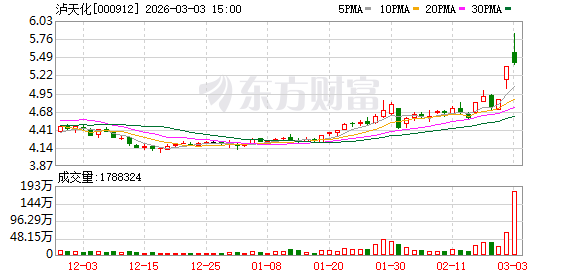
泸天化:股东中国农业银行四川省分行拟减持不超过1568万股
Zheng Quan Ri Bao· 2026-03-03 13:44
Group 1 - The core point of the article is that Luzhou Laojiao announced a plan for a major shareholder, Agricultural Bank of China Sichuan Branch, to reduce its stake in the company by selling up to 15.68 million shares, which represents no more than 1% of the total share capital [2] Group 2 - The share reduction is set to begin on March 26, 2026, and will take place over a period of three months [2]


金融工程日报:市场放量下挫,科技股回调显著-20260303
Guoxin Securities· 2026-03-03 13:42
- The provided content does not include any quantitative models or factors for analysis[1][2][3]