
宏观环境

Search documents
有色商品日报-20260327
Guang Da Qi Huo· 2026-03-27 05:25
1. Report Industry Investment Rating - Not provided in the given content 2. Core Views of the Report - **Copper**: Overnight, both domestic and international copper prices fluctuated and weakened. The import window for domestic spot refined copper remained open, but import profitability declined. The US - Iran conflict and negotiations introduced uncertainties, and the market was still pricing in the macro - environment's variability. However, the macro - suppression has weakened marginally, and fundamental support is emerging. Copper prices are expected to enter a phase of "support at the bottom, lack of upward drive" and oscillate to find the bottom. It is recommended to shift from a previously cautious and bearish strategy to range - bound operations and gradually build long positions at key support levels, while paying attention to copper prices in the range of 90,000 - 100,000 yuan/ton [1]. - **Aluminum**: Overnight, alumina fluctuated weakly, while Shanghai aluminum and aluminum alloy fluctuated strongly. Overseas raw material cost support has gradually weakened. After the release of domestic production increments and the upcoming arrival of a large amount of imported alumina, inventory is under pressure. The market's core contradiction has shifted from high premiums due to overseas geopolitics to the weak reality of domestic inventory accumulation and slow - starting demand, as well as the logic of upward repair of the copper - aluminum ratio. If there are no unexpected geopolitical disturbances, aluminum prices are expected to adjust weakly in the short term. Attention should be paid to the approaching inflection point of inventory reduction and be vigilant against new geopolitical variables [1][2]. - **Nickel**: Overnight, LME nickel and Shanghai nickel declined. Nickel ore prices continued to strengthen, while primary nickel faced significant inventory pressure. On the demand side, stainless - steel inventory decreased week - on - week, and the supply of MHP was disrupted. Given the current strengthening cost side, there may be short - term long - trading opportunities based on the cost line, but attention should be paid to overseas geopolitics and market sentiment. There is also an expectation for supplementary quotas in July, which will also put pressure on nickel prices [2]. 3. Summary According to Related Catalogs 3.1 Research Views - **Copper**: Import window open but profitability down; US - Iran conflict and negotiations cause uncertainty; LME inventory down 350 tons to 359,825 tons, Comex inventory up 939 tons to 534,985 tons, SHFE copper warehouse receipts down 5,670 tons to 246,441 tons; downstream restocking willingness increased after price decline; strategy shift from cautious - bearish to range - bound operations [1]. - **Aluminum**: Alumina (AO2605) down 0.75% to 2,917 yuan/ton, Shanghai aluminum (AL2605) up 0.51% to 23,870 yuan/ton, aluminum alloy (AD2604) up 0.5% to 22,940 yuan/ton; overseas cost support weakens, domestic inventory pressure increases; short - term weak adjustment expected [1][2]. - **Nickel**: LME nickel down 1.04% to $17,165/ton, Shanghai nickel down 0.73% to 135,990 yuan/ton; LME inventory down 216 tons to 282,240 tons, SHFE warehouse receipts down 12 tons to 57,593 tons; nickel ore prices up, primary nickel inventory pressure; short - term long - trading opportunities based on cost line, but attention to geopolitics and sentiment [2]. 3.2 Daily Data Monitoring - **Copper**: Flat - copper price down 260 yuan/ton to 95,315 yuan/ton; LME inventory down 350 tons, Comex inventory up 939 tons, SHFE warehouse receipts down 5,670 tons; social inventory (domestic + bonded area) down 27,000 tons to 584,000 tons; active contract import profit up 603.8 yuan/ton to 727.9 yuan/ton [3]. - **Lead**: Average price of 1 lead down 50 yuan/ton to 16,400 yuan/ton; LME inventory unchanged at 283,100 tons, SHFE inventory down 9,939 tons to 66,110 tons; active contract import profit up 226 yuan/ton to 855 yuan/ton [3]. - **Aluminum**: Wuxi aluminum price down 230 yuan/ton to 23,530 yuan/ton, Nanhai price down 270 yuan/ton to 23,440 yuan/ton; LME inventory down 3,675 tons to 423,075 tons, SHFE total inventory up 35,619 tons to 452,044 tons; social inventory of electrolytic aluminum down 2,000 tons to 1.337 million tons, alumina up 40,000 tons to 358,000 tons; active contract import loss up 392 yuan/ton to 3,911 yuan/ton [4]. - **Nickel**: Jinchuan nickel plate price up 1,050 yuan/ton to 142,050 yuan/ton; LME inventory down 216 tons to 282,240 tons, SHFE inventory down 20 tons to 63,661 tons; social inventory of nickel up 959 tons to 88,449 tons; active contract import profit up 4,051 yuan/ton to 1,471 yuan/ton [4]. - **Zinc**: Main settlement price up 0.1% to 22,985 yuan/ton; LME inventory unchanged at 115,650 tons, SHFE inventory up 793 tons to 6,268 tons; social inventory down 5,100 tons to 214,400 tons; active contract import loss up 220 yuan/ton to 2,873 yuan/ton [6]. - **Tin**: Main settlement price up 0.1% to 352,530 yuan/ton; LME inventory unchanged at 8,720 tons, SHFE inventory down 2,472 tons to 10,042 tons; active contract import loss down 10,077 yuan/ton to 16,699 yuan/ton [6]. 3.3 Chart Analysis - **Spot Premium**: Charts show the historical trends of spot premiums for copper, aluminum, nickel, zinc, lead, and tin from 2019 - 2026 [8][9][11][12]. - **SHFE Near - Far Month Spread**: Charts display the historical trends of the spread between the first and second - month contracts for copper, aluminum, nickel, zinc, lead, and tin from 2019 - 2026 [14][17][21]. - **LME Inventory**: Charts present the historical trends of LME inventories for copper, aluminum, nickel, zinc, lead, and tin from 2019 - 2026 [23][25][27]. - **SHFE Inventory**: Charts show the historical trends of SHFE inventories for copper, aluminum, nickel, zinc, lead, and tin from 2019 - 2026 [29][31][33]. - **Social Inventory**: Charts display the historical trends of social inventories for copper (including bonded areas), aluminum, nickel, zinc, stainless steel, and 300 - series from 2019 - 2026 [35][37][40]. - **Smelting Profit**: Charts present the historical trends of copper concentrate index, rough copper processing fee, aluminum smelting profit, nickel - iron smelting cost, zinc smelting profit, and stainless - steel 304 smelting profit margin from 2019 - 2026 [41][43][45].
最关键问题:类比2021年初还是类比2022年初?
Guotou Securities· 2026-03-25 11:32
Core Insights - The current A-share market is facing two significant underlying logical changes: structural imbalance in internal positions and substantial macroeconomic changes [1] - The report emphasizes the importance of determining whether the current situation is more comparable to early 2021 or early 2022, as historical pricing reviews indicate essential differences between the two periods [1][10] Historical Pricing Review - In March 2021, the core essence of the decline was structural adjustment rather than the onset of a systemic downturn. The decline was triggered by a rapid rise in U.S. Treasury yields and deteriorating micro trading structures, leading to a significant correction in previously favored "Mao Index" core assets [2] - The Shanghai Composite Index fell by 8.1%, while the ChiNext Index dropped nearly 21.6%. However, the market did not enter a full bear market but instead completed a clear shift in main lines, with the "Ning Combination" replacing the "Mao Index" as the core trading focus [2][11] - In February 2022, the decline was characterized as a defensive reduction rather than a simple style rebalancing, driven by weakening risk appetite, declining incremental funds, and profit expectations. The decline was triggered by inflation expectations stemming from the Russia-Ukraine conflict, with the total A-share market dropping 9.46% in January 2022 [3][11] Current Market Analysis - Based on the historical scenarios, two core scenarios are projected for the current market: 1. If the macro environment shows moderate inflation and resilient global economic characteristics, the current market is more likely to resemble March 2021, with the Shanghai Composite Index's performance aligning with this scenario [4][12] 2. If clear stagflation and a pause in the global rate cut cycle occur, the current market will resemble early 2022, necessitating a comprehensive reduction in positions and a shift towards defensive strategies [4][12] Sector Positioning - The report highlights that as of Q4 2025, domestic institutions have a significant allocation in the pan-technology sector, exceeding 50%, with the total allocation in overseas sectors approaching 70%. This indicates a structural imbalance that necessitates a rebalancing strategy moving forward [7][33] - The report suggests a focus on "new and old coexisting" strategies, emphasizing the selection of representative structural directions within technology, overseas, and resource sectors for effective portfolio management [7][8] Investment Themes - The report identifies four key rebalancing themes: 1. New and old rebalancing 2. Internal rebalancing within resource sectors 3. Internal rebalancing within technology sectors 4. Internal rebalancing within overseas sectors [8] - The emphasis is on identifying low-positioned value stocks and adjusting to the changing macroeconomic landscape, particularly in light of rising oil prices and a strengthening dollar [33][29]
花生:关注宏观
Guo Tai Jun An Qi Huo· 2026-03-15 11:08
Report Summary 1. Investment Rating No investment rating for the industry is provided in the report. 2. Core Viewpoints - The peanut spot market has seen a price decline. As of March 12, the average price of national general peanuts was 8,064 yuan/ton, up 9 yuan/ton or 0.11% from March 5. Some growers and grain dealers are reluctant to sell, resulting in limited supply. Processing enterprises are cautious in purchasing raw materials, and some trading enterprises hold a large amount of inventory. The demand for commercial peanuts is weak, while the demand for oil peanuts is increasing as some large oil mills start purchasing [1]. - In the futures market, peanut futures rose in the week of March 13. The main contract (PK2605) had a maximum price of 8,198 yuan/ton, a minimum of 7,920 yuan/ton, and a closing price of 8,186 yuan/ton (compared to 7,906 yuan/ton the previous week) [1]. - The Middle - East situation has affected the macro oil - meal market. Oil mills entered the market earlier than expected, which is positive for market sentiment. The increase in export orders for small - sized peanuts from Southeast Asia is beneficial to the peanut spot market, with some specifications in a tight - balance situation. However, the demand for commercial peanuts remains weak, which restricts the upward space of the market [2]. 3. Summary by Directory 3.1 Basis and Spread - The report presents the basis of Henan Baisha peanuts and Xingcheng Xiaoriben peanuts from 2021 - 2026, as well as the 11 - 1 spread (discontinued) and 5 - 10 spread [6][7][8]. 3.2 Price Data - The price of Henan Zhumadian Baisha peanuts was basically flat compared to last week. The report also shows the price trends of Henan Zhengyang Baisha peanuts and Sudan refined rice [9][10]. 3.3 Supply - The arrival volume of 6 oil - peanut markets was about 0.65 million tons, up 2.18% week - on - week and 18.08% year - on - year. The arrival volume of 14 commercial - peanut markets was about 0.4 million tons, down 9.42% week - on - week and 18.82% year - on - year. The arrival volume of 20 domestic trade markets was about 1.05 million tons, down 2.56% week - on - week and up 0.69% year - on - year [12]. 3.4 Demand - The arrival volume of sample oil mills was about 2.36 million tons, up 191.13% week - on - week and 6.49% year - on - year. The mainstream price of domestic first - grade peanut oil is stable at 14,000 - 15,000 yuan/ton, with some mills slightly raising prices. The mainstream price of peanut meal is 3,100 - 3,300 yuan/ton. The theoretical profit of peanut processing in some domestic oil mills was 169.98 yuan/ton this week, up 116.06 yuan/ton from last week and 297.59 yuan/ton from the same period last year. The comprehensive startup rate of sample enterprises was 6.26%, up 4.2% week - on - week and down 12.68% year - on - year. The peanut crushing volume of sample oil mills was about 1.11 million tons, up 203.55% week - on - week and down 66.94% year - on - year [19]. 3.5 Inventory - The report shows the inventory trends of peanuts and peanut oil in oil mills from 2020 - 2026 [22].
地缘冲突引发市场巨震,镍不锈钢V型反转
Hua Tai Qi Huo· 2026-03-10 05:45
1. Report Industry Investment Rating - Not provided in the given content 2. Core Viewpoints of the Report - For the nickel variety, although demand is still weak, the supply - side is supported by Indonesian nickel ore policies, leading to rising nickel ore prices and high production costs for ferronickel and electrolytic nickel, making the price bottom relatively stable. In the short term, geopolitical conflicts and the macro - environment are the main drivers of nickel price movements [2][4]. - For the stainless - steel variety, the price trend is mainly influenced by nickel prices. High costs support the price bottom, but loose supply and increasing inventory will suppress the upside space. Geopolitical conflicts and the macro - environment are the main drivers of price movements in the short term [5][6]. 3. Summary by Related Catalogs Nickel Variety Market Analysis - On March 9, 2026, the main contract of Shanghai nickel opened at 137,000 yuan/ton and closed at 136,520 yuan/ton, a change of - 0.16% from the previous trading day's closing. The trading volume was 630,657 (+249,124) lots, and the open interest was 208,527 (-4,952) lots [1]. Trend Analysis - Due to the intensification of geopolitical tensions in the Middle East and the strengthening of the US dollar index, the Shanghai nickel main contract plunged at the opening of the day session, reaching an intraday low of 132,350 yuan/ton within 15 minutes with a decline of over 3%. Then, due to the easing of the US stance, the price rebounded to near the opening price and then fluctuated until the close. Fundamentally, demand is weak, but the supply - side is supported by Indonesian policies, and nickel ore prices are rising [2]. - In the nickel ore market, the overall market is stable. In the Philippines, the main mining area is affected by weather, and the supply is uncertain. Mines' quotes remain high. In Indonesia, the supply of the domestic nickel ore market is tight, and the domestic premium remains high [2]. Spot Market - Jinchuan Group's ex - factory price premium in Shanghai converged, and the spot premium of Jinchuan resources declined. Other brands' spot premiums were stable or rising. The trading volume improved when the nickel price fell in the morning and then declined as the price rose. The previous trading day's Shanghai nickel warehouse receipts were 53,897 (+329) tons, and LME nickel inventory was 287,418 (-132) tons [3]. Strategy - Unilateral: Mainly conduct range operations and pay attention to macro risks. Cross - period, cross - variety, spot - futures, and options strategies are not recommended [4]. Stainless - Steel Variety Market Analysis - On March 9, 2026, the main contract of stainless steel opened at 14,170 yuan/ton and closed at 14,105 yuan/ton. The trading volume was 171,844 (+92,808) lots, and the open interest was 100,023 (-4,171) lots [4][5]. Trend Analysis - The stainless - steel price is mainly influenced by nickel prices. Geopolitical conflicts and macro - factors are the main drivers of price fluctuations. On the supply side, the crude steel production schedule in March increased month - on - month, and the supply pressure increased. On the consumption side, consumption was poor after the Spring Festival, and social inventory continued to accumulate, suppressing price rebounds [5]. Spot Market - The spot price fluctuated with the futures price, first falling and then rising. The market was in a wait - and - see mood, and trading was light. The stainless - steel price in Wuxi market was 14,450 (+0) yuan/ton, and in Foshan market was 14,400 (+0) yuan/ton. The 304/2B premium was 310 - 510 yuan/ton. The ex - factory tax - included average price of high - nickel pig iron was 1,088.0 yuan/nickel point [5]. Strategy - Unilateral: Neutral. Cross - period, cross - variety, spot - futures, and options strategies are not recommended [6].
X @Yuyue
Yuyue· 2026-02-27 10:50
刚才看到一条 18:30:15 外交部提醒中国公民撤离伊朗的提醒,建议中国公民暂勿前往伊朗,有点风声鹤唳大盘走了个滑滑梯 + 美股盘前也小小下跌以示尊重。翻了一下历史情况刻舟求剑,在去年 2025 年 6 月 17 日外交部发布过一次同样的声明,当时 BTC 从 104k 下跌到了 100k,四五天后和谈之后才停止下跌结合 $NVDA 昨天财报后不妙的走势 + DeepSeek V4 即将发布的预期,这两天科技股持仓估计不太舒服的。存储作为英伟达上游大概率也会被波及个人是觉得宏观环境难做的时候可以多休息,抓简单做的时间做比较舒服 ...
长江有色:24日铅价小跌 刚需采购为主整体成交清淡
Xin Lang Cai Jing· 2026-02-24 10:03
Core Viewpoint - The lead market is experiencing a slight decline in prices, influenced by a balance of macroeconomic factors both domestically and internationally, with supply recovering faster than demand post-holiday [2][3]. Price Movement - Today's Shanghai lead futures saw a minor drop, with the main contract opening at 16,855 yuan, reaching a high of 16,980 yuan and a low of 16,620 yuan, closing at 16,670 yuan, down 30 yuan or 0.18% [1]. - The latest price for London lead is reported at 1,964 USD, an increase of 12 USD [1]. Market Analysis - The domestic spot lead price has slightly decreased, with the average price reported at 16,660 yuan, down 30 yuan [1]. - The Guangdong spot market for 1 lead is reported between 16,585-16,685 yuan, averaging 16,635 yuan, remaining stable compared to the previous trading day [1]. - The current spot lead market quotes range from 16,525-16,710 yuan, with the Shanghai futures contracts showing a discount of 220-35 yuan [1]. Supply and Demand Dynamics - The lead market is characterized by a situation where supply is recovering faster than demand, with smelting enterprises resuming production smoothly and raw material supply remaining stable [2][3]. - Demand recovery is slow, particularly from downstream lead-acid battery enterprises, which are primarily focused on digesting pre-holiday inventory and maintaining only essential purchases [2][3]. - The overall market is in a state of weak supply and demand, with slight inventory accumulation, making it difficult for prices to form a trend [2][3]. Future Outlook - In the short term, lead prices are expected to maintain a narrow range of fluctuations, with potential for stronger performance as demand signals become clearer following the resumption of downstream operations in March [3]. - From a strategic perspective, lead is viewed as a stable investment choice due to its clear expectations for supply and demand improvement and relatively low valuation [3].


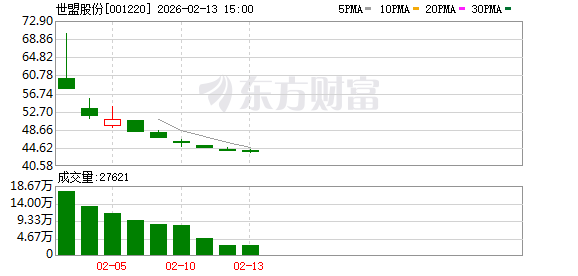
世盟股份:公司二级市场股票价格受到宏观环境等因素影响
Zheng Quan Ri Bao· 2026-02-14 05:31
Group 1 - The company stated that its stock price in the secondary market is influenced by macroeconomic conditions, industry policies, and investor risk preferences [2] - The company's production and operational activities are normal, and it will focus on its core responsibilities to enhance management and drive high-quality development [2]
车美仕财报发布与股价波动,市场关注零售需求与宏观环境
Jing Ji Guan Cha Wang· 2026-02-12 13:18
Financial Performance - The latest financial report for CarMax (KMX.US) was released on December 18, 2025, with a consensus expectation of total revenue at $5.711 billion, reflecting a year-over-year decline of 5.48% [1] - The adjusted earnings per share (EPS) expectation was $0.39, indicating a year-over-year decrease of 36.10% [1] - The report highlighted weak retail demand, pressure from financing costs, and resilience in the wholesale channel [1] Stock Performance - In January 2026, CarMax's stock price experienced significant fluctuations, with a notable increase of 5.12% on January 6, reaching $41.30, and a further rise of 1.37% on January 9, closing at $45.23, despite a 35.35% decrease in trading volume on that day [2] - These stock movements reflect market reactions to retail used car transaction volumes and the macroeconomic environment [2] - As of February 12, 2026, there were no major upcoming events disclosed regarding CarMax, such as new financial report schedules or company actions, with regular events like quarterly earnings releases subject to official announcements [2]

银行板块受宏观环境影响,第一抵押银行股价微涨
Jing Ji Guan Cha Wang· 2026-02-11 16:18
Group 1: Macroeconomic Influences - The U.S. Treasury Secretary highlighted that foreign capital inflows into U.S. Treasury bonds and stock markets may boost market liquidity sentiment [1] - China's policy focus on promoting effective investment and the central bank's maintenance of a loose monetary policy could indirectly affect global bank stock risk appetite [1] - Eurozone inflation dropped to 1.7% and weak wage data from Japan indicate a divergence in global economic growth, potentially increasing volatility in bank stocks [1] Group 2: Stock Performance - First Guaranty Bank's stock price increased by 1.66% over the past week, closing at $9.17 on February 11, but experienced a single-day decline of 0.33% [2] - The stock had a trading range of 1.74% with low trading volume, averaging about $0.75 million per day and a turnover rate of 0.01% [2] - The bank's price-to-book ratio stands at 0.75, while the price-to-earnings ratio (TTM) is negative at -2.20, indicating pressure on profitability [2] - The broader U.S. bank sector saw a slight decline of 0.33%, with the individual stock performing slightly better than the sector, influenced by a 0.54% rise in the Nasdaq index over the past five days [2]
机构:2026年初宏观环境或对比特币整体有利
Ge Long Hui· 2026-01-02 13:45
Group 1 - The Chief Investment Officer of Sygnum Bank, Fabian Dori, believes that the macroeconomic environment in early 2026 may be favorable for Bitcoin due to improving economic data and the gradual easing of panic in the crypto market by the end of 2025 [1] - Historical experience suggests that changes in fundamental factors, market sentiment, and regulatory factors could support Bitcoin's performance over the next 6 to 9 months, although these positive factors may not all materialize simultaneously [1]