
可再生能源

Search documents
一季度可再生能源占新增装机约九成 支持民企投资能源基础设施举措出台
Ren Min Ri Bao· 2025-05-05 21:45
Group 1: Energy Supply and Consumption - The National Energy Administration reported that energy supply is sufficient, consumption is growing, and the overall supply-demand situation is relaxed with stable prices showing a downward trend [1] - In the first quarter, renewable energy accounted for 90% of new installed capacity, with an increase of 76.75 million kilowatts, representing a year-on-year growth of 21% [1] - Renewable energy generation reached 816 billion kilowatt-hours in the first quarter, a year-on-year increase of 18.7%, making up 35.9% of total electricity generation [1] Group 2: Nuclear Energy Development - The operational and approved nuclear power installed capacity in China exceeds 120 million kilowatts, with a projected nuclear power generation of 450.9 billion kilowatt-hours in 2024, accounting for 4.5% of total generation [1] - The government plans to support the development of advanced nuclear technologies, including fourth-generation reactors and small modular reactors [1] Group 3: Hydrogen Energy Sector - Hydrogen energy is a key focus, with a projected production and consumption scale exceeding 36.5 million tons in 2024, making China the world's largest producer [2] - Over 600 renewable energy electrolysis hydrogen production projects are planned, and more than 540 hydrogen refueling stations have been established [2] - Approximately 24,000 fuel cell vehicles have been promoted as part of the ongoing demonstration applications [2] Group 4: Investment in Energy Sector - Energy investments have shown rapid growth, with a 12.9% year-on-year increase in investment in key energy projects in the first two months [2] - Investments in offshore wind, new energy storage, power grids, and nuclear power are growing quickly [2] Group 5: Support for Private Enterprises - The National Energy Administration has issued a notice to support private enterprises in enhancing development momentum and fair market participation [3] - Private enterprises account for over 80% of operators with more than 10,000 charging facilities, indicating their significant role in the energy sector [3] - New nuclear power projects approved recently have at least 10% shareholding from private enterprises, highlighting their increasing involvement in energy infrastructure [3]
Clearway Energy Inc-C:强劲利润率表现;重申CAFD指引;产能建设如期推进-20250505
海通国际· 2025-05-05 01:23
Investment Rating - The report maintains a positive outlook on Clearway Energy, reaffirming its guidance for 2025 [1][2]. Core Insights - Clearway Energy reported adjusted net income exceeding consensus expectations, with adjusted EBITDA of $252 million, surpassing the consensus estimate of $237 million [2][3]. - The company reiterated its 2025 fiscal year guidance for cash available for distribution (CAFD) at $400 million to $440 million, with a long-term target of 5%-8%+ growth in CAFD per share post-2027 [1][2]. - Capacity expansion is on track, with a guidance of 1.1 GW for fiscal year 2025 and 2.3 GW for fiscal years 2026-2027, with all domestic equipment in place and funding secured for key projects [1][3]. Financial Performance Summary - For Q1 2025, Clearway Energy reported revenues of $298 million, which is in line with expectations, and a net income of $4 million, compared to a consensus loss of $30 million [2][4]. - The company achieved a gross profit margin of 59% for Q1 2025, reflecting a significant year-over-year increase [4]. - The adjusted EBITDA margin was reported at 85%, indicating strong operational efficiency [4].

巴菲特接班人首次披露投资密码!3条颠覆性策略曝光!
Sou Hu Cai Jing· 2025-05-04 10:44
Core Insights - Warren Buffett announced his retirement as CEO of Berkshire Hathaway, passing the leadership to Greg Abel by the end of the year, marking the end of an era and reflecting the company's strategic adjustments in response to global economic changes [1][3] Group 1: Leadership Transition - The transition from Buffett to Abel signifies a shift from a "heroic individual" model to a "systematic governance" approach within Berkshire Hathaway [3] - Abel's leadership style is expected to differ from Buffett's, focusing on practical operations and potentially steering the company towards deeper investments in industrial sectors, particularly in renewable energy [4] Group 2: Cash Reserves Strategy - Berkshire Hathaway's cash reserves reached a record high of $347.7 billion, equivalent to one-eighth of Apple's market value or one-quarter of Mexico's GDP for 2024 [5] - Buffett explained the high cash reserves as a strategic patience due to the scarcity of investment opportunities in a high-valuation market, with a focus on maintaining a safety margin [5] - The company is utilizing short-term U.S. Treasury bonds to generate an annualized return of 5%, showcasing a robust "cash plus fixed income" strategy [5] Group 3: Global Investment Insights - Buffett's investment in Japanese trading companies has been highly successful, with a market value of $23.5 billion and annual dividend income of $812 million, achieved through currency, governance, and geopolitical arbitrage [6][7] - In contrast, Berkshire's cautious approach to China reflects concerns over regulatory uncertainties, with potential future investments in Hong Kong stocks or special purpose vehicles [7] Group 4: Policy Critique - Buffett criticized trade protectionism, arguing that trade should not be weaponized, emphasizing the economic, strategic, and moral implications of such policies [8] - The company is diversifying its operations globally, with investments in renewable energy projects in the Middle East and Australia, and insurance ventures in India [8] Group 5: Evolution of Value Investing - The transition of leadership does not signify the end of value investing but indicates a subtle evolution, maintaining core principles like long-termism and safety margins while integrating technology and ESG factors into investment decisions [9] - Abel's focus on renewable energy aims for over 60% of the energy portfolio to be from sustainable sources by 2030, reflecting a shift towards incorporating environmental considerations [9] Group 6: Lessons for Investors - The transition highlights the importance of institutional frameworks over individual charisma in sustaining great enterprises [10] - Cash is viewed as a strategic asset in uncertain times, emphasizing liquidity's value [10] - Companies need to develop resilient networks in a geopolitical landscape characterized by competition and uncertainty [11]


双碳研究 | 核电引爆澳大利亚大选:能源转型路线激辩
Sou Hu Cai Jing· 2025-05-03 17:54
核电引爆澳大利亚大选: 能源转型路线激辩 【France24网 5月1日报道】 澳大利亚作为风光资源与关键矿产大国,自视为零碳转型先锋,但在即将于本周六举行的澳大利亚大选 前,是否首次引入核电成为政治博弈焦点。这场争议令人联想到总理安东尼·阿尔巴尼斯(Anthony Albanese)三年前承诺终结的"气候战争"——当时政坛因减排目标长期拉锯。 尽管坐拥全球最大铀矿储量,澳大利亚已立法禁止核电25年。反对党领袖彼得·达顿(Peter Dutton)近 期提出将在2050年前投资2000亿美元建造七座核电站的激进方案,主张放缓风光项目、扩大天然气开 发,推翻现政府清洁能源目标。他声称核电"比可再生能源成本更低且更可靠",并在领导人辩论中表 示:"我承诺发展核能,不是为了选票,而是因为这符合国家的最佳利益。" 为摆脱化石燃料依赖,多国正加大核电布局。美国、法国、英国等31国已承诺到2050年将核能产能提升 至目前三倍,凸显核电在全球能源转型中的战略地位。 澳大利亚保护基金会(Australian Conservation Foundation)核能分析师戴夫·斯威尼(Dave Sweeney)表 示,此时调整能源 ...
AES(AES) - 2025 Q1 - Earnings Call Transcript
2025-05-02 15:02
Financial Data and Key Metrics Changes - The company reported adjusted EBITDA of $591 million for Q1 2025, a decrease from $640 million in the same quarter last year, which was anticipated due to prior year revenues from the accelerated monetization of the Warrior Run PPA and the sale of AES Brazil [22][23] - Adjusted EPS for the quarter was $0.27, down from $0.50 year-over-year, also in line with expectations [23] Business Line Data and Key Metrics Changes - The Renewables segment saw a 45% year-over-year increase in EBITDA, driven by contributions from new projects and the inclusion of renewables in Chile, previously part of the Energy Infrastructure segment [24][25] - The Utilities segment experienced higher adjusted PTC, primarily due to tax attributes from the Pike County Energy Storage Project and new rates implemented in Indiana [26] Market Data and Key Metrics Changes - The company has a backlog of 11.7 gigawatts, with significant contributions expected from new projects, including a 1 gigawatt solar plus storage project contracted with Amazon [6][9] - The company is well-positioned against potential tariff impacts, with 80% of its backlog scheduled to come online between 2025 and 2027 having zero exposure to tariffs [10][11] Company Strategy and Development Direction - The company reaffirmed its 2025 guidance and long-term growth rate targets, emphasizing a focus on long-term contracted generation and growth in U.S. regulated utilities [5][33] - The company is executing the largest investment program in the history of AES Indiana and AES Ohio, with plans to invest approximately $1.4 billion this year [19][20] Management's Comments on Operating Environment and Future Outlook - Management expressed confidence in the resilience of the business model, highlighting that two-thirds of EBITDA comes from long-term contracted generation, which is not tied to underlying demand conditions [17][32] - The company anticipates strong demand from corporate customers, particularly data centers, and expects to meet its financial metrics despite economic uncertainties [7][33] Other Important Information - The company achieved its asset sale proceeds target for the year with the sale of a minority stake in its global insurance company for $450 million [6][18] - The company has successfully completed all financings needed to address its 2025 debt maturities and has hedged 100% of its benchmark interest rate exposure through 2027 [31] Q&A Session Summary Question: Impact of the insurance transaction on EBITDA - Management expects the EBITDA impact from the insurance transaction to be in the range of $25 million to $30 million, viewing it as a low-cost equity financing that supports growth [40][41] Question: Clarification on tariff exposure - Management clarified that the majority of tariff exposure is limited to a small quantity of batteries imported from Korea, with active measures in place to mitigate this exposure [48][50] Question: Status of asset sale targets - The company is close to achieving its $3.5 billion asset sale target, with ongoing discussions about potential sales in its thermal portfolio and other assets [93][96] Question: Renewable demand trends - Management noted continued strong demand from data center customers, with no significant pull forward in contracts due to potential IRA changes [71][73] Question: Future plans for AES Ohio - The recent legislation is seen as net positive for AES Ohio, allowing for a more constructive regulatory framework and eliminating regulatory lags [120]

【专访】世界经济论坛专家:气候变化愈加紧迫,中国在全球脱碳进程中将扮演重要角色
Xin Lang Cai Jing· 2025-04-30 10:07
Group 1: Climate Change and Global Response - The 2020s are critical for strengthening climate action, with 2024 marking a brief global temperature rise above the 1.5℃ threshold, a key target of the Paris Agreement [1] - The urgency of climate change is now a tangible reality, prompting a shift from delay to action among nations, as evidenced by extreme weather events [4][6] - The need for collective responsibility and substantial investment in climate action is emphasized to break political deadlocks [5] Group 2: China's Role in Climate Action - China is transitioning to a renewable energy-dominated system, with its green energy industry expected to exceed 8.5 trillion yuan in 2024 and reach 10 trillion yuan by 2025, reflecting a compound annual growth rate of over 18% [2] - China's rapid deployment of new energy logistics vehicles and advancements in hydrogen fuel technology highlight its commitment to sustainable transportation [9] - The country is making significant progress in reducing costs for key climate technologies, positioning itself as a leader in global decarbonization efforts [10] Group 3: Economic Opportunities and ESG - The global green market is projected to grow from $5 trillion in 2020 to $14 trillion by 2030, indicating substantial economic opportunities for early movers in climate action [8] - Companies are encouraged to recognize environmental protection as essential for survival and economic development, shifting from compliance to proactive climate action [8] - The transportation sector, responsible for 23% of global carbon emissions, faces urgent demands for energy structure transformation, with China leading in innovative solutions [7][9]

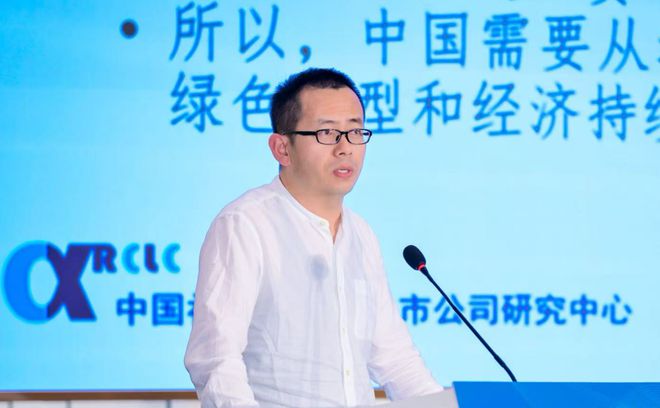
张鹏:实现绿色低碳转型,需以“先立后破”思路实现经济增长与绿色发展相兼容
Zhong Guo Jing Ying Bao· 2025-04-29 10:59
Core Viewpoint - The article emphasizes China's approach to balancing economic development with carbon reduction goals amid global climate change challenges, highlighting the importance of green low-carbon transformation and the "first establish, then break" strategy to mitigate the impact on economic growth [2][3]. Group 1: Green Transformation Strategy - China is enhancing governance for green low-carbon transformation, achieving significant progress in green development while pursuing economic growth [2]. - The dual goals of carbon peak and carbon neutrality are being pursued simultaneously, with a focus on key industries like new energy vehicles and power market reform [2][3]. - The strategy aims to reduce friction costs associated with green low-carbon transformation while ensuring continuous economic growth [3][4]. Group 2: Renewable Energy Development - China's renewable energy sector is accelerating, with renewable energy accounting for 74.4% of new installed capacity in 2021, and wind and solar power installations reaching 74.33 million kilowatts in the first quarter of 2025 [5]. - The establishment of a market-oriented carbon trading market and carbon pricing mechanisms is seen as essential for incentivizing corporate carbon reduction and promoting green technology innovation [5][6]. Group 3: Industrial Transformation - The transition from traditional high-carbon industries to green energy-driven production methods is crucial for achieving carbon peak and neutrality goals [6][7]. - The development of new green industries, such as new energy vehicles and artificial intelligence, is expected to drive economic growth through industrial transformation [7][8]. - A balanced approach is necessary to address regional disparities in economic structure and resource availability during the green transition [7][8]. Group 4: Policy Recommendations - A phased approach to high-carbon industry exit and low-carbon industry cultivation is recommended, avoiding a one-size-fits-all strategy [8]. - Policies should support low-carbon industry development, enhance technological innovation, and facilitate workforce training to ease the transition [8].
日本将向越南脱碳项目投资最多200亿美元
日经中文网· 2025-04-29 02:57
日本首相石破茂(最 4月28日,日本首相石破茂在越南主席府与越南总理范明政举行了会谈。他表示,日本政府和民 间将在海上风力发电和电网建设计划等越南脱碳项目上投入最多200亿美元。考虑到美国的关税 措施,双方确认了自由贸易体制的重要性。 版权声明:日本经济新闻社版权所有,未经授权不得转载或部分复制,违者必究。 石破茂在联合记者会上表示:"世界经济的不确定性增加,对东南亚地区的影响也令人担忧。我们 将诚恳倾听越南的声音"。范明政在谈到全球经济时强调:"我们确认了重视多边主义和呼吁国际 努力的重要性"。 越南面临着在维持经济增长的同时,既要确保电力供应,又要减轻对环境负担的双重课题。通过 投资日本企业在脱碳领域的优势举措,日本意在展示自身对越南的贡献,同时在中国拥有影响力 的越南扩大自身存在感。 第一阶段已选定10多个投资计划。其中包括住友商事和丸红等日企最多投资100亿美元规模的海 上风力发电项目等。 双方还同意推进安全保障合作。将建立外交和防卫副部长级磋商(2+2)机制。讨论遏制中国在 南海扩张的对策。 左)与越南总理范明政举行会谈(Kyodo) 日本经济新闻(中文版:日经中文网)手塚悟史 河内报道 第一阶段已 ...
国家能源局出台促进能源领域民营经济发展若干举措 持续支持能源领域民营企业发行上市
Zhong Guo Zheng Quan Bao· 2025-04-28 22:41
Core Insights - The National Energy Administration has issued a notice aimed at promoting the development of the private economy in the energy sector, focusing on financing channels and supporting private enterprises in various aspects such as public offerings, refinancing, mergers and acquisitions, and bond financing [1][3]. Group 1: Support for Private Enterprises - The notice encourages private enterprises to invest in nuclear power projects, hydropower, oil and gas storage facilities, and liquefied natural gas receiving stations [1][2]. - It supports private enterprises in participating in major infrastructure projects, including oil and gas pipeline networks and renewable energy projects like solar thermal power and biomass energy [1][2]. Group 2: Development of New Energy Models - The notice emphasizes the development of new energy business models, including virtual power plants and smart microgrids, and encourages investment in new technologies such as energy storage and charging infrastructure [2][3]. - It promotes innovation in the private sector, urging traditional energy companies to accelerate digital transformation and adopt advanced technologies for energy equipment recycling [2]. Group 3: Market Participation and Fair Competition - The notice aims to improve market access for private enterprises by enhancing the separation of oil and gas pipeline operations and optimizing licensing conditions for construction companies [2][3]. - It seeks to lower electricity connection costs for small private enterprises and improve the overall market environment for fair competition [2][3]. Group 4: Enhancing Government Services - The notice proposes streamlined administrative processes, including online approvals and one-stop services for wind power projects, to improve government services for private enterprises [3]. - It emphasizes the need for better communication between government and enterprises, as well as the protection of private enterprise rights [3][4].
【省发展改革委】陕西超额完成2024年可再生能源电力消纳任务
Shan Xi Ri Bao· 2025-04-28 22:37
Core Insights - The National Energy Administration has reported that Shaanxi Province has achieved a renewable energy consumption responsibility weight completion of 26.6%, with a total renewable energy consumption of 69.1 billion kilowatt-hours [1] - Shaanxi's non-hydropower renewable energy consumption reached 60.2 billion kilowatt-hours, exceeding the national target [1] Group 1 - Shaanxi Province is implementing a new energy security strategy and is focused on achieving carbon neutrality goals by developing a new power system centered around renewable energy [1][2] - The installed capacity of renewable energy in Shaanxi has increased to 56.56 million kilowatts by the end of March 2025, which is 2.3 times that of the end of the 13th Five-Year Plan, with an annual growth rate exceeding 23% [1] - The proportion of renewable energy in the total installed capacity of the province has risen to 48% [1] Group 2 - The provincial development and reform commission aims to prioritize the development of renewable energy and establish three renewable energy bases, while also promoting pumped storage projects and the hydrogen energy storage industry [2] - The goal is to enhance the external power transmission channels and facilitate large-scale, high-proportion, and market-oriented development of renewable energy [2] - This initiative is expected to empower the province's high-quality development and ensure national energy security [2]