
数码

Search documents
“广货行天下”叠加“年味肇庆” 多重消费补贴迎新春
Nan Fang Du Shi Bao· 2026-01-15 05:10
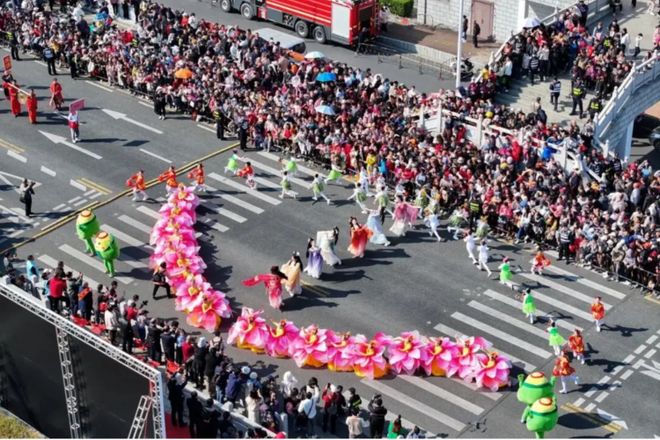
Core Viewpoint - The article highlights the vibrant consumer spending initiatives in Zhaoqing, Guangdong, as part of the "New Year Celebration" campaign, showcasing significant financial incentives and cultural activities to stimulate local tourism and consumption [2]. Group 1: Consumer Incentives - Zhaoqing has issued 4,876 consumption vouchers, generating a direct consumption boost of 332 million yuan as of January 2 [2]. - The "Old for New" subsidy program continues, offering substantial rebates: up to 20,000 yuan for cars, 1,500 yuan for home appliances, and 500 yuan for digital products [3]. - A new initiative called "Buy New, Get Subsidy" has been launched, with an investment of nearly 20 million yuan, resulting in a consumption increase of 530 million yuan, benefiting 17,000 participants [6]. Group 2: Dining and Lottery Promotions - Dining vouchers are available, providing discounts of 40 yuan for 200 yuan spent, 100 yuan for 500 yuan, and 200 yuan for 1,000 yuan, usable at 46 local merchants [7]. - A lottery campaign encourages consumers to obtain invoices for purchases over 100 yuan, with chances to win a Xiaopeng M03 car and local specialty gifts [7][8]. - The lottery will have two rounds, with the first round in early February 2026 and the second in early March 2026, offering additional prizes such as scenic tickets and local food [8]. Group 3: Cultural and Tourism Activities - Zhaoqing plans to integrate cultural resources into a series of events from early February to the Lantern Festival, expecting to attract over 3 million participants [9]. - Key activities include traditional lion dances, flower lantern exhibitions, and various cultural fairs, connecting historical sites and promoting local heritage [9]. - The events will also feature fireworks displays and sports competitions, enhancing community engagement and consumer spending [9].

焕新惠民政策红利精准激发消费热情 消费市场持续火热迎来“开门红”
Yang Shi Wang· 2026-01-15 04:14
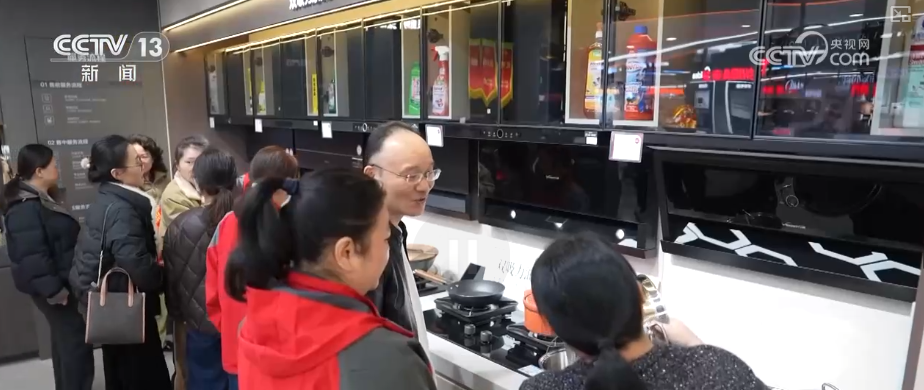
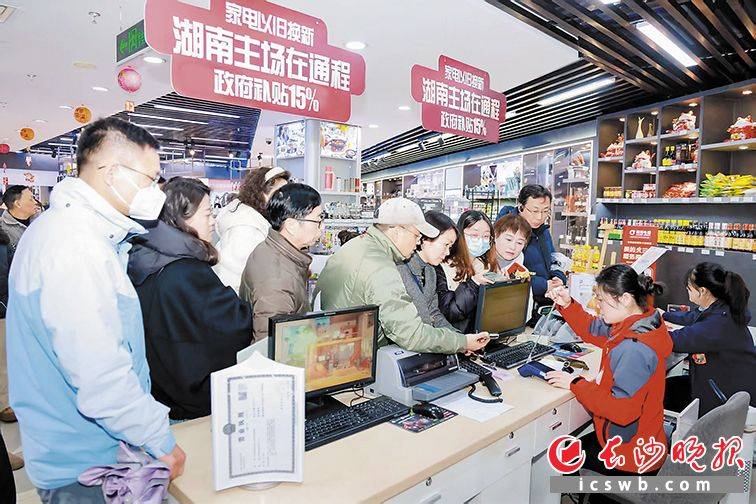
Core Insights - The new round of consumer goods trade-in policy has been implemented, leading to a surge in the consumption market in regions like Hunan and Shanxi, marking a strong start to the new year [1] Group 1: Policy Impact - The trade-in policy has resulted in significant consumer interest, with many consumers in Hunan's Changsha city actively inquiring about the "national subsidy" policy at large appliance stores [3] - The subsidy from businesses and manufacturers can reach up to 45%, contributing to a sales increase of over 30% since January 1 [7] Group 2: Product Coverage - Hunan's 2026 trade-in policy has expanded the scope of subsidized products to include "digital and smart products," covering smartphones, tablets, smartwatches, smart glasses, and smart home products [9] - The current "national subsidy" program includes six categories of home appliances and four categories of digital smart products, with a subsidy standard of 15% off the final price after all discounts [14] Group 3: Consumer Behavior - Consumers are taking advantage of the subsidies, with reports of significant discounts, such as a consumer purchasing a refrigerator for 2,000 yuan less on the first day of the subsidy [13] - The addition of smart glasses in the 2026 policy is particularly appealing to younger consumers, indicating a shift in consumer preferences [13]
12万笔以旧换新补贴撬动5亿元消费
Sou Hu Cai Jing· 2026-01-15 00:57
Core Insights - Chongqing has launched a new round of consumer subsidies for replacing old products with new ones, covering various sectors including home appliances and digital smart products, which has led to a significant increase in consumer enthusiasm and sales [1][2][3] Group 1: Home Appliances - As of January 11, the total number of transactions for home appliance replacements reached 60,870, with subsidies amounting to approximately 46 million yuan, directly driving sales of 324.6 million yuan [2][3] - The implementation of the policy has resulted in a 110% increase in foot traffic and sales at stores, with consumers shifting their purchasing mindset towards high-quality, energy-efficient products, which now account for 65% of sales [1][3] Group 2: Digital Smart Products - The total number of transactions for digital and smart product subsidies reached 61,990, with a total subsidy amount of about 25 million yuan, directly boosting sales by 206.7 million yuan [3][4] - The policy has stimulated demand for new smartphones and tablets, with many stores offering additional incentives such as trade-in bonuses and interest-free installment plans to lower the cost for consumers [2][3] Group 3: Market Trends and Future Plans - The sales data reflects a strong consumer demand for high-quality green smart products, prompting the local government to enhance policy promotion and encourage more businesses to participate [3] - The inclusion of smart glasses in the subsidy program has led to a doubling of sales for these products during the holiday period, indicating a growing interest in smart wearable devices [2]

尺素金声|3.92万亿元销售、惠及4.94亿人次,以旧换新一举多赢
Sou Hu Cai Jing· 2026-01-14 12:46
Group 1 - The core viewpoint of the news is that the "old-for-new" policy has become a significant driver of consumer demand and economic growth, particularly in the appliance and automotive sectors [1][4][5] - From January 1 to 2, 2024, Hebei Province recorded 133,600 sales transactions in home appliances and digital products, totaling 590 million yuan, indicating a strong market response to the policy [1] - The "old-for-new" policy has led to a total sales volume of 3.92 trillion yuan, benefiting 494 million people, with over 18.3 million vehicles and 192 million home appliances exchanged [4] Group 2 - The policy has contributed to a growth of over 1 percentage point in total retail sales, with home appliance retail sales exceeding 1 trillion yuan, marking a historical high [5] - In the automotive sector, nearly 60% of the old-for-new exchanges involved new energy vehicles, with the retail market share of new energy passenger cars exceeding 50% for nine consecutive months [6] - The policy adjustments for 2026 aim to enhance quality and innovation, with a focus on energy-efficient products and expanding subsidies to new smart devices, thus supporting high-quality development [8]
“新国补”政策落地 消费市场热力全开
Yang Shi Xin Wen Ke Hu Duan· 2026-01-14 06:53
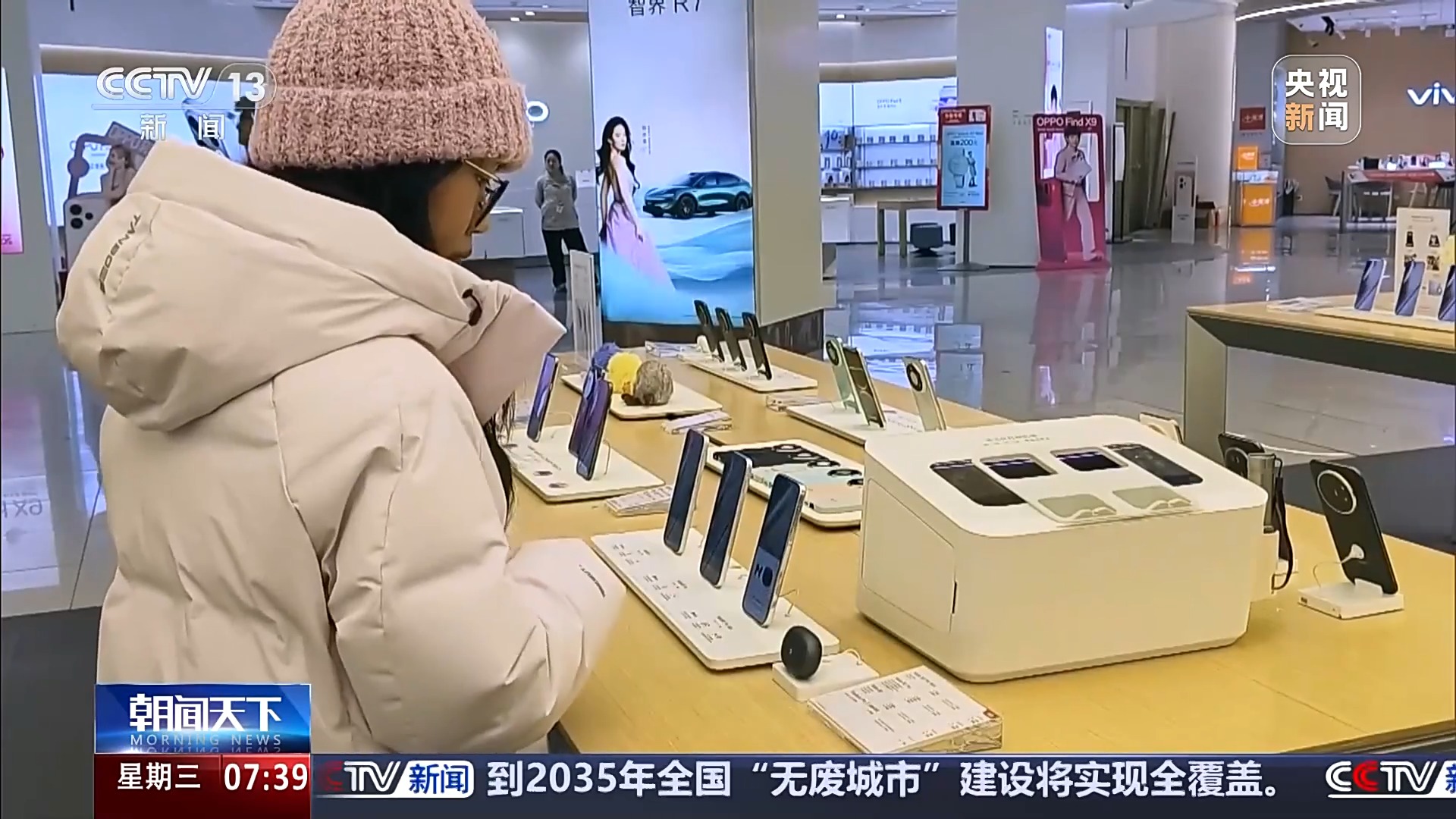
Group 1 - The core viewpoint of the articles highlights the positive impact of the new "old-for-new" subsidy policy in China, particularly in Henan and Sichuan provinces, which has stimulated consumer enthusiasm in the automotive and electronic goods markets [1][6][10] Group 2 - In Henan, the "national subsidy" policy has been a focal point for consumers, with various car manufacturers offering additional discounts and promotions, including tax rebates and extra subsidies for trade-ins, leading to increased sales [2][6] - The consumer electronics market in Henan is also experiencing a surge, with retailers offering discounts and gifts alongside the national subsidy, attracting more buyers [4][6] Group 3 - Sichuan's new subsidy policy, effective from January 1, provides a 15% discount for six categories of home appliances and four categories of digital and smart products, igniting consumer interest and boosting market activity [7][10] - The policy emphasizes green energy efficiency and smart upgrades, making energy-efficient appliances the market standard and appealing to younger consumers with new subsidy categories like smart glasses and watches [7][10] Group 4 - The implementation of the subsidy policy in Sichuan has been smooth, with easy application processes for consumers, which not only benefits buyers but also encourages retailers to upgrade their product offerings [10]
2026年首批625亿元资金已下达 新一轮“国补”落地多地积极部署
Zhong Guo Chan Ye Jing Ji Xin Xi Wang· 2026-01-14 01:08
Core Viewpoint - The 2026 national subsidy program aims to stimulate domestic consumption through a series of financial incentives for consumers purchasing new products, particularly in the electronics and automotive sectors, with a total of 62.5 billion yuan allocated for the first batch of subsidies [1][8]. Subsidy Details - Consumers purchasing eligible digital products such as smartphones, tablets, smartwatches, and smart glasses priced under 6,000 yuan will receive a subsidy of 15% of the product price, capped at 500 yuan per item [2]. - For major home appliances like refrigerators, washing machines, and air conditioners, a similar subsidy of 15% applies, with a maximum of 1,500 yuan per item [2]. - In the automotive sector, scrapping eligible old vehicles for new energy cars will yield a subsidy of 12% of the new car price, up to 20,000 yuan, while scrapping fuel vehicles for smaller fuel cars will provide a 10% subsidy, capped at 15,000 yuan [2]. Regional Implementation - All 21 cities in Guangdong Province launched the 2026 subsidy program on January 1, with the first transactions occurring in Guangzhou, indicating strong local engagement [3]. - Other provinces, such as Yunnan and Zhejiang, have also initiated their own automotive subsidy programs, leading to increased consumer interest and foot traffic in dealerships [3][4]. Process Optimization - Various regions have streamlined the subsidy application process, allowing consumers to apply for automotive subsidies through national systems or mobile apps, while home appliance subsidies are facilitated through major e-commerce platforms [4]. - Cities like Beijing and Shanghai have adopted innovative methods for subsidy distribution, enhancing consumer participation and interest [4]. Market Impact - The expanded subsidy program is expected to create new opportunities in the digital and smart product markets, with significant sales increases observed in smart glasses and AI-enabled home appliances during the New Year holiday [5][7]. - The policy is designed to support small and medium enterprises by lowering investment thresholds for equipment upgrades, thereby enhancing public service and commercial facilities [5]. Economic Outlook - The 2026 subsidy program is viewed as a critical measure for boosting domestic demand and stabilizing economic growth, with long-term benefits anticipated in industrial structure optimization and consumer ecosystem enhancement [8].
逾702万人次参与 带动消费超423亿元
Sou Hu Cai Jing· 2026-01-13 22:20
Core Insights - The "old-for-new" policy in Changsha has significantly boosted the home appliance market, attracting over 7.02 million participants and generating sales exceeding 42.3 billion yuan in 2025, making it a key driver for economic growth and consumer spending [2][3] Group 1: Policy Implementation - In 2025, Changsha expanded the "old-for-new" policy to include digital products like smartphones and tablets, achieving comprehensive coverage across four core categories: home appliances, automobiles, home renovation, and digital products [3] - The subsidy structure is differentiated, with energy-efficient appliances receiving up to 20% of the final sales price as a subsidy, capped at 2,000 yuan, while digital products receive a 15% subsidy, with a maximum of 500 yuan per item [3] - The policy has been optimized for efficiency, with changes in subsidy distribution and a simplified application process to enhance consumer experience [3] Group 2: Market Performance - The "old-for-new" initiative led to significant sales in various sectors, with home appliances generating approximately 10.598 billion yuan, and digital products and home renovation markets contributing over 5.4 billion yuan and 3.7 billion yuan, respectively [4] - The automotive sector saw over 139,000 participants claiming subsidies, resulting in vehicle purchases exceeding 22.2 billion yuan, with 55% of these being new energy vehicles [3][4] Group 3: Future Outlook - The home appliance market in Changsha continues to thrive into 2026, with a reported sales increase of over 30% in early January compared to the previous year, driven by the new policy [5] - Changsha plans to further optimize policy services and enhance the recycling system for waste materials, aiming to unlock additional consumer potential and support high-quality economic development [5]
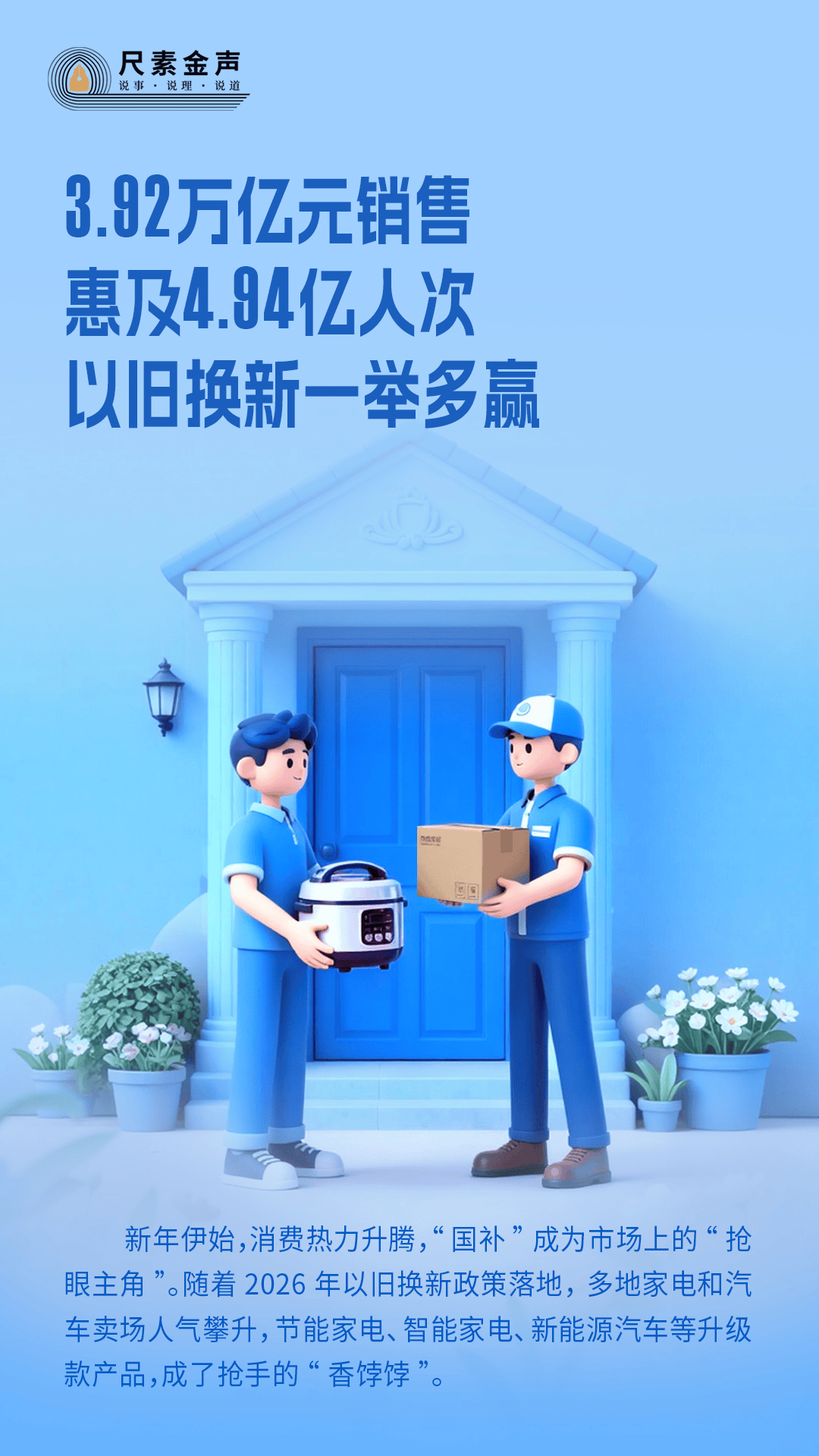
3.92万亿元销售、惠及4.94亿人次,以旧换新一举多赢
Xin Lang Cai Jing· 2026-01-13 10:28
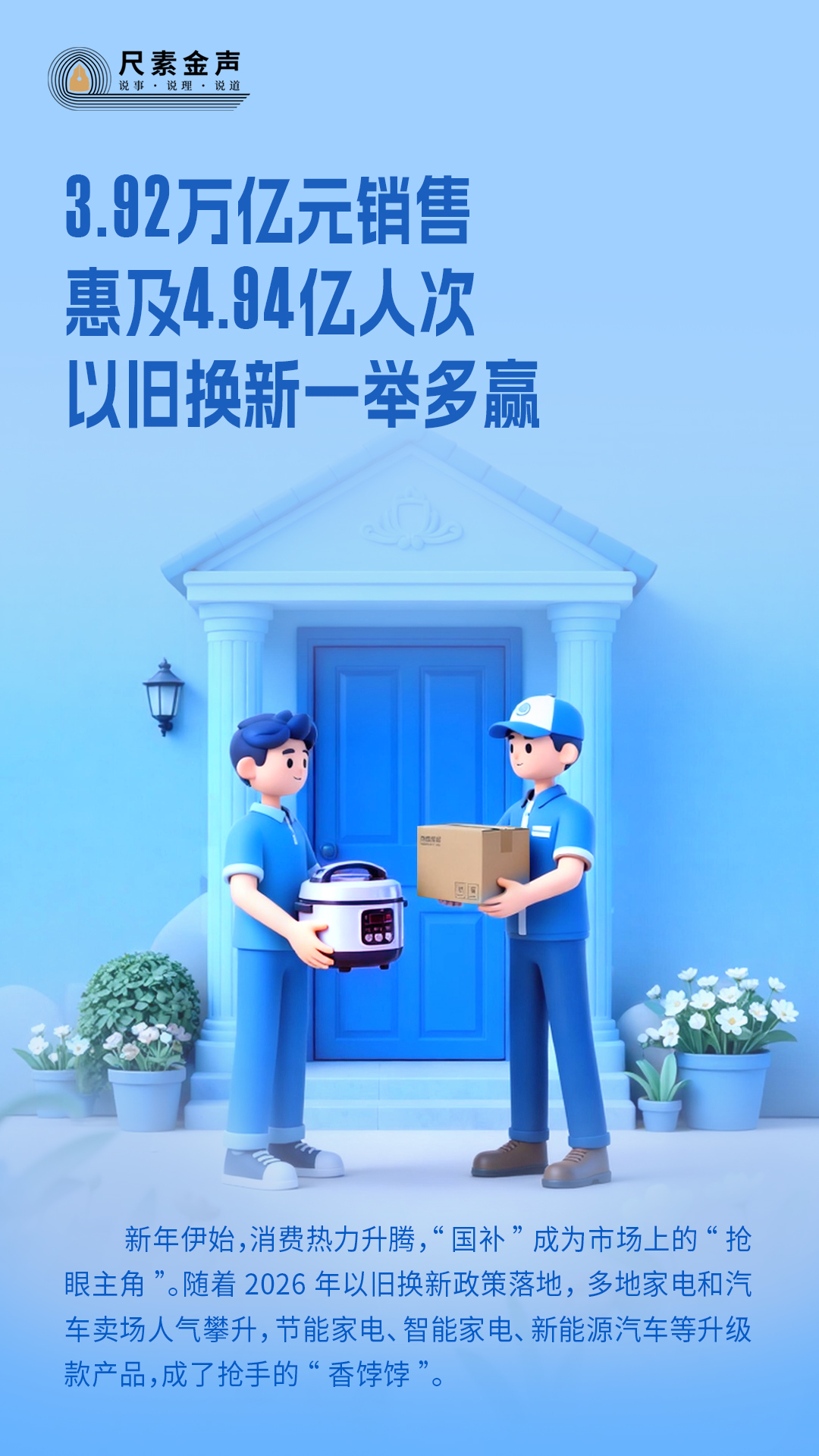
来源:人民日报客户端 新年伊始,消费热力升腾,"国补"成为市场上的"抢眼主角"。随着2026年以旧换新政策落地,多地家电和汽车卖场人气攀升,节能家电、智能家电、新能 源汽车等升级款产品,成了抢手的"香饽饽"。 1月1日至2日,河北省家电、数码和智能产品合计销售13.36万笔,销售总额5.9亿元;元旦假期,福州市消费品(不含汽车)以旧换新核销近1600万元,拉动 消费1.25亿元……政策红利对接消费需求,奏响新年扩内需、促消费的"开场好戏"。 2024年消费品以旧换新政策实施以来,相关商品销售额达3.92万亿元,惠及4.94亿人次。其中,汽车以旧换新超1830万辆,家电以旧换新超1.92亿件,手 机等数码产品购新超9100万部。以旧换新已不是简单的"旧物换新品",而是成了推动经济良性循环的"关键纽带"。 政策支撑消费潜力持续释放 —— 2025年前11个月,以旧换新带动社零总额增长超1个百分点,家电零售额已超2024年全年,突破万亿元大关并创历史新高。一大批绿色智能新品走进千家 万户,更好满足了人们对美好生活的向往。 政策精准 " 导航 " 产业提质升级 —— 2025年,汽车以旧换新中,新能源汽车占比近60% ...
天猫2025年新品牌报告出炉:超15万商家涌入开店,创历史新高
Sou Hu Cai Jing· 2026-01-13 03:11
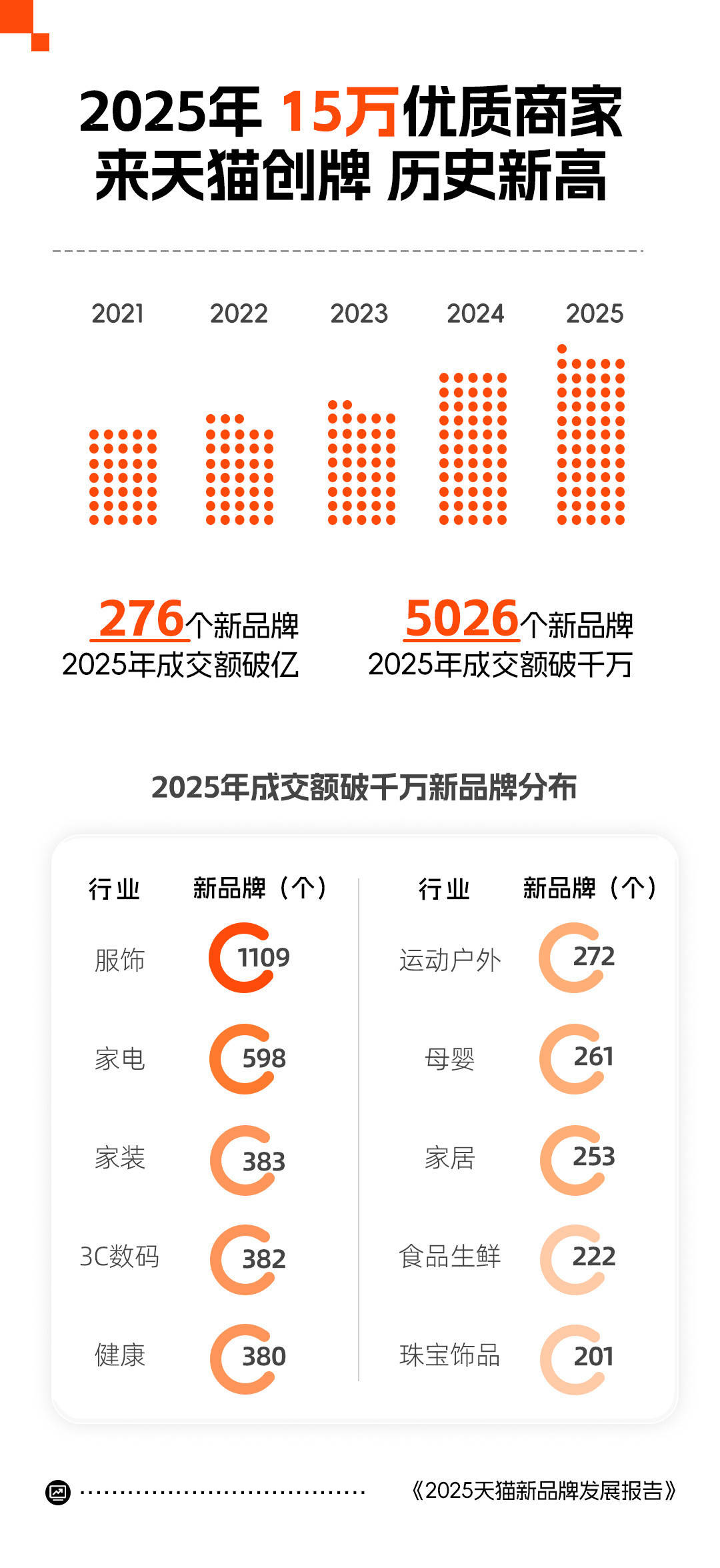
Core Insights - Tmall's 2025 New Brand Development Report highlights a record influx of over 150,000 quality new merchants, showcasing strong growth momentum and entrepreneurial vitality [1] - The report indicates that 276 brands achieved annual sales exceeding 100 million yuan within three years of opening, while 5,026 brands surpassed 10 million yuan, marking a significant milestone in the growth of new brands on the platform [1] Industry Distribution - The top ten industries for new brands achieving over 10 million yuan in sales include apparel, home appliances, home decoration, 3C digital products, health, sports and outdoor, maternal and infant products, home goods, food and fresh produce, and jewelry, covering essential areas of consumer daily life [6] Successful New Brands - New brands have successfully penetrated mature markets by addressing specific consumer needs with high-quality differentiated products. For instance, the instrument brand LiberLive introduced a "stringless guitar" that lowers the learning barrier, while the AR glasses brand XREAL has established a strong brand identity through innovative technology [9] - The pet brand "Xu Cuihua" launched plant-based cat litter to address common pain points, quickly capturing market share and becoming a leader in its category, benefiting from Tmall's focus on showcasing differentiated and well-reviewed products [9] Regional Highlights - Guangzhou, Shenzhen, Jinhua, Hangzhou, Quanzhou, Xiamen, Wuhan, Xuzhou, Dongguan, and Zhengzhou are identified as the top ten "brand creation cities" for 2025, with Guangzhou leading for three consecutive years. In 2025, new merchants from Guangzhou exceeded 18,000, doubling from 2023 [10] Systematic Support for Brand Growth - Tmall's "扶优" strategy provides unprecedented resources to brands with original capabilities and long-term potential, covering various aspects such as operational incentives, new product incubation, brand membership operations, high-quality live streaming, and user growth [13] - Tmall offers a tiered support system for new brands at different development stages, including the "Blue Star Plan" for new merchants and the "Treasure New Brand" plan for brands in their growth phase [13] Future Opportunities - The report identifies 50 blue ocean opportunity sectors for 2026, including smart robots, AI glasses, skin science, personalized makeup, wearable home clothing, light customization in home decoration, smart mattresses, and outdoor pet products, indicating significant growth potential for entrepreneurs and brands [14] Overall Market Trends - The Tmall 2025 report reveals that in the context of increasingly segmented and personalized consumer markets, new brands are experiencing unprecedented development opportunities, continuously injecting fresh vitality and growth momentum into the market [18]

优化消费品以旧换新政策实施 推动商品消费扩容升级
Xin Lang Cai Jing· 2026-01-12 23:09
Core Viewpoint - The recent national business work conference has prioritized the implementation of consumption promotion actions, specifically focusing on optimizing the "old-for-new" policy for consumer goods to enhance consumption expansion and upgrading by 2026 [1][5]. Group 1: Policy Implementation and Goals - The Ministry of Commerce reports that in 2025, the sales volume of goods related to the "old-for-new" policy exceeded 2.6 trillion yuan, benefiting over 360 million people [1][6]. - Specific targets include the replacement of over 11.5 million vehicles, 129 million home appliances, 9.1 million digital products, 12 million home renovation items, and 1.25 million electric bicycles [1][6]. - A joint notice from the Ministry of Commerce and six other departments outlines the support for the "old-for-new" policy through long-term special government bond funding and local matching funds [1][6]. Group 2: Subsidy Optimization and Consumer Support - The 2026 policy will adjust subsidies from fixed amounts to a percentage of vehicle prices, with different rates for new energy and fuel vehicles [2][7]. - Consumers purchasing energy-efficient appliances will receive a 15% subsidy based on the product's sales price, with an expansion to include new categories like smart glasses [2][7]. - The central government will continue to allocate long-term special bond funds, enhancing the efficiency of subsidy distribution and ensuring that benefits reach consumers directly [2][7]. Group 3: Industry Impact and Future Directions - The "old-for-new" policy has significantly boosted sales and promoted the adoption of high-quality products like new energy vehicles and energy-efficient appliances, laying a foundation for 2026 [3][8]. - Experts suggest expanding consumer categories, optimizing the consumption environment, and innovating consumption models to further stimulate consumption growth [3][8]. - Recommendations include enhancing the supply system, improving consumer experience, and strengthening the recycling system for old products to support a sustainable consumption ecosystem [4][9].