药品

Search documents
【UNFX课堂】美元的脆弱基石:贸易战、联储变局与就业困境
Sou Hu Cai Jing· 2025-08-07 10:28
Core Viewpoint - The recent stability of the US dollar is misleading, as underlying risks are accumulating, with significant declines earlier in the year and temporary support factors now appearing weak [1][4]. Group 1: Economic Factors - The US dollar experienced a nearly 11% decline from January to April, followed by a brief recovery due to strategic concessions on tariffs and stable employment data [1]. - Recent tariff measures introduced by President Trump, particularly on semiconductors and pharmaceuticals, are raising concerns about economic protectionism and potential price increases [1][2]. - The US employment market is showing signs of fatigue, with non-farm payroll reports failing to exceed 100,000 for three consecutive months, historically a recession indicator [2][4]. Group 2: Federal Reserve Independence - The independence of the Federal Reserve is under scrutiny, with recent resignations and potential political influences on monetary policy [2]. - Speculation about future Fed leadership includes candidates who may prioritize political objectives over traditional monetary policy, potentially undermining the credibility of the Fed [2][4]. Group 3: Market Reactions - The reduction in short positions against the dollar suggests a temporary stabilization, but ongoing fundamental deterioration and rising political risks indicate clear downward pressure on the dollar [3][4]. - The euro is largely reacting to US macroeconomic changes, with limited upward movement despite some narrowing of interest rate differentials [3]. Group 4: Summary of Risks - The foundations supporting the dollar's recent resilience—tariff adjustments, temporary stability from Powell, and reliable employment data—are now crumbling, leading to increased risks for the dollar [4][5]. - The market is now focused on which negative factor will trigger the dollar's downward trend first [5].
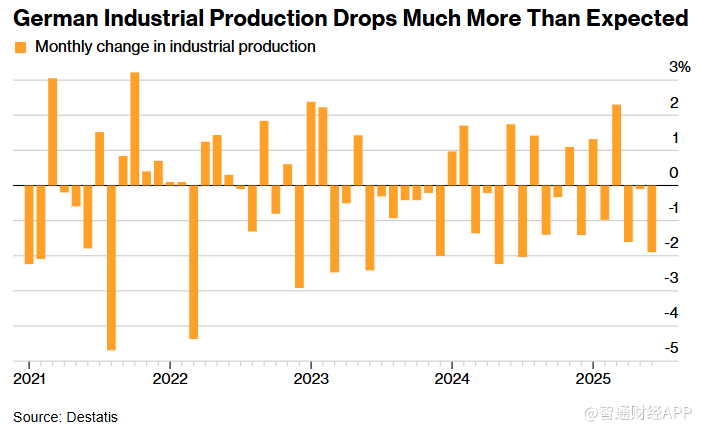
德国工业产出创一年最大降幅 经济忧虑加剧
智通财经网· 2025-08-07 09:00
智通财经APP获悉,德国工业产出遭遇近一年来最大降幅,表明这个欧洲最大经济体上季度的经济萎缩 程度可能比最初估计的还要严重。数据显示,德国6月季调后工业产出环比下降1.9%,降幅远远超出经 济学家的预期,主要受机械设备、药品和食品等行业的影响。德国联邦统计局周四表示,5月份的产出 数据被修正为小幅萎缩,而第二季度整体产出降幅目前已达1%。 德国工业产出降幅远超预期 贝伦贝格银行首席经济学家Holger Schmieding表示,这一下降幅度可能意味着经济萎缩0.2%,而不是上 周公布的0.1%。 他表示:"这是一个重大挫折,确实预示着第二季度数据可能向下修正。" Schmieding表示,此次产出数 据下降将抵消年初为赶在美国关税生效前提前生产而增加的产出。 随着美国总统唐纳德·特朗普的关税落地,德国出口导向型企业的困境加剧。 保时捷和奥迪等汽车制造商已下调了业绩预期,而其他一些制造商表示供应短缺加剧可能会损害经济增 长。德国联邦统计局表示,5月份"异常高的修正"是汽车制造商的数据修正造成的。 Bloomberg Economics欧元区高级经济学家David Powell表示:"我们预计短期内的形势仍将不容 ...

恒生创新药指数“提纯”修订方案8月11日起正式生效,挂钩产品恒生创新药ETF(520500)最新规模超11亿创新高
Xin Lang Ji Jin· 2025-08-07 05:44
Group 1 - The core viewpoint of the articles highlights the significant boost in the Hong Kong stock market's innovative drug sector, with the Hang Seng Innovative Drug Index showing an impressive increase of over 111% this year, attracting market attention [1] - The Hang Seng Innovative Drug Index has undergone a revision to focus solely on the pharmaceutical and biotechnology sectors, enhancing its ability to reflect the development trends of the innovative drug industry [1] - The index has gained eligibility for southbound trading, which is expected to improve liquidity and serve as a valuable tool for investors seeking opportunities in innovative drugs [1] Group 2 - The Hang Seng Innovative Drug ETF (520500) is currently one of the few ETFs tracking the Hang Seng Innovative Drug Index, with its latest shares and scale reaching 555 million and 1.128 billion yuan, respectively, both hitting historical highs [2] - The ETF has demonstrated strong liquidity, with a daily trading volume exceeding 1 billion yuan for 12 consecutive trading days, and an average daily trading volume of 1.453 billion yuan during the specified period [2] - The current logic of the innovative drug industry has shifted towards international expansion, with domestic companies increasingly seeking to commercialize their innovations in mature markets like Europe and the U.S. [2] Group 3 - The management of the Hang Seng Innovative Drug ETF (520500) by Huatai-PB Fund has a strong track record, having launched several benchmark ETFs and maintaining an 18-year record of zero errors in ETF operations [3] - The ETF has achieved a return of 56.94% in the first half of 2025, closely aligning with its benchmark, the Hang Seng Innovative Drug Index, which had a return of 57.83% during the same period [3]
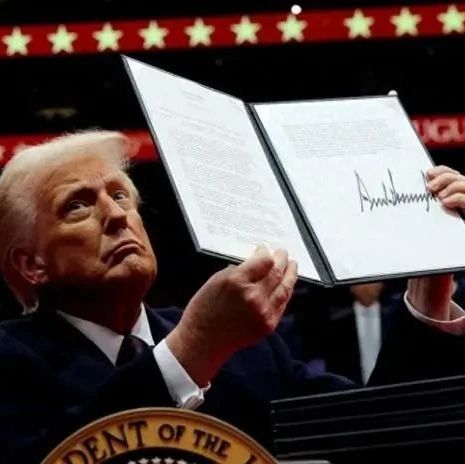
8月7日 特朗普要发表重要讲话
Guo Ji Jin Rong Bao· 2025-08-06 17:48
Group 1 - The new tariff policy by President Trump, originally set to take effect on August 1, has been postponed to August 7, with the tariff rates "basically determined" according to U.S. Trade Representative Jamison Greer [1][2] - Trump is expected to announce significant economic measures on August 6, which will be his first major action following a series of economic and geopolitical warnings [2] - Trump has expressed dissatisfaction with India for continuing to purchase Russian oil, threatening "very significant" tariffs as punishment, which has led to a defensive response from Indian officials [3][4] Group 2 - The Indian stock market has shown signs of stress, with the BSE Sensex index dropping 0.38% and the rupee depreciating against the dollar amid concerns over potential U.S. tariffs [3] - The Sensex and Nifty indices fell again on August 6, with Sensex down 166 points, as Trump indicated plans to impose tariffs on specific industries, including semiconductors and pharmaceuticals, potentially raising drug tariffs to 250% [4] - Following Trump's executive order on July 31, trade partners will face adjustments in tariff rates, with new rates set to take effect on August 7 [5][6] Group 3 - The U.S. has announced a significant increase in tariffs on Swiss imports to 39%, up from a previously proposed 31%, raising concerns about potential job losses and order declines in Swiss industries [7] - Swiss officials, including President Keller-Sutter and Economy Minister Parmelan, have traveled to Washington to negotiate before the new tariffs take effect [7][8] - Japan's Economic Revitalization Minister is also in the U.S. seeking clarification and adjustments to tariff measures, as Japan's goods may face higher effective tax rates than the agreed 15% [8]
8月7日,特朗普要发表重要讲话
Sou Hu Cai Jing· 2025-08-06 16:02
Group 1 - The new tariff policy by the Trump administration has been postponed from August 1 to August 7, with the tariff rates "basically determined" before the deadline [1] - Trump has expressed dissatisfaction with India's continued purchase of Russian oil, threatening significant tariffs as a punishment [2][3] - India's response highlights its strategic need for Russian oil to stabilize global oil prices, emphasizing the potential economic impact of U.S. tariffs on India [2] Group 2 - The Sensex and Nifty indices in India have declined due to concerns over U.S. tariffs, with Sensex dropping 166 points and Nifty falling below 24,600 points [3] - The U.S. has announced a 39% tariff on Swiss imports, significantly higher than the previously proposed 31%, raising concerns about job losses in Swiss export industries [6] - Swiss officials are seeking negotiations with the U.S. to address the impending tariffs, while Japan is also engaging in discussions regarding its trade agreements with the U.S. [7]
美联储内部生变,A股渐进式修复
Chuang Yuan Qi Huo· 2025-08-06 09:40
Report Industry Investment Rating No relevant information provided. Core View of the Report - Trump may soon announce the next Fed Chair. If the Fed cuts interest rates, it will be beneficial for A-shares. However, the external market environment is highly uncertain due to Trump's threats regarding tariffs and energy sanctions. A-shares have shown strong index performance in the past two days but lack trading volume. In the short term, it is necessary to monitor whether the trading volume will recover and the activity of the technology sector to determine if the market will oscillate and break through the 3,674-point mark. In the long term, the market is expected to move upward with oscillations. The report is optimistic about the technology sector and suggests paying attention to its performance [1][2][10]. Summary by Relevant Catalogs 1. Market View 1.1 Overseas Overnight - US service industry data indicates resilience, with the July ISM non-manufacturing PMI at 50.1 (below the expected 51.5 but above the previous value of 50.8) and the July S&P Global services PMI at 55.7 (above both the expected and previous values of 55.2). - Trump stated that the next Fed Chair candidates have been narrowed down to four, and an announcement may be made soon. The US will announce tariffs on semiconductor and pharmaceutical imports next week, with the maximum pharmaceutical tariff reaching 250%. Trump also threatened to significantly increase tariffs on India within 24 hours and impose a 35% tariff on the EU if it fails to fulfill its investment obligations to the US. These factors have dampened market risk appetite, leading to a weaker US dollar index, a decline in short-term US Treasury yields and an increase in long-term yields, a rise in gold prices, a collective decline in US stock indices, a decline in the Nasdaq Golden Dragon China Index, and a slight depreciation of the offshore RMB exchange rate. However, the potential for Fed rate cuts is seen as a positive for A-shares [1][4]. 1.2 Domestic Market Review - On Tuesday, the market continued its rebound, with the Shanghai Composite Index rising 0.96%, the Shenzhen Component Index rising 0.59%, and the ChiNext Index rising 0.39%. The strength of the Shanghai Composite Index was mainly due to the contribution of the large financial sector. Although more stocks rose than fell, the market sentiment was slightly weaker than on Monday. All primary sectors rose, with banks, steel, media, communications, and non-bank finance leading the gains, while pharmaceutical biology, computer, and building materials had the smallest increases. A total of 3,901 stocks rose, and 1,325 stocks fell. The central bank and six other departments jointly issued a document to promote financial support for new industrialization, which is essentially a financial supply-side reform aimed at breaking through bottlenecks through precise capital allocation [2][5]. 1.3 Important Information - **Tariffs**: Trump will announce tariffs on pharmaceuticals and chips in the next week, with the maximum pharmaceutical tariff reaching 250%. He will significantly increase tariffs on India within 24 hours and impose a 35% tariff on the EU if it fails to fulfill its investment obligations to the US. The US trade deficit in June was -$60.2 billion, the smallest since September 2023 [6]. - **Political News**: Trump believes that Vance is the most likely candidate for the next president, and Secretary of State Rubio would be a helpful ally. Trump may soon announce a new Fed Chair, with four candidates, and Besent hopes to remain in the Treasury. Trump will decide whether to impose sanctions on countries purchasing Russian energy after a meeting on Wednesday. The State Council General Office issued an opinion on gradually implementing free pre-school education, starting from the fall semester of 2025, waiving tuition fees for children in the first year of public kindergartens. The China Securities Regulatory Commission is strengthening constraints on third parties involved in capital market fraud. The central bank and six other departments are guiding banks to provide medium- and long-term financing for key manufacturing industrial chains such as integrated circuits and industrial mother machines. The National Health Commission and other departments jointly issued an implementation plan for a healthy environment promotion action [6][7][8]. 1.4 Today's Strategy - Monitor the recovery of trading volume and the activity of the technology sector in the short term to determine if the market will oscillate and break through the 3,674-point mark. In the long term, the market is expected to move upward with oscillations. The report is optimistic about the technology sector and suggests paying attention to its performance [10]. 2. Futures Market Tracking - The report provides detailed data on the performance, trading volume, and open interest of various stock index futures contracts, including the Shanghai 50, CSI 300, CSI 500, and CSI 1000. It also presents charts showing the basis, inter - contract spreads, and trading volume and open interest trends of these futures contracts [12][13]. 3. Spot Market Tracking - The report shows the current points, daily, weekly, monthly, and annual returns, trading volumes, and valuation quantiles of major stock indices such as the Wind All - A, Shanghai Composite Index, Shenzhen Component Index, and others. It also analyzes the impact of market styles (cyclical, consumer, growth, financial, and stable) on the performance of the Shanghai 50, CSI 300, CSI 500, and CSI 1000 indices. Additionally, it provides valuation and trading volume data for various industries [37][38][39]. 4. Liquidity Tracking - The report includes charts showing central bank open - market operations (in billion yuan) and the Shibor interest rate levels [50].
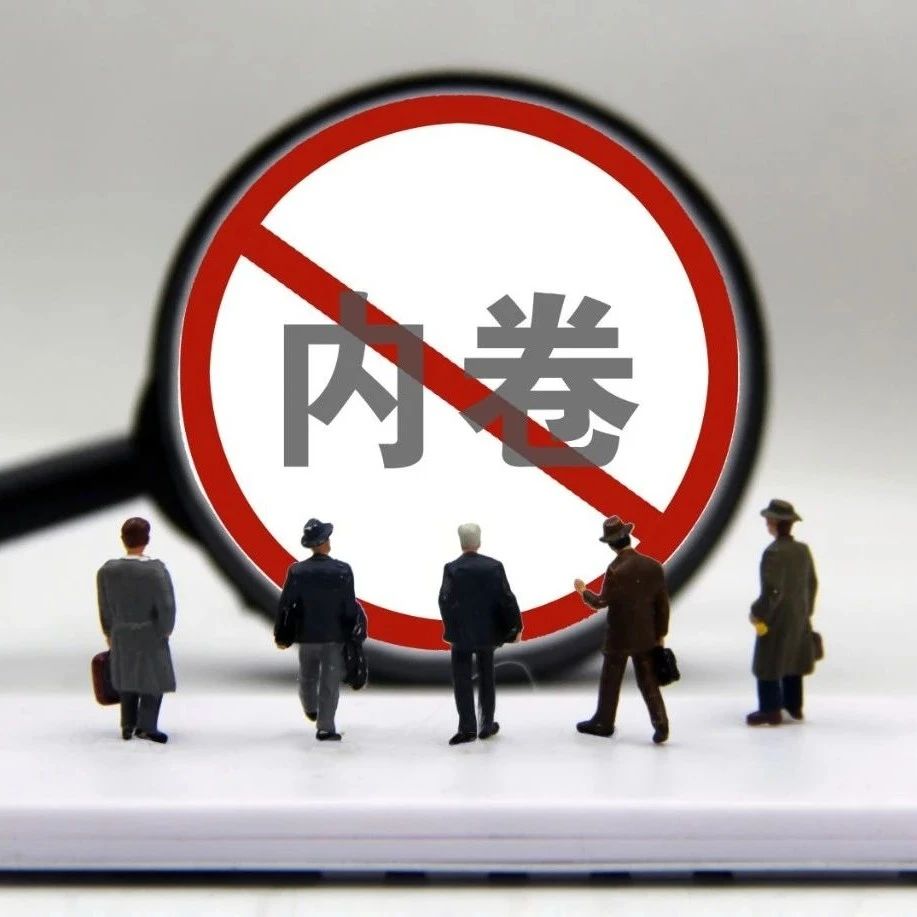
治理“内卷式”竞争!多部门“组合拳”发力!
Zheng Quan Shi Bao· 2025-08-06 00:22
Group 1 - The core viewpoint emphasizes the need for a unified national market to combat "involution" in various industries, which has led to unhealthy competition and profit sacrifices among companies [1][4][11] - The government is implementing a series of measures to address "involution" by promoting fair competition and optimizing resource allocation, which is crucial for the construction of a unified national market [2][5][10] - The recent policies focus on both constraints and guidance, including prohibiting local governments from offering unfair incentives and promoting mergers and technological innovation in key industries [5][6] Group 2 - The regulatory framework is evolving, with new laws such as the revised Anti-Unfair Competition Law aimed at preventing predatory pricing and ensuring fair competition among businesses [8][9] - The government is actively seeking to break down local protectionism and market barriers, which are significant obstacles to the establishment of a unified national market [10][11] - Initial results from the government's "combination punches" against "involution" have shown improvements in capacity management and pricing rationality in industries like steel, automotive, and e-commerce [11]
治理“内卷式”竞争!多部门“组合拳”发力!
证券时报· 2025-08-06 00:14
Core Viewpoint - The article discusses the ongoing "involution" competition across various industries in China, emphasizing the need for a unified national market and the government's efforts to regulate and guide this competition to ensure a healthy market environment [2][4][11]. Group 1: Involution Competition - The "involution" competition has escalated from e-commerce and automotive sectors to electronics, food, steel, and cement industries, leading to a detrimental cycle where companies sacrifice profits for market share [2][4]. - The Chinese government, through multiple departments, is actively implementing measures to address this "involution" competition, aiming to break the cycle and promote a healthier market order [2][5][11]. Group 2: Government Measures - The National Development and Reform Commission (NDRC) has introduced guidelines to prevent local governments from offering illegal incentives in areas such as finance, taxes, and resources, focusing on both constraints and guidance [5][6]. - The Ministry of Industry and Information Technology (MIIT) is targeting key industries like automotive and steel to encourage structural adjustments and the elimination of outdated capacities [6][11]. - The State Administration for Market Regulation (SAMR) is conducting targeted actions against unfair competition across a wide range of sectors, including e-commerce and food, to ensure fair market practices [6][9]. Group 3: Price Governance Framework - Recent reforms in the Anti-Unfair Competition Law aim to establish a fair competition review system, prohibiting practices that disrupt market order through below-cost pricing [8][9]. - The NDRC and SAMR are working on revising the pricing law to address predatory pricing and ensure that service pricing is also regulated, enhancing the legal framework for market supervision [9][10]. Group 4: Achievements and Future Directions - Initial results from the government's "combination punches" against "involution" competition show improvements in industries like steel and construction materials, with a gradual recovery in upstream supply chain prices [11]. - The article highlights the need for further reforms in performance evaluation and fiscal systems to eliminate local protectionism and market barriers, which are essential for the successful establishment of a unified national market [11].
欧盟官员:美国对欧盟15%的关税是全包关税,包含最惠国税率!这与其他一些与美国有协议的国家不同
Ge Long Hui· 2025-08-05 10:09
Group 1 - The European Union (EU) faces a 15% tariff on goods entering the United States, which is all-inclusive and includes the most-favored-nation rate, differing from some countries with agreements with the U.S. [1] - The 15% tariff applies to all goods except for steel and aluminum, with current tariffs on pharmaceuticals and semiconductors being zero [1] - If the tariffs on pharmaceuticals and semiconductors are raised due to the U.S. Section 232 investigation, they will not exceed 15% [1] Group 2 - The 15% tariff cap also applies to automobiles and auto parts, which have no quotas or restrictions [1]
巴克莱:“对等关税”落地,新加坡是亚洲最大赢家、越南是输家,但半导体和药品关税风险更大
美股IPO· 2025-08-03 03:53
巴克莱分析显示,越南面临全球最高的增值加权美国关税税率2.3%,越南有高达15.1%的国内增值部 分直接暴露在受美方关税影响的出口中。新加坡增值加权关税率仅0.5%,主要因半导体和药品暂时豁 免。但巴克莱警告,半导体和药品关税风险更大;若特朗普对药品征收200%关税,新加坡将面临严重 冲击。 特朗普"对等关税"政策终于落地,新加坡以10%的关税税率成为亚洲最大赢家,而越南面临全球最高 的增值加权美国关税税率。然而,巴克莱警告,半导体和药品行业面临更大不确定性。 韩国 15% 、印尼和菲律宾 19% 、越南 20% 、印度 25% 的税率保持不变。 巴克莱称,对于被认定为"转运"规避关税的商品,将征收40%的惩罚性关税,但具体认定标准尚未公 布。 增值加权关税分析:越南压力最大,新加坡出人意料 巴克莱研究团队的增值加权美国关税税率分析揭示了亚洲国家和地区面临的实际压力程度。 当地时间7月31日,特朗普签署行政令,确定了对多个国家和地区征收的"对等关税"税率。 8月2日,据追风交易台消息,巴克莱在8月1日的研报中称,根据最新行政令, 新加坡保持10%的关 税税率,成为亚洲最大赢家 。 值得注意的是,巴克莱研究团队 ...