
稀土

Search documents
中国北方稀土(集团)高科技股份有限公司关于召开2025年第三季度业绩说明会的公告
Shang Hai Zheng Quan Bao· 2025-10-21 18:36
Core Viewpoint - China Northern Rare Earth Group High-Tech Co., Ltd. is set to hold a Q3 2025 performance briefing on October 29, 2025, to discuss its operational results and financial status with investors [2][3]. Group 1: Meeting Details - The performance briefing will take place on October 29, 2025, from 15:00 to 16:00 [4]. - The meeting will be held at the Shanghai Stock Exchange Roadshow Center and will be conducted in an interactive online format [4][5]. - Company executives, including the General Manager and independent directors, will participate in the meeting [4]. Group 2: Investor Participation - Investors can join the meeting online via the Shanghai Stock Exchange Roadshow Center [5]. - A pre-submission of questions is encouraged from October 22 to October 28, 2025, allowing the company to address common investor concerns during the briefing [5]. Group 3: Contact Information - The company’s securities department can be contacted at phone numbers 0472-2207799 and 0472-2207788, or via email at cnrezqb@126.com for further inquiries [6].

冲中国稀土地位?一觉醒来,美澳85亿稀土协议落地,誓破中国垄断,特朗普:量多到用不完
Sou Hu Cai Jing· 2025-10-21 16:50
Core Viewpoint - China's recent export control measures on rare earth elements directly impact the U.S., highlighting the latter's dependency on Chinese rare earth materials for high-tech industries, including defense [1][3]. Group 1: China's Export Control Measures - The Chinese Ministry of Commerce has issued six announcements regarding the export control of all seventeen rare earth elements and related technologies, including extraterritorial clauses affecting foreign companies [1]. - Rare earth elements are crucial for modern industries, particularly in semiconductors and military applications, where U.S. defense contractors rely heavily on these materials [1][3]. Group 2: U.S. Response and Agreements - In response to China's export controls, the U.S. has signed an $8.5 billion rare earth supply agreement with Australia, aiming to reduce reliance on Chinese supplies [3][4]. - The agreement includes over $3 billion in investments in Australian rare earth mining projects, with an estimated value of over $53 billion in extractable rare earth minerals [3][6]. Group 3: U.S. Expectations and Challenges - U.S. officials, including former President Trump, express optimism that the agreement will resolve the rare earth supply issues, suggesting that the U.S. will have an abundance of these materials within a year [4][6]. - Despite the U.S. efforts, China's dominance in the rare earth sector is significant, with proven reserves of 44 million tons, accounting for nearly half of global reserves, and a complete supply chain from mining to processing [6][9]. Group 4: China's Competitive Advantages - China controls 90% of the global rare earth separation and purification processes, with major companies holding 85% of domestic mining quotas and 90% of smelting capacity [6][9]. - The country has a strong technological edge, having filed nearly 26,000 rare earth-related patents, surpassing the total of all other countries combined, and achieving high purification efficiencies [9].


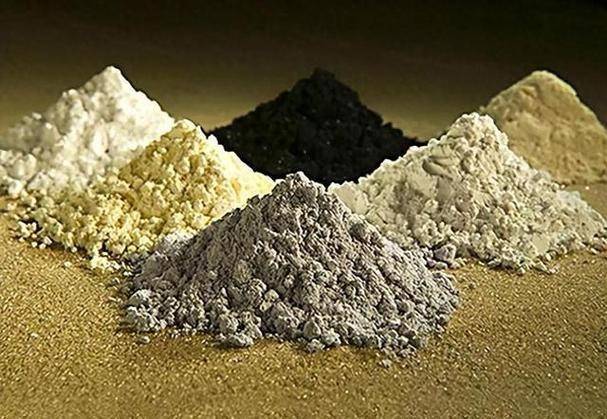
有色金属全品种会议
2025-12-03 02:12
Summary of Key Points from Conference Call Records Industry Overview: Non-Ferrous Metals Electric Vehicles and Energy Storage - Domestic electric vehicle penetration rate is rapidly increasing, expected to reach 53.5% by September 2025, while global penetration varies significantly, indicating growth potential outside China and Europe [1][2] - Policy support for energy storage is strengthening, with projections for new energy storage installations to reach 180 million kilowatts by 2027, driving project investments of 250 billion yuan [1][2] Lithium Supply and Demand - Due to low lithium carbonate prices in the past two years, global lithium mining companies are expected to reduce capital expenditures in 2024, potentially slowing future production [1][3] - Lithium supply growth is projected to fall below 20% for the first time in 2026, while demand remains strong, leading to a significant reduction in surplus lithium in the market next year [1][3] Aluminum Market Dynamics - The electrolytic aluminum market is benefiting from rising copper prices, with aluminum prices approaching 21,000 yuan, and domestic capacity utilization rates are high [1][4] - The impact of tariffs between China and the U.S. on the aluminum sector is limited, with China exporting approximately 800,000 tons of aluminum products to the U.S. annually, accounting for about 5% of total aluminum demand [4][6] Alumina Price Impact - The decline in alumina prices has positively affected companies with low self-sufficiency rates, such as Zhongfu Industrial, which has shown excellent profit performance [1][7] Key Market Trends and Projections Lithium Market Outlook - Recent rebounds in lithium futures indicate strong downstream demand, with expectations for lithium prices to remain supported in the short term [2][3] - The anticipated increase in energy storage demand and electric vehicle penetration are primary drivers for lithium demand [2][3] Copper Price Fluctuations - Copper prices are currently volatile, influenced by macroeconomic factors, with expectations for a bullish window in the first half of 2026, potentially reaching historical highs of 12,000 to 14,000 USD [8][9] Tin Market Insights - Tin is classified as a critical mineral resource, with supply tightness driven by China's export controls and global supply constraints [2][15] - Strong demand for tin solder, particularly from the semiconductor sector, is expected to continue [15] Rare Earths and Tungsten - Recent price corrections in rare earths are attributed to market sentiment and export controls, with future price movements dependent on the stabilization of neodymium and praseodymium prices [18][19] - The tungsten market has seen price corrections followed by a rebound, with recommendations for companies like Xiamen Tungsten and others due to their growth potential [22] Investment Recommendations - High-dividend stocks such as China Aluminum and Zhongfu Industrial are highlighted as attractive investment opportunities [1][7] - Companies in the lithium sector, including Ganfeng Lithium and Tianqi Lithium, are recommended for their growth potential in solid-state batteries and energy storage [5] - Focus on companies like Huayou Cobalt and Luxshare Precision in the cobalt sector, which are expected to see significant profit growth [14] Conclusion - The non-ferrous metals sector is poised for growth driven by electric vehicle adoption, energy storage demand, and strategic supply constraints. Investment opportunities exist across various sub-sectors, particularly in lithium, aluminum, and cobalt, with a focus on companies demonstrating strong fundamentals and growth potential.
美澳签署85亿美元矿产协议,一年后稀土多到无处安放?
Sou Hu Cai Jing· 2025-10-21 14:52
Core Points - The agreement between the US and Australia involves an investment of $8.5 billion focused on critical minerals and rare earths, with both countries committing over $1 billion each for initial projects within the next six months [3][5] - The agreement aims to enhance economic and defense cooperation between the two nations, with the US Department of Defense funding a modern smelting plant in Western Australia to produce 100 tons of gallium annually [3][5] - Australia, as the fourth-largest rare earth resource country, seeks to leverage its resources to deepen ties with the US, especially as it becomes the only country outside China capable of producing heavy rare earth elements [5][7] Strategic Background - The agreement is part of a broader strategy to reduce reliance on Chinese supply chains, as 87% of the supply chains for over 1,000 US weapon systems depend on Chinese suppliers [7] - The acceleration of this agreement was triggered by China's export controls on gallium and germanium in 2024, highlighting the urgency of diversifying supply sources [7] Reality Challenges - China dominates the rare earth industry not only in mining but also in refining, holding 92% of the global rare earth refining capacity as of 2023 [9] - The largest US rare earth company, MP Materials, faces challenges as 80% of its revenue comes from exports to China, which are hindered by a 125% retaliatory tariff [9] - Cost issues are significant, with the average selling price of praseodymium-neodymium oxide from the Mountain Pass mine in the US being 18% lower than production costs, leading to a halt in expansion plans for the only large-scale separation plant in North America [11] Future Outlook - The US-Australia agreement is set against a market largely controlled by China, which has held the top position in rare earth patent applications for 14 consecutive years, accounting for 50% of the global total [12] - The development of alternative technologies, such as sodium batteries by CATL, could disrupt the current resource dependency landscape, as sodium battery costs are only one-tenth of lithium [12] - The success of the US-Australia critical minerals agreement will depend on resolving radioactive waste treatment technology for heavy rare earth separation within three years and implementing subsidy mechanisms to offset China's price advantages [15]
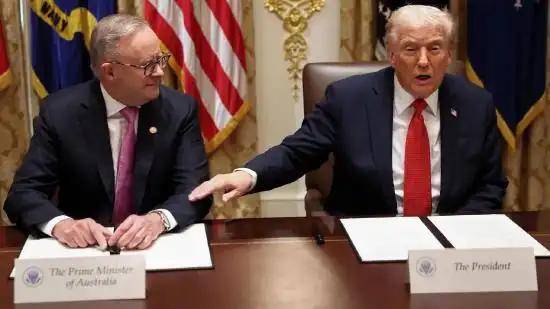
美澳 85 亿美元稀土协议达成,想要打破中国稀土垄断?特朗普这下乐坏了:多到根本用不完
Sou Hu Cai Jing· 2025-10-21 14:33
Core Insights - The recent signing of an $8.5 billion rare earth supply agreement between the U.S. and Australia has garnered significant attention, with U.S. President Trump expressing optimism about the potential for abundant rare earth supplies in the near future [1] Industry Overview - Historically, China has faced challenges in the rare earth sector, possessing rich reserves but lacking the technology to process them, leading to low export prices and reliance on foreign processed products [3] - A breakthrough in rare earth separation technology in the 1970s, led by Chinese scientist Xu Guangxian, allowed China to overcome foreign monopolies and establish itself as a leader in rare earth separation [4] Current Market Position - China currently dominates the global rare earth market, producing approximately 70% of the world's rare earth minerals and refining over 90% of rare earth products, making it the only country capable of supplying all 17 rare earth metals [4] - The establishment of a complete industrial chain from mining to high-purity products has solidified China's position in the rare earth sector, with significant advancements in downstream applications such as permanent magnets and catalytic materials [4] Regulatory Environment - China has implemented stricter export controls on rare earths and related technologies, enhancing its leverage in international trade and making it difficult for other countries to challenge its dominance [6] Competitive Landscape - The U.S.-Australia rare earth agreement, while ambitious, faces significant challenges in breaking China's long-established dominance, which is supported by decades of technological and policy development [7] - The complexities of technology, cost, and talent present substantial barriers for the U.S. and Australia in their efforts to compete with China's rare earth capabilities [7] Strategic Recommendations - In the context of global economic integration, collaboration rather than confrontation may be a more effective approach for the U.S. and Australia to engage with China in the rare earth sector, promoting resource allocation and joint development [7]
全美沦陷!稀土新规第九天,美高层纳闷了!美国也没想到,8年过去了稀土还是没有突破
Sou Hu Cai Jing· 2025-10-21 13:37
Core Insights - A new regulation in a certain country regarding rare earth exports has caused significant disruption in the U.S., leading to protests involving over 7 million people across all 50 states [1] - The U.S. has long relied on imported rare earth resources for high-end manufacturing but has failed to overcome technological bottlenecks, contrasting sharply with other countries that have made rapid advancements in critical areas like semiconductors [1] - The U.S. rare earth industry faces a dual crisis: a lack of technological accumulation and talent, with R&D stagnating for over 8 years, and the outsourcing of the complete supply chain, resulting in high costs for rebuilding domestic capabilities [1] - The global rare earth market has fundamentally changed, with the certain country maintaining dominant control through patent protections and technical review mechanisms, making it unlikely for the U.S. to replicate a complete production system even in 10 years [1] - There is a suggestion that if the U.S. wishes to compete internationally, it should first learn relevant languages and contract norms instead of merely criticizing others for perceived discourtesies [1][3]

Investor Presentation_ 中美变局下的经济展望
2025-10-21 13:32
Summary of Key Points from the Conference Call Industry Overview - The report focuses on the economic outlook under the changing dynamics between China and the United States, particularly in the context of the Asia Pacific region [2][3]. Core Economic Insights - The actual GDP growth rate for the year is expected to reach 4.8%, with a decline in growth anticipated in the second half of the year [7][8]. - The persistent issue of deflation remains a significant challenge, with nominal GDP weakening affecting wage growth [17][18]. - The fiscal impulse has weakened since August, leading to a rapid decline in infrastructure investment [11][12]. Investment and Consumption Trends - Infrastructure investment growth rates have shown a downward trend across various sectors, including utilities and transportation [13]. - Consumer sentiment has deteriorated, with a notable increase in youth unemployment rates [22][24]. - Retail sales, excluding old-for-new products, have shown a significant decline, particularly in housing-related consumption and automobiles [19]. Export Performance - China's export performance has exceeded expectations, benefiting from supply chain advantages, despite a noticeable decline in exports to the U.S. [26][27]. - Exports to non-U.S. regions have remained strong, indicating resilience in the face of trade tensions [26]. U.S.-China Trade Relations - Recent developments include China's expansion of rare earth controls and the U.S. threatening to impose 100% tariffs [30][31]. - Ongoing bilateral consultations are noted, with both sides expressing the need to avoid new restrictive measures [31][32]. - The potential scenarios for U.S.-China relations range from tactical escalations to long-term economic decoupling [34][36]. Rare Earth and Technology Controls - The tightening of rare earth controls by China may accelerate the global shift away from reliance on Chinese supplies [41]. - The U.S. has intensified technology controls, particularly in the semiconductor sector, where China's self-sufficiency remains low [46]. Structural Economic Challenges - The high savings rate in China reflects deep-seated structural imbalances in the economy, with a significant portion of savings concentrated in bank deposits [83][85]. - The report emphasizes the need for consumption to rebalance the economy, with social security reforms being crucial for increasing consumption's share in GDP [66][63]. Policy Recommendations - A comprehensive fiscal stimulus plan of approximately 10 trillion RMB is proposed to boost consumption and support economic recovery [51]. - Structural reforms are necessary to address the systemic tendencies of overcapacity and improve resource allocation efficiency [108]. Real Estate Market Insights - The real estate sector is still in a phase of adjustment, with new construction activity having largely completed its quantitative adjustments, while price adjustments remain uncertain [78]. - The report suggests that real estate inventory reduction will serve social welfare rather than solely support real estate companies [80]. Conclusion - The overall economic outlook remains cautious, with significant challenges posed by deflation, structural imbalances, and geopolitical tensions. The emphasis on reforms and fiscal measures is critical for stabilizing and stimulating the economy moving forward [7][66][51].
Rare-Earth Stocks Are Hot. How Trump, China Can Drive Them Even Higher.
Barrons· 2025-10-21 12:25
Investors are watching how the U.S. government's industrial policy might benefit companies. ...
美澳签署矿产协议,特朗普:一年后,美国稀土将多到用不完
Sou Hu Cai Jing· 2025-10-21 11:57
Group 1 - Australia has signed an $8.5 billion mineral and rare earth supply agreement with the U.S., which is being promoted as a milestone to break China's monopoly [1][3] - The U.S. plans to invest $3 billion in Australian rare earth mines within six months and develop $53 billion worth of minerals, including a gallium processing plant [3][4] - Despite the agreement, Australia only holds about 3% of global rare earth reserves, while China controls nearly 90% of the refining capacity, indicating a significant gap in processing capabilities [3][6] Group 2 - The U.S. rare earth company MP Materials relies on Chinese technology for deep processing, and historically, 90% of Australia's rare earth ore has been sent to China for processing [4][6] - Building a factory capable of producing high-purity rare earth oxides will take at least three years and cost over 30% more than in China, highlighting the challenges in establishing a self-sufficient supply chain [6][9] - The U.S. military's current inventory of samarium-cobalt magnets is only sufficient for six months of production, while the new gallium processing plant in Australia will not begin trial production until 2025 [9][11] Group 3 - The agreement between Australia and the U.S. is seen as a strategic move to balance national security and economic interests, with Australia trading rare earth agreements for U.S. support in building strategic nuclear submarines [11][13] - China's ability to adjust the market through strategic reserves and accelerate high-end application research in rare earths poses a long-term challenge to the U.S.-Australia alliance [11][13] - The essence of the rare earth competition transcends resource acquisition, becoming a test of industrial system maturity, with China's established industrial network unlikely to be dismantled by recent agreements [13]
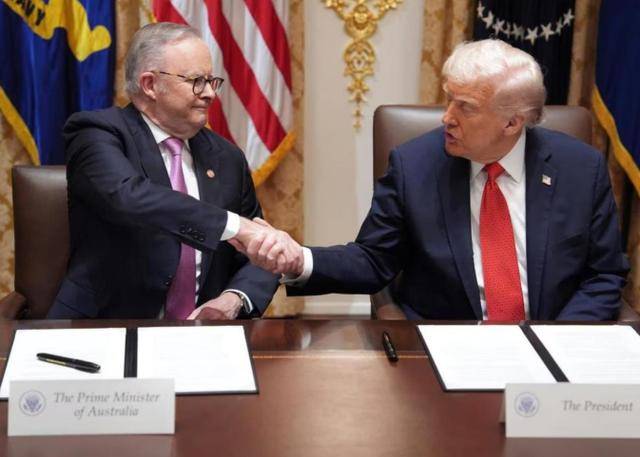
85 亿美元落定!美澳达成稀土合作协议,目标直指中国垄断,特朗普乐开了花:多到用不完
Sou Hu Cai Jing· 2025-10-21 11:51
Core Insights - The signing of an $8.5 billion rare earth cooperation agreement between the U.S. and Australia highlights the strategic importance of rare earth elements in the context of global high-tech industry growth and U.S. concerns over China's dominance in this sector [1][3][9] Investment and Financial Commitment - Both the U.S. and Australia will invest over $1 billion each in the first six months to kickstart initial cooperation projects [3] - The two countries plan to jointly invest over $3 billion in key mineral projects within the same timeframe [3] - The U.S. Export-Import Bank will issue seven financing letters totaling over $2.2 billion, potentially leveraging up to $5 billion in investments [3] Project Focus and Development - The cooperation will focus on Australia's rich rare earth resources, particularly the Nolans project in the Northern Territory, which produces neodymium for night vision devices and missiles [3][4] - Additional projects in Victoria, Queensland, and New South Wales will involve the production of titanium and zircon, applicable in aerospace, medical, and transportation sectors [4] - Development of the Queensland graphite mine, the world's third-largest, could significantly alter the graphite supply landscape [4] Supply Chain and Industrial Strategy - The agreement includes plans to build refining facilities in Australia, with the U.S. Department of Defense funding a high-end gallium refining plant in Western Australia, designed to produce 100 metric tons annually [6] - This refining facility is crucial for the U.S. defense and high-tech industries, as gallium is a key material for radar and electronic devices [6] Market Dynamics and Competitive Landscape - China holds a dominant position in the global rare earth market, with 49% of the world's reserves and 69% of production as of 2024, making it a critical player in the supply chain [6][7] - Australia, while rich in rare earth resources (estimated at 3% to 4% of global total), lags behind China in mining and refining capabilities [7] - The U.S.-Australia agreement aims to reduce reliance on Chinese rare earths and establish an independent supply chain, reflecting a strategic move in the context of U.S.-China competition [9]