美妆

Search documents
创新消费力|专访国务院发展研究中心市场经济研究所研究员王微:从商品到服务 消费市场进入深度调整期
Bei Jing Shang Bao· 2025-08-05 08:33
Core Insights - The Chinese consumption market is undergoing a significant structural transformation, shifting from goods consumption to service consumption, which presents both new growth opportunities and challenges [1] - The growth rate of social retail sales (社零额) has been declining, reflecting changes in economic development stages and consumption structure [1][5] - Service consumption is becoming a major growth driver, with its share in total household consumption expected to reach 47% by 2024 [1][4] Consumption Market Trends - The importance of consumption in the economy has been increasingly recognized, with policies aimed at boosting consumption being prioritized at both national and local levels [4] - New trends include a stable growth rate, emergence of new consumption drivers, and a shift from goods to service consumption, with digital and green consumption growing rapidly [4][7] - In Beijing, service consumption accounts for over 50% of household spending, with a projected growth of 6.1% in service consumption in 2024 [4] Changes in Social Retail Sales Growth - The decline in social retail sales growth is attributed to the transition of the economy from high-speed to medium-speed growth, alongside a shift in consumption structure [5] - The long-term trend indicates that service consumption will exceed 50% of household spending, becoming a primary source of consumption growth [5] Contribution of Consumption to Economic Growth - Consumption has become a more significant driver of economic growth compared to investment, especially in the context of uncertainties in international trade [6] - Prior to 2019, final consumption contributed over 50% to GDP growth, but recent fluctuations due to the pandemic have posed new challenges [6] Emerging Consumption Dynamics - Despite a slowdown in traditional consumption growth, new dynamics such as green and digital consumption are rapidly expanding [7][8] - The retail sales of new energy vehicles are projected to exceed 10 million units in 2024, marking a 40.7% year-on-year increase [8] Policy Support and Market Mechanisms - Recent years have seen a surge in consumption-boosting policies, with coordinated efforts across various government departments [9] - Market mechanisms play a crucial role in matching supply and demand, but challenges remain in addressing the mismatch between homogeneous supply and diverse consumer needs [10] Challenges Facing the Consumption Market - Key challenges include employment and income issues, which significantly impact consumer confidence and spending capacity [12] - The traditional supply model struggles to meet the diverse demands of consumers, and institutional barriers in service sectors like education and healthcare hinder growth [12] Future Outlook - The consumption market is at a critical juncture, requiring comprehensive reforms in statistical systems, governance, and corporate structures to fully realize its potential [13]


封关已确定,美妆消费要变天了!
Sou Hu Cai Jing· 2025-08-05 04:05
Core Viewpoint - The official announcement of the Hainan Free Trade Port's full island closure operation starting December 18 signifies the establishment of China's largest free trade port, enhancing its international market connectivity and attracting global quality resources [1][3]. Group 1: Impact on the Beauty Industry - Hainan has become a crucial duty-free shopping destination for international beauty brands, with a total duty-free shopping amount of 250.1 billion yuan since the implementation of the duty-free policy in April 2011, where cosmetic products account for over 50% of sales [3]. - The "closure" refers to designating Hainan as a "domestic outside" area, allowing for zero tariffs on imported goods while maintaining customs management for goods entering other domestic regions [3][4]. - The range of zero-tariff products will expand from 1,900 to approximately 6,600 tax items, covering 74% of all product categories, which is an increase of nearly 53 percentage points compared to before the closure [6]. Group 2: Cost Reduction and Market Competitiveness - The elimination of import tariffs on cosmetics will directly reduce import costs for companies, with the lowest most-favored-nation tax rate for skincare products being 1% and up to 6.5% for other beauty products [7]. - The processing and value-added policy allows goods processed in Hainan with over 30% imported materials to enter the mainland exempt from import tariffs, only subject to value-added and consumption taxes, enhancing market competitiveness [7]. - As of March 2023, the value of processed goods for internal sales in Hainan reached 7.546 billion yuan, with an estimated tariff exemption of about 601 million yuan [7]. Group 3: Strategic Adjustments by International Brands - Major international beauty brands have already begun to strengthen their presence in Hainan, with several opening duty-free stores in recent years, including Kao, Shiseido, L'Oréal, Estée Lauder, and Procter & Gamble [8]. - The closure of Hainan is seen as a pivotal moment for international beauty brands in China, shifting focus from "traffic competition" to "value cultivation," with the ability to convert policy benefits into brand assets being crucial for future competitiveness [10]. Group 4: Opportunities for Domestic Brands - The closure presents multifaceted opportunities for domestic beauty brands, allowing them to reduce raw material costs through processing policies and enhance their high-end image via duty-free channels [12]. - Domestic brands can leverage Hainan as a global launchpad, establishing a model of "R&D in Hainan, manufacturing in the mainland, and global sales" [12]. - However, challenges remain, including the need for domestic brands to differentiate their products in a competitive market dominated by international players [12].

逸仙电商上涨5.58%,报9.175美元/股,总市值8.46亿美元
Jin Rong Jie· 2025-08-04 14:22
Core Viewpoint - Yatsen Holding Limited (YSG) shows positive financial performance with a significant increase in net profit and a rise in stock price, indicating potential growth in the beauty market [1][2]. Financial Performance - As of March 31, 2025, Yatsen's total revenue reached 834 million RMB, reflecting a year-on-year growth of 7.78% [1]. - The company's net profit attributable to shareholders was -5.303 million RMB, which represents a substantial year-on-year increase of 95.74% [1]. Stock Market Activity - On August 4, YSG's stock price increased by 5.58%, closing at $9.175 per share, with a trading volume of $2.0324 million and a total market capitalization of $846 million [1]. Upcoming Events - Yatsen is scheduled to release its fiscal year 2025 interim report on August 19, with the actual disclosure date subject to company announcement [2]. Company Overview - Yatsen Holding Limited, registered in the Cayman Islands, operates primarily through its subsidiary Guangzhou Yatsen E-commerce Co., Ltd., which was established in 2016 and is a leading player in the Chinese beauty market [2]. - The company offers a range of high-growth cosmetic and skincare brands, including Perfect Diary, Little Ondine, and DR.WU, and engages customers through both online and offline channels across major e-commerce and social platforms in China [2].

激战超高端,爱马仕、LV靠美妆“御寒”没戏?
FBeauty未来迹· 2025-08-04 13:51
Core Insights - The luxury goods industry is undergoing a significant adjustment, with global market growth stagnating for two consecutive years and a notable decline in the Chinese market, reflecting a challenging environment since the 2008 financial crisis [2][4][5] Market Performance - According to Bain & Company, the luxury goods market is expected to experience zero growth in 2025, with the Chinese luxury market facing a dramatic decline of 18% [5][8] - The luxury sector's core businesses, such as leather goods and jewelry, are under pressure, while the beauty segment shows slight growth, indicating a shift in consumer preferences [4][10] Consumer Behavior - The Z generation's luxury spending dropped by 7% in 2024, equating to a market evaporation of $57 billion, as consumers become more discerning and shift their spending towards more stable assets like gold and jewelry [5][8] - Chinese consumers are increasingly rational in their luxury spending, with only 26% of high-end consumers planning to increase their spending in 2025, a significant drop from previous years [8][9] Brand Strategies - Major luxury brands are reassessing their strategies, with LVMH's revenue declining by 4% in the first half of 2025, prompting the company to consider selling its designer brand Marc Jacobs to alleviate performance pressure [11][17] - The beauty segment is emerging as a potential new growth engine for luxury groups, with brands like LVMH and Kering investing in beauty products to attract younger consumers [20][22] Competitive Landscape - The luxury beauty market is witnessing a transformation, with traditional high-end brands facing growth challenges while ultra-high-end brands maintain stable growth [21][29] - Local brands are gaining traction in China, appealing to consumers seeking personalized and culturally relevant products, which poses a challenge to established luxury brands [9][29] Future Outlook - The luxury goods industry must adapt to changing consumer preferences and market dynamics, focusing on emotional engagement and experiential offerings to navigate the current downturn [9][20][29]
吴声2025年度演讲:场景革命十年,哲学生活方式到来
新消费智库· 2025-08-04 13:03
Core Viewpoint - The article emphasizes the concept of "scene creation" and the importance of reconstructing meaning in the context of AI and new consumption patterns, highlighting the need for businesses to design specific scenarios to engage users effectively [4][20][26]. Group 1: Scene Creation and Meaning Reconstruction - The "scene revolution" over the past decade has driven the evolution of new species in business, with a focus on designing impactful scenarios that resonate with users [12][19]. - The concept of "刹那涌现" (momentary emergence) suggests that the evolution of AI applications will occur through meticulously designed scenarios, which are essential for understanding the rapid changes in the business landscape [20][24]. - The article outlines four key concepts for reconstructing meaning: NOW (the power of connection), FLOW (immersive human-machine interaction), HERE (narratives that transcend presence), and EGO (the core question of self) [26][30][34]. Group 2: Case Studies of Scene Brands - The evolution of the brand "三翼鸟" (Three Wings Bird) illustrates the shift from merely offering products to providing personalized home scene customization solutions, emphasizing the importance of understanding user needs [15][19]. - "红星美凯龙" (Red Star Macalline) has transformed into an "AI home life destination," integrating home appliances, furniture, and decoration into a cohesive experience, showcasing the power of scene branding [17][19]. - The article highlights "小红书" (Xiaohongshu) as a platform that redefines connection through user-generated content, emphasizing the importance of real-time engagement and community building [34][35]. Group 3: The Role of AI in Scene Creation - The emergence of AI-driven solutions is reshaping traditional business models, as seen in companies like "星星充电" (Star Charging), which integrates dynamic connections in digital energy management [45][46]. - The article discusses how AI is enhancing human-machine interaction, with examples of companies like 联想 (Lenovo) developing intelligent terminals that facilitate seamless user experiences [58][60]. - The concept of "物理AI" (Physical AI) is introduced, where AI technologies are applied to real-world interactions, enhancing the user experience in everyday environments [63][64]. Group 4: The Future of Scene Brands - The article posits that the future of scene brands lies in their ability to create meaningful connections and experiences that resonate with users on a deeper level, moving beyond mere functionality [19][24]. - The rise of "潮玩" (trendy toys) as a form of emotional commerce reflects a shift towards products that express individuality and cater to specific emotional needs [90][91]. - The concept of "空间网络的生态IP" (space network ecological IP) is introduced, suggesting a model where brands can replicate and localize their presence across different markets, enhancing their relevance and impact [97].

一个包装瓶,如何让欧莱雅和LVMH成“盟友”?
Xin Lang Cai Jing· 2025-08-04 06:23
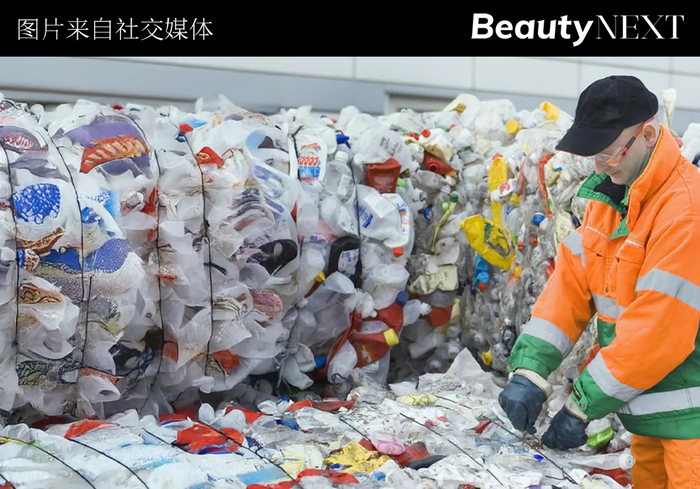
Core Insights - The beauty industry is undergoing a transformation where packaging, traditionally seen as disposable, is being redefined as a durable good within a circular economy framework [1][2][5] - France is leading the way with a pilot project involving six perfume brands aimed at reusing bottles, marking a significant shift towards sustainability in high-end beauty [2][5] - The French law on waste reduction and circular economy mandates increasing reuse rates, pushing the beauty industry to rethink its operational models [2][24] Group 1: Industry Initiatives - Six major brands have formed alliances to promote sustainability, including the establishment of organizations like TRASCE and The Value of Beauty Alliance [2][5] - The "La Boucle Beauté" project, involving brands like Lancôme and Chanel, aims to test a large-scale perfume bottle reuse system [5][8] - The initiative includes a logistics system for collecting and cleaning used bottles, utilizing innovative CO2 cleaning technology to minimize environmental impact [8][12] Group 2: Regulatory Environment - The French "Anti-Waste and Circular Economy Law" (AGEC) sets specific reuse targets for packaging, requiring 7% reuse by the end of 2025 and 10% by 2027 [2][24] - The law includes over a hundred obligations and prohibitions aimed at eliminating single-use plastics by 2040, with phased targets for reduction, reuse, and recycling [24][26] Group 3: Challenges and Opportunities - The beauty industry generates millions of tons of packaging waste annually, with 95% of containers discarded after a single use, highlighting the need for a shift towards reuse [11][12] - The transition from recycling to reuse presents challenges in product design, cleaning standards, and logistics, requiring a collaborative ecosystem [12][14] - In China, the lack of mandatory policies and infrastructure for reuse presents a significant barrier, with current practices largely focused on recycling rather than establishing a verified reuse system [26][30] Group 4: Consumer Perception - Consumer acceptance of reused products is a critical barrier, as perceptions of hygiene and value affect willingness to participate in reuse programs [32][33] - Education and trust-building measures are essential to shift consumer mindsets towards embracing reused beauty products [32][33]
明星代言井喷,美妆集体患上焦虑症?
Xin Lang Cai Jing· 2025-08-04 06:13
Core Insights - The beauty industry is experiencing an unprecedented surge in celebrity endorsements, with over a hundred announcements in the first half of 2025, indicating a shift towards a "short and quick" marketing strategy [1][4][34] - The reliance on celebrity endorsements has intensified, with brands struggling to define their identity while depending heavily on star power for sales [1][34] Group 1: Trends in Celebrity Endorsements - The endorsement landscape has become fragmented, with brands seeking to reach broader audiences by employing multiple types of endorsements such as "ambassadors" and "friends" [3][4] - A significant portion of endorsements (approximately 21%) are categorized as "ambassadors" and "friends," while 24% belong to niche endorsements [4] - The trend of celebrities endorsing multiple brands has become common, leading to frequent "overlap" where one celebrity represents various products across different categories [18][28] Group 2: Impact of Endorsements on Product Launches - Nearly 90% of celebrity endorsements are closely tied to new product launches, serving as a key promotional strategy for brands [15][34] - The beauty industry is witnessing a rise in endorsements for niche categories like fragrances, with brands like Jo Malone and Mugler actively engaging younger celebrities to enhance their market presence [22][28] Group 3: Market Dynamics and Brand Strategies - The beauty sector is under pressure to deliver quick results, leading to a focus on celebrity endorsements as a rapid solution for driving sales and traffic [35][37] - The internal pressure for performance metrics has resulted in brands increasingly relying on celebrity endorsements as a primary strategy for achieving sales targets [37][38] - The current market environment has made it more cost-effective for brands to secure endorsements in the first half of the year, as prices for celebrities have decreased due to oversupply and market fluctuations [43][44] Group 4: Evolution of Endorsement Strategies - The nature of endorsements has shifted from long-term brand-building partnerships to short-term sales-driven campaigns, with contracts often lasting only 3-6 months [47][50] - Brands are now prioritizing celebrities based on their ability to drive sales rather than their alignment with brand values, marking a significant change in endorsement criteria [47][50] - The rise of athlete endorsements is notable, as brands seek to leverage the authenticity and positive image associated with sports figures [28][31] Group 5: Future Directions for Brands - To build lasting consumer relationships, brands must move beyond reliance on celebrity endorsements and focus on creating emotional connections and community engagement [58][61] - Strategies such as IP collaborations, content production, and enhanced customer relationship management are essential for fostering long-term brand loyalty [58][59] - The shift from a "celebrity-centric" approach to a "community-centric" model may provide a more sustainable path for brands to connect with consumers [61]



报告丨2025年下半年策略展望:特朗普2.0与“十五五规划”下的市场将如何演绎?
Xin Lang Cai Jing· 2025-08-04 02:00
Core Viewpoint - The article discusses the implications of U.S. foreign policy and trade dynamics, particularly in the context of U.S.-China relations, highlighting potential economic bifurcation and investment opportunities in technology sectors due to shifting geopolitical landscapes [2][5][11]. Group 1: U.S.-China Trade Dynamics - The trade relationship between the U.S. and China is experiencing a shift, with China taking a more dominant role in negotiations compared to previous years [2][5]. - The potential for a "tariff spiral" is noted, drawing parallels to historical events in the 1930s, which could impact global trade and economic conditions [1][5]. - The U.S. currently accounts for 27% of global consumption, with strong performance in the Nasdaq indicating robust corporate earnings [6][20]. Group 2: Investment Opportunities - The demand for AI technologies is experiencing exponential growth, benefiting U.S. tech giants and potentially impacting A-shares in sectors like optical modules [2][20]. - The "15th Five-Year Plan" in China emphasizes investment in technology, with high demand for computing power, servers, and semiconductors expected to persist throughout the year [2][18]. - The article suggests a focus on defensive asset classes such as bonds and utility stocks, as well as sectors related to security and technology, in light of geopolitical tensions [8][11]. Group 3: Economic Outlook - The article indicates that corporate profitability may face deflationary pressures due to increased costs from tariffs and trade restrictions [8][11]. - The overall economic environment is characterized by high volatility and structural rotation, suggesting a need for strategic investment approaches [8][11]. - The anticipated return of capital to the U.S. markets is expected to favor domestic technology and debt markets, aligning with the "15th Five-Year Plan" objectives [18][20].
爱马仕、普拉达业绩增长不佳;加拿大鹅喜获高增长|看时尚
2 1 Shi Ji Jing Ji Bao Dao· 2025-08-04 01:35
Group 1: Company Performance - Hermès reported a 9% sales growth in Q2, reaching €3.9 billion, with all regions showing growth. Leather goods sales increased by 14.8% to €1.76 billion, while watch sales declined by 5.5% to €130 million [14] - Adidas achieved a 7.3% increase in net sales for H1, totaling €12.1 billion, with a gross margin rise of 0.9 percentage points to 51.9% and operating profit up 70% to €1.2 billion [2] - Prada's H1 revenue reached €2.74 billion, marking a 9.1% increase at constant exchange rates, with retail sales up 10.1% to €2.453 billion [2][3] Group 2: Strategic Developments - Kering announced a €20 million signing bonus for new CEO Luca de Meo, alongside a nearly €9 million annual salary, which has positively impacted the company's stock price, rising 24% since the announcement [3] - PUMA appointed Andreas Hubert as COO, effective September 1, to streamline operations by integrating procurement, IT, and logistics under one role [6] - Arena appointed Mark Pinger as the new Chief Brand Officer, effective October 1, leveraging his background in sports and experience in strategic roles [7] Group 3: Market Trends and Challenges - L'Oréal's Q2 sales grew by 1.6% to €22.47 billion, with an operating margin of 21.1%, indicating a recovery from previous performance issues [8] - Canada Goose reported a strong start to the new fiscal year with a 22.4% revenue increase to CAD 107.8 million, showcasing brand resilience [9] - SMCP's sales grew by 2.7% to €601.1 million, with all regions outside Asia showing growth, indicating a stable performance despite regional challenges [11] Group 4: Leadership Changes and Impacts - Jil Sander's CEO Serge Brunschwig resigned after six months, indicating potential instability in leadership [13] - Nicolas Puech, the largest individual shareholder of Hermès, no longer holds shares, raising concerns about brand image and market confidence [5][6]

爱马仕、普拉达业绩增长不佳;加拿大鹅喜获高增长
2 1 Shi Ji Jing Ji Bao Dao· 2025-08-04 01:29
Group 1: Financial Performance - Hermès reported a 9% sales growth in Q2, reaching €3.9 billion, with all regions showing growth [15] - Adidas achieved a 7.3% increase in net sales to €12.1 billion, with a significant 70% rise in operating profit to €1.2 billion [2] - Prada's net revenue for H1 reached €2.74 billion, reflecting a 9.1% growth at constant exchange rates [3] - Canada Goose experienced a robust start to the fiscal year with a 22.4% increase in global revenue to CAD 107.8 million [10] - L'Oréal's sales for H1 were €22.47 billion, with a 1.6% growth, and an operating profit margin of 21.1% [9] - SMCP reported a 2.7% increase in sales to €601.1 million, with growth in all regions except Asia [11] Group 2: Management Changes - Kering appointed Luca de Meo as CEO, offering a €20 million signing bonus, which positively impacted the stock price [4] - PUMA appointed Andreas Hubert as COO, aiming to streamline operations by integrating various functions [8] - Arena announced Mark Pinger as the new Chief Brand Officer, effective October 1, 2025 [8] - Jil Sander's CEO Serge Brunschwig resigned after six months in the position [14] Group 3: Brand and Market Insights - The performance of Prada's main brand declined by 1.9%, while Miu Miu surged by 49.2%, indicating a divergence in brand performance [3] - Hermès' leather goods sales grew by 14.8%, while the watch segment faced challenges with a 5.5% decline [15][16] - L'Oréal's digital transformation efforts are beginning to show results, with a growth acceleration from Q1 to Q2 [9] - The luxury market is showing resilience, with brands like Canada Goose capitalizing on strong demand [10]