
信托

Search documents
上海:两家信托公司不动产信托登记成功落地
news flash· 2025-06-09 12:01
6月9日,上海信托、爱建信托各有不动产信托登记案例在上海同步成功落地,标志着我国不动产信托运 用场景进一步拓展到家庭财富定向传承、银发老人特殊需要等普惠金融领域,再次展现了信托服务民生 需求的独特价值。(上海证券报) ...
5月网络安全罚单大增,建行安阳分行、湖南资阳农商行因防计算机病毒不力被罚;邢台银行收当月最大罚单丨金融合规月报
2 1 Shi Ji Jing Ji Bao Dao· 2025-06-09 11:31
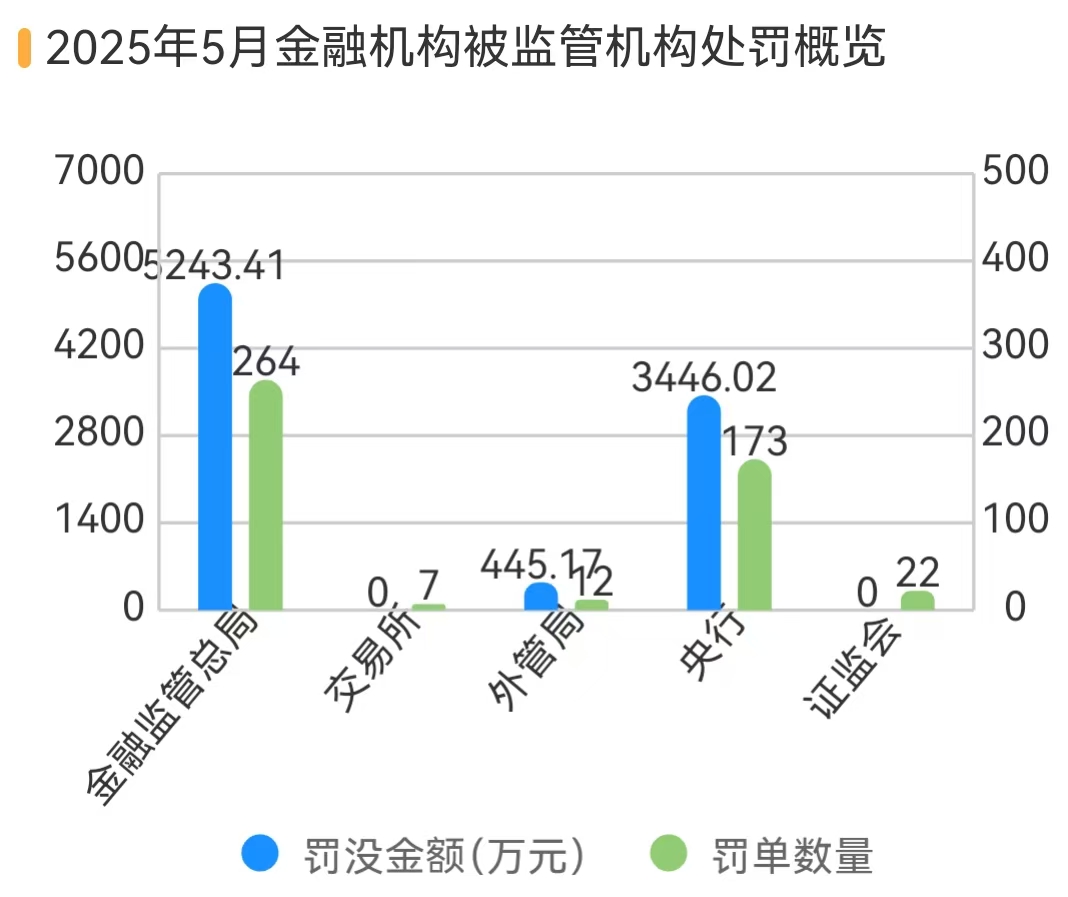
Summary of Key Points Core Viewpoint - In May, financial institutions received a total of 478 fines amounting to 91.346 million yuan, with both the number of fines and the total amount showing a month-on-month decline compared to April [1]. Group 1: Penalty Situation in May - The National Financial Regulatory Administration reduced its penalty intensity in May, with the number of fines decreasing by 18.77% and the total amount decreasing by 13.84% compared to April [2]. - The People's Bank of China (PBOC) slightly increased the number of fines by 7.45%, while the China Securities Regulatory Commission (CSRC) saw a significant decrease of 51.11% in the number of fines issued [2]. - Fines for banks, insurance companies, securities firms, and futures companies decreased by 5.8%, 26.27%, 33.33%, and 38.46% respectively compared to April [6]. Group 2: Major Fines in May - Only one fine exceeded 2 million yuan in May, with Xingtai Bank penalized 2.85 million yuan for inaccurate loan risk classification and poor management of non-performing loans [9]. Group 3: Compliance Cases in May - Xingtai Bank was fined 1.5 million yuan for engaging in arbitrage activities and failing to implement the "three checks" loan system, with eight responsible individuals also penalized [10]. - The regulatory bodies have repeatedly warned against fund arbitrage and the need for banks to set loan rates based on sustainable commercial principles [11]. Group 4: Compliance Characteristics in May - There was a significant increase in penalties related to cybersecurity and data security, with 13 fines issued, marking an 85.71% increase compared to the previous month [12]. - The PBOC issued 11 fines related to cybersecurity, while the CSRC issued two fines to futures companies [12]. - The most common violations included breaches of cybersecurity management regulations and failure to report cybersecurity incidents in a timely manner [12]. Group 5: Anti-Money Laundering Efforts - In May, the PBOC issued 133 fines related to anti-money laundering, representing a 12.71% increase from April [13]. - The most frequent violation was the failure to fulfill customer identity verification obligations, accounting for 67.67% of the fines [13]. Group 6: Penalty Rankings - Xingtai Bank had the highest penalty amount in May, receiving two fines exceeding 1 million yuan [14]. - The second highest was the Bank of Communications with a total penalty of 2.6632 million yuan, followed by Beijing Bank with 2.4 million yuan [16].

金融观察员|多项稳经济增量政策即将陆续落地;中小银行密集降息潮来袭
Guan Cha Zhe Wang· 2025-06-09 05:29
Group 1: Economic Policies and Market Trends - Multiple economic stabilization policies are expected to be implemented soon, covering key areas such as "two new" and "two heavy" policies, as well as stabilizing foreign trade [1] - The "two new" policies have been a significant driver for expanding domestic demand, with sales of digital products benefiting from new purchase subsidies exceeding 140 billion yuan [1] - Retail sales of home appliances have maintained double-digit growth for eight consecutive months, and investment in equipment and tools has increased by 18.2% year-on-year in the first four months of the year [1] Group 2: Banking Sector Developments - A wave of interest rate cuts has been initiated by small and medium-sized banks, with some fixed deposit rates falling below 1.5%, leading to a shift of funds towards the wealth management market [1] - The scale of bank wealth management reached 31.24 trillion yuan by early June, an increase of 144 billion yuan since the end of April [1] - Major wealth management firms are reducing fees to attract customers, with some products offering rates as low as 0.01% [1] Group 3: Trust and Financial Innovations - CITIC Trust has launched a bankruptcy service trust project to revitalize the Nanning Wuxiang Ocean City, which had been stagnant for five years, through judicial reorganization and substantial restructuring [2] Group 4: Regulatory Changes and Corporate Governance - Global regulatory bodies are tightening scrutiny on stablecoins, with total market capitalization surpassing 160 billion USD, and USDT holding over 70% market share [2] - Recent personnel changes at Guizhou Bank include the resignation of three directors due to "work arrangements," with new candidates proposed for board positions [4] - Several major wealth management subsidiaries have announced fee reductions, aligning with industry trends, but experts warn that relying solely on fee cuts without improving research and product quality may not sustain user engagement [4]

信托业转型任重道远,盈利风险仍需高度警觉
Di Yi Cai Jing· 2025-06-09 03:24
Core Insights - The trust industry in China is facing a dual challenge of transitioning from old profit growth points to new ones while managing existing business risks [1][2] - As of the end of 2024, the total trust assets managed by 67 companies reached 29.56 trillion yuan, marking a year-on-year growth of 23.58%, despite a significant profit decline of 45.52% to 23.087 billion yuan [1] - The shift in the trust business model from financing and asset management to asset service trusts reflects a fundamental change, but this transition is associated with lower returns, making it difficult to replicate past profit peaks [1] Industry Challenges - Many trust companies are currently experiencing a disconnect between new and old profit growth points, alongside the need to address risks from existing business operations [2] - The ongoing decline in profits may undermine the long-term development momentum of the trust industry, with an increasing number of companies facing operational challenges and liquidity risks [3] - The number of trust companies unable to disclose their 2024 annual reports has risen to 10, with 8 companies reporting losses [3] Risk Management - Trust companies are urged to accelerate the resolution of existing business risks by leveraging the advantages of the trust system and collaborating with shareholders [4] - The real estate sector and local government financing platforms, which have been heavily relied upon by the trust industry, are undergoing significant adjustments, leading to increased defaults and disputes [4] - In 2022 and 2023, 34 and 32 trust companies reported a total of 1,005 and 296 litigation cases, respectively, with the amounts involved reaching approximately 86.3 billion yuan and 72.6 billion yuan [4] Investment Strategy - Trust companies need to enhance their capabilities in equity asset investments and focus on building professional teams to adapt to the changing market [6] - The shift of trust funds from traditional sectors like real estate to capital markets is evident, but only 1.12 trillion yuan, or 5.04%, of the over 10 trillion yuan in funds directed towards securities is allocated to stocks and funds [6] - Trust companies are encouraged to utilize their proprietary funds to support key sectors like technology innovation while managing bad debt rates effectively [6] Regulatory Environment - The trust industry requires more comprehensive and definitive supporting policies to facilitate the transition from old to new growth drivers [7] - Recent pilot programs for real estate and equity trust property registration in major cities provide a framework for the industry’s development, but further improvements in cross-regional coordination and tax policies are necessary [7] - Optimizing policies and legal frameworks for trust companies' participation in capital markets can help alleviate existing barriers and create new growth opportunities [7]
又一国投系老将,履新!
Zhong Guo Ji Jin Bao· 2025-06-09 03:02
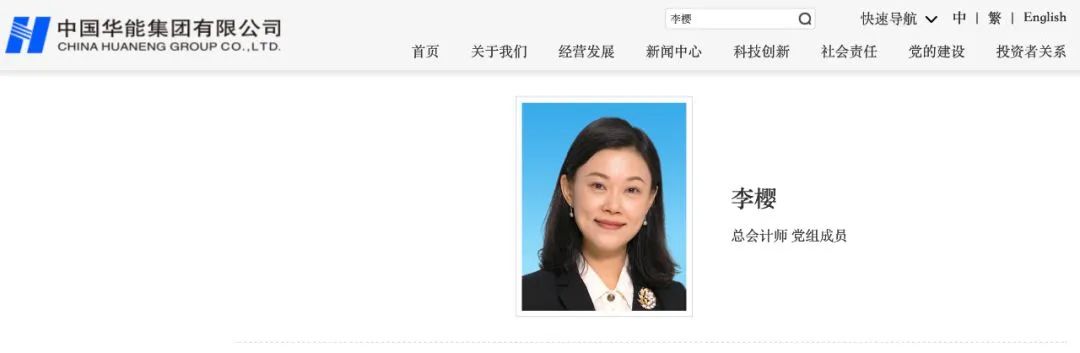
【导读】李樱履新,任中国华能集团总会计师、党组成员 见习记者舍梨 近日,中国华能集团有限公司网站"公司领导"一栏最新信息显示,李樱已任中国华能集团总会计师、党组成员。 李樱出任中国华能总会计师 公开资料显示,李樱,女,1974年生,经济学硕士,现任中国华能集团有限公司总会计师、党组成员。她曾长期在国投系企业任职,担任过国投电力控股 股份有限公司证券部经理兼证券事务代表,国投财务有限公司总经理助理、副总经理,国投资本控股有限公司副总经理、董事会秘书兼财务总监等职务, 2018年任国投资本总经理,2023年任国投泰康信托有限公司董事长,直至此次履新中国华能集团。 中国华能集团和国投集团均为中央企业,在国务院国资委2024年10月发布的98家央企名录中,中国华能和国投集团分别位列第17位、第49位。 中国华能集团创立于1985年。公司注册资本为349亿元人民币,主营业务包括电源开发、投资、建设、经营和管理,电力(热力)生产和销售,金融、煤 炭、交通运输、新能源、环保相关产业及产品的开发、投资、建设、生产、销售,实业投资经营及管理。目前,中国华能集团拥有57家二级单位、480余 家三级企业,5家上市公司(分别为华能国 ...

中国信达(01359.HK):受益经济复苏 业绩筑底
Ge Long Hui· 2025-06-09 02:03
Core Viewpoint - China Cinda is a comprehensive financial group focused on non-performing asset management, with stable total assets but declining revenue and net profit in recent years [1][2] Group 1: Business Overview - China Cinda's business includes non-performing asset management and financial services, with non-performing asset management contributing 53% and financial services 48% to revenue in the first half of 2024 [1] - The total assets of China Cinda were approximately 1.58 trillion yuan at the end of Q2 2024, with operating revenue of 37.4 billion yuan and net profit of 1.6 billion yuan in the first half of 2024 [1] Group 2: Financial Performance - The company's return on equity (ROE) was 2% in 2023 and is estimated to decline to around 1% in 2024 [1] - The forecast for net profit for ordinary shareholders from 2024 to 2026 is 2.4 billion, 4 billion, and 4.7 billion yuan, representing year-on-year growth of -43%, 67%, and 16% respectively [2] Group 3: Subsidiary Performance - China Cinda operates through four financial subsidiaries, with significant growth in the management scale of Jinda Trust and improved ROE for Jinda Financial Leasing, while Nanshan Bank faces rising non-performing loan ratios [2] - The annualized ROE for Nanshan Bank in the first half of 2024 was 5.1% [2] Group 4: Market Outlook - The company is expected to benefit from economic recovery, which may lead to a reduction in asset impairment losses and improvement in performance [2] - The estimated reasonable valuation for the company is between 1.27 and 1.62 HKD, indicating a premium of 2% to 30% relative to the current stock price [2]
中国信托资产规模29.56万亿再创新高 10万亿资金信托投向证券市场年增55%
Chang Jiang Shang Bao· 2025-06-08 23:15
Core Insights - The Chinese trust industry is undergoing structural transformation driven by capital market reforms and the new "three-category" regulations, with trust assets expected to reach 29.56 trillion yuan by the end of 2024, an increase of 5.64 trillion yuan or 23.58% from the end of 2023 [2][3] - The securities market has become the largest destination for trust funds, with a total of 10.27 trillion yuan allocated to securities (including stocks, funds, and bonds) by the end of 2024, marking a significant increase of 3.67 trillion yuan or 55.61% from the previous year [2][7] - Wealth management service trusts are increasingly important, with a total of approximately 1.03 trillion yuan in wealth management service trusts by the end of 2024, reflecting a shift in client demand towards comprehensive wealth management [5] Trust Asset Growth - Trust assets in China have shown a stable growth trend, recovering from a decline between 2017 and 2020, with significant growth resuming from 2021 onwards [3] - The implementation of the "three-category" business transformation has led to a notable change in the asset scale of the trust industry, aligning with market demand [3][4] Wealth Management Services - Wealth management service trusts have become a core focus of the trust industry's transformation, with family trusts, insurance trusts, and other personal wealth trusts showing significant balances [5] - The overall profitability of trust companies remains under pressure, with operating income of 940.36 billion yuan in 2024, a year-on-year increase of 8.89%, while total profit decreased by 45.52% to 230.87 billion yuan [5] Securities Market Investment - The securities market has emerged as the highest allocation area for trust funds, with 46.17% of total trust funds directed towards this sector [7] - Specific allocations include 7.23 trillion yuan to stocks, 3.98 trillion yuan to funds, and 9.15 trillion yuan to bonds, with respective growth rates of 22.1%, 19.38%, and 61.2% [7] Real Estate and Other Investments - Trust funds allocated to the real estate sector decreased to 840.17 billion yuan by the end of 2024, down 1.34 billion yuan from the previous year, indicating a declining trend [8] - Investments in industrial enterprises and basic industries have increased, with respective allocations of 3.97 trillion yuan and 1.6 trillion yuan, reflecting a shift in focus [8] Economic Impact - The trust industry is expected to channel 22.25 trillion yuan of funds, with 28.81% directly supporting the real economy and 46.17% indirectly through the securities market, totaling 16.68 trillion yuan [9]

实力见证!中国外贸信托入选上交所“债券双榜”
Sou Hu Cai Jing· 2025-06-07 16:46
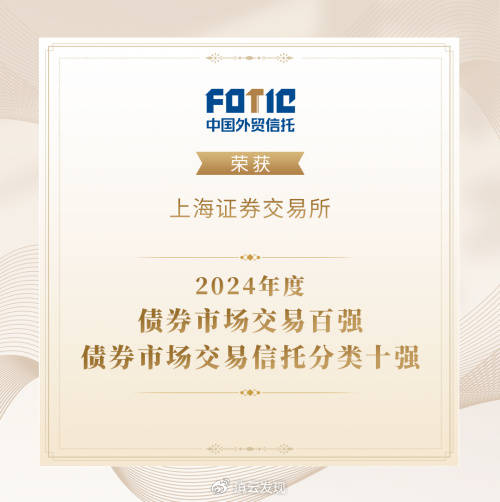
Core Viewpoint - China Foreign Trade Trust has achieved significant recognition in the bond market by being listed among the "Top 100 Bond Market Traders" and "Top 10 Trust Companies in Bond Market Trading" for three consecutive years, reflecting its strong performance and commitment to serving the real economy [1][3]. Group 1: Company Achievements - In 2024, China Foreign Trade Trust achieved a bond trading volume of nearly 820 billion yuan on the Shanghai Stock Exchange [3]. - As of the first quarter of 2025, the company held approximately 640 billion yuan in bonds issued on the Shanghai Stock Exchange, ranking among the top in trading and new bond subscription volumes among trust companies [3]. - The company has been recognized for its comprehensive service system that includes trust, fundraising, valuation, trading, risk control, and settlement, which has garnered widespread market acclaim [3]. Group 2: Future Plans - China Foreign Trade Trust aims to deepen its participation in the bond market by enhancing both the breadth and depth of its services, focusing on stable trading and responsible financial practices [4]. - The company plans to contribute to the construction of a new development pattern and promote high-quality economic development while creating long-term value for investors [4]. - The commitment to financial innovation and service to national strategies will be central to the company's future endeavors in the capital market [4].
信托业规模逼近30万亿元:新成立产品逾七成为资产服务信托
Zhong Guo Jing Ying Bao· 2025-06-06 15:47
Core Insights - The trust industry in China has seen significant growth in asset scale, reaching 29.56 trillion yuan by the end of 2024, a 23.58% increase from the end of 2023 [1][2] - Despite the growth in asset scale, the industry's profit has sharply declined by 45.52% to 230.87 billion yuan, indicating a pressing need for new revenue and profit drivers [5][6] Asset Scale and Revenue - The trust asset scale increased by 5.64 trillion yuan from the end of 2023, marking a substantial annual growth [1] - Operating income for the trust industry reached 94.036 billion yuan in 2024, up 8.89% from 86.361 billion yuan in 2023 [1][5] - The average trust business income for 57 companies was 7.81 million yuan, a decrease of 6.99% from the previous year [5] Business Transformation - The growth in asset scale is attributed to the implementation of the "Three Classification New Regulations," which has led to a shift from traditional non-standard financing to diversified asset service trusts and asset management trusts [2][3] - Asset service trusts accounted for 70% of new products and 50% of the scale of newly established products in 2024, despite their low fee structure impacting overall profitability [1][4] Specific Trust Categories - By the end of 2024, family trust balances reached 643.58 billion yuan, while insurance trust balances were 270.40 billion yuan, contributing to a total of 1.0289 trillion yuan in personal wealth trusts [2] - The administrative management service trust business had a scale of 1.8177 trillion yuan, indicating a deepening of service scenarios and the social value of trusts [3] - Asset management trusts totaled 11.39 trillion yuan, with fixed income trusts primarily invested in bond assets amounting to 9.15 trillion yuan [3] Profitability Challenges - The overall profitability of the trust industry has weakened, with a significant drop in profits due to the low fee structure of asset service trusts [5][6] - The average fair value loss for 57 companies was 94 million yuan, indicating increased pressure on revenue and profit margins [6] - The industry is urged to balance traditional and new business growth to enhance profit performance and adapt to regulatory changes [7]
透视信托业2024年发展:10万亿资金投向证券市场,转型过渡期利润近“腰斩”
Xin Lang Cai Jing· 2025-06-06 00:51
Core Insights - The trust industry in China is experiencing significant growth, with total trust assets reaching 29.56 trillion yuan by the end of 2024, an increase of 5.64 trillion yuan or 23.58% from the end of 2023 [1] - However, the total profit of the trust industry has decreased sharply to 23.09 billion yuan, a nearly 50% decline year-on-year, indicating challenges in profitability despite asset growth [1][6] Industry Overview - By the end of 2024, the trust asset scale is approaching 30 trillion yuan, reflecting a substantial change following the implementation of the "three classifications" business transformation [1] - The trust industry is adjusting to market demands, leading to a notable increase in asset scale [1] Investment Trends - In 2024, 22.25 trillion yuan of funds were allocated to trust investments, with nearly 50% (10.27 trillion yuan) directed towards the securities market, marking a 55.61% increase from 6.60 trillion yuan at the end of 2023 [2][3] - The breakdown of investments shows that 7.23 trillion yuan was invested in the stock market, 3.98 trillion yuan in funds, and 9.15 trillion yuan in bonds [2] Profitability Challenges - The trust industry's total profit for 2024 is reported at 23.09 billion yuan, a decrease of 45.52% from the previous year, highlighting a significant decline in profitability [6] - The low fee structure of asset service trusts is impacting overall profit income, necessitating a focus on improving trust business yield [6] Business Classification Reform - The recent regulatory changes have categorized trust businesses into asset service trusts, asset management trusts, and public welfare trusts, promoting a shift from traditional non-standard financing to more diversified and specialized business models [7][9] - The wealth management trust sector is seeing growth, with family trusts and insurance trusts becoming increasingly significant, reflecting the rising demand for wealth management services [8][9] Future Outlook - The trust industry is expected to continue evolving, with a focus on balancing traditional and new business growth to enhance profitability [6] - The development of asset service trusts is emphasized as a key area for future growth, aligning with the industry's core business objectives [9]