具身智能

Search documents
东莞首富完成交接班,38岁儿子接棒800亿产业帝国,重金布局AI与具身智能
21世纪经济报道· 2025-12-31 06:33
Core Viewpoint - Dongyangguang Group is undergoing a significant ownership transition as the controlling shareholder, Guo Meilan, transfers her stakes in subsidiaries to her son, Zhang Yushuang, marking a generational shift in leadership and control of the company [1][3][5]. Group 1: Ownership Structure Changes - Guo Meilan has transferred 71.75% of her shares in Luyuan Yunen Electronics and 74.63% in Luyuan Xinjing Technology to Zhang Yushuang, resulting in Zhang directly holding 99.20% and 75.00% of these companies respectively [1][3]. - Following the transfer, Zhang Yushuang indirectly holds 38.70% of Dongyangguang Group through these subsidiaries, effectively becoming the new controlling shareholder [3][5]. Group 2: Company Background and Financial Performance - Dongyangguang Group, founded in 1997, has diversified its operations into five main sectors: electronic components, high-end aluminum foil, chemical new materials, energy materials, and liquid cooling technology, with a global market share of approximately 30% in the chemical foil sector [8]. - For the first three quarters of 2025, Dongyangguang reported revenues of 10.97 billion yuan and a net profit of 906 million yuan [8]. Group 3: Strategic Developments and Future Plans - Under Zhang Yushuang's leadership, Dongyangguang is actively pursuing upgrades and strategic transformations, including investments in AI and embodied intelligence [12]. - The company has established a joint venture with Zhongji Xuchuang to enhance its capabilities in liquid cooling technology, and it has made significant investments in semiconductor technology to strengthen its competitive position [12][14]. - In a landmark move, Dongyangguang acquired all operations of Qinhuai Data in China for 28 billion yuan, marking the largest merger in the IDC industry in China [12][14].



投资人把脉2026:AI、具身智能、生物制造,或出现百亿美金超级独角兽 | 界面预言家⑥
Xin Lang Cai Jing· 2025-12-31 03:06
Core Insights - The global confidence in Chinese technological innovation is significantly recovering, with a focus on AI, robotics, and other advanced technologies [3][4][19] - Investment sentiment is shifting towards a more concentrated focus on specific sectors, particularly AI, embodied intelligence, semiconductors, and smart hardware [1][6][14] - Investors are increasingly recognizing the importance of underlying technological capabilities and sustainability in business models, moving beyond traditional narratives [1][2][13] Investment Trends - The primary investment themes for 2025 are AI, embodied intelligence, and semiconductors, with a notable increase in valuations for quality projects [5][6][14] - The investment landscape is evolving, with a shift from "picking ripe fruit" to "growing fruit trees," emphasizing early-stage involvement and nurturing projects from inception [18][19] - The market is witnessing a structural change, with more international investors focusing on Chinese assets due to renewed confidence in innovation [4][19] Sector-Specific Developments - The embodied intelligence sector is seen as a pathway to Artificial General Intelligence (AGI), with ongoing exploration in various approaches to achieve this goal [9][10][34] - The AI sector is transitioning from foundational models to application layers, with a growing emphasis on commercial viability and customer retention [23][24] - The integration of AI with physical world applications is expected to drive significant advancements in manufacturing and logistics [32][33] Market Dynamics - The exit environment for investments has improved, particularly with the recovery of the Hong Kong stock market, providing viable exit channels for innovative companies [12][19] - The investment community is increasingly required to possess deep industry knowledge and technical understanding to make informed decisions [13][31] - The focus on sustainable and innovative business models is becoming critical as the market matures and competition intensifies [25][34] Future Outlook - The anticipated trends for 2026 include a continued focus on AI applications, embodied intelligence, and biomanufacturing, with expectations of significant economic impact [20][21][28] - The investment strategy will likely prioritize projects that demonstrate a combination of technology, industry relevance, and global scalability [32][34] - The Chinese market is expected to see a diversification of outbound investment strategies, with a focus on brand and technology exportation [35][36][37]
「十五五」时期重点产业前瞻与发展路径研究丨36氪研究院
36氪· 2025-12-31 00:14
Core Insights - The "14th Five-Year Plan" period prioritizes the construction of a modern industrial system, marking a strategic shift from single-point technological breakthroughs to systematic industrial upgrades [6][19]. - The new energy industry is transitioning from a focus on installed capacity to building a "source-grid-load-storage" collaborative system, emphasizing dynamic balance between production and consumption [7]. - The aerospace sector is developing a dual-driven model of national engineering and commercial space, with large aircraft industrialization and commercial space driving the scale and capability of the industry chain [8]. - Future industries such as 6G and quantum technology place China in the global leading tier of R&D, aiming to seize the high ground in technology standards and industrial ecosystems through forward-looking layouts [9]. - The transformation of traditional industries emphasizes not only greening and intelligentization but also explicitly promotes "service-oriented manufacturing," guiding the manufacturing sector to extend services throughout the product lifecycle [10]. Group 1: Modern Industrial System - The construction of a modern industrial system is the primary task of the "14th Five-Year Plan," highlighting its core position as a foundation for new era development [19][20]. - The modern industrial system consists of three parts: upgrading traditional industries, developing emerging pillar industries, and strategically laying out future industries [20]. Group 2: Emerging Pillar Industries - The cultivation of emerging pillar industries is positioned as the strategic core of the modern industrial system, providing a strong new growth engine for high-quality development [23]. - Key emerging pillar industries include new energy, new materials, aerospace, and low-altitude economy, which are expected to drive explosive growth in multiple trillion-level markets [23]. Group 3: New Energy - The new energy sector has evolved into a comprehensive ecosystem encompassing "production, storage, transmission, and application," with a strategic significance in ensuring national energy security and achieving carbon neutrality [24]. - As of the end of 2024, China's cumulative installed capacity of new energy reached 1.41 billion kilowatts, maintaining a global leading position [25]. - The annual new installed capacity during the "14th Five-Year Plan" period is expected to remain around 30 million kilowatts [25]. Group 4: New Materials - The new materials industry in China has rapidly grown, with total output value exceeding 8 trillion yuan in 2024, but still faces structural challenges with about 30% of key high-end materials relying on imports [34]. - Significant breakthroughs are being made in various fields, including third-generation semiconductor materials and high-end alloys for aerospace applications [39]. Group 5: Aerospace - The aerospace sector has formed a dual-driven model of national major projects and commercial markets, with the C919 large aircraft and commercial space rapidly developing [42]. - The market size of China's aerospace manufacturing industry is expected to reach 601.7 billion yuan by 2025, with a compound annual growth rate of approximately 14.05% [42]. Group 6: Low-altitude Economy - The low-altitude economy, driven by various manned and unmanned aerial vehicles, is expected to reach a scale of 505.95 billion yuan in 2023, with a year-on-year growth of 33.8% [50]. - The market is projected to exceed 1 trillion yuan by 2026, with a compound annual growth rate of approximately 29.6% from 2021 to 2026 [50]. Group 7: Future Industries - Future industries represent cutting-edge technological and industrial development directions, including quantum technology, biomanufacturing, hydrogen energy, and brain-computer interfaces [61]. - The quantum technology sector is expected to grow significantly, with the industry scale projected to reach approximately 80 billion USD by 2024 and potentially near 1 trillion USD by 2035 [64].

把握未来五年中国经济蕴藏的新机遇
Jing Ji Ri Bao· 2025-12-30 23:58
Core Viewpoint - The "14th Five-Year Plan" outlines strategic opportunities and challenges for China's economic and social development, emphasizing high-quality growth and a focus on various key sectors [2][3]. Economic Opportunities - The plan identifies numerous new opportunities, including the development of a modern industrial system and the strengthening of the real economy, with specific mentions of sectors such as mining, metallurgy, chemicals, and advanced technologies [3]. - The goal is to achieve significant results in high-quality development, with economic growth maintained within a reasonable range and an increase in domestic consumption driving economic growth [2][3]. Economic Challenges - Challenges include unbalanced development, insufficient effective demand, and pressures on employment and income growth, which need to be addressed to convert challenges into opportunities [4]. - The plan sets a target for per capita GDP to reach the level of moderately developed countries by 2035, requiring an average annual GDP growth of approximately 4.17% from 2025 to 2035 [4]. Consumer Income and Spending - The plan aims to increase residents' income through various channels, including wage, operational, property, and transfer income, with a focus on enhancing the share of labor remuneration in national income distribution [7][11]. - There is an emphasis on improving the structure of income distribution to promote a more reasonable allocation of income among residents [7]. Investment and Consumption - The plan suggests that increasing government spending on social welfare and implementing direct consumer support policies will enhance residents' consumption capacity [8][11]. - The importance of stabilizing the stock market to increase residents' property income and subsequently boost consumption is highlighted [14]. Capital Market Development - The stability of the capital market is crucial for enhancing investor confidence and ensuring sustainable income growth, which in turn affects consumer behavior [14][15]. - Encouraging long-term funding sources for technological innovation is essential for fostering a robust capital market and supporting economic growth [15][18]. Technological Innovation and Global Competitiveness - The plan emphasizes the need for China to cultivate high-quality listed companies with international competitiveness, particularly in the technology sector, to participate in global competition [18]. - The focus is on creating a favorable investment environment for companies to grow and attract long-term capital into the market [18].
神秘的“华为系”具身团队,回应11个关键问题
3 6 Ke· 2025-12-30 09:27
文|王欣 编辑|苏建勋 在2025年火热的具身智能创业潮中,"它石智航"有着绝对吸睛的实力。 这是一个由国内智驾黄埔军校核心高管组成的"梦之队"。它石智航首席执行官陈亦伦曾在华为车BU担 任自动驾驶系统CTO;首席科学家丁文超曾是华为"天才少年"。董事长李震宇则担任过百度智能驾驶事 业群原总裁,打造过全球最大的Robotaxi出行平台"萝卜快跑"。 在自动驾驶行业,陈亦伦、李震宇均是带过千人团队、打过胜仗的"名将",两人的合作创业,也让它石 智航迅速成为资本的宠儿。在今年3月,它石智航以1.2 亿美元的融资额,创下中国具身智能行业天使轮 最大融资额纪录。 资本看重它石智航的技术积累和人才储备。线性资本创始人兼 CEO 王淮曾这样评价它石智航:"他们能 将之前在华为做自动驾驶的很多软硬件打磨的经验,结合大模型的思考和推理能力,落实在具身机器人 身上。" 可在天使轮融资破纪录,创始团队如此豪华的状况下,不同于其他具身智能公司高频地披露出货量与技 术突破,2025年一年,它石智航鲜少公布进展。 12月19日,它石智航办了一场线上发布会,持续时间只有短短40分钟,展示的成果,是"全球首个完成 刺绣的机器人"。 为什么 ...
北交所专题报告:具身智能应用场景持续拓展
Dongguan Securities· 2025-12-30 09:01
Group 1 - The core viewpoint of the report highlights the continuous expansion of embodied intelligence application scenarios, with a significant growth trajectory in the Chinese market, projected to reach 1.25 trillion yuan by 2027, driven by the integration of AI and robotics, policy support, and expanding application scenarios [1][21][22]. Group 2 - The Chinese embodied intelligence market is experiencing rapid growth, with a market size of 2,923 billion yuan in 2018, expected to reach 8,634 billion yuan by 2024, reflecting a compound annual growth rate (CAGR) of 19.78% [21][24]. - The structure of the Chinese embodied intelligence market in 2024 is primarily divided into two sectors: robotics applications, which hold a dominant market share of 55.6%, and the autonomous driving market, accounting for 44.4% [22][24]. - The robotics industry in China is projected to grow from 203 billion yuan in 2018 to 4,802 billion yuan by 2024, with a CAGR of 15.43%, and is expected to reach 6,328 billion yuan by 2027 [28][29]. - The autonomous driving market in China is anticipated to grow from 3,832 billion yuan in 2024 to 6,200 billion yuan by 2027, with a CAGR of 24.02% from 2018 to 2027 [35][37]. Group 3 - The report identifies two key companies in the embodied intelligence sector: Kaiter Electronics and Tieda Technology, detailing their business models and revenue structures [2][39]. - Kaiter Electronics focuses on the research, production, and sales of sensors, controllers, and actuators, with revenue contributions from actuators, sensors, and controllers at 44.91%, 30.67%, and 23.23% respectively in the first half of 2025 [43][45]. - Tieda Technology specializes in communication signal products, with revenue contributions from monitoring systems, electrical equipment, and other businesses at 65.87%, 16.30%, and 17.83% respectively in the first half of 2025 [57][58].
新质生产力投资进阶细分赛道重构2026布局逻辑
Zhong Guo Zheng Quan Bao· 2025-12-29 21:13
Core Insights - The article emphasizes the importance of new quality productivity in driving economic growth, particularly in sectors like commercial aerospace and embodied intelligence, as highlighted by recent government policies and technological advancements [1][2][3] Group 1: Emerging Sectors - The concept of new quality productivity is expanding, with significant focus on commercial aerospace and embodied intelligence as key emerging sectors [2][3] - The government has elevated the status of embodied intelligence and commercial aerospace, indicating their strategic importance in future economic development [2][3] - Technological breakthroughs in embodied intelligence and commercial aerospace are facilitating their application in various industries, enhancing their relevance [2][3] Group 2: Investment Directions for 2026 - Analysts predict that 2026 will mark a transition from strategic planning to practical implementation of new quality productivity, becoming a core engine for economic advancement [3][4] - Recommended investment areas include: - Power equipment, particularly lithium batteries and energy storage, driven by global infrastructure demands and policy support [4] - The electronics sector, focusing on AI supply chains, storage, and self-sufficiency, with expected growth in demand for ASIC chips and storage solutions [4] - The military industry, including commercial aerospace and aviation engine sectors, benefiting from increased policy focus and new equipment orders [4] Group 3: Long-term Growth Potential - The investment opportunities in 2026 are expected to arise from sectors that integrate cutting-edge technology with the domestic market, aligning with national strategic goals [5] - Key areas identified for significant potential include the AI supply chain, new energy and advanced manufacturing, and sectors benefiting from the "anti-involution" trend in manufacturing [5]
新质生产力投资进阶 细分赛道重构2026布局逻辑
Zhong Guo Zheng Quan Bao· 2025-12-29 21:08
Core Viewpoint - The article emphasizes the acceleration of high-level technological self-reliance and the importance of new quality productivity, highlighting emerging sectors such as commercial aerospace and embodied intelligence as key investment opportunities leading into 2026 [1][2]. Group 1: Emerging Sectors - The concept of new quality productivity is expanding, with significant emphasis on commercial aerospace and embodied intelligence as emerging sectors [2][3]. - Analysts identify three major areas under new quality productivity: large technology industries (computers, electronics, communications), large manufacturing industries (power equipment, machinery, defense, automotive), and large health industries (pharmaceuticals, biotechnology) [2]. Group 2: Policy and Technological Drivers - The government has elevated embodied intelligence and intelligent robotics to a strategic level alongside biomanufacturing and quantum technology, indicating a strong policy support for these sectors [2]. - Recent technological breakthroughs in embodied intelligence have been achieved across various levels, including core algorithms and data ecosystems, with applications starting to emerge in industrial and specialized operations [3]. Group 3: Investment Directions for 2026 - Analysts recommend three key investment directions for 2026: 1. Power equipment, particularly lithium batteries and energy storage, driven by global infrastructure demands and policy support for new energy systems [4]. 2. The electronics sector, focusing on AI supply chains, storage, and self-controlled segments, with expectations of increased demand from major CSP manufacturers [4]. 3. The military industry, including commercial aerospace and aviation engine supply chains, benefiting from increased policy focus and anticipated order growth [5]. Group 4: Long-term Growth Potential - Investment opportunities in 2026 are expected to arise from sectors that integrate cutting-edge technology with the domestic market, aligning with national long-term strategies [6]. - Key areas identified for significant potential include the AI supply chain, new energy and advanced manufacturing, and manufacturing sectors benefiting from the "anti-involution" trend [6].
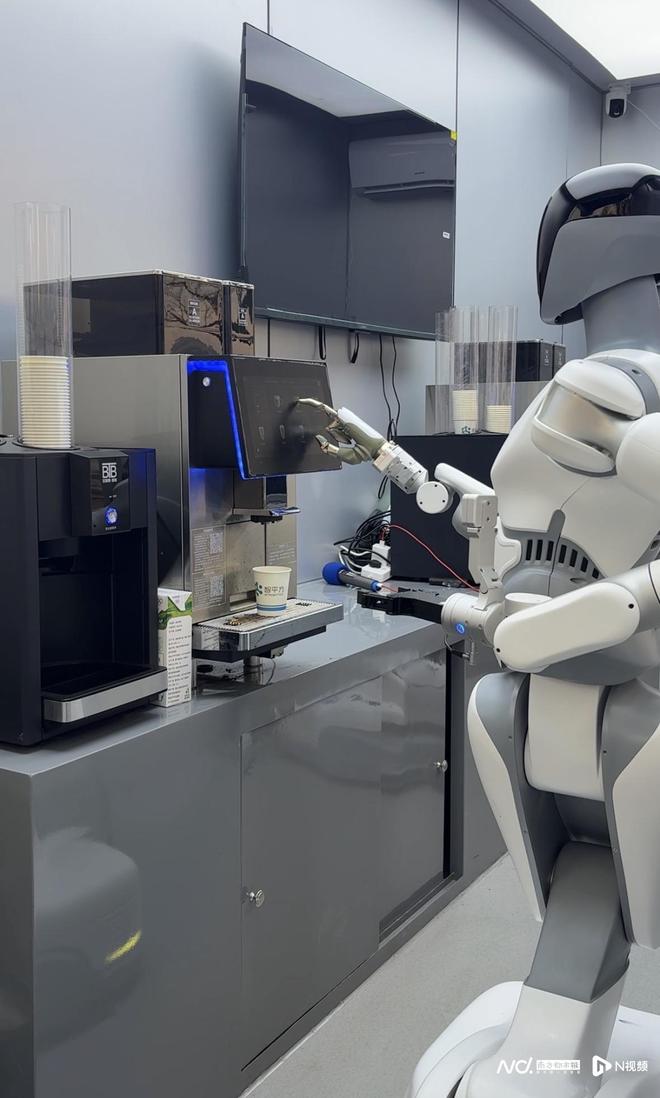
做咖啡、卖盲盒,人形机器人“实操派”寻找自己的“秀场”
Nan Fang Du Shi Bao· 2025-12-29 10:29
Core Insights - The article discusses the emergence of "embodied intelligence" companies, particularly focusing on the operational model of the company Zhi Ping Fang, which has opened a robot-operated coffee shop in Beijing, aiming to enhance brand exposure and public engagement with robotics [1][4]. Group 1: Business Model and Operations - Zhi Ping Fang has launched a robot coffee shop named "Zhi Mo Fang" in Beijing's Chaoyang Park, featuring two humanoid robots that prepare coffee for customers [1][4]. - The robots can complete the coffee-making process in approximately 1.5 minutes, but human staff are still required for tasks such as customer interaction and replenishing supplies [4][6]. - The company plans to establish 1,000 "Zhi Mo Fang" locations across China within three years, targeting tourist spots, commercial areas, and cultural venues [4][6]. Group 2: Market Strategy and Consumer Engagement - The initiative is a collaboration between Zhi Ping Fang and the Chaoyang District Cultural and Tourism Bureau, aiming to showcase the practical applications of humanoid robots in public settings [6]. - The business model includes direct sales of robots to operators or revenue-sharing partnerships with businesses [6]. - The company aims to leverage the novelty of humanoid robots to provide emotional value and enhance consumer experience, despite concerns about the sustainability of public interest [7][8]. Group 3: Challenges and Future Outlook - The company acknowledges that public exposure may reveal product issues, but views real user feedback as an opportunity for rapid product iteration and improvement [8]. - Zhi Ping Fang recognizes the long-term nature of the embodied intelligence sector, emphasizing the need for patience and confidence in technology development [8].

七大未来产业吸金近700亿,筑基“十五五”新增长极
Huan Qiu Wang· 2025-12-29 08:59
Group 1 - The global technology competition is intensifying, with disruptive technologies at the core of the "future industries" becoming a prominent part of China's economic landscape, as highlighted in the "14th Five-Year Plan" [1][2] - The total financing in related fields has approached 70 billion yuan this year, with specific sectors like nuclear fusion and 6G seeing index increases of over 80% [1][4] - The future industries are transitioning from "concept validation" to "commercialization," becoming a leading force in driving economic and social transformation [1] Group 2 - The "14th Five-Year Plan" outlines a clear blueprint for future industries, focusing on seven key areas including quantum technology, biomanufacturing, hydrogen energy, nuclear fusion, brain-computer interfaces, embodied intelligence, and 6G [2] - Local governments are actively responding with supportive policies, such as Beijing's "Create the Future" initiative, which has supported 83 potential enterprises and facilitated over 2 billion yuan in financing [2] - Various cities like Shenzhen and Shanghai are implementing financial measures to support high-quality development in future industries, establishing a solid foundation for growth [2] Group 3 - The capital market's enthusiasm for future industries is evident, with IPOs and refinancing processes accelerating significantly, totaling nearly 70 billion yuan as of December 26, 2025 [4] - Notable fundraising includes 14 billion yuan from China Nuclear Power in the nuclear fusion sector and over 8 billion yuan from companies in the embodied intelligence sector [4] - The overall profitability of future industries is expected to improve, with a median net profit forecast of over 650 billion yuan for 381 companies in 2025, reflecting a year-on-year increase of over 20% [5] Group 4 - Market funds are actively seeking undervalued potential stocks, with over 40 companies showing a decrease in shareholder numbers, indicating a concentration of shares [6] - Companies like Fuzhijun Technology and Zhongyuan Neipei have seen significant reductions in shareholder numbers, suggesting increased market attention [6] - Some companies, despite underperforming in the market, are positioned in sectors like embodied intelligence and quantum technology, presenting potential investment opportunities [6]