
互联网

Search documents
2月全球十大富豪
Sou Hu Cai Jing· 2026-02-04 10:19
Core Insights - The global billionaire rankings have seen significant changes at the start of the year, with half of the top ten billionaires experiencing shifts in their positions, while Elon Musk remains the wealthiest individual with an estimated net worth of $775 billion as of February 1, 2026 [2][5]. Group 1: Wealth Increases - Elon Musk's net worth increased by $48 billion over the past month, driven by the success of xAI Holdings and the rising valuations of SpaceX and Tesla [2][3]. - Larry Page's wealth rose by $20 billion due to an 8% increase in Alphabet's stock price, making him the second-largest gainer this month [3][7]. - Sergey Brin's net worth increased by $18 billion, reaching $255 billion, as he also benefited from Alphabet's stock performance [3][9]. - Jeff Bezos saw an increase of $8 billion in his wealth, bringing his total to $250 billion [3][11]. - Mark Zuckerberg's net worth rose by $19 billion to approximately $246 billion, aided by an 8% rise in Meta's stock price [3][13]. Group 2: Wealth Decreases - Larry Ellison experienced the largest decline, with a $34 billion drop in his net worth to $211 billion, following a 17% decrease in Oracle's stock price [4][15]. - Bernard Arnault's wealth decreased by $26 billion to $169 billion, as LVMH's stock fell by 14% [4][17]. - Amancio Ortega's wealth decreased by $1 billion to approximately $145 billion, despite returning to the top ten [4][21]. - Warren Buffett's net worth fell by $7 billion to $142 billion, reflecting a decrease in Berkshire Hathaway's stock value [4][23]. Group 3: Billionaire Rankings - The total wealth of the top ten billionaires remains stable at $2.6 trillion, with all individuals having a net worth of at least $147 billion [5][25]. - The top ten billionaires include eight Americans, with Bernard Arnault from France and Amancio Ortega from Spain being the only non-Americans [5][25]. - As of February 1, 2026, the wealthiest individuals are predominantly male, with the highest net worth being $775 billion for Elon Musk [5][25].


微信给马化腾浇了“一盆冷水”
虎嗅APP· 2026-02-04 10:14
Core Viewpoint - The article discusses the conflict between WeChat and its own product, Yuanbao, highlighting the challenges of maintaining user experience while trying to drive engagement through marketing strategies like the Yuanbao red envelope campaign [5][12]. Group 1: WeChat's Response to Yuanbao - WeChat issued a warning against Yuanbao's red envelope sharing, stating that it interfered with platform order and user experience, leading to the restriction of direct access to Yuanbao links within WeChat [8][9]. - Following WeChat's announcement, Yuanbao quickly adapted by changing its sharing mechanism to a "password red envelope," allowing users to share a text password instead of a direct link [9][10]. Group 2: User Experience and Marketing Strategies - There are two contrasting opinions regarding WeChat's actions: one believes it upheld user experience standards, while the other speculates it was a reaction to Yuanbao's underwhelming performance [12]. - Users had previously raised concerns about Yuanbao's marketing tactics, questioning whether they constituted excessive disturbance to the user experience [12][14]. Group 3: Strategic Implications - The article emphasizes that Yuanbao's aggressive marketing strategy was a response to the high customer acquisition costs and the need to maximize traffic efficiency in a competitive landscape [19]. - A brand representative noted that leveraging WeChat's private traffic is a cost-effective way to enhance customer lifetime value, especially in a market where public traffic is becoming increasingly expensive [19]. Group 4: Challenges Faced by Yuanbao - Despite Tencent's significant investment in promoting Yuanbao with a 1 billion cash red envelope campaign, the product was described as still needing refinement and not fully mature [20]. - The article suggests that the rushed decision to heavily promote Yuanbao could negatively impact WeChat's user experience and may not achieve the desired user retention, as evidenced by past market trends [20].

北水动向|北水成交净买入133.73亿 大摩称市场过度担忧增值税传闻 北水继续抢筹科网股
智通财经网· 2026-02-04 10:13
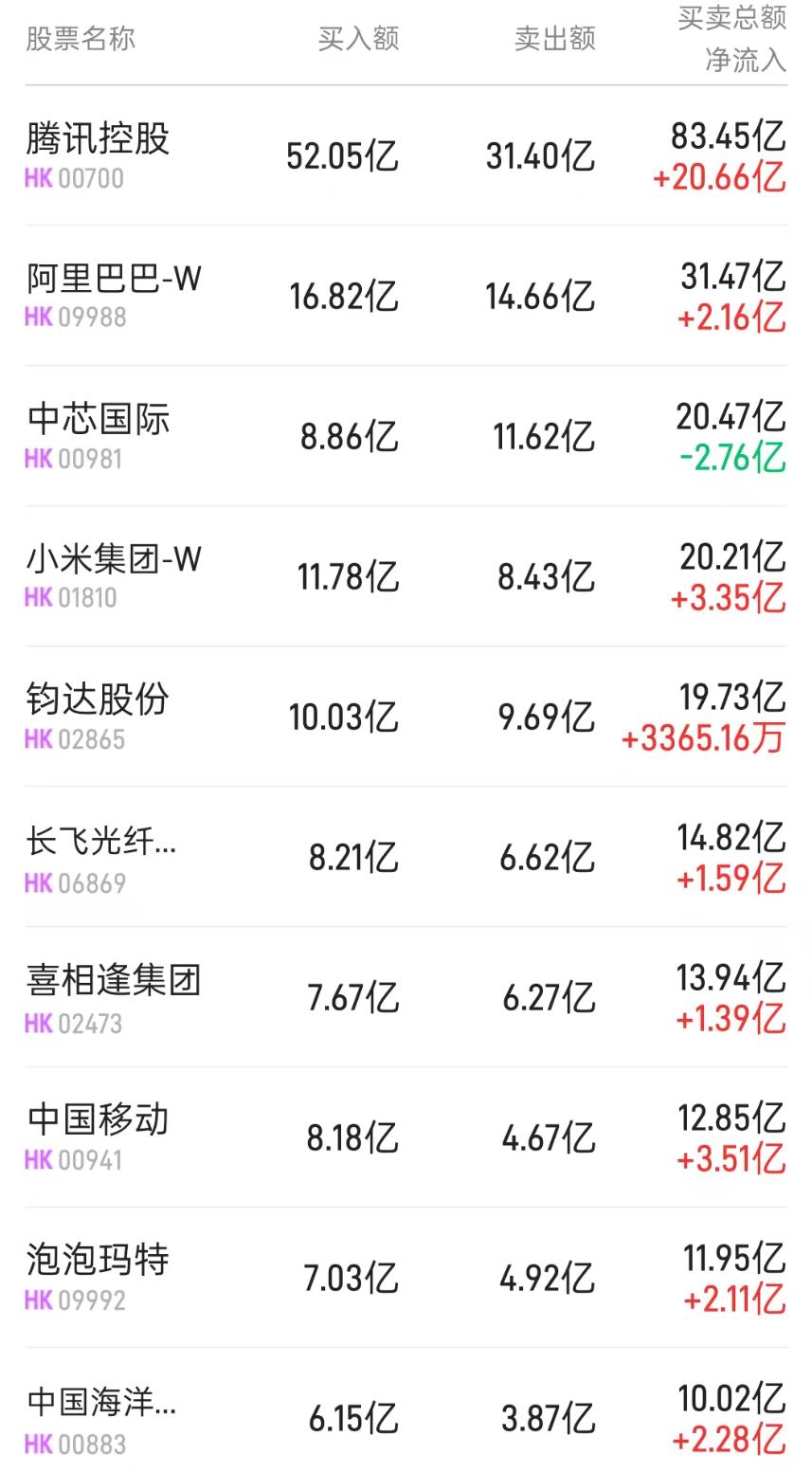
Core Viewpoint - The Hong Kong stock market experienced significant net inflows from northbound capital, totaling HKD 133.73 billion, with major contributions from Tencent, Alibaba, and Southern Hang Seng Technology, while SMIC and Hua Hong Semiconductor faced the highest net outflows [1]. Group 1: Northbound Capital Inflows - Tencent Holdings (00700) received a net inflow of HKD 52.05 billion, with total trading volume of HKD 83.45 billion, reflecting a net increase of HKD 20.66 billion [2]. - Alibaba-W (09988) saw a net inflow of HKD 16.82 billion, with total trading volume of HKD 31.47 billion, resulting in a net increase of HKD 2.16 billion [2]. - Southern Hang Seng Technology (03033) attracted a net inflow of HKD 11.67 billion, contributing to the overall positive sentiment in the tech sector [4]. Group 2: Notable Net Outflows - SMIC (00981) experienced a net outflow of HKD 8.86 billion, with total trading volume of HKD 20.47 billion, indicating a net decrease of HKD 2.76 billion [2]. - Hua Hong Semiconductor (01347) faced a net outflow of HKD 1.90 billion, with total trading volume of HKD 6.15 billion, reflecting a significant decline [4]. Group 3: Sector Performance and Trends - The telecommunications sector, represented by China Mobile (00941), saw a net outflow of HKD 3.5 billion, attributed to anticipated pressure on net profits due to an increase in value-added tax rates [5]. - The optical fiber industry, led by Changfei Optical Fiber (06869), is experiencing a price increase trend, with expectations of continued growth driven by demand from telecom operators [6]. - Xiaomi Group (01810) reported a net inflow of HKD 7.65 billion, supported by strong electric vehicle delivery performance and ongoing investments in AI and robotics [5].




恒生指数收涨0.05%,煤炭、内房股走高,科网股低迷
Jin Rong Jie· 2026-02-04 09:58
Market Overview - The Hang Seng Index closed up 0.05% at 26,847.32 points, while the Hang Seng Tech Index fell by 1.84% to 5,366.44 points [1]. Sector Performance - Coal stocks led the gains, with Yanzhou Coal Mining rising over 10% and China Shenhua Energy increasing by over 5% [1]. - Chip stocks showed weak performance, with Shanghai Fudan down over 5% and Huahong Semiconductor declining nearly 5% [1]. - The technology sector overall performed poorly, with Tencent Holdings down nearly 4% and Bilibili falling over 3% [1]. - Domestic property stocks collectively rose, with Shimao Group increasing over 14% and Sunac China rising over 8% [1]. Individual Stock Movements - Among the Hang Seng Index constituents, Xinyi Glass, China Shenhua, and China Resources Land had the highest gains [1]. - Conversely, Ctrip Group, Tencent Holdings, and NetEase saw the largest declines [1]. - In the Hang Seng Tech Index, Li Auto, Leapmotor, and Haier Smart Home showed the most significant increases [1]. - On the downside, Kingdee International, Ctrip Group, and Tongcheng Travel experienced the largest drops [1].

港股4日涨0.05% 收报26847.32点
Xin Hua Wang· 2026-02-04 09:48
新华社香港2月4日电 香港恒生指数4日涨12.55点,涨幅0.05%,收报26847.32点。全日主板成交2854.33 亿港元。 国企指数跌4.73点,收报9048.38点,跌幅0.05%。恒生科技指数跌100.82点,收报5366.44点,跌幅 1.84%。 中资金融股方面,中国银行涨1.09%,收报4.65港元;建设银行涨0.9%,收报7.88港元;工商银行涨 0.78%,收报6.43港元;中国平安涨1.05%,收报72.05港元;中国人寿涨2.03%,收报35.16港元。 石油石化股方面,中国石油化工股份涨2.26%,收报5.44港元;中国石油股份涨2.12%,收报9.16港元; 中国海洋石油涨1.37%,收报23.68港元。 【纠错】 【责任编辑:薛涛】 蓝筹股方面,腾讯控股跌3.96%,收报558港元;香港交易所跌0.43%,收报420.2港元;中国移动涨 1.34%,收报79.35港元;汇丰控股涨0.07%,收报139港元。 香港本地股方面,长实集团涨1.14%,收报45.94港元;新鸿基地产涨0.41%,收报123.6港元;恒基地产 涨0.88%,收报32.08港元。 ...
光伏产业链股拉升!传马斯克团队调研,上市公司证实!
Xin Lang Cai Jing· 2026-02-04 09:43
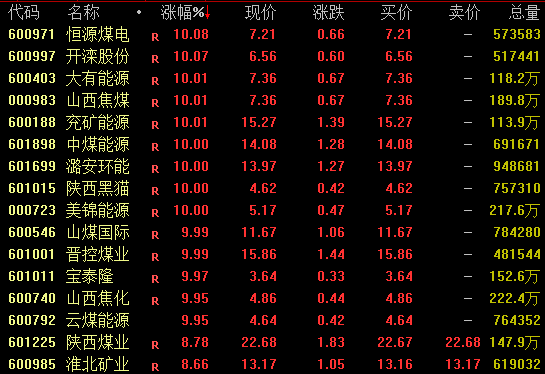
Market Overview - The Shanghai Composite Index rose 0.85% to 4102.2 points, with the SSE 50 Index increasing over 1% and the Shenzhen Component Index up 0.21% [1][12] - The total trading volume in the Shanghai and Shenzhen markets was approximately 2.5 trillion yuan, a decrease of about 620 billion yuan from the previous day [1][12] - Over 3200 stocks in the A-share market closed higher, with significant gains in the coal sector [1][12] Coal Sector Performance - The coal sector experienced a collective surge, with over 10 stocks including Yanzhou Coal and China Coal Energy hitting the daily limit [3][14] - Notable stocks included Yanzhou Coal Energy up over 10%, China Coal Energy up over 8%, and Shanxi Coking Coal also seeing significant gains [2][14] - Reports indicated that Indonesian mining officials announced a substantial reduction in coal production quotas, leading to a halt in spot coal exports [14][16] Solar Industry Developments - The solar industry saw a significant rally, with stocks like JinkoSolar, Zhonglai Co., and Zairun New Energy all hitting the daily limit of 20% [6][16] - JinkoSolar's stock price reached 8.40 yuan, reflecting a 20% increase, while Zhonglai Co. also saw similar gains [7][17] - There were rumors of Elon Musk's team visiting several Chinese solar companies to explore potential collaborations, particularly in advanced technologies [17][18] Tencent's Stock Movement - Tencent Holdings experienced a sharp decline, closing down approximately 4% with a market capitalization of 509.06 billion HKD [10][18] - The drop was attributed to regulatory actions against third-party marketing practices on its WeChat platform, which affected user experience [20]




光伏产业链股拉升!传马斯克团队调研,上市公司证实!
证券时报· 2026-02-04 09:39
Market Overview - The Shanghai Composite Index rebounded strongly, closing above 4100 points with a gain of 0.85% at 4102.2 points, driven by banking and brokerage sectors [1] - The total trading volume in the Shanghai and Shenzhen markets was approximately 2.5 trillion yuan, a decrease of about 620 billion yuan from the previous day [1] - Over 3200 stocks in the A-share market rose, with significant gains in the coal sector, real estate, insurance, and brokerage [1] Coal Sector Performance - The coal sector experienced a significant surge, with over 10 stocks hitting the daily limit, including Yanzhou Coal Mining and China Coal Energy, which saw gains of over 10% [4] - Reports indicated that Indonesian mining officials announced a substantial reduction in coal production quotas, leading to a halt in spot coal exports, which could impact global coal prices [5] - Analysts suggest that the coal market's focus this year will be on overseas developments rather than domestic factors, with potential price increases linked to U.S. demand and reduced Indonesian supply [6] Photovoltaic Industry Dynamics - The photovoltaic sector saw a notable rise, with stocks like JinkoSolar and Zhonglai Co. hitting the daily limit of 20% [8] - Market rumors indicated that Elon Musk's team visited several Chinese photovoltaic companies to explore potential collaborations, particularly in advanced technologies [10] - JinkoSolar confirmed interactions with Musk's team, highlighting interest in their technological capabilities [10] Hong Kong Market Movements - In the Hong Kong market, Yanzhou Coal Mining rose over 10%, while major tech stocks like Tencent Holdings and Ctrip Group saw declines of approximately 4% and 6%, respectively [2]

景顺长城科技军团郭琳:看好科技、互联网、周期资源品、制造业出海等
Xin Lang Cai Jing· 2026-02-04 09:15
Core Viewpoint - The A-share market has entered a phase of fluctuation and adjustment after a continuous rise at the beginning of the year, with popular sectors like commercial aerospace, gold, and silver also experiencing corrections. A balanced investment strategy across different industries is recommended to capture opportunities and mitigate risks associated with concentrated investments [1][7]. Investment Strategy - The newly issued fund, Invesco Great Wall Smart Mixed Fund (code: 026709), is managed by Guo Lin, a member of the Invesco Great Wall Technology Legion, who emphasizes a growth-oriented investment style with balanced allocations across various sectors [1][3]. - Guo Lin's investment philosophy focuses on "trends, timing, and cost," seeking to identify sub-industries with mid-term growth potential by analyzing industry policies, technological innovations, and supply-demand changes [3][9]. Portfolio Composition - In Guo Lin's managed funds, over 50% of the holdings are in growth-style stocks, primarily concentrated in TMT (Technology, Media, and Telecommunications), with additional allocations in non-ferrous metals, pharmaceuticals, military, and new consumption sectors [4][10]. - The fund has shown strong performance, with returns of 54.77% and 98.12% over the past 1 and 2 years, respectively, significantly outperforming the benchmark [10]. Market Outlook - The A-share market is currently fluctuating around the 4000-point mark, with expectations of increased trading volume and active performance in growth sectors due to a favorable liquidity environment [5][11]. - Guo Lin suggests that the first quarter is an opportune time for stock selection, as many companies will provide clearer guidance for the new year, and the market is expected to undergo differentiation after an active investment phase [12]. Fee Structure - The Invesco Great Wall Smart Mixed Fund employs a floating fee structure linked to excess returns, aligning the interests of the fund manager with those of investors and promoting a focus on sustainable long-term performance [6][12].

华夏国证港股通科技ETF投资价值分析:人工智能加速落地,支撑龙头科技公司的增长动能
Shenwan Hongyuan Securities· 2026-02-04 09:09
1. Report Industry Investment Rating No relevant content provided. 2. Core Viewpoints of the Report - Policy indicates that technology and artificial intelligence are entering an accelerated implementation phase, and the implementation of AI applications in leading technology companies is evident, supporting their performance growth [4]. - The Guozheng Hong Kong Stock Connect Technology Index focuses on leading technology companies in the Hong Kong stock market, has a high - weight concentration, and has relatively excellent historical performance. It also has differences and advantages compared with other Hong Kong technology indexes [4]. - The Huaxia Guozheng Hong Kong Stock Connect Technology ETF has increasing circulating shares and good on - site liquidity since its listing, and its fund managers have rich experience in managing ETF products [4]. 3. Summary According to Directory 3.1 Artificial Intelligence Accelerates Implementation, Supporting the Growth Momentum of Leading Technology Companies 3.1.1 Policy Points to Technology and Artificial Intelligence Entering an Accelerated Implementation Phase - On January 9, 2026, eight departments including the Ministry of Industry and Information Technology jointly issued the "Implementation Opinions on the Special Action of 'Artificial Intelligence + Manufacturing'". By 2027, China will promote the in - depth application of 3 - 5 general large - models in the manufacturing industry, form a large - scale application paradigm covering multiple industries, build 1000 high - level industrial intelligent agents, create 100 high - quality industrial data sets, and promote the implementation of 500 typical application scenarios [4][10]. 3.1.2 The Implementation of AI Applications in Leading Technology Companies is Evident, Supporting Performance Growth - Tencent Holdings: In the second quarter of 2025, AI - driven advertising technology upgrades significantly improved click - through rates and delivery efficiency, and marketing service revenue increased by about 20% year - on - year. The demand from enterprise customers for AI services has increased, and GPU leasing and API token usage have become new sources of revenue [13][14]. - Alibaba: In fiscal year 2025, the revenue growth rate of Alibaba Cloud's public cloud accelerated significantly, and the revenue of AI - related products has achieved triple - digit growth for seven consecutive quarters. The company clearly takes "AI + Cloud" as its core growth direction [14]. - Meituan: In 2025, it introduced AI technology and intelligent assistant tools in multiple scenarios, which helps optimize resource allocation and improve user and merchant experience [14]. - Xiaomi: By the end of 2024, the Xiaomi AIoT platform had connected 904 million devices (excluding smartphones and laptops), showing that AI has formed a real and continuous demand in the terminal [15]. 3.2 Guozheng Hong Kong Stock Connect Technology Index: Fully Covers the Hong Kong Technology Field and has High Offensive Elasticity 3.2.1 The Guozheng Hong Kong Stock Connect Technology Index Focuses on Leading Technology Companies in the Hong Kong Stock Market - The Guozheng Hong Kong Stock Connect Technology Index selects 30 listed company securities with large market capitalizations in the technology - related fields that are listed on the Hong Kong Stock Exchange and eligible for the Stock Connect program as index samples. As of December 31, 2025, the sum of the weights of the top five constituent stocks was 60.45%, and the sum of the weights of the top ten constituent stocks was 79.53%. Leading enterprises such as Tencent Holdings, Alibaba - W, Xiaomi Group - W, and Meituan - W have a weight of more than 10% [4][20]. 3.2.2 Comparison of the Guozheng Hong Kong Stock Connect Technology Index with Other Hong Kong Technology Indexes - In terms of the main industries covered by the index, the Guozheng Hong Kong Stock Connect Technology Index has a wider coverage. It includes the pharmaceutical industry compared with the Hang Seng Technology Index and adds hardware equipment, semiconductors, automobiles, and the pharmaceutical industry compared with the CSI Hong Kong Stock Connect Internet Index. In terms of the single - weight limit, it increases the weights of heavy - weight stocks compared with the Hang Seng Technology Index, making the index more elastic [4][28]. 3.2.3 The Guozheng Hong Kong Stock Connect Technology Index has Relatively Excellent Historical Performance - From 2019 to 2025, the annualized return of the Guozheng Hong Kong Stock Connect Technology Index was 12.98%, and the Sharpe ratio was 0.35, both significantly higher than those of the CSI Hong Kong Stock Connect Internet Index and the Hang Seng Technology Index. In annual return comparisons, it has greater elasticity in good market conditions and smaller decline amplitudes in poor market conditions [4][36]. 3.3 Analysis of the Investment Value of the Huaxia Guozheng Hong Kong Stock Connect Technology ETF 3.3.1 The Circulating Shares have been Continuously Increasing Since Listing and the On - site Liquidity is Good - Since its listing on September 3, 2025, the circulating shares of the Huaxia Guozheng Hong Kong Stock Connect Technology ETF have been increasing. As of January 27, 2026, the circulating shares increased to 3.059 billion, a 131.22% increase compared with the listing. Its on - site average daily turnover was 341 million yuan, and the highest daily turnover reached 792 million yuan [4][42][43]. 3.3.2 The Current Fund Managers' Managed ETF Products - The current fund managers of the Huaxia Guozheng Hong Kong Stock Connect Technology ETF are Mr. Xu Meng and Ms. Wang Xinwei. Taking Mr. Xu Meng as an example, as of January 27, 2026, he is currently managing 10 ETF products with a total scale of 222.98 billion yuan [49].
恒生科技全天跌1.84%,南向资金净流入133亿港元,资金为何逆势布局?
Mei Ri Jing Ji Xin Wen· 2026-02-04 09:05
2月4日(周三),恒生科技全天表现弱势,权重股腾讯控股受到"元宝风波"影响,盘中一度跌近4%。 截至16点港股收盘,恒生科技跌1.84%,日K"五连跌"。但资金面上看,南向资金下跌之际大幅加仓, 全天净流入约133亿港元,创近一周净流入新高。 ETF资金动向方面,恒生互联网ETF、港股通科技ETF、港股通互联网ETF2月4日均出现大额买单,连 续两日出现大额净流入,显示资金逆势布局,"越跌越买"。华夏基金分析称,资金之所以逆势加仓,或 基于三点: 1)港股科技相对A股、美股科技,估值处于近5年低位,恒生科技与创业板指收益差到历史高位,安全 边际高;2)港股科技板块占据AI应用端与商业化核心环节,增长确定性高;3)海外弱美元大趋势不 变,与南向资金共振,为港股后市流动性提供支撑。上述三大因素都将为港股科技未来价值回归创造条 件。 港股通科技ETF基金(159101.SZ)在深圳证券交易所上市,并支持T+0交易机制,为A股投资者提供低 门槛、免换汇的交易便利。场外投资者也可以逢低定投华夏港股通科技ETF联接C(025806.OF)。 逢低布局港股科技核心资产,可以关注港股通科技ETF基金(159101.SZ),被 ...