航空

Search documents
“全勤生”霍尼韦尔携最新成果亮相进博
Jing Ji Wang· 2025-11-11 10:21
Core Insights - Honeywell participated in the China International Import Expo for the eighth consecutive year, showcasing its commitment to innovation and collaboration in the Chinese market [1][4] - The company launched eight new products across five key areas, marking the highest number of new products introduced at the expo [1][2] - Honeywell signed 26 strategic cooperation agreements with partners from various industries, focusing on smart factories, measurement control, and green energy [4] Product Innovations - Honeywell introduced new solutions for semiconductor manufacturing, enhancing wafer production stability, precision, and yield [1] - The ThermJet-pro low-NOx burner made its debut in China, combining efficient combustion with low emissions [1] - New battery safety sensors were launched to provide early warnings for thermal runaway risks in various battery applications [1][3] Management and Operational Excellence - The company will jointly release a white paper on lean transformation, detailing the localized implementation of its Honeywell Excellence System (HES) [2] - The white paper highlights a case study of Zhejiang Jinhua New Materials Co., showcasing continuous improvement and management practices [2] Automation and Sustainability - Honeywell displayed technologies in automation, including smart ship solutions and control systems, aimed at industrial intelligence upgrades [3] - The company presented innovative solutions for circular economy development, including UpCycle plastic recycling technology and smart factory concepts [3] Future Aviation Solutions - New ground warning software (SURF-A) was showcased to enhance flight safety by helping pilots identify runway hazards [3] - Sustainable aviation fuel (SAF) solutions were introduced, demonstrating significant greenhouse gas emission reductions of up to 80% compared to fossil fuels [3]

中美会晤,欧洲敲响警钟:中国反制有手段,欧盟自主是关键
Sou Hu Cai Jing· 2025-11-11 07:52
Group 1 - The core viewpoint of the article indicates that China's attitude towards the U.S. is becoming increasingly assertive, and if the EU continues to lack strategic autonomy, it may find itself caught between the U.S. and China [1][11][13] - The recent U.S.-China meeting reached several agreements, including joint efforts to combat fentanyl trafficking, lowering certain tariffs, and delaying rare earth regulations, which provided some relief for European businesses [3][10] - However, the agreements lack detailed execution clauses and binding commitments, diminishing their practical effectiveness, and core issues such as technological competition and geopolitical differences remain unaddressed [3][4] Group 2 - The article highlights that the current geopolitical landscape has shifted, with China adopting a more proactive stance in response to U.S. tariffs and trade pressures, utilizing rare earths as a significant bargaining chip [8][10] - European industries, particularly the automotive and aerospace sectors, are increasingly vulnerable to the repercussions of U.S.-China tensions, as their supply chains heavily rely on Chinese rare earths and markets [10][14] - The EU recognizes the importance of strategic autonomy, as evidenced by the introduction of the "European Strategic Autonomy Act," aimed at reducing dependence on external critical resources and technologies [10][14]

资讯日报:美国政府有望结束停摆-20251111
Guoxin Securities Hongkong· 2025-11-11 07:37
Market Overview - The Hang Seng Index closed at 26,649, up 1.55% for the day and 32.85% year-to-date[3] - The S&P 500 index closed at 6,832, increasing by 1.54% daily and 16.17% year-to-date[3] - The Nasdaq Composite rose by 2.27% to 23,527, with a year-to-date increase of 21.83%[3] Economic Indicators - China's CPI rose by 0.2% month-on-month and turned positive year-on-year with a 0.2% increase, marking the first rise in six months[9] - Core CPI in China increased by 1.2% year-on-year, continuing a six-month upward trend[9] Sector Performance - Major tech stocks in Hong Kong saw gains, with Tencent, Kuaishou, and Alibaba rising over 2%[9] - New consumption stocks performed strongly, with China Duty Free up over 15%[9] - Gold stocks collectively surged, with companies like Chifeng Jilong Gold and China Silver Group rising over 6%[9] U.S. Government Developments - The U.S. government is expected to end its longest shutdown, with a compromise plan passing a key Senate vote[12] - This development has significantly boosted market risk appetite, leading to gains in major U.S. indices[12] Stock Movements - Nvidia surged by 5.8%, Palantir jumped 8.8%, and Tesla rose by 3.7% following positive market sentiment[12] - Chinese concept stocks also saw a rise, with the Nasdaq Golden Dragon China Index up 2.25%[12]





连马斯克都盯上了这块“肥肉”
Sou Hu Cai Jing· 2025-11-11 06:15
Core Viewpoint - The focus on Tesla has shifted to Elon Musk's trillion-dollar compensation plan, which received 75% approval at the recent shareholder meeting, ensuring his continued leadership [1][3]. Group 1: Tesla's Strategic Shift - Tesla is expected to place less emphasis on its pure electric vehicle business, with a growing focus on AI, autonomous driving, and humanoid robots as key areas for higher valuation [3]. - Musk has indicated that Tesla is developing a prototype flying car, which is set to be showcased by the end of the year, suggesting a diversification of the company's business model beyond traditional car manufacturing [3]. Group 2: Competitors in the Flying Car Market - Chinese company Xpeng has made significant advancements in the flying car sector, showcasing its A868 prototype, which features a range of innovative technologies and aims for a 500 km range with a maximum speed of 360 km/h [5][6]. - The A868 prototype has successfully completed its first test flight and is entering a critical phase of flight validation, indicating rapid progress in the flying car development [6]. Group 3: Market Potential and Industry Growth - A report from Boston Consulting predicts that the eVTOL market in China will reach $41 billion by 2040, highlighting the growing demand for urban air mobility solutions [8]. - Xpeng's flying car manufacturing facility is set to produce 10,000 units annually, with an initial capacity of 5,000, indicating a strong commitment to scaling production [8][10]. - The global market for flying cars is expected to grow significantly, with estimates suggesting it could reach $9 trillion by 2050, positioning China as a potential leader in this emerging market [15].


我国成功发射卫星互联网低轨13组卫星;华东地区首架AS700载人飞艇正式交付丨智能制造日报
创业邦· 2025-11-11 03:48
Group 1 - Blue Origin is set to execute its first NASA mission with the "New Glenn" rocket, challenging SpaceX's dominance in the space industry [2] - Nvidia's CEO has requested TSMC to increase 3nm wafer capacity by 50% to meet surging demand for Blackwell AI chips, raising monthly production from 100,000-110,000 to approximately 160,000 wafers [2] - The AS700 manned airship, developed by China Aviation Industry Corporation, has been delivered to Zhejiang Province, marking the first of its kind in East China [2] Group 2 - Global smartphone panel shipments increased by 8.1% quarter-on-quarter in Q3 2025, driven by the iPhone 17 series and other major brands, with an expected annual total of 2.243 billion units [2] - China successfully launched 13 low-orbit satellite internet satellites using the Long March 12 rocket, marking a significant achievement in satellite internet deployment [2]

港股异动丨航空股继续上涨 东航盘初涨超4%续刷阶段新高 机构指航空业超级周期或将开启
Ge Long Hui A P P· 2025-11-11 02:01
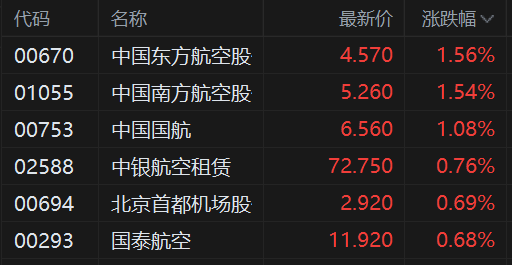
Group 1 - The core viewpoint of the article highlights a bullish trend in the Hong Kong aviation sector, with significant stock price increases for major airlines such as China Eastern Airlines and China Southern Airlines, indicating a potential super cycle in the aviation industry [1] - Cathay Pacific's research report maintains a bullish outlook on aviation fuel transportation, predicting that the industry will experience record high profitability in Q4, driven by high passenger load factors and low ticket prices [1] - The report suggests that the recent seasonal transition has had a weaker impact than in previous years, with business travel remaining active and supporting a year-on-year increase in both volume and price [1] Group 2 - The article mentions that the U.S. government is likely to end its shutdown, with President Trump stating that all air traffic controllers must return to work immediately, which could positively impact the aviation sector [1] - The stock performance of various airlines is noted, with China Eastern Airlines up 4.56%, China Southern Airlines up 1.54%, and Air China up 1.08%, reflecting strong market sentiment [1] - The MACD golden cross signal formation indicates a positive trend for these stocks, suggesting continued upward momentum in the aviation sector [1]

刚刚,开盘大涨!
中国基金报· 2025-11-11 01:36
Market Overview - The South Korean KOSPI index opened high and continued to rise, with an increase of 2.77% as of the report [3] - Japanese stock market also saw gains, with the Nikkei 225 index rising over 1% [8] South Korea Market Drivers - Reports indicate that South Korea will reduce dividend taxes, and the National Pension Service may increase its allocation to domestic stocks, boosting market sentiment [5] - Bank and brokerage stocks surged significantly due to the dividend tax reduction news, providing support for the KOSPI index [5] Japan Market Insights - Goldman Sachs reported that U.S. investors are increasing their holdings in Japanese assets, driven by governance reforms and strong performance in AI-related stocks [10] - Notable stock performances included SoftBank Group, All Nippon Airways, and Renesas Electronics, each rising over 4%, while Nippon Steel's stock increased by over 6% due to better-than-expected second-quarter operating profits [10] Investment Trends - Japanese investors purchased more U.S. Treasury bonds than other major markets in September, with a net purchase of 1.13 trillion yen [12] - The Japanese government is focusing on investment in critical sectors such as semiconductors, AI, shipbuilding, defense, and key minerals to drive economic growth [15][14] Economic Strategy - Prime Minister Fumio Kishida aims to utilize a new stimulus plan to initiate economic growth and has tasked an expert group with developing a new growth strategy by next summer [14] - The expert group emphasizes the importance of investing in 17 key areas crucial for Japan's economic growth [15]

中新互联互通项目10年合作硕果累累
Sou Hu Cai Jing· 2025-11-11 00:45
Core Viewpoint - The China-Singapore Connectivity Project has achieved significant milestones in its 10 years of operation, facilitating extensive cooperation between Chongqing and Singapore, and enhancing connectivity between Western China and ASEAN countries [1][2][3]. Group 1: Project Achievements - Over the past decade, the project has signed 347 government and commercial cooperation agreements, amounting to $26 billion [1][7]. - Cumulative cross-border financing has reached $21.7 billion [1][7]. - The project has led to the creation of 33 innovative and recognizable institutional open results [1][7]. Group 2: Infrastructure and Logistics - The project has established a new logistics channel, significantly reducing transportation time and costs; for instance, the rail-sea intermodal transport time from Chongqing to Singapore has decreased from 10 days to 7 days, with a 25% reduction in per-container costs [2][4]. - The new logistics channel has facilitated trade, with the total import and export volume between Western China and ASEAN exceeding 1 trillion yuan [2]. Group 3: Sectoral Focus and Innovations - The project emphasizes modern service industries, achieving notable results in finance, aviation, logistics, and information sectors [4]. - Innovations include the Qualified Domestic Limited Partner (QDLP) program and cross-border digital currency settlements, enhancing the region's openness [3][6]. Group 4: Education and Cultural Exchange - The project has expanded cooperation into education and cultural tourism, with significant increases in exchange programs and tourist flows between Chongqing and Singapore [5][8]. - The number of exchanges between Chongqing and Singapore has grown fivefold since 2015, with Singaporean overnight visitors to Chongqing increasing sevenfold [5][8]. Group 5: Future Directions - The project aims to focus on digital economy and green development, seeking to enhance cross-border data flow and improve digital service experiences for citizens [6][7]. - By 2030, the project aspires to become a new model for international cooperation in digital rules and green development [7].
“中国是一个战略性市场”
Ren Min Ri Bao· 2025-11-10 22:41
Group 1 - Colombia showcased as the guest country at the 8th China International Import Expo, presenting a historic opportunity for deepening cooperation with China [2] - The trade relationship between China and Colombia has been steadily developing, with China being a strategic market for Colombian products, particularly in agriculture [2] - Colombian products like coffee and fruits align with Chinese consumer preferences for quality and sustainability, creating unprecedented opportunities for market entry [2] Group 2 - Colombia's participation in the Belt and Road Initiative is expected to enhance its integration into the global cooperation network, facilitating exports and attracting investments [2] - The ongoing construction of the Bogotá Metro Line 1 by a Chinese company is transforming local lifestyles, creating jobs, and alleviating traffic pressure [3] - Increasing interest from Chinese investors in Colombia's emerging sectors such as green transportation, food safety, and digitalization indicates expanding cooperation opportunities [3] Group 3 - The recovery of China's outbound tourism market is making Chinese tourists a significant emerging source for Latin America, with a growing number visiting Colombia [3] - Colombia is actively pursuing partnerships with Chinese airlines to establish direct flight routes, aiming to enhance travel cooperation between the two countries [3]

美国政府有望结束停摆,纳指反弹2.3%,热门中概股普涨
Feng Huang Wang· 2025-11-10 22:28
Market Overview - The three major U.S. indices closed higher, with the Dow Jones up 381.53 points (0.81%), the Nasdaq up 522.64 points (2.27%), and the S&P 500 up 103.63 points (1.54%) [3] - The technology sector led the gains, with the information technology sector rising 2.68% and semiconductor ETFs increasing by 3.07% [3] Government Shutdown - The U.S. Senate made progress towards ending the longest federal government shutdown in history, with an 88% probability of resolution this week according to Polymarket [1] - House Speaker Johnson called for a quick return to Washington for a vote on the Senate's agreement, with expectations for a vote this week [1] Earnings Reports - In the third quarter earnings season, 83% of the 446 S&P 500 companies that reported exceeded market expectations [2] - Venture Global reported a revenue of $3.33 billion, more than tripling year-over-year, but lowered its full-year profit forecast due to gas price volatility [5] Technology and AI Stocks - Major tech stocks rebounded, with Nvidia rising 5.8% and Palantir soaring 8.8%, indicating a recovery in the tech and AI sectors [4] - Analysts noted that the AI sector has not faced structural negatives, with many companies reporting strong earnings [1] Cryptocurrency Developments - Coinbase announced plans to launch a new token sales platform aimed at providing retail investors early access to token trading [7] Microsoft Marketing Strategy - Microsoft is recruiting popular influencers to promote its AI product Copilot, aiming to increase its appeal among younger consumers [8]