信托

Search documents
股市必读:东莞控股(000828)5月16日董秘有最新回复
Sou Hu Cai Jing· 2025-05-18 21:11
Core Viewpoint - Dongguan Holdings has completed the transfer of a 22.2069% stake in Dongguan Trust, receiving a total of 142,765.52 million yuan, which will positively impact the company's profit by reversing a bad debt provision of 5,996.15 million yuan [2][3]. Group 1: Transaction Information - As of May 16, 2025, Dongguan Holdings' stock closed at 10.33 yuan, down 1.15%, with a turnover rate of 0.47% and a trading volume of 48,500 shares, amounting to a transaction value of 50.2672 million yuan [1]. - On May 16, the capital flow for Dongguan Holdings showed a net outflow of 4.1351 million yuan from main funds, a net inflow of 3.2195 million yuan from speculative funds, and a net inflow of 915,600 yuan from retail investors [1][3]. Group 2: Company Announcements - Dongguan Holdings announced the progress of the transfer of its 22.2069% stake in Dongguan Trust to Dongguan City Road and Bridge Investment Construction Co., Ltd. for 142,765.52 million yuan [2]. - The company signed the equity transfer agreement on May 17, 2024, and received the first payment of 42,829.66 million yuan on May 23, 2024, followed by the second payment of 99,935.86 million yuan on May 16, 2025 [2]. - The completion of this transaction allows the company to reverse the previously recognized bad debt provision of 5,996.15 million yuan, leading to an increase in total profit [2][3].

西安市雁塔区打造“放心消费在雁塔”品牌
Sou Hu Cai Jing· 2025-05-18 15:09
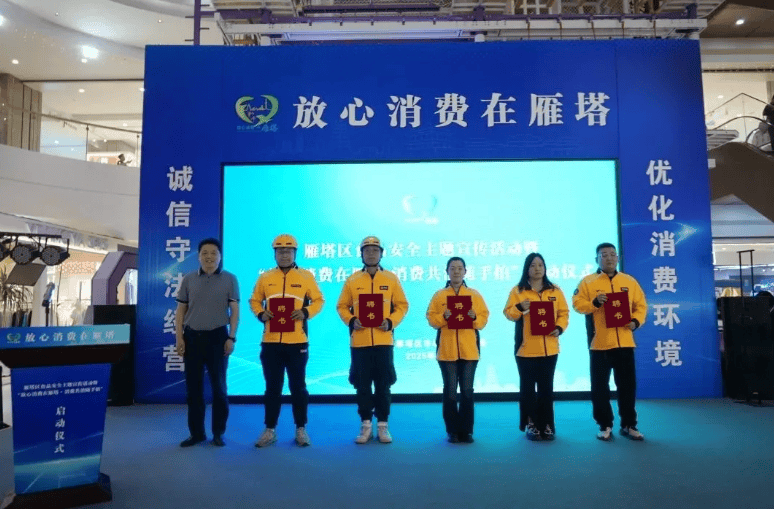
Core Viewpoint - The Xi'an Yanta District Market Supervision Bureau is implementing a multi-faceted governance system to enhance consumer confidence and satisfaction, aligning with the national strategy to build an international consumer center city in Xi'an [1][5]. Group 1: Consumer Environment Improvement - The bureau has launched the "One Five One Ten" special activity plan focusing on five key areas: safety, quality, price, service, and rights protection, establishing a standardized consumer service system and a joint punishment mechanism for dishonesty [1][5]. - The introduction of a prepaid consumption trust service in collaboration with Chang'an Trust marks an innovative practice in the prepaid consumption sector in Northwest China [1]. Group 2: Technological Integration in Services - The development of the "Safe Consumption in Yanta" WeChat mini-program includes a "Consumer Co-Governance Snap" feature, allowing observers to report issues, which are then managed through a closed-loop system for efficient problem resolution [1]. - The establishment of two major dining demonstration streets, "Tanghuang Business Port" and "Yucai Road," aims to enhance overall service quality in the district, utilizing advanced technologies like AI behavior recognition and cloud data analysis for kitchen operations [2]. Group 3: Collaboration and Resource Integration - A strategic partnership with Northwest University of Political Science and Law has been formed to research consumer rights protection and cultivate legal talent, enhancing the intellectual support for consumer environment governance [4]. - The formation of the Yanta District Inspection and Testing Certification Association promotes industry self-discipline and fosters a fair and trustworthy market environment [4]. Group 4: Efficient Consumer Rights Protection - The bureau has optimized the rights protection service mechanism, reducing the complaint resolution time from 60 days to 30 days, and established a "shared court" service station for efficient judicial services [5]. - Collaboration with the Xi'an Fiber and Textile Supervision and Inspection Institute has led to the creation of the first consumer service workstation in the fiber and textile sector in the province, enhancing service quality for consumers [5].

信托年报里的危与机:去年少赚近三成 业务转型、风险化解加速
Di Yi Cai Jing· 2025-05-18 13:40
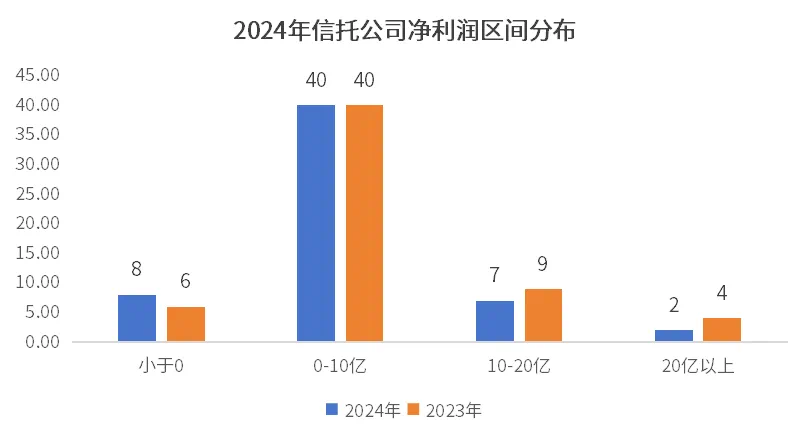
Core Viewpoint - The trust industry is experiencing significant pressure on profitability, with a notable decline in revenue and profit margins, indicating a period of transformation and adjustment within the sector [1][2][3]. Financial Performance - In 2024, the total revenue of 57 disclosed trust companies fell to 632.41 billion yuan, a decrease of approximately 125 billion yuan or 16.49% compared to the previous year [2][3]. - The total profit for the industry dropped nearly 30% to 315.54 billion yuan, with net profit at 257.58 billion yuan, reflecting a decline of 25.76% year-on-year [2][3]. - The average revenue per trust company was 11.09 billion yuan, down over 2 billion yuan from 2023, with only 25 companies reporting positive revenue growth [3][4]. Industry Segmentation - The industry is witnessing a "Matthew Effect," where the gap between leading and lagging companies is widening, with some companies experiencing significant revenue declines [4][5]. - Notably, Jilin Trust reported an extraordinary revenue increase of 88 times, primarily due to substantial investment gains [3][4]. - Conversely, companies like Wukuang Trust saw their revenue drop significantly, falling from the top ten to the bottom ranks due to losses in net interest income and investment returns [4][5]. Business Structure and Transformation - Trust business revenue totaled approximately 444 billion yuan, down about 7%, while proprietary business revenue fell nearly 33% to less than 188 billion yuan [9][13]. - The decline in both trust and proprietary business revenues indicates challenges in the traditional business model, with many companies facing a "gap" in returns due to the contraction of high-yield non-standard businesses [9][13]. - The industry is undergoing a transformation, with a focus on asset service trusts and family trusts, as companies seek to adapt to regulatory changes and market demands [15][16]. Risk Management and Asset Scale - The total trust asset scale surpassed 27 trillion yuan, reflecting a year-on-year growth of 26.64%, although 11 companies experienced a reduction in asset scale [14]. - The top 20 trust companies hold nearly 74% of the total industry assets, indicating challenges for smaller institutions in expanding their business [14]. - Companies are actively working on risk resolution, particularly in the real estate and urban investment sectors, with varying degrees of success in managing existing risks [15][16].

建元信托: 建元信托股份有限公司关联交易管理办法(2025年5月修订)
Zheng Quan Zhi Xing· 2025-05-16 12:35
Core Viewpoint - The article outlines the management measures for related party transactions of Jianyuan Trust Co., Ltd., aiming to regulate related party transactions, prevent risks, and protect the rights of the company and its shareholders [2][3]. Group 1: General Principles of Related Party Transactions - Related party transactions must adhere to the principles of legality and compliance, ensuring adherence to laws, regulations, and internal governance [2][3]. - Transactions should be conducted transparently, avoiding complex arrangements that could lead to regulatory arbitrage or financial manipulation [3]. - The independence of operations must be maintained, ensuring that transactions are necessary and reasonable without favoring major shareholders [3]. - Transactions should follow general commercial principles, ensuring that terms are not more favorable than those offered to non-related parties [3]. - There is a requirement for public disclosure of related party transactions, ensuring that information is accurate, complete, and timely [3]. Group 2: Management Structure and Responsibilities - The company has established a management structure involving the board of directors, a related party transaction committee, independent directors, and senior management to oversee related party transactions [4][5]. - The board of directors is ultimately responsible for the management of related party transactions, while the related party transaction committee reviews compliance and necessity [5][6]. - The supervisory board is tasked with overseeing the review, voting, disclosure, and data governance of related party transactions [6][7]. Group 3: Identification and Management of Related Parties - Related parties include both natural persons and legal entities, categorized according to definitions from financial regulatory authorities [9][10]. - Departments within the company are responsible for actively identifying related parties and reporting any changes in their status [10][11]. - The board of directors and supervisory board office are responsible for maintaining and updating the list of related parties based on feedback and changes in business operations [10][11]. Group 4: Review, Disclosure, and Reporting of Related Transactions - Related party transactions are classified into significant and general transactions, with specific thresholds for review and disclosure [12][13]. - Significant transactions require approval from the related party transaction committee and the board of directors, with a majority of non-related directors present [12][13]. - The company must report all related party transactions to regulatory authorities within specified timeframes [12][13]. Group 5: Internal Management and Compliance - The company must establish a robust internal control mechanism for related party transactions, ensuring compliance with legal and regulatory requirements [22][23]. - Transactions should be documented in written agreements, adhering to commercial principles and ensuring fair pricing [22][23]. - The company is prohibited from using various means to evade regulatory requirements related to significant related party transactions [23][24].

广东:适当放宽科技创新领域并购贷款适用范围、期限、出资比例 扩大科技创新领域并购贷款投放
news flash· 2025-05-16 10:08
Core Viewpoint - Guangdong Province is implementing measures to promote high-quality development in venture capital by creating a supportive financial ecosystem for technological innovation [1] Group 1: Policy Initiatives - The Guangdong Provincial Government is encouraging banks, insurance companies, leasing firms, and guarantee companies to collaborate with venture capital institutions through linked business models such as "loan + external direct investment" and "loan + bank investment subsidiary + external direct investment" [1] - There will be a relaxation of the applicable scope, duration, and investment ratio for merger loans in the technology innovation sector, aimed at increasing the availability of such loans [1] Group 2: Financial Support for Startups - The policy emphasizes the use of intellectual property financial pilot zone policies to encourage trust companies to establish service trusts based on new types of property rights, such as intellectual property [1] - There is an increased focus on providing comprehensive financial support for seed-stage and early-stage technology enterprises [1]
中粮资本(002423) - 2025年5月15日投资者关系活动记录表
2025-05-16 07:30
Group 1: Financial Performance - In 2024, COFCO Capital achieved total operating revenue of CNY 25.25 billion, a year-on-year increase of 13.32%, and net profit attributable to shareholders of CNY 1.21 billion, up 18.55% [1] - In Q1 2025, COFCO Capital reported operating revenue of CNY 2.35 billion and net profit of CNY 392 million [1] - In 2024, China-UK Life Insurance recorded a net profit of CNY 803 million, with original insurance premium income of CNY 21.031 billion, a 30% increase year-on-year [2] Group 2: Business Development - China-UK Life Insurance's new single premium income reached CNY 8.707 billion, while renewal premium income was CNY 12.324 billion, both maintaining good growth [2] - Individual insurance channels achieved premium income of approximately CNY 6.1 billion, a 15% increase year-on-year [3] - The agency channel reported premium income of about CNY 7.89 billion, a 21% increase year-on-year [3] Group 3: Trust and Asset Management - COFCO Trust's business scale exceeded CNY 600 billion, with a year-on-year increase of 107%, and trust income of CNY 1.234 billion, up 5.5% [5] - COFCO Trust achieved a net profit of CNY 703 million, a 16% increase year-on-year [5] - The asset management product system of COFCO Trust saw its scale surpass CNY 100 billion by the end of 2024 [5] Group 4: Futures and Risk Management - COFCO Futures achieved a net profit of CNY 265 million in 2024, an 11% increase, with a return on equity (ROE) of 7.2% [6] - COFCO Futures has maintained an AA rating from the CSRC for 11 consecutive years and received multiple industry awards [6]

中信信托:财产登记制度突破为行业高质量发展注入新动能
Zhong Guo Jing Ying Bao· 2025-05-15 14:57
Core Viewpoint - The recent policy breakthroughs in real estate and equity trust registration in Beijing are expected to set a benchmark for the transformation and upgrading of the national trust industry, enhancing the legal framework and operational clarity for trust companies [2][3]. Group 1: Policy Implementation - The Beijing Financial Regulatory Bureau and the Beijing Municipal Planning and Natural Resources Commission have jointly issued a notification to facilitate real estate trust property registration, marking a significant step in the industry [1]. - The first equity trust property registration was successfully completed by CITIC Trust, indicating the practical implementation of the new policy [1]. - In the first month of the new equity trust registration policy, foreign trade trusts successfully executed three equity trust projects across family inheritance, industrial upgrading, and bankruptcy restructuring [1]. Group 2: Industry Impact - The new registration policies address significant industry pain points by clarifying the distinction between trust property and the trustee's inherent assets, thereby reducing risks associated with third-party claims [3]. - The policies provide a legal guarantee for trust businesses, enabling trust companies to engage more effectively in complex projects such as corporate bankruptcy restructuring and mergers and acquisitions [3][4]. Group 3: Business Opportunities - The registration system opens new avenues for trust businesses, allowing for direct registration of real estate as trust property, which aids in asset isolation and generational transfer, particularly beneficial for high-net-worth families [4]. - The improved equity registration system allows for direct registration under trust plans, mitigating previous operational risks and enhancing the ability of trust companies to participate in various financial services [4][5]. Group 4: Challenges Ahead - Tax policies related to trust property transfers remain to be clarified, which could hinder the development of real estate trust businesses despite the new registration policies [7]. - There is a need for greater public awareness and understanding of trust mechanisms, as many potential clients lack knowledge about utilizing real estate and equity trusts for asset management [8]. - A shortage of professionals with the necessary expertise in law, finance, and taxation poses a challenge for the effective operation and management of real estate and equity trust businesses [8].
2024中国债务重组市场深度观察:在破立之间重构经济新生态
经济观察报· 2025-05-15 13:31
Core Viewpoint - Debt restructuring is a core mechanism for alleviating corporate debt risks and optimizing resource allocation, playing a key role in macroeconomic transformation and industrial restructuring [1][23]. Group 1: Debt Restructuring in Real Estate - A real estate company announced significant progress in a $95.5 billion offshore debt restructuring, implementing a "mandatory debt-to-equity swap" plan to completely resolve its offshore debt risks [2]. - The real estate sector is experiencing a "dual climate," with increasing differentiation and a peak in defaults expected by 2024, as favorable policies continue to emerge [6]. - The restructuring of offshore debts is seen as a way to relieve repayment pressure temporarily, but the ultimate resolution of debt risks depends on subsequent operational developments [6][7]. Group 2: Bankruptcy Cases and Trends - In 2024, approximately 30,000 bankruptcy cases are expected to be adjudicated nationwide, with a notable decrease from the peak of 47,000 cases in 2022 [3]. - The debt risks are not limited to traditional sectors but are also emerging in new industries such as semiconductors, new energy vehicles, and financial services [3]. - The number of bankruptcy cases has remained high over the past three years, indicating a significant market clearing process [3]. Group 3: Diversification of Debt Restructuring Methods - Debt restructuring methods are evolving towards diversification, marketization, and flexibility, with numerous high-profile cases providing valuable references for other market participants [4]. - The consensus is forming around the necessity of allowing "zombie companies" to exit the market while rescuing viable enterprises to prevent uncontrolled debt risks [4]. Group 4: Investment in Restructuring - The restructuring of listed companies is becoming a focal point in the capital market, with increased scrutiny from judicial and regulatory bodies to ensure creditor rights are protected [10][11]. - The number of investors participating in restructuring processes has surged, with some companies attracting nearly 100 interested investors [10]. Group 5: Financial Institutions and Risk Resolution - Several financial institutions are undergoing risk resolution and debt restructuring, with methods such as mergers, takeovers, and bankruptcy becoming standard practices [13]. - The case of Sichuan Trust, which successfully underwent bankruptcy restructuring, serves as a significant example of effective risk resolution in the financial sector [14]. Group 6: Institutional Evolution and Innovations - The evolution of debt restructuring rules is underway, with a focus on enhancing the legal framework and integrating local practices into a cohesive system [17][18]. - The pre-restructuring concept is gaining traction, with numerous local regulations being developed to facilitate this process, although challenges remain due to the lack of a national legislative framework [18]. Group 7: Future Outlook for Debt Restructuring - The revision of the Bankruptcy Law is on the agenda, aiming to create a unified framework that accommodates the diversity of market participants [20]. - Local experiences in personal bankruptcy are paving the way for potential national legislation, with successful pilot programs in cities like Shenzhen [21]. - The integration of artificial intelligence in bankruptcy processes is being explored, indicating a future trend towards digitalization in debt restructuring [22].

宏达股份: 北京中银(成都)律师事务所关于四川宏达股份有限公司2025年第三次临时股东会法律意见书
Zheng Quan Zhi Xing· 2025-05-15 11:14
中银(成都)律师事务所 关于四川宏达股份有限公司 成都中银(2025)第 008-026 号 www.zhongyinlawyer.com 北京中银(成都)律师事务所 关于四川宏达股份有限公司 法律意见书 致:四川宏达股份有限公司 北京中银(成都)律师事务所(以下简称"中银律师")接受四川宏达股份 有限公司(以下简称"公司")的委托,根据《中华人民共和国证券法》(以下 简称《证券法》)《中华人民共和国公司法》(以下简称《公司法》)、中国证 券监督管理委员会《上市公司股东会规则》(以下简称《股东会规则》)等有关 法律法规以及《四川宏达股份有限公司章程》(以下简称《公司章程》)的有关 规定,指派律师出席公司 2025 年第三次临时股东会(以下简称"本次股东会") 并就本次股东会的相关事项发表意见。 为出具本法律意见书,中银律师审查了本次股东会的相关资料,包括但不限 于公司召开 2025 年第三次临时股东会的通知、公司第十届监事会第十二次会议 决议及公告、公司第十届董事会第十七次会议决议及公告等文件资料,同时听取 了公司董事会秘书就本次股东会有关事实的陈述和说明。公司已向中银律师做出 保证和承诺,保证公司向中银律师 ...

2024中国债务重组市场深度观察:在破立之间重构经济新生态
Jing Ji Guan Cha Wang· 2025-05-15 10:28
Group 1 - The core viewpoint of the article highlights the significant progress in the offshore debt restructuring of a real estate company, with a total scale of approximately $9.55 billion, aiming to fundamentally resolve the company's offshore debt risks [2] - The current economic environment in China is transitioning, with a shift from "high-speed expansion" to a focus on optimizing and revitalizing existing resources, making debt restructuring a critical tool for market participants [2][4] - The report indicates that the real estate industry's "deceleration and quality improvement" reflects deeper changes in the Chinese economy, with debt restructuring evolving from a last-resort risk management strategy to a core mechanism for resource allocation [2][4] Group 2 - In 2024, the number of bankruptcy cases in China is projected to be around 30,000, with a notable decrease from the peak of 47,000 cases in 2022, indicating a stabilizing economic recovery [3] - The report notes that debt risks are not limited to traditional industries but are also emerging in new sectors such as semiconductors, new energy vehicles, and financial services, highlighting a broader scope of debt challenges [3][5] - The real estate sector is experiencing a significant divide, with state-owned enterprises performing better than private firms, leading to a concentration of resources towards high-quality real estate companies [5] Group 3 - The report emphasizes the diversification and market-oriented evolution of debt restructuring practices across various industries, with successful case studies providing valuable insights for other market participants [4][6] - The restructuring of listed companies is becoming a focal point in the capital market, with increased scrutiny from judicial and regulatory bodies to ensure the protection of creditors' rights [7][8] - The report outlines the emergence of a robust investment interest in the restructuring of listed companies, with a significant increase in the number of investors participating in these processes [8] Group 4 - Financial institutions are increasingly adopting legal and market-based approaches for risk resolution, with notable cases such as Sichuan Trust's successful restructuring serving as a model for future practices [9][10] - The report highlights the importance of a multi-faceted approach to financial institution risk management, combining self-rescue efforts with market mechanisms and potential public funding assistance [10] Group 5 - The evolution of debt restructuring rules is underway, with a focus on enhancing the legal framework and exploring pre-restructuring practices to address the complexities of the process [11][12] - The report identifies three key trends for the debt restructuring market in 2025, including the anticipated revision of the Bankruptcy Law, the potential breakthrough of personal bankruptcy systems, and the increasing role of digital technologies in bankruptcy processes [13][14][15]