电动汽车

Search documents
有信心有底气继续推动外贸稳量提质
Zhong Guo Zheng Quan Bao· 2025-08-21 20:11
Core Viewpoint - China's foreign trade has shown resilience and growth amidst increasing international economic and trade challenges, with a cumulative import and export growth of 3.5% in the first seven months of the year, indicating a steady improvement in both quantity and quality [1][2] Policy Support - Since the fourth quarter of last year, multiple rounds of policies aimed at stabilizing foreign trade have been implemented, focusing on nurturing new trade dynamics, enhancing public services, and supporting foreign trade enterprises in maintaining orders and employment [1] - In the first seven months, the short-term insurance coverage by China Export & Credit Insurance Corporation reached $573.5 billion, a year-on-year increase of 14.7%, while the Export-Import Bank provided over 700 billion RMB in new loans to the foreign trade sector [1] Diversified Cooperation - China has been expanding mutually beneficial cooperation with more trade partners, with imports and exports to emerging and other markets growing by 5% year-on-year in the first seven months, accounting for 65.5% of total trade, an increase of 0.9 percentage points [1] Momentum Release - The upward and innovative momentum in foreign trade has been further solidified, with exports of electromechanical products increasing by 9.3% year-on-year, making up 60% of total exports, an increase of 1.1 percentage points [2] - High-tech and high-value-added products such as smart home devices, electric vehicles, industrial robots, and ships have maintained a high export growth rate, with 654,000 foreign trade enterprises achieving actual import and export performance, nearly 90% of which are private enterprises [2] Global Trade Challenges - Multiple international organizations have noted that increasing tariff barriers significantly raise global trade costs, severely impacting the efficiency and stability of global supply chains, indicating ongoing downward risks in global trade [2] - The commitment to expanding high-level opening-up and focusing on high-quality development is emphasized as a strategy to address various uncertainties [2]
中国资产吸引力大增 韩国资金加速布局
Zheng Quan Shi Bao· 2025-08-21 18:40
Group 1: Investment Trends - South Korean investors have increasingly turned to Chinese assets, with China becoming the second-largest overseas investment destination for South Korea, following the US [1][2] - As of August 20, the cumulative trading volume in the Hong Kong stock market by South Korean investors exceeded $5.8 billion, with net purchases of Chinese stocks amounting to approximately $499 million in 2023, reversing a trend of net selling over the previous three years [1][3] - The number of active stock trading accounts in South Korea reached 69.3 million, indicating a highly active retail investor base [2] Group 2: Market Dynamics - Korean investors are particularly interested in high-growth sectors such as electric vehicles, batteries, artificial intelligence, and technology [3][5] - The total custodial funds of South Korean investors in the Hong Kong stock market increased from $1.8 billion in January to $2.53 billion by August 2023, reflecting a positive shift in investor sentiment [3] - Korean asset management companies are launching products linked to Chinese assets, including ETFs focused on electric vehicles and AI [5] Group 3: Institutional Response - Korean financial institutions are actively organizing events and promotional activities to attract investors to Chinese markets, such as commission-free trading promotions [4][5] - Kiwoom Securities reported a 38.46% year-on-year increase in revenue for Q1 2023, driven by overseas trading fees, particularly from the Greater China region [4] Group 4: Future Outlook - Analysts predict that the positive sentiment towards Chinese assets among South Korean investors will continue, driven by favorable policies and a recovering market [6][7] - The anticipated revaluation of Chinese stocks is expected to persist until 2026, supported by economic stimulus measures and structural changes in the market [6][7] - The competitiveness of China's electric vehicle and robotics industries is gaining attention, with expectations of significant growth in these sectors [7]
蔚来上涨10.06%,报5.58美元/股,总市值126.36亿美元
Jin Rong Jie· 2025-08-21 16:00
Core Points - NIO's stock price increased by 10.06% to $5.58 per share, with a trading volume of $466 million and a total market capitalization of $12.636 billion as of August 21 [1] - As of March 31, 2025, NIO reported total revenue of 12.035 billion RMB, representing a year-on-year growth of 21.46%, while the net profit attributable to shareholders was -6.891 billion RMB, a decrease of 31.06% year-on-year [1] Company Overview - NIO, founded in November 2014, is a pioneer and leader in the high-end smart electric vehicle market, aiming to create a pleasant lifestyle for users [2] - The company focuses on building a community centered around smart electric vehicles, sharing joy and growing together with users [2] - NIO designs, develops, co-manufactures, and sells high-end smart electric vehicles, driving innovation in autonomous driving, digital technology, electric powertrains, and battery technology [2] - The company has introduced several high-end smart electric vehicles, including the ES8 SUV launched in December 2017, the ES6 SUV in December 2018, the EC6 coupe SUV in December 2019, the ET7 sedan in January 2021, and the ET5 coupe sedan in December 2021 [2]

外媒:为什么印度需要中国?
Xin Lang Cai Jing· 2025-08-21 15:21
Group 1 - India's industrial ambitions increasingly rely on acquiring technology from China, with nearly $48 billion in electronic and electrical equipment imported from China in 2024, highlighting India's dependence on Chinese components for smartphone and telecom network assembly [1] - The Indian pharmaceutical industry also imports a significant portion of its active pharmaceutical ingredients from China, indicating a broader reliance on Chinese technology and materials [1] - India is particularly dependent on China for rare earth magnets, which are crucial for achieving its goals in electric vehicles, renewable energy, and consumer electronics [1] Group 2 - In critical technology areas such as electric vehicle batteries and clean energy storage, India requires Chinese technological capabilities and expertise, as domestic technology is insufficient and alternatives are scarce [1] - Major Indian conglomerates are exploring partnerships with Chinese companies, with notable examples including Gautam Adani's discussions with BYD for potential battery manufacturing collaboration and JSW's agreements with Chinese automotive firms for electric vehicle technology [1] - India is also a significant market for Chinese smartphone manufacturers, with approximately 156 million smartphones imported and sold in 2024, providing substantial market opportunities for companies like Xiaomi, Vivo, and OPPO [1][2] Group 3 - As the world's third-largest automotive market, India sold around 4.3 million passenger vehicles in 2024, making it an important target market for Chinese automotive manufacturers [2] - This collaboration benefits Chinese companies by providing access to one of the fastest-growing consumer markets globally [2]
小米集团-W(01810):2025H1业绩点评:汽车毛利率再创新高,手机高端化持续推进
Soochow Securities· 2025-08-21 13:51
Investment Rating - The report maintains a "Buy" rating for Xiaomi Group-W (01810.HK) [1] Core Views - The company reported a revenue of 115.96 billion yuan in Q2 2025, representing a year-on-year increase of 30.5% and a quarter-on-quarter increase of 4.2%. The adjusted net profit was 10.83 billion yuan, up 75.4% year-on-year and 1.5% quarter-on-quarter, with a gross margin of 22.5% [8] - The automotive segment achieved a record high gross margin of 26.4% in Q2 2025, with revenue of 21.26 billion yuan, a quarter-on-quarter increase of 14.4%. The company aims to achieve profitability in its automotive business by the second half of 2025 [8] - The smartphone market share continues to rise, with Q2 2025 smartphone revenue at 45.52 billion yuan, a year-on-year decrease of 2.1%. The global market share increased by 0.6 percentage points to 14.7% [8] - The IoT segment generated revenue of 38.71 billion yuan in Q2 2025, with a gross margin of 22.5%. The company has expanded its new retail stores to 17,000, with approximately 200 stores overseas [8] Financial Summary - The total revenue forecast for Xiaomi Group is projected to reach 491.83 billion yuan in 2025, with a year-on-year growth of 34.41% [1] - The net profit attributable to the parent company is expected to be 39.60 billion yuan in 2025, reflecting a year-on-year increase of 67.40% [1] - The earnings per share (EPS) is forecasted to be 1.52 yuan in 2025, with a price-to-earnings (P/E) ratio of 32.11 based on the closing price on August 20, 2025 [1]

前7个月深圳“新三样”产品出口同比增超20% 出口结构深度转型
Zheng Quan Ri Bao Wang· 2025-08-21 13:41
Group 1: Export Growth of "New Three Items" - The export of "New Three Items" (electric vehicles, lithium batteries, and photovoltaic products) from Shenzhen reached 62.18 billion yuan in the first seven months of this year, representing a year-on-year growth of 21.5% [1] - In 2023, the total export of "New Three Items" is projected to be 88.76 billion yuan, with a year-on-year increase of 33.9%, and is expected to reach 99.69 billion yuan in 2024, growing by 11.5% [1] - The growth of "New Three Items" exports indicates a significant shift in Shenzhen's export structure towards high-tech, high-value-added, and green low-carbon sectors [1] Group 2: Company Performance in Lithium Battery Sector - Shenzhen Haopeng Technology Co., Ltd. reported that its overseas revenue reached 1.49 billion yuan in the first half of 2025, a year-on-year increase of 18.53%, accounting for 53.95% of total revenue [2] - The gross profit margin for overseas business was 19.70%, higher than the overall gross profit margin, contributing to the company's profit growth [2] - Shenzhen Keda Li Industrial Co., Ltd. achieved overseas revenue of 252 million yuan in the first half of 2025, with overseas revenue growing from 84 million yuan in 2020 to 574 million yuan in 2024 [2] Group 3: Electric Vehicle Export Performance - BYD Co., Ltd. exported 545,000 new energy vehicles from January to July this year, marking a year-on-year increase of 133.49% [3] - The company has utilized roll-on/roll-off ships to transport over 70,000 vehicles globally by mid-July [3] - BYD's new energy vehicles are now available in over 110 countries and regions, contributing to global green transportation [3] Group 4: Photovoltaic Product Export Growth - Shenzhen Jiejia Weichuang New Energy Equipment Co., Ltd. saw its overseas revenue grow from 566 million yuan in 2020 to 1.74 billion yuan in 2024 [3] - The company is experiencing a trend of global diversification in overseas projects, supported by its extensive experience in international market expansion [3] - The company's ability to provide comprehensive "turnkey" solutions enhances its competitiveness in securing overseas orders [3] Group 5: Technological Advancements and Sustainability - The "New Three Items" products possess high technological content and added value, aligning with global environmental protection and sustainable development trends [4] - Shenzhen enterprises are enhancing their technological research and innovation capabilities in the new energy sector, leading to rapid growth in exports [4]

小米集团-W(01810.HK):Q2收入及利润续创新高 关注大家电出海与二期工厂爬坡
Ge Long Hui· 2025-08-21 10:40
Core Insights - Xiaomi Group achieved record high revenue and adjusted net profit in Q2 2025, with revenue reaching 116 billion yuan, a year-on-year increase of 30.5%, marking three consecutive quarters of over 100 billion yuan [1] - Adjusted net profit was 10.8 billion yuan, exceeding Bloomberg's expectation of 10.2 billion yuan, and representing a year-on-year increase of 75% [1] - The performance was driven by strong IoT business growth, improved EV gross margins, and a slight offset from a decline in smartphone revenue [1] Smartphone Segment - Q2 smartphone revenue was 45.5 billion yuan, down 2% year-on-year, with a gross margin of 11.5%, a decrease of 0.7 percentage points [1] - The average selling price (ASP) was 1,073 yuan, down 2.7% year-on-year [1] - The company adjusted its annual shipment target to 175 million units, emphasizing product structure over sales volume [2] IoT Segment - Q2 IoT revenue reached 38.7 billion yuan, a year-on-year increase of 45%, exceeding expectations [2] - The gross margin for IoT was 22.5%, down 2.7 percentage points quarter-on-quarter, primarily due to promotional activities [2] - Smart home appliances saw significant growth, with air conditioner shipments exceeding 5.4 million units, a year-on-year increase of over 60% [2] Electric Vehicle Segment - Q2 revenue from the electric vehicle (EV) segment was 21.3 billion yuan, with 81,300 units delivered and an ASP of 253,700 yuan [3] - The operating loss in this segment was reduced to 300 million yuan from 500 million yuan in Q1, with a gross margin of 26.4% [3] - The management maintained the annual delivery target of 350,000 units and expects to achieve operational profitability in the second half of 2025 [3] Future Outlook - The company has raised its revenue forecasts for 2025-2027 to 485.4 billion, 597.2 billion, and 725.8 billion yuan, respectively [3] - Adjusted net profit forecasts for the same period are now 43.6 billion, 51.2 billion, and 64.9 billion yuan [3] - The company aims to enter the European market by 2027 and plans to expand its sales and service network in Southeast Asia and Europe [2][3]
我国外贸“向上”“向新”势头更加巩固 稳中有进、量质齐升
Yang Shi Wang· 2025-08-21 10:36
Group 1 - The core viewpoint is that China's foreign trade has maintained a steady and progressive trend in the first seven months of the year, achieving both quantity and quality improvements, which is considered quite challenging [1] - The momentum of foreign trade is increasingly solid, with high-tech and high-value-added products such as smart home devices, electric vehicles, industrial robots, and ships maintaining a high export growth rate [4] - In the first seven months, there were 654,000 foreign trade enterprises with import and export performance, of which nearly 90% were private enterprises [4]

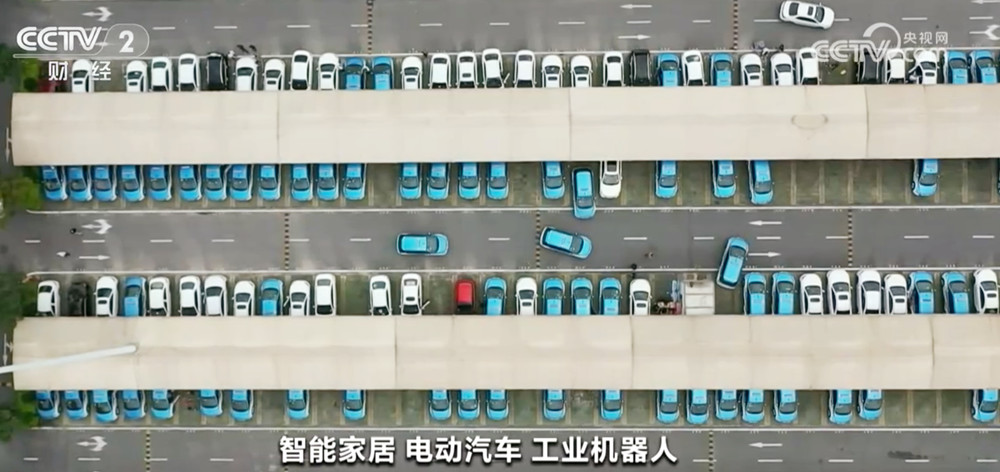
商务部:我国外贸“向上”“向新”的势头更加巩固
Xin Hua Cai Jing· 2025-08-21 08:48
Core Insights - China's foreign trade is showing a solid upward and innovative momentum, with a total import and export value of 25.7 trillion yuan in the first seven months of the year, reflecting a year-on-year growth of 3.5% [2] Group 1: Trade Performance - In the first seven months, China's exports of electromechanical products increased by 9.3%, accounting for 60% of total exports, which is a 1.1 percentage point increase year-on-year [2] - High-tech and high-value-added products such as smart home devices, electric vehicles, industrial robots, and ships maintained a high export growth rate [2] - A total of 654,000 foreign trade enterprises achieved import and export performance in the first seven months, with nearly 90% being private enterprises [2] Group 2: Challenges and Strategies - The international economic and trade environment is facing significant risks and challenges, with increased tariff barriers raising global trade costs and affecting supply chain efficiency and stability [2] - China will continue to expand high-level opening-up and focus on high-quality development to address various uncertainties in the global trade landscape [2]
小米EV业务年内或盈利,入局仅1年
日经中文网· 2025-08-21 08:00
Core Viewpoint - Xiaomi's electric vehicle (EV) business is expected to achieve profitability by 2025, leveraging its competitive pricing and strong sales momentum, despite facing challenges related to rapid expansion and production capacity [2][4][6]. Group 1: Financial Performance - In the fiscal quarter from April to June 2025, Xiaomi reported a 30% year-on-year increase in overall revenue, reaching 115.9 billion yuan, with net profit soaring to 11.8 billion yuan, a 2.3-fold increase compared to the same period last year [4]. - Xiaomi's EV-related business incurred a loss of 300 million yuan, despite the company investing approximately 30 billion yuan in the EV sector over the past three years [4][5]. - The gross margin for Xiaomi's automotive business reached 26.4%, surpassing BYD's automotive gross margin of 22% for the 2024 fiscal year [5]. Group 2: Product Launch and Sales - The EV sedan "SU7," launched in March 2024, has seen strong sales, while the SUV "YU7," released in June, received over 240,000 pre-orders within 18 hours [6]. - Xiaomi is currently able to deliver 30,000 vehicles per month, but faces long delivery times of 34-58 weeks for new models, which could lead to customer attrition if not addressed [6]. Group 3: Market Challenges - Despite strong performance in the EV sector, Xiaomi faces issues related to production capacity and sales disputes, which could harm its brand image if unresolved [6]. - The company is also experiencing a 2% decline in overall smartphone revenue, prompting a downward revision of its 2025 shipment target by 5 million units to 175 million [9]. - The economic uncertainty and low demand in the Chinese real estate market are contributing to a challenging operating environment, necessitating the establishment of a business model that does not rely on subsidies [9].