工业制造

Search documents
金融期货周报-20251107
Jian Xin Qi Huo· 2025-11-07 13:30
Report Information - Report Title: Financial Futures Weekly Report [1] - Date: November 7, 2025 [2] - Researcher: He Zhuoqiao, Huang Wenxin, Nie Jiayi [3] Industry Investment Rating - Not provided in the report. Core Viewpoints - For the stock index, in the long - term, the upward trend remains unchanged due to the easing external environment and new policy expectations from the 15th Five - Year Plan. In the short - term, the index may oscillate around the key pressure level of 4000 points on the Shanghai Composite Index. A dumbbell strategy with balanced allocation of CSI 300 and CSI 500 is recommended [13]. - For treasury bonds, the negative factors in the bond market have basically been released, and November is a stage of accumulating positive factors. Although there are some uncertain disturbances, the overall bond market environment has improved. It is recommended to seize allocation opportunities when there is market over - adjustment [87]. - For shipping indexes, although the actual demand may not support large price increases, the freight rate is likely to form an upward trend, and the bottom may have been reached. It is recommended to maintain the idea of buying on dips for the December contract [108]. Summary by Section Stock Index Market Review - The A - share market has shown a pattern of "short - term correction followed by strong performance, and rebound after a sharp decline due to external shocks" since the beginning of the year. From November 3 - 7, the A - share market rose with reduced volume. The Wind All - A index rose 0.62%, and large - cap blue - chip stocks performed better. Futures were weaker than the spot index [7][8]. - Looking ahead, concerns about liquidity in the US market and high expectations for Sino - US tariff negotiations have led to a weakening market after the positive news was released. Domestically, the economic fundamentals in September faced more pressure, and the export data in October showed a downward trend. Although the margin trading balance provided support, the participation of retail investors was not high. The overall A - share trading volume returned to 2 trillion yuan, and its sustainable growth needs attention [12][13]. 成交持仓分析 - Stock index trading volume decreased. The average daily trading volumes of IF, IH, IC, and IM decreased by 1.13, 0.71, 0.79, and 0.46 million lots respectively compared with last week. The positions showed a differentiated trend. IF and IM positions increased, while IH and IC positions decreased [14]. 基差、跨期价差及跨品种价差分析 - The basis showed a differentiated trend. The basis of CSI 300 and CSI 500 widened, while that of SSE 50 changed from premium to discount, and the basis of CSI 1000 narrowed. The annualized basis rate of each index decreased. The spread between the next - month and current - month contracts of IF, IC, and IM widened, while that of IH narrowed. The spread between the current - quarter and current - month contracts of all varieties widened. Large - cap blue - chip stocks performed relatively better [16][26][32]. Industry Sector Overview - In the CSI 300, the energy, industrial, and financial sectors led the gains, while the pharmaceutical, optional consumer, and information sectors led the losses. In the CSI 500, the energy, public utilities, and industrial sectors led the gains, while the real estate, pharmaceutical, and information sectors led the losses. Among the first - level industries, the power equipment, coal, and petroleum and petrochemical sectors led the gains, while the beauty care, computer, and pharmaceutical biology sectors led the losses [33][35]. Valuation Comparison - As of November 7, the rolling price - to - earnings ratios of CSI 300, SSE 50, CSI 500, and CSI 1000 were 14.3295, 11.9766, 33.464, and 47.8124 times respectively, and they were at the 88.07%, 91.32%, 79.72%, and 77.08% percentile levels in the past decade [38]. Treasury Bonds This Week's Market Review - **Treasury Bond Futures Market**: The central bank's bond - buying was slightly lower than expected, and the warming of the A - share market suppressed the bond market. The performance of long - term futures was slightly stronger than that of spot bonds, while the opposite was true for short - term bonds. There is a certain positive arbitrage space for each variety's main contract, and there is a large reverse arbitrage space for non - CTD bonds of 30 - year, 10 - year, and 2 - year main contracts. The basis of the 10 - year main contract is slightly high and has the motivation to converge. The spread between the current - quarter and next - quarter contracts is expected to continue to narrow during the position - shifting process. A flattening strategy is recommended [42][44][51]. - **Bond Spot Market**: Most of the spot yields of treasury bonds increased this week, with a larger increase at the short end. The yield of US Treasury bonds first decreased and then increased [65]. - **Funding Situation**: At the beginning of the month, there was a net withdrawal of funds. The central bank conducted an equal - amount renewal of the 3 - month outright reverse repurchase due this month. The overall funding situation was stable, and there was no liquidity stratification between banks and non - banks [70]. - **Interest Rate Derivatives**: The yields of interest rate swap varieties increased slightly this week, and the liquidity expectation was stable [85]. Market Analysis - The bond market stabilized and strengthened in October. Currently, the economic fundamentals still face pressure, and the market's expectation of monetary easing may rise again. The restart of treasury bond trading has brought direct buying demand to the bond market, and the impact of wide - credit expectations on the bond market should be limited. Although there are some uncertain disturbances, the bond market environment has improved [87]. Next Week's Open - Market Maturities and Important Economic Calendar - There are a total of 783 billion yuan of reverse repurchases due next week, and important economic data such as China's October social financing data and national economic activity data will be released [95]. Shipping Index Market Review - The reduction of quotes hit the sentiment of long - positions. This week, the SCFIS index turned down again. On the spot side, shipping companies reduced the price increase, which hit the sentiment of long - positions and led to a sharp decline in EC futures [96]. Container Shipping Market Situation - **Spot Market**: The freight rates of ocean routes continued to rebound, with the rates of European and American routes rising. Shipping companies continued to raise the quotes for November and December, but the increase was lower than before. Considering the general demand and the decline of the SCFIS index, it is uncertain whether the price increase can be fully implemented [102][103]. - **Supply - Demand Fundamentals**: On the supply side, the container shipping capacity in Europe in November remained at a relatively high level in the off - season, and the potential and actual shipping capacities are expected to continue to grow. The geopolitical conflict in the Middle East continues to deteriorate, and the probability of the Red Sea resuming navigation within the year is low. On the demand side, the macro - demand in the eurozone continues to recover weakly, and the demand at the end - of - year peak season may be lower than expected, so the support for container shipping prices is limited [106][107]. Market Outlook - Although the actual demand may not support a large price increase, the freight rate is likely to form an upward trend, and the bottom may have been reached. It is recommended to maintain the idea of buying on dips for the December contract [108].
威海:“AI+”赋能千行百业
Da Zhong Ri Bao· 2025-11-07 06:45
Group 1: AI Empowerment in Industries - Dishang Group utilizes AI technology to enhance the entire supply chain, processing over 2 million data streams daily through a smart hub built with 3,000 IoT devices [1] - The AI clothing design system can generate 100 design proposals for specific keywords, improving design and development cycles by 20% and supply chain management efficiency by 25% [1] - The company achieved a 98% pass rate in quality inspections and increased customer satisfaction to 98% due to AI support [1] Group 2: Government Services and AI Integration - Weihai's Big Data Bureau is actively exploring the integration of AI across various sectors, enhancing service speed, work efficiency, and quality of life [2] - AI applications in industrial manufacturing have emerged in companies like Weigao Group and Dishang Group, focusing on cost reduction and efficiency improvement [2] - The local deployment of AI models like DeepSeek has supported 18 government departments, improving job services and creating an "AI resume assistant" for job seekers [2] Group 3: Innovations in Public Services - The introduction of an AI-powered service agent in the "Love Shandong" app allows users to obtain information quickly through natural language queries, reducing the need for extensive searches [3] - The AI service agent aims to streamline over 90% of simple inquiries in high-frequency public service areas, enhancing user experience [3] - The Big Data Bureau plans to develop more practical AI services to improve governance, industry development, and cultural tourism [3]
报告:超半数中国CEO对未来一年中国经济增长抱有信心
Zheng Quan Shi Bao Wang· 2025-11-07 05:40
Core Insights - The 8th China International Import Expo (CIIE) is taking place in Shanghai from November 5 to 10, showcasing a positive shift in CEO confidence regarding China's economic growth for the upcoming year [1] Summary by Categories Economic Outlook - 54% of Chinese CEOs express confidence in China's economic growth over the next year, an increase of 9 percentage points from the previous year, and significantly higher than their confidence in the global economy [1] - 73% of Chinese CEOs anticipate positive revenue growth for their companies this year, down from 81% last year; 20% expect negative revenue growth, up from 15% last year [1] Industry Performance - There is a notable divergence in revenue growth expectations between emerging and traditional industries; the life sciences and technology sectors show the most optimistic revenue growth outlook [1] - Traditional industries such as industrial manufacturing, consumer retail, and real estate face pressure on revenue growth due to supply-demand imbalances and weak demand [1] Competitive Challenges - "Involution" competition is identified as a significant short-term challenge for Chinese companies; 52% of CEOs prioritize R&D and innovation to develop new productive capabilities to overcome this competition [1]
山西证券研究早观点-20251107
Shanxi Securities· 2025-11-07 01:54
Group 1: Market Overview - The report highlights a positive trend in the domestic capital market, with major indices showing gains, such as the Shanghai Composite Index rising by 0.97% and the Shenzhen Component Index increasing by 1.73% [3] - The average daily trading volume in A-shares reached 2.32 trillion yuan, reflecting a 29.38% increase compared to the previous period [7] - The report notes a mixed performance among major indices from October 27 to October 31, with the Shanghai Composite Index increasing by 0.11% and the ChiNext Index rising by 0.50% [7] Group 2: Industry Insights - The non-bank financial sector is experiencing a favorable outlook due to deepening capital market reforms, which are expected to enhance the fundamentals of brokerage firms [5][7] - The report discusses the communication industry, emphasizing the strong growth in AI computing demand and the mismatch between short-term performance expectations and actual results [6][8] - The report indicates that the North American cloud service providers (CSPs) are expected to significantly increase their capital expenditures, with a projected total of $443 billion to $632 billion from 2025 to 2027 [8] Group 3: Company Performance - Industrial Fulian (601138.SH) reported a revenue increase of 38.40% year-on-year for the first three quarters of 2025, driven by strong demand for AI servers [15] - The company achieved a net profit of 224.87 billion yuan, reflecting a 48.52% increase year-on-year, with significant growth in its cloud computing and communication equipment segments [15] - Xihang West Flight (000768.SZ) reported a revenue of 302.44 billion yuan for the first three quarters of 2025, marking a 4.94% increase year-on-year, with a net profit of 9.92 billion yuan, up 5.15% [11] Group 4: Investment Recommendations - The report suggests a "Buy-A" rating for Industrial Fulian, with projected EPS of 1.78, 2.79, and 3.75 for 2025-2027, indicating strong growth potential in the AI server market [16] - For Xihang West Flight, the report maintains an "Increase-A" rating, forecasting EPS of 0.42, 0.48, and 0.57 for the same period [14] - The report highlights the growth potential of the tire industry, particularly for Wind God Co. (600469.SH), which is expected to benefit from increasing demand for specialty tires and a new production project [24][28]





中国牵头制定的工业5G国际标准发布
Zhong Guo Xin Wen Wang· 2025-11-06 07:22
Core Viewpoint - The release of the first global industrial 5G international standard, led by China, marks a significant milestone in the integration of 5G technology within industrial applications, facilitating the digital, networked, and intelligent transformation of global industries [1] Group 1: Standard Development - The standard, titled "General Requirements for Industrial Network 5G Communication Technology," was jointly proposed by China and Germany, with contributions from experts from the United States, France, Japan, and other countries [1] - This standard fills a gap in international standards for industrial 5G, emphasizing the collaborative effort among multiple nations [1] Group 2: Application and Scope - The standard focuses on the basic architecture, operational mechanisms, and maintenance management of 5G networks in industrial settings [1] - It provides various use cases for the integration of 5G technology in industrial environments, applicable throughout the entire lifecycle of 5G industrial wireless communication systems, from planning and design to construction and optimization [1] - The standard aims to offer unified technical specifications for users, design units, and equipment manufacturers deploying and applying 5G technology in industrial contexts [1]
我国牵头制定 全球首个工业5G国际标准正式发布
Yang Shi Xin Wen Ke Hu Duan· 2025-11-06 02:33
Core Points - The International Electrotechnical Commission (IEC) has officially released the world's first international standard for industrial 5G, titled "General Requirements for Industrial Network 5G Communication Technology" [1][2] - The standard was jointly proposed by China and Germany, with contributions from experts from the United States, France, Japan, and other countries, filling a gap in international standards for industrial 5G [1] - The deep integration of 5G and industry is recognized as a core engine driving the global digital, networked, and intelligent transformation of industries [1] - The standard focuses on the basic architecture, working mechanisms, and maintenance management of 5G networks in industrial applications, providing various use cases for the integration of 5G in industrial environments [1] - It offers a unified technical specification for the entire lifecycle of 5G industrial wireless communication systems, from planning and design to construction and optimization, benefiting users, design units, and equipment manufacturers [1] Industry Impact - The release of this standard marks a milestone achievement for China in the "5G + Industry" integration application field, contributing Chinese wisdom and solutions to the global manufacturing industry's digital transformation [2]
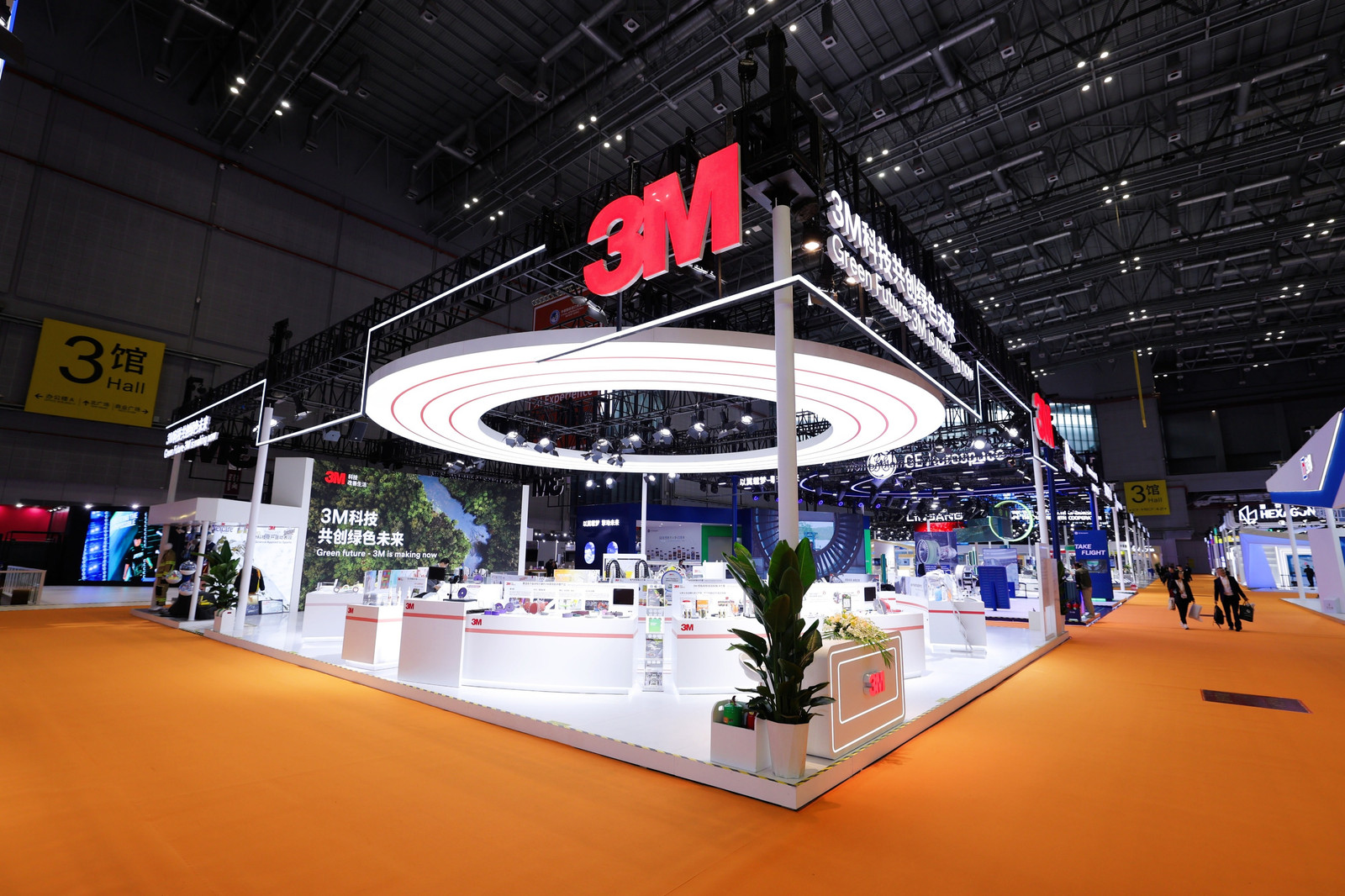
3M八年同行进博, 以科技之力共创绿色未来
Di Yi Cai Jing· 2025-11-06 01:34
Core Insights - 3M is participating in the China International Import Expo (CIIE) for the eighth consecutive year, showcasing its commitment to innovation and local collaboration with the theme "3M Technology Co-creating a Green Future" [1] - The company emphasizes its focus on five key markets: industrial, safety, automotive, electronics, and consumer, demonstrating its dedication to sustainable development through technological advancements [1][3] Group 1: Innovation and Product Focus - 3M's industrial display area features key solutions aimed at enhancing production efficiency and precision in manufacturing [3] - The safety display area highlights 3M's commitment to protecting the health and safety of professionals [5] - The automotive display showcases multi-dimensional material science solutions that cater to the evolving demands for electrification, intelligence, and personalization in the automotive industry [5] - The electronics display focuses on providing advanced optical solutions to meet the increasing demands for screen durability and optical clarity [5] - The consumer display area addresses the growing demand for environmentally friendly materials, balancing functionality and sustainability [5] Group 2: Strategic Collaborations - During the expo, 3M will sign a strategic cooperation memorandum with Dow, focusing on new materials and environmental technologies to accelerate the transition to low-carbon industries [6] - This collaboration aims to leverage both companies' resources to explore cutting-edge green technologies and enhance the practical application of research outcomes [6] Group 3: Commitment to Local Development - The CIIE has become a significant platform for attracting foreign investment, with 3M recognizing the investment opportunities in the Chinese market [7] - 3M's Shanghai chemical production base, which includes a $50 million smart cutting center, enhances its ability to meet the needs of domestic electronic and industrial clients [7] - A recent expansion project at the Shanghai chemical production base increased production capacity by 50%, aligning with the diverse demands for low-pollution, lightweight, and high-strength products in the consumer electronics and automotive sectors [7] - Upgrades to the optical materials pilot laboratory further strengthen 3M's competitive advantage in research, testing, and production, enabling efficient responses to client needs in the electronic and automotive sectors [7]


促进贸易优化升级 绿色贸易领域首个专项政策文件出台
Zhong Guo Chan Ye Jing Ji Xin Xi Wang· 2025-11-04 22:32
Core Insights - The implementation opinions on expanding green trade, as the first specialized policy document in the field, aim to promote trade optimization and support the achievement of the "dual carbon" goals in the context of global climate change and green low-carbon transition [1][2] Group 1: Policy Measures - The policy focuses on enhancing the green low-carbon development capabilities of foreign trade enterprises, promoting green design and production, reducing carbon emissions from foreign trade products, and establishing a public service platform for green trade [1] - It emphasizes the development of sustainable fuel trade, such as green hydrogen, and the improvement of standards and management measures for the import of renewable resources [1] - The policy aims to create a favorable international environment for green trade by promoting inclusive and fair international green trade rules and actively participating in high-standard trade agreement negotiations [1] Group 2: Industry Performance - China's exports of green low-carbon products, including wind power, photovoltaics, and new energy vehicles, have reached over 200 countries and regions, significantly reducing global wind and solar power generation costs by over 60% and 80% respectively [2] - The Ministry of Industry and Information Technology has established 451 green design enterprises and developed over 40,000 green products, with the output of national green factories accounting for over 20% [2] - The goal is to increase the output proportion of green factories at all levels to 40% by 2030 [2] Group 3: Regulatory Framework - The State Administration for Market Regulation has revised the "Management Measures for Adopting International Standards," which has shortened the international standard conversion time by nearly six months [3] - As of September, China's overall international standard conversion rate has reached 86%, achieving the 2025 target set in the National Standardization Development Outline [3] - The People's Bank of China plans to introduce a "Green Low-Carbon Transition Industry Guidance Catalog" in February 2024 to clarify green trade recognition and reduce trade barriers [3]
“十四五”期间 我国研制发布数据领域国家标准超120项
Yang Shi Xin Wen· 2025-11-03 18:06
Group 1 - The core viewpoint of the article highlights the significant progress in China's data standard system construction during the "14th Five-Year Plan" period, which supports the accelerated development of the digital economy [1] - China has become the first country globally to classify data as a production factor, advancing data standardization efforts [1] - Over 120 national standards in the data field have been developed and published during the "14th Five-Year Plan," with widespread applications in key areas such as artificial intelligence, new infrastructure, and data trading [1] Group 2 - The implementation of data standards has empowered various industries, including industrial manufacturing, healthcare, and transportation [1]
55只公募基金前三季度净值增长率超100%
Zheng Quan Ri Bao Zhi Sheng· 2025-11-03 16:08
Group 1 - The core viewpoint of the articles highlights the strong performance of public funds in the third quarter, with 55 funds achieving a net value growth rate exceeding 100% year-to-date, indicating a positive investment experience for holders [1][2] - A significant portion of these high-performing funds, including those focused on innovative pharmaceuticals and advanced manufacturing, have substantial management scales exceeding 10 billion yuan, demonstrating a commitment to long-term investment strategies [1][2] - The innovative pharmaceutical fund has consistently held top positions in quality pharmaceutical companies, with over 70% of its total market value concentrated in its top ten holdings, reflecting a strong belief in the potential of the pharmaceutical sector [1] Group 2 - The advanced manufacturing fund, with a management scale over 10 billion yuan, has also shown a focus on key industrial stocks, with over 40% of its total assets in its top ten holdings, indicating a strategic approach to investment [2] - Analysts note that China's innovation-driven policies have accelerated the development of core technology sectors such as artificial intelligence and semiconductors, creating favorable conditions for funds focused on high-growth areas [2] - The successful performance of many funds in the first three quarters of the year is attributed to three core characteristics: industry focus, low turnover rates, and consistent strategies, which align with the principles of long-term investment [2][3]