
矿业

Search documents
港股概念追踪|美国铜期货交易价格屡创新高 机构看好大宗铜趋势走强(附概念股)
智通财经网· 2025-12-15 00:36
Group 1 - The core viewpoint is that European copper mining stocks are poised for their best annual performance since 2016, driven by rising U.S. copper futures prices and the potential for continued growth in 2026 [1] - Citigroup analysts favor Glencore Plc as their top stock pick for 2026, expecting a 15% increase in the stock price over the next 12 months due to the company's efforts to boost copper production [1] - Oddo BHF highlights Rio Tinto Group's attractive development roadmap in copper, particularly with the ramp-up of its Simandou project in Guinea, which is expected to enhance iron ore production [1] Group 2 - Oddo mining analyst Maxime Kogge maintains a bullish outlook on mining stocks for next year, emphasizing that a significant slowdown in the Asian economy could negatively impact market sentiment [2] - Citic Construction's report indicates that gold and silver performed strongly last week, while other risk assets were weaker, with precious metals expected to dominate the market in 2025 [2] - The report outlines three phases for precious metals in 2025, influenced by factors such as tariffs and Federal Reserve policies, suggesting that copper will be the next major commodity to watch after gold and silver [2] Group 3 - Key copper mining stocks in the Hong Kong market include Luoyang Molybdenum (03993), Zijin Mining (02899), Minmetals Resources (01208), Jiangxi Copper (00358), China Nonferrous Mining (01258), and China Metallurgical Group (01618) [3] - Key players in the copper-clad board sector include Kingboard Laminates (01888) and Kingboard Chemical Holdings (00148) [3]



洛阳钼业(03993.HK)子公司拟10.15亿美元收购EQX旗下LatAm及LGC 100%股权 获Aurizona等三座金矿权益
Ge Long Hui· 2025-12-15 00:30
Core Viewpoint - CMOC Limited, a subsidiary of Luoyang Molybdenum Co., Ltd., has signed an agreement to acquire 100% equity in Leagold LatAm Holdings B.V. and Luna Gold Corp. from Equinox Gold Corp. for a total consideration of $1.015 billion, which includes $900 million in cash at closing and up to $115 million in contingent cash payments based on sales performance after one year [1] Group 1 - The acquisition involves obtaining full ownership of the Aurizona Gold Mine, RDM Gold Mine, and Bahia integrated mining complex [1] - The deal is structured with an initial cash payment and a contingent payment linked to sales, indicating a performance-based component to the acquisition [1] - The transaction is expected to enhance CMOC Limited's portfolio in the gold mining sector, expanding its operational footprint in Latin America [1]

福特斯克金属集团宣布收购Alta Copper
Ge Long Hui A P P· 2025-12-14 23:52
格隆汇12月15日|澳大利亚矿业巨头福特斯克金属集团(FMG)12月15日宣布,与加拿大矿业公司Alta Copper签署协议,根据该协议,FMG拟收购Alta Copper尚未持有的64%已发行流通普通股,Alta Copper 股东将获得每股1.40加元的现金对价,该交易对Alta Copper的总股权估值达1.39亿加元(合1.01亿美 元)。 ...
中国真正的隐形首富:手握全球十万亿矿产,一年进账7227亿元
Sou Hu Cai Jing· 2025-12-14 14:04
我国的首富到底是哪位呢?根据去年的官方数据显示,农夫山泉的创始人钟睒睒以资产排名第一。然而,也有不少人对他是否真正是全国首富提出了疑问, 认为一些其他的大佬的财富甚至比他更多。 其中,拥有世界铜王美誉的王文银,掌握着全球顶级矿产的丰富资源,每年净赚7000亿,是许多人眼中的中国隐形首富。那么,他是如何获得如此巨大财富 的?在经商过程中,王文银又经历了怎样的一段传奇故事呢? 1. **寒门贵子,艰难创业** 像许多在改革开放大潮中崛起的富豪一样,王文银的家庭经济条件并不优越,他出生在安徽一个贫苦的农村家庭,正是典型的寒门贵子。1968年,王文银在 这个贫困家庭中诞生。 马云、马化腾等人一直是民间讨论的全国首富热门人选。而更有人认为,一些低调的、知名度不高的隐藏富豪更有可能才是真正的中国首富。 虽然家境贫寒,王文银的父母并没有放弃对他教育的投资,虽然家里经济捉襟见肘,他们仍然咬牙送王文银上学。由于时代的特殊背景,王文银的求学之路 并不顺利,但直到1989年,他终于考入了南京大学。 在那个大学生极为宝贵的年代,能够考入像南京大学这样的985高校,实属难得。因此,王文银毕业后顺利进入了一家国企,获得了一个铁饭碗的工作 ...


钟永生辞去副董事长职务
中国能源报· 2025-12-14 10:59
钟永生辞去西部矿业股份有限公司(以下简称"西部矿业")副董事长等职务。 12月13日,西部矿业发布公告称,公司董事会于近日收到董事、副董事长钟永生先生提交的书面辞职报告, 钟永生先生因工作调动, 申请辞去公司董事、副董事长及战略与可持续发展委员会委员职务 。辞职后,钟永生先生将不再担任公司任何职务。 来源:上海证券交易所网站 End 欢迎分享给你的朋友! 出品 | 中国能源报(c ne ne rgy) 责编丨李慧颖 人民服系社主管主办 能源领域最大的原创内容基地 010-6536 9497 发行热线 中国的话报 010-6536 9481 传 真 @ 人工 . Dast 践行央媒使命 守望能源变革 2026年《中国能源报》 全年定价480元/份 每周一出版 012 国内邮发代号1-6 百姓5 国内统一刊号为CN11—0068 中国能源网(含官方微博、官方微信 )入列中央新闻网站 | 姓名 | 离任职务 | 离任时间 | 原定任期 | 离任原因 | 是否继续在上 市公司及其控 | 具体职务 | 是否存在 未履行完 | | --- | --- | --- | --- | --- | --- | --- | --- ...

智利1-10月累计铜产量下降
Shang Wu Bu Wang Zhan· 2025-12-13 15:42
Group 1 - The core point of the article highlights a slight decrease in Chile's copper production for the first ten months of 2025 compared to the same period in 2024, with a total output of 4.427 million tons, down 0.7% from 4.458 million tons [1] Group 2 - In October 2025, copper production in Chile was 455,000 tons, representing a year-on-year decline of 6.8% [1] - Codelco, the state-owned copper mining company, reported a cumulative copper production of 1.127 million tons for the first ten months of 2025, reflecting a year-on-year increase of 0.7% [1] - BHP's Escondida mine achieved a cumulative copper production of 1.139 million tons, marking a year-on-year growth of 10% [1] - The Collahuasi mine, jointly owned by Glencore and Anglo American, produced 332,000 tons of copper, which is a significant year-on-year decrease of 30% [1] - Antofagasta Minerals' Los Pelambres mine reported a cumulative copper production of 252,000 tons, down 7.8% year-on-year [1]

供应紧张与AI需求推动铜价一路猛涨,每吨接近1.2万美元
Sou Hu Cai Jing· 2025-12-13 10:12
IT之家 12 月 13 日消息,当地时间 12 月 12 日,据路透社报道,在 AI 数据中心需求迅猛增长、矿端供应受限以及美国以外地区铜源紧张的背景下,铜价正 快速逼近每吨 12000 美元(IT之家注:现汇率约合 84771 元人民币)。 目前,Comex 铜库存已升至 405782 吨,占全球交易所库存的 61%,而 2025 年初仅为 20%。 累积。 铜因导电性能突出,成为支撑数据中心、电网升级、纯电动汽车以及能源转型基础设施的关键材料。 今年以来,受矿山事故和美国囤货行为推动,铜价累计上涨 35%,有望创下 2009 年以来最大涨幅。当地时间周五,铜价触及每吨 11952 美元。 路透社汇总的分析师预测显示,铜市场今年将出现 12.4 万吨供应缺口,明年缺口预计扩大至 15 万吨。 全球范围内用于电网升级和扩容的巨额投资正在持续推高铜需求,而数据中心与清洁能源项目对电力的需求尤为庞大,进一步放大了铜的战略地位。 麦格理预计今年全球铜需求为 2700 万吨,同比 2024 年增长 2.7%,中国需求量的增幅为 3.7%。麦格理判断,明年中国以外地区的铜需求增速约为 3%。 麦格理分析师爱丽丝・福克 ...

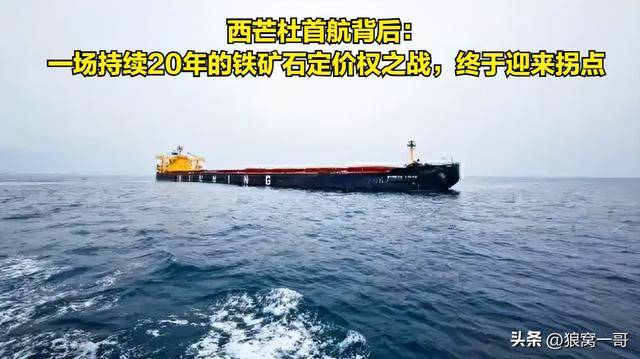
西芒杜首航背后:一场持续20年的铁矿石定价权之战,终于迎来拐点
Sou Hu Cai Jing· 2025-12-13 06:45
Core Viewpoint - A cargo ship carrying iron ore from Africa is set to fundamentally change the global industrial system, marking a shift from China being a mere buyer to becoming a rule-maker in the iron ore market [2][3]. Group 1: Significance of the Iron Ore Shipment - The shipment consists of 200,000 tons of iron ore, which is not just an ordinary commodity but the "blood" of the industrial system [5]. - Steel is foundational for various sectors including infrastructure, manufacturing, military, energy, transportation, shipbuilding, machinery, and real estate [6]. - For over two decades, China has been in a passive position in this critical resource segment [6]. Group 2: China's Historical Position in Iron Ore Market - China has been the largest steel producer and iron ore importer but has lacked pricing power due to the high level of market monopoly [8]. - The global iron ore shipping market has been dominated by three major groups that control mines, ports, shipping routes, and pricing mechanisms [7]. Group 3: Breaking the Monopoly Structure - The significance of the Simandou project lies not in resource scarcity but in breaking the threefold monopoly: resource, transportation, and financial [11]. - Simandou's high-quality ore provides a structural advantage in steel production, reducing costs and emissions [12]. - The project integrates mining, transportation, and shipping, creating a complete operational system that connects African resources to the global industrial cycle [14]. Group 4: China's New Role in the Supply Chain - China is transitioning from being a terminal buyer to a core participant and organizer in the iron ore supply chain [19]. - This shift allows China to transform iron ore from a market risk into an industrial asset, marking a qualitative change in its role [19]. Group 5: Transfer of Pricing Power - The transfer of pricing power is contingent on three hard conditions: the ability to choose not to buy, the ability to influence supply timing, and the capacity to participate in rule-making [22][25][29]. - With Simandou's gradual output, China gains alternative options, diminishing the pricing power of traditional suppliers [24]. Group 6: Implications for Guinea - For Guinea, the Simandou project represents not just mineral sales but a comprehensive infrastructure development that supports long-term economic growth [32]. - The project is characterized as a development-oriented partnership rather than exploitative extraction [33]. Group 7: China's Industrial Security Strategy - The project reflects China's matured industrial security strategy, aiming to secure critical resources and integrate them into a controllable system [36]. Group 8: Future Implications - The iron ore shipment signifies a milestone, indicating that China is poised to gain long-term pricing power and reshape the global iron ore market dynamics [43].
12月11日【中銀做客】恆指、紫金礦業、小米、建行
Ge Long Hui· 2025-12-13 04:20
Market Overview - The Hong Kong stock market is currently experiencing a narrow range of fluctuations, with the Hang Seng Index oscillating between 25,100 and 26,100 points, indicating a lack of clear direction [1][2] - Recent trading volumes have decreased significantly, with several days recording turnover below 200 billion HKD, contrasting with previous levels exceeding 230 billion HKD [1][2] - Investor sentiment appears cautious, with many adopting a wait-and-see approach as the market approaches the holiday season [1][2] Investment Products - In the current unclear market environment, investors are increasingly focusing on index-related products such as Hang Seng Index warrants, which allow for short-term trading even with limited index movement [2][3] - It is advised that investors avoid short-term warrants due to potential declines in implied volatility, especially around holiday periods [3] Commodity Stocks - Commodity-related stocks, including Zijin Mining (02899), are attracting attention as international commodity prices tend to improve towards year-end, supported by a recent interest rate cut in the U.S. [3][4] - Zijin Mining's stock price has risen to around 33 HKD, up from approximately 30 HKD in late October, indicating strong investor interest in commodity stocks [4] Xiaomi Corporation - Xiaomi's stock has shown resilience, recovering from a recent low of 36.6 HKD, with management actively buying back shares, which may stabilize the stock price [5][6] - Recent data indicates a significant inflow of approximately 12 million HKD into Xiaomi's warrants over the past five trading days, reflecting strong investor support [6] China Construction Bank - China Construction Bank (939) has seen its stock price decline to around 7.5 HKD, raising questions about potential stabilization and rebound opportunities [6][7] - There is growing interest in CCB's warrants, with investors considering the current price level as a potential entry point for a rebound [6][7] - A specific CCB warrant (20915) offers an attractive leverage of nearly 12 times, making it appealing for investors anticipating a price recovery [7]
应紧张和人工智能需求如何推动铜价逼近12,000美元
Wen Hua Cai Jing· 2025-12-13 02:16
Group 1 - The demand for copper is expected to surge due to the rise of artificial intelligence data centers and tight supply outside the U.S., pushing copper prices close to $12,000 per ton [1] - Copper prices have increased by 35% year-to-date, potentially marking the largest annual gain since 2009, with a record high of $11,952 per ton reached recently [1] - A supply deficit of 124,000 tons is projected for the copper market this year, increasing to 150,000 tons next year, driven by significant investments in modernizing power grids and clean energy [1][2] Group 2 - The transition to renewable energy technologies, including wind and solar, is expected to further boost copper demand, with global demand projected to reach 27 million tons this year, a 2.7% increase from 2024 [2] - Supply disruptions, including an incident at Freeport-McMoRan's Grasberg mine in Indonesia, have heightened expectations of supply tightness, with U.S. copper prices attracting traders [2] - As of now, copper inventories in exchange warehouses have increased by 54% to 661,021 tons, with Comex copper inventory reaching a record 405,782 tons, accounting for 61% of total exchange inventory [2][3]