服装

Search documents
2025年第43周:服装行业周度市场观察
艾瑞咨询· 2025-11-03 00:03
Industry Environment - In Q2 2025, major sports and apparel companies reported mixed financial results, with Nike's revenue at $11.097 billion, down 12% year-on-year, and a 21% decline in Greater China; Adidas saw a 2.2% increase in net sales to €5.952 billion, but a 3% drop in Greater China [2][3] - Anta's revenue grew by 14.3% in the first half of the year, with FILA brand revenue hitting a record high; Lululemon's quarterly revenue reached $2.525 billion, up 6.5% [2][3] - Puma's quarterly sales fell by 8.3%, resulting in a net loss of €247 million; Asics reported a 17.7% increase in net sales for the first half of the year [3] Trend Analysis - The "sneaker speculation" trend is waning, leading to reduced premiums in the basketball shoe market; however, new brands are emerging through platforms like Douyin, leveraging personal influence and fan economies [4] - Customization and national trend designs are becoming key drivers in jewelry consumption, with young women aged 24-30 leading the market; the demand for unique designs and emotional resonance is increasing [5] Shopping Center Dynamics - International fast fashion brands like H&M and Zara are losing ground in China due to e-commerce competition and brand aging, leading shopping centers to pivot towards high-rent sectors like dining and beauty [6][7] Global Expansion of Domestic Brands - Chinese apparel brands are increasingly targeting Southeast Asia for expansion, with companies like HLA and Semir opening numerous stores; however, overseas revenue remains low, typically under 2% of total revenue [8] High-End Functional Style - The rise of high-end functional fashion is influenced by cyberpunk aesthetics and a focus on human-centered design, with brands like Descente leading the trend by combining technology and aesthetics [9] Major Brand Developments - Lao Feng Xiang invested $24 million for a 20% stake in Maybach Luxury Goods Asia-Pacific to enhance its high-end business; this move aims to expand into the international market [10] - Tambor is transitioning from down jackets to outdoor sports and has filed for a Hong Kong IPO, facing challenges like brand recognition and high inventory turnover [11] - LVMH reported a 1% year-on-year revenue increase in Q3, leading to a significant rise in stock prices across the luxury sector, with a total market value increase of $70 billion [12][13] Market Innovations - Descente is gaining popularity among civil service professionals in China due to its functional designs, while facing challenges in maintaining a high-end image [14] - Bananain launched a pop-up store in Shanghai, focusing on immersive experiences and social causes, highlighting the brand's commitment to comfort and warmth [15] Lululemon's Challenges - Lululemon's recent quarterly report showed slowing revenue growth, particularly in men's apparel, with a significant drop in market value; the brand faces challenges in balancing core business and diversification efforts [16][17] Market Trends in Gold - The price of gold reached a new high, with institutions predicting further increases; brands like Chow Tai Fook are raising prices, but consumer sentiment remains cautious [18] Shein's Expansion - Shein is transitioning from an online-only model to a multi-channel retail approach, opening stores in France while facing localization challenges and regulatory pressures [19]


股市必读:比音勒芬三季报 - 第三季度单季净利润同比下降27.42%
Sou Hu Cai Jing· 2025-11-02 20:39
Core Viewpoint - The financial performance of Biyinlefen (002832) shows mixed results for the third quarter of 2025, with revenue growth but a significant decline in net profit, indicating potential challenges ahead for the company [3][4]. Trading Information - On October 31, 2025, Biyinlefen's stock closed at 15.98 yuan, up 1.4%, with a turnover rate of 2.09% and a trading volume of 81,500 shares, amounting to a transaction value of 130 million yuan [1]. - The net outflow of main funds was 13.16 million yuan, while retail investors saw a net inflow of 10.04 million yuan [1]. Shareholder Changes - As of September 30, 2025, the number of shareholders decreased to 36,400, a reduction of 1,623 or 4.26% from June 30, 2025. The average number of shares held per shareholder increased from 15,000 to 15,700, with an average market value of 247,900 yuan [2][4]. Financial Performance - For the first three quarters of 2025, Biyinlefen reported a main revenue of 3.201 billion yuan, a year-on-year increase of 6.71%. However, the net profit attributable to shareholders decreased by 18.7% to 620 million yuan, and the net profit excluding non-recurring items fell by 21.36% to 578 million yuan [3][4][5]. - In Q3 2025 alone, the company achieved a revenue of 1.098 billion yuan, up 3.23% year-on-year, but the net profit dropped by 27.42% to 205 million yuan [3][4]. Key Financial Metrics - The company's debt ratio stands at 25.64%, with investment income of 15.89 million yuan and financial expenses of 770,000 yuan. The gross profit margin is reported at 75.63% [3][4]. - Total assets at the end of the reporting period were approximately 7.356 billion yuan, reflecting a 2.14% increase from the previous year, while equity attributable to shareholders rose by 7.66% to 5.469 billion yuan [5][7]. Shareholder Information - The top ten shareholders include Xie Bingzheng, holding 37.88% of shares, followed by Feng Lingling with 3.44%. The majority of shares held by the top shareholders are subject to trading restrictions [9][10].

宁波太平鸟时尚服饰股份有限公司 关于“太平转债”可选择回售结果的公告
Zheng Quan Shi Bao· 2025-11-02 18:03
Core Viewpoint - The company announced that during the repurchase period from October 23 to October 29, 2025, no investors submitted repurchase applications for the "Tai Ping Convertible Bonds," resulting in a completed repurchase process without any financial transactions required [1][3]. Group 1: Repurchase Announcement - The repurchase period for the "Tai Ping Convertible Bonds" was set from October 23 to October 29, 2025, with a repurchase price of 100.49 CNY per bond, including the current interest [2][3]. - The company disclosed multiple announcements regarding the repurchase of "Tai Ping Convertible Bonds" from October 16 to October 29, 2025 [1]. Group 2: Repurchase Results and Impact - The effective number of repurchase applications during the period was 0, resulting in a total repurchase amount of 0 CNY, meaning no further financial actions are required [3][4]. - The repurchase of "Tai Ping Convertible Bonds" will not impact the company's cash flow, asset status, or share capital [3]. Group 3: Subsequent Matters - The unrepurchased "Tai Ping Convertible Bonds" will continue to be traded on the Shanghai Stock Exchange [4]. Group 4: Convertible Bond Issuance Overview - The company issued 8 million convertible bonds on July 15, 2021, with a total fundraising amount of 800 million CNY, and these bonds began trading on August 6, 2021 [8]. - The initial conversion price was set at 50.32 CNY per share, with the conversion period from January 21, 2022, to July 14, 2027 [8]. Group 5: Conversion Price Adjustments - The current conversion price is 20.88 CNY per share, with several adjustments made due to various corporate actions [6][13]. - The conversion price may be subject to downward adjustments if the company's stock price falls below 85% of the current conversion price for a specified period [16].

我什么都没做错,但过往的行业“蛋糕”,突然没有了
创业家· 2025-11-02 10:10
Core Insights - The article emphasizes that the decline of a product does not necessarily mean that the company is obsolete; rather, it highlights the importance of retaining core capabilities to adapt and survive in changing markets [2][3]. Group 1: Market Decline and Adaptation - The traditional kimono market in Japan has seen a drastic decline, dropping from 20 trillion yen in 1975 to approximately 2 trillion yen in 2023, a 90% decrease [8]. - The company Kyoto Monogatari faced a 90% drop in sales, illustrating the severe impact of market changes on traditional businesses [10]. - The fourth-generation heir of Kyoto Monogatari, Akira Arakawa, recognized that merely calling for a return to traditional culture would not suffice; instead, he opted for a strategic migration to adapt to the new market realities [13][14]. Group 2: Capability Assessment - Arakawa conducted a capability assessment, realizing that the company's true value lay in its unique dyeing technique, specifically the "extreme deep black" dyeing process [22]. - The dyeing process involves three key steps: basic dyeing, the use of a proprietary agent that allows the fabric to "absorb" light, and a patient drying process that enhances the quality of the dye [19][20][21]. Group 3: Market Opportunities - As consumer preferences shifted towards second-hand clothing due to economic and environmental considerations, Kyoto Monogatari identified a new market opportunity [24][26]. - The company launched the "PANDA BLACK" project in collaboration with WWF Japan, which involved revitalizing old garments by dyeing them black, thus appealing to modern consumers [27]. Group 4: Business Model Innovation - Kyoto Monogatari chose not to directly serve consumers but instead partnered with established retailers like BEAMS and Isetan to leverage their market presence, creating a win-win situation for all parties involved [30][32]. - This strategic partnership allowed Kyoto Monogatari to maintain its core capabilities while effectively reaching consumers through established retail channels [34].

中国设计师品牌出海:海外市场需要怎样的中国创造力?
Di Yi Cai Jing· 2025-11-02 05:39
Core Insights - Chinese designer brands are transitioning from product output to cultural and aesthetic output, marking a structural advancement in the industry [1][13] - The competitive landscape is intensifying, with new brands needing more than just good design to succeed, as market expectations are lowering due to homogenization [3][4] - The need for collaboration with local partners in Europe is emphasized for successful market entry [1][9] Industry Trends - The independent designer brand ecosystem is evolving, with a shift from pre-order models to a mix of pre-order and inventory sales, leading to a significant decrease in price points [3] - Consumer demand is contracting, and the cost of trial and error is rising, making it challenging for designer brands to grow in a market that lacks patience [4] - The women's apparel sector is experiencing revenue declines, prompting brands to seek differentiation outside the mainstream market [5] Brand Strategies - Raxxy, a rising brand, aims for high-end positioning despite the challenges of price competition, utilizing artistic methods to innovate its product offerings [5][7] - The brand is focusing on establishing a presence in key European markets through partnerships and high-profile retail locations [9][10] - Raxxy's first commercial collection is set to launch globally, with prices ranging from €2000 to €3000, indicating a strategy to penetrate the luxury segment [7][10] Cultural Integration - Chinese designers are increasingly drawing from local cultural elements and traditional craftsmanship to enhance their brand narratives and global appeal [8][12] - Collaborations and pop-up events are being used as strategies to build overseas recognition and market presence [8] - The emphasis is on creating a strong brand identity and narrative that resonates with international consumers [12] Market Challenges - New brands face the challenge of quickly establishing their identity and positioning in a mature and competitive market [9] - The rising costs associated with entering global markets necessitate careful financial planning and brand pricing strategies [9][10] - The importance of innovation in design and marketing is highlighted as a key factor for achieving international success [7][10]
森马服饰(002563):25Q3营收、利润均恢复正增长,经营周期触底回升
Shenwan Hongyuan Securities· 2025-11-02 04:11
Investment Rating - The investment rating for the company is "Buy" (maintained) [6] Core Insights - The company reported positive growth in both revenue and profit for Q3 2025, with revenue reaching 9.84 billion yuan (up 4.7% year-on-year) and a net profit of 537 million yuan (down 28.9% year-on-year) [6] - Q3 2025 revenue was 3.7 billion yuan (up 7.3% year-on-year) and net profit was 210 million yuan (up 4.5% year-on-year) [6] - The operating cycle is recovering, supported by national consumption promotion policies and upcoming e-commerce sales events [6] Financial Data and Profit Forecast - Total revenue forecast for 2025 is 15.602 billion yuan, with a year-on-year growth rate of 6.7% [2] - Net profit for 2025 is projected at 935 million yuan, with a year-on-year decline of 17.8% [2] - Earnings per share for 2025 is estimated at 0.35 yuan [2] - Gross margin is expected to be 44.1% in 2025 [2] - Return on equity (ROE) is projected to be 7.9% for 2025 [2] Market Data - As of October 31, 2025, the closing price of the stock is 5.41 yuan, with a market capitalization of 11.948 billion yuan [3] - The stock has a price-to-earnings (PE) ratio of 16 for 2025 [2] - The dividend yield is 9.24% based on the most recent dividend announcement [3] Sales and Profitability Analysis - For the first half of 2025, children's clothing brand Balabala generated revenue of 4.31 billion yuan (up 6% year-on-year) [6] - The casual wear segment saw a revenue decline of 5% to 1.72 billion yuan [6] - The self-operated channel outperformed, with online e-commerce revenue at 2.69 billion yuan (down 0.1% year-on-year) and offline direct sales at 0.95 billion yuan (up 34.8% year-on-year) [6] Operational Insights - The company is focusing on improving operational quality in offline stores and optimizing channel structures [6] - Inventory at the end of Q3 2025 was 4.14 billion yuan, with inventory turnover days at 191 days [6]

拓展绿色贸易释放创新活力
Jing Ji Ri Bao· 2025-11-01 22:04
Core Viewpoint - The 20th Central Committee's Fourth Plenary Session emphasizes the importance of "promoting innovative trade development," particularly focusing on "expanding intermediate goods trade and green trade," which is seen as a new driving force for China's foreign trade and a significant contribution to climate change response and green low-carbon transition [1][2]. Group 1: Definition and Importance of Green Trade - Green trade integrates environmental protection and sustainable development into the entire process of international trade, covering green products, technologies, services, and rules [2][3]. - The significance of developing green trade includes responding to international economic and trade rule adjustments, achieving carbon peak and carbon neutrality goals, and addressing traditional trade bottlenecks [4][5]. Group 2: Aspects of Green Trade - Green trade encompasses three main aspects: 1. The greening of trade objects, including environmentally friendly products like photovoltaic cells and electric vehicles [3]. 2. The greening of trade processes, focusing on minimizing environmental impacts throughout the supply chain [3]. 3. The inclusion of external environmental and social costs in trade accounting, such as carbon emissions and resource consumption [3]. Group 3: Current Trends and Achievements in Green Trade - China's green trade is experiencing robust growth, with significant increases in exports of green energy products, such as a 71.9% rise in wind turbine exports and over 200 billion yuan in photovoltaic product exports [5][9]. - The "new three items" (new energy vehicles, lithium batteries, and photovoltaic products) have seen a 2.6 times increase in export scale compared to 2020, marking a significant shift towards high-end, low-carbon products [9][10]. Group 4: Challenges and Future Directions - Despite the achievements, challenges remain, including the need for improved carbon management capabilities and the establishment of a unified green low-carbon product standard system [18][19]. - Future efforts should focus on enhancing international dialogue, improving carbon management capabilities, and participating in the development of global foundational carbon rules [18][19].
比羽绒服轻便,比冲锋衣时尚!防风防水防寒,一上架就卖爆了
洞见· 2025-11-01 12:35
Core Viewpoint - The article promotes a Swiss military brand's versatile and affordable outerwear, highlighting its quality, functionality, and significant discount from the original retail price [20][23][76]. Group 1: Product Features - The outerwear is designed to be lightweight yet warm, featuring a 450g fleece lining that retains heat effectively [29]. - It is waterproof, breathable, and resistant to dirt, making it suitable for unpredictable weather conditions [9][11]. - The product is available in multiple colors and sizes, catering to a wide range of body types and preferences [82][85]. Group 2: Pricing and Value Proposition - The original retail price of the outerwear is set at ¥1099, but it is currently offered at a promotional price of ¥159, representing a significant discount of approximately 85% [20][23]. - The article emphasizes that this outerwear can replace multiple clothing items, providing value for money by serving as a stylish windbreaker, casual jacket, and more [88]. Group 3: Brand and Market Position - The Swiss military brand has a long-standing reputation, established in 1884, and is recognized for its high-quality outdoor apparel sold in 22 countries [41]. - The article positions the outerwear as a competitive alternative to high-priced international brands, appealing to budget-conscious consumers [87].

今晚苏超决赛,“玩梗经济学”今年的收官之战
Jing Ji Guan Cha Bao· 2025-11-01 10:50
Group 1 - The "Su Super" league has rapidly gained popularity, transforming from a grassroots event into a nationwide phenomenon, igniting public enthusiasm and engagement [1][5][6] - The league's structure is unique in the Chinese football landscape, featuring teams from 13 cities competing in a format that enhances suspense and viewer engagement [2][3] - The league encourages widespread participation by setting low ticket prices and promoting a community-driven atmosphere, with most players being amateurs from various professions [3][4] Group 2 - The league has become a cultural event, with match days turning into community celebrations, attracting large crowds and even international visitors [4][5] - The online presence of "Su Super" has exploded, with social media engagement reaching billions of views, significantly surpassing traditional professional leagues [5][11] - Economic benefits have been observed, with increased tourism and local business activity linked to the league, demonstrating a multiplier effect in the region [6][7] Group 3 - The league has sparked various commercial opportunities, including brand sponsorships and merchandise sales, showcasing its potential for economic growth [7][8] - The "meme economy" surrounding the league has created a new marketing strategy, turning local culture and humor into viral content that drives engagement [8][9] - Government support has played a crucial role in the league's success, balancing oversight with the freedom for local creativity and participation [15][16] Group 4 - The success of "Su Super" raises questions about its replicability in other regions, highlighting the importance of local governance and cultural context [15][16] - The league's decentralized structure allows for diverse participation and local branding, which may not be easily replicated in areas with different administrative dynamics [16][17] - The rise of grassroots sports like "Su Super" challenges traditional professional leagues, emphasizing community engagement and emotional connection over commercial interests [18][19] Group 5 - The league's popularity indicates a strong public interest in football, suggesting potential for grassroots leagues to serve as talent pools for professional clubs [19][20] - "Su Super" poses a competitive threat to existing professional leagues, as it attracts attention and sponsorships that might otherwise go to traditional formats [20][21] - The league's emphasis on community and enjoyment may prompt professional clubs to reassess their operational strategies and focus more on fan engagement [21][22]
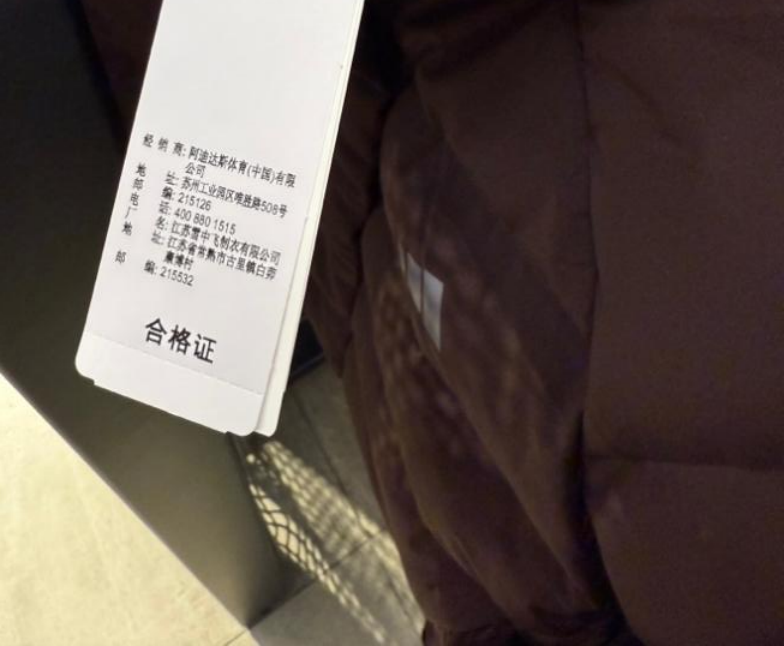
小吊牌藏着“利润剪刀差”:高端服饰定价倍率超10倍!同厂不同价背后,波司登们如何抢“话语权”
Mei Ri Jing Ji Xin Wen· 2025-11-01 06:20
Core Insights - The discussion around the pricing of international brands like Adidas and Nike has intensified, particularly regarding their reliance on Chinese manufacturers like Xuezhongfei, which has led to questions about brand value and consumer perception [1][2]. Group 1: Brand Perception and Consumer Behavior - Consumers are increasingly skeptical of brand premiums and are focusing on the actual value and quality of products, comparing specifications and prices rather than simply relying on brand names [2][9]. - The shift in consumer behavior indicates a preference for products that align with personal values, such as sustainability, rather than just brand prestige [9][18]. - The traditional brand premium model is being challenged as consumers demand transparency and justification for higher prices [7][9]. Group 2: Evolution of Chinese Manufacturing - Chinese manufacturers like Xuezhongfei and Shenzhou International are evolving from mere subcontractors to strategic partners with international brands, showcasing their manufacturing capabilities and quality standards [5][18]. - The Chinese apparel industry has developed a comprehensive and specialized supply chain that is difficult to replicate, maintaining its competitive edge despite some production moving to Southeast Asia [16][18]. - The transformation of Chinese manufacturing is marked by a shift from low-end processing to high-end manufacturing, with a focus on quality, efficiency, and innovation [18]. Group 3: Financial Performance and Market Dynamics - Xuezhongfei, under Bosideng, reported a 26.4% year-on-year increase in its OEM business revenue, indicating a growing market presence and recognition of its manufacturing capabilities [10]. - The financial performance of Bosideng's OEM business highlights the increasing importance of manufacturing partnerships in driving revenue growth [10][12]. - The concentration of major clients poses risks for manufacturers, emphasizing the need for diversification in client relationships to mitigate potential revenue losses [12][18].