医药

Search documents
利好!密集来袭!多部门最新部署→
Zheng Quan Shi Bao· 2025-09-29 00:11
Group 1 - New stock subscription: Dao Sheng Tian He with subscription code 780026, issue price 5.98 yuan per share, subscription limit of 27,500 shares [7] - Industrial and Information Technology Ministry and eight other departments issued the "Non-ferrous Metal Industry Stabilization Growth Work Plan (2025-2026)", targeting an average annual growth of around 5% in added value for the non-ferrous metal industry and a 1.5% average annual growth in the production of ten non-ferrous metals [7] - The Ministry of Transport and six other departments issued the "Implementation Opinions on 'Artificial Intelligence + Transportation'", aiming for widespread application of AI in transportation by 2027 and deep integration by 2030 [8] Group 2 - The Ministry of Industry and Information Technology, the Ministry of Ecology and Environment, and the People's Bank of China issued the "Petrochemical and Chemical Industry Stabilization Growth Work Plan (2025-2026)", focusing on guiding project planning and enhancing high-end supply [9] - The People's Bank of China held its 110th monetary policy committee meeting, emphasizing the need for a moderately loose monetary policy and enhancing counter-cyclical adjustments to promote stable economic growth [9] - In August, profits of industrial enterprises above designated size increased by 20.4% year-on-year, reversing a decline of 1.5% in the previous month, with cumulative profits from January to August showing a 0.9% year-on-year increase [10]
从药明康德开发者日看 CDMO 和创新药产业趋势
Huafu Securities· 2025-09-28 11:10
Investment Rating - The industry rating is "Outperform the Market" [8] Core Insights - The report highlights that the pharmaceutical industry is experiencing a significant increase in the complexity of drug molecules, leading to higher R&D and production value [5][19] - The small molecule CDMO sector is expected to maintain a compound annual growth rate (CAGR) of over 16% in the next five years, with peptide CDMO projected to grow at over 25% and oligonucleotide CDMO at over 31% [5][22] - The report indicates that leading CDMO companies are showing strong order acquisition capabilities and operational efficiency despite external uncertainties [5][31] - The overall industry is in a phase of increasing R&D investment and outsourcing rates, with global pharmaceutical R&D spending expected to rise from $154.9 billion in 2015 to $277.6 billion by 2024, reflecting a CAGR of 6.7% [22][26] Summary by Sections 1. Weekly Market Review - The CITIC Pharmaceutical Index fell by 2.1% during the week of September 22-26, 2025, underperforming the CSI 300 Index by 3.2 percentage points [4][44] - Year-to-date, the CITIC Pharmaceutical and Biotech Index has risen by 22.6%, outperforming the CSI 300 Index by 7.0 percentage points [4][44] - The top five performing stocks for the week included Xiangrihui (+57.9%), Aopumai (+23.9%), and Xinlitai (+15.8%) [4][64] 2. Industry Trends from WuXi AppTec - The report discusses the trends observed during WuXi AppTec's investor day, emphasizing the continuous innovation in drug technologies and the increasing complexity of drug molecules [5][19] - The average weight of drug molecules has increased by 14% from 2021 to 2025, with the proportion of molecules weighing over 600 Da rising by 63% [19][21] - The report notes that the CRO outsourcing rate is expected to exceed 50% by 2024, driven by the increasing R&D investments from smaller biotech firms [26][27] 3. CDMO Performance - Leading CDMO companies have shown robust growth in Q2 2025, with some raising their annual performance guidance, indicating an accelerating recovery in the industry [39] - WuXi AppTec provided production services for 20% of the 40 small molecule innovative drugs approved by the FDA from 2024 to the first half of 2025 [31][32] 4. Investment Recommendations - The report suggests focusing on innovative drugs, particularly those with strong revenue and commercialization capabilities, as well as potential high-value targets based on technological and industry trends [6][44] - Recommended stocks include Kangfang Biotech, BaiLi Tianheng, and Yuantong Biotech among others for October [6][44]
贸促会: 美国反复调整关税政策致7月全球经贸摩擦再升温
Zhong Guo Xin Wen Wang· 2025-09-28 10:46
Core Viewpoint - The global trade friction index reached 110 in July, indicating a high level of trade tensions, with trade friction measures increasing by 6.6% year-on-year and 27.6% month-on-month [1] Group 1: Global Trade Friction - The trade friction measures are significantly influenced by the U.S. repeatedly adjusting its tariff policies, leading to a resurgence in global trade tensions in July [1] - Among 20 monitored countries and regions, the U.S., EU, and Brazil have the highest trade friction indices, with the U.S. having the largest amount of trade friction measures for 13 consecutive months [1] Group 2: Industry-Specific Insights - Trade friction conflicts are concentrated in 13 major industries, particularly in electronics, chemicals, transportation equipment, machinery, pharmaceuticals, light industry, and non-ferrous metals, with the electronics industry having the highest trade friction index [1] Group 3: China-Specific Trade Friction - The trade friction index concerning China among 19 countries and regions is at a high level of 107, with the U.S. having the highest index. Key sectors include drones, solar cells, and AI chips [1] - In July, the trade friction measures involving China decreased by 16.4% year-on-year but increased by 11.9% month-on-month [1]
节前增配大盘价值,成长内高低切
HTSC· 2025-09-28 10:35
Quantitative Models and Construction Methods - **Model Name**: A-Share Multi-Dimensional Timing Model **Model Construction Idea**: The model evaluates the directional judgment of the A-share market using four dimensions: valuation, sentiment, capital, and technical indicators. Valuation and sentiment dimensions adopt a mean-reversion logic, while capital and technical dimensions use trend-following logic. The model combines these dimensions to provide a comprehensive view of market trends [2][9][15]. **Model Construction Process**: 1. The model uses the Wind All A Index as a proxy for the A-share market. 2. Each dimension generates daily signals with values of 0, ±1, representing neutral, bullish, or bearish views. 3. Valuation indicators include equity risk premium (ERP). 4. Sentiment indicators include option put-call ratio, implied volatility, and futures member position ratio. 5. Capital indicators include financing purchase amount. 6. Technical indicators include Bollinger Bands and the difference in the proportion of individual stock trading volume [11][15]. 7. The final multi-dimensional score is calculated as the sum of the scores from the four dimensions, determining the overall market view [9][15]. **Model Evaluation**: The model effectively captures market trends and provides actionable insights for timing decisions [9]. - **Model Name**: Style Timing Model **Model Construction Idea**: The model evaluates timing for dividend and size styles using trend-based indicators and crowding metrics [3][17][22]. **Model Construction Process**: 1. **Dividend Style Timing**: - The model uses three indicators: relative momentum of the CSI Dividend Index vs. CSI All Index, 10Y-1Y term spread, and interbank pledged repo transaction volume. - Each indicator generates daily signals with values of 0, ±1, representing neutral, bullish, or bearish views. - The final score is the sum of the three indicators, determining the overall view on dividend style [17][21]. 2. **Size Style Timing**: - The model uses the crowding degree of small-cap and large-cap styles, calculated based on momentum difference and trading volume ratio between the Wind Micro-Cap Index and CSI 300 Index. - Crowding degree is determined by averaging the top three results of six different window lengths for small-cap and large-cap styles. - High crowding is triggered when small-cap crowding exceeds 90% or large-cap crowding falls below 10%. - In high crowding zones, a small parameter double moving average model is used to capture short-term reversals. In low crowding zones, a large parameter double moving average model is used to follow medium- to long-term trends [22][24][26]. **Model Evaluation**: The model provides effective timing signals for style rotation, especially in different market conditions [22][24]. - **Model Name**: Industry Rotation Model **Model Construction Idea**: The model uses genetic programming to directly extract factors from industry index data, focusing on price-volume and valuation characteristics. It employs a dual-objective genetic programming approach to enhance factor diversity and reduce overfitting [4][29][32]. **Model Construction Process**: 1. The model uses 32 CITIC industry indices as underlying assets. 2. Factors are updated quarterly, and the model rebalances weekly. 3. The dual-objective genetic programming approach evaluates factors using |IC| and NDCG@5 metrics to assess monotonicity and performance of long positions. 4. Factors are combined using a greedy strategy and variance inflation factor to reduce collinearity. 5. The highest-weight factor is constructed as follows: - Perform cross-sectional regression of standardized monthly trading volume against the rolling 4-year percentile of price-to-book ratio (P/B). Take residuals as variable A. - Sum the smallest 9 values of variable A over the past 15 trading days to obtain variable B. - Standardize variable B using z-score, reverse values greater than 2.5, and sum the standardized values over the past 15 trading days [29][33][37]. **Model Evaluation**: The model effectively identifies industry rotation factors with strong monotonicity and performance, while reducing overfitting risks [29][33]. - **Model Name**: China Domestic All-Weather Enhanced Portfolio **Model Construction Idea**: The model adopts a macro factor risk parity framework, emphasizing risk diversification across underlying macro risk sources rather than asset classes. It actively allocates based on macro expectation momentum [5][38][41]. **Model Construction Process**: 1. **Macro Quadrant Division and Asset Selection**: Divide growth and inflation dimensions into four quadrants based on whether they exceed or fall short of expectations. Determine suitable assets for each quadrant using quantitative and qualitative methods. 2. **Quadrant Portfolio Construction and Risk Measurement**: Construct sub-portfolios with equal weights for assets within each quadrant, focusing on downside risk. 3. **Risk Budgeting Model for Quadrant Weights**: Adjust quadrant risk budgets monthly based on "quadrant views" derived from macro expectation momentum indicators, which consider buy-side expectation momentum and sell-side expectation deviation momentum [38][41]. **Model Evaluation**: The model effectively balances macro risks and enhances portfolio performance through active allocation [38][41]. --- Model Backtesting Results - **A-Share Multi-Dimensional Timing Model**: - Annualized Return: 25.23% - Maximum Drawdown: -28.46% - Sharpe Ratio: 1.17 - Calmar Ratio: 0.89 - Year-to-Date (YTD): 40.98% - Last Week's Return: 0.15% [14] - **Style Timing Model**: - **Dividend Style Timing**: - Annualized Return: 16.04% - Maximum Drawdown: -25.52% - Sharpe Ratio: 0.87 - Calmar Ratio: 0.63 - YTD: 21.75% - Last Week's Return: 0.23% [20] - **Size Style Timing**: - Annualized Return: 26.25% - Maximum Drawdown: -30.86% - Sharpe Ratio: 1.09 - Calmar Ratio: 0.85 - YTD: 65.89% - Last Week's Return: 1.07% [27] - **Industry Rotation Model**: - Annualized Return: 32.60% - Annualized Volatility: 17.95% - Sharpe Ratio: 1.82 - Maximum Drawdown: -19.63% - Calmar Ratio: 1.66 - Last Week's Return: 0.27% - YTD: 36.44% [32] - **China Domestic All-Weather Enhanced Portfolio**: - Annualized Return: 11.53% - Annualized Volatility: 6.16% - Sharpe Ratio: 1.87 - Maximum Drawdown: -6.30% - Calmar Ratio: 1.83 - Last Week's Return: 0.66% - YTD: 9.02% [42]
中国贸促会:7月全球经贸摩擦指数为110,处于高位
Zhong Guo Xin Wen Wang· 2025-09-28 09:13
Group 1 - The global trade friction index for July is reported at 110, indicating a high level of trade tensions, primarily influenced by the U.S. adjusting its tariff policies [1] - The amount involved in global trade friction measures has increased by 6.6% year-on-year and 27.6% month-on-month [1] - The U.S., EU, and Brazil have the highest trade friction indices among 20 monitored countries, with the U.S. leading for 13 consecutive months [1] Group 2 - In the monitored 13 major industries, trade friction is concentrated in electronics, chemicals, transportation equipment, machinery, pharmaceuticals, light industry, and non-ferrous metals, with the electronics sector having the highest friction index [1] - A total of 76 import and export tariff measures were reported, along with 19 trade remedy investigations, 134 notifications to the WTO regarding technical barriers to trade (TBT) and sanitary and phytosanitary measures (SPS), 32 import and export restrictions, and 197 other restrictive measures [1] - The import and export tariff measures index is the highest among five sub-index measures, becoming a key bargaining chip in international trade negotiations [1] Group 3 - The trade friction index concerning China from 19 countries is at 107, indicating a high level of trade tensions [2] - The U.S. has the highest trade friction index concerning China, particularly in the electronics sector, including drones, solar cells, and AI chips [2] - The amount involved in trade friction measures concerning China has decreased by 16.4% year-on-year but increased by 11.9% month-on-month [2]
贸促会:美国反复调整关税政策致7月全球经贸摩擦再升温
Zhong Guo Xin Wen Wang· 2025-09-28 08:47
Core Insights - The global trade friction index reached 110 in July, indicating a high level of trade tensions, with trade friction measures involving an amount that increased by 6.6% year-on-year and 27.6% month-on-month [1] By Country - Among 20 monitored countries and regions, the United States, European Union, and Brazil had the highest global trade friction indices, with the U.S. leading in trade friction measures for 13 consecutive months [1] By Industry - The main industries affected by trade friction include electronics, chemicals, transportation equipment, machinery, pharmaceuticals, light industry, and non-ferrous metals, with the electronics sector having the highest trade friction index [1] China-related Trade Friction - The trade friction index related to China among 19 countries and regions was 107, indicating a high level of tension, with the U.S. having the highest index. Key sectors include drones, solar cells, and AI chips [1] - In July, the amount involved in trade friction measures related to China decreased by 16.4% year-on-year but increased by 11.9% month-on-month [1]
中国贸促会:受美国反复调整关税政策影响,全球经贸摩擦再次升温
Xin Hua Cai Jing· 2025-09-28 07:23
Core Insights - The global trade friction index reached 110 in July, indicating a high level of trade tensions influenced by the U.S. adjusting its tariff policies [1] - The monetary value of global trade friction measures increased by 6.6% year-on-year and 27.6% month-on-month [1] Country Analysis - Among 20 monitored countries and regions, the U.S., EU, and Brazil have the highest global trade friction indices, with the U.S. leading in the monetary value of trade friction measures for 13 consecutive months [1] Industry Analysis - The trade friction measures are concentrated in 13 major industries, with the electronics sector having the highest trade friction index [1] - Other affected industries include chemicals, transportation equipment, machinery, pharmaceuticals, light industry, and non-ferrous metals [1] Specific Measures - A total of 76 import and export tariff measures were reported across the 20 monitored countries and regions, along with 19 trade remedy investigations [1] - There were 134 notifications submitted to the WTO regarding technical barriers to trade (TBT) and sanitary and phytosanitary measures (SPS), 32 import and export restrictions, and 197 other restrictive measures [1] - The import and export tariff measures index is the highest among five categories of sub-indices, serving as a key bargaining chip in international trade negotiations [1]
中康科技“天宫一号健康产业AI应用能力中枢”发布,以卓越医学理解力重塑行业格局
Tai Mei Ti A P P· 2025-09-28 06:19
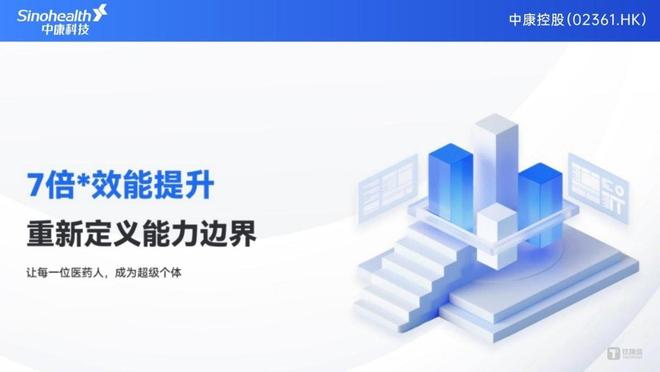
Core Insights - Zhongkang Technology has launched the "Tiangong No.1 Health Industry AI Application Capability Hub," marking a new phase in the intelligent transformation of the health industry [1][9] - The "Zhuomuniao Medical Model" achieved the top rank in the "Medical Language Understanding" category on the MedBench evaluation platform, highlighting its leading position in the pharmaceutical AI sector [1][2] Group 1: Technological Leadership - The "Zhuomuniao Medical Model" boasts 70 billion parameters, enabling it to deeply analyze vast amounts of medical literature, thus providing precise understanding and extraction of key information [2] - This model addresses the limitations of general AI in the medical field, establishing a solid foundation for deep applications of AI in the health industry [2] Group 2: Industry Value - The "Tiangong No.1 Health Industry AI Application Capability Hub" integrates 18 years of Zhongkang's pharmaceutical industry data and experience, creating a comprehensive AI application ecosystem [3] - The commercial intelligent agent within the hub enhances individual efficiency, allowing medical professionals to generate evidence reports in minutes, increasing productivity by up to 7 times [3] Group 3: Organizational Collaboration - The "Enterprise Growth Workbench" addresses inter-departmental collaboration challenges by providing over 100 intelligent agents that enhance efficiency across the pharmaceutical marketing chain [5][6] - This model breaks down departmental barriers, fostering competitive growth through collaborative evolution [6] Group 4: Strategic Significance - The hub aims to serve as a foundational infrastructure for the intelligent upgrade of the health industry, connecting all segments from research and development to production and distribution [8] - It seeks to redefine operational methods and decision-making processes in the health industry, promoting a new paradigm of human-machine collaboration [8] - Zhongkang Technology is positioned to become a standard setter and connector in the health industry AI application ecosystem, driving innovation and collaboration [8][9]

日均6个企业团组出国商务洽谈
Di Yi Cai Jing Zi Xun· 2025-09-28 06:05
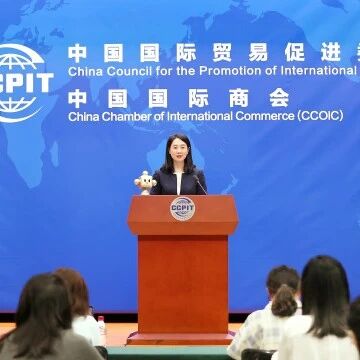
Group 1 - The State Council emphasizes the need to strengthen support for enterprises going abroad and improve the overseas comprehensive service system [2][3] - The China Council for the Promotion of International Trade (CCPIT) reports an increase in the willingness of Chinese enterprises to expand internationally, with a significant rise in the number of business groups going abroad for negotiations [2][3] - Since 2024, the CCPIT has organized 2,249 batches of groups to visit 102 countries and regions, averaging six business groups traveling abroad daily for discussions [2][3] Group 2 - The CCPIT plans to enhance service resources across legal, financial, and logistics sectors, and establish comprehensive service ports and stations in key countries [3][4] - The CCPIT has approved 1,623 overseas exhibition projects this year, with a planned exhibition area of 950,000 square meters, and has executed 970 projects involving over 34,000 participating enterprises [4] - The CCPIT has established partnerships with international organizations to enhance legal services for enterprises, handling over 400 foreign-related cases and 6,570 mediation cases this year [4][5] Group 3 - The CCPIT has organized multiple training sessions for enterprises going abroad and has responded to over 20,000 inquiries through its trade law service [5] - The global economic and trade friction index reached 110 in July, indicating a high level of trade tensions, particularly influenced by U.S. tariff policy adjustments [6] - The CCPIT reports that the trade friction measures involving 20 monitored countries have increased by 6.6% year-on-year and 27.6% month-on-month [6][7]
日均6个企业团组出国商务洽谈
第一财经· 2025-09-28 06:00
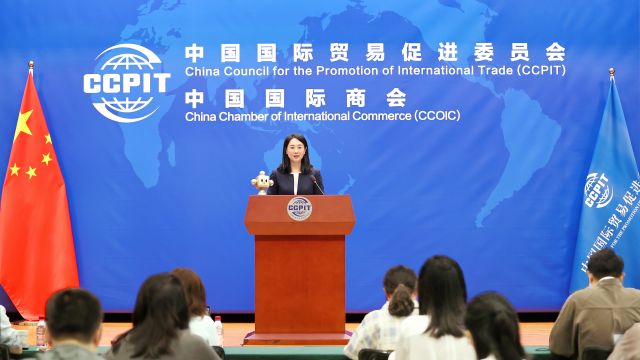
Core Viewpoint - The article emphasizes the need for enhancing overseas comprehensive service systems to support Chinese enterprises in international cooperation and competition, especially as they accelerate their overseas expansion efforts [3][4]. Group 1: Government Initiatives - The State Council's executive meeting highlighted the importance of providing robust support for outbound enterprises and improving the overseas service system, including legal, financial, and logistics services [4]. - The China Council for the Promotion of International Trade (CCPIT) has initiated the "Thousand Groups Going Abroad" campaign, organizing 2,249 batches of groups to 102 countries and regions for business negotiations in 2024, averaging six groups per day [3][4]. Group 2: Service Enhancements - CCPIT plans to strengthen mechanisms to support outbound enterprises by addressing non-commercial risks and enhancing the quality of overseas investments [4]. - The organization aims to build more platforms for outbound activities, including industry exhibitions and participation in bilateral business events, to deepen cooperation with key markets and Belt and Road Initiative countries [4][5]. Group 3: Legal and Public Services - In 2023, CCPIT approved 1,623 overseas exhibition projects, with a planned exhibition area of 950,000 square meters, and executed 970 projects covering 64 organizing units and 51 countries, involving over 34,000 participating enterprises [5]. - CCPIT has established partnerships with international organizations to provide quality commercial legal services, handling over 400 foreign-related cases and 6,570 mediation cases in the first half of the year, with a total amount involved of nearly 10 billion [5][6]. Group 4: Global Trade Tensions - The global trade friction index reached 110 in July, indicating a high level of trade tensions, with a 6.6% year-on-year increase in the monetary value of trade friction measures [8]. - The United States, the European Union, and Brazil have the highest trade friction indices, with the electronics sector being the most affected [8][9].