
经贸摩擦

Search documents
2025年11月欧盟涉华经贸摩擦指数最高
Zhong Guo Xin Wen Wang· 2026-01-28 09:09
Group 1 - The core viewpoint of the article highlights that the EU has the highest trade friction index with China in November 2025, particularly in sectors like semiconductor materials, rare earth magnets, and LCD products [1] - In November 2025, the trade friction measures involving 19 countries (regions) decreased by 12.4% year-on-year and 2.4% month-on-month, while the global trade friction index remained high at 101 [1] - The EU, the US, and South Korea rank as the top three countries in terms of global trade friction index, with the EU initiating multiple anti-subsidy and anti-dumping investigations, surpassing the US for the first time in 16 months in terms of trade friction measures [1] Group 2 - A total of 30 import and export tariff measures were announced by the 20 monitored countries (regions), along with 19 trade remedy investigations, 152 notifications to the WTO regarding technical barriers to trade (TBT) and sanitary and phytosanitary measures (SPS), 12 import and export restrictions, and 212 other restrictive measures [2] - The trade remedy measures index is the highest among the five categories of sub-index measures [2]
建信期货钢材日评-20251231
Jian Xin Qi Huo· 2025-12-31 01:49
Report Summary 1. Report Industry Investment Rating There is no information about the industry investment rating in the report. 2. Core Viewpoints - The news factor may cause the steel price to turn from strong to weak recently, but there is still support from the fundamentals. It is expected that the market will first decline and then rise, and the overall trend will be range - bound [9]. 3. Summary by Directory 3.1 Market Review - On December 30, the main contracts of rebar and hot - rolled coil futures 2605 generally rose first and then fell. The rebar futures contract RB2605 closed at 3134 yuan/ton, down 0.10%; the hot - rolled coil futures contract HC2605 closed at 3282 yuan/ton, down 0.33%; the stainless - steel futures contract SS2602 closed at 13090 yuan/ton, up 1.28% [5]. - In the spot market, on December 30, the prices of major rebar spot markets were basically stable, while the prices of individual hot - rolled coil spot markets fluctuated. The hot - rolled coil prices in Hefei and Fuzhou markets rose by 10 yuan/ton, and the price in Lecong market fell by 10 yuan/ton [7]. - In terms of technical indicators, the daily KDJ indicator of the rebar 2605 contract rose, with the J value turning up and the K and D values continuing to rise; the daily KDJ indicator of the hot - rolled coil 2605 contract formed a death cross. The daily MACD red column of the rebar 2605 contract slightly enlarged for two consecutive trading days, while that of the hot - rolled coil 2605 contract turned to a slight narrowing [7]. 3.2 Market Outlook - News: There are reports that JPMorgan Chase's long - position in silver exceeded regulatory requirements, leading to regulatory intervention. For JPMorgan Chase, taking profits may be the best option. The significant fluctuations in international silver prices have triggered resonance in related metal commodity markets [8]. - Fundamentals: The decline in the output of the five major steel products has significantly narrowed, and the demand has continued to decline slightly. Due to the weekly supply being less than demand, the social inventory has continued to decline to a new low since mid - January. On the cost side, the iron ore price has continued to rise to a new high since late February, while the fourth round of price cuts for coke spot is expected to be implemented on New Year's Day. Despite the one - up - one - down situation, the steel cost remains relatively firm [9]. 3.3 Industry News - On December 26, the Ministry of Ecology and Environment held a regular press conference, reporting on the implementation of the Action Plan for Source Prevention and Control of Soil Pollution, including pollutant reduction in key industries and infrastructure improvement [10]. - The Tariff Policy Commission of the State Council issued the 2026 Tariff Adjustment Plan, which will be implemented from January 1, 2026, including adjustments to import provisional tax rates and the addition of new sub - items [10]. - The China Council for the Promotion of International Trade released the latest economic and trade friction index. In October, the amount involved in global economic and trade friction measures decreased by 7.3% year - on - year but remained at a high level [10]. - On December 26, the expert consultation meeting on the 14th Five - Year Plan for the steel industry was held in Beijing, emphasizing aspects such as减量 development, carbon peaking, standard setting, digital transformation, and product structure adjustment [10]. - On December 29, Datong - Qinhuangdao Railway stated that the expected increase in related transaction amounts in the next three years is due to the decline in coal transportation demand and the expansion of non - coal bulk markets [11]. - China Power signed a new coal supply framework agreement with Huainan Mining on December 29, 2025, with a supply period from January 1, 2026, to December 31, 2028 [11]. - Indonesia's Ministry of Trade issued a regulation using the Indonesian coal benchmark price (HBA) as a basis for export reference prices, but the specific implementation time and mechanism of the export tariff policy remain to be determined [11]. - On December 26, Liugang Group's annual output of automotive steel exceeded one million tons, and the annual sales of container plates, die steel, and exported steel also reached one million tons [11]. - On December 26, Ganeng Co., Ltd. announced the transfer of 20% of its shares in Pingxiang Juyuan Coal Industry Co., Ltd. to Jiangxi Coal Industry Group Co., Ltd. at a price of 0 yuan [11]. - India's crude oil imports in November increased by 11.1% year - on - year, while petroleum product imports decreased by about 8.6% and exports decreased by 1.7% [11]. - India's coal imports in November 2025 were 19.2658 million tons, a year - on - year increase of 6.56% and a month - on - month decrease of 1.64%. From January to November, the total coal imports were 227 million tons, a 1.18% decrease from the previous year [11]. 3.4 Data Overview The report presents multiple data charts, including the spot prices of rebar and hot - rolled coil in major markets, the weekly output and steel mill inventory of the five major steel products, the social inventory of rebar and hot - rolled coil in major cities, the blast furnace and electric furnace operating rates and capacity utilization rates, the national daily average pig iron output, the apparent consumption of the five major steel products, and the basis between Shanghai rebar and hot - rolled coil spot and their May contracts. All data sources are from Mysteel and the Research and Development Department of CCB Futures [13][14][17][24][32][33].
140万亿之后,中国经济凭什么继续向前
Sou Hu Cai Jing· 2025-12-28 10:26
Core Insights - The article emphasizes that China's economy is not merely enduring but is undergoing a significant upgrade, characterized by a clear direction and stability [6] Group 1: Economic Structure and Growth - China's economy, valued at 140 trillion yuan, is likened to a giant ship successfully shifting gears rather than merely docking [5] - The economy has added approximately 40 trillion yuan over five years, equivalent to creating a new world-class economy, with a focus on digital economy, artificial intelligence, and green industries as primary growth drivers [5] Group 2: Policy Stability - The macroeconomic policy is described as "proactive" rather than unconventional, with precise fiscal measures and a monetary policy that prioritizes price stability and expectations [5] - The governance capability is highlighted as being able to maintain a firm grip on the economic direction, aiming for stable growth, stable prices, and stable confidence [5] Group 3: External Trade and Open Economy - In the face of trade tensions, China is taking a rational approach to countermeasures while expanding its openness, maintaining its position as the world's largest trading nation [5] - The strategy combines internal circulation as a foundation with high-level openness as an accelerator, using certainty to counteract uncertainty [5] Group 4: Future Outlook - Artificial intelligence is viewed not as a bubble but as a filter, with China's advantages lying in its vast scenarios, massive data, and stable power supply [5] - The commitment to open-source and inclusive technology aims to ensure that advancements are not only profitable but also beneficial to society [5]


博时市场点评11月4日:三大指数调整,创业板跌近2%
Xin Lang Ji Jin· 2025-11-04 08:13
Market Overview - The three major indices in the A-share market experienced a decline, with the Shanghai Composite Index closing at 3960.19 points, down 0.41% [4] - The Shenzhen Component Index fell by 1.71% to 13175.22 points, while the ChiNext Index decreased by 1.96% to 3134.09 points [4] - The market saw a total of 1612 stocks rise and 3461 stocks fall, indicating a bearish sentiment [4] Trading Volume and Margin Financing - The market turnover was recorded at 19,387.06 billion yuan, showing a decrease from the previous trading day [5] - The margin financing balance increased to 24,947.63 billion yuan, up by over 8.3 billion yuan from the previous day [5] Economic Indicators and Policy Outlook - The recent PMI data showed a significant seasonal decline, indicating continued pressure on the short-term economic fundamentals [1] - The market is expected to focus on the fundamentals as it enters a relatively policy and expectation vacuum phase in November [1] - The People's Bank of China and the Bank of Korea renewed a bilateral currency swap agreement, maintaining a scale of 400 billion yuan, which is expected to enhance trade and investment cooperation [2][3]

涉及出口管制,妥处经贸摩擦,欧盟邀中方赴欧谈稀土
Huan Qiu Shi Bao· 2025-10-22 22:52
Group 1 - The core viewpoint of the articles revolves around the recent discussions between Chinese and European officials regarding export controls, particularly focusing on rare earth elements and the EU's response to China's measures [1][2][3] - Chinese Minister Wang Wentao emphasized that the recent export control measures on rare earths are a normal practice to enhance China's export control system and reflect its responsibility as a major country in maintaining global peace and stability [1][3] - The EU's Trade and Economic Security Commissioner, Valdis Dombrovskis, expressed understanding of China's export controls, citing national security concerns, while urging China to expedite the approval process for European companies' applications [1][2] Group 2 - The articles highlight the ongoing tensions in EU-China trade relations, particularly in light of the new rare earth export controls implemented by China on October 9, which require permits for the export of certain products and technologies [2][3] - There is a growing debate within the EU regarding its trade policy towards China, with countries like Germany and France advocating for discussions on potential retaliatory measures against China's export controls [4] - The introduction of the "anti-coercion mechanism" by the EU, which allows for trade restrictions and other measures, is seen as a significant step in the EU's strategy to respond to perceived threats from China [4]
贸促会: 美国反复调整关税政策致7月全球经贸摩擦再升温
Zhong Guo Xin Wen Wang· 2025-09-28 10:46
Core Viewpoint - The global trade friction index reached 110 in July, indicating a high level of trade tensions, with trade friction measures increasing by 6.6% year-on-year and 27.6% month-on-month [1] Group 1: Global Trade Friction - The trade friction measures are significantly influenced by the U.S. repeatedly adjusting its tariff policies, leading to a resurgence in global trade tensions in July [1] - Among 20 monitored countries and regions, the U.S., EU, and Brazil have the highest trade friction indices, with the U.S. having the largest amount of trade friction measures for 13 consecutive months [1] Group 2: Industry-Specific Insights - Trade friction conflicts are concentrated in 13 major industries, particularly in electronics, chemicals, transportation equipment, machinery, pharmaceuticals, light industry, and non-ferrous metals, with the electronics industry having the highest trade friction index [1] Group 3: China-Specific Trade Friction - The trade friction index concerning China among 19 countries and regions is at a high level of 107, with the U.S. having the highest index. Key sectors include drones, solar cells, and AI chips [1] - In July, the trade friction measures involving China decreased by 16.4% year-on-year but increased by 11.9% month-on-month [1]
中美第四轮交锋还没开始,特朗普提前露了怯,美国未战先败一局
Sou Hu Cai Jing· 2025-09-14 08:07
Core Points - The fourth round of US-China trade negotiations is set to take place in Madrid, with US Treasury Secretary Bessent under significant domestic pressure while China maintains a calm stance [1][3][5] - The negotiations are framed as a high-stakes game, with both sides employing strategic moves akin to a chess match, reflecting the ongoing tension in the trade relationship [3][5][9] - The choice of Madrid as the negotiation venue is seen as a strategic move by both parties, with the US aiming to signal unity with European allies and China seeking to showcase its cooperation with EU countries [8][11] Summary by Sections Negotiation Context - The US has been increasing tariffs, with a rapid escalation from 10% to 20% within a few months, while China has responded with measured countermeasures [5][9] - The US faces internal economic pressures, including rising consumer prices and complaints from retailers, which complicate its negotiation strategy [3][9][13] China's Position - China emphasizes dialogue and cooperation, asserting that it will not compromise on core interests, and has shown resilience in its economic performance [11][19] - The Chinese strategy includes strengthening economic ties with other countries, making it difficult for the US to isolate China [11][19] Media and Public Perception - The media narrative varies significantly between the US and China, with US outlets focusing on pressure and challenges, while Chinese media project stability and confidence [15][19] - The negotiations are characterized by a dramatic atmosphere, with global markets closely watching for potential outcomes and implications [20] Potential Outcomes - The negotiations are seen as a critical juncture, with the possibility of reaching a temporary agreement on tariffs that could ease market tensions, or a breakdown that could lead to further escalation [19][20] - The humorous commentary surrounding the potential impact on Spanish wine exports highlights the broader economic implications of the trade talks [8][19]
特朗普签下“休战书”,24小时内中方主动发起反击,美国的盟友们,一个也别想逃!
Sou Hu Cai Jing· 2025-08-17 02:17
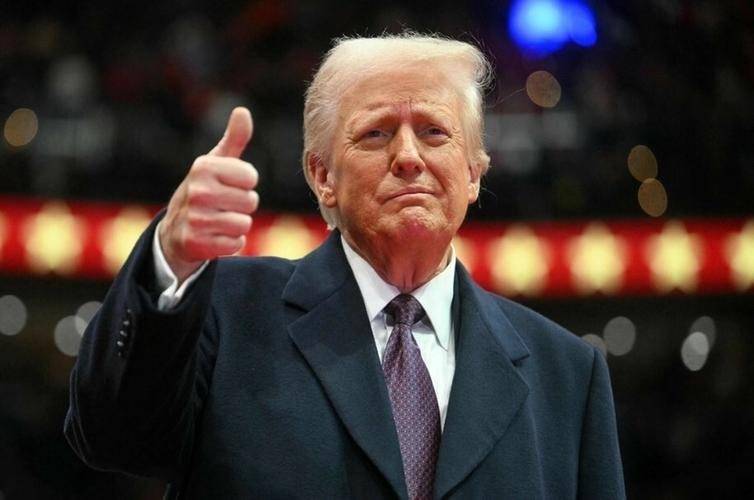
Group 1 - The U.S. announced a 90-day suspension of the 24% tariffs on Chinese goods while maintaining the existing 10% tariffs, indicating a desire to ease tensions without relinquishing leverage in negotiations [1][3] - Following the U.S. announcement, China quickly retaliated by launching an anti-dumping investigation against Canadian and Japanese imports of halogenated butyl rubber, which had been under investigation since September 2024 [3][5] - The Chinese authorities determined that the imports from Canada and Japan were indeed dumping and causing substantial harm to domestic industries, leading to the imposition of a deposit requirement for these imports starting August 14 [5][7] Group 2 - The swift response from China demonstrates adherence to anti-dumping regulations and WTO rules, targeting U.S. allies to signal that countries supporting U.S. actions against China will face consequences [7] - Japan's cooperation with the U.S. on tariff negotiations and its efforts to assist in resolving issues related to rare earth materials have been noted, indicating a strategic alignment with U.S. interests [5][7] - Canada's previous actions, including imposing tariffs on Chinese electric vehicles and steel products, have led to its current predicament, highlighting the interconnectedness of international trade policies and retaliatory measures [5][7]
针对美加征关税 印度表示将“采取一切必要行动”维护国家利益
Xin Hua She· 2025-08-06 16:14
Core Viewpoint - The Indian government criticizes the U.S. for imposing additional tariffs on Indian products, labeling the actions as "unfair, unjust, and unreasonable" and indicating that India will take necessary actions to protect its national interests [1] Group 1: U.S. Tariffs on India - The U.S. President signed an executive order imposing an additional 25% tariff on Indian exports, citing India's import of Russian oil as the reason [1] - The Indian government has expressed regret over the U.S. decision to impose tariffs, emphasizing that its oil imports are based on market factors and aimed at ensuring energy security [1] Group 2: U.S.-India Trade Relations - The U.S. has been pressuring India on trade issues, threatening to significantly increase tariffs on Indian products due to India's purchase of Russian oil [1]
【环球财经】印度政党回击美关税威胁
Xin Hua She· 2025-08-06 12:25
Group 1 - The Indian government and major opposition parties have strongly responded to the U.S. threats of imposing tariffs on Indian products due to India's purchase of Russian oil [1] - U.S. President Trump has threatened to impose a 25% tariff on Indian goods, citing high tariffs and non-tariff barriers as burdensome [1] - India's ruling party and opposition have criticized Trump's comments, emphasizing the need to protect national dignity and economic interests [1] Group 2 - Indian Prime Minister Modi stated the necessity for India to protect its economic interests amid global uncertainties, possibly in response to Trump's previous remarks [2] - Trade negotiations between the U.S. and India have stalled, with India refusing to grant tariff concessions on agriculture and dairy as requested by the U.S. [2] - The U.S. Department of Commerce reported that the trade volume between the U.S. and India is projected to be approximately $128.8 billion in 2024, with India having a trade surplus of $45.8 billion [2]