
保险业

Search documents
——信用周报20260207:如何看待近期二永与普信债走势分化?
Huachuang Securities· 2026-02-08 00:20
Group 1: Market Overview - Credit bond yields generally declined this week, with credit spreads widening passively[1] - The overall equity market was weak, while the central bank supported the liquidity ahead of the Spring Festival, leading to a stronger bond market[1] - The 5-year credit spreads for Puxin bonds widened significantly after a previous compression, while 1-2 year AA real estate bonds performed well with a substantial narrowing of spreads[1] Group 2: Divergence in Bond Performance - The overall demand structure for bank perpetual bonds may be weaker compared to Puxin bonds due to regulatory impacts and changing investment preferences[2] - After a compression of excess spreads, the coupon value of perpetual bonds has decreased, influenced by weak market trading sentiment[2] - Concerns over redemption pressures in secondary bond funds have increased due to volatility in the equity market, leading to heightened selling pressure on perpetual bonds[2] Group 3: Investment Strategy - Current market conditions lack a clear trading theme, with short-term pricing factors expected to be neutral[3] - Focus on high convexity products is recommended, particularly in the 3-year and under category, where fund and wealth management demand is high[3] - For 4-5 year products, Puxin bonds near 4 years are highlighted for their high convexity, with yields around 2.5%[3]
耗资4亿港元四度举牌后,弘康人寿开始减持郑州银行H股
Xin Lang Cai Jing· 2026-02-07 07:35
Core Viewpoint - Hongkang Life Insurance reduced its stake in Zhengzhou Bank H-shares, selling 12.17 million shares at a price of 1.359 HKD per share, totaling approximately 16.54 million HKD. After the sale, Hongkang Life holds 415 million shares, reducing its ownership from over 22% to 20.56%, while still remaining a significant institutional shareholder. This reduction is seen as a response to liquidity pressures and a cautious reassessment of Zhengzhou Bank's low dividends, unstable governance, and weak asset quality [1][18]. Group 1: Hongkang Life's Shareholding Activities - Hongkang Life's investment in Zhengzhou Bank H-shares began in mid-2025, with a series of purchases that triggered multiple disclosures. The first purchase was on June 27, acquiring 16 million shares at 1.2068 HKD each, increasing its stake to 5.55%. Subsequent purchases continued through July and August, with the total investment exceeding 400 million HKD and an average purchase price between 1.18 and 1.43 HKD [1][19][2]. - By the end of Q3 2025, Hongkang Life had accumulated approximately 447 million shares, representing 22.14% of the total H-share capital, making it one of the largest institutional shareholders [1][19]. Group 2: Financial Performance of Hongkang Life - Hongkang Life's net profit was approximately 1.76 billion CNY in 2019, but it faced a decline from 2020 to 2022 due to regulatory changes affecting dividend insurance. The company began to recover, with net profit reaching 4.60 billion CNY by the end of 2025 [2][24]. - The insurance business revenue for 2025 was about 72.25 billion CNY, a slight decrease from 75.11 billion CNY in 2024, indicating a shift from financial products to protection-type insurance [8][25]. Group 3: Zhengzhou Bank's Governance and Financial Health - Zhengzhou Bank, established in 1996 and listed in 2015, has faced significant management turnover in 2025, with multiple executives resigning, leading to concerns about stability and continuity in operations [11][28]. - As of Q3 2025, Zhengzhou Bank reported total assets of approximately 743.6 billion CNY, with a year-on-year growth of 9.93%. However, the bank's net interest margin remains under pressure, and its profitability growth is below industry averages [11][28]. - The bank's non-performing loan ratio was 1.76% as of Q3 2025, which, while showing a slight decline, remains significantly higher than the average for listed city commercial banks [14][29]. Group 4: Dividend Policy Controversies - Zhengzhou Bank's dividend policy has been a contentious issue, with a history of low and inconsistent dividends that diverge from industry norms. The bank did not implement cash dividends for several years until 2024, when it reinstated dividends at a low rate of 9.69% of net profit, far below the industry average of over 30% [16][32]. - The bank's governance structure has led to conflicts between A-share and H-share shareholders, particularly regarding dividend proposals, with significant opposition from H-share investors [16][33].

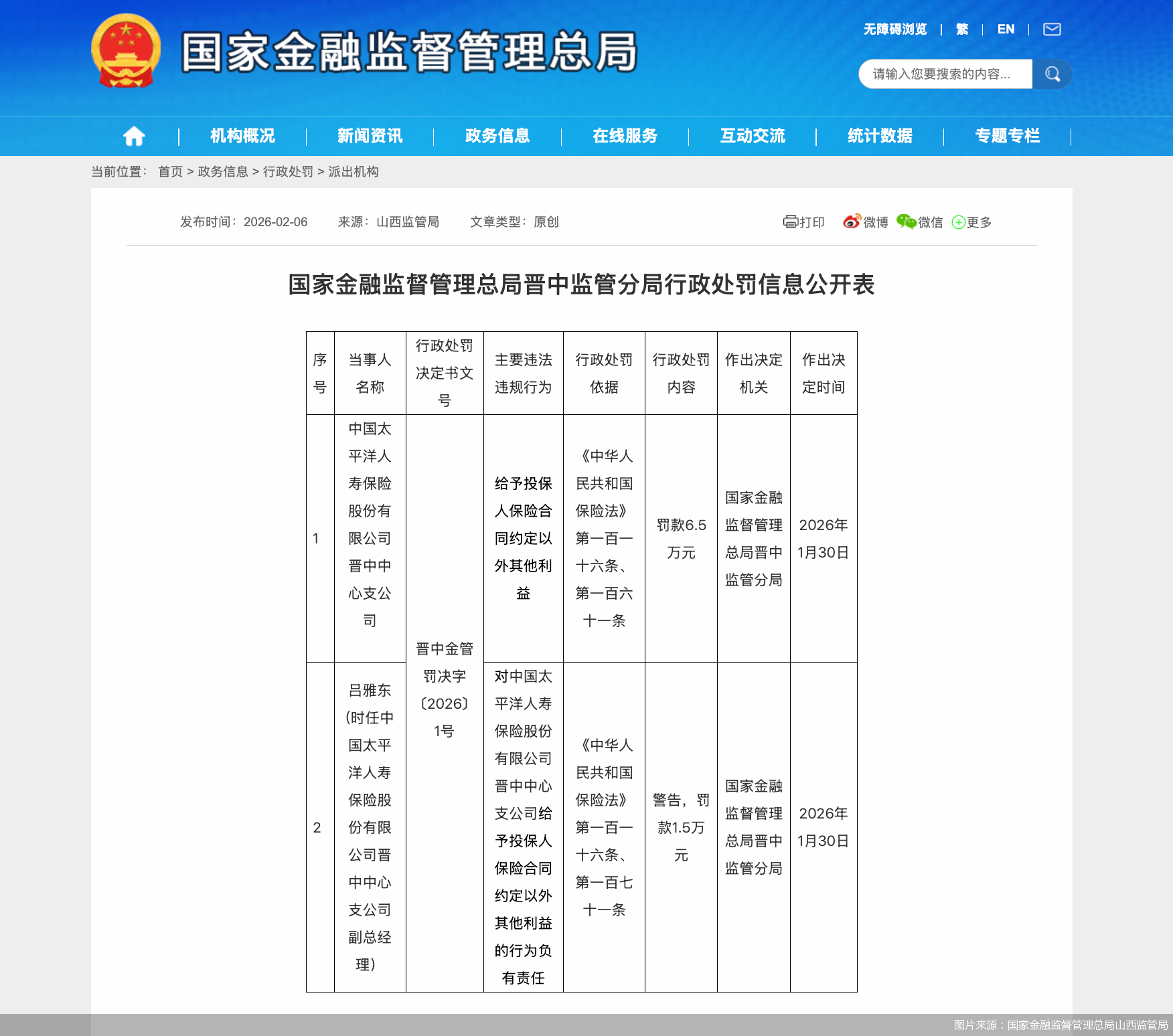
给予投保人保险合同约定以外的其他利益,太保寿险晋中中心支公司被罚8万元
Bei Jing Shang Bao· 2026-02-06 12:10
Core Viewpoint - China Pacific Life Insurance Co., Ltd. was fined for providing benefits outside of the insurance contract to policyholders, highlighting regulatory scrutiny in the insurance sector [1][3]. Group 1: Company Actions - China Pacific Life Insurance Co., Ltd. was penalized with a fine of 65,000 yuan for violating insurance regulations [1][3]. - The company's vice president, Lü Yadong, received a warning and was fined 15,000 yuan for his role in the violation [1][3]. Group 2: Regulatory Framework - The penalties were based on violations of the Insurance Law of the People's Republic of China, specifically Articles 116 and 111 [3].

新年1月银保“开门红”:谁攻城、谁略地、谁失地?
Xin Lang Cai Jing· 2026-02-06 11:43
来源:中保新知 实际上,"开门红"的火热此前已有"预告"——元旦过后,市场即有消息称,元旦假期累计实现新单保费 规模突破700亿元,其中多家险企银保渠道新单保费"涨幅惊人"。再之前,银保在2025年已强势重返人 身险行业第一大渠道。 经历了两个相对低迷的"开门红"后,银保渠道在2026开年打了个翻身仗。中保新知日前获悉,1月寿险 业银保渠道期交保费1030亿元,同比增长34%;趸交保费1096亿元,同比增长24%。 不过从机构端看,残酷的现实同样赤裸,忧喜依然同在。 TOP10险企座次在2025年大洗牌后,"老七家"和非银外资险企继续攻城略地。1月,"老七家"银保渠道 期交保费总额425亿元,同比大增88%,市场份额从2023年的23%上升至41%,有3家同比增速翻倍;非 银外资险企银保渠道期交保费规模也取得同比33%的增速。而另一边,银行系险企同比小幅增长4%但 出现分化,小型中资险企增速整体"告负"。 01 "老七家"市场份额升至四成 延续过去两年表现,寿险"老七家"(中国人寿、平安人寿、新华保险、太平人寿、太保寿险、人保寿 险、泰康人寿)银保渠道保费继续狂飙。 今年1月,7家实现期交保费总额425亿元, ...
2025年人身险公司退保率排行:行业退保率全面优化!投连险、银保渠道成高退保产品关键词
Xin Lang Cai Jing· 2026-02-06 11:37
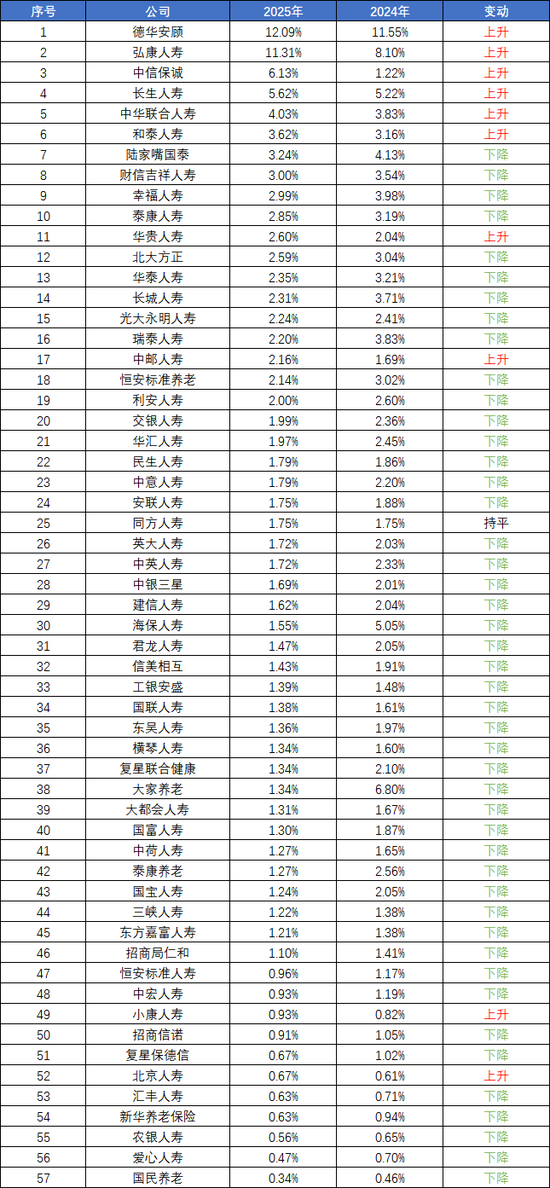
Core Insights - The life insurance industry in 2025 showed a positive performance with total revenue reaching 1,207.95 billion yuan, a year-on-year increase of 12.29%, and net profits totaling 67.39 billion yuan, a significant increase of 170.66% [1][15][25] - The average surrender rate for the industry decreased to 2.17%, with a median of 1.62%, indicating an overall stabilization in surrender rates compared to 2024 [1][10][25] - A notable differentiation in surrender rates among companies was observed, with the highest surrender rate exceeding 12% and the lowest at 0.34%, reflecting an increasing disparity compared to the previous year [1][16][17] Revenue and Profit Performance - The total revenue of 57 life insurance companies reached 1,207.95 billion yuan in 2025, marking a 12.29% increase from the previous year [1][15] - The net profit for these companies was 67.39 billion yuan, representing a substantial year-on-year growth of 170.66% [1][15] Surrender Rate Analysis - The average surrender rate for the life insurance industry in 2025 was 2.17%, down from 2.5% in 2024, while the median surrender rate decreased from 2.03% to 1.62% [10][25] - Among the 57 companies, 28 had surrender rates between 1% and 2%, while 11 companies reported rates below 1% [10][25] - Only four companies had surrender rates exceeding 5%, indicating a concentration of rates in the lower ranges [10][25] Company-Specific Surrender Rates - The companies with the highest surrender rates included Dehua Angu Life at 12.09% and Hongkang Life at 11.31%, both showing increases from 2024 [3][18] - The surrender rates for other companies varied significantly, with some experiencing improvements while others faced increases [3][17] Product Structure and Surrender Trends - Surrender rates were notably high for investment-linked and universal life insurance products, which are sensitive to market interest rates and investment returns [2][16][27] - The top ten products by cumulative surrender amount accounted for a total of 44.851 billion yuan, primarily from investment-linked and universal products [12][27] - The surrender behavior is influenced by market conditions, with clients opting to adjust or surrender policies in response to changing yield expectations [2][16][27]
避险资产异动!黄金暴跌、原油跳涨:一个被误读的"危机信号"
Sou Hu Cai Jing· 2026-02-06 10:25
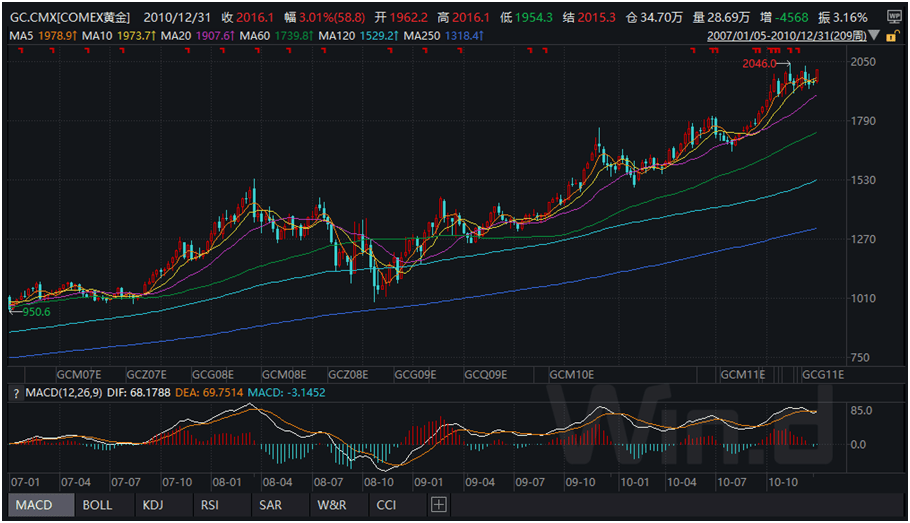
Core Viewpoint - The recent sharp decline in gold and silver prices after a rapid increase has raised concerns among investors about a potential liquidity crisis in the U.S. [1] Group 1: Historical Context and Market Behavior - Precious metals like gold and silver are traditionally viewed as safe-haven assets, particularly during geopolitical conflicts or negative external shocks, leading to price increases [1] - Historical data shows that during the 2008 financial crisis, gold prices fell by one-third before recovering due to government intervention through monetary policy [1][4] - The relationship between gold prices and financial crises is evident, as seen during the 2008 crisis when investor panic led to increased cash holdings and a subsequent drop in gold prices [4][6] Group 2: Current Market Dynamics - The recent price drop in gold and silver is attributed to three main factors: profit-taking after a high volatility period, adjustments in margin requirements by CME, and the nomination of a hawkish Federal Reserve chair candidate [7][8][9] - The adjustment in margin requirements increased pressure on high-leverage speculators, contributing to the price correction [8] - The nomination of Kevin Walsh, who advocates for "rate cuts and balance sheet reduction," may influence market sentiment and asset prices, particularly in relation to oil prices [9] Group 3: Investment Strategies and Future Outlook - The significant price correction in precious metals does not necessarily indicate an imminent liquidity crisis, and current investment strategies can continue to be executed [11] - Investors holding positions in gold and silver futures should prepare for volatility and consider reducing leverage while maintaining a safety margin [11] - Monitoring oil prices is recommended, as they may exhibit an inverse relationship with precious metal prices leading up to the new Federal Reserve chair's official appointment [11]
小年,这群“80+”打起非洲鼓
Jin Rong Shi Bao· 2026-02-06 04:17
Core Viewpoint - The article highlights the increasing engagement and satisfaction of elderly individuals in specialized retirement communities, showcasing their active participation in cultural and recreational activities, which enhances their quality of life and social connections [2][3][4]. Group 1: Community Engagement and Activities - Elderly residents in retirement communities are actively participating in various activities, such as forming a drumming club to perform at community events, indicating a vibrant social life [2]. - The community provides a range of facilities and services, including musical instruments and interest classes, which contribute to a fulfilling retirement experience [2][3]. - Traditional customs and celebrations, such as receiving Spring Festival gift packages, are embraced by the elderly, enhancing their sense of belonging and cultural connection [4]. Group 2: Industry Trends and Developments - The aging population in China is projected to reach 3.23 billion by the end of 2025, with a significant increase in the elderly demographic, necessitating enhanced elder care services [7]. - The insurance industry is increasingly involved in the elderly care sector, with over 130 community retirement projects established, reflecting a growing trend towards integrated care models [8]. - China Life Insurance has launched a 185 billion yuan elder care fund to support diverse retirement solutions, focusing on urban premium retirement apartments and community care projects [5]. Group 3: Policy and Strategic Initiatives - The government is prioritizing the establishment of a multi-tiered pension system to address the needs of an aging population, emphasizing the importance of collaboration among various stakeholders [8]. - The "14th Five-Year Plan" outlines strategies for enhancing elder care services and developing a sustainable elder care industry, aiming to create a supportive environment for the elderly [7]. - Insurance companies are expected to play a crucial role in the elder care industry, leveraging their financial resources and service capabilities to improve the quality and sustainability of elder care services [9].
建信人寿:价值转型成果显现 不断激发高质量发展内生动能
Bei Jing Shang Bao· 2026-02-06 03:02
Core Viewpoint - The life insurance industry is undergoing a significant transformation towards high-quality development, driven by regulatory policies, market recovery, and the expansion of new business models such as pension and digital finance [1][2]. Group 1: Industry Transformation - The life insurance sector is shifting from scale-driven growth to value-oriented strategies, focusing on sustainable long-term value creation [2]. - Companies are restructuring their operational logic to enhance management efficiency while maintaining steady premium growth [2]. - The industry is experiencing a fundamental change in its development focus, emphasizing the importance of value creation over mere premium volume [2]. Group 2: Company Performance - As of the end of 2025, the company reported a cumulative net profit of 660 million yuan, with total premium income reaching 50.132 billion yuan, reflecting a year-on-year growth of 20.31% [2]. - The company has established a healthy development model driven by long-term value-oriented business, with steady growth in new policy premiums [2]. - The company’s total assets reached 339.843 billion yuan by the end of 2025, marking a 6.54% increase from the beginning of the year [3]. Group 3: Investment Management - The company employs an asset-liability management strategy, focusing on stable income, risk control, and dynamic asset allocation [3]. - The average financial investment return rate was 3.73%, while the comprehensive investment return rate was 4.95% as of the end of 2025, supporting the transformation of the liability side [3]. Group 4: Liability Management - The company has improved its liability cost control through refined management and digital transformation, resulting in a decrease in liability funding costs [4]. - The remaining margin balance reached 24.8 billion yuan, an 11.80% increase year-on-year, indicating enhanced profitability potential [3]. Group 5: Product Innovation - The company has expanded its product offerings, launching 23 insurance products focused on pension finance, catering to the diverse needs of consumers [5]. - The company has accelerated the transformation of dividend insurance products, which have gained popularity in the low-interest-rate environment [6]. Group 6: Talent and Management - The company emphasizes talent development through systematic training programs and a structured approach to talent management [7]. - Digital transformation initiatives have been implemented to enhance operational efficiency and customer service capabilities [8]. Group 7: Ecosystem Innovation - The company is extending its service offerings through innovative models such as "insurance + health" and "insurance + wellness," creating comprehensive financial solutions [9]. - The company has engaged in extensive consumer outreach, conducting over 2,250 educational events and reaching more than 15 million consumers [9].
偿付能力体检未达标 5家险企触发“连锁反应”
Xin Lang Cai Jing· 2026-02-05 17:12
Core Viewpoint - Five insurance companies have failed to meet solvency standards as of the fourth quarter of 2025, raising concerns about their ability to fulfill policyholder obligations and the potential consequences of continuous non-compliance [1][2]. Group 1: Companies Failing to Meet Solvency Standards - The five companies that did not meet solvency standards include Anhua Agricultural Insurance, Asia-Pacific Property Insurance, Qianhai Property Insurance, Changsheng Life Insurance, and Huahui Life Insurance [1]. - Among these, four companies have consistently failed to meet solvency standards in recent years, indicating a pattern of ongoing issues [1][2]. Group 2: Reasons for Non-Compliance - The primary reasons for non-compliance include weak capital foundations, limited business scale and diversity, and inadequate risk management practices [2][3]. - Specific issues cited include capital shortages, improper asset allocation, and deficiencies in risk control and compliance management [2][3]. Group 3: Impacts of Non-Compliance - Non-compliance with solvency standards can lead to significant operational restrictions, including limitations on new business, management changes, and potential loss of market reputation [5][6]. - Regulatory measures may include increased scrutiny, operational restrictions, and even potential takeover or bankruptcy proceedings for non-compliant companies [5][6]. Group 4: Responses and Strategies for Improvement - Companies are taking steps to address solvency issues, such as capital supplementation, improving corporate governance, and enhancing risk management frameworks [7][9]. - Specific strategies include engaging strategic investors, optimizing capital allocation, and utilizing technology to improve risk assessment and operational efficiency [7][9]. Group 5: Challenges in Improving Solvency - Companies face challenges in raising capital due to low shareholder willingness and a tough market financing environment, making it difficult to improve solvency ratios [9]. - Additionally, companies with low risk ratings must overcome internal cultural resistance and establish systematic control frameworks to enhance governance and risk management [9].
平凉静宁:财政金融“组合拳”护航乡村振兴
Sou Hu Cai Jing· 2026-02-05 09:25
Group 1: Economic Development Initiatives - Jingning County focuses on developing the real economy and stimulating micro-subject vitality, adhering to the "5+1" collaborative mechanism to implement fiscal and financial policies effectively [1] - The county has established a "five-in-one" premium financing mechanism for agricultural insurance, with a total investment of 207 million yuan since 2018, benefiting over 109,900 households and 69 fruit companies [2] Group 2: Financing Solutions - Jingning County has created a precise financing platform to address the financing difficulties of local market entities, with a target of issuing 2.493 billion yuan in loans to key industrial chains by the end of 2025 [3] - The county has successfully facilitated financing of 362 million yuan for 64 enterprises through various initiatives, including targeted financing meetings and the establishment of a demand database [3] Group 3: Inclusive Finance Expansion - The county aims to achieve a balance of 2.718 billion yuan in loans for small and micro enterprises by 2025, ensuring coverage of all 24 townships with bank outlets [4] - By the end of 2025, the county plans to issue 506 million yuan in small loans to impoverished households, supporting 36,900 households in developing production and business projects [4]