
电子产品

Search documents
深圳市磁镜科技有限公司成立 注册资本10万人民币
Sou Hu Cai Jing· 2025-08-12 06:49
Core Insights - Shenzhen Magnetic Mirror Technology Co., Ltd. has been established with a registered capital of 100,000 RMB and is represented by Li Jinze [1] Company Overview - The company engages in a wide range of business activities including internet sales, electronic product sales, computer hardware and software retail, and various other retail sectors [1] - The company is involved in brand management, consulting services, advertising design and production, and market marketing planning [1] - It also participates in investment activities, including venture capital limited to unlisted companies, and offers technology services such as software development and internet data services [1] Business Scope - The general business scope includes sales of daily necessities, clothing, toys, and automotive accessories, among others [1] - The company is authorized to conduct internet information services, subject to approval from relevant authorities [1] - The operational activities are conducted under the legal framework, ensuring compliance with necessary regulations [1]
新华联合投资(08159) - 达成復牌指引及恢復买卖
2025-08-11 14:00
香港交易及結算所有限公司及香港聯合交易所有限公司對本公告之內容概不負責, 對其準確性或完整性亦不發表任何聲明,並明確表示概不就因本公告全部或任何 部分內容而產生或因倚賴該等內容而引致的任何損失承擔任何責任。 除另有界定外,本公告所用詞彙與該等公告所界定者具有相同涵義。 背景 於二零二四年七月二日,應本公司要求,本公司股份於聯交所暫停買賣,以待刊發 本公司截至二零二四年三月三十一日止十五個月(「二零二四年十五個月」)之經 審核全年業績公告(「二零二四年十五個月業績」)。 (於開曼群島註冊成立並於百慕達存續之有限公司) CHINA UNITED VENTURE INVESTMENT LIMITED (股份代號:8159) 達成復牌指引 及 恢復買賣 本公告乃由新華聯合投資有限公司(「本公司」,連同其附屬公司,統稱「本集團」) 董事(「董事」)會(「董事會」)根據香港聯合交易所有限公司(「聯交所」)GEM證 券上市規則(「GEM上市規則」)第17.10條及香港法例第571章證券及期貨條例第 XIVA部項下之內幕消息條文作出。 茲提述本公司日期為二零二四年六月二十八日、二零二四年七月三十一日(「二零 二四年七月更新公 ...
7月进出口数据点评:涨价提振进一步显现
Huachuang Securities· 2025-08-08 08:11
1. Report Industry Investment Rating No relevant content provided. 2. Core Viewpoints - China's export in July increased by 7.2% year-on-year, and import increased by 4.1%. The "rush to export" and price increase supported the export to exceed expectations, while the price increase was the main driver for the import growth [3]. - In the short term, the "rush to export" logic may be weakening, and the export in August may decline. In the medium term, the uncertainty of tariff policies may decrease, and the support from quantity and price to export may decline, with the pressure of export slowdown gradually emerging [3]. - For imports, the CRB increase in August is still at a high level, which is expected to support the import reading. Attention should be paid to the repair elasticity of domestic demand, import volume, and price [4]. 3. Summary by Directory 3.1 Export: The re - warming of entrepot trade in July under the uncertainty of tariff negotiations - **Overall situation**: In July, the export growth rate was +7.2%, rising for two consecutive months. The "rush to export" logic was strong due to the uncertainty of tariff negotiations, and the export price increase also contributed to the high export growth from June to July. However, the "rush to export" logic is weakening, and the export may decline in August [3][20]. - **By commodity type** - Labor - intensive consumer goods: The year - on - year export declined to - 3.1%. The reasons may be the pre - Christmas rush to export in June and the "price - for - volume" strategy [1][22]. - Intermediate goods: The export growth rate continued to rise, with a combined year - on - year increase of 18.6% for five types, driving the export growth by 2.1 percentage points. It is expected to remain the main support for exports [1][26]. - Electronic products: The drag on export increased. The combined year - on - year decline of mobile phones and laptops was - 1.3%, and the contribution to export was - 18.1% [29]. - Automobiles: The driving effect on export remained high, with a year - on - year increase of 18.6% in export value, driving the export growth by 0.6 percentage points [29]. - **By country** - Developed economies: The year - on - year export growth rates to the US, EU, and Japan were - 21.7%, +9.3%, and +2.5% respectively. The EU's export weight continued to be higher than the same period, showing a substitution effect [2][34]. - ASEAN: The export share decreased, with a year - on - year increase of 16.6% in July, a slight slowdown of 0.4 pct [2][34]. - Latin America: The proportion rebounded, with a year - on - year increase of 7.7% in export in July ( - 2.1% in June), and the share rose to 8.3%, reaching a new high since August 2024. Entrepot trade heated up [2][34]. 3.2 Import: Price increase drives the further upward movement of imports - **Overall situation**: In July, the import amount increased by 4.1% year - on - year, rising further after turning positive in June. The price increase was the main driving force, and the CRB spot index had a good synchronicity with the import amount growth rate [2][38]. - **By commodity type** - Upstream bulk commodities: The import drag narrowed, with a combined year - on - year decline of 7.9% in the import amount of five types of upstream bulk commodities, which was 3.5 pct higher than that in June [39]. - Intermediate goods: The growth rate continued to rise, with a combined year - on - year increase of 9.5% in the import of four types, driving the import growth by 1.9% [39]. - Downstream consumer goods: The drag also narrowed, with a combined year - on - year decline of - 15.6% in the import of three types of consumer goods ( - 21.0% in June) [39].
缅甸老挝税率最高,转运关税影响巨大,美国新关税启用令东南亚承重压
Huan Qiu Shi Bao· 2025-08-07 22:57
Core Points - The implementation of "reciprocal tariffs" by the U.S. has begun, affecting nearly all trade partners with tariffs ranging from 10% to 50%, significantly impacting Asian countries [1] - Southeast Asian countries are experiencing varied outcomes, with Vietnam negotiating a reduced tariff rate from 46% to 20%, setting a precedent for the region [2] - The U.S. has adopted a differentiated tariff strategy based on trade deficits, supply chain dependencies, market openness, and geopolitical considerations [3] Group 1: Impact on Southeast Asia - Vietnam is the most affected economy, with exports to the U.S. totaling $137 billion, accounting for approximately 30% of its GDP [2] - Countries like Myanmar and Laos face the highest tariffs at 40%, severely limiting their access to the U.S. market [2] - The overall trade volume between the U.S. and ASEAN is projected to reach $476.8 billion by 2024, with ASEAN countries exporting $352.3 billion to the U.S. [2] Group 2: Business Implications - The new tariffs complicate supply chains in Southeast Asia, which heavily rely on Chinese raw materials and components [4] - Companies in Thailand and other countries express concerns over the potential requirement for higher localization of components, which may be unfeasible given the current supply chain dynamics [5] - The tariffs may lead to a shift in trade partnerships as countries explore alternatives to reduce dependency on the U.S. market [6] Group 3: Strategic Responses - Southeast Asian nations may initially comply with U.S. tariff threats to mitigate economic damage, but this could foster a growing sentiment against reliance on the U.S. [6] - Countries are considering joining trade agreements like CPTPP and RCEP to enhance economic cooperation and resilience against U.S. tariffs [6] - The tariffs are seen as a disruption to the global trade system, prompting nations to seek new trade growth avenues [6]
广州制造业的长跑突围,“拐点”来了
Zhong Guo Chan Ye Jing Ji Xin Xi Wang· 2025-08-06 23:10
Group 1 - The industrial output value in Guangzhou increased by 0.7% year-on-year in the first half of 2025, marking a pause in the 15-month period of negative growth [2][27] - Guangzhou's economic growth rate reached 3.8% in the first half of the year, showing a significant acceleration from 3.0% in the first quarter [4][27] - The recovery of the industrial sector is playing a crucial role in stabilizing the overall economy of Guangzhou [5][27] Group 2 - The "12218" modern industrial system in Guangzhou demonstrates strong resilience and diverse support capabilities, aiding the industrial sector's recovery [7][27] - The automotive industry, while still facing challenges with a 5.7% year-on-year decline in industrial output value, shows signs of recovery with a narrowing decline compared to the first quarter [7][8] - Investment in the automotive manufacturing sector increased by 19.3%, with a notable 48.4% growth in the automotive parts manufacturing investment [8] Group 3 - New production forces such as integrated circuit manufacturing (30% growth) and industrial robots (19% increase) are emerging as new growth drivers for Guangzhou's economy [9][27] - The city has a unique industrial breadth and depth, covering 41 industrial categories and housing six trillion-level advanced manufacturing clusters [10][27] - The beauty industry and smart products, such as LCD display modules, have shown remarkable growth, with the latter's production surging by 150% [11] Group 4 - Guangzhou is becoming a hub for smart electric vehicles, with companies like XPeng Motors achieving significant delivery milestones [16][27] - The low-altitude economy is gaining traction, with a 17.1% increase in the aerospace and equipment manufacturing sector and a 37.7% rise in civil drone production [18][27] - The emergence of "hard tech" unicorns in fields like autonomous driving and carbon-silicon chip manufacturing highlights the city's innovative ecosystem [20][23] Group 5 - The industrial recovery is supported by a restructuring of the industrial ecosystem, with significant investments and reforms in talent acquisition and financial support [25][26] - Guangzhou launched 618 new industrial investment projects in the first half of the year, with 28 projects exceeding 1 billion [25] - The city's financial institutions have increased long-term loans to enterprises, indicating a continued focus on supporting the real economy [26]
创新消费力|专访国务院发展研究中心市场经济研究所研究员王微:从商品到服务 消费市场进入深度调整期
Bei Jing Shang Bao· 2025-08-05 08:33
Core Insights - The Chinese consumption market is undergoing a significant structural transformation, shifting from goods consumption to service consumption, which presents both new growth opportunities and challenges [1] - The growth rate of social retail sales (社零额) has been declining, reflecting changes in economic development stages and consumption structure [1][5] - Service consumption is becoming a major growth driver, with its share in total household consumption expected to reach 47% by 2024 [1][4] Consumption Market Trends - The importance of consumption in the economy has been increasingly recognized, with policies aimed at boosting consumption being prioritized at both national and local levels [4] - New trends include a stable growth rate, emergence of new consumption drivers, and a shift from goods to service consumption, with digital and green consumption growing rapidly [4][7] - In Beijing, service consumption accounts for over 50% of household spending, with a projected growth of 6.1% in service consumption in 2024 [4] Changes in Social Retail Sales Growth - The decline in social retail sales growth is attributed to the transition of the economy from high-speed to medium-speed growth, alongside a shift in consumption structure [5] - The long-term trend indicates that service consumption will exceed 50% of household spending, becoming a primary source of consumption growth [5] Contribution of Consumption to Economic Growth - Consumption has become a more significant driver of economic growth compared to investment, especially in the context of uncertainties in international trade [6] - Prior to 2019, final consumption contributed over 50% to GDP growth, but recent fluctuations due to the pandemic have posed new challenges [6] Emerging Consumption Dynamics - Despite a slowdown in traditional consumption growth, new dynamics such as green and digital consumption are rapidly expanding [7][8] - The retail sales of new energy vehicles are projected to exceed 10 million units in 2024, marking a 40.7% year-on-year increase [8] Policy Support and Market Mechanisms - Recent years have seen a surge in consumption-boosting policies, with coordinated efforts across various government departments [9] - Market mechanisms play a crucial role in matching supply and demand, but challenges remain in addressing the mismatch between homogeneous supply and diverse consumer needs [10] Challenges Facing the Consumption Market - Key challenges include employment and income issues, which significantly impact consumer confidence and spending capacity [12] - The traditional supply model struggles to meet the diverse demands of consumers, and institutional barriers in service sectors like education and healthcare hinder growth [12] Future Outlook - The consumption market is at a critical juncture, requiring comprehensive reforms in statistical systems, governance, and corporate structures to fully realize its potential [13]


与世界交融共赢 ——柬埔寨加入世界贸易组织20周年回顾与展望
Sou Hu Cai Jing· 2025-08-03 07:09
Core Viewpoint - Cambodia has made significant progress in its integration into the global trade system since joining the WTO 20 years ago, enhancing its economic structure, trade volume, and living standards while actively participating in multilateral trade frameworks [1][4][12]. Summary by Sections Overall Performance After 20 Years - Cambodia has fulfilled its commitments upon joining the WTO, reducing the average tariff rates for agricultural and non-agricultural products from 28.1% and 17.7% to 9.4% and an estimated 7.9% respectively by 2023 [4]. - The trade-weighted average tariff is projected to be 7.9%, with agricultural and non-agricultural tariffs at 11.8% and 7.6% respectively, leading to higher GDP growth and trade flow [4]. Legal and Regulatory Framework - Cambodia has implemented a new customs law and 25 accompanying regulations to meet WTO requirements, enhancing trade transparency and efficiency [5][6]. - A series of important laws have been revised or established to align with WTO rules, including laws on e-commerce, consumer protection, and trade remedies [6]. Economic Achievements - From 2004 to 2023, Cambodia's GDP increased from $5.3 billion to $32.17 billion, a sixfold growth, with per capita GDP rising from $464 to $1,917 [14]. - International trade has surged, with total trade volume growing from $4.5 billion to $46.82 billion, and exports increasing from $2.798 billion to $23.47 billion, averaging a 12% annual growth rate [14]. Foreign Investment and Social Development - Foreign investment has expanded from $110 million in 2000 to $4.9 billion in 2023, with manufacturing and infrastructure being key sectors [15]. - The poverty rate has significantly decreased from 60% in 2000 to 16% in 2023, with Cambodia set to graduate from the least developed country status by 2029 [15]. Challenges Ahead - Cambodia faces challenges in the current complex international environment, including the need for effective dispute resolution mechanisms within the WTO and adapting to regional trade agreements [18]. - The slowdown in economic growth among key trading partners poses risks to Cambodia's trade and foreign investment inflows [18]. Future Opportunities - Cambodia aims to leverage new opportunities while maintaining a commitment to the WTO multilateral trade system, enhancing its role in global economic cooperation [19]. - The country plans to adapt to evolving international trade rules and promote digital and green trade initiatives to ensure broader benefits [19][20].

梁丹媚:遭越南“背刺”,印尼和美国谈判关税时陷入两难
Sou Hu Cai Jing· 2025-07-31 00:16
Core Viewpoint - The article discusses a significant shift in the U.S. geopolitical economic strategy under the Trump administration, characterized by unprecedented tariffs aimed at reshaping global supply chains, curbing China's influence, and re-establishing U.S. economic dominance [1][5]. Tariff Impact - The scale of the tariff measures is alarming, with proposed tariffs of 46% on Vietnamese exports, 49% on Cambodian goods, 36% on Thai products, 32% on Indonesian items, and 24% on Malaysian exports [2][4]. - Following the announcement, Southeast Asian currencies such as the Thai baht and Malaysian ringgit experienced sharp declines, leading to significant market volatility [4]. Trade Balance and Strategy - The U.S. claims these tariffs are a response to "unfair trade practices," yet many ASEAN countries are sources of substantial U.S. trade surpluses, with a total trade volume of $476.8 billion in 2024, including $352.3 billion in exports from ASEAN to the U.S. [4][5]. - Analysts suggest that the true aim of the tariffs is to economically compel Southeast Asian nations to decouple from China, making their ties with China less economically viable [5][6]. Political Leverage - The U.S. strategy is described as using international trade as a tool for political coercion, effectively weaponizing trade to achieve its geopolitical objectives [6]. - The uncertainty surrounding the implementation of these tariffs serves as a strategic weapon, creating confusion and anxiety among targeted nations and businesses, thereby maximizing U.S. leverage in negotiations [7]. ASEAN's Response - ASEAN's collective response to the U.S. tariffs has been weak, with member states unable to form a unified front against U.S. unilateralism, leading to a situation where individual countries seek bilateral negotiations with the U.S. [10][11]. - The establishment of a "Vietnam precedent," where Vietnam negotiated a reduction in tariffs from 46% to 20%, has shifted the focus of other ASEAN countries from collective resistance to individual negotiations, fostering competition among them [13][14].
康达新材:接受华福证券调研
Mei Ri Jing Ji Xin Wen· 2025-07-30 10:09
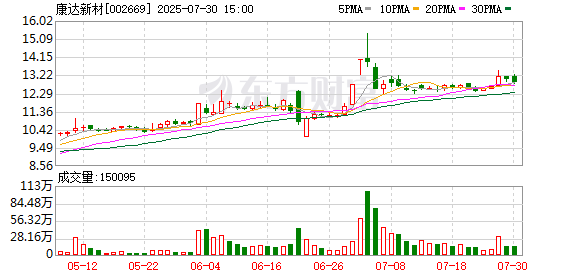
康达新材(SZ 002669,收盘价:12.84元)发布公告称,2025年7月30日10:30—11:30,康达新材接受华 福证券调研,公司副总经理、董事会秘书沈一涛参与接待,并回答了投资者提出的问题。 2024年1至12月份,康达新材的营业收入构成为:胶粘剂行业占比72.62%,电子产品业务占比8.48%, 合成树脂占比6.1%,其他业务占比4.28%,医药中间体占比3.31%。 (文章来源:每日经济新闻) ...

印度据悉仍致力于秋季之前与美国达成双边贸易协议
news flash· 2025-07-30 09:41
Core Viewpoint - India is reportedly committed to negotiating a bilateral trade agreement with the United States before autumn, despite potential tariffs proposed by President Donald Trump [1] Group 1: Trade Agreement Negotiations - Indian officials plan to continue discussions with the U.S. on a bilateral trade agreement this fall [1] - The negotiations are ongoing despite the threat of tariffs exceeding 25% on Indian exports [1] Group 2: Impact of Tariffs - Internal estimates indicate that if tariffs over 25% are imposed, approximately 10% of India's exports could be affected during the July to September period [1] - Sectors such as electronics, gems, and jewelry are expected to be significantly impacted by these potential tariffs [1]