
酒类

Search documents
深耕酒业源头,赋能数字未来——微信电商平台云岭酒业正式启航
Sou Hu Cai Jing· 2025-12-29 18:40
Core Insights - The article highlights the rise of Yunling Liquor Industry, a platform focused on integrating the liquor supply chain and building a WeChat e-commerce ecosystem, aiming to inject new vitality into the liquor industry [1][8] - Yunling Liquor Industry emphasizes a development philosophy of "direct sourcing and quality first," ensuring that every product meets market and consumer standards through stringent quality control [1][6] Group 1: Business Model and Strategy - The platform integrates high-quality resources from liquor manufacturers, covering various categories such as white liquor, local specialty liquor, and customized liquor [1] - Yunling Liquor Industry utilizes WeChat as its core sales channel, creating a new sales pathway that reduces intermediaries and enhances efficiency [1][3] Group 2: Consumer Engagement and Experience - The platform operates a closed-loop model of "content seeding + community conversion + repurchase retention," which helps liquor companies lower marketing costs while providing consumers with transparent pricing and attentive service [3] - Yunling Liquor Industry focuses on transforming the liquor business from "selling products" to "selling experiences and services" through digital tools [3] Group 3: Support for Liquor Enterprises - The platform serves as an empowerment platform for liquor companies, offering support in brand packaging, product planning, marketing promotion, and channel expansion [4] - By enhancing brand exposure and market competitiveness, Yunling Liquor Industry helps quality liquor brands expand from regional to national markets and transition from traditional to digital [6] Group 4: Future Outlook - Looking ahead, Yunling Liquor Industry plans to deepen resource integration, accelerate platform technology upgrades, and explore more cooperative models to promote the deep integration of the liquor industry with the digital economy [8] - The company's goal is not only to become a successful WeChat e-commerce platform but also to play a significant role in the digital transformation of the Chinese liquor industry [8]

食品饮料行业周度更新:大众品需求边际回暖,餐供链板块周度领涨-20251229
Changjiang Securities· 2025-12-29 11:29
Investment Rating - The industry investment rating is "Positive" and is maintained [9] Core Viewpoints - The liquor sector is experiencing a phase of "supply optimization and weak demand recovery," with inventory destocking expected to continue in Q4. Short-term price recovery is anticipated due to Moutai's controlled supply, with attention on Spring Festival sales and inventory turnover [2][5] - Demand for mass consumer goods is expected to show marginal recovery, with January anticipated to see a strong start due to delayed Spring Festival stocking [2][5] - The latest recommended companies include Ganhe Weiye, Guoquan, Anqi Yeast, Babi Foods, Ligao Foods, Wancheng Group, Anjii Foods, Kuaijishan, Shanxi Fenjiu, Yanghe, and Guizhou Moutai [2][5] Summary by Sections Production Data - In November, the industry production data revealed that meat and soft drinks led the growth, with meat production increasing by 16.3% and soft drinks by 0.4%. Other categories, such as alcoholic beverages, continue to face downward pressure [4][16] - Non-alcoholic categories showed stable production growth, with notable increases in fresh and chilled meat production, driven by declining prices of core items like pork, stimulating demand [20] Market Review - Since the beginning of the year, the Food and Beverage (Yangtze) Index has decreased by 4.22%, underperforming compared to the CSI 300. The market has seen significant differentiation, particularly in Q2 and Q3, due to consumption scene restrictions and a trend towards cost-effective consumption preferences [6][28] - In the past week, the restaurant supply chain sector (including food and condiments) has outperformed, while the liquor sector (including beer and wine) has shown relatively weak performance [6][28] Industry Dynamics - Companies in the soft drink sector are focusing on core categories to enhance competitiveness, such as Yuanqi Forest divesting its dairy business to concentrate on tea and sparkling water. Cross-industry innovations are also being explored, with new products like rice whiskey targeting specific dining scenarios [7][34] - Digital transformation and employee incentives are driving channel changes, with integrated online and offline strategies becoming mainstream. Companies like Luckin Coffee and Three Squirrels are rapidly expanding into high-traffic areas [7][34]



从金庸小说到Z世代酒桌,江湖情长竹叶青始终在场
Wind万得· 2025-12-28 22:31
Core Viewpoint - The article highlights the rising popularity of Zhuyeqing liquor among Generation Z consumers, emphasizing a shift from traditional social drinking to a focus on self-enjoyment and emotional value in consumption [2][3]. Group 1: Market Trends - Generation Z is becoming the main consumer force, leading to a transformation in drinking culture that prioritizes "self-consumption" and "emotional value" over traditional social obligations [2]. - Zhuyeqing liquor meets the demand for a "low-burden drinking" experience, characterized by its herbal origins and moderate alcohol content, making it appealing to younger consumers [2][3]. Group 2: Product Characteristics - The taste profile of Zhuyeqing liquor combines the richness of grain liquor with herbal freshness, offering a complex and lingering aftertaste that aligns with the high-quality lifestyle aspirations of young consumers [2]. - The liquor's health-oriented attributes and quality are positioned to resonate with the current trends of health-conscious and moderate drinking among younger demographics [3]. Group 3: Brand Strategy - Zhuyeqing liquor is leveraging its historical legacy and scientific advancements to align with the needs of Generation Z, focusing on classic product value while exploring the potential of traditional liquors through quality upgrades [2][3]. - The brand is implementing an independent brand strategy that emphasizes innovation in flavors and product differentiation to break through market homogenization [3]. Group 4: Historical Significance - Zhuyeqing liquor has a rich history dating back 1500 years, with significant contributions from historical figures like Fu Shan and Hua Luogeng, who enhanced its formulation and production methods [5][6]. - The liquor's evolution from a traditional beverage to a modern favorite reflects its adaptability and enduring appeal across different eras, marking it as a significant part of Chinese liquor culture [6].

茅台葡萄酒董事长“划红线”:坚决惩处低价窜货,一经发现停止合作
Xin Lang Cai Jing· 2025-12-28 03:27
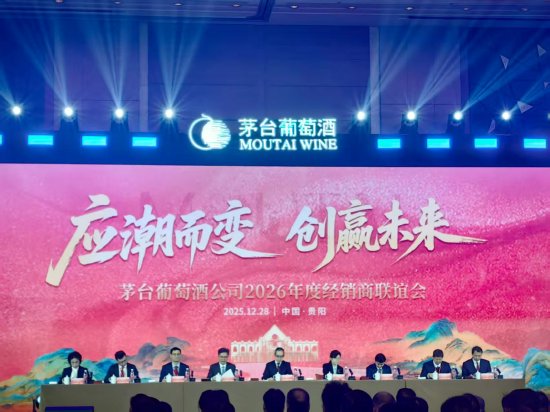
Core Viewpoint - The article discusses the recent developments in the Moutai wine industry, particularly focusing on the 2026 Moutai wine dealer conference and the company's strategies to maintain market stability and pricing integrity [1][3]. Group 1: Company Strategy - Moutai's Chairman, Li Chunfeng, outlined a detailed plan for 2026, emphasizing the importance of maintaining market integrity and protecting price stability [1][3]. - The company will take strict measures against low-price dumping and other disruptive behaviors by dealers, stating that any dealer found engaging in such practices will have their partnership terminated [5]. Group 2: Market Pricing - Recent data from "Wine Price Insider" indicates that the terminal transaction price for Feitian Moutai has stabilized between 1816 and 1827 yuan over the past five days [5]. - The price of premium Moutai has increased by 114 yuan within the same period, rising from 2281 yuan to 2395 yuan, reflecting a 5% increase [5].
茅台葡萄酒2026年最新规划:新增汽泡酒品类“五一”上市,将总经销产品纳入整体产品体系
Xin Lang Cai Jing· 2025-12-28 03:21
Core Insights - The article discusses the strategic planning of Moutai Wine Company for 2026, focusing on product optimization and market adaptation [1][3]. Group 1: Product Strategy - Moutai Wine will enhance product adaptability by adhering to the principles of "demand-driven product" and "sales-driven production" to align with changing consumer trends [3]. - The product lineup will focus on three tiers: the "tip" will feature the estate series, emphasizing Qingluan, Estate R5, and Estate R4, with Estate R3 as a supplementary option; the "body" will cultivate the Old Tree Vine series, strengthening the market presence of Old Tree 35 while promoting new products Old Tree 20 and Old Tree 25; the "base" will develop the "Mountain Sea Phoenix" mass-market series, introducing sparkling wine as a new category for 2026, alongside light and healthy products like tea dry white [3]. - Personalized and differentiated products will be launched according to consumer demand, with fresh wine and zodiac wine set for New Year’s release, and sparkling wine and youthful tea dry white products scheduled for the May Day holiday [3]. Group 2: Market Pricing - Recent data from "Wine Price Insider" indicates that the terminal transaction price of Flying Moutai has stabilized between 1,816 and 1,827 yuan over the past five days; the price of premium Moutai has increased by 114 yuan, rising from 2,281 yuan to 2,395 yuan, marking a 5% increase [3].
茅台葡萄酒高管回顾2025年:调整优化产品结构,已全面停止严重倒挂的老产品
Xin Lang Cai Jing· 2025-12-28 03:01
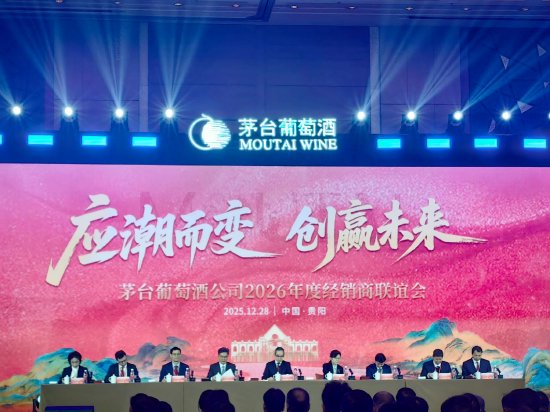
Core Viewpoint - The 2026 Moutai Wine Distributor Conference highlighted the company's strategic adjustments in product structure and production management to better align with market demands and enhance profitability [1][2]. Group 1: Product Strategy - Moutai Wine has streamlined its product lines from six to three main series: Garden, Old Tree, and Mountain-Sea Phoenix, targeting high-end, mid-range, and mass-market consumers [1][2]. - The company has increased the pace of new product upgrades, completing 20 new products across the three main series, including popular items like Dream Autumn and Peak Drunk [1][2]. - Moutai Wine is focusing on self-branded mass-market products and has seen positive results from its fresh wine and tea dry white products [1][2]. Group 2: Production Management - The company has implemented strict production controls, halting the production of older products that are significantly underperforming, except for specific dealer requests [1][2]. - Production is now guided by the principles of "producing based on demand" and "selling based on production" to optimize inventory and meet market needs [1][2]. Group 3: Market Pricing - Recent data indicates that the terminal transaction price for Flying Moutai has stabilized between 1816 and 1827 yuan over the past five days [4]. - The price of premium Moutai has increased by 114 yuan, rising from 2281 yuan to 2395 yuan, reflecting a 5% increase [4].
谋企业发展,创行业未来 冀食协会长联席扩大会议在刘伶醉成功举办
Sou Hu Cai Jing· 2025-12-27 01:40
省食协会长、副会长、各市食协会长、秘书长及衡水老白干、板城酒业、沙城老窖、今麦郎、君乐宝、 露露等众多省内食品企业负责人共同出席会议。与会代表针对下一步发展展开讨论,对推动河北食品行 业高质量发展纷纷建言献策。 2025年12月26日,河北省食品工业协会2025年度会长联席扩大会议在巨力集团刘伶醉酒业成功召开。 作为本次会议承办单位负责人,巨力集团执行总裁、刘伶醉酒业董事长杨帅在发言中,首先介绍了刘伶 醉的品牌文化底蕴、企业发展战略和2026年的发展规划;表达了刘伶醉依托巨力平台和冀食协的聚合引 领,充分激发900年品牌势能,为构建更加健康的河北省食品工业生态贡献企业力量的决心和信心。 河北省食品工业协会党支部书记吴龙妹做大会总结发言:吴龙妹首先对2025年1-10月份省食品产业在全 省经济发展占比情况作了深度分析;就省食协2025年的工作情况作了详实介绍,介绍中有重点、有创 新、有举措、有实效,同时号召企业抓住机遇,加速发展,共同推动全省食品行业健康发展。 河北省发改委产业处张寰翔会上充分听取的企业代表的发言和建议,对冀酒共享品牌的发展寄于厚望, 希望省食协进一步发挥桥梁作用,服务职能部门、服务企业,共同促 ...

观酒|气泡黄酒爆火后“泡沫”散去,黄酒年轻化路在何方?
Nan Fang Du Shi Bao· 2025-12-26 06:25
Core Insights - The Chinese liquor industry is undergoing significant transformation in 2025, facing challenges such as high channel inventory and weak terminal sales, while also experiencing new opportunities driven by changing policies, consumption patterns, and scenarios [1] - The rise of "sparkling yellow wine" has captured attention, with Kuaijishan achieving over 10 million yuan in sales within 12 hours during a live stream, highlighting the potential for product innovation targeting younger consumers [1][2] - However, the initial success of "sparkling yellow wine" has not been sustained, raising questions about the long-term viability of such marketing-driven strategies and the need for deeper market penetration [3][7] Industry Trends - The yellow wine sector has seen increased capital market interest, with Kuaijishan and Guyuelongshan experiencing significant stock price fluctuations and market capitalization changes, reflecting a reassessment of the industry's transformation potential [4][6] - Kuaijishan reported a revenue of 1.212 billion yuan in the first three quarters of 2025, a year-on-year increase of 14.12%, while Guyuelongshan's revenue decreased by 8.11% during the same period, indicating divergent performance strategies [5] - Both companies are pursuing product innovation to attract younger consumers, with Kuaijishan focusing on a "sparkling series" and Guyuelongshan expanding its product matrix to include diverse offerings [5][6] Marketing and Channel Strategies - Kuaijishan emphasizes online marketing and influencer partnerships to drive rapid sales growth, while Guyuelongshan focuses on traditional channel upgrades and cross-industry collaborations to enhance offline penetration [6] - The need for a national distribution network is critical for the success of younger-targeted products, as current sales are heavily concentrated in the Yangtze River Delta region [8][9] Future Directions for Yellow Wine - The yellow wine industry must innovate beyond mere imitation, focusing on flavor essence and health benefits to meet consumer preferences [8] - A comprehensive approach is required to integrate product development, channel construction, and cultural narratives, moving from traditional storytelling to contemporary lifestyle connections [9] - The success of yellow wine's youth-oriented strategies will depend on the industry's ability to create a synergistic ecosystem encompassing products, channels, culture, and consumer engagement [10]
观酒 气泡黄酒爆火后“泡沫”散去,黄酒年轻化路在何方?
Nan Fang Du Shi Bao· 2025-12-26 06:25
Core Insights - The Chinese liquor industry is undergoing significant transformation in 2025, facing challenges such as high channel inventory and weak terminal sales, while also experiencing new opportunities driven by policy, consumption, and scenario changes [1] - The trend of product innovation targeting younger consumers is emerging, with low-alcohol beverages, fruit wines, and sparkling yellow wines becoming key connections to Generation Z [1] - The industry is witnessing a shift towards international markets as domestic growth slows, with liquor companies accelerating their global expansion efforts [1] Group 1: Industry Trends - The yellow wine sector is unexpectedly gaining attention, with Kuaijishan's "sparkling yellow wine" achieving over 10 million yuan in sales within 12 hours during a live stream event, leading to a surge in its stock price and market capitalization [3] - Despite initial success, the popularity of "sparkling yellow wine" has declined rapidly, highlighting the challenges traditional yellow wine companies face in appealing to younger consumers [5] - The competition between Kuaijishan and Guyuelongshan reflects a renewed market interest in the yellow wine industry, with both companies experiencing significant stock price fluctuations and market capitalization changes [6] Group 2: Company Performance - Kuaijishan reported a revenue of 1.212 billion yuan in the first three quarters of 2025, a year-on-year increase of 14.12%, while its net profit grew by 3.32% [6] - In contrast, Guyuelongshan's revenue for the same period was 1.186 billion yuan, a decline of 8.11%, although its net profit saw a slight increase of 0.17% [6] - Both companies are pursuing different strategies for product innovation, with Kuaijishan focusing on a "sparkling" series and Guyuelongshan expanding its product matrix to include diverse offerings [7] Group 3: Marketing and Channel Strategies - Kuaijishan emphasizes online marketing and influencer-driven sales, while Guyuelongshan focuses on upgrading traditional channels and forming cross-industry alliances to enhance offline penetration [9] - The rapid stock buyback plan initiated by Guyuelongshan indicates its confidence in the capital market and strategic stability in response to Kuaijishan's market capitalization lead [9] - The yellow wine industry's competition is not only about immediate marketing results but also reflects long-term transformation expectations, indicating a shift towards a more sustainable approach to young consumer engagement [9] Group 4: Future Directions for Yellow Wine - The yellow wine industry must innovate beyond mere imitation, focusing on flavor essence and health value to meet modern consumer preferences [11] - A nationwide channel network is essential for the success of young-oriented products, requiring a blend of online and offline strategies to cultivate consumer habits [12] - Cultural narratives surrounding yellow wine need to evolve from traditional storytelling to contemporary lifestyle integration, making it relevant to younger demographics [12]


浙江省酒业协会:今年黄酒产业产销量均有微量增长
Cai Jing Wang· 2025-12-26 05:29
Group 1 - The core viewpoint of the news highlights the performance of the Zhejiang liquor industry in 2025, indicating mixed results across different segments, with yellow wine showing a decline in sales but an increase in profit, while beer and white liquor face challenges in sales despite some growth in production and revenue [1][2]. Group 2 - In the yellow wine sector, from January to October 2025, production reached 288,971 thousand liters, a year-on-year increase of 17.07%, while sales volume decreased by 3.40% to 255,588 thousand liters. Sales revenue fell by 8.74% to 3.145 billion yuan, but total tax profit rose by 10.12% to 697 million yuan, with profit increasing by 26.67% to 440 million yuan [1]. - The beer industry in Zhejiang produced 2,569,844 thousand liters from January to October 2025, a decrease of 2.11%, but sales revenue increased by 0.49% to 7.666 billion yuan. Tax profit rose by 5.87% to 1.963 billion yuan, with tax revenue increasing by 3.86% to 1.090 billion yuan, and profit grew by 8.50% to 873 million yuan [1]. - The white liquor sector saw production rise by 37.18% to 10,113 thousand liters, but sales volume fell by 13.62% to 5,516 thousand liters. Revenue from eight white liquor companies dropped by 14.49% to 7.602 million yuan, indicating a challenging economic environment for the sector [1]. - The overall outlook for the yellow wine industry suggests slight growth in both production and sales in 2025, while the beer industry is adapting to new consumer demands with improved product structures and a focus on high-end offerings [2]. - The white liquor industry is enhancing its production capacity and market outreach, with a reported capacity increase of 9.03% year-on-year, and is actively participating in major exhibitions to boost its influence [2].