
外卖

Search documents
京东,变革外卖
Sou Hu Cai Jing· 2025-07-23 02:52
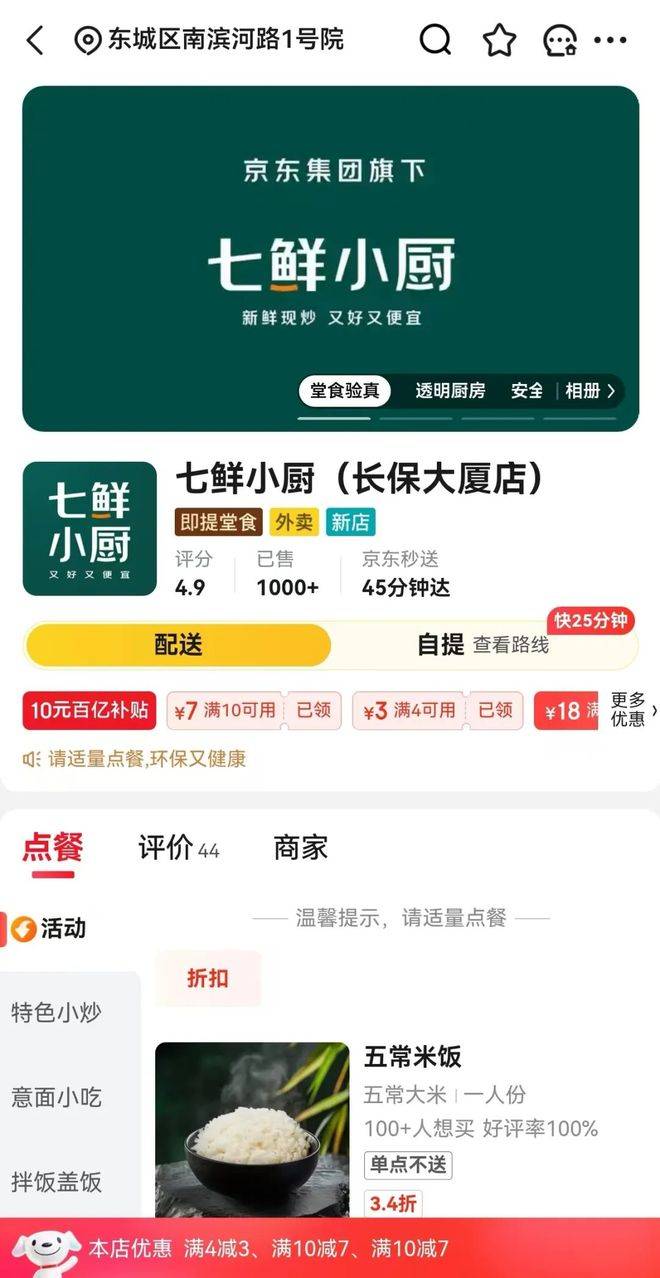
Core Insights - JD.com has launched its first self-operated takeaway store, "Qixian Xiaochu," in Beijing, aiming to disrupt the traditional takeaway model with a focus on quality and safety [1][7] - The store employs a "Dish Partner Program" to enhance its supply chain and food safety standards, addressing existing pain points in the takeaway market [1][11] Group 1: Business Model and Operations - "Qixian Xiaochu" operates under a model that includes a central kitchen and instant delivery, ensuring a seamless supply chain from ingredient sourcing to consumer delivery [1] - The store features a transparent kitchen where customers can observe the cooking process, emphasizing fresh, made-to-order meals without pre-prepared dishes [1][2] - Customers can order through the JD.com app, with prices ranging from 20 to 40 yuan, and the store has already sold 1,000 dishes [2][5] Group 2: Strategic Initiatives - JD.com has initiated a "Dish Partner Program" with a 1 billion yuan investment to recruit chefs for 1,000 signature dishes, allowing partners to focus on recipe development while JD handles production and quality control [7][9] - The program offers a guaranteed minimum share of 1 million yuan for each selected dish, plus unlimited sales commissions based on actual sales [9] Group 3: Market Potential and Competitive Landscape - The takeaway market in China is projected to grow significantly, with a compound annual growth rate of 8%-10% and a market size expected to triple by 2025 compared to 2020 [14] - JD.com aims to build a differentiated competitive barrier through its self-operated model, which integrates dish resources and supply chain capabilities, addressing consumer demands for health and transparency [14][16] - Other competitors like Meituan and Ele.me are also enhancing food safety measures, indicating a broader industry trend towards improved standards [16]


“外卖大战”硝烟未止:平台补贴仍继续,茶饮单量回归正常,有骑手称收入腰斩
Sou Hu Cai Jing· 2025-07-23 01:51
Group 1 - The core viewpoint of the articles indicates that while extreme discounts like "0 yuan purchase" have disappeared, the price war among food delivery platforms is not over, with significant discounts still being offered by platforms like Taobao, JD, and Meituan [1][2] - Industry experts predict that the price war will continue for at least 1-2 months due to new platforms entering the market, creating a competitive environment that will not resolve quickly [1][2] - The external pressure from regulatory bodies has led to a tightening of subsidies, but substantial discounts remain prevalent, indicating ongoing competition among major e-commerce platforms for market share in instant retail [2][6] Group 2 - During the height of the subsidy war, delivery riders experienced a surge in income, with reports of daily earnings exceeding 500 yuan, and some even reaching over 1,000 yuan [3][4] - As the subsidy war winds down, rider incomes have begun to decline, with many reporting daily earnings dropping to around 300-500 yuan [4] - The competitive landscape has shifted, with businesses now facing multiple layers of competition, including from other merchants on the same platform and across different platforms, leading to thinner profit margins [9] Group 3 - The reliance on subsidies has created a challenging environment for small and medium-sized businesses, as they struggle to compete with larger chains benefiting from significant funding [6][7] - The long-term sustainability of the benefits gained from the subsidy wars is questioned, as the price distortions created may not be recoverable once subsidies are removed [8] - Experts emphasize the need for businesses to balance profit margins with customer base growth, suggesting that selectively withdrawing from low-margin activities could be a viable strategy [5][9]
外卖战没有熄火,商家、骑手、消费者面临的问题也未解决
2 1 Shi Ji Jing Ji Bao Dao· 2025-07-22 23:18
Core Viewpoint - The recent regulatory talks with major food delivery platforms like Ele.me, Meituan, and JD.com signal a shift in the aggressive subsidy strategies that have characterized the industry, indicating a need for more sustainable promotional practices [1][2]. Group 1: Regulatory Actions and Industry Response - The State Administration for Market Regulation has urged platforms to standardize their promotional behaviors, suggesting that the current subsidy wars need to be moderated [1]. - Multiple restaurant industry associations have called for a halt to aggressive subsidies, citing that such practices have led to unsustainable pricing and profit pressures on traditional dining establishments [2]. Group 2: Impact on Businesses - Some businesses have reported significant order increases due to subsidies, with one brand noting a nearly 30% rise in orders since May, although profit margins have been squeezed [3][4]. - The average profit margin for many businesses has reportedly decreased by 10% to 30% during subsidy campaigns, highlighting the financial strain on restaurants [3]. Group 3: Challenges Faced by Restaurants - Restaurants face operational challenges due to sudden spikes in low-priced orders, which can overwhelm delivery capabilities and degrade service quality [4]. - Smaller brands are particularly disadvantaged, as they struggle to compete for visibility and customer engagement against larger chains that benefit from platform resources [4]. Group 4: Future of Subsidy Strategies - Experts suggest that the focus should shift from mere subsidies to enhancing quality and efficiency in service delivery, with a call for platforms to develop better operational tools for small businesses [9]. - The potential for a transition from a "traffic competition" model to a "quality competition" model is seen as crucial for the long-term sustainability of the industry [9].

淘宝闪购称不会做“0元购”这类事;美团拼好饭日订单峰值超过3500万单|未来商业早参
Mei Ri Jing Ji Xin Wen· 2025-07-22 23:16
Group 1 - Zero One Technology launched an enterprise-level Agent AI, positioning it as a "super employee" with deep thinking and task planning capabilities [1] - The Agent AI can be customized based on specific business scenarios, addressing complex business needs [1] - The company aims to enhance application breadth and cost control in the future [1] Group 2 - Meituan's "Pinh Hao Fan" initiated the "Ten Thousand Brands" plan, providing support to over 10,000 well-known restaurant brands [2] - The platform has surpassed 5,000 restaurant brands and achieved a peak daily order volume of over 35 million [2] - This strategy aims to attract more users and differentiate Meituan from competitors in the fiercely competitive food delivery market [2] Group 3 - Taobao Flash Sale denied rumors of launching a "1 cent takeaway self-pickup" product, emphasizing the importance of protecting merchants' profits [3] - The platform has no internal targets for order volume, focusing instead on market-driven operations [3] - This approach may attract more quality merchants and build a sustainable competitive advantage [3] Group 4 - JD.com announced a "Dish Partner" recruitment plan, aiming to establish 10,000 "Seven Fresh Kitchens" within three years [4] - The company will invest 10 billion yuan to find partners for 1,000 signature dishes, offering a guaranteed minimum revenue share of 1 million yuan per dish [4] - This initiative leverages JD's strong supply chain and financial resources to compete in the food delivery sector [4] Group 5 - Didi launched a summer discount campaign for rides, offering fares starting at 30% off in nine countries, including South Korea and Singapore [5][6] - The campaign targets domestic tourists traveling abroad, with popular destinations including Tokyo and Seoul [6] - Didi aims to attract more users by addressing travel cost concerns, while facing competition from other ride-hailing services [6]

住房租赁条例正式落地,全国彩票收入创历史新高 | 财经日日评
吴晓波频道· 2025-07-22 15:39
Group 1: Housing Rental Regulations - The "Housing Rental Regulations" was officially announced by the State Council, set to take effect on September 15, 2025, aiming to standardize rental activities and protect the rights of parties involved [1] - The regulations consist of 7 chapters and 50 articles, addressing rental activities, behaviors of rental companies, and supervision management [1] - The rental population in China is nearing 260 million in 2023 and is expected to exceed 300 million by 2025, indicating significant market potential [1][2] Group 2: Economic Performance of Major Provinces - Six major economic provinces reported GDP growth rates exceeding the national average of 5.3% in the first half of the year, with Zhejiang leading at 5.8% [3] - Guangdong province, however, showed disappointing growth at 4.2%, significantly below the national level, primarily due to a 9.7% decline in fixed asset investment [3][4] - The industrial sectors in Jiangsu, Zhejiang, and Henan provinces were key drivers of economic growth, with private enterprises boosting foreign trade in Zhejiang [3][4] Group 3: Lottery Sales - National lottery sales reached a record high of 317.85 billion yuan in the first half of the year, with a year-on-year growth of 3% [5] - The growth rate of lottery sales has been slowing, with a significant drop from 36.5% in 2023 to 7.6% in 2024 [5][6] - Young consumers are increasingly drawn to instant lottery games, reflecting a shift in purchasing behavior amid economic uncertainties [6] Group 4: U.S. Credit Outlook - Fitch Ratings downgraded the outlook for 25% of U.S. industries to "negative," citing increased uncertainty and a slowdown in economic growth [7] - The U.S. government is expected to maintain a high deficit, with projections indicating a debt-to-GDP ratio of 135% by 2029 [7][8] - The downgrade suggests a higher likelihood of credit rating reductions for affected industries, impacting bond prices and financing conditions [7][8] Group 5: Lithium Battery Exports - China's lithium-ion battery exports reached a record high of $34.102 billion in the first half of the year, marking a 25.14% year-on-year increase [9] - The export volume of lithium-ion batteries increased by 17.52% to 2.156 billion units, despite ongoing low prices for raw materials like lithium carbonate [9][10] - The growth in exports is attributed to factors such as increased overseas demand and domestic production capacity expansion [9][10] Group 6: JD's New Business Model - JD launched its first self-operated takeaway store, "Qixian Xiaochu," focusing on quality food without pre-prepared dishes [11][12] - The store operates on a model that combines takeaway and self-pickup, aiming to address food safety concerns [11][12] - The operational challenges include maintaining food quality and managing the risks associated with the restaurant business model [12] Group 7: Neuralink's Surgical Milestone - Neuralink completed two brain-machine interface surgeries in one day, marking a significant advancement in its operations [13] - The company aims to perform 20 to 30 surgeries by 2025, focusing on treating severe conditions like ALS and spinal cord injuries [13][14] - The efficiency of surgeries has improved significantly due to advancements in robotic technology, which reduces reliance on human surgeons [13][14]

京东回应外卖新模式:七鲜小厨不是抢餐厅生意,三年建设10000家
36氪未来消费· 2025-07-22 14:58
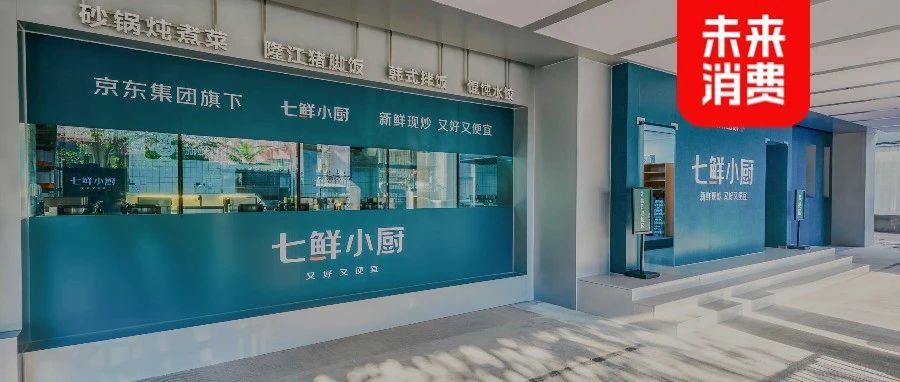
Core Viewpoint - JD's new model "Seven Fresh Kitchen" aims to create a unique business model distinct from Meituan, focusing on a partnership approach with restaurants and chefs to innovate the supply chain in the food delivery industry [2][3][4]. Summary by Sections Business Model - JD positions "Seven Fresh Kitchen" as a "cooperative quality dining production platform," where it recruits dish recipes from restaurant partners, while JD manages all operational aspects including raw materials, rent, and labor [4][6]. - The initial store is located in Beijing, offering a variety of dishes priced between 10 to 20 yuan after subsidies [3][4]. Partnership and Recruitment - As of now, nearly 7,000 chefs and restaurant brands have signed up as "dish partners" for the program, indicating strong interest in the cooperative model [5][12]. - JD guarantees a minimum revenue share of 1 million yuan for each dish partner, ensuring they can collaborate with confidence [10]. Market Positioning - JD's goal is to establish 10,000 "Seven Fresh Kitchens" nationwide within three years, contrasting with Meituan's plan to open 1,200 "Raccoon Kitchens" in the same timeframe [7]. - The model aims to tackle issues in the food delivery sector, such as "ghost kitchens" and food safety, by ensuring quality and affordability [8][17]. Supply Chain Innovation - JD emphasizes its supply chain advantages, using well-known suppliers for ingredients and implementing strict quality controls to ensure food safety [16][18]. - The operational model eliminates the need for on-site food preparation, reducing hygiene risks associated with traditional restaurants [16]. Consumer Experience - The "Seven Fresh Kitchen" aims to provide a trustworthy and affordable dining option, addressing consumer concerns about food safety and quality [17][18]. - The first day of operations saw overwhelming demand and positive customer feedback, highlighting the effectiveness of the model [18]. Future Outlook - JD is open to partnerships with other platforms and does not intend to compete with existing restaurants, focusing instead on enhancing the overall dining experience [21].
3年要开1万家外卖自营店,京东最新回应:已有7千人报名开发菜品
Di Yi Cai Jing· 2025-07-22 14:49
Core Insights - JD.com is launching a "Dish Partner" recruitment plan, investing 1 billion yuan to find partners for 1,000 signature dishes, aiming to establish 10,000 "Seven Fresh Kitchens" nationwide within three years [1] Group 1: Business Model and Strategy - The "Seven Fresh Kitchen" is positioned as a quality restaurant production platform, where JD.com will manage overall operations while partners focus on dish development [2] - As of now, nearly 7,000 applicants have registered, including brands like Jiahe Yipin and Ziyuan Baiwei Chicken [2] - The partnership model allows brand merchants or individual chefs to share in the profits from dish sales, while JD.com covers rent, labor, and operational costs [2][5] Group 2: Market Positioning and Pricing - The price range for individual dishes is set between 10 to 30 yuan, with JD.com aiming for low pricing while ensuring quality through its supply chain [5] - The "Seven Fresh Kitchen" adheres to JD.com's quality standards for restaurant partners, focusing on "takeaway only" models that have passed offline customer traffic tests [3] Group 3: Competitive Landscape - The model differentiates itself from competitors like Meituan's "Raccoon Canteen" by rejecting pre-prepared dishes and focusing on freshly cooked meals, appealing to health-conscious consumers [6] - JD.com aims to leverage supply chain integration and technology to create a competitive edge, addressing food safety concerns through "fresh cooking + transparent kitchen" [6] - The sustainability of this heavy asset model in high-frequency consumption scenarios remains a challenge for JD.com [6]
如何看外卖大战及下半年格局演变
2025-07-22 14:36
Summary of Conference Call Notes Industry Overview - The conference call discusses the competitive landscape of the food delivery industry, particularly focusing on major players such as Meituan, Alibaba, Pinduoduo, and ByteDance [1][2][3]. Key Points and Arguments - **Regulatory Impact**: Regulatory bodies have intervened to standardize promotional behaviors among food delivery platforms, particularly addressing the waste caused by "0 Yuan Purchase" promotions. This has led to a reduction in subsidy intensity, although large discount coupons remain available to foster a win-win ecosystem for merchants, riders, and platforms [1][3]. - **Market Growth and Order Volume**: The food delivery market has seen a significant increase in order volume, reaching approximately 250 million orders, with Meituan accounting for 150 million and Alibaba for 80 million. However, this growth is attributed to a bubble effect caused by merchants and consumers splitting orders rather than an actual increase in demand [1][4]. - **Strategic Goals of Alibaba**: Alibaba aims to enhance its C-end traffic entry without necessarily seeking to dominate the food delivery sector. Meituan is still viewed as the leading player in a stable market environment [1][6]. - **Pinduoduo's Market Entry**: Pinduoduo is expected to enter the instant retail market in August, targeting a GMV of 50-60 billion RMB for the second half of the year, corresponding to 16-17 million orders [1][7]. - **ByteDance's E-commerce Growth**: ByteDance has a strong advantage in the e-commerce sector, with a mature ecosystem of merchants and users. The growth rate of Douyin's e-commerce is impressive, with a 25% increase in early 2025 and a rise to 35-40% later in the same year, posing a significant threat to traditional e-commerce players like Alibaba and JD [1][8]. - **Local Services Development by ByteDance**: ByteDance has launched the "Tanfang" agent in local services but faces limitations due to computational constraints. They are also recruiting quality merchants for their "Sui Xin Tuan" business, which includes group buying and delivery services [1][9]. Additional Important Insights - **Competitive Pressure on Meituan**: Meituan faces competitive pressure from multiple platforms, including Alibaba, JD, Pinduoduo, and ByteDance. The structural impact of low-price orders has led to a decline in market share, necessitating expansion into new sectors to drive revenue and profit growth [2][10]. - **Market Expectations for Meituan**: There is a divergence in market expectations regarding Meituan's future. Some investors view regulatory changes as beneficial, while others see them as detrimental. The upcoming Q2 earnings report and the stability of Meituan's Unit Economics (UE) will be crucial for predicting trends for the second half of the year and into 2026 [1][12]. - **Future Growth Opportunities**: If the growth rate of the food delivery market can increase from high single digits to around 10%, and instant retail growth can rise from 15-20% to 25-30%, Meituan may still have opportunities to gain incremental revenue and profit through market expansion [10][11].
三家外卖平台,被约谈!
券商中国· 2025-07-22 13:41
Core Viewpoint - The Zhengzhou Market Supervision Administration has conducted administrative talks with major food delivery platforms, emphasizing the need for compliance and rectification to maintain a fair and orderly online market environment [1][2]. Group 1: Compliance and Responsibility - Platforms are required to enhance their sense of responsibility and urgency regarding compliance, ensuring thorough qualification reviews of merchants and eliminating illegal operators [1]. - A dynamic verification mechanism must be established to ensure that operating entities are legal and compliant [1]. Group 2: Food Safety and Operational Standards - Platforms must strengthen food safety management by promoting online displays of food preparation areas and ensuring comprehensive coverage of food safety seals [1]. - Strict adherence to cleanliness and disinfection protocols for delivery containers is mandated to safeguard the delivery process [1]. Group 3: Consumer Rights and Fair Competition - Platforms are instructed to prohibit deceptive pricing practices, such as fictitious original prices and forced bundling, while ensuring clear labeling of product specifications and pricing [1]. - An online dispute resolution channel will be established to prioritize food safety complaints, aiming to reduce response and processing times to enhance consumer satisfaction [1]. Group 4: Regulatory Actions and Enforcement - The Market Supervision Administration will adopt a "zero tolerance" approach, launching special rectification actions targeting illegal operations and unfair practices [2]. - A dual investigation system will be implemented to address both merchant violations and platform management responsibilities, with a mechanism for public exposure of typical cases [2].

拼好饭启动“万家品牌”计划,汉堡王、老乡鸡等超5000个知名品牌已加入
Jing Ji Guan Cha Wang· 2025-07-22 13:10
Core Insights - Meituan's "Wan Jia Brand" initiative aims to support 10,000 well-known restaurant brands with resources like traffic allocation, joint customization services, and brand support to enhance consumer service [1] - The daily order volume for Meituan's instant retail surpassed 150 million, with over 35 million orders coming from "Pin Hao Fan," indicating significant growth in the food delivery sector [1] - "Pin Hao Fan" has become the fastest-growing innovative product in the industry over the past five years, providing a reliable growth path for restaurant brands [1] Group 1 - The number of restaurant brands on "Pin Hao Fan" has exceeded 5,000, with resource investments helping merchants achieve a dual growth in order profits [1] - The number of stores operated by well-known brands on "Pin Hao Fan" has increased by 64% year-on-year [1] - "Pin Hao Fan" differentiates itself from traditional delivery models by using standard meal packages, aggregating orders, and centralized delivery to help merchants create popular dishes and achieve stable order volumes [1] Group 2 - The "explosive product one-price" brand section on "Pin Hao Fan" allows users to access nearby brand stores directly, providing stable traffic and repeat purchases for brand merchants [3] - "Pin Hao Fan" encourages consumers to explore quality small dining establishments nearby, aiming to bring stable customer flow to these unique shops [3] - The initiative focuses on enhancing consumer value by transforming the supply chain to offer affordable quality meal packages, targeting young consumers with high-cost performance [3]