航空航天

Search documents
新的万亿级增长极来了?空天产业迎来价值重估时刻
券商中国· 2025-10-30 23:28
Core Viewpoint - The article emphasizes China's ambitious goals in the aerospace sector, particularly the upcoming launch of the Shenzhou 21 manned spacecraft and the long-term objective of landing on the moon by 2030, highlighting the strategic importance of aerospace in national development [2][7]. Industry Development - The aerospace industry in China has evolved significantly since the Wright brothers' first powered flight in 1903, with milestones including the successful flight of China's first self-made aircraft by Feng Ru in 1909 [3]. - The launch of Sputnik 1 in 1957 marked the beginning of the space age, with China achieving its first satellite launch in 1970 and significant advancements in manned spaceflight and deep space exploration in the 21st century [4][5]. Strategic Importance - The recent inclusion of "aerospace power" in the 14th Five-Year Plan indicates a strategic elevation of the aerospace industry, with a focus on developing advanced manufacturing and emerging industries such as aerospace and low-altitude economy [7][8]. - The government aims to foster a market worth trillions in the aerospace sector, with projections for the commercial satellite communication industry to grow significantly by 2030 [9][10]. Investment Opportunities - The upcoming Shenzhou 21 mission is expected to benefit companies involved in aerospace technology, with several listed companies participating in the mission's support [6]. - The Aerospace ETF (159227) focuses on leading companies in the aerospace sector, including those involved in military and civilian applications, and is positioned to capture growth opportunities in the industry [12][14]. Market Trends - The commercial aerospace sector is experiencing rapid growth, with over 600 companies and an annual growth rate exceeding 20%, indicating a pivotal moment for investment in this area [9][10]. - The article notes that the aerospace ETF has seen significant inflows, reflecting market confidence in the aerospace industry's potential [14].


为何要再造一个高技术产业
Jing Ji Ri Bao· 2025-10-30 22:14
Core Insights - The Chinese government aims to cultivate and expand emerging and future industries, with the goal of creating a new high-tech industry equivalent to the size of China's existing high-tech sector over the next decade, injecting continuous new momentum into the economy and high-quality development [1][3] Economic Context - China's economic growth faces challenges due to the weakening of traditional growth drivers and the slow replacement by new drivers, necessitating the reconstruction of a high-tech industry to stabilize growth [1][2] - The current contribution of high-tech manufacturing to industrial value added is less than 20%, indicating a significant gap compared to developed countries, which positions the reconstruction of a high-tech industry as a strategic move to enhance competitiveness [2] Strategic Importance - The reconstruction of a high-tech industry is seen as a critical step in reshaping industrial advantages, allowing China to consolidate its leading position in advantageous sectors and seize opportunities in future markets [2][4] - The ongoing technological revolution, particularly in areas like artificial intelligence, presents both opportunities and uncertainties, making the establishment of a high-tech industry essential for capturing new technological advancements and mitigating risks [2][3] Industrial Foundation - China's "three new" economy is projected to contribute 24.29 trillion yuan to GDP in 2024, exceeding 18%, supported by a robust industrial system and leadership in sectors like new energy vehicles and 5G [3] - The country ranks second globally in R&D expenditure, with significant breakthroughs in quantum computing and artificial intelligence, indicating a strong foundation for the development of a new high-tech industry [3] Future Industry Development - The focus will be on nurturing emerging pillar industries such as new energy, new materials, and aerospace, which are expected to create substantial market opportunities and drive the expansion of the high-tech sector [3][4] - Future industries will be strategically developed in areas like quantum technology and brain-computer interfaces, transitioning from technological reserves to market applications, thus becoming new growth points for the economy [3] Transformation of Manufacturing - The initiative to rebuild a high-tech industry represents a qualitative transformation of Chinese manufacturing, moving away from being "big but not strong" to a more resilient and innovative position in global competition [4]
专访招商基金李湛:把握五大赛道机遇 拥抱中国式长期主义
Nan Fang Du Shi Bao· 2025-10-30 17:45
Core Insights - The "15th Five-Year Plan" is a critical period for achieving socialist modernization, emphasizing high-quality development and strategic adjustments compared to the "14th Five-Year Plan" [2][4]. Economic and Policy Focus - The "15th Five-Year Plan" continues to prioritize high-quality development while shifting focus from quantitative economic growth to qualitative improvements and reasonable growth [4]. - The plan emphasizes the integration of technological innovation with industrial innovation, particularly in key areas like integrated circuits and industrial mother machines [4]. - The strategy has shifted from a supply-side focus to a dual emphasis on supply and demand, highlighting the importance of new demand leading to new supply [5]. Key Areas of Opportunity - Five key sectors are identified for explosive growth: 1. Strategic and future industries such as renewable energy, aerospace, and quantum technology [7]. 2. Upgrading traditional industries through high-end, intelligent, and green transformations [7]. 3. Deep integration of modern services and the digital economy [7]. 4. AI and its application across various sectors [8]. 5. Modern infrastructure and green transition initiatives [8]. Asset Management Role - The asset management industry is crucial for funding allocation and value discovery, supporting technological innovation through various investment methods [9]. - The industry must also focus on promoting common prosperity and green transformation by developing inclusive financial products and directing funds towards green industries [10]. Challenges for Asset Management - The industry faces challenges in cultivating "patient capital" due to the long investment cycles associated with technology and green projects [10]. - There are difficulties in valuation and risk pricing for new technologies, requiring high professional capability [10]. - Policy execution uncertainties and the need for robust risk prevention measures are also significant challenges [10]. Investment Strategies for Individuals - Individual investors are advised to adopt a "slow wealth" approach, focusing on long-term growth alongside quality companies [11]. - Asset allocation should align with the "15th Five-Year Plan," emphasizing sectors like technology self-reliance and green transformation [11]. - Utilizing professional institutions for diversified investments and maintaining a balanced portfolio is recommended [12].
创投铁幕之后,再筑新墙
3 6 Ke· 2025-10-30 17:21
Core Points - The core message of the "America First Investment Policy" is that American investors should focus on investing in the future of the United States rather than in other countries [1][2] Summary by Sections Policy Changes - The "America First Investment Policy" significantly expands the scope of the Reverse CFIUS (Committee on Foreign Investment in the United States) restrictions from three sensitive sectors (semiconductors, artificial intelligence, quantum computing) to include biotechnology, hypersonic technology, aerospace, advanced manufacturing, directed energy, and other areas influenced by China's "military-civil fusion" strategy [1][3] - The policy restricts various types of investments, including private equity, venture capital, greenfield investments, corporate expansions, and public securities trading [1][2] - It also limits funding sources, including pension funds, university endowments, and other limited partner investors [1][3] Impact on Chinese Investments - The policy may exert pressure on Chinese concept stocks (Chinese companies listed in the U.S.) from multiple angles, potentially affecting their market performance and regulatory scrutiny [2][10] - The expansion of restricted sectors under the policy indicates a more aggressive stance from the U.S. towards curbing China's technological advancements [2][4] Historical Context - The changes reflect a broader historical trend of the U.S. attempting to contain China's development in strategic industries and advanced technologies, a strategy that has been consistent since Trump's first term [4][5] Investment Environment - The "America First" label emphasizes that American capital should be directed towards U.S. industries, while investments from "friendly" nations are encouraged, contrasting with restrictions on investments from "foreign adversaries" [6][7] - The policy signals a potential increase in scrutiny for Chinese dollar funds investing in the U.S. market, which may face stricter CFIUS reviews [7][8] Regulatory Measures - The policy outlines enhanced regulatory measures for Chinese concept stocks, including stricter auditing requirements and potential risks of forced delisting if compliance with U.S. auditing standards is not met [10][11] - It emphasizes the need for thorough reviews of the auditability and corporate governance of foreign adversaries' companies listed in the U.S., particularly focusing on VIE (Variable Interest Entity) structures [14][15] Taxation Agreements - The policy raises the possibility of suspending or terminating the 1984 U.S.-China tax treaty, which could significantly increase the tax burden on economic exchanges between the two countries, impacting capital, labor, trade, and technology flows [2][17]
上海中试平台:驱动新兴产业从实验室跑进生产线
Zheng Quan Ri Bao· 2025-10-30 16:27
Core Viewpoint - The establishment of pilot testing platforms is crucial for bridging the gap between technological innovation and industrial application, particularly in emerging industries such as low-altitude economy, new materials, and new energy [1][2][4]. Group 1: Importance of Pilot Testing Platforms - Pilot testing platforms serve as essential "real-world testing grounds" for technologies, enabling rapid validation and iteration before mass production [2][3]. - These platforms help break the cycle of hesitation among downstream enterprises regarding the adoption of domestically produced machinery due to a lack of large-scale industrial validation [2][3]. - The integration of pilot testing platforms into the overall technology and industrial development strategy in Shanghai aims to streamline the process from project initiation to operational deployment [4][5]. Group 2: Innovative Practices and Case Studies - Shanghai Jiao Tong University's Zhihong Technology has successfully implemented a pilot testing line for automotive powertrains, identifying over 1,400 specific issues that were addressed to ensure successful product integration into downstream manufacturing [2][3]. - The Shanghai Chemical Industry Zone has developed a specialized pilot testing facility that focuses on electronic chemicals and synthetic biology, providing comprehensive services from small-scale production to performance validation [6][7]. - The East China UAV Base has become a hub for low-altitude new aircraft testing, facilitating a streamlined process for flight testing, certification, and market application [8][11]. Group 3: Challenges and Solutions - The sustainability of pilot testing platforms is challenged by high operational costs and the inherent risks associated with research and development [9][10]. - The Shanghai Chemical Industry Zone has adopted a gradual exploration approach to manage risks and costs effectively, transitioning from lower-risk facilities to higher-risk environments as operational experience is gained [9][10]. - Innovative service models are being developed to create diverse revenue streams, including technology incubation and market development, to ensure the long-term viability of pilot testing platforms [10][11]. Group 4: Strategic Significance - Pilot testing platforms are becoming key nodes that connect the innovation chain, industrial chain, and funding chain, enhancing regional competitiveness [12]. - These platforms are increasingly viewed as vital tools for attracting investment and fostering industrial ecosystems, moving beyond traditional incentives like land and tax benefits [11][12].
波音持续走低,现跌超5%
Mei Ri Jing Ji Xin Wen· 2025-10-30 15:16
Core Viewpoint - Boeing's stock continues to decline, currently down over 5% as of October 30 [1] Company Summary - Boeing's share price has experienced a significant drop, indicating potential concerns among investors regarding the company's performance and outlook [1]

国新证券每日晨报-20251030
Guoxin Securities Co., Ltd· 2025-10-30 11:02
Domestic Market Overview - The domestic market experienced a rise in both volume and price, with the Shanghai Composite Index closing at 4016.33 points, up 0.7%, and the Shenzhen Component Index closing at 13691.38 points, up 1.95% [1][4][9] - A total of 26 out of 30 sectors in the CITIC first-level industry index saw gains, with significant increases in the power equipment and new energy, non-ferrous metals, and comprehensive finance sectors, while banking, food and beverage, and textile and apparel sectors faced declines [1][4][9] - The total trading volume for the entire A-share market was 22,907 billion, showing a decrease compared to the previous day [1][4][9] Overseas Market Overview - The three major U.S. stock indices closed mixed, with the Dow Jones down 0.16%, the S&P 500 unchanged, and the Nasdaq up 0.55% [2][4] - Notable declines were seen in Boeing, which fell over 4%, and UnitedHealth Group, which dropped more than 3%, leading the Dow's decline [2][4] - The total market capitalization of the U.S. tech giants reached over $5 trillion, with Nvidia rising nearly 3% and Google increasing over 2% [2][4] Key News Highlights - The Ministry of Foreign Affairs expressed willingness to work with the U.S. to achieve positive outcomes from the upcoming meeting between the Chinese and U.S. presidents [3][12] - The Ministry of Commerce and four other departments issued the "Urban Commercial Quality Improvement Action Plan" to enhance urban commercial development [3][13] - The State Administration of Foreign Exchange released a package of policies to support the stable development of foreign trade [3][14] - The Central Enterprises Strategic Emerging Industry Development Fund raised 51 billion yuan in its first phase [3][17][18] - The Federal Reserve lowered interest rates by 25 basis points, marking the fifth rate cut since September 2024 [3][21]
中简科技:ZT8产品主要针对航天领域研制
Zheng Quan Ri Bao Wang· 2025-10-30 10:17
Core Viewpoint - Zhongjian Technology (300777) announced on October 30 that its ZT8 product is primarily developed for the aerospace sector, and the company is expanding its product range to include bundles and specifications to match more application scenarios [1] Group 1 - The ZT8 product is specifically designed for the aerospace industry [1] - The company is working on diversifying its product offerings to reduce customer concentration risk [1] - The expansion into new markets is expected to contribute to this year's sales revenue [1]

广州前三季度GDP破2.3万亿:新兴产业经济贡献率超1/3
2 1 Shi Ji Jing Ji Bao Dao· 2025-10-30 09:29
Economic Performance - Guangzhou's GDP for the first three quarters of 2023 reached 23,265.65 billion yuan, with a year-on-year growth of 4.1% [1] - The first industry added value was 197.94 billion yuan, growing by 4.2%; the second industry added value was 5,564.37 billion yuan, growing by 2.7%; and the third industry added value was 17,503.34 billion yuan, growing by 4.6% [1] - The economic growth momentum is increasingly driven by emerging industries, contributing over one-third of the growth [2][3] Industrial Development - The industrial added value in Guangzhou increased by 1.4% year-on-year in the first three quarters, an improvement of 0.7 percentage points from the first half of the year [3] - The "3+5" strategic emerging industries achieved an added value of 7,517.28 billion yuan, with a year-on-year growth of 4.6% and a contribution rate of 35.2% to GDP [3][4] New Energy Vehicles - Xiaopeng Motors experienced significant growth, with overseas deliveries reaching 29,706 units, a year-on-year increase of over 125% [2] - The production of new energy vehicles in Guangzhou showed a steady increase, with a cumulative production growth of 20.6% year-on-year [2] Infrastructure and Investment - The T3 terminal of Guangzhou Baiyun International Airport officially commenced operations, marking a new era for the airport with five runways and three terminals [5] - In the first three quarters, 1,939 new fixed asset investment projects were initiated, with a total planned investment amount increasing by 5.7% year-on-year [3] Trade and Foreign Investment - Guangzhou's total import and export value exceeded 900 billion yuan in the first three quarters, with exports maintaining a growth rate of over 20% [10] - Cross-border e-commerce imports and exports reached 169.12 billion yuan, contributing to a year-on-year growth of 12.5% in foreign trade [10] Consumer Market - The passenger volume at Guangzhou's airport exceeded 60 million, with a year-on-year growth of 8.4%, and international passenger volume increased by 20% [6] - The city's retail market saw a significant increase in consumer spending, particularly in the tourism sector, with inbound tourist spending via Alipay surging over 180% [6][8]

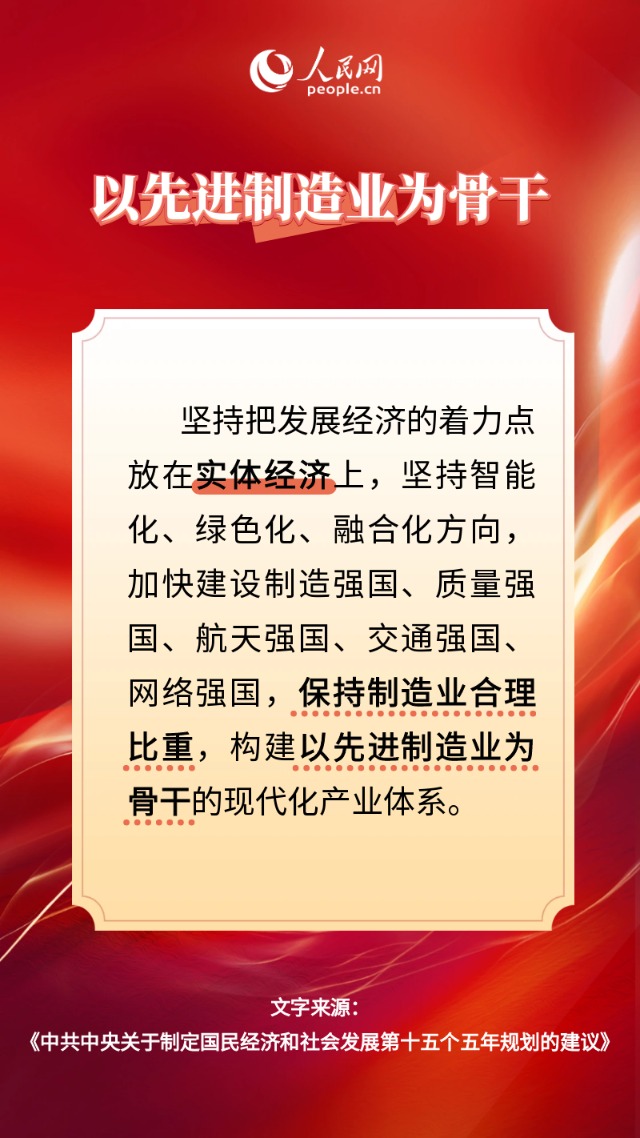
热词里的“十五五” | 建设现代化产业体系,千行百业将迎来哪些变化?
Ren Min Wang· 2025-10-30 06:01
Core Viewpoint - The article emphasizes the importance of building a modern industrial system as the material and technological foundation for a modern nation, as outlined in the "14th Five-Year Plan" by the Central Committee of the Communist Party of China [1]. Group 1: Optimizing Traditional Industries - The plan aims to enhance and upgrade key traditional industries such as mining, metallurgy, chemical, light industry, textiles, machinery, shipbuilding, and construction to strengthen their global competitiveness [4]. - It focuses on improving the self-controllability of industrial chains and emphasizes the need for major technological breakthroughs and the implementation of high-quality development actions for key manufacturing industries [4]. Group 2: Developing Emerging Pillar Industries - The initiative includes the implementation of industrial innovation projects to promote the development of strategic emerging industries such as new energy, new materials, aerospace, and low-altitude economy [5]. - It aims to create a robust industrial ecosystem by facilitating large-scale application demonstrations of new technologies, products, and scenarios to accelerate the growth of emerging industries [5]. Group 3: Forward-Looking Layout for Future Industries - The plan encourages exploration of diverse technological routes, typical application scenarios, feasible business models, and market regulation rules to drive growth in sectors like quantum technology, biomanufacturing, hydrogen energy, and nuclear fusion [6]. - It also emphasizes the need for innovative regulatory methods and the development of venture capital to support the growth of future industries [6][8]. Group 4: Enhancing and Upgrading the Service Sector - The strategy includes actions to expand and improve the service sector, enhance regulatory reforms, and develop a supportive policy framework [9]. - It aims to promote the specialization and high-end value chain extension of productive services while fostering high-quality, diversified, and convenient development in the life services sector [9].