军工制造

Search documents
突发!又跳水!
中国基金报· 2025-10-28 08:13
Market Overview - A-shares broke through the 4000-point mark during intraday trading, reaching a new high not seen in over a decade, with the Shanghai Composite Index showing broad optimism in the market [4][10] - The market saw 2366 stocks rise, with 71 hitting the daily limit up, while 2908 stocks declined [4][5] Gold Market Dynamics - Gold prices continued to decline, falling to below $3930 per ounce, a drop of 1.26% on October 28, after reaching a record high of over $4380 per ounce the previous week [3][10] - Despite the recent downturn, gold prices have increased by over 50% this year, supported by central bank purchases and retail investor interest [3] - Analysts from Citigroup predict that gold prices may drop to $3800 per ounce in the next three months due to various factors, including potential agreements between the U.S. and China and changes in gold price momentum [3] Sector Performance - Local stocks in Fujian province continued to show strength, with companies like Haixia Innovation and Fujian Cement hitting the daily limit up [6] - The military industry sector experienced a collective surge, with stocks such as Jianglong Shipbuilding and Great Wall Military Industry also reaching the daily limit up [8] - In contrast, the gold and non-ferrous metal sectors faced declines, with Tongling Nonferrous Metals hitting the daily limit down [9][10]


楚江新材:子公司天鸟高新产能利用率持续拉满
Zheng Quan Shi Bao Wang· 2025-10-27 07:09
Core Viewpoint - The company Chujiang New Materials (002171) is actively responding to the increasing defense demand through its subsidiary Tian Niao High-tech, ensuring full production capacity and timely delivery of military orders [1] Group 1: Company Operations - Tian Niao High-tech's military business is progressing steadily in response to the growing defense needs [1] - The company has reported full production tasks this year, with its factory production lines operating at full capacity [1] - Measures such as capacity expansion, workforce increase, and extended working hours are being implemented to ensure the delivery of military orders [1] - The capacity utilization rate remains consistently high [1]

*ST万方提示:公司存在控股股东、实控人发生变更或无实控人风险
Mei Ri Jing Ji Xin Wen· 2025-10-26 14:01
Core Viewpoint - *ST WanFang has experienced abnormal stock trading fluctuations, with a cumulative price increase deviation of 14.57% over three consecutive trading days, while the company's operational status remains normal and no significant changes in the internal or external business environment have occurred [1] Group 1: Stock Trading and Ownership Structure - The major shareholder, Beijing WanFang Yuan Real Estate Development Co., Ltd., faces uncertainty as its 90.86 million shares have been subject to failed auctions, leading to potential changes in the controlling shareholder or actual controller of the company [1] - WanFang Yuan has delegated all voting rights of 80.44 million shares (25.83% of total shares) to Huide Industrial Co., Ltd. for five years, making Huide the controlling shareholder, with the Jiangyuan District Finance Bureau as the actual controller [2] - If WanFang Yuan loses its status as the major shareholder, the voting rights delegation will automatically become invalid [2] Group 2: Business Operations - *ST WanFang's main business focuses on agriculture and military industries, with agricultural products including raw grains and feed corn, and military operations providing precision machining and special welding services for lightweight, high-precision metal structures [2] Group 3: Financial Performance - In 2024, *ST WanFang reported revenue of 391 million yuan, a year-on-year increase of 133.70%, and a net profit attributable to shareholders of 10.65 million yuan, up 304.49%, although the net profit after deducting non-recurring items was -4.60 million yuan [3] - The company has been placed under delisting risk warning due to negative net profit and revenue figures, with the first half of the year showing no significant improvement, reporting revenue of 153 million yuan and a net loss of 5.02 million yuan [3] - The China Securities Regulatory Commission has initiated an investigation into *ST WanFang for suspected violations of information disclosure regulations [4]

美国军工被中国铝厂“断粮”?F35雷达成本够造700架战机
Sou Hu Cai Jing· 2025-10-26 05:40
Core Viewpoint - The article discusses the impact of China's export controls on gallium and germanium on the global supply chain, particularly affecting the U.S. military-industrial complex and the F-35 fighter jet program [1][6][14]. Group 1: Export Controls and Supply Chain Impact - China's Ministry of Commerce announced export controls on critical metals like gallium and germanium starting August 1, 2023, in response to escalating U.S. restrictions on Chinese technology exports [1]. - The global gallium supply chain faced immediate disruption due to China's export restrictions, leading to a significant drop in F-35 deliveries from a planned 150 units to less than 100 by the end of 2023 [3][6]. - The price of gallium surged from $350 per kilogram to $725, with projections to exceed $595 by September 2025, directly impacting U.S. military production [6][13]. Group 2: U.S. Production Challenges - The U.S. faces enormous economic burdens in attempting to establish domestic gallium production, with estimated costs for building equivalent aluminum facilities reaching $210 billion, excluding operational costs [4]. - The energy requirements for gallium extraction in the U.S. are substantial, with 1.36 billion kilowatt-hours needed per ton, and U.S. industrial electricity prices being three times higher than China's [4][8]. - The U.S. Department of Defense began inventorying gallium supplies in July 2023, recognizing the severe impact of gallium shortages on the production of critical weapons systems like the F-35 and Patriot missiles [4][12]. Group 3: Global Resource Dynamics - China dominates the gallium market, producing 98% of the global supply, and has a significant advantage due to its abundant aluminum ore reserves and low electricity costs [6][8][10]. - The U.S. attempts to recycle gallium from old circuit boards have proven insufficient, with a recovery rate of only 20% [5]. - The competition for strategic resources like gallium and rare earth elements reflects a broader reconfiguration of global supply chains, exposing vulnerabilities in U.S. military reliance on Chinese resources [13][14].

稀土这张重要牌影响之大,让全世界明白过来,不能跟中国作对
Sou Hu Cai Jing· 2025-10-26 02:38
Core Insights - The article highlights the strategic importance of rare earth elements (REEs) for military applications, particularly for the U.S. Navy, which relies heavily on these materials for advanced weaponry and technology [1][5][10] - China holds a dominant position in the global rare earth market, controlling approximately 34% of the world's total reserves, which amounts to about 120 million tons [1][9] - The U.S. is currently facing challenges in its military production due to a lack of access to refined rare earth materials, which are essential for the manufacturing of advanced naval vessels and submarines [5][10] Group 1 - Rare earth elements are critical for military applications, with specific quantities required for U.S. naval vessels, such as 2.4 tons for an Arleigh Burke-class destroyer and 4.2 tons for a Virginia-class submarine [1][10] - Historically, China did not prioritize rare earth mining and processing, leading to a situation where the U.S. benefited from low-cost exports for military manufacturing [1][3] - The current landscape has shifted, with China now controlling the entire supply chain from mining to refining, making it difficult for other countries to compete [3][7] Group 2 - The U.S. is attempting to negotiate for increased rare earth exports from China, but China has implemented strict controls on exports to protect its resources and industry [5][9] - Germany has successfully navigated China's export regulations by agreeing to oversight and data sharing, demonstrating a potential model for cooperation [5][9] - The strategic management of rare earth exports by China serves as a significant leverage point in international relations, compelling countries to maintain cooperative ties with China for access to these critical materials [9][11] Group 3 - The U.S. military's reliance on rare earth elements exposes vulnerabilities in its supply chain, particularly as demand for advanced military equipment increases [7][10] - China's control over rare earth processing technology creates a barrier for other nations, as they cannot simply source raw materials without the capability to refine them [7][10] - The shift from passive resource exportation to active control over rare earth elements has transformed China's position into a powerful negotiating tool on the global stage [11]

瞒天过海,俄国影子舰队硬扛19轮制裁,欧洲买家发现油还是俄国的
Sou Hu Cai Jing· 2025-10-25 07:54
Group 1 - The EU's 19th round of sanctions against Russia includes a ban on liquefied natural gas and a significant reduction of the oil price cap to $47.6 per barrel, aimed at crippling Russian energy revenue [2] - Despite these sanctions, global oil prices rose by over 5.5%, indicating that the sanctions have not had the intended effect on the market [4] - Russia has established a "shadow fleet" of over 1,000 oil tankers to circumvent sanctions, frequently changing flags and falsifying shipping documents, making it difficult for the EU to enforce the sanctions effectively [6][8] Group 2 - In September 2025, Russia's oil exports increased by 2.76% month-on-month, reaching 7.44 million barrels per day, demonstrating the resilience of its supply chain [8] - Russia is redirecting its economic focus towards Asia, with coal exports increasing by 22% year-on-year in September 2025, and China becoming the largest importer [10] - The establishment of Russia's own payment system, SPFS, and the rise of the yuan in cross-border payments to 28% by March 2025, reflects a significant shift towards de-dollarization [12] Group 3 - The sanctions are causing economic strain in Europe, particularly for Eastern European countries that rely heavily on Russian energy, leading to calls for reconsideration of the sanctions [15] - The EU faces internal divisions over the handling of approximately €200 billion in frozen Russian assets, with concerns about potential legal and financial repercussions [17] - Russia's defense spending has surged to 36% of its federal budget in 2025, the highest since the Soviet Union's collapse, indicating a shift towards a wartime economy [19] Group 4 - Russia's military production capabilities have significantly increased, with missile production reaching 2,300 units annually, more than double that of the U.S., showcasing its mobilization strength [21] - The global economic impact of the sanctions has led to a 40% increase in energy costs and a 25% rise in food prices, pushing over 50 low-income countries into debt [21]
英国拉黑中国4座码头,转头给俄油德国子公司开绿灯,真相扎心
Sou Hu Cai Jing· 2025-10-24 17:15
Group 1 - The UK recently expanded sanctions against Russian energy companies, including Rosneft and Lukoil, but later allowed business with two German subsidiaries of Rosneft, indicating a contradictory approach to sanctions [1][4][5] - The two subsidiaries, under German control since 2022, are crucial for Germany's energy supply, holding significant refining capacity that supplies 90% of Berlin's fuel [4][5][10] - The UK’s exemption for these companies reflects a strategic decision to avoid disrupting Germany's energy security, highlighting the complexities within European energy dependencies [5][16] Group 2 - The UK simultaneously imposed new sanctions on various entities, including four Chinese oil terminals and 44 oil tankers involved in transporting Russian oil, demonstrating a dual standard in enforcement [7][8][10] - The German arms industry, particularly Rheinmetall, has seen a significant increase in defense sales, with a projected 2024 revenue of €7.6 billion, up 50% year-over-year, indicating a booming military sector amid the conflict [10][11] - Germany's arms exports have surged, with 2024 figures expected to reach €13.33 billion, of which €8.15 billion is directed towards Ukraine, showcasing the military industry's growth during the ongoing conflict [11][12] Group 3 - Russia has criticized the sanctions as illegal and counterproductive, suggesting that they harm the implementing countries more than Russia itself [12][14] - The ongoing conflict has led to increased energy prices in Europe, with both Germany and the UK facing rising costs and economic challenges due to the sanctions [16][17] - The contradictions in Western sanctions reflect internal conflicts among European nations, balancing the need to pressure Russia while protecting their own economic interests [16][17]

特朗普称“是中国逼我的”,美媒炸锅,美国船商已乖乖向中国交钱
Sou Hu Cai Jing· 2025-10-24 05:46
Group 1 - Trump's recent comments on imposing a 100% tariff on Chinese goods were unexpectedly hesitant, labeling the policy as "unsustainable" [1][3] - The shipping industry in the U.S. has shown signs of compromise in response to China's countermeasures, indicating a growing concern over the impact of tariffs [3][4] - Major corporations, including defense giant Lockheed Martin, have expressed opposition to Trump's tariff proposals, recognizing the potential for escalating tensions and retaliatory actions from China [4][8] Group 2 - The U.S. shipping industry is heavily reliant on Chinese-built vessels, with significant portions of fleets and order books consisting of Chinese ships [9][10] - The introduction of a special port fee for U.S. vessels by China is a direct response to U.S. tariffs, with fees set to increase progressively over the coming years [12][18] - The American shipping association has requested urgent negotiations with the government to address the financial pressures caused by these tariffs and fees, but the government remains firm on its policies [21][23] Group 3 - The ongoing trade conflict has led to a shift in shipping routes, with vessels originally destined for the U.S. now rerouting to the UK and EU, highlighting the disruption caused by tariff policies [8][27] - The uncertainty surrounding the duration of these tariffs and fees is a major concern for the shipping industry, as it complicates long-term planning and operations [10][18] - The imposition of tariffs and fees is expected to increase costs for American consumers, as these expenses are likely to be passed down the supply chain [8][27]
闪评丨美军火商财报飘红 白宫“和平”人设崩塌
Sou Hu Cai Jing· 2025-10-22 11:24
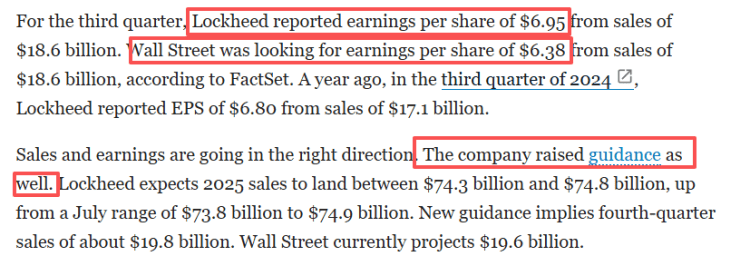
Group 1 - The core viewpoint of the articles highlights that global conflicts have significantly boosted the profits of American arms manufacturers, with companies like Lockheed Martin, Northrop Grumman, and Raytheon Technologies reporting strong financial results in their third-quarter earnings [1][3][6] - Lockheed Martin reported third-quarter sales of $18.6 billion, an 8.8% year-over-year increase, and earnings per share of $6.95, exceeding market expectations of $6.38 [1] - Northrop Grumman's earnings per share reached $7.67, surpassing the expected $6.46, while Raytheon Technologies saw a revenue increase of 11% to $22.5 billion, exceeding market predictions of $21.27 billion [3] Group 2 - The driving force behind the robust profits of American defense giants is attributed to the current global turmoil, ongoing military conflicts, and a general increase in military spending and arms races [3] - The U.S. military budget has been on the rise in recent years, with pressure on allied nations to increase their defense spending and purchase American weapons, as many allies lack the capability to independently secure their defense [3] - The geopolitical competition among major powers has created a favorable environment for U.S. defense companies to market their products effectively, leading to substantial profits [3] Group 3 - The strong financial performance of defense giants may enhance their lobbying power and influence in U.S. domestic politics and policy-making [7] - Defense companies play a crucial role in the U.S. economy, impacting employment and voter tendencies in various states, which facilitates their lobbying efforts to influence both domestic and foreign policies [7] - This influence contributes to a militarized approach in U.S. policy-making, making it challenging to adopt peaceful resolutions to international issues [7] Group 4 - The contrast between the U.S. government's portrayal as a "peace maker" and the booming arms sales is notable, as external crises often stem from policies that respond to defense industry demands [8] - The militarization of U.S. foreign policy has become evident, with the defense industry significantly shaping the country's international actions, leading to a perception of the U.S. as a more aggressive actor rather than a peace promoter [8] - The label of "peace maker" is seen as a political narrative that does not align with the reality of U.S. actions, which often exacerbate global conflicts [8]


金价彻底爆了!一夜猛涨36元,金饰克价涨至1294元
Sou Hu Cai Jing· 2025-10-21 10:34
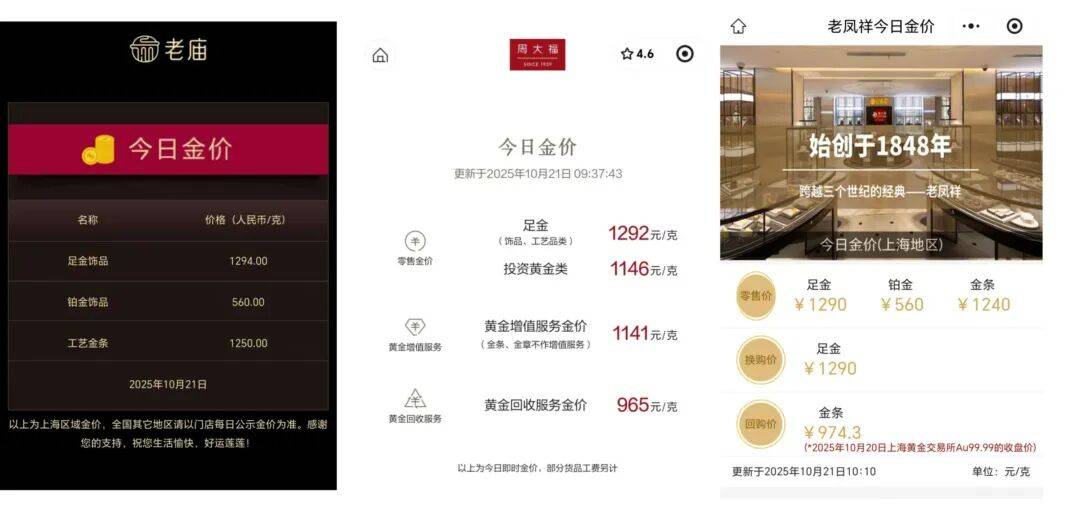
Group 1: Gold Price Surge - Domestic gold jewelry prices have significantly increased, with Lao Miao's gold jewelry quoted at 1294 CNY per gram, up 36 CNY from the previous day [1] - Other brands like Chow Tai Fook and Lao Feng Xiang also raised their prices, with increases of 30 CNY and 32 CNY per gram respectively [1] - In response to rising gold prices, Chow Tai Fook plans to increase retail prices of gold products by 12%-18% by the end of October [3] Group 2: Stock Market Reactions - A-shares related to gold have seen a rise, with companies like Zhaojin Gold and Mankalon increasing by over 4% [3] - Following a previous decline, international gold prices surged, with COMEX gold futures rising by 2.49% to 4374.3 USD per ounce [3] - The S&P 500 and other major U.S. indices experienced gains, driven by positive investor sentiment and strong performance from tech stocks like Apple [4] Group 3: Global Economic Factors - The U.S. government shutdown is expected to end soon, alleviating investor concerns and contributing to a positive market outlook [4] - Global trade tensions appear to be easing, further boosting investor confidence [4] - The market is optimistic about upcoming earnings reports, with approximately 85% of S&P 500 companies exceeding earnings expectations [6]