
军工

Search documents
与普京会晤后,美方立马对中方改了口风,莫迪昭告全球:印度不跪
Sou Hu Cai Jing· 2025-08-19 05:13
Economic Impact of Tariffs - The implementation of tariff policies has severely impacted the US economy, with inflation soaring by 2.9% and clothing prices experiencing a 60% surge [3] - Corporate supply chain costs have increased by 13%, leading to production halts in companies like Ford due to rare earth supply disruptions [3] - Trump's approval rating has dropped by 14 percentage points due to tariff-related issues, particularly affecting agricultural states where farmers have suffered significant losses from Chinese tariffs on US beef and soybeans [3] Response from China - China has responded firmly to US tariffs, emphasizing the legitimacy of energy cooperation and rejecting tariff threats [3] - China's control over rare earth materials has become a critical leverage point, directly impacting the US military and electric vehicle industries, with companies like Tesla seeking urgent assistance [3] - Historical precedents indicate that the US has previously had to retract 100% tariffs on China, suggesting a potential for similar outcomes in the current situation [3] India's Economic Challenges - The US has raised tariffs on Indian goods from 25% to 50%, threatening India's $77.5 billion export market and putting 6 million jobs at risk [4] - India's defense procurement from Boeing has been halted, leading to a 3% drop in Boeing's stock price, while Indian farmers have faced retaliatory tariffs on US soybeans and almonds [4] - India has secured a stable energy supply from Russia at a 30% discount, mitigating some impacts of US tariffs [4] Manufacturing Sector Comparison - China's manufacturing sector constitutes 28% of its GDP and dominates 90% of global rare earth processing capacity, while India's manufacturing share has decreased from 16% to 13% [6] - Despite Apple's plans to shift some production to India, the majority of iPhone 16 Pro production remains in China, highlighting India's ongoing reliance on Chinese manufacturing [6] Cooperation Between China and India - The rapid cooperation between China and India has taken the US by surprise, with India redirecting textile orders to Chinese e-commerce platforms [7] - Following the implementation of US tariffs, India's exports to the US only decreased by 2.7%, while exports to China surged by 19.3% [7] - The establishment of a direct currency exchange between the Indian Reserve Bank and China has accelerated the de-dollarization process among BRICS nations, with trade volumes expected to exceed $100 billion within three years [7] Regional Geopolitical Shifts - The collective actions of BRICS countries have significantly undermined the US's "Indo-Pacific Strategy," with various nations opting to bypass US influence in trade agreements [7] - Investments in the Asia-Pacific region have surged, with a 58% increase in Chinese investments in high-speed rail and 5G infrastructure, totaling $1.2 trillion [7]

莫迪三记重拳打向特朗普!50%关税战背后,印度为何敢掀翻美国牌桌?
Sou Hu Cai Jing· 2025-08-19 05:13
Core Points - The unprecedented trade war between the US and India was ignited by President Trump's executive order raising tariffs on Indian goods to 50%, leading to a significant drop in India's annual export value by 30% [1] - India's economy, particularly its manufacturing sector, faces severe challenges as the "Make in India" initiative struggles, with manufacturing's GDP contribution declining from 16% to 14% over the past decade [5] - India's retaliatory measures, including halting a $3.6 billion arms deal and imposing high tariffs on US bourbon, have impacted US companies and highlighted the interconnectedness of the two economies [3][5] Group 1: Trade Impact - The 50% tariff increase has caused a drastic reduction in India's exports to the US, which account for 18% of its total exports [3] - The textile industry has been particularly hard hit, with orders being diverted to Vietnam, and the pharmaceutical sector facing losses due to increased costs [3] - The trade conflict has led to protests in India, with farmers expressing their discontent over the economic fallout [3] Group 2: Economic Structure - The "Make in India" initiative, aimed at boosting manufacturing, has not achieved its goals, with a decline in manufacturing's share of GDP [5] - The dependency on Chinese components for mobile phone assembly has increased costs for Indian manufacturers, making them less competitive [5] - The energy sector has seen a strategic shift, with India initiating oil transactions in yuan to mitigate the impact of US sanctions [3] Group 3: Geopolitical Dynamics - The trade war has prompted India to strengthen ties with other nations, as evidenced by increased military cooperation with Russia and diplomatic engagements with China [8] - The postponement of US-India tariff negotiations indicates ongoing tensions and uncertainty in trade relations [6] - The geopolitical landscape is shifting, with India seeking to assert itself as a strong player despite external pressures [8]

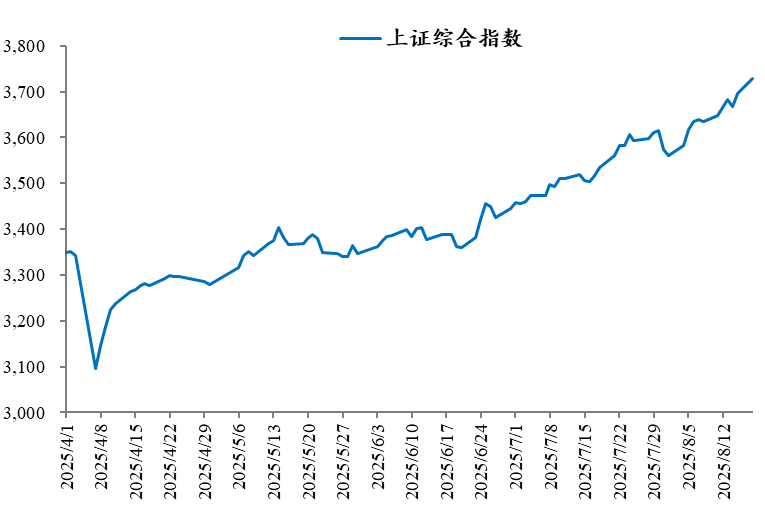
任泽平:此轮牛市是风险偏好提升带来的“信心牛”,重启经济复苏关键在于“债务大挪移”
Sou Hu Cai Jing· 2025-08-19 05:02
Group 1 - The core viewpoint of the article is that the current bull market in A-shares is characterized as a "confidence bull" driven by a significant shift in macroeconomic policy and an increase in risk appetite, rather than being fundamentally driven by corporate earnings [6][10][13] - A-shares have shown remarkable performance, with major indices reaching new highs and a significant increase in trading volume, indicating a strong market sentiment [2][3] - The increase in retail investor participation is evident, with a notable rise in new account openings and a shift of funds from savings to the stock market [3][4] Group 2 - The current bull market is not fundamentally driven, as economic indicators show signs of slowing down, including declines in industrial production, fixed asset investment, and real estate sales [4][5] - The bull market is influenced by a liquidity trap and a lack of alternative investment options, leading to a surge in capital inflow into the stock market as investors seek returns [5][9] - The driving forces behind the bull market include a significant increase in risk appetite and a decrease in the risk-free interest rate, which have been mutually reinforcing since the macroeconomic policy shift on September 24, 2023 [9][10][11] Group 3 - The macroeconomic policy shift on September 24, 2023, marked a turning point, leading to a series of measures that boosted market confidence, including monetary easing and support for the real estate sector [10][14] - The bull market is expected to have strategic significance for the development of new economies and hard technologies, providing necessary capital market support for these sectors [17] - The current bull market is seen as a potential driver for wealth effect recovery, which could positively impact consumer spending and the real estate market [17][18]
A股半日成交额超1.6万亿
Sou Hu Cai Jing· 2025-08-19 04:56
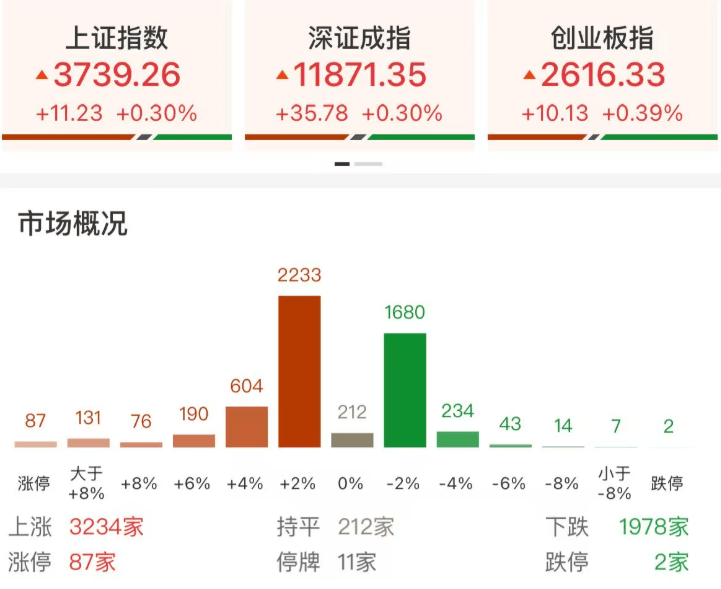
Group 1 - A-shares experienced a morning surge followed by a slight pullback, with the three major indices showing minor increases. The half-day trading volume in the Shanghai and Shenzhen markets was 1.64 trillion, a decrease of 78.7 billion compared to the previous trading day [1] - Over 3,200 stocks in the market saw gains, indicating a broad-based upward movement despite the mixed performance of individual stocks [1] Group 2 - The Huawei concept stocks showed strong fluctuations, with Chengmai Technology hitting the daily limit up of 20%. CPO and other computing hardware stocks maintained their strength, with companies like Xinyisheng reaching historical highs [3] - Consumer stocks, particularly in the liquor sector, rebounded, with Jiugui Liquor also hitting the daily limit up. In contrast, military stocks underwent adjustments, with Fenghuo Electronics dropping over 5% [3] - The sectors with the highest gains included liquor, Huawei HiSilicon, CPO, and rare earth permanent magnets, while military, PEEK materials, securities, and gaming sectors faced the largest declines. By the end of trading, the Shanghai Composite Index rose by 0.3%, the Shenzhen Component Index increased by 0.3%, and the ChiNext Index gained 0.39% [3]
中证军工指数创两年新高,华宝高端装备基金亏损14%发布清算公告
Sou Hu Cai Jing· 2025-08-19 04:32
Core Insights - The China Securities Military Industry Index has surged by 58.96% from 8154.35 to 12961.76 points since September 24, 2024, reaching a two-year high, driven by geopolitical tensions and national strategic advancements [2] - The announcement of a commemorative event for the 80th anniversary of the victory in the Chinese People's Anti-Japanese War has further fueled market enthusiasm for the military industry sector [2] - Despite the booming military market, the Huabao High-end Equipment Stock Fund has initiated liquidation, raising questions about its performance amidst the industry's growth [2] Fund Performance and Management - The Huabao High-end Equipment Stock Fund, established on August 16, 2022, has entered liquidation due to its net asset value falling below 200 million RMB, triggering termination clauses in its contract [5][6] - The fund's current manager, Zhuang Haoliang, took over in November 2023 and adjusted the portfolio to focus on core military assets, achieving a total return of 8.54% during his tenure, but still underperforming its benchmark by 6.93 percentage points [6] - Since its inception, the fund has recorded a cumulative loss of -14.56%, indicating poor performance despite the military sector's overall growth [6] Manager's Track Record - Zhuang Haoliang's management history shows a pattern of negative returns across most funds he has managed, including significant losses in other products such as Huabao Wisdom Industry Mixed Fund and Huabao Third Industry Mixed Fund [7][10] - The Huabao High-end Equipment Stock Fund's liquidation reflects broader issues in Zhuang's investment strategy, which has not adapted well to varying market conditions, leading to underwhelming performance across different sectors [10] Industry Context - The liquidation of the Huabao High-end Equipment Stock Fund marks the fifth fund liquidation by Huabao since 2025, highlighting ongoing challenges within the firm and the broader market for funds with low asset levels [10][11] - The trend of fund liquidations, including those triggered by low asset values, suggests a difficult environment for certain investment strategies within the industry [11]

市场冲高回落,三大指数小幅上涨,两市半日成交额超1.6万亿
Feng Huang Wang Cai Jing· 2025-08-19 03:48
Market Overview - The market experienced a slight increase in the morning session, with the Shanghai Composite Index rising by 0.3%, the Shenzhen Component Index also up by 0.3%, and the ChiNext Index increasing by 0.39% [1][2] - The total trading volume in the Shanghai and Shenzhen markets reached 1.64 trillion yuan, a decrease of 78.7 billion yuan compared to the previous trading day [1][6] Index Performance - The Shanghai Composite Index closed at 3739.26, with 1286 stocks rising and 926 falling [2] - The Shenzhen Component Index closed at 11871.35, with 1741 stocks rising and 1056 falling [2] - The ChiNext Index closed at 2616.33, with 809 stocks rising and 536 falling [2] Sector Performance - Strong sectors included liquor, Huawei HiSilicon, CPO, and rare earth permanent magnet stocks, with notable performances from companies like Chengmai Technology, which hit the daily limit [3][2] - The liquor sector saw a rebound, with Jiugui Liquor reaching the daily limit [2] - Weak sectors included military industry, PEEK materials, securities, and gaming, with Fenghuo Electronics dropping over 5% [3][2] Market Sentiment - The overall market sentiment was mixed, with over 3200 stocks rising and a total of 3234 stocks experiencing an increase [5] - The market heat index was recorded at 55, indicating moderate activity [6]

A股新高科技成主推力,后市机会如何挖掘?长城基金科技投资观点集锦来了!
Xin Lang Ji Jin· 2025-08-19 02:52
Group 1 - The A-share market has reached new highs, driven by the technology growth sector, particularly the performance of the computing power industry chain, including CPO and PCB [1] - There is a focus on identifying investment opportunities in specific technology sub-sectors and industries with higher investment value [1] Group 2 - Short-term market trends may shift from upward to a more volatile phase, with an emphasis on switching between high and low sectors [2] - There is potential for significant investment opportunities in AI sub-sectors, including liquid cooling, power supply, and AI applications, as well as companies with strong overseas performance [3] - The market is expected to seek structural opportunities, particularly in computing, media, and semiconductor sectors, while monitoring new product launches in the traditional consumer electronics peak season [4] Group 3 - The military industry is anticipated to have further potential for new highs, supported by policy-driven funds, despite short-term fluctuations [5] - There is a focus on the progress of AI applications and other potential opportunities, including solid-state batteries and satellite internet [6] Group 4 - The market is expected to experience a brief return to volatility, with a focus on growth stocks and sectors benefiting from industry improvements and policy support [7][8] - The TMT sector is seeing a shift in focus towards domestic computing power and applications, with optimism regarding structural opportunities [9] Group 5 - The market is generally viewed positively for the medium term, with potential for strong sectors to continue performing well despite short-term fluctuations [10]
军工ETF(512660)昨日净流入超1.6亿元,市场关注行业长期发展逻辑
Mei Ri Jing Ji Xin Wen· 2025-08-19 02:26
Core Viewpoint - The intensification of great power competition is a long-term trend, leading to a positive outlook for the military industry, which requires advanced aircraft and missiles as key tools for modern warfare [1] Industry Summary - The military industry is expected to accelerate the filling of gaps during the "14th Five-Year Plan" period, aiming to achieve the centenary goal of military development by 2027 [1] - In the aviation equipment sector, China is reshaping its supply chain by promoting the localization of key components such as engines and hydraulic oil to reduce foreign dependency [1] Index and ETF Summary - The military ETF (512660) tracks the CSI Military Index (399967), which selects listed companies involved in aviation equipment, aerospace, shipbuilding, weaponry, military electronics, and satellites to reflect the overall performance of China's military industry [1] - The CSI Military Index covers multiple key sub-sectors within the military field, showcasing a comprehensive representation of the overall development status of China's military industry [1]
新余国科:公司股东持有人数为42,422人
Jin Rong Jie· 2025-08-19 01:16
公司回答表示:尊敬的投资者您好,截止到2025年8月10日,公司股东持有人数(已合并)为42,422 人,感谢您对公司的关注! 金融界8月19日消息,有投资者在互动平台向新余国科提问:董秘您好,请问截止8月10号公司股东数是 多少? ...

中信证券:8月下旬是中报披露密集期,市场预计将回归业绩主线
Sou Hu Cai Jing· 2025-08-19 00:49
Core Viewpoint - The market is entering a high-level oscillation period, with diminishing marginal positive factors impacting the market. The focus is expected to return to performance as the mid-year report disclosure period approaches in late August. The second half of the year typically sees a concentrated technology release cycle in the domestic technology sector, with increasing certainty in areas such as AI computing power, consumer electronics, military industry, and innovative pharmaceuticals [1][2]. Market Environment - External factors include a recent meeting between US and Russian leaders, indicating a potential easing of geopolitical tensions. Internally, domestic economic data has not shown significant improvement, with ongoing adjustments in economic and income structures. Fiscal policies continue to support the development of the domestic technology industry, and market liquidity remains ample [2]. - The People's Bank of China has emphasized maintaining reasonable liquidity and promoting a reasonable recovery in prices as part of its monetary policy execution report [2]. Catalytic Factors - The 2025 AGIC Shenzhen International General Artificial Intelligence Conference is scheduled for August 27-29, focusing on various industry scenarios and featuring multiple forums, including the release of the "China Artificial Intelligence Industry White Paper" [3]. - A series of economic data releases from multiple countries is expected, which may influence global capital flows and interest rate decisions, particularly from the European Central Bank and the Federal Reserve [3]. Focus Areas - The market is entering a new thematic brewing phase, with a focus on narratives, events, and performance themes. Recommended areas include AI computing power, consumer electronics, military industry, and innovative pharmaceuticals [3].
