
零售

Search documents
通胀担忧再度升温,美国1月PPI涨幅全线超预期
Feng Huang Wang· 2026-02-27 22:49
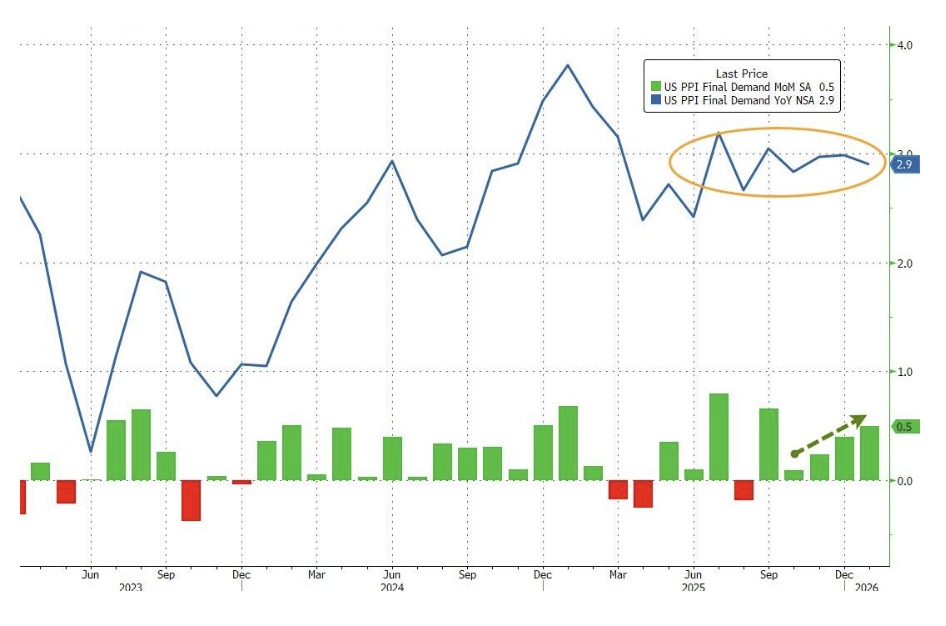
Core Insights - The Producer Price Index (PPI) for January in the U.S. rose more than expected, indicating that businesses may be passing on higher costs from import tariffs to consumers, suggesting potential inflationary pressures in the coming months [1][6] - The PPI year-on-year rate for January was recorded at 2.9%, exceeding the expected 2.6% and down from the previous value of 3.0% [1] - The core PPI, excluding volatile food and energy prices, increased by 3.6% year-on-year, above the expected 3.0% and up from the previous 3.3% [3] Price Movements - Service prices were the main driver of the PPI increase, with a month-on-month rise of 0.8%, and trade services prices surged by 2.5% [3] - Wholesale profit margins for professional and commercial equipment skyrocketed by 14.4%, indicating that companies are transferring tariff costs to customers [3] - Prices in various sectors, including clothing, chemicals, and retail, also saw increases [3] Commodity Categories - Energy prices fell by 2.7% and food prices decreased by 1.5% in January; however, core commodity prices (excluding food and energy) rose significantly by 0.7% [4] Economic Indicators - Some components of the PPI report will be included in the Personal Consumption Expenditures (PCE) price index, which is a key inflation indicator closely monitored by the Federal Reserve [5] - Economists had anticipated that the core PCE inflation for January could rise by as much as 0.5%, corresponding to a year-on-year increase of about 3.1% [6] Market Reactions - Concerns about rising inflation due to the higher-than-expected PPI data may shift market focus away from the disruptive impacts of artificial intelligence [6] - Despite stock market declines following the PPI release, U.S. Treasury yields continued to fall, suggesting that bond investors did not view the PPI as the primary driver of market movements [6]

把握消费趋势,持续扩大内需
2 1 Shi Ji Jing Ji Bao Dao· 2026-02-27 22:35
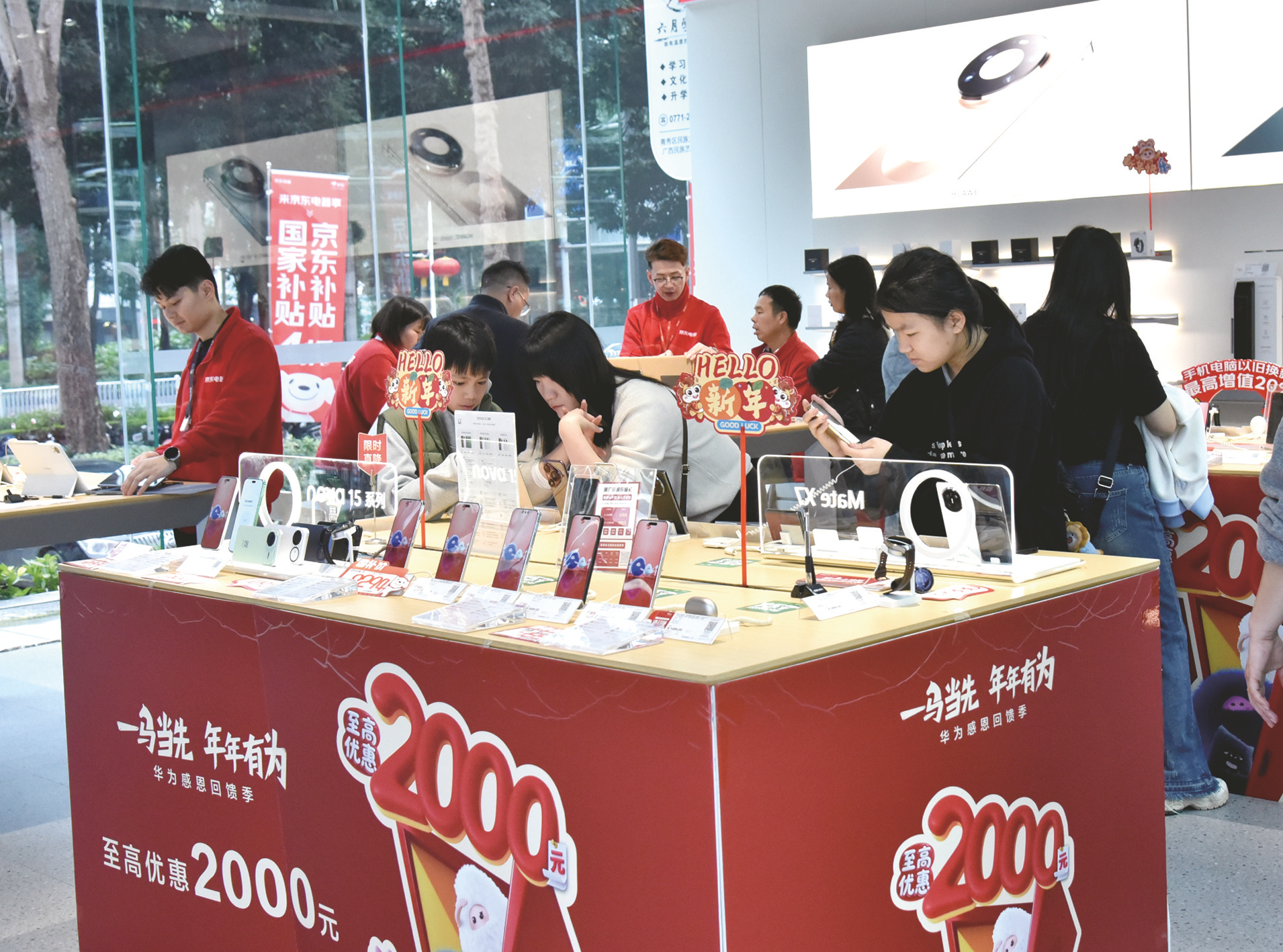
Core Insights - The central political bureau meeting emphasized the need for a more proactive macro policy to enhance demand, optimize supply, and stimulate consumption growth, especially in light of the strong consumer trends observed during the recent Spring Festival [1][4] Group 1: Consumption Trends - The Spring Festival consumption scene has diversified, indicating a trend of consumption upgrading in China, with a shift from material to service consumption, particularly in 2026 where service consumption is expected to be a core growth driver [2][5] - Significant increases in consumer spending were noted, with New Year's Eve dinner reservations doubling, and box office revenues for Spring Festival films exceeding 5.6 billion yuan, reflecting strong cultural consumption demand [2][3] - The travel and hospitality sectors saw substantial growth, with data showing a 105% year-on-year increase in New Year's Eve dinner bookings and a nearly 40% rise in traffic for popular dining lists [1][2] Group 2: Market Dynamics - The dual focus on both lower-tier and cross-border markets has enhanced connectivity between domestic and international consumption, with a notable surge in spending in county-level economies driven by a large return home during the holiday [3][5] - Cross-border consumption has also seen significant growth, with spending in regions like Malaysia and Maldives increasing by 131% and 186% respectively, while inbound tourism has surged, indicating a new trend of international visitors celebrating the Spring Festival in China [3][4] Group 3: Technological Impact - The integration of digital technology has played a crucial role in energizing consumption, with innovations such as digital red envelopes and AI-driven services enhancing consumer experiences and engagement [4][5] - The demand for smart and green consumption is on the rise, reflecting a deep integration of consumption with technology and sustainable practices, which is vital for stimulating new growth in domestic demand [4][5] Group 4: Policy and Supply Side - The extended nine-day Spring Festival holiday and supportive policies like duty-free shopping and consumption incentives have created favorable conditions for consumption expansion, boosting consumer confidence [4][5] - Continuous innovation on the supply side has effectively matched changing consumer demands, creating a virtuous cycle where demand drives supply and vice versa, particularly in the cultural and tourism sectors [5]
南宁有奖发票第三批超3万张发票中奖
Xin Lang Cai Jing· 2026-02-27 20:31
Group 1 - The core activity "Lucky Nanning · Ticket Enjoyment" has seen a total of 31,984 winning invoices in its third draw, indicating strong public participation and engagement since its launch on February 19 [2][3] - The total number of uploaded invoices has exceeded 280,000, with a total face value surpassing 110 million yuan, and nearly 93,000 participants have won prizes [3][4] - The upcoming promotional activity "Lucky Nanning · Immediate Fortune" will run from March 3 to March 8, focusing on high-frequency consumer needs during the festive season [3][4] Group 2 - The promotional event will distribute various types of consumer vouchers, including discounts for supermarkets, department stores, fuel, and dining, with specific discount tiers outlined [4] - Consumers can access these vouchers through the Cloud Flash Payment App, enhancing the convenience of participation [4] - The initiative aims to stimulate consumer spending and create a unique shopping experience during the festive season, encouraging the habit of requesting invoices for participation in the lottery [3][4]
今年云南省将发放10亿元“彩云消费礼包”
Xin Lang Cai Jing· 2026-02-27 19:29
Core Insights - The Yunnan provincial government plans to issue a total of 1 billion yuan in "Colorful Cloud Consumption Coupons" to stimulate market activity and consumer spending, focusing on various sectors including automotive, e-commerce, and tourism [1][2] Group 1: Consumption Coupons - A total of 820 million yuan is allocated for various types of consumption coupons, including those for automotive, e-commerce, food, and tourism, with specific themes and events planned for distribution [1] - The film consumption coupon will launch in May with a budget of 10 million yuan, available to both residents and tourists [1] - Sports consumption coupons are set at 30 million yuan, usable for event tickets and fitness services [1] Group 2: Retail and Supply Chain Innovation - An allocation of 65 million yuan is designated for retail innovation, focusing on scene-based transformation and digital empowerment [2] - 58 million yuan is earmarked for optimizing the agricultural supply chain and modernizing trading markets [2] - 57 million yuan is intended for fostering new consumption models and enhancing service offerings in areas like night markets and cultural performances [2] Group 3: Policy Implementation and Monitoring - The provincial finance department is working on funding and establishing a communication mechanism for policy evaluation and optimization, ensuring proper fund management [3] - The provincial commerce department will implement a comprehensive approach to improve retail quality and supply chain efficiency [3] Group 4: Economic Impact and Future Plans - Over the next two years, 12.713 billion yuan will be allocated for consumption initiatives, expected to significantly boost consumer sentiment and economic recovery [4] - The issuance of 1 billion yuan in consumption coupons is projected to directly drive over 65 billion yuan in consumer spending [4] - Online retail sales in the province grew by 14.2%, outperforming the national average, while restaurant revenues increased by 4.2% [4]
梅西百货(M.N):董事会宣布将季度股息上调5%,增至每股19.15美分。
Jin Rong Jie· 2026-02-27 17:51
本文源自:金融界AI电报 梅西百货(M.N):董事会宣布将季度股息上调5%,增至每股19.15美分。 ...
从春节消费副本里,刷出几条对购物中心有用的BUFF
Sou Hu Cai Jing· 2026-02-27 17:41
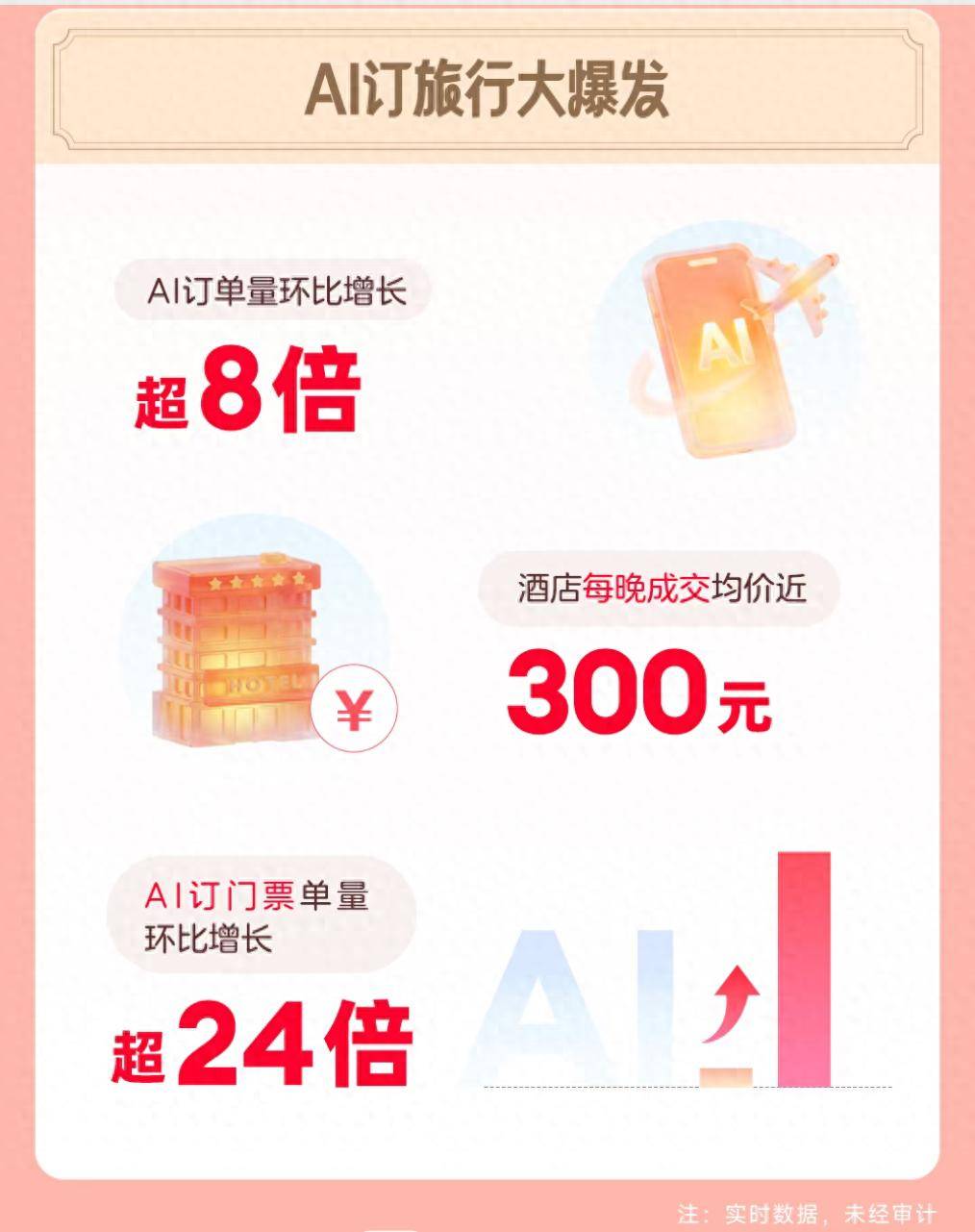
Core Insights - The market performance after the extended holiday reveals new consumer behavior trends influenced by AI technology in decision-making processes [1][10] Group 1: AI Influence on Consumer Behavior - Over 100 million users utilized Meituan's AI assistant "Xiaotuan" for planning their consumption during the Spring Festival, with AI orders on Fliggy increasing by over 800% compared to pre-holiday levels [2] - The use of AI for decision-making is not limited to younger consumers; over 4 million users aged 60 and above successfully used the "one-sentence order" feature on Alibaba's Qianwen app [2] - AI is becoming a key decision-making tool for consumers, indicating a shift in how they plan trips and make purchases [2][4] Group 2: Changing Service Demand - There is a significant increase in demand for professional services, with searches for "pet sitting" rising nearly 60% and "dog walking" more than doubling [6] - Consumers are willing to pay for convenience and professional services, suggesting a shift from basic errands to more specialized offerings [6] - Shopping centers need to adapt their service offerings to meet these emerging consumer demands, potentially incorporating home services and health care into their business models [6] Group 3: Immersive Experience Trends - The sales of "intangible cultural heritage + market" group purchases increased by 764%, with traditional cultural experiences transitioning from "check-in" to "immersive" [8] - Consumers are increasingly seeking deeper engagement with experiences, preferring activities that allow for participation and learning rather than mere observation [8][9] - Shopping centers should focus on creating content-rich experiences that encourage repeat visits, rather than relying solely on visual appeal [9][10]
国务院各部门采纳代表委员所提意见建议4900余条
Xin Lang Cai Jing· 2026-02-27 17:29
Group 1: Government Initiatives and Achievements - In 2025, the State Council handled 8,754 proposals from the National People's Congress and 4,868 proposals from the Chinese People's Political Consultative Conference, achieving a completion rate of 95.6% and 97.3% respectively, with high satisfaction from representatives [1] - Over 4,900 suggestions from representatives were adopted, leading to the introduction of more than 2,200 related policies and measures, resulting in significant progress in investment, consumption, and high-quality development [1] Group 2: Consumer Market Growth - The contribution of consumption to economic growth reached 52%, an increase of 5 percentage points from the previous year [2] - In 2025, the total retail sales of consumer goods exceeded 50 trillion yuan for the first time, with a significant boost in sales from trade-in programs amounting to 2.61 trillion yuan, benefiting 366 million people [2] - Online retail sales grew by 8.6%, while retail sales in the service sector increased by 5.5%, with certain categories like cultural, sports, and leisure services experiencing double-digit growth [2] Group 3: Technological and Financial Support - The National Venture Capital Guidance Fund is set to launch with a total scale expected to reach 1 trillion yuan, alongside the establishment of various funds exceeding 350 billion yuan to facilitate venture capital [3] - The scale of re-loans for technological innovation and transformation increased to 1.2 trillion yuan, with a reduced interest rate of 1.25%, expanding the support scope [3] - By the end of 2025, loans to technology-based small and medium-sized enterprises reached 3.63 trillion yuan, marking a year-on-year growth of 19.8% [3] Group 4: Agricultural Technological Advancements - In 2025, the contribution rate of agricultural technological progress surpassed 64%, with significant achievements such as the cloning of the world's first high-temperature resistant rice gene [4] - Innovations in agricultural biotechnology and the integration of artificial intelligence into agriculture are advancing rapidly, with new wheat varieties developed to address disease resistance and yield improvement [4] Group 5: Market Regulation and Compliance - The State Administration for Market Regulation has implemented nine special rectification actions to address illegal activities, including significant cases in live-streaming e-commerce [5] - A total of 1,856 quality enhancement projects were executed to resolve quality issues, with recalls of defective mobile power products affecting nearly 1.4 million units [5] - New regulations, including the revision of the Anti-Unfair Competition Law and the issuance of compliance guidelines for internet platforms, have been introduced to ensure lawful operations of platform enterprises [5]
有奖发票试点落地 “小激励”转为“大活力”
Zheng Quan Ri Bao· 2026-02-27 16:10
Core Insights - The implementation of the prize invoice initiative aims to stimulate consumer demand and enhance market vitality, with a pilot program starting in January 2026 across 50 cities [1][3] - The initiative has seen significant participation, with over 579,000 participants and more than 30.52 million yuan in prizes distributed in Nanjing alone by February 23 [1][2] - The program is designed to encourage consumer spending by linking prize incentives to invoice collection, thereby creating a positive consumption atmosphere [3][4] Group 1 - The prize invoice pilot program has successfully engaged consumers, with notable participation rates and substantial invoice amounts recorded in cities like Chengdu and Guangdong [2][3] - In Guangdong, 1.528 million participants recorded 11.41 million invoices totaling 3.07 billion yuan during the Spring Festival, indicating a robust consumer response [2] - The initiative has been characterized by its broad coverage and low participation barriers, enhancing consumer engagement in essential spending areas such as retail and dining [3][4] Group 2 - The policy is expected to create a multi-layered and sustainable impact on consumption, enhancing immediate spending and fostering a cycle of consumption and invoice collection [4] - The initiative not only boosts consumer confidence but also encourages merchants to comply with regulations, thereby improving the overall consumption environment [3][4] - The prize invoice program is strategically designed to convert fiscal resources into tangible benefits for residents, stabilizing consumption expectations and amplifying market effects [3]
卓悦控股(00653.HK)中期亏损收窄至约6880万港元
Ge Long Hui· 2026-02-27 13:54
Core Viewpoint - 卓悦控股 reported a significant decline in revenue for the six months ending December 31, 2025, primarily due to changes in cross-border trade patterns, despite a reduction in losses compared to the previous year [1] Financial Performance - Revenue for the period was approximately HKD 12.3 million, down 50.4% from approximately HKD 24.8 million in the same period of 2024 [1] - Losses narrowed to approximately HKD 68.8 million, compared to a loss of about HKD 135 million in the same period of 2024 [1] Operational Insights - The reduction in losses indicates that the company has managed to implement stringent cost management and maintain operational efficiency despite a challenging retail environment and ongoing investments in digital infrastructure [1]
大连友谊:拟由全资子公司分别在阿联酋、马来西亚及几内亚设立全资子公司
Mei Ri Jing Ji Xin Wen· 2026-02-27 13:50
Group 1 - Dalian Friendship announced its commitment to the "going out" strategy to enhance its overseas market presence and optimize resource allocation [1] - The company plans to establish wholly-owned subsidiaries in the UAE, Malaysia, and Guinea through its wholly-owned subsidiary, Hong Kong Yingchi Trading Co., Ltd [1]
