
低空经济

Search documents
A股投资策略周报告:关注政策和业绩催化方向-20250722
CHINA DRAGON SECURITIES· 2025-07-22 12:52
Group 1 - The "anti-involution" trend is expected to continue, with positive performance in related sectors following the July 1 policy announcement. This trend is based on the expectation of improved industry performance and sustained demand, which may enhance the space for the "anti-involution" market [4][24]. - The U.S. tariff policy impact has dulled, with the recent extension of tariff exemptions and adjustments indicating a less aggressive stance, which may limit its overall market impact [4][30]. - As of July 20, 2025, 43.7% of the 1,547 listed companies that disclosed earnings forecasts reported positive expectations, particularly in sectors like non-bank financials, metals, and construction materials [4][31]. Group 2 - The GDP growth rate for the first half of 2025 was 5.3%, exceeding the annual target, with the second quarter showing a slight decline to 5.2% due to external factors. The first and third industries saw growth, while the second industry experienced a decline [34][35]. - The "anti-involution" policies have led to active responses from various industries, including steel, photovoltaic, and automotive sectors, which are expected to benefit from these measures [12][40]. - The focus on technology and advanced manufacturing sectors is highlighted, with significant opportunities in military, low-altitude economy, AI, and robotics, driven by favorable policies and high industry sentiment [40].
广东省贸促会会长陈小锋:加强三地工商对接,涵养湾区城市新动能
2 1 Shi Ji Jing Ji Bao Dao· 2025-07-22 12:36
Core Insights - Guangdong's foreign trade, exports, and imports reached historical highs in the first half of the year, indicating robust economic vitality in the Greater Bay Area [1] - The theme of the recent roundtable meeting was "Focusing on Technological Innovation and Industrial Cooperation," aiming to enhance urban development capabilities [1] - The Greater Bay Area is recognized as a world-class city cluster with strong foundations for optimizing urban structure and promoting high-quality development [1] Group 1: Traditional Industry Transformation - Guangdong's traditional industries, such as home appliances, light industry textiles, and food, are large-scale and aim to collaborate with Hong Kong and Macau to apply advanced technologies for product quality enhancement [2] - The focus is on upgrading traditional industry performance and reconstructing the industrial base [2] Group 2: Emerging Industry Development - The Greater Bay Area seeks to strengthen joint efforts in key technologies within emerging industries like integrated circuits, new energy vehicles, low-altitude economy, and biomedicine [2] - The goal is to cultivate leading enterprises and enhance regional industrial competitiveness [2] Group 3: Future Industry Layout - Future industries such as biomanufacturing, quantum technology, embodied intelligence, and 6G are targeted for development [2] - The strategy includes leveraging the advantages of manufacturing, research, talent, and finance across the Greater Bay Area to establish industry standards and broaden new market opportunities [2] Group 4: Institutional Mechanism - The roundtable meeting serves as a regular mechanism to promote business integration among Guangdong, Hong Kong, and Macau, implementing the consensus and outcomes of the Greater Bay Area development conference [2] - Activities have been held in various locations including Guangzhou, Dongguan, Hong Kong, and Zhuhai [2]
“低空 +”赋能千行百业 中国低空经济“振翅高飞”
Yang Shi Wang· 2025-07-22 12:20
Group 1 - The low-altitude economy and commercial space have emerged as significant new industries driving new productive forces in China [1] - The low-altitude economy has showcased its potential in various applications such as urban governance, air traffic, emergency rescue, and low-altitude tourism [1] - The comprehensive layout of drone research, testing, production, and operation is accelerating the formation of a "Sky City" in multiple regions of China [1] Group 2 - Shenzhen is enhancing its low-altitude economy with a new comprehensive drone testing center covering over 12,000 square meters [4] - The "One Network Unified Flight Low-altitude Smart Inspection Service Platform" has been launched, covering eight major urban management areas [4] - The low-altitude economy chain in Guangdong has surpassed 100 billion yuan, with over 15,000 related enterprises and more than 700 drone flight routes established [7] Group 3 - Hefei is utilizing mobile boundary layer meteorological observation stations to provide real-time weather data for low-altitude flight safety [10] - Xi'an has established a low-altitude logistics route for high-frequency transportation of scientific samples and precision instruments, with 106 upstream and downstream enterprises in the drone industry chain [13] Group 4 - The Chinese low-altitude economy market is projected to reach 1.5 trillion yuan by 2025 and 3.5 trillion yuan by 2035, driven by policy improvements and technological innovations [14]

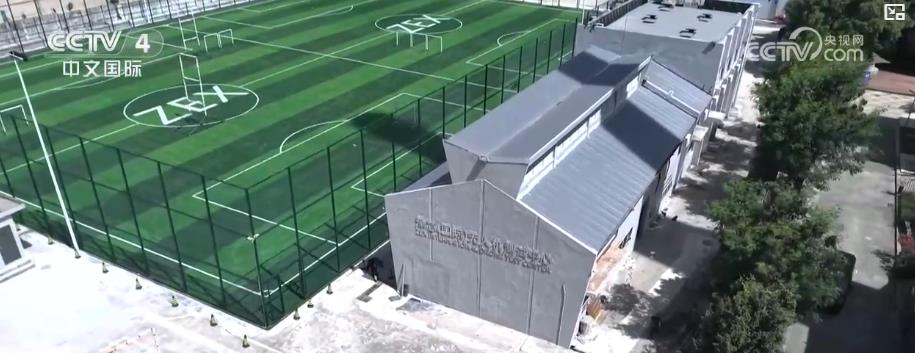
国泰海通|机械:人形机器人国内外催化不断,固态电池产业加速
国泰海通证券研究· 2025-07-22 09:54
Group 1: Humanoid Robots and AI Innovations - The global first Tesla-themed restaurant will open on July 21, featuring Tesla's Optimus robot as a waiter, enhancing customer service through QR code ordering and autonomous delivery to car windows [1] - Zhiyuan and Yushu jointly won a procurement order for bipedal robots from China Mobile, with a total order value of 124 million yuan, which is expected to accelerate the application of humanoid robots and create a development ecosystem [1] - The World Artificial Intelligence Conference will be held on July 26 in Shanghai, featuring discussions on embodied intelligence and humanoid robots, with participation from notable industry players like Tesla and Yushu [1] Group 2: Solid-State Battery Industry - The solid-state battery project by Qingtai Energy has entered trial production, with multiple production bases established across China, indicating positive signals for the industry [2] - Solid-state batteries are expected to gradually replace liquid batteries as the next mainstream power source due to their performance and safety advantages, with project construction accelerating [2] - Attention is recommended for the equipment-related supply chain, including dry mixing, coating, and packaging inspection processes [2] Group 3: Other Key Sectors - In the photovoltaic equipment sector, silicon wafer prices have rebounded, and domestic silicon material companies are responding to government policies to avoid excessive competition, focusing on cost-based pricing adjustments [3] - Xiaopeng Huitian and Yunlu Composite Materials have signed a project cooperation agreement to collaborate on lightweight flying cars, focusing on high-performance carbon fiber composite materials [3] - The collaboration aims to address traditional composite material production challenges, enhancing weaving efficiency and optimizing precision for new fiber materials [3]

布局低空,布局引领全球的万亿赛道
Sou Hu Cai Jing· 2025-07-22 07:46
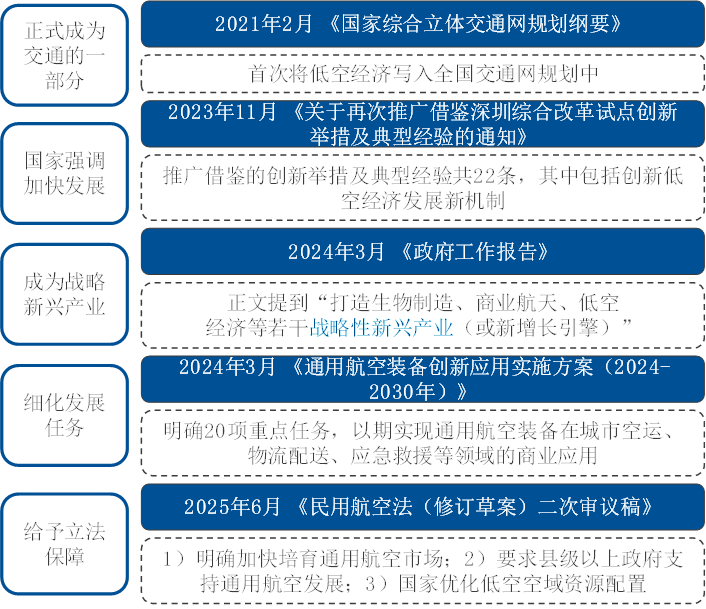
Group 1 - The core viewpoint is that the low-altitude economy is a significant growth sector in the new productivity landscape, with China leading globally in technology and standards, and the market potential is vast, projected to exceed 30 trillion yuan by 2035 for the unmanned low-altitude industry alone [1][8] - The low-altitude economy encompasses various applications below 3,000 meters, including both manned and unmanned scenarios, and has gained attention since its inclusion in national transportation planning in 2021, highlighting its strategic importance [2][11] - The government has set clear policies and strategic goals for the low-altitude economy, with a focus on commercial applications in urban air transport, logistics, and emergency rescue, marking the beginning of a rapid development phase [2][11] Group 2 - The low-altitude economy addresses challenges such as large usage areas and dispersed targets, providing new experiences in agriculture, power line inspection, emergency rescue, tourism, and logistics, thus opening up a trillion-yuan market [5][6] - The economic viability of low-altitude applications is evident, with drone usage in agriculture increasing daily operational efficiency by 60 times and reducing labor costs by 80%, leading to significant improvements in crop yield and pesticide utilization [6][7] - By 2035, the scale of drone applications is expected to reach 3.1 trillion yuan, indicating a transition to a trillion-yuan market starting in 2029 [8] Group 3 - China is at the forefront of the global low-altitude economy, having issued the world's first four certifications necessary for the commercial operation of eVTOL aircraft, which are already being utilized in tourism [10] - The establishment of pilot cities for eVTOL in 2024 marks a significant step towards nationwide adoption, with plans for infrastructure development and regulatory frameworks to support the low-altitude industry [11][12] - The low-altitude economy requires a comprehensive industrial chain, including infrastructure, aircraft manufacturing, operational services, and flight safety, to ensure its successful development [12] Group 4 - The National General Aviation Industry Index focuses on various sectors of the low-altitude economy, providing a representative measure of the industry, with a balanced coverage of components, manufacturing, and operational services [14] - Historical performance of the National General Aviation Index shows a return of 215.51%, significantly outperforming the Shanghai Composite Index, especially as the low-altitude economy enters a high-growth phase [17] - The E Fund General Aviation ETF (159255) is identified as a suitable tool for investors looking to capitalize on the low-altitude economy during this critical window of opportunity [19]
深圳战新产业 创造“崭新”生活
Shen Zhen Shang Bao· 2025-07-21 22:53
Group 1: Innovation and Product Showcase - The Shenzhen Innovation Product Exhibition showcased 174 products from 69 high-quality Shenzhen enterprises, highlighting the city's innovative capabilities and the dynamic potential of its strategic emerging industries [1] - Key products included AI headphones, AI glasses for movie viewing, and the world's first smart omnidirectional underwater robot, representing advancements in robotics, low-altitude economy, and medical devices [1] Group 2: Industrial Growth and Economic Impact - Shenzhen has maintained its position as the "Industrial First City" in China, achieving the highest total industrial output value and industrial added value among all cities for three consecutive years since 2022 [2] - The production of civilian drones, industrial robots, and 3D printing equipment in Shenzhen saw significant growth in Q1, with increases of 48.2%, 40.1%, and 38% respectively [1] - The total output value of Shenzhen's robot industry is projected to exceed 201.2 billion yuan in 2024, marking a 12.58% increase from 2023 [2] Group 3: Capital Investment and Financing - The humanoid robot industry in Shenzhen is experiencing multiple commercial breakthroughs, with several strategic emerging enterprises successfully entering the capital market [4] - Notable listings include CloudWalk Technology on the Sci-Tech Innovation Board and UBTECH Robotics on the Hong Kong Stock Exchange, indicating strong investor interest in Shenzhen's strategic emerging industries [4] - The People's Bank of China and other departments have announced increased financing support for private enterprises in key sectors, including artificial intelligence and low-altitude economy, to enhance innovation and industrial strength [4]

深圳战新产业 创造“崭新”生活 今年一季度,全市民用无人机、工业机器人、3D打印设备产量分别增长48.2%、40.1%、38%
Shen Zhen Shang Bao· 2025-07-21 22:47
Group 1: Innovation and Product Showcase - The Shenzhen Innovation Product Exhibition showcased 174 products from 69 high-quality Shenzhen enterprises, highlighting the city's innovation capabilities and the dynamic potential of its strategic emerging industries [1] - Key products included AI headphones, AI glasses capable of translation and movie viewing, and the world's first smart omnidirectional underwater robot, demonstrating advancements in robotics, low-altitude economy, and medical devices [1] Group 2: Industrial Growth and Economic Impact - Shenzhen has maintained its position as the "Industrial First City" in China, achieving the highest total industrial output value and industrial added value among all cities for three consecutive years since 2022 [2] - The strategic emerging industries, particularly robotics and artificial intelligence, are becoming new pillars for industrial upgrading in Shenzhen, with significant production growth in civil drones (48.2%), industrial robots (40.1%), and 3D printing equipment (38%) in Q1 [1][2] Group 3: Robotics Industry Development - The total output value of Shenzhen's robotics industry is projected to exceed 201.2 billion yuan in 2024, marking a 12.58% increase from 178.7 billion yuan in 2023 [2] - The region is developing into a hub for robotics, with initiatives like the "Robot Valley" and "Embodied Intelligence Port," and notable achievements such as the victory of the "Tian Gong Ultra" robot in the world's first humanoid robot marathon [2] Group 4: Capital Investment and Financing - The humanoid robot industry in Shenzhen is experiencing significant commercial breakthroughs and increased capital investment, with several companies successfully listing on stock exchanges, including Yutong Technology and UBTECH [4] - Financial institutions are being encouraged to enhance support for private enterprises in strategic emerging industries, focusing on areas like artificial intelligence, robotics, new energy vehicles, and low-altitude economy [4]

科创板开市六周年:以“新”为题 书写资本市场科创答卷
Zheng Quan Ri Bao· 2025-07-21 17:16
Core Insights - The establishment of the Sci-Tech Innovation Board (STAR Market) in Shanghai represents a significant institutional innovation aimed at enhancing China's multi-tiered capital market system and supporting technological innovation [1][2] - Over the past six years, the STAR Market has successfully nurtured nearly 600 "hard tech" companies, facilitating over 1.1 trillion yuan in financing and creating a positive cycle of technology breakthroughs, capital enhancement, and industrial growth [2][6] - The introduction of the "1+6" reform plan aims to further enhance the STAR Market's role in supporting technology innovation and new productivity by establishing a growth tier for companies and introducing professional institutional investors [8][11] Institutional Innovations - The STAR Market has implemented a registration-based system focusing on information disclosure, allowing unprofitable companies to go public and facilitating the return of red-chip companies [2][4] - Key innovations include streamlined financing conditions, optimized listing standards, and the introduction of a second type of restricted stock for equity incentives, enhancing flexibility and inclusivity [4][5] - The reforms have not only addressed the financing challenges faced by tech companies but have also contributed to the overall improvement of the capital market's legal framework [5][6] Financial Performance - As of now, the STAR Market has supported 589 companies in going public, raising a total of 925.7 billion yuan through IPOs and 191.7 billion yuan through refinancing, totaling over 1.1 trillion yuan [6][7] - The compound annual growth rates for revenue and net profit of STAR Market companies over the past five years are 19% and 9%, respectively, indicating sustained growth [7][8] - Notably, 22 out of 54 previously unprofitable companies have achieved profitability post-listing, showcasing the effectiveness of the STAR Market in nurturing potential [7] Future Outlook - The STAR Market is set to continue its role as a "testbed" for capital market reforms, focusing on the integration of capital and technology, and fostering new productivity [3][12] - The "1+6" reform plan is expected to enhance the adaptability of the capital market to the needs of tech companies throughout their lifecycle, particularly during their growth phases [9][10] - The introduction of professional institutional investors is anticipated to improve the market's ability to identify and support innovative companies, thereby enhancing the overall efficiency of capital allocation [10][14]
低空经济或告别“野蛮生长”,步入高质量发展阶段
Datong Securities· 2025-07-21 11:49
Market Review - The equity market saw most major indices rise, with the ChiNext Index leading at an increase of 3.17% [4][5] - The bond market experienced a decline in both short and long-term interest rates, with the 10-year government bond rate decreasing by 0.01 basis points to 1.665% [8][12] - The fund market reflected a rebound, with the equity fund index rising by 3.06% and the secondary bond fund index increasing by 0.35% [13] Equity Product Allocation Strategy - Event-driven strategies include focusing on low-altitude economy development, with recommended funds such as Huashan Manufacturing Pioneer A (006154) and Bosera Military Industry Theme A (004698) [18][15] - The asset allocation strategy suggests a balanced core plus a barbell strategy, emphasizing dividend and technology sectors, with funds like Anxin Dividend Select A (018381) and Jiashi Hong Kong Internet Core Assets (011924) [18][19] Stable Product Allocation Strategy - Market analysis indicates a net injection of 12,011 billion yuan by the central bank, maintaining a loose monetary stance [20] - The GDP data for the first half of the year shows a growth of 5.3%, indicating effective growth stabilization policies [20] - Key products to focus on include Nord Short Bond A (005350) and Huashan Pure Bond A (040040) [24][25]
爱建智能制造周报:宇树科技启动IPO辅导,机器人资本化进程再进一步-20250721
Shanghai Aijian Securities· 2025-07-21 11:37
Investment Rating - The report rates the humanoid robot sector as having high configuration cost-effectiveness, suggesting a focus on core enterprises with performance support [2]. Core Insights - The humanoid robot industry is advancing with significant commercial orders, including a notable contract worth 124 million yuan for humanoid robot manufacturing [23]. - The semiconductor equipment sector continues to thrive, driven by strong demand for advanced processes, particularly in AI and high-performance computing [26][27]. - The low-altitude economy is witnessing accelerated commercialization, highlighted by a major eVTOL export agreement worth 1 billion USD [31]. - The controllable nuclear fusion sector is progressing with the successful ignition of the HHMAX-901, marking a shift from laboratory to application [29]. Summary by Sections Industry Performance - The mechanical equipment sector outperformed the CSI 300 index, with a weekly increase of 2.91% compared to the CSI 300's 1.09% [8][10]. - The printing and packaging machinery sub-sector showed the best performance with a 6.16% increase [12]. Investment Recommendations - Focus on humanoid robot companies like Top Group and Zhenyu Technology, which have strong performance backing [2]. - High-end computing and storage chip demand is expected to benefit key equipment companies, with recommendations for companies like Tuojing Technology and Shengmei Shanghai [2]. - Solid-state battery technology is advancing, with system integration equipment companies like Xian Dao Intelligent and Liyuan Heng likely to benefit [2]. Key Developments - The humanoid robot sector is seeing increased capital activity, with Yushu Technology completing its IPO guidance registration [4]. - ASML and TSMC reported strong Q2 results, with ASML's net sales reaching 7.7 billion euros, a 23.2% year-on-year increase [26][27]. - The low-altitude economy is gaining traction with significant orders for eVTOLs, marking a milestone in China's export capabilities [31]. Market Trends - The semiconductor sales in May showed a year-on-year increase of 18.2% globally and 13.0% in China [38]. - The production of industrial robots in China increased by 35.5% year-on-year in May, indicating robust growth in automation [48].