
外卖

Search documents
继续爆单!“做不完,根本做不完!”台州店家都干懵了……
Huan Qiu Wang Zi Xun· 2025-07-11 00:04
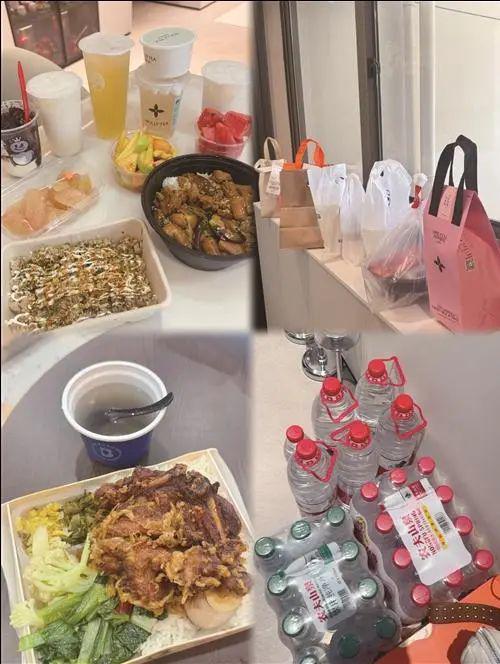
Core Viewpoint - The recent "subsidy war" in the food delivery market has led to unprecedented discounts, significantly increasing order volumes and consumer excitement in Taizhou, with platforms like JD, Meituan, and Ele.me competing aggressively [1][2][7]. Consumer Experience - Consumers have reported experiencing substantial discounts, with offers such as "18 yuan off 18 yuan" and even zero-cost meals becoming common [2][4]. - One consumer shared that they spent only 0.4 yuan on a drink and 8.3 yuan on a meal due to these discounts, highlighting the extreme affordability during this period [5][6]. Market Dynamics - The food delivery platforms have seen a surge in order volumes, with Taobao Flash Purchase and Ele.me reporting over 80 million daily orders, including more than 13 million non-food orders [9]. - Despite the initial high level of subsidies, there has been a noted decrease in discount intensity as of July 9, yet order volumes remain high, particularly for popular chain restaurants and beverage shops [7][9]. Industry Impact - The surge in orders has overwhelmed many businesses, with some reporting daily orders increasing by 20 to 30 [9]. - While the profit margins for coffee shops have remained stable, the competition has pressured the profit margins of chain restaurants and other food services [10].



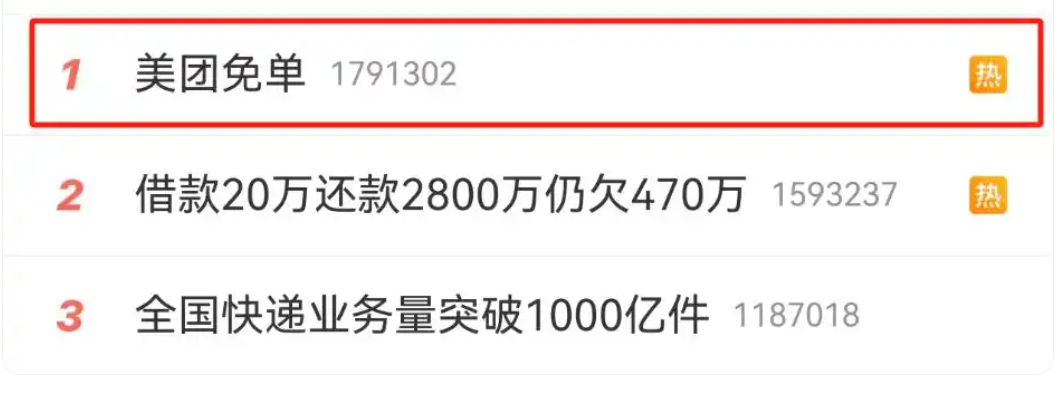
美团免单冲上热搜榜首!外卖补贴“大战”又升级
Zheng Quan Shi Bao Wang· 2025-07-10 23:54
Group 1 - The topic of "Meituan Free Order" has surged to the top of trending searches, indicating an escalation in the subsidy competition among food delivery platforms [1][3] - Several chain restaurant brands have announced collaborations with Meituan to launch free order promotional activities starting July 11, requiring users to log in to Meituan to access these benefits [3] - The ongoing subsidy competition among major platforms is stimulating consumer enthusiasm and expanding instant retail business, but raises concerns about long-term sustainability and profitability for some merchants [3] Group 2 - Meituan and Taobao Flash Sale issued significant discount coupons over the weekend of July 5-6, leading to a surge in order volume, with Meituan reporting over 1.2 billion orders on July 5 [4] - Taobao Flash Sale and Ele.me announced a combined daily order count exceeding 80 million, with over 2 billion active users on Taobao Flash Sale [4] - The first week of the 500 billion subsidy program saw a significant increase in business for many restaurant brands, with 95% of peak performances coming from regional chain brands [4] Group 3 - JD.com has launched its "Double Hundred Plan," committing over 10 billion yuan to support brands achieving significant sales milestones, while also implementing a 10 billion yuan consumer subsidy [5] - JD.com’s daily order volume has surpassed 25 million, capturing over 31% of the national food delivery market share, and approximately 45% in the quality delivery segment [5] - The overall daily order volume in China's food delivery market is estimated to be between 80 million and 90 million [5]

“外卖大战”持续上演:美团爆单1.2亿 系统一度宕机 淘宝闪购补贴“冲单”
Xi Niu Cai Jing· 2025-07-10 13:49
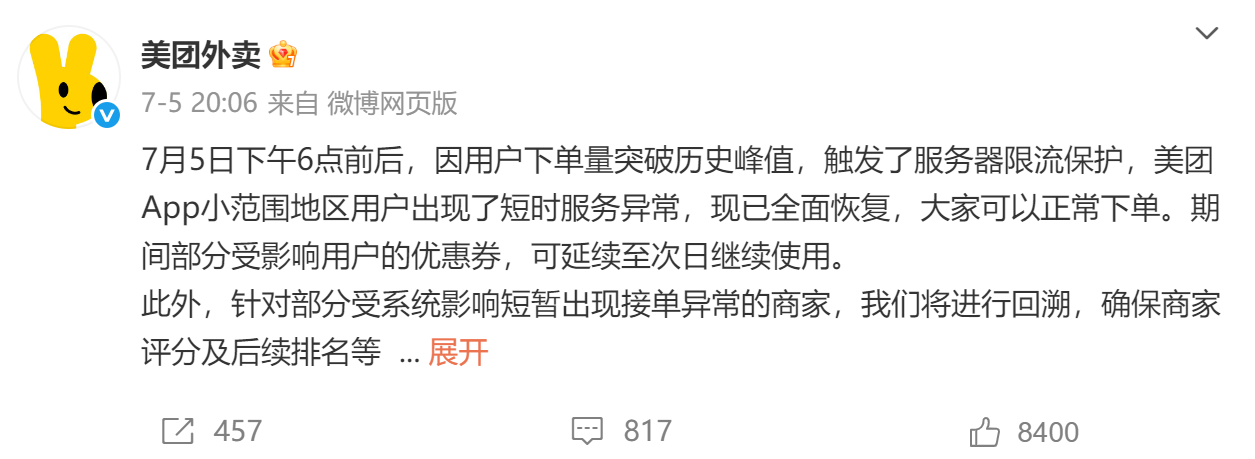
7月5日,阿里、美团两大平台分别放出了大量且大额的外卖红包券,新一轮"外卖大战"上演,也被网友称为"薅羊毛日"。 有的用户表示收到了"满25减21""满16减16"等多张优惠券。这些优惠券使得部分饮品和食品的外卖价格接近"0元购"。随着优惠券的持续发放,不断有消费 者涌入美团和淘宝闪购下单,导致美团一度出现宕机,甚至冲上微博热搜榜。 对此,美团外卖官方表示,7月5日下午6点前后,因用户下单量突破历史峰值,触发了服务器限流保护,美团App小范围地区用户出现了短时服务异常,现 已全面恢复,大家可以正常下单。期间部分受影响用户的优惠券,可延续至次日继续使用。 此外,针对部分受系统影响短暂出现接单异常的商家,美团将进行回溯,确保商家评分及后续排名等不受影响。 美团内网公布的信息显示,当晚20时45分,美团即时零售日订单突破1亿单,截至22时54分,美团即时零售当日订单破1.2亿单。 据报道,美团此次大规模补贴或源于阿里的补贴计划。7月2日,淘宝闪购宣布启动规模500亿元的补贴计划,补贴方式涉及红包雨、免单卡、商品直降等, 为期12个月。 有消息透露,7月5日是淘宝闪购的"冲单日",其目标是峰值订单超过美团,预计达到9 ...
“0元奶茶”,究竟是谁买单?
财联社· 2025-07-10 13:24
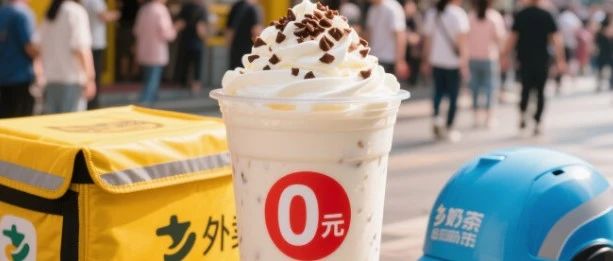
Core Insights - The article discusses the ongoing competition among e-commerce platforms, highlighting significant consumer subsidies that stimulate spending [1][2] - It raises the question of who ultimately bears the cost of these subsidies, indicating a complex relationship between consumers, platforms, and merchants [2] Group 1: Consumer Behavior and Sales Data - As of July 8, JD.com reported nearly 200 restaurant brands achieving over 1 million sales on its platform, while Taobao's flash sales reached a daily order volume of 80 million by July 7, and Meituan's instant retail surpassed 120 million orders in a single day by July 5 [1] - Consumers are benefiting from substantial discounts, with promotions like "2 yuan for a cup of Luckin Coffee" and "0 yuan for milk tea" trending on social media [1] Group 2: Merchant Strategies and Profitability - Merchants participating in platform promotions view these as a strategy to exchange lower prices for increased sales volume, with some reporting that despite lower consumer spending, they earn more per order due to platform subsidies [3] - A merchant from Taobao's flash sales noted that while users enjoy "0 yuan purchases," the platform provides a subsidy of 4 to 5 yuan per order, leading to a significant increase in repurchase rates [3] - Merchants often feel pressured to participate in promotional activities due to platform incentives, with one Meituan merchant stating that order volumes increase when participating in such events [3][4] Group 3: Cost Structure and Sustainability of Subsidies - The cost structure behind these promotions is complex, with merchants often sharing the burden of discounts alongside platform subsidies [4] - For example, in a typical order of 56 yuan with an 18 yuan discount, the merchant bears 12 yuan of the discount while the platform covers 6 yuan, in addition to other fees [4] - Some merchants choose not to engage in aggressive discounting, reporting stable order volumes despite the promotional activities [4] Group 4: Future of Competition and Market Dynamics - Experts predict that the price wars among platforms will continue, as the current market dynamics require one party to sacrifice more [5] - The competition is not only about food delivery but also about establishing a comprehensive local delivery ecosystem, with platforms like Meituan, JD.com, and Taobao vying for market share [5][6] - The sustainability of subsidies is seen as a way for platforms to explore diverse monetization strategies, with the competition focusing on which platform can better leverage traffic for revenue generation [6]

多家国际投资机构下调阿里目标价:大摩与汇丰都下调至150美元,汇丰预计阿里26年外卖每单亏2.7元
Sou Hu Cai Jing· 2025-07-10 12:10
Core Viewpoint - Morgan Stanley and HSBC have both lowered Alibaba's target price to $150, reflecting concerns over the company's short-term profitability due to increased investments in its food delivery and instant retail businesses [3][5]. Group 1: Target Price Adjustments - Morgan Stanley reduced Alibaba's American Depositary Receipts (ADR) target price from $180 to $150, citing significant investments of approximately 100 billion RMB in the food delivery and instant retail sectors during the first fiscal quarter ending in June [3]. - HSBC also lowered its target price from $176 to $150 while maintaining a "buy" rating, indicating that the stock price decline has largely accounted for the expected earnings adjustments [5]. Group 2: Investment and Competition - Alibaba is increasing its subsidies through the Taobao Flash Purchase platform to capture more market share in the food delivery and instant retail sectors, leading to heightened competition, particularly from Meituan and JD.com [3]. - Meituan has launched aggressive promotions, including large food delivery coupons and "zero-cost purchases," while JD.com announced a "Double Hundred Plan" to invest over 10 billion RMB to support benchmark brands in achieving significant sales [3]. Group 3: Financial Projections - Analysts at Morgan Stanley expect Alibaba's investment in food delivery and instant retail to double to 200 billion RMB in the second fiscal quarter, which may lead to a more than 40% year-on-year decline in EBITA for its local services [3]. - HSBC forecasts that Alibaba's food delivery business will incur a loss of 2.7 RMB per order and instant shopping will lose 3.7 RMB per order, with an overall loss in local services projected at 55 billion RMB [5]. Group 4: Cloud Business Outlook - Despite the challenges in its core businesses, Morgan Stanley remains optimistic about Alibaba's cloud business, projecting a 22% year-on-year revenue growth and stable profit margins at 8% for the first fiscal quarter [4]. - The integration of AI technology in cloud computing and e-commerce is seen as a key driver for Alibaba's long-term competitive advantage [4].
阿里终于想通了
远川研究所· 2025-07-10 12:04
Core Viewpoint - The article discusses the intense competition in the food delivery market in China, highlighting the financial losses expected for major players like Alibaba and JD, while also detailing the strategic shifts and market dynamics that have shaped the industry landscape [1][4][60]. Group 1: Market Dynamics - Goldman Sachs estimates that Alibaba's food delivery service will incur losses of 41 billion RMB and JD will lose 26 billion RMB in the coming year, while Meituan's EBIT will decrease by 25 billion RMB [1]. - The fierce competition has led to aggressive promotional strategies, such as "18 RMB off for orders over 18 RMB" and "three meals a day for no more than 10 RMB" [3]. - The market has seen a significant shift with Alibaba's Taobao Flash Sale and Meituan Instant Retail achieving daily orders of 80 million and 120 million respectively [4]. Group 2: Historical Context - The food delivery market has long been dominated by Meituan and Ele.me, which together held over 90% market share before JD's entry [6]. - The merger of Meituan and Dianping is considered a pivotal moment that altered the competitive landscape, allowing Meituan to gain a significant market share and profitability [16][18]. - Ele.me's acquisition by Alibaba was a strategic move to counter Meituan's dominance, but it has struggled to regain market share despite substantial investments [27][28]. Group 3: Strategic Shifts - Alibaba's recent restructuring has seen Taobao Flash Sale take a more prominent role, indicating a shift in strategy to better compete with Meituan [62]. - The integration of Ele.me, Koubei, and Fliggy into Alibaba's local services division reflects an attempt to streamline operations and enhance competitiveness [43][39]. - The article emphasizes the need for a unified command structure within Alibaba's local services to effectively compete in the fragmented market [70][73]. Group 4: Future Outlook - The rise of instant retail, characterized by rapid delivery services, poses a new challenge to traditional food delivery models, blurring the lines between e-commerce and local services [49][61]. - JD's innovative approach to integrating food delivery with its e-commerce platform has shown promising results, suggesting a potential shift in strategy for competitors [58][60]. - The ongoing evolution of the market indicates that companies must adapt quickly to changing consumer behaviors and competitive pressures to survive [64][65].

反思外卖大战:警惕被补贴催熟的“虚假繁荣”
Guan Cha Zhe Wang· 2025-07-10 12:04
Core Viewpoint - The recent surge in the food delivery market, characterized by intense competition and substantial subsidies, has created a temporary "four-win" scenario for consumers, merchants, delivery personnel, and platforms, but this situation is not sustainable and may lead to future crises [3][4][5] Group 1: Market Dynamics - The food delivery market in China is experiencing a fierce competition reminiscent of past market bubbles, with platforms offering significant subsidies to attract users, leading to a temporary spike in demand [5][6] - The phenomenon of "zero-yuan purchases" for popular items like milk tea highlights the aggressive marketing strategies employed by platforms to boost user engagement [6][9] - Despite the apparent success in the milk tea sector, data indicates that a significant number of milk tea shops are closing, suggesting that the current boom is not reflective of the industry's overall health [9] Group 2: Economic Implications - High levels of subsidies can distort market signals, leading to mismatches in supply and demand, and creating a reliance on artificially low prices [5][10] - The concept of "sticky price trap" emerges as consumers develop a low-price expectation, making it difficult for platforms to raise prices without risking a sharp decline in demand [10] - The long-term sustainability of the food delivery market is questioned, as the current model of growth through subsidies may not lead to a healthy, profitable business environment [4][6]

外卖大战,打的根本不是外卖
大胡子说房· 2025-07-10 12:01
Core Viewpoint - The recent decline in the Hong Kong stock market, particularly the Hang Seng Tech Index, is attributed to the fierce competition in the food delivery sector among Meituan, Alibaba, and JD.com, leading to significant stock price drops for these companies [1][2][7]. Group 1: Market Dynamics - The ongoing food delivery war among Meituan, Alibaba, and JD.com is causing short-term profit losses, which negatively impacts investor sentiment and stock prices [3][5][6]. - The stock prices of Alibaba, JD.com, and Meituan have fallen significantly, with Alibaba nearing its April 7 low and JD.com and Meituan dropping below that level [6][7]. - The competition is not just about food delivery but is fundamentally aimed at capturing market share in the instant retail sector, also known as flash purchase [12][13]. Group 2: Instant Retail Market - Instant retail, or flash purchase, involves consumers ordering daily necessities online for delivery within 30 minutes, a market that has been growing despite challenges in supply chain and delivery capabilities [14][17]. - The instant retail market is currently valued at approximately 500 billion, with Meituan holding a 60% market share, and is projected to grow to 2 trillion by 2030 [29][30]. - Both Alibaba and JD.com are facing growth bottlenecks in their core e-commerce businesses, prompting them to pivot towards instant retail to capture this emerging market [18][19][25]. Group 3: Strategic Implications - The competition in food delivery is seen as a necessary step for Alibaba and JD.com to build a user base and reduce delivery costs, which are essential for successfully launching instant retail services [35][41]. - The significant subsidies being offered by Alibaba (500 billion) and JD.com (100 billion) for food delivery are part of their strategy to gain a foothold in the instant retail market [42]. - The outcome of this competition may not be as critical for consumers, who benefit from lower prices, but it poses risks for investors in the short term due to the intense competition and market volatility [45][46].

外卖内卷之谜:东哥在思考什么?
Hu Xiu· 2025-07-10 11:55
Core Viewpoint - The fierce competition in the food delivery market is leading companies to invest heavily, potentially reaching a total of 100 billion yuan for the year, despite regulatory pressures against such practices [1][3]. Group 1: Market Dynamics - Companies are investing real money to reclaim market share in a saturated environment, raising questions about the motivations behind these actions [3][12]. - The current situation is likened to a triathlon where competitors unexpectedly revert to the beginning, indicating a possible misjudgment in strategy [5][6]. - The competition is characterized as a zero-sum game, where losses are evident through declining stock prices and lack of synergy among firms [7][8]. Group 2: Regulatory Context - Regulatory bodies have previously intervened to halt aggressive subsidy practices in the market, yet companies are now re-engaging in similar behaviors [3][14]. - There is a contradiction in the actions of companies, as they engage in subsidy wars while also attempting to align with regulatory expectations [13][14]. Group 3: Strategic Insights - The actions of key players, particularly JD.com, are under scrutiny as they pursue multiple initiatives that require significant policy support, such as applying for stablecoin licenses [10][11]. - The competitive landscape suggests that while some companies may feel compelled to engage in price wars, others, like JD.com, may be acting on a different strategic rationale [12][26]. Group 4: Economic Implications - The current investment in subsidies could be interpreted as a response to government calls for stimulating consumption, positioning these actions as beneficial rather than detrimental [30][32]. - The narrative suggests that these subsidies might be viewed as a form of corporate social responsibility, contributing to economic recovery rather than merely fueling competition [30][31].
氪星晚报|百度智能云曦灵手语数字人荣膺联合国“AI向善”杰出案例奖;WaytoAGI社区发起“超级创作者计划”;中国和马来西亚互免签证协定即将生效
3 6 Ke· 2025-07-10 11:23
Group 1 - Shanghai Disneyland has halted offline sales of its new summer product line due to excessive resale prices, with items originally priced over 100 yuan being sold for nearly 500 yuan by scalpers [1] - The remaining inventory of the summer series will be sold online through Tmall, while other themed products will still be available through lottery and retail stores [1] Group 2 - Meituan has refuted claims regarding the number of delivery riders with higher education, stating that there is no factual basis for the reported figures of 300,000 undergraduate students working as delivery riders [1] Group 3 - Baidu's AI sign language digital human has been recognized with the United Nations "AI for Good" Outstanding Case Award, highlighting its role in providing accessible information for the hearing-impaired community [2] Group 4 - WaytoAGI community has launched the "Super Creator Program," aimed at gathering global AI creators and enterprises to foster collaboration and incubate outstanding AI projects [3] Group 5 - Samsung Electronics plans to launch its first tri-fold smartphone by the end of this year, expanding its Galaxy series with a new form factor [4] Group 6 - Lazada has been recognized as the most beloved brand in Thailand, achieving an advertising awareness rate of 65.7% in June 2025 [4] Group 7 - "Ruyuyuan Technology" has completed a 29 million yuan Series A financing round, which will support its development in the destination charging sector [6] Group 8 - The Shanghai Stock Exchange has held a policy briefing for investment institutions regarding the Sci-Tech Innovation Board, aiming to enhance communication and support for innovation-driven development [8]
