
非银金融

Search documents
转债市场日度跟踪20250710-20250710
Huachuang Securities· 2025-07-10 14:47
1. Report Industry Investment Rating No relevant content provided. 2. Core Viewpoints of the Report - Today, the convertible bond market followed the equity market's upward trend, with valuations rising on a month - on - month basis. The trading sentiment in the convertible bond market weakened [1]. - The convertible bond price center increased, and the proportion of high - price bonds rose. The overall weighted average closing price of convertible bonds was 124.13 yuan, up 0.43% from yesterday [2]. - Valuations increased. The fitted conversion premium rate for 100 - yuan par value was 25.30%, up 0.71 pct from yesterday [2]. - In the industry performance, more than half of the underlying stock industry indices rose, with 17 industries rising in the A - share market and 18 in the convertible bond market [3]. 3. Summary by Related Catalogs 3.1 Market Main Index Performance - The CSI Convertible Bond Index rose 0.40% month - on - month, the Shanghai Composite Index rose 0.48%, the Shenzhen Component Index rose 0.47%, the ChiNext Index rose 0.22%, the SSE 50 Index rose 0.62%, and the CSI 1000 Index rose 0.25% [1]. - Small - cap value stocks were relatively dominant. Small - cap value stocks rose 1.06%, while large - cap growth stocks rose 0.14% [1]. | Index Code | Index Name | Closing Price | Daily Change (%) | Weekly Change (%) | Monthly Change (%) | YTD Change (%) | | --- | --- | --- | --- | --- | --- | --- | | 000832.CSI | CSI Convertible Bond | 450.71 | 0.40 | 1.43 | 3.45 | 8.72 | | 889033.WI | Convertible Bond Equal - Weighted | 213.99 | 0.28 | 0.99 | 2.56 | 10.04 | | 8841324.WI | Convertible Bond Index | 1960.13 | 0.34 | 1.94 | 4.41 | 18.75 | | 884257.WI | Convertible Bond Pre - plan | 1713.71 | 0.21 | 1.32 | 5.18 | 17.43 | | 000001.SH | Shanghai Composite Index | 3509.68 | 0.48 | 1.59 | 3.23 | 4.71 | | 399001.SZ | Shenzhen Component Index | 10631.13 | 0.47 | 2.10 | 3.72 | 2.08 | | 399006.SZ | ChiNext Index | 2189.58 | 0.22 | 3.10 | 6.22 | 2.24 | | 000016.SH | SSE 50 Index | 2756.93 | 0.62 | 1.26 | 2.61 | 2.69 | | 000852.SH | CSI 1000 Index | 6406.57 | 0.25 | 1.54 | 3.02 | 7.53 | [7] 3.2 Market Capital Performance - The trading volume in the convertible bond market was 66.907 billion yuan, a 1.57% decrease from the previous day. The total trading volume of the Wind All - A Index was 1.515068 trillion yuan, a 0.81% decrease from the previous day [1]. - The net outflow of main funds from the Shanghai and Shenzhen stock markets was 21.158 billion yuan, and the yield of the 10 - year Treasury bond rose 1.70 bp to 1.66% [1]. 3.3 Convertible Bond Price and Valuation - The overall closing - price weighted average of convertible bonds was 124.13 yuan, up 0.43% from yesterday. The closing price of equity - biased convertible bonds was 164.25 yuan, down 0.91%; that of bond - biased convertible bonds was 115.18 yuan, up 0.46%; and that of balanced convertible bonds was 124.13 yuan, up 0.29% [2]. - The proportion of bonds with a closing price above 130 yuan was 33.19%, up 1.57 pct from yesterday. The largest change in proportion was in the 100 - 110 (including 110) range, with a proportion of 3.19%, down 1.08 pct from yesterday. There were 2 bonds with a closing price below 100 yuan [2]. - The median price was 125.74 yuan, up 0.51% from yesterday. The fitted conversion premium rate for 100 - yuan par value was 25.30%, up 0.71 pct from yesterday. The overall weighted par value was 94.96 yuan, up 0.51% from yesterday [2]. 3.4 Industry Performance - In the A - share market, the top three rising industries were real estate (+3.19%), petroleum and petrochemicals (+1.54%), and steel (+1.44%); the top three falling industries were automobiles (-0.62%), media (-0.54%), and national defense and military industry (-0.41%) [3]. - In the convertible bond market, the top three rising industries were environmental protection (+2.50%), coal (+1.39%), and non - bank finance (+0.95%); the top three falling industries were communications (-0.92%), agriculture, forestry, animal husbandry and fishery (-0.67%), and media (-0.24%) [3]. - In terms of different sectors: - Closing price: The large - cycle sector rose 0.81%, the manufacturing sector rose 0.05%, the technology sector fell 0.22%, the large - consumption sector rose 0.12%, and the large - finance sector rose 0.66% [3]. - Conversion premium rate: The large - cycle sector decreased 1.1 pct, the manufacturing sector increased 0.32 pct, the technology sector increased 0.024 pct, the large - consumption sector decreased 0.13 pct, and the large - finance sector decreased 0.34 pct [3]. - Conversion value: The large - cycle sector rose 1.12%, the manufacturing sector fell 0.41%, the technology sector fell 0.25%, the large - consumption sector rose 0.07%, and the large - finance sector rose 0.96% [3]. - Pure - bond premium rate: The large - cycle sector rose 1.0 pct, the manufacturing sector rose 0.046 pct, the technology sector fell 0.28 pct, the large - consumption sector rose 0.11 pct, and the large - finance sector rose 0.77 pct [4]. 3.5 Industry Rotation - Real estate, petroleum and petrochemicals, and steel led the rise. For example, real estate had a daily increase of 3.19% in the underlying stock market, and its PE (TTM) 3 - year quantile was 97.80%, and PB (LF) 3 - year quantile was 51.03% [53].
【10日资金路线图】非银金融板块净流入近65亿元居首 龙虎榜机构抢筹多股
证券时报· 2025-07-10 13:35
Market Overview - The A-share market showed mixed results on July 10, with the Shanghai Composite Index closing at 3509.68 points, up 0.48%, and the Shenzhen Component Index at 10631.13 points, up 0.47% [2] - Total trading volume in the A-share market was 15152.79 billion, a decrease of 123.41 billion from the previous trading day [2] Capital Flow - The main capital in the A-share market experienced a net outflow of 211.58 billion, with an opening net outflow of 85.28 billion and a closing net outflow of 25.44 billion [3][4] - The CSI 300 index saw a net inflow of 4.7 billion, while the ChiNext index had a net outflow of 102.46 billion [5][6] Sector Performance - Among the 12 sectors in the Shenwan first-level industry classification, 12 sectors saw net capital inflows, with the non-bank financial sector leading at 64.7 billion [7][8] - The top five sectors with net capital inflows included: - Non-bank financial: 64.7 billion, up 1.34% - Real estate: 51.43 billion, up 2.95% - Banking: 42.45 billion, up 0.97% - Non-ferrous metals: 26.76 billion, up 0.89% - Oil and petrochemicals: 25.16 billion, up 1.00% [8] Institutional Activity - Institutions showed interest in several stocks, with notable net purchases in Jingao Technology and net sales in Honghe Technology [9][11] - The top stocks with institutional net purchases included: - Jingao Technology: 13239.79 million, up 9.96% - Chongqing Construction: 2013.68 million, up 10.12% [11] Recent Institutional Focus - Institutions have recently focused on stocks such as TCL Technology, with a target price of 5.90, representing a potential upside of 31.99% from the latest closing price [13]


陆股通2025Q2持仓点评:陆股通Q2增持医药通信非银,减持家电食饮计算机
China Post Securities· 2025-07-10 11:55
- The report does not contain any quantitative models or factors related to the requested analysis





数据复盘丨房地产、煤炭等行业走强 54股获主力资金净流入超1亿元
Zheng Quan Shi Bao Wang· 2025-07-10 10:30
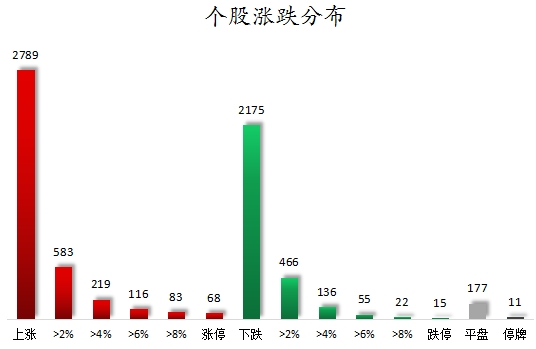
Market Overview - The Shanghai Composite Index closed at 3509.68 points, up 0.48%, with a trading volume of 613.16 billion yuan [1] - The Shenzhen Component Index closed at 10631.13 points, up 0.47%, with a trading volume of 881.01 billion yuan [1] - The ChiNext Index closed at 2189.58 points, up 0.22%, with a trading volume of 419.45 billion yuan [1] - The STAR Market 50 Index closed at 979.99 points, down 0.32%, with a trading volume of 22.17 billion yuan [1] - Total trading volume for both markets was 1494.17 billion yuan, a decrease of 11.01 billion yuan from the previous trading day [1] Sector Performance - Strong sectors included real estate, coal, oil and petrochemicals, steel, securities, education, construction decoration, non-ferrous metals, and banking [2] - Active concepts included rental and sale rights, horse racing, organic silicon, prefabricated buildings, housing inspection, rare earth permanent magnets, express delivery, innovative drugs, and new urbanization [2] - Weak sectors included automotive, media, defense and military industry, jewelry, electronics, and computers [2] Individual Stock Performance - A total of 2789 stocks rose, while 2175 stocks fell, with 177 stocks remaining flat and 11 stocks suspended [2] - 68 stocks hit the daily limit up, while 15 stocks hit the daily limit down [2] - Notable stocks with significant net inflows included Zhongyou Capital with a net inflow of 713 million yuan, followed by Tongyu New Materials and Zhongke Jin Cai [8][9] - Stocks with significant net outflows included BYD with a net outflow of 1.006 billion yuan, followed by Shenghong Technology and Xinyi Sheng [10][11] Institutional Activity - Institutions net bought 11 stocks, with the highest net purchase in Jingao Technology at approximately 132.39 million yuan [13][14] - The total net purchase by institutions was approximately 48.35 million yuan [13] - The most sold stock by institutions was Honghe Technology, with a net outflow of approximately 80.73 million yuan [13]

34.70亿元资金今日流入非银金融股
Zheng Quan Shi Bao Wang· 2025-07-10 10:02
| 代码 简称 | 今日涨跌幅(%) | 今日换手率(%) | 主力资金流量(万元) | | --- | --- | --- | --- | | 000617 中油资本 | 6.15 | 7.31 | 85885.35 | | 601696 中银证券 | 10.03 | 7.18 | 55947.34 | | 601318 中国平安 | 2.20 | 0.77 | 53639.62 | | 600030 中信证券 | 1.51 | 1.17 | 49210.54 | | 300059 东方财富 | 0.96 | 2.92 | 43376.10 | | 601236 红塔证券 | 6.33 | 3.02 | 16876.43 | | 601878 浙商证券 | 1.83 | 1.74 | 14262.43 | | 601601 中国太保 | 1.40 | 0.60 | 11928.48 | | 603093 南华期货 | 10.02 | 7.74 | 11825.52 | | 601099 太平洋 | 1.78 | 3.89 | 11786.54 | | 000935 四川双马 | 9.98 | 5.00 | ...



主力动向:7月10日特大单净流出14.28亿元
Zheng Quan Shi Bao Wang· 2025-07-10 10:02
Core Viewpoint - The stock market experienced a net outflow of 1.428 billion yuan in large orders, with 32 stocks seeing net inflows exceeding 200 million yuan, led by Northern Rare Earth with a net inflow of 1.436 billion yuan [1][2]. Market Overview - The Shanghai Composite Index closed up 0.48%, with a total net outflow of 1.428 billion yuan across both markets. A total of 1,919 stocks saw net inflows, while 2,794 stocks experienced net outflows [2]. - Among the 14 sectors, non-bank financials had the highest net inflow of 3.29 billion yuan, followed by the banking sector with a net inflow of 2.147 billion yuan. Other sectors with significant inflows included real estate and non-ferrous metals [2]. Individual Stock Performance - Stocks with net inflows exceeding 200 million yuan averaged a rise of 10.16%, outperforming the Shanghai Composite Index. Notable performers included Puling Software and Yuheng Pharmaceutical, which closed at their daily limit [3]. - The top stocks by net inflow included: - Northern Rare Earth: 1.436 billion yuan [4] - Zhongyou Capital: 1.096 billion yuan [4] - Industrial and Commercial Bank of China: 850 million yuan [4] - The stocks with the highest net outflows included: - ST Huatuo: -625 million yuan [4] - Shenghong Technology: -621 million yuan [4] - Cambricon Technologies: -554 million yuan [4]. Sector Analysis - The sectors with the highest net inflows were concentrated in non-bank financials, banking, and computer industries, with 5, 4, and 3 stocks respectively [4]. - The sectors with the highest net outflows included electronics and automotive, with net outflows of 3.794 billion yuan and 1.744 billion yuan respectively [2].




主力资金动向 34.70亿元潜入非银金融业
Zheng Quan Shi Bao Wang· 2025-07-10 10:02
Core Insights - The non-banking financial sector experienced the highest net inflow of capital today, amounting to 3.47 billion, with a price change of 1.37% and a turnover rate of 2.01% [1] - The electronic sector faced the largest net outflow of capital, totaling -4.90 billion, with a price change of -0.31% and a turnover rate of 2.61% [1] Industry Summary - **Non-banking Financial**: - Trading volume: 839.6 million shares - Change in trading volume: +13.28% - Net capital inflow: 3.47 billion [1] - **Real Estate**: - Trading volume: 635 million shares - Change in trading volume: +85.74% - Net capital inflow: 2.23 billion [1] - **Banking**: - Trading volume: 588.2 million shares - Change in trading volume: +36.92% - Net capital inflow: 2.05 billion [1] - **Electronic**: - Trading volume: 718.3 million shares - Change in trading volume: -10.63% - Net capital outflow: -4.90 billion [1] - **Media**: - Trading volume: 431.3 million shares - Change in trading volume: -9.33% - Net capital outflow: -2.54 billion [1] - **Automobile**: - Trading volume: 410.5 million shares - Change in trading volume: -13.74% - Net capital outflow: -2.81 billion [1]
两市主力资金净流出130.25亿元,沪深300成份股资金净流入
Sou Hu Cai Jing· 2025-07-10 09:45
Market Overview - On July 10, the Shanghai Composite Index rose by 0.48%, the Shenzhen Component Index increased by 0.47%, the ChiNext Index went up by 0.22%, and the CSI 300 Index also rose by 0.47% [1] - Among the tradable A-shares, 2,946 stocks increased, accounting for 54.51%, while 2,279 stocks declined [1] Capital Flow - The main capital saw a net outflow of 13.025 billion yuan throughout the day [1] - The ChiNext experienced a net outflow of 9.166 billion yuan, while the STAR Market had a net outflow of 1.361 billion yuan [1] - The CSI 300 constituent stocks had a net inflow of 7.383 billion yuan [1] Industry Performance - Out of the 18 primary industries classified by Shenwan, the top-performing sectors were Real Estate and Oil & Petrochemicals, with increases of 3.19% and 1.54%, respectively [1] - The sectors with the largest declines were Automotive and Media, with decreases of 0.62% and 0.54% [1] Industry Capital Inflows - The Non-Bank Financial sector led the net capital inflow, with a net inflow of 3.470 billion yuan and a daily increase of 1.37% [2] - The Real Estate sector followed with a net inflow of 2.228 billion yuan and a daily increase of 3.19% [2] Industry Capital Outflows - The Electronics sector had the largest net capital outflow, with a net outflow of 4.899 billion yuan and a daily decline of 0.31% [1][2] - The Automotive sector also saw a significant outflow of 2.812 billion yuan, with a daily decrease of 0.62% [1][2] Individual Stock Performance - A total of 1,970 stocks experienced net capital inflows, with 699 stocks having inflows exceeding 10 million yuan [2] - The stock with the highest net inflow was Northern Rare Earth, which rose by 10.02% with a net inflow of 1.180 billion yuan [2] - Stocks with the largest net outflows included BYD, Shenghong Technology, and New Yi Sheng, with outflows of 0.923 billion yuan, 0.769 billion yuan, and 0.718 billion yuan, respectively [2]

太平洋证券投资策略
Tai Ping Yang Zheng Quan· 2025-07-10 08:13
Group 1 - The core viewpoint indicates that domestic corporate profits remain under pressure, with capital and risk appetite driving the A-share market's upward fluctuations. The financial sectors such as banks, non-banking financial institutions, pharmaceuticals, and telecommunications are expected to lead this trend, with an anticipated increase in risk appetite by late July [3][4][12]. - As of May, the cumulative profit of industrial enterprises above designated size turned negative year-on-year, and the manufacturing PMI for June was at 49.7, indicating marginal improvement but still below the growth line. Only six industries have seen upward adjustments in profit expectations for 2025, including steel, social services, and media, suggesting that corporate profit growth remains in a bottoming phase [4][12][17]. - The overall profitability indicators, ROA and ROE, remain weak, with banks, steel, and transportation showing relatively better performance [4][12]. Group 2 - Micro liquidity is showing a net inflow trend, with equity mutual funds issuing 272.6 billion units since the beginning of the year, and the margin trading scale has continued to see net inflows since May. Northbound capital saw a significant increase in Q2, with a net inflow of 61.7 billion, compared to 13.5 billion in Q1, particularly in sectors like power equipment, pharmaceuticals, and telecommunications [5][13]. - The issuance of special government bonds and the recent political meetings are expected to enhance market risk appetite. The path from special bonds to bank capital supplementation and interest rate cuts is clear, benefiting overall macro liquidity [6][14]. Group 3 - The investment strategy recommends three main lines: first, sectors like banks and public utilities that represent bond-like characteristics due to weak profits and strong liquidity; second, sectors such as photovoltaics, live pigs, and glass that are expected to benefit from policy negotiations and rising risk appetite; third, sectors like pharmaceuticals and telecommunications that will benefit from incremental capital inflows [7][16]. - The report anticipates that the trade war is likely to settle in the third quarter, with the narrative of "American exceptionalism" potentially returning to market focus, leading to a resurgence of the dollar and U.S. stocks [7][41].

【盘中播报】沪指涨0.54% 房地产行业涨幅最大
Zheng Quan Shi Bao Wang· 2025-07-10 06:46
Market Overview - The Shanghai Composite Index increased by 0.54% as of 13:58, with a trading volume of 982.71 million shares and a transaction amount of 1,172.799 billion yuan, a decrease of 1.60% compared to the previous trading day [1] Industry Performance - Real estate, banking, and non-bank financial sectors showed the highest gains, with increases of 2.85%, 1.49%, and 1.22% respectively [1] - The sectors with the largest declines included beauty care, national defense and military industry, and automotive, with decreases of 0.72%, 0.69%, and 0.66% respectively [2] Detailed Industry Data - **Real Estate**: - Change: +2.85% - Transaction Amount: 173.93 billion yuan - Leading Stock: Guangda Jiabao, +9.97% [1] - **Banking**: - Change: +1.49% - Transaction Amount: 358.05 billion yuan - Leading Stock: Minsheng Bank, +5.50% [1] - **Non-Bank Financial**: - Change: +1.22% - Transaction Amount: 684.53 billion yuan - Leading Stock: Bank of China Securities, +10.03% [1] - **Beauty Care**: - Change: -0.72% - Transaction Amount: 39.79 billion yuan - Leading Stock: Huaye Fragrance, -4.81% [2] - **National Defense and Military**: - Change: -0.69% - Transaction Amount: 391.13 billion yuan - Leading Stock: Northern Long Dragon, -9.13% [2] - **Automotive**: - Change: -0.66% - Transaction Amount: 492.01 billion yuan - Leading Stock: Redick, -6.20% [2]

