非银金融

Search documents
南向资金持续净流入,港股央企红利ETF(513910)成“核心战场”
Mei Ri Jing Ji Xin Wen· 2025-07-10 05:31
Group 1 - The core viewpoint of the articles highlights the positive performance of Hong Kong stocks, particularly in the construction materials, steel, banking, and non-bank sectors, driven by significant inflows of southbound capital [1] - From July 7 to July 9, southbound capital net inflows into the Hong Kong stock market reached nearly 20 billion RMB, improving liquidity and boosting valuation recovery expectations for Hong Kong banks and energy sectors [1] - There has been a noticeable shift in trading style of southbound capital from aggressive to defensive, favoring high-certainty dividend assets amid reduced market risk appetite and declining risk-free interest rates [1] Group 2 - The policy framework established at the beginning of the year aims to expand the proportion of equity funds and guide long-term capital into the capital market, favoring low-volatility assets with stable dividend characteristics [1] - The Hong Kong central enterprise dividend ETF tracks an index with a dividend yield that remains 4.5% higher than the 10-year government bond yield, indicating that undervalued, high-certainty assets will continue to attract capital inflows in the long term [2] - Despite short-term profit-taking actions, the core logic for the continuation of the market trend remains intact, supported by the dual attributes of central enterprise background and high dividend returns [2]
今日49只A股封板 房地产行业涨幅最大
Zheng Quan Shi Bao Wang· 2025-07-10 04:45
Market Overview - The Shanghai Composite Index increased by 0.36% as of the morning close, with a trading volume of 783.11 million shares and a transaction amount of 934.47 billion yuan, a decrease of 3.50% compared to the previous trading day [1] Industry Performance - Real estate, banking, and oil & petrochemicals sectors showed the highest gains, with increases of 1.53%, 1.42%, and 1.23% respectively [1] - The automotive, defense, and electronics sectors experienced the largest declines, with decreases of 0.93%, 0.92%, and 0.76% respectively [2] Leading Stocks - In the real estate sector, Yuhua Development led with a gain of 9.94% [1] - In the banking sector, Minsheng Bank rose by 5.12% [1] - In the oil & petrochemicals sector, *ST Xinchao increased by 5.08% [1] - In the steel sector, Jinling Mining surged by 10.02% [1] - In the non-bank financial sector, Nanhua Futures also rose by 10.02% [1] - In the pharmaceutical sector, Qianyuan Pharmaceutical saw a significant increase of 19.98% [1] Sector Summary - The real estate sector had a transaction amount of 117.03 billion yuan, up 26.74% from the previous day [1] - The banking sector recorded a transaction amount of 266.82 billion yuan, up 36.61% [1] - The oil & petrochemicals sector had a transaction amount of 80.95 billion yuan, up 36.47% [1] - The automotive sector had a transaction amount of 389.36 billion yuan, down 16.50% [2] - The defense sector recorded a transaction amount of 316.85 billion yuan, down 23.79% [2] - The electronics sector had a transaction amount of 1,036.63 billion yuan, down 10.88% [2]




7月9日有色金属、电子、医药生物等行业融资净买入额居前
Zheng Quan Shi Bao Wang· 2025-07-10 01:37
Core Insights - As of July 9, the latest market financing balance reached 1,855.737 billion yuan, an increase of 3.843 billion yuan compared to the previous trading day [1] - Among the 18 primary industries, the non-ferrous metals sector saw the largest increase in financing balance, rising by 0.964 billion yuan [1] - The industries with notable increases in financing balance include electronics, pharmaceuticals, and automobiles, with increases of 0.869 billion yuan, 0.622 billion yuan, and 0.566 billion yuan respectively [1] - Conversely, 13 industries experienced a decrease in financing balance, with non-bank financials, transportation, and computers showing the largest declines of 0.503 billion yuan, 0.210 billion yuan, and 0.161 billion yuan respectively [1] Industry Financing Balance Changes - The construction materials industry had the highest growth rate in financing balance, with a latest balance of 12.159 billion yuan, reflecting a 1.43% increase [1] - Other industries with significant growth rates include non-ferrous metals (1.22%), national defense and military industry (0.75%), and basic chemicals (0.66%) [1] - Industries with the largest declines in financing balance include transportation (-0.61%), environmental protection (-0.56%), and retail (-0.44%) [2] - The latest financing balances for the top industries are as follows: - Non-ferrous metals: 80.248 billion yuan, increase of 0.964 billion yuan, growth rate of 1.22% [1] - Electronics: 214.565 billion yuan, increase of 0.869 billion yuan, growth rate of 0.41% [1] - Pharmaceuticals: 133.094 billion yuan, increase of 0.622 billion yuan, growth rate of 0.47% [1] - Transportation: 33.945 billion yuan, decrease of 0.210 billion yuan, decline rate of 0.61% [2] - Non-bank financials: 156.456 billion yuan, decrease of 0.503 billion yuan, decline rate of 0.32% [2]
量化点评报告:传媒、电子进入超配区间,哑铃型配置仍是最优解
GOLDEN SUN SECURITIES· 2025-07-09 10:44
- The industry mainline model uses the Relative Strength Index (RSI) indicator to identify leading industries. The construction process involves calculating the past 20, 40, and 60 trading days' returns for 29 primary industry indices, normalizing the rankings, and averaging them to derive the final RSI value. Industries with RSI > 90% by April are likely to lead the market for the year[11][13][14] - The industry rotation model is based on the "Prosperity-Trend-Crowdedness" framework. It includes two sub-models: the industry prosperity model (high prosperity + strong trend, avoiding high crowdedness) and the industry trend model (strong trend + low crowdedness, avoiding low prosperity). Historical backtesting shows annualized excess returns of 14.4%, IR of 1.56, and a maximum drawdown of -7.4%[16][18][22] - The left-side inventory reversal model focuses on industries with low inventory pressure and potential for restocking. It identifies sectors undergoing a rebound from current or past difficulties. Historical backtesting shows absolute returns of 25.9% in 2024 and excess returns of 14.8% relative to equal-weighted industry benchmarks[28][30][29] - The industry ETF allocation model applies the prosperity-trend-crowdedness framework to ETFs. It achieves annualized excess returns of 15.5% against the CSI 800 benchmark, with an IR of 1.81. The model's excess returns were 6.0% in 2023, 5.3% in 2024, and 7.7% in 2025[22][27][16] - The industry prosperity stock selection model combines industry weights from the prosperity-trend-crowdedness framework with PB-ROE scoring to select high-value stocks within industries. Historical backtesting shows annualized excess returns of 20.0%, IR of 1.72, and a maximum drawdown of -15.4%[23][26][16] - The industry prosperity-trend model achieved excess returns of 3.9% in 2025, while the inventory reversal model showed absolute returns of 1.3% and excess returns of -2.1% relative to equal-weighted industry benchmarks[16][28][30]
沪指重返3500点,红利还能买吗?
Sou Hu Cai Jing· 2025-07-09 05:32
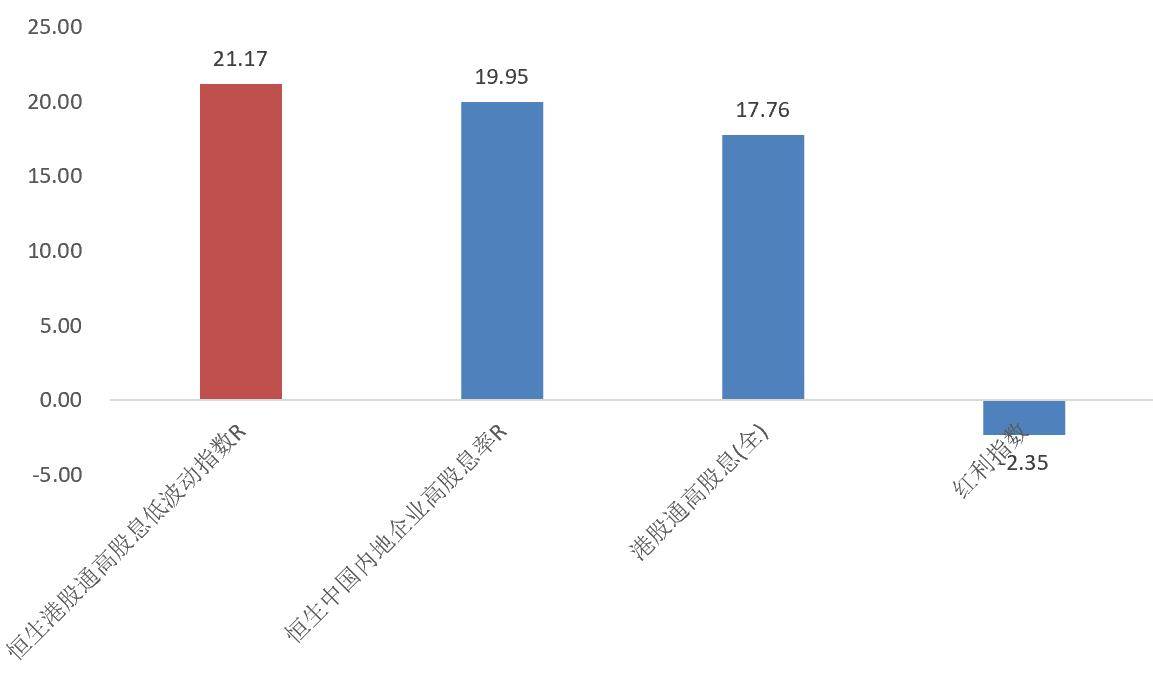
Core Viewpoint - The article discusses the performance of the Chinese stock market, particularly the Shanghai Composite Index, and the strong performance of dividend stocks, especially in the Hong Kong market, driven by significant inflows from institutional investors. Group 1: Market Performance - The Shanghai Composite Index has successfully reclaimed the 3500-point mark, indicating a potential continuation of upward momentum if trading volume remains robust [1] - The banking sector, particularly the four major banks, has reached historical highs, suggesting that the strong performance of dividend stocks is likely to persist [1] Group 2: Dividend Stocks Analysis - The Hang Seng High Dividend Low Volatility Index has shown the best performance among major dividend indices in both A-shares and Hong Kong, with a year-to-date increase of 21.17% and a current dividend yield of 6.4% [1] - The market capitalization of the Hang Seng High Dividend Low Volatility Index components held through the Stock Connect reached 1.58 trillion HKD, accounting for 17% of the total market capitalization, reflecting high investor interest [1] Group 3: Institutional Investment Trends - Institutional investments, particularly from insurance funds, have significantly boosted the performance of Hong Kong dividend assets, with net inflows exceeding 2.1 billion CNY into the Hong Kong Dividend Low Volatility ETF (520550) this year [2] - Projections indicate that insurance funds could see an incremental increase of 250 to 400 billion CNY in 2025, which would further support the strong performance of Hong Kong dividend stocks [5]

报告:上半年金融、科技与高端制造业需求突出 促上海办公室市场小幅回暖
Zhong Guo Xin Wen Wang· 2025-07-09 03:49
Group 1: Market Overview - The Shanghai real estate market showed signs of recovery in the first half of 2025, driven by strong performance in finance, consumer goods manufacturing, and technology sectors [1] - A total of 4 new office projects were launched, with a cumulative supply of 302,000 square meters, reflecting a 3.9% decrease compared to the previous period [1] - The financial sector led the demand for office space, accounting for 22%, followed by consumer goods manufacturing at 17%, and TMT (Technology, Media, and Telecommunications) at 16% [1] Group 2: Rental Trends - Rental prices in Shanghai decreased by 3.0% to 247.2 yuan per square meter, while effective rents fell by 4.3% to 174.4 yuan per square meter [2] - The market is expected to see an additional supply of approximately 770,000 square meters in the next six months, which may increase competition but also enhance market liquidity [2] Group 3: Retail Market Insights - The retail property market is projected to receive about 577,000 square meters of new supply in the coming months, which is expected to improve regional commercial quality [3] - The demand for dining establishments dominated the retail market, accounting for 45%, with a notable presence of Chinese cuisine brands [2][3] - The retail sector's demand share increased to 41%, with apparel demand at 23%, indicating active expansion of fashion and outdoor brands [2][3]
22个行业获融资净买入,计算机行业净买入金额最多
Sou Hu Cai Jing· 2025-07-09 03:07
Core Insights - As of July 8, the latest market financing balance reached 1,851.893 billion yuan, an increase of 5.488 billion yuan compared to the previous trading day [1] - Among the 22 first-level industries, the computer industry saw the largest increase in financing balance, rising by 0.965 billion yuan [1] - The industries with notable increases in financing balance also include non-bank financials, public utilities, and electrical equipment, with increases of 0.907 billion yuan, 0.693 billion yuan, and 0.669 billion yuan respectively [1] - Conversely, nine industries experienced a decrease in financing balance, with food and beverage, petroleum and petrochemicals, and steel showing the largest declines of 0.221 billion yuan, 0.162 billion yuan, and 0.145 billion yuan respectively [1][2] Industry Summary - The light manufacturing industry recorded the highest growth rate in financing balance, with a latest balance of 13.268 billion yuan, reflecting a 1.81% increase [1] - Public utilities, telecommunications, and textile and apparel industries followed with growth rates of 1.60%, 0.81%, and 0.77% respectively [1] - The steel, petroleum and petrochemicals, and social services industries had the largest declines in financing balance, with latest balances of 14.069 billion yuan, 25.147 billion yuan, and 9.915 billion yuan, showing decreases of 1.02%, 0.64%, and 0.58% respectively [1][2]
非银行业点评:“南向通”参与机构扩容,非银机构投资经纪或迎机遇
Minsheng Securities· 2025-07-09 01:51
Investment Rating - The report maintains a "Recommended" rating for the industry, indicating a potential upside of over 15% relative to benchmark indices [6]. Core Insights - The recent measures announced by the People's Bank of China and the Hong Kong Monetary Authority aim to enhance the "Southbound Bond Connect" mechanism, allowing a broader range of domestic investors, including non-bank financial institutions, to invest in offshore bond markets [1][2]. - The expansion of eligible investors to include brokerages, funds, insurance companies, and wealth management firms is expected to increase the investment flexibility and yield for these non-bank institutions [3]. - The report highlights the significant size of the Hong Kong bond market, with outstanding balances of HKD bonds, offshore RMB bonds, and G3 currency bonds amounting to USD 195.5 billion, USD 173.2 billion, and USD 565.6 billion respectively as of the end of 2024 [3]. Summary by Sections Section 1: Policy Changes - The "Southbound Bond Connect" will now include four types of non-bank institutions, allowing them to invest in all types of bonds traded in the Hong Kong market [3]. - The measures also include optimizing the offshore repurchase business and swap mechanisms to better meet investors' liquidity and interest rate risk management needs [1][2]. Section 2: Market Opportunities - The report suggests that the inclusion of non-bank institutions will enhance the diversity of investment options available, thereby improving the overall investment returns for these entities [3]. - The push to integrate RMB stock trading counters into the Hong Kong Stock Connect is expected to increase the trading volume of RMB-denominated stocks, benefiting both mainland and Hong Kong financial institutions [4]. Section 3: Investment Recommendations - The report recommends focusing on non-bank related investment targets, particularly leading brokerages such as CITIC Securities, Huatai Securities, and China Galaxy, which have established a strong presence in the Hong Kong market [5]. - It also suggests monitoring internet finance companies and quality financial institutions like the Hong Kong Stock Exchange for potential investment opportunities [5].
352股获杠杆资金大手笔加仓
Zheng Quan Shi Bao Wang· 2025-07-09 01:50
Market Overview - On July 8, the Shanghai Composite Index rose by 0.70%, with the total margin trading balance reaching 1,864.93 billion yuan, an increase of 5.55 billion yuan from the previous trading day [1] - The margin trading balance in the Shanghai market was 940.28 billion yuan, up by 2.27 billion yuan; in the Shenzhen market, it was 918.73 billion yuan, an increase of 3.27 billion yuan; and in the Beijing Stock Exchange, it was 5.92 billion yuan, up by 0.0087 billion yuan [1] Industry Analysis - Among the industries tracked by Shenwan, 22 sectors saw an increase in margin trading balances, with the computer industry leading with an increase of 0.965 billion yuan, followed by non-bank financials and public utilities with increases of 0.907 billion yuan and 0.693 billion yuan, respectively [1] Stock Performance - A total of 1,951 stocks experienced an increase in margin trading balances, accounting for 53.02% of the total, with 352 stocks seeing an increase of over 5% [1] - The stock with the largest increase in margin trading balance was Huawi Design, which saw a balance of 15.12 million yuan, up by 98.21% from the previous trading day, and its stock price rose by 1.55% [1] - Other notable stocks with significant increases in margin trading balances included Wuzhou Medical and Fuling Co., with increases of 77.80% and 71.23%, respectively [1] Top Gainers and Losers - Among the top 20 stocks with the largest increases in margin trading balances, the average increase in stock prices was 2.43%, with notable gainers including Jinding New Materials, Rifa Precision Machinery, and Jin Chengzi, which rose by 10.05%, 9.95%, and 8.58%, respectively [2] - Conversely, the stocks with the largest declines included Shanke Intelligent, Wuzhou Medical, and Kangnong Agriculture, which fell by 6.09%, 3.52%, and 2.00%, respectively [2] Margin Trading Balance Changes - In contrast to stocks with increased margin trading balances, 1,729 stocks saw a decrease, with 183 stocks experiencing a decline of over 5% [4] - The stock with the largest decrease in margin trading balance was Feng'an Co., with a balance of 2.77 million yuan, down by 43.73% from the previous trading day [5] - Other stocks with significant declines included Yitong New Materials and Tonghui Information, with decreases of 43.73% and 35.84%, respectively [5]
南向资金“扫货”港股!全年有望吸金超万亿元
21世纪经济报道· 2025-07-08 23:29
Core Viewpoint - The Hong Kong market demonstrated significant resilience and strong performance in the first half of 2025, with major indices showing approximately 20% gains year-to-date [1][3]. Group 1: Market Performance - As of July 8, 2025, the Hang Seng Index, Hang Seng Tech Index, and Hang Seng China Enterprises Index recorded year-to-date increases of 20.33%, 19.41%, and 19.09% respectively [3]. - In contrast, the A-share market indices, including the Shanghai Composite Index, Shenzhen Component Index, and ChiNext Index, showed much lower cumulative gains of 4.35%, 1.67%, and 1.84% respectively [3]. Group 2: Capital Inflows - Southbound capital has been the main driver of the Hong Kong stock market's strong performance, with a net inflow of 7031.49 billion RMB year-to-date, achieving 94% of the total for 2024 [5]. - The inflow from southbound funds has significantly improved market liquidity, with average daily trading volume reaching 4193.96 billion RMB, 2.28 times that of the same period in 2024 [5]. Group 3: Investment Preferences - Public funds are primarily focused on technology and consumer sectors, leading to substantial inflows into several Hang Seng Tech ETFs, which saw a net inflow of 116.15 billion RMB this year [9][10]. - Insurance funds prefer high-dividend and low-volatility assets, seeking stable cash flows amid a low-interest-rate environment [10][11]. Group 4: IPO Market - The Hong Kong IPO market has seen a robust recovery, with over 1070 billion HKD raised in the first half of 2025, a 22% increase from the previous year, making it the top global market for fundraising [14][15]. - The number of IPOs reached 42 in the first half of 2025, a 40% increase compared to the same period in 2024, with high-quality listings from mainland companies [14]. Group 5: Valuation and Future Outlook - Despite the strong performance, the valuation of the Hong Kong market remains attractive, with the Hang Seng Index trading at a TTM P/E ratio of 10.68 and a dividend yield of 3.93% [17]. - Analysts suggest a balanced investment strategy focusing on high-growth technology and new economy sectors while also considering stable dividend-paying assets to mitigate external volatility [17][18].