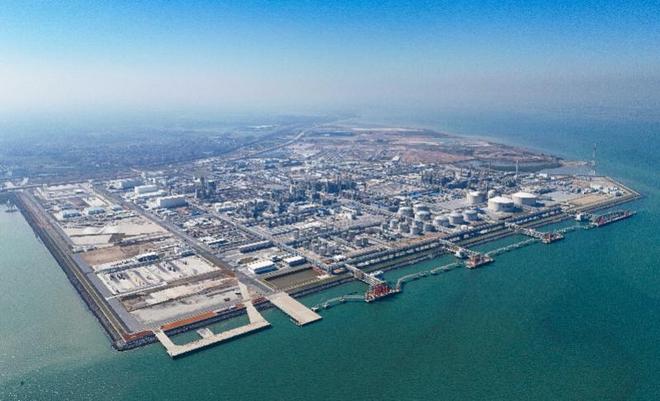
化学原料和化学制品制造业

Search documents
大越期货甲醇早报-20260330
Da Yue Qi Huo· 2026-03-30 07:14
Report Industry Investment Rating There is no information about the report industry investment rating in the provided content. Core Viewpoints - The direction of market fluctuations will be determined by changes in geopolitical conflicts. In the short term, with a favorable supply - demand fundamental, the local methanol price shows strong resilience. For the inland market, cost transmission is smooth, downstream开工 enthusiasm has increased, especially the consumption of raw material methanol by olefins has significantly increased, upstream methanol plants are continuously reducing inventory, and port inventory reduction is accelerating. The supply - demand fundamentals support the bottom of inland methanol. However, geopolitical conflicts are the decisive factor for future market trends. If the Middle East war continues, methanol futures and spot prices will remain strong; if the war situation eases, there may be a phased correction. The correction amplitude may be limited due to the tight supply - demand balance and increased olefin demand in the inland area. For the port market, imports are continuously decreasing, exports to Southeast Asia are surging, the main olefin plants at the port are starting up, demand is rapidly increasing, and port inventory is continuously decreasing. Multiple positive fundamentals support the port market, which is expected to continue to be strong this week. Future attention should be paid to the resonance of the chemical sector and the progress of the US - Iran conflict. It is expected that the methanol price will fluctuate strongly this week, with MA2605 oscillating between 3220 - 3450 yuan/ton [5]. Summary by Directory 1. Daily Tips - The fundamental situation of methanol 2605: The geopolitical conflict determines the market trend. In the short term, the supply - demand fundamentals are good, and the local methanol price is resilient. Inland cost transmission is smooth, downstream开工 is high, and inventory is decreasing. The port market has multiple positive factors such as reduced imports, increased exports, and starting olefin plants. The price is expected to be strong this week. The expected price range of MA2605 is 3220 - 3450 yuan/ton. The basis shows that the spot price is higher than the futures price. As of March 26, 2026, the total social inventory of methanol in East and South China ports decreased by 7.05 tons, and the available circulating supply in coastal areas decreased by 2.21 tons. The 20 - day moving average is upward, and the price is above the average. The main positions are net long and increasing [5]. 2. Long - Short Concerns - **Likely to be bullish**: Some plants have stopped or reduced production, such as Inner Mongolia Heima and Shanxi Zhongxin; the methanol production in Iran is at a low level, and imports in February are expected to continue to shrink; the inventory of methanol plants in the production area is low, and some enterprises even limit sales; some downstream users continue to stock up before the Spring Festival [6]. - **Likely to be bearish**: The domestic methanol production is at a high level, and there is no shortage of supply; as the Spring Festival approaches, downstream industries such as formaldehyde are gradually shutting down for holidays, and the demand for raw materials is weakening; the main olefin plants at the port are shut down, and local demand is significantly weakened; most downstream users have completed pre - holiday stocking, and the phased demand is decreasing [7]. 3. Fundamental Data - **Price data**: In the spot market, the price of thermal coal in the Bohai Rim is 688 yuan/ton, the price of methanol in Jiangsu is 3360 yuan/ton, CFR China Main Port is 414 US dollars/ton, the import cost is 3492 yuan/ton, CFR Southeast Asia is 655 US dollars/ton, etc. In the futures market, the closing price of the main contract is 3296 yuan/ton, the number of registered warrants is 7835, and the effective forecast is 147. The basis is 64 yuan/ton, and the import price difference is 196 yuan/ton. The price differences between different regions and markets are also provided [8]. - **Price trends**: The weekly increase in the spot price of methanol in Jiangsu is 10.16%, in Hebei is 11.68%, in Inner Mongolia is 7.34%, and in Fujian is 11.00%. The weekly increase in the futures price is 5.24%. The basis has increased by 146 yuan/ton [9][11]. - **Profit data**: The weekly profit of coal - based methanol production is 75 yuan/ton, the profit of natural gas - based methanol production remains at - 40 yuan/ton, and the profit of coke oven gas - based methanol production is 602 yuan/ton [20]. - **Load data**: The national weighted average methanol load is 74.90%, a decrease of 3.81% from last week; the load in the northwest region is 81.54%, a decrease of 3.55% from last week [22]. - **External market data**: The weekly increase in CFR China is 8.38%, in CFR Southeast Asia is 17.70%, and the price difference between China and Southeast Asia has decreased by 66.5 US dollars/ton [25]. - **Import price difference data**: The weekly increase in the spot price is 10.16%, the import cost has increased by 8.49%, and the import price difference has increased by 37 yuan/ton [29]. - **Downstream product data**: The price of formaldehyde remains unchanged, the price of dimethyl ether remains unchanged, and the price of acetic acid has increased by 21.21%. The production profit of formaldehyde is - 403 yuan/ton, the production profit of dimethyl ether is - 320 yuan/ton, and the production profit of acetic acid is 952 yuan/ton. The production profit of MTO is - 4752 yuan/ton [32][37][40][45][50]. - **Inventory data**: The inventory in East China ports is 47.27 tons, a decrease of 3.80 tons from last week; the inventory in South China ports is 28.3 tons, a decrease of 3.30 tons from last week [52]. - **Warrant data**: The number of warrants has increased by 2.54% to 7835, and the effective forecast remains at 147 [57]. - **Balance sheet data**: The report provides the methanol balance sheet from November 2022 to October 2024, including production, demand, net imports, inventory, and supply - demand differences [59]. 4. Maintenance Status - **Domestic plant maintenance**: Multiple domestic methanol plants are in maintenance, including Shaanxi Black Cat, Qinghai Zhonghao, etc. The maintenance time and loss vary by plant [60]. - **Overseas plant operation**: The operation status of overseas methanol plants varies. Some plants in Iran are in the process of restarting or operating at a low level, and plants in other countries such as Saudi Arabia, Malaysia, and the United States are generally operating normally [61]. - **Olefin plant operation**: The operation status of olefin plants also varies. Some plants are in normal operation, some are in maintenance, and some have plans for future maintenance or production [62].
大越期货甲醇周报-20260330
Da Yue Qi Huo· 2026-03-30 07:07
1. Report Industry Investment Rating No information provided in the given content. 2. Core Viewpoints of the Report - Geopolitical conflicts will determine the market fluctuation direction. In the short - term, the supply - demand fundamentals are good, and the local methanol price has strong resilience. Inland, cost transmission is smooth, downstream开工 enthusiasm has increased, especially the olefin's consumption of methanol has increased significantly, and the upstream methanol factories are continuously destocking. The supply - demand fundamentals support the bottom of inland methanol. However, geopolitical conflicts are the decisive factor for future market trends. If the Middle East war continues, methanol futures and spot prices will remain strong; if the war situation eases, there may be a phased correction, but the correction amplitude may be limited due to the tight supply - demand balance and increased olefin demand. In ports, imports are decreasing, exports to Southeast Asia are surging, the main olefin plants in ports are starting up, demand is rising rapidly, and port inventories are continuously decreasing. The port market is expected to continue to be strong next week. Attention should be paid to the resonance of the chemical sector and the progress of the US - Iran conflict [5]. 3. Summary According to the Directory 3.1 Weekly Review - Geopolitical conflicts determine market trends. Inland and port methanol markets have different characteristics. Inland has cost - demand support, and ports have multiple favorable factors such as reduced imports and increased demand [5]. 3.2 Fundamental Data 3.2.1 Domestic Methanol Spot Price - From March 20th to March 27th, prices in different regions changed. For example, in Jiangsu, the price increased from 3050 yuan/ton to 3360 yuan/ton, a 10.16% increase; in Hebei, it increased from 2440 yuan/ton to 2725 yuan/ton, an 11.68% increase [6]. 3.2.2 Methanol Futures and Basis - From March 20th to March 27th, the futures price increased from 3132 yuan/ton to 3296 yuan/ton, a 5.24% increase. The basis changed from - 82 yuan/ton to 146 yuan/ton [8]. 3.2.3 Methanol Production Profits by Different Processes - Coal - based production profit increased from 455 yuan/ton to 531 yuan/ton; natural gas - based production profit remained at - 40 yuan/ton; coke oven gas - based production profit increased from 601 yuan/ton to 819 yuan/ton [10]. 3.2.4 Domestic Methanol Enterprise Load - Nationally, the load decreased from 78.71% to 74.90%, a 3.81% decrease; in the northwest, it decreased from 85.09% to 81.54%, a 3.55% decrease [12]. 3.2.5 Outer - market Methanol Price and Spread - CFR China increased from 382 US dollars/ton to 414 US dollars/ton, an 8.38% increase; CFR Southeast Asia increased from 556.5 US dollars/ton to 655 US dollars/ton, a 17.70% increase. The spread between them changed from - 174.5 US dollars/ton to - 241 US dollars/ton [15]. 3.2.6 Methanol Import Spread - The import cost increased from 3219 yuan/ton to 3492 yuan/ton, an 8.49% increase. The import spread changed from - 169 yuan/ton to - 132 yuan/ton [18]. 3.2.7 Methanol Traditional Downstream Product Prices - Formaldehyde price remained at 1070 yuan/ton; dimethyl ether price remained at 3850 yuan/ton; acetic acid price increased from 3300 yuan/ton to 4000 yuan/ton, a 21.21% increase [24]. 3.2.8 Production Profits and Loads of Traditional Downstream Products - Formaldehyde: The production profit decreased from - 276 yuan/ton to - 403 yuan/ton, and the load increased slightly from 30.97% to 30.98%. - Dimethyl ether: The production profit decreased from 85 yuan/ton to - 320 yuan/ton, and the load increased from 8.34% to 9.79%. - Acetic acid: The production profit increased from 423 yuan/ton to 952 yuan/ton, and the load decreased from 73.61% to 72.32% [25][27][32]. 3.2.9 MTO Production Profit and Load - The MTO production profit decreased from - 3760 yuan/ton to - 4752 yuan/ton, and the load decreased from 86.45% to 84.18% [36]. 3.2.10 Methanol Port Inventory - In the East China port, the inventory decreased from 51.07 to 47.27; in the South China port, it decreased from 31.6 to 28.3 [37]. 3.2.11 Methanol Warehouse Receipts and Effective Forecasts - Warehouse receipts increased from 7641 to 7835, a 2.54% increase; effective forecasts remained at 147, a 0.00% change [41]. 3.3 Maintenance Status 3.3.1 Domestic Methanol Device Maintenance - Many domestic methanol enterprises are in maintenance, including Shaanxi Black Cat, Qinghai Zhonghao, etc. Different enterprises have different maintenance start and end times, and the weekly maintenance losses vary [43]. 3.3.2 Overseas Methanol Device Operation - Overseas methanol devices in different countries have different operation statuses. For example, some Iranian devices are in the process of restarting, and some Saudi and Malaysian devices are operating normally [44]. 3.3.3 Olefin Device Operation - Different olefin enterprises in different regions have different operation statuses. Some are in normal operation, some are in maintenance, and some are in the process of starting up or restarting [45].
纯碱周报:高库存与弱需求仍是主旋律-20260330
Hua Long Qi Huo· 2026-03-30 02:56
Report Industry Investment Rating - Not provided in the report Core Viewpoints - Last week, the price of the main contract of soda ash futures first rose and then fell, with an overall weekly decline. The market is caught in a tug - of - war between supply contraction and weak demand. - The supply side shows positive changes with a significant week - on - week decline in weekly output and operating rate, which eases supply pressure and provides bottom support for prices. However, the demand side remains weak, with downstream purchases mainly for low - price and just - in - time needs. The overall shipment rate has dropped to a recent low, and the de - stocking process is hindered. - Rising raw material costs are squeezing industry profit margins. The profit of the combined - soda process has declined from its peak, and the ammonia - soda process continues to be slightly in the red. - The latest real - estate data shows a continued year - on - year decline in new construction and completion areas, suppressing long - term demand expectations. - In the short term, supply contraction provides support, but weak demand and high inventory pressure remain unresolved, limiting the upside potential of futures prices. The market may continue to fluctuate and consolidate [36]. Summary by Relevant Catalogs 1. Soda Ash Supply and Demand Situation (1) Production and Capacity Analysis - As of March 26, 2026, the weekly domestic soda ash production was 775,400 tons, a week - on - week decrease of 42,700 tons or 5.22%. Among them, the production of light soda ash was 368,000 tons, a week - on - week decrease of 16,100 tons, and the production of heavy soda ash was 407,400 tons, a week - on - week decrease of 26,600 tons [9]. - The comprehensive capacity utilization rate of soda ash was 81.87%, down 4.51 percentage points from the previous week. The ammonia - soda capacity utilization rate was 90.45%, unchanged from the previous week; the combined - production capacity utilization rate was 76.17%, down 3.81 percentage points from the previous week. The overall capacity utilization rate of 16 enterprises with an annual capacity of one million tons or more was 84.47%, down 3.70 percentage points from the previous week [11]. (2) Soda Ash Inventory Analysis - As of March 26, 2026, the total inventory of domestic soda ash manufacturers was 1.8519 million tons, an increase of 40,300 tons or 2.22% from Monday. Among them, the inventory of light soda ash was 946,600 tons, a week - on - week decrease of 200 tons, and the inventory of heavy soda ash was 905,300 tons, a week - on - week increase of 40,500 tons. Compared with last Thursday, it decreased by 1,900 tons or 0.10%. The inventory of light soda ash decreased by 16,500 tons, and the inventory of heavy soda ash increased by 14,600 tons. The inventory at the same time last year was 1.63 million tons, a year - on - year increase of 221,900 tons or 13.61% [15]. (3) Shipment Situation Analysis - As of March 26, 2026, the weekly shipment volume of Chinese soda ash enterprises was 820,000 tons, a week - on - week decrease of 7.56%. The overall shipment rate of soda ash was 100.23%, a decrease of 9.39 percentage points from the previous week [17]. (4) Profit Analysis - As of March 26, 2026, the theoretical profit (per double - ton) of the combined - soda process for Chinese soda ash was 215 yuan/ton, a week - on - week decrease of 5.49%. During the week, the price of raw - material mine salt was stable, while the price of thermal coal increased significantly, strengthening the cost side. The prices of soda ash and its by - product ammonium chloride were relatively stable. Therefore, with the increase in costs, the double - ton profit of the combined - soda process decreased slightly [20]. - As of March 26, 2026, the theoretical profit of the ammonia - soda process for Chinese soda ash was - 26.20 yuan/ton, a week - on - week decrease of 0.90 yuan/ton. During the week, the price of raw - material sea salt remained stable, and the price of anthracite coal fluctuated and adjusted downward, with a slight increase in the cost side. The soda ash market remained stable with no significant price fluctuations. Therefore, the profit of the ammonia - soda process fluctuated downward [24]. 2. Downstream Industry Situation (1) Supply Side of the Float Glass Industry - As of March 26, 2026, the daily output of national float glass was 144,900 tons, a decrease of 0.62% compared with the 19th. The weekly output of national float glass from March 20 - 26, 2026 was 1.0145 million tons, a week - on - week decrease of 0.77% and a year - on - year decrease of 8.47% [26]. (2) Float Glass Industry Inventory - As of March 26, 2026, the total inventory of national float glass sample enterprises was 73.622 million weight boxes, a week - on - week decrease of 814,000 weight boxes or 1.09%, and a year - on - year increase of 9.86%. The inventory days were 33.6 days, a decrease of 0.1 day from the previous period [30]. 3. Market Price Analysis - The price of 5500 - calorie thermal coal increased from 731 yuan/ton to 756 yuan/ton, a week - on - week increase of 3.42%. The price of well - mine salt in East China remained stable at 260 yuan/ton. - The prices of light and heavy soda ash in various regions remained unchanged. The price of float glass in China increased from 1163 yuan/ton to 1169 yuan/ton, a week - on - week increase of 0.52%. The price of 2.0 - mm photovoltaic glass in China remained stable at 10 yuan/square. The price of 32% caustic soda in Jiangsu increased from 860 yuan/ton to 900 yuan/ton, a week - on - week increase of 4.65%. The price of dry ammonium chloride in Henan remained stable at 660 yuan/ton. The price of synthetic ammonia in Jiangsu decreased from 2490 yuan/ton to 2477 yuan/ton, a week - on - week decrease of 0.52% [35]. 4. Comprehensive Analysis and Operation Suggestions - The short - term supply contraction provides support, but weak demand and high inventory pressure remain unresolved, limiting the upside potential of futures prices. The market may continue to fluctuate and consolidate. - Operation suggestions: For unilateral trading, it is recommended to wait and see or conduct range trading. Since supply contraction provides support but weak demand restricts the upside, one can sell high and buy low between key support and resistance levels. For arbitrage, there are no specific suggestions. For options, one can consider selling out - of - the - money put options to collect premiums and increase returns in a volatile market [36][37].
长江大宗2026年4月金股推荐
Changjiang Securities· 2026-03-29 10:46
Group 1: Metal Sector Insights - Major profit forecasts for Zijin Mining show a net profit of CNY 823.16 million in 2026, with a PE ratio of 10.31[10] - China Hongqiao is expected to achieve a net profit of CNY 324.61 million in 2026, with a PE ratio of 9.37[10] - Dazhong Mining's projected net profit for 2026 is CNY 17.07 million, with a significantly high PE ratio of 38.50[10] Group 2: Lithium Industry Outlook - The lithium industry is expected to see a supply-demand turning point between 2026 and 2027, driven by a decline in supply growth and increased demand from energy storage[15] - Domestic lithium demand is projected to reach 131.10 million tons LCE by 2030, reflecting a year-on-year growth of 23%[15] - The total lithium industry demand is forecasted to be 412.99 million tons LCE by 2030, with a compound annual growth rate of 18%[15] Group 3: Transportation Sector Analysis - The oil transportation sector is anticipated to experience a "spring effect" due to inventory replenishment needs, requiring an additional 57 VLCCs over the next year[41] - The effective supply of VLCCs is projected to be 54 by 2027, which may lead to increased prices once the Strait of Hormuz is navigable again[41] Group 4: Chemical and Power Sector Projections - Wanhua Chemical is expected to generate a net profit of CNY 186.92 million in 2026, with a PE ratio of 13.40[10] - Longyuan Power's projected net profit for 2026 is CNY 61.52 million, with a PE ratio of 18.68[10]





原油继续大涨,影响时间和幅度或超预期
SINOLINK SECURITIES· 2026-03-29 07:05
Investment Rating - The report does not explicitly provide an investment rating for the chemical industry Core Insights - The geopolitical tensions, particularly between the US and Iran, have led to significant disruptions in the chemical supply chain, affecting various sectors including fertilizers and semiconductors [1][2] - The chemical market is experiencing price fluctuations due to supply chain vulnerabilities, with specific products like helium and fertilizers facing acute shortages [1][2] - The AI industry is facing challenges due to increased demand for computing power, leading to a surge in CPU prices and extended delivery times [1] - Major companies are actively expanding production capacities to meet rising demand, with significant investments in AI infrastructure [1] Summary by Sections Market Review - Brent crude oil averaged $105.45 per barrel, down 0.87% week-on-week, while WTI crude oil averaged $92.98 per barrel, down 3.22% [9] - The basic chemical sector outperformed the index with a 2.31% increase, while the petrochemical sector saw a slight decline of 0.10% [10] Recent Views from the Chemical Team - The tire industry is stabilizing with a slight increase in operating rates, while raw material prices are on the rise [23] - The dye market remains stable, with prices for disperse dyes holding steady and active dyes experiencing an increase due to strong cost support [25][27] - The carbon dioxide market is seeing limited price increases due to insufficient demand support [28] Key Events - Iran's response to the US ceasefire proposal has created uncertainty in the market, impacting supply chains [2] - The shutdown of major ammonia plants in Australia and India has exacerbated the fertilizer supply crisis [2] - A significant reduction in helium supply due to attacks on Qatari facilities poses a threat to the semiconductor industry [2] Price Movements - The price of titanium dioxide has increased by 5.1% due to rising costs and supply constraints [29] - The market for vitamin A and E has seen price fluctuations, with both experiencing upward trends followed by stabilization [30] Production and Supply Chain Insights - The report highlights the ongoing challenges in the supply chain, with many companies facing production delays and increased costs due to geopolitical tensions [1][2][23] - The report notes that companies are adjusting their pricing strategies in response to rising raw material costs and supply chain disruptions [29][30]
财务造假,4家A股公司被集体重罚!一股下周被ST,超4万股民踩雷
21世纪经济报道· 2026-03-28 13:04
Core Viewpoint - The article highlights the intensified regulatory scrutiny on financial fraud in the Chinese capital market, emphasizing that companies involved in such practices will face severe penalties, including personal accountability for executives [4][19][20]. Group 1: Recent Regulatory Actions - Four listed companies received penalties for financial misconduct, with three already under "ST" status, indicating financial distress [1][3]. - The companies involved include ST Delong, ST Bailing, ST Mingcheng, and Siert, with Siert set to be marked as "ST" soon [1][3]. Group 2: Characteristics of Financial Fraud - ST Bailing's case is notable for its unique method of financial fraud, involving cross-period adjustments of sales expenses, leading to distorted financial reports over four years [7][8]. - ST Delong and Siert's penalties reflect a trend of "heavy penalties on individuals," with fines for individuals exceeding those for the companies themselves [3][11]. - Common issues among the companies include various forms of financial fraud, such as fictitious revenue, inflated profits, and improper expense accounting [12][15]. Group 3: Regulatory Trends - The regulatory environment is shifting towards strict enforcement against financial fraud, with no leniency for companies that attempt to correct their mistakes post-factum [18][19]. - There is a significant increase in penalties for key individuals within companies, indicating a focus on holding executives accountable for corporate misconduct [19][20]. - The regulatory stance now includes penalties for the misuse of funds, even if the funds are returned, aiming to deter major shareholders from exploiting company resources [20][21]. Group 4: Implications for the Market - The article suggests that the ongoing regulatory actions will lead to a more transparent and predictable capital market environment in China [21]. - Companies that continue to engage in financial fraud or misuse of funds will face severe consequences, as indicated by the recent penalties [21].



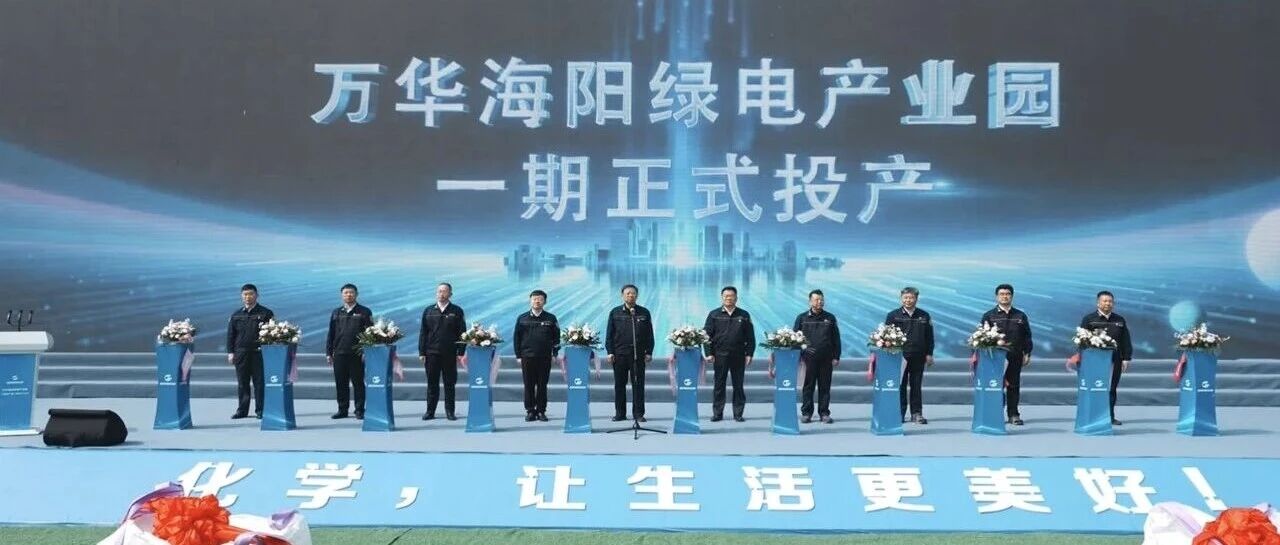
万华海阳绿电产业园举行一期投产暨二期开工仪式
鑫椤锂电· 2026-03-28 11:47
Core Viewpoint - Wanhua Chemical is positioning itself as a leading global supplier in the polyurethane and specialty chemicals market, with a focus on innovative battery materials and green energy solutions [2][4]. Group 1: Project Overview - The Wanhua Haiyang Green Power Industrial Park is located in Yantai, covering approximately 1850 acres with a total planned investment of 16.8 billion yuan [4]. - The project has been recognized as a significant initiative by Shandong Province, included in the 2025 major projects list and as a pilot for integrated source-network-load-storage projects [4]. Group 2: Technological Advancements - The project utilizes world-class lithium iron phosphate cathode material technology, offering high energy density, long cycle life, and excellent safety performance, catering to diverse demands in the power battery and energy storage markets [6]. - Wanhua's battery materials R&D center, with over 800 innovative team members, has achieved mass production of fourth-generation battery materials, significantly enhancing energy density and system integration compared to mainstream market products [6]. Group 3: Market Demand and Strategic Partnerships - There is a strong market demand for the products, with strategic partnerships established with leading domestic and international clients [6]. - The project aims to promote the local consumption of green electricity and address green trade barriers by exploring green electricity trading and direct connections [6]. Group 4: Future Developments - The second phase of the Wanhua Haiyang Green Power Industrial Park is set to accelerate, with an expected production start by the end of 2026, further solidifying Wanhua's leading position in the new energy battery materials sector [7].

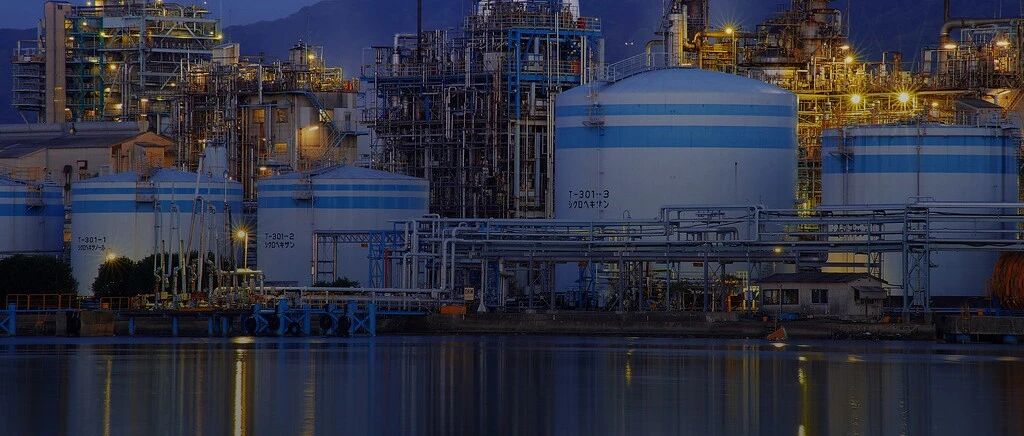
突发!全球最大甲醇基地遭遇不可抗力!陶氏发出警告
DT新材料· 2026-03-27 16:03
Core Viewpoint - The article highlights the significant impact of supply disruptions in the chemical industry, particularly in methanol and styrene production, due to the force majeure declared by SABIC, which could lead to increased prices and supply shortages globally [1][2]. Group 1: Supply Chain Disruptions - SABIC's methanol production facility in Jubail, Saudi Arabia, has an annual capacity of 4.7 million tons, while its styrene production capacity is approximately 1.8 million tons. The simultaneous disruption of these core products is expected to widen the global supply gap for methanol and styrene [2]. - The supply chain for various basic chemical raw materials, including polyethylene, polypropylene, ethylene glycol, and urea, is facing severe interruptions, leading to a near standstill in regional supply chains [2]. - If the situation in the Middle East does not improve, the ongoing production halts could exacerbate the supply-demand gap for global chemical raw materials, resulting in upward price pressures [2]. Group 2: Economic Impact - Saudi Finance Minister Mohammed Al-Jadaan indicated that the ongoing conflict could have severe implications not only for the region but also for the global economy, with risks not yet fully reflected in market prices [3]. - Dow Chemical's CEO Jim Fitterling warned of potential inflation effects due to shortages and price surges in petrochemical products, which could impact multiple sectors, including construction materials, consumer goods, and automotive industries [3]. Group 3: Domestic Market Dynamics - In China, domestic methanol production is at a historical high, with an operating rate of 92.8% as of March 18, indicating a structural shift towards domestic supply amid declining imports [4]. - Major domestic methanol producers include Baofeng Energy, with a total capacity of 12.5 million tons per year, leading the market [4]. - The current market dynamics suggest a transition from expectation-driven pricing to reality-driven pricing, where the realization of supply gaps will become a core support for prices [4]. Group 4: Green Methanol Opportunities - The article discusses the potential for green methanol, driven by carbon neutrality goals, to gain acceptance in the market due to the current tightness in traditional methanol supply [5]. - Key players in the green methanol sector include companies like Goldwind Technology and China Tianying, which are positioned to capitalize on the growing demand for sustainable fuel alternatives [5]. - Methanol is recognized as a "cornerstone of chemicals" and a "new energy star," with global consumption projected to reach 141.1 million tons in 2024, highlighting significant market opportunities [5].
信德新材跌1.04% 上市即巅峰超募15亿中信证券保荐
Zhong Guo Jing Ji Wang· 2026-03-27 09:12
Core Viewpoint - Xinde New Materials (301349.SZ) is currently trading at 55.00 yuan, reflecting a decline of 1.04%, and is in a state of breaking its initial public offering (IPO) price [1] Group 1: IPO and Financial Performance - Xinde New Materials was listed on the Shenzhen Stock Exchange's ChiNext board on September 9, 2022, with an initial public offering of 17 million shares at a price of 138.88 yuan per share [1] - The total funds raised by Xinde New Materials amounted to 236.096 million yuan, with a net amount of 216.58238 million yuan after deducting issuance costs, exceeding the original plan by 151.58238 million yuan [2] - The company planned to use the raised funds for a 30,000-ton carbon material industrial upgrade project, a research and development center project, and to supplement working capital [2] Group 2: Issuance Costs and Dividend Distribution - The total issuance costs for Xinde New Materials were 19.51362 million yuan, with CITIC Securities receiving a sponsorship and underwriting fee of 17.50674 million yuan [3] - The company announced a dividend distribution plan on May 24, 2023, which included a cash dividend of 10.00 yuan per 10 shares (before tax) and a capital reserve transfer of 5 shares for every 10 shares held, totaling 68 million yuan in cash dividends [3]

百年情缘今再续:巴斯夫项目在粤投产背后的吸引力与支撑力
Nan Fang Du Shi Bao· 2026-03-27 06:53
Core Viewpoint - BASF's integrated base in Guangdong, with an investment of approximately €8.7 billion, marks the company's largest single investment in China and signifies its long-term commitment to the Chinese market [1][5][16]. Investment and Development - The BASF (Guangdong) integrated base officially commenced operations on March 26, 2026, and is the company's seventh integrated production facility globally, covering an area of about 4 square kilometers and employing over 2,000 staff [5][10]. - The project aims to produce a diverse range of products, including basic chemicals, intermediates, and specialty chemicals, which will help reduce China's reliance on high-end product imports [5][10]. Strategic Location and Support - Guangdong was chosen for the project due to its status as a strong economic province and a leader in reform and opening-up, with significant demand from industries such as automotive and electronics [7][10]. - The location in Zhanjiang benefits from excellent transportation infrastructure, facilitating efficient import of raw materials and distribution of products [7][10]. Environmental and Technological Innovations - The integrated base is designed to significantly lower carbon emissions, with a potential reduction of up to 50% compared to traditional petrochemical facilities [8][10]. - The facility features the world's first ethylene unit powered entirely by renewable energy, with an annual capacity of 1 million tons, producing high-quality, low-carbon products [8][10]. Market Outlook and Future Plans - BASF's investment reflects confidence in China's chemical market, which is seen as a growth engine due to its transition towards high-quality development [7][13]. - The company aims to align its climate-neutral roadmap with China's dual carbon goals, targeting a 25% reduction in greenhouse gas emissions by 2030 compared to 2018 levels, and achieving net-zero emissions by 2050 [11][12]. Industry Context - The establishment of the BASF integrated base is viewed as a model for foreign enterprises to seize new opportunities in China's evolving market, highlighting the importance of the Chinese market for sustainable growth and technological innovation [17].