巧克力

Search documents
2025年第49周:食品饮料行业周度市场观察
艾瑞咨询· 2025-12-13 00:07
Group 1 - The pre-prepared food market is experiencing a paradox of consumer trust issues and capital enthusiasm, driven by urbanization and the demand for convenient dining [3][4]. - The "zero additives" concept is being phased out in favor of "clean label" standards, emphasizing ingredient transparency and natural prioritization [5][6]. - The energy drink industry is undergoing rapid transformation with ingredient innovation and scene segmentation, focusing on health trends and diverse flavors [7][8]. Group 2 - The nut import market in China is projected to reach $2.386 billion in 2024, with a significant increase in demand for high-end varieties like pistachios [10]. - The beverage market is facing a downturn, with sales declining due to the rise of on-demand drink services and aggressive pricing strategies [14][15]. - The convenience food industry in China is shifting towards value creation, with a market size expected to grow from 673.6 billion yuan in 2023 to 960.3 billion yuan by 2026 [18]. Group 3 - The dairy industry is seeing a shift from ambient milk to fresh milk, with companies like Bright Dairy exploring new growth areas in the pet food market [20]. - Wangwang is facing challenges in the milk market, prompting the company to diversify into AD calcium milk to regain market share [21]. - The plant-based food sector is experiencing a downturn, with companies focusing on technological innovation and localization to meet market demands [17]. Group 4 - JD.com is enhancing its pre-prepared food strategy, aiming to strengthen its supply chain and align with the growing demand for ready-to-eat meals [31]. - China Resources Beverage is entering the ready-to-drink coffee market, competing against established brands like Nestlé and Starbucks [32]. - Wanglaoji is diversifying into the functional beverage market by acquiring distribution rights for Red Bull in southern China, aiming for significant sales growth [33].






综述|斯洛文尼亚企业看好中国市场前景
Xin Hua She· 2025-11-27 08:40
Core Insights - Slovenian companies are optimistic about the Chinese market due to the increasing demand for high-quality, innovative, and culturally distinctive products [1][2] - The participation in the China International Import Expo has highlighted the growing popularity of premium products among Chinese consumers [1] - There is a notable trend towards organic and natural health products, with consumers seeking certified organic options free from artificial additives [2] Group 1: Market Opportunities - Slovenian craft beer producer Klavf Brewery reported strong interest in their high-end products during the recent import expo, establishing long-term partnerships in China [1] - The chocolate and wine company, Amethyst LLC, has been active in the Chinese food and beverage market since 2019, emphasizing the importance of quality standards to meet consumer expectations [1] Group 2: Strategic Developments - The Slovenian bee product brand Medex has observed a sharp increase in demand for organic health products, reinforcing their confidence in expanding within the Chinese market [2] - The Slovenian motor manufacturer Domel has positioned its Suzhou facility as a showcase for Industry 4.0, evolving from a sales office to a comprehensive manufacturing and technology center in China [2] - Slovenian companies are focusing on continuous innovation, storytelling, local partnerships, and tailored marketing strategies to enhance their brand influence in China [2]
2025CAFEEX上海咖啡展总览 - 从咖啡豆到巧克力与威士忌的体验之旅
东京烘焙职业人· 2025-11-26 08:33
Core Viewpoint - The 2025 CAFEEX Shanghai Coffee Exhibition will combine coffee with chocolate and whiskey, offering a unique sensory experience and an opportunity for flavor exploration [3][7]. Event Details - The exhibition will take place from November 28 to 30, 2025, at the Shanghai International Procurement Exhibition Center, featuring immersive experiences related to flavor exploration and lifestyle [7][63]. - The event is designed for both coffee enthusiasts and newcomers, promising surprises and emotional connections [7]. Activities and Experiences - Professional cupping sessions will allow attendees to experience the layers and flavors of coffee up close, while forums will provide opportunities to interact with baristas and industry experts [5][56]. - The exhibition will showcase the latest design trends and technological breakthroughs in coffee-making equipment, emphasizing the importance of tools in enhancing flavor and experience [36]. Related Exhibitions - The CAFEEX will run concurrently with the CHOCEX chocolate exhibition, which will feature a variety of chocolate brands and products, highlighting the stories behind single-origin chocolates and innovative flavor combinations [48][37]. Educational Opportunities - The event will include a series of lectures and discussions led by industry experts, covering topics such as coffee production stability, the relationship between coffee and whiskey, and sustainable practices in coffee production [62][54].

2025美好生活|高质量发展与消费升级-2025年度美好生活新消费高峰论坛即将启幕
Sou Hu Cai Jing· 2025-11-17 10:23
Core Insights - The Chinese consumer market is undergoing a significant transformation, shifting from a focus on "cost-performance" to "emotional value" and "technological trust" as key competitive variables [2][6][7] - A high-quality development and consumption upgrade forum will be held on November 21, 2025, in Beijing, aimed at exploring paths for industry transformation and sustainable development [3][7] Market Structure - By 2025, the Chinese consumer market is expected to exhibit a "dumbbell" structure, characterized by rapid growth in consumption among Generation Z and a burgeoning silver economy focused on quality living, creating a trillion-level market [6] - This structural change is shifting consumer logic from "satisfying needs" to "creating demand," with consumers seeking products that embody more emotional and social values [6] Product Development - Companies are increasingly focusing on the emotional resonance and social value of their products, moving away from standardized goods [6] - Innovations such as "zero-additive herbal tea" and culturally enriched bottled water are examples of how brands are meeting urban consumers' demands for "natural health" and storytelling [6] Competitive Focus - The competition is shifting from market share to meticulous refinement across the entire R&D, production, and service chain [6] - Companies are embedding "craftsmanship" into the less visible aspects of the supply chain, enhancing product quality through advanced techniques like micron-level homogenization in dairy products and precise temperature control in chocolate production [6] Technological Integration - Technology is becoming a new engine for upgrading the consumer industry, with AI, IoT, and blockchain technologies deeply penetrating the supply chain [7] - The integration of technology with traditional practices is enhancing production efficiency and establishing "assured consumption" as a core competitive advantage [7] Future Outlook - The upcoming forum is anticipated to provide critical insights for the next decade of the consumer market, emphasizing that product value is not just a gift of nature but a commitment from companies to a better life [7]
瑞士商界齐发力!美国将把对瑞士关税降至15%?特朗普:正在研究
Di Yi Cai Jing· 2025-11-11 12:46
Core Viewpoint - Swiss businesses are actively engaging in negotiations with the U.S. to reach a tariff agreement, potentially lowering tariffs to 15%, aligning with the EU's tariff rates [1][2][4] Group 1: Swiss Business Engagement - Swiss business leaders have shifted from behind-the-scenes lobbying to direct engagement with the Trump administration, aiming to break months of negotiation deadlock [2][3] - The Swiss delegation, led by Federal President Keller-Sutter, was initially shocked by the U.S. imposing a 39% tariff on Swiss goods, which is the highest among developed economies [2][4] Group 2: Economic Impact and Trade Relations - The U.S. trade deficit with Switzerland is approximately $39 billion, with the U.S. imposing high tariffs as a response to this imbalance [2][6] - Swiss exports account for over 70% of its GDP, with key products including watches, chocolate, and machinery, making the U.S. a crucial market [4][6] Group 3: Negotiation Dynamics - High-profile Swiss executives, including those from Partners Group and Rolex, have met with Trump to emphasize the strong economic ties between the two nations [3][4] - The Swiss strategy in negotiations has leveraged its traditional strengths, with business leaders seen as more effective than political figures in addressing trade issues [4][5] Group 4: Future Prospects - There is speculation that a trade agreement could be announced at the World Economic Forum in Davos in January 2026, with Trump likely to attend [7] - The potential for Swiss companies to invest in the U.S. gold refining industry is being considered as a strategy to persuade the U.S. to lower tariffs [6][7]
新华时评:进博为桥,中国与天下同利
Xin Hua She· 2025-11-10 07:41
Group 1 - The China International Import Expo (CIIE) serves as a significant platform for global economic engagement, showcasing China's commitment to open cooperation and mutual benefits [1][4] - The CIIE has attracted 23,000 foreign exhibitors and generated an intended transaction value exceeding $500 billion over the past seven years, highlighting its role as a vital entry point for international businesses into the Chinese market [1][2] - China remains the world's second-largest import market for 16 consecutive years, with imports of goods and services expected to exceed $15 trillion during the 14th Five-Year Plan period [1][3] Group 2 - The current CIIE features participation from 155 countries and regions, with 290 Fortune 500 companies, marking record highs in exhibition area and total number of exhibitors [2] - The event showcases 461 new products, technologies, and services across various cutting-edge fields, establishing itself as a key node in the global innovation chain [2][3] - Companies view the CIIE as a strategic opportunity for deep engagement with global resources, shifting their focus from mere product sales to technology collaboration and joint market development [3] Group 3 - The CIIE exemplifies China's market potential, characterized by a large consumer base and increasing demand for upgraded consumption, supported by innovative elements and resources [3] - The recent Fourth Plenary Session of the 20th Central Committee of the Communist Party of China emphasized the need for high-level opening up and creating new cooperative opportunities [3][4] - China positions itself as a co-creator of global opportunities and a builder of open platforms, reinforcing its commitment to shared development and prosperity [4]
进博会现场:瑞士莲以经典与创新奏响甜蜜“交响曲”
Zhong Guo Jing Ji Wang· 2025-11-09 03:33
Core Points - The 8th China International Import Expo (CIIE) took place in Shanghai from November 5 to 10, showcasing various international brands [1] - Lindt, a Swiss chocolate brand, highlighted its commitment to the Chinese market by launching a new product, "Panda Chocolate," inspired by the giant panda [1] - The brand celebrated its 180th anniversary this year, emphasizing its dedication to cultural exchange and environmental protection through its products [1] Company Strategy - Lindt focuses on local innovation to meet consumer demands in China, showcasing its Dubai-style chocolate series that debuted in March [1] - The company aims to enhance its product offerings in the Chinese market, maintaining a commitment to high-quality chocolate experiences [1] - Lindt's mission is to create emotional connections through chocolate, reinforcing its brand values of craftsmanship and innovation [1]
新华时评|进博为桥,中国与天下同利
Xin Hua She· 2025-11-07 11:13
Core Insights - The China International Import Expo (CIIE) serves as a significant platform for global economic engagement, emphasizing China's commitment to mutual benefits with the world [1][4] - The expo has attracted 23,000 foreign exhibitors and generated an intended transaction volume exceeding $500 billion over the past seven years, highlighting China's market appeal despite global economic challenges [1][2] - China remains the world's second-largest import market for 16 consecutive years, with projected imports of over $15 trillion during the 14th Five-Year Plan period [1][3] Group 1 - The eighth CIIE has seen participation from 155 countries and regions, with 290 Fortune 500 companies showcasing their products, marking record exhibition space and total number of exhibitors [2] - The event has become a vital node in the global innovation chain, featuring 461 new products, technologies, and services across various cutting-edge fields [2][3] - Companies view the CIIE as a strategic opportunity for deep engagement with global resources, shifting focus from mere product sales to technology collaboration and joint market development [3] Group 2 - The CIIE reflects China's large market size and evolving consumer demands, providing a robust foundation for international business opportunities [3] - The recent Fourth Plenary Session of the 20th Central Committee of the Communist Party of China emphasized the need for high-level openness and cooperation, indicating a future of broader opportunities for global development [3][4] - The CIIE symbolizes China's role as a co-creator of global opportunities and a platform for shared development, reinforcing the belief in open cooperation and mutual prosperity [4]
总台记者探访丨从阿尔卑斯山到东方明珠 一家奥地利巧克力企业的进博之约
Yang Shi Xin Wen Ke Hu Duan· 2025-11-05 23:30
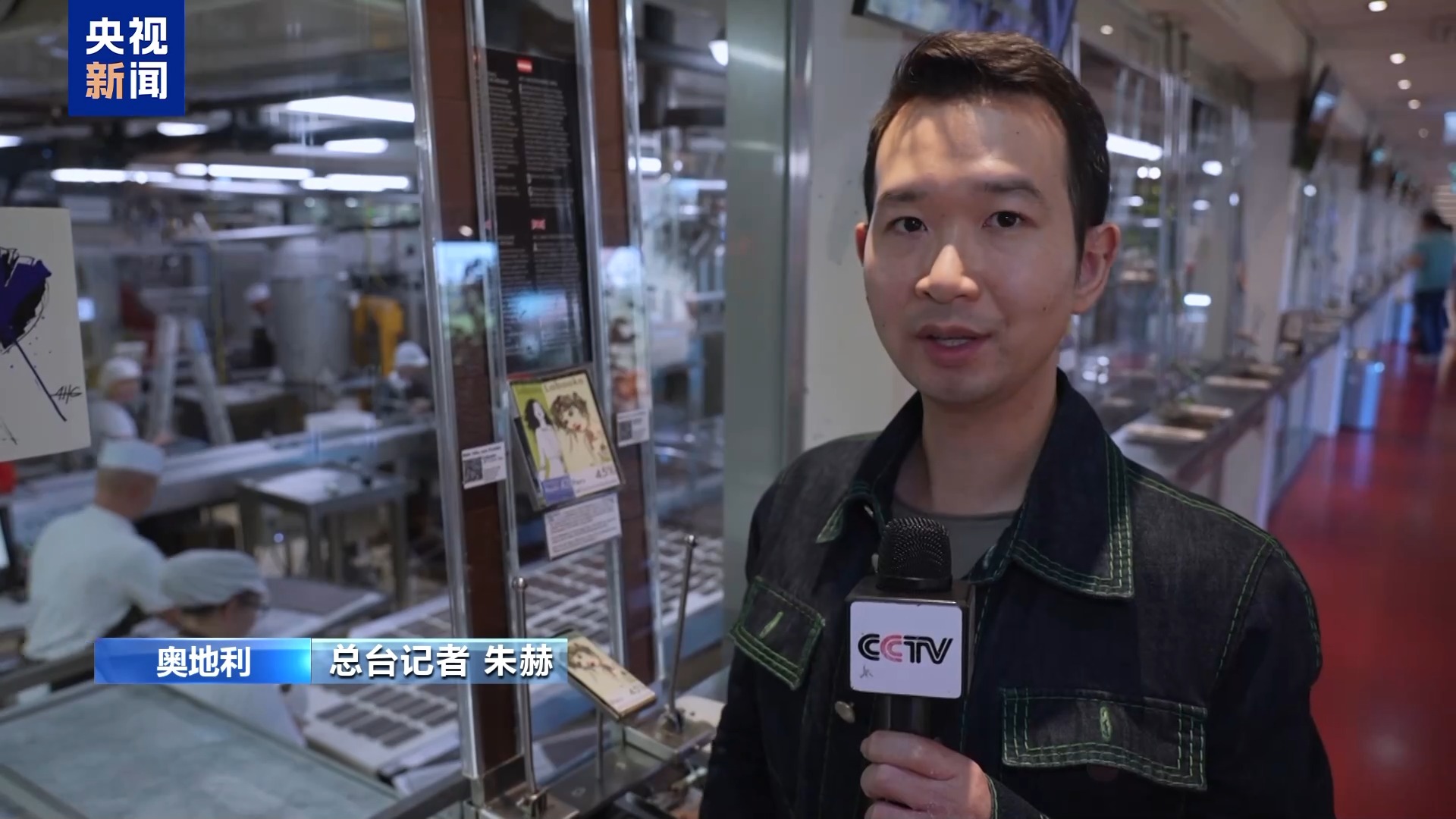
Core Insights - The eighth China International Import Expo (CIIE) opened on November 5 in Shanghai, showcasing international products and fostering cultural exchange [2][17] - The Austrian chocolate company, Zotter, has participated in every CIIE since its inception, highlighting its commitment to the Chinese market [2][9] Company Overview - Zotter Chocolate is located in the scenic Styria region of Austria, where it operates a chocolate production facility and an immersive experience center known as the "Chocolate Theatre" [2][4] - The company emphasizes the cultural experience of chocolate, transforming it from a mere food item into an engaging activity for consumers [4][6] Market Strategy - The founder's daughter, Julia Zotter, recognized the potential of the Chinese market after her initial visit as an exchange student, leading to the establishment of a chocolate experience in Shanghai [7][9] - Julia Zotter views the CIIE as a significant platform for launching new products and engaging with consumers, noting the interest in discovering new products among attendees [11][13] Future Plans - The Chinese market is seen as a crucial growth opportunity for Zotter, with plans to introduce localized flavors and explore the integration of Chinese ingredients and cultural elements into their chocolate offerings [15][13] - The company aims to leverage the rapid changes and vast potential of the Chinese consumer market, aligning its product quality and cultural experience with local preferences [15][13]

(第八届进博会)“洋土特产”抢滩进博会 越来越有“中国味”
Zhong Guo Xin Wen Wang· 2025-11-05 04:34
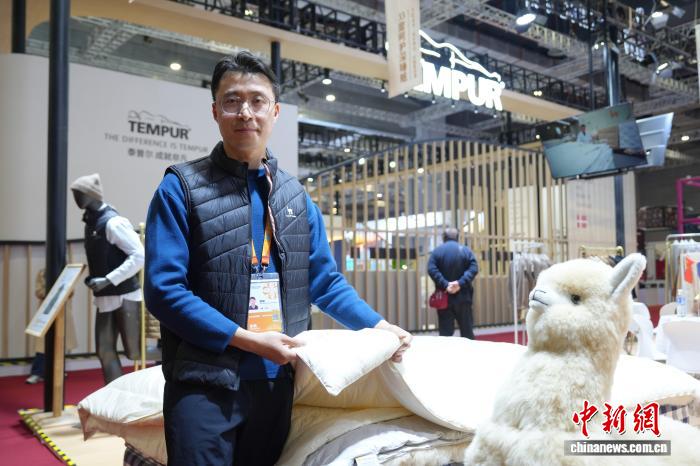
Group 1: Market Trends and Growth - The New Zealand alpaca fiber industry has seen an average annual sales growth of over 100% in China over the past six years, with the company's exhibition space expanding from 9 square meters to 120 square meters at the China International Import Expo (CIIE) [1] - The Chinese market now accounts for over 60% of the company's global sales, indicating its significance as a key market for New Zealand alpaca products [2] Group 2: Product Adaptation and Consumer Preferences - Companies are increasingly adapting their products to meet the preferences of Chinese consumers, such as developing lighter and more breathable alpaca blankets [2] - The introduction of essential oil sprays, designed to cater to the lifestyle habits of young Chinese consumers, reflects a shift towards products that emphasize natural and healthy attributes [2] - Colombian chocolate brands are also tailoring their offerings to the Chinese market by incorporating local flavors, such as dried fruits, into their chocolate products, which aligns with the health-conscious trends among Chinese consumers [4]