房产中介

Search documents
补偿N+4?贝壳再挥裁员刀,有产研团队遭「团灭」
Xin Lang Cai Jing· 2025-12-01 01:36
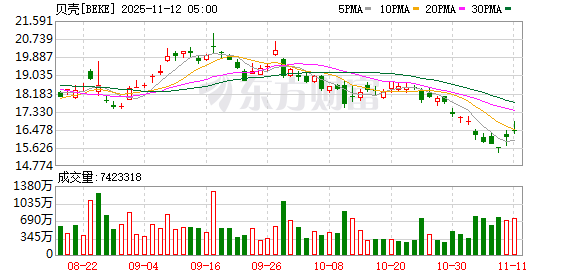
Group 1 - Beike is reportedly undergoing a large-scale layoff, with rumors suggesting a 30% reduction in workforce, particularly affecting the R&D department and senior positions [2][3] - Employees have confirmed the N+4 compensation plan, but some view it as misleading, equating to N+1 plus three months of year-end bonus, which typically amounts to four months [2] - A source close to Beike claims the actual layoff figure is exaggerated, estimating it to be around 0.5%, affecting approximately 650 employees out of a total of 131,800 [2][4] Group 2 - Since 2021, Beike has faced multiple rounds of layoffs, with a reported reduction of about 3,200 employees by mid-2025 [4][6] - The company’s net profit for Q3 2025 dropped by 36.1% year-on-year, indicating ongoing pressure in its core real estate business [6][8] - Beike is shifting towards a "one body, three wings" strategy, with new business revenue accounting for 45% of total income, although these new ventures have lower profit margins [6][8] Group 3 - Beike's Q3 2025 revenue was 23.05 billion RMB, a 2.1% increase year-on-year, but net income was only 7.47 billion RMB, reflecting significant challenges in the real estate market [6][7] - The company’s stock price has fallen over 70% from its peak, with recent trading around 17.23 USD per share, prompting a buyback program totaling approximately 2.3 billion USD [9][11] - Vanke has completely divested its stake in Beike, ending a strategic partnership that began in 2015, which may be linked to Vanke's own operational pressures [11][12]


补偿N+4?贝壳再挥裁员刀,有产研团队遭“团灭” | BUG
Xin Lang Cai Jing· 2025-12-01 01:04
Core Viewpoint - Beike Zhaofang is reportedly undergoing a significant layoff, with rumors suggesting a 30% reduction in workforce, particularly affecting the R&D department and senior positions, amidst ongoing financial struggles in the real estate market [2][3][6]. Group 1: Layoff Details - The company is said to have initiated a large-scale personnel optimization, with a reported layoff rate of 30%, particularly impacting the R&D and operational departments [2][3]. - Employees have indicated that the compensation plan, referred to as N+4, is misleading, as it effectively amounts to N+1 plus three months of year-end bonuses, which typically would total four months [2][3]. - A source close to Beike claims that the actual layoff rate is exaggerated, estimating it to be around 0.5%, affecting approximately 650 employees out of a total workforce of about 131,800 [2][4]. Group 2: Financial Performance - Beike's financial report for Q3 2025 shows a revenue of 23.1 billion yuan, a slight increase of 2.1% year-on-year, but net profit plummeted by 36.1% to 747 million yuan [6][7]. - The company has faced significant pressure in its core real estate business, with transaction volumes in the new housing market dropping by 13.7%, leading to a 14.1% decline in revenue from this segment [6][8]. - Despite the challenges, Beike is shifting towards a "one body, three wings" strategy, with new business revenues now accounting for 45% of total income, although these new ventures have lower profit margins [6][9]. Group 3: Market Context - The real estate market's overall downturn has severely impacted Beike's performance, prompting the company to halt expansions and focus on cost-cutting measures, including layoffs [6][9]. - Beike's stock price has significantly declined, falling over 70% from its peak, with recent trading around 17.23 USD per share [10]. - Vanke, a strategic partner, has completely divested its holdings in Beike, marking the end of their investment relationship, which began in 2015 [12][13].

2025W47房地产周报:政策预期再起,方向节奏如何展望?-20251124
NORTHEAST SECURITIES· 2025-11-24 15:23
Investment Rating - The report maintains an "Outperform" rating for the real estate industry [6] Core Insights - The real estate market is experiencing significant downward pressure on both volume and price, necessitating new policy measures to boost confidence [16][20] - Short-term policies such as mortgage interest subsidies and personal income tax deductions are expected to be implemented to alleviate the current market downturn [39] - The report highlights a potential for structural recovery in the housing market, particularly in first-tier cities, if purchasing restrictions are fully lifted [39] Summary by Sections 1. Market Overview - The real estate market is facing increased downward pressure, with sales volume and prices declining significantly. In October 2025, cumulative sales area decreased by 6.8% year-on-year, and sales value dropped by 9.6% [16] - The report notes that the sales area for new homes in 45 cities totaled 2.72 million square meters, with first-tier cities experiencing a year-on-year decline of 43.19% [5] 2. Policy Directions - The report anticipates policy measures focusing on loosening purchase restrictions, providing mortgage interest subsidies, and implementing personal income tax deductions to stimulate demand [28][31] - There is a growing expectation for the central government to engage in large-scale market-oriented housing stockpiling to stabilize the market [37] 3. Stock Market and Credit Bonds - The A-share real estate sector underperformed the market, with a decline of 5.83%, while the Hong Kong real estate sector outperformed with a decline of 4.94% [41][53] - As of November 21, 2025, the cumulative issuance of real estate credit bonds reached 3,815.39 billion, with a net financing amount of -421.33 billion [41] 4. REITs Market - The REITs index experienced a decline of 1.12% this week, with transaction volumes decreasing by 8.80% [3][12] 5. Land Market - The report indicates a significant increase in land supply and transaction area across major cities, with a 92.79% increase in supply and a 24.37% increase in transaction area [4] 6. Investment Recommendations - The report suggests focusing on three areas within the real estate sector: commercial real estate (e.g., New Town Holdings, China Resources), property management (e.g., Greentown Service), and real estate brokerage (e.g., Beike, Wo Ai Wo Jia) [40]



一份房产中介的财报,揭露了楼市最真实的现状
Sou Hu Cai Jing· 2025-11-17 23:20
Core Viewpoint - The second-hand housing market is the most accurate reflection of the real estate market's current state, and this perspective will continue to gain significance as new homes eventually become second-hand properties [1][3]. Group 1: Company Performance - Beike's Q3 financial report revealed a net profit of 747 million yuan, a year-on-year decline of 36.1%, and an adjusted net profit of 1.286 billion yuan, down 27.8% year-on-year [3]. - The total transaction volume for Beike's second-hand housing business reached 505.6 billion yuan, a year-on-year increase of 5.8%, but revenue decreased by 3.6% to approximately 6 billion yuan [3]. - Beike's new housing business saw a transaction volume of 196.3 billion yuan, a year-on-year decline of 13.7%, with revenue dropping 14.1% to 6.6 billion yuan [3][4]. Group 2: Market Trends - The second-hand housing market is experiencing a price drop, leading to increased transaction volumes as buyers find better value, although revenue is declining due to a higher proportion of transactions coming from franchise stores [6][8]. - The overall real estate market is shrinking, impacting Beike's profitability despite its market dominance [7]. - The shift towards "fourth-generation residential" projects is reducing developers' reliance on intermediaries, leading to lower commission rates for agents [8]. Group 3: Future Outlook - Beike's non-real estate business, including home decoration and rental services, is performing well, with home decoration revenue at 4.3 billion yuan and rental income growing by 45.3% to 5.7 billion yuan [8][9]. - The real estate industry is transitioning from a focus on property transactions to comprehensive residential services, indicating that Beike may expand its offerings to include furniture and appliances [10]. - Future home-buying decisions will increasingly prioritize living quality, rental yield, and property management, with older neighborhoods likely facing further depreciation [11][12].

高成本获客能走多远?从巨头崛起看行业适配本质
Sou Hu Cai Jing· 2025-11-15 06:49
Core Viewpoint - The article discusses the concept of "Internet thinking" and its applicability across different industries, emphasizing that not all sectors can benefit from high-cost customer acquisition strategies. The key to success lies in high-frequency usage, user stickiness, and network effects, which are essential for sustaining customer engagement without ongoing subsidies [1][2]. Group 1: Understanding "Internet Thinking" - "Internet thinking" refers to attracting a large user base through free strategies or subsidies, which can later be monetized as user habits are formed [1]. - Successful examples of "Internet thinking" include platforms like Taobao, Didi, Meituan, which have established strong network effects and user habits, allowing them to retain users even without subsidies [2][4]. Group 2: Characteristics of High-Cost Customer Acquisition Models - High-cost customer acquisition models are sustainable only if they meet three criteria: high-frequency usage, user habit formation, and the ability to create a dual-sided network effect [2][4]. - Platforms like Taobao and WeChat exemplify high-frequency usage, as users frequently engage with these services, forming habitual usage patterns [2][4]. Group 3: Unsustainable High-Cost Customer Acquisition Models - The second-hand car e-commerce industry illustrates the pitfalls of high-cost customer acquisition, as it is characterized by low-frequency, high-value transactions, making it difficult to cultivate user habits [6][9]. - Companies like Uxin faced significant losses despite high gross margins, as their marketing expenses exceeded revenues, leading to unsustainable business models [6][5]. - The real estate sector, represented by companies like Aiwujia, also struggled with high-cost acquisition due to the low-frequency nature of transactions and the inability to build user loyalty [10][11].

贝壳三季度利润承压 非房交易收入占比升至45%
Zhong Guo Jing Ying Bao· 2025-11-12 07:00
Core Viewpoint - In Q3 2025, the real estate market continues to undergo deep adjustments as policy effects weaken, with Beike's net revenue increasing by 2.1% year-on-year to 23.1 billion yuan, driven by a significant rise in rental service income despite declines in new and second-hand housing revenues [2] Financial Performance - Beike reported a net profit of 747 million yuan in Q3, a decrease of 36.1% year-on-year, while adjusted net profit fell by 27.8% to 1.286 billion yuan [3] - The total transaction volume on Beike's platform remained flat year-on-year at 736.7 billion yuan, with the existing home business GTV reaching 505.6 billion yuan, up 5.8%, but revenue down 3.6% to approximately 6 billion yuan [4] - New home business GTV in Q3 was 196.3 billion yuan, down 13.7%, with revenue decreasing by 14.1% to 6.6 billion yuan, attributed to a sluggish new home market [4] Business Segments - The number of active stores on Beike's platform reached 59,012, a year-on-year increase of 25.9%, while the number of active agents grew by 11.4% to 471,501 [4] - Non-real estate transaction revenue reached a record high, accounting for 45% of total revenue, with home decoration and rental services contributing significantly [7] - Rental business revenue increased by 45.3% year-on-year to 5.7 billion yuan, with a profit margin improvement of 4.3 percentage points to 8.7% [7][8] Strategic Initiatives - Beike's CEO highlighted ongoing efforts in organizational restructuring, process reengineering, and technological innovation to enhance business efficiency and customer experience [5] - The company is expanding its AI capabilities in core business scenarios, with the AI assistant "Laike" covering 414,000 agents by the end of Q3 [5] - Beike is exploring new market opportunities in lower-tier cities with its "B+" product and has launched a new business, "Beihome," focusing on data-driven customer needs [5][6]
房价出现全面调整,输得最惨的并不是炒房客,这两类或将爱影响
Sou Hu Cai Jing· 2025-10-28 05:40
Core Viewpoint - The Chinese real estate market is undergoing a significant adjustment, with property prices declining across both first-tier and second-tier cities, leading to a challenging environment for various stakeholders [1][3][9]. Market Trends - In the second quarter of 2025, the price index for new residential properties in 70 major cities fell by 2.7% month-on-month and 7.8% year-on-year, marking the largest decline in nearly five years [1]. - As of June 2025, the inventory of commercial housing reached 5.37 billion square meters, with a de-stocking cycle extending to 17 months, significantly above the healthy level of 12 months [1]. - Real estate investment growth has been negative for eight consecutive months, and land transaction area decreased by 23.5% year-on-year [1]. Affected Demographics - The most impacted groups are high-leverage young families and workers dependent on the real estate industry [3][4]. - High-leverage families, primarily from the 80s and 90s generations, face severe financial strain due to falling property values and high mortgage burdens [3][4]. - Approximately 37% of homebuyers in first- and second-tier cities belong to high-leverage families, experiencing both asset depreciation and psychological distress [4]. - The real estate industry employs around 250 million people, and the downturn has led to significant job losses and income reductions across various sectors, including real estate agencies, construction, and home improvement [4][6]. Industry Response - The number of real estate agency stores decreased by nearly 15% in the first half of 2025, with a 30% turnover rate among employees [4][6]. - The construction industry saw a 17.3% year-on-year decline in new employment, with some regions reporting a 15% drop in wages for construction workers [4][6]. - Retail in related sectors, such as home furnishings, has also suffered, with foot traffic down over 40% and sales halved compared to the previous year [6]. Government Measures - The government has implemented measures to stabilize the real estate market, including lowering down payment ratios, reducing mortgage rates, and canceling purchase restrictions [7]. - These policies have shown some effect, with a 5.3% month-on-month increase in national commercial housing sales area in June 2025, indicating signs of market stabilization [7]. Long-term Outlook - The adjustment in the real estate market reflects broader economic and demographic shifts, suggesting that property will no longer consistently appreciate in value [9]. - The focus is shifting back to housing as a means of living rather than speculation, emphasizing the importance of rational decision-making in both home buying and career choices [9][10].

房产中介或面临大洗牌,央媒发声,多地行动,房产走势已明朗
Sou Hu Cai Jing· 2025-10-25 23:31
Core Insights - The real estate agency industry in China has rapidly expanded, with over two million practitioners, but there is a growing call for the abolition of real estate agents due to widespread consumer dissatisfaction [1][3] Group 1: Consumer Dissatisfaction - A survey indicates that 85% of respondents are dissatisfied with agency services, and 73% support the cancellation of real estate agents [1] - Key issues include the prevalence of false or outdated property listings, leading to feelings of deception among consumers when agents redirect them to less favorable options [3] - Some unscrupulous agents encourage buyers and sellers to sign "yin-yang contracts" to evade taxes, which can lead to legal repercussions for the parties involved [5] Group 2: Market Disruption - Real estate agents are accused of artificially inflating prices, disrupting the normal market order by persuading homeowners to raise prices based on exaggerated market trends [7] - This manipulation has led many homeowners, who initially had no intention to increase prices, to raise their selling or rental prices [7] Group 3: Regulatory Environment - The call for the abolition of real estate agents may be unrealistic, but the industry is expected to face stricter regulations and oversight in the future [9] - A notice issued by the Ministry of Housing and Urban-Rural Development and eight other departments emphasizes the need to address significant issues in the real estate market within three years [9] - Major cities like Beijing, Guangzhou, and Nanjing have begun implementing comprehensive regulations on real estate agencies to tackle existing market chaos [9] Group 4: Future Trends - The future of the real estate industry is becoming clearer, with increased regulatory efforts leading to a more standardized market, potentially eliminating non-compliant second-hand agencies [10] - The influx of private capital into online real estate trading platforms is expected to reduce reliance on traditional agents by providing easier access to information for buyers and sellers [10] - Local governments are establishing second-hand housing transaction centers to alleviate information asymmetry between buyers, sellers, and agents, as seen in Yongcheng, Henan Province [10]

佣金还是抽成,这是一个问题|蔚言大义
Jing Ji Guan Cha Wang· 2025-10-18 06:52
Core Viewpoint - The transition from "commission" to "cut" reflects a shift in the perception of intermediary services in the digital economy, where platforms have become essential facilitators of transactions, leading to a change in how fees are viewed and understood [4][5][9]. Group 1: Role of Intermediaries - Intermediaries provide essential services such as information matching, verification of transaction details, and process facilitation, which justify the fees paid by both parties involved in a transaction [3][4]. - The existence of intermediaries helps reduce transaction costs and improve efficiency, making the payment of fees reasonable in the context of real estate transactions [3][4]. Group 2: Evolution of Fees - In the digital age, intermediaries have evolved into platforms that connect supply and demand, leading to a more complex fee structure that often obscures the specific services provided [4][7]. - The term "cut" has emerged as a more colloquial and negative connotation compared to "commission," reflecting a perception of exploitation and lack of transparency in platform fees [6][9]. Group 3: Regulatory Context - Recent regulatory documents have begun to recognize and differentiate between "commission" and "cut," indicating a formal acknowledgment of the changing landscape of platform fees [8][9]. - The inclusion of "cut" in regulatory guidelines suggests a shift in how platform fees are categorized and understood within the broader economic framework [8][9]. Group 4: Market Dynamics - The decline in growth rates in relevant sectors has heightened sensitivity to fees, making the transition from "commission" to "cut" more pronounced as stakeholders become more aware of their expenditures [10]. - Platforms face market constraints that can limit their ability to impose high fees, as excessive cuts may drive merchants to seek alternatives, thereby impacting platform revenues [9][10].

房产中介大洗牌:巨头裁员、网红抢单、北京立规矩,现在还赚吗?
Sou Hu Cai Jing· 2025-10-07 08:23
Core Viewpoint - The real estate industry is experiencing a significant downturn, characterized by a sharp decline in second-hand housing transaction volumes, store closures, and mass layoffs among frontline workers, particularly affecting major industry players. In contrast, some local small agencies are managing to expand and find new opportunities amidst this crisis [2][5][7]. Group 1: Industry Challenges - The Shanghai real estate market has seen transaction volumes drop to historical lows, with some areas nearing a "frozen" state, while housing prices are in a continuous decline [7][9]. - The core issue for real estate agencies is the "double drop" in transaction volume and prices, leading to layoffs and store closures as agencies struggle to maintain profitability [5][9]. - The traditional model of real estate agencies, which relied on high transaction volumes for commission income, is being severely tested as the market faces a depletion of demand and a shift in buyer sentiment [9][11]. Group 2: Small Agencies' Success - Some emerging small agencies are thriving by adopting a new commission model that offers agents a significantly higher share of profits, distributing 70% of company profits to agents compared to the traditional 5%-8% [11][13]. - These small agencies are leveraging social media to attract clients, transforming property sales into content-driven marketing, which allows them to reach potential buyers outside traditional channels [13][15]. Group 3: Traditional Agencies' Struggles - Traditional agencies are aware of the importance of social media but struggle to implement effective changes due to outdated incentive structures and rigid operational models [15][16]. - Many traditional agencies continue to rely on their proprietary apps for client engagement, which limits their ability to adapt to new market dynamics and customer acquisition strategies [16][18]. Group 4: Industry Regulations and Ethics - The downturn has led to the emergence of unethical practices among some agencies, including misleading clients and manipulating prices, which violate legal regulations [18][19]. - Recent initiatives by industry associations aim to curb these practices by promoting transparency and accountability, emphasizing the need for compliance and ethical behavior in the industry [21][23].