海洋养殖

Search documents
科技兴海、产业强海、生态护海——宁波海洋经济活力迸发
Jing Ji Ri Bao· 2026-01-09 21:58
Core Viewpoint - Ningbo Zhoushan Port is set to exceed a container throughput of 40 million TEUs by 2025, maintaining its position as the world's leading port for cargo throughput for 17 consecutive years [1]. Group 1: Port Development and Capacity - Ningbo Zhoushan Port currently operates over 300 container shipping routes and has increased its sea-rail intermodal services to 29 routes, connecting more than 700 ports across over 200 countries and regions [1]. - The port's efficiency is enhanced by advanced automation technologies, including a self-developed "dual-core brain" system for container operation scheduling, allowing for precise digital control [3]. Group 2: Economic Growth and Investment - A recent investment promotion conference in Xiangshan County resulted in the signing of 33 projects with a total investment of 21.19 billion yuan, focusing on cutting-edge fields such as aerospace and deep-sea technology [2]. - The Ningbo Marine Economy Development Demonstration Zone is positioned as the main battleground for the city's marine economic development, moving away from traditional investment models to a technology-driven approach [2]. Group 3: Marine Industry Innovations - Ningbo has made significant advancements in marine equipment manufacturing, including underwater robots capable of operating at depths of 6,000 meters and high-voltage underwater cables, marking breakthroughs in domestic technology [5]. - The city is also developing a deep-sea wind power mother port, which will support the development of 28 million kilowatts of deep-sea projects in Zhejiang Province [6]. Group 4: Sustainable Development and Environmental Protection - The establishment of a 200 MW floating solar power station in Cixi City demonstrates Ningbo's commitment to balancing economic benefits with ecological sustainability, providing power for nearly 100,000 households and reducing carbon emissions by approximately 190,000 tons [8]. - Ningbo is enhancing marine ecological protection through initiatives like the national-level marine release platform and coastal ecological restoration projects, which aim to restore significant areas of marine ecosystems [8][9]. Group 5: Future Prospects - The development of marine economy in Ningbo is expected to yield substantial growth, with the potential for significant contributions from marine industries, as indicated by the establishment of a regional blue carbon trading platform [9].
威海“2+3”模式引领减污降碳协同创新试点两年成效显著
Qi Lu Wan Bao· 2026-01-09 03:10
Core Viewpoint - Weihai City has developed a distinctive "2+3" model for pollution reduction and carbon reduction, focusing on energy and marine sectors while implementing mandatory actions in industrial, transportation, and lifestyle areas [1][2] Energy Sector - Significant achievements in green and low-carbon transformation, with 8 clean energy infrastructure projects, including nuclear power and offshore wind and solar energy, contributing to substantial emission reductions [1] - Nuclear heating in Rongcheng and Rushan has resulted in low operational costs and high heating capacity, achieving economic, ecological, and social benefits [1] Marine Sector - Continuous enhancement of pollution reduction and carbon sequestration capabilities, with the establishment of China's first regional marine carbon sink intelligent management service platform [1] - Completion of 338.7 tons of blue carbon transactions by 6 financial institutions, and the promotion of a multi-nutrient integrated aquaculture model across 140,000 acres, leading to a 26% increase in industry income [1] - Four marine carbon sequestration projects have collectively stored approximately 31.7 million tons of carbon [1] Industrial Sector - Improvement in the green manufacturing system, with 105 city-level green factories, 4 green parks, and 28 green supply chain management enterprises established [1] - Four industrial green transformation projects have cumulatively reduced carbon dioxide emissions by 38,700 tons, sulfur dioxide by 52.54 tons, and nitrogen oxides by 47.8 tons [1] Transportation Sector - Optimization of transportation structure, with an average annual growth rate of 18% in railway freight volume from 2020 to 2024 [2] - 100% of newly updated taxis and buses are now electric vehicles [2] Lifestyle Sector - Deepening of the zero-waste and low-carbon lifestyle concept, with over 640 city-level "zero-waste cells" cultivated and 24 recommended as provincial-level typical cases [2] - Weihai City received the highest ranking in the provincial "zero-waste city" construction assessment, earning a reward of 3 million yuan [2] - Public green travel remains stable at over 70% [2] Future Plans - Weihai's ecological environment bureau will collaborate with relevant departments to enhance pollution reduction and carbon reduction capabilities and strengthen integrated regulatory mechanisms [2] - Plans to quantify the effectiveness of pollution reduction and carbon reduction efforts and evaluate results across departments and enterprises [2] - Emphasis on summarizing successful experiences and creating the "Weihai model" [2]
行进的海岸线 | 逐光深蓝 海洋产业“焕新”前行
Yang Guang Wang· 2026-01-02 01:19
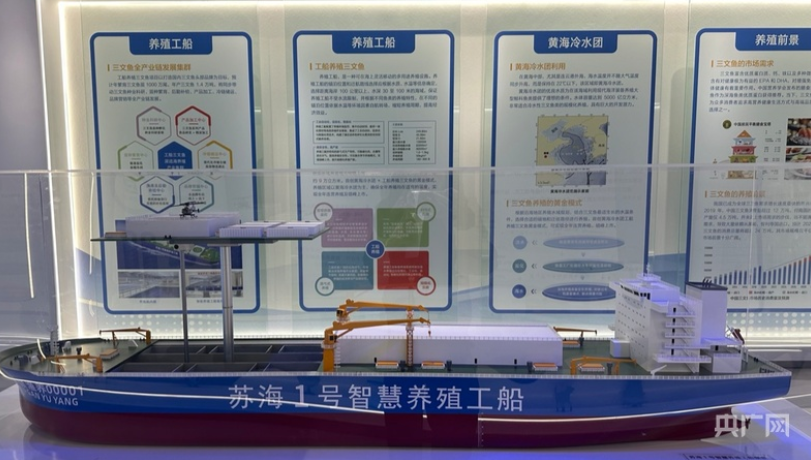
Group 1 - The core narrative of China's coastal line is shifting from "scale growth" to "quality upgrade" in the marine economy, injecting strong momentum into the construction of a marine power [1] - Marine aquaculture is the cornerstone of the marine economy, evolving from nearshore farming to smart ocean ranching, aiming for a win-win in ecological and economic benefits [2] - The "Suhai No. 1" self-propelled closed aquaculture vessel in Jiangsu Lianyungang is expected to produce 8,000 tons of salmon annually, marking a shift away from traditional weather-dependent farming [3] Group 2 - Technological empowerment is transforming aquaculture from "experience-driven" to "data-driven" decision-making, enhancing product quality and sustainability [5] - The ecological priority is essential for sustainable industry development, as demonstrated by the restoration of tidal flats in Liaoning, leading to increased natural resource yields [7] - Under the "dual carbon" goals, marine energy is transitioning from a supplementary energy source to a primary one, with offshore wind power leading globally in grid-connected capacity for five consecutive years [8] Group 3 - The synergy between ports, industries, and culture is driving the high-quality development of the marine economy in coastal areas, with significant growth in cargo throughput in Ningde and the establishment of wind power manufacturing clusters in Guangdong [10] - Cultural tourism integration is enhancing the human touch of ports, with innovative projects revitalizing local economies and attracting youth entrepreneurship [12] - The concept of "urban-rural symbiosis" is ensuring that marine economic benefits reach the populace, exemplified by local fishermen transitioning to tourism roles [13]

守望那片湛蓝——连云五年,向海图强
Yang Zi Wan Bao Wang· 2025-12-29 08:45
Core Insights - Lianyungang District has achieved significant progress during the "14th Five-Year Plan" period, focusing on maritime development despite a challenging environment [1] Maritime Economy - The district has successfully implemented innovative aquaculture practices, such as "rotational farming" of various seafood, which has increased production and transformed traditional fishermen into modern aquaculture practitioners [3] - Over 600 million yuan has been invested in marine projects, resulting in an annual production of over 100,000 tons of oysters, enhancing the local seafood supply chain [3] Port and Logistics - The port serves as a vital hub for international logistics, with significant investments in infrastructure and innovative reforms, such as standardized transactions for second-hand containers [6] - More than 80 billion yuan has been invested in the region over the past five years, demonstrating a commitment to creating a favorable business environment [6] Urban Development and Quality of Life - The district has seen the addition of approximately 5,200 new educational slots and the establishment of high-quality medical facilities, improving access to education and healthcare [9] - Urban renewal initiatives have included the creation of pocket parks and the renovation of old neighborhoods, contributing to a more livable city [9] Future Outlook - Lianyungang District aims to continue enhancing its maritime economy, deepen reforms, and improve the quality of life for residents, positioning itself for higher quality development [10]
辽宁借力AI打造海洋产业金融风险防控体系
Xin Lang Cai Jing· 2025-12-28 19:25
Core Viewpoint - Liaoning Province's "14th Five-Year" plan positions the marine economy as a strategic pillar for revitalizing Northeast China, focusing on "quality improvement, capacity expansion, and potential tapping" to build a modern marine industry system [1] Group 1: Marine Industry Development - The development of the "Old, Original, and New" marine industry cluster in Liaoning is crucial for implementing provincial strategies, with traditional industries needing upgrades, advantageous industries requiring consolidation, and emerging industries rapidly rising [1] - Provincial financial policies are directed towards key areas such as technology, green finance, and digital finance to guide resource aggregation [1] Group 2: Financial Risks in Marine Industries - The risks associated with "Old" industries are deeply linked to ecological environments, where overfishing can lead to ecological degradation and stricter regulations, threatening the legitimacy and asset value of related enterprises [2] - The core risk for "Original" industries lies in the urgency and uncertainty of transformation, particularly under the "dual carbon" goals, where significant investments in green technology are required [2] - "New" industries face risks from their technological forefront and social sensitivity, where inadequate consideration of community impacts can lead to project delays and cost overruns [2] Group 3: AI Applications in Risk Management - Traditional risk control methods are insufficient against complex risks, while AI can enhance financial risk control systems through data processing, pattern recognition, and predictive capabilities [3] - AI can create an intelligent monitoring and early warning system by integrating diverse real-time data sources, enabling dynamic assessments of ecological loads and potential pollution risks in marine industries [3] - AI facilitates precise pricing and innovation of sustainable financial products by constructing detailed ESG risk profiles, allowing for differentiated pricing based on environmental performance [4] Group 4: Collaborative Ecosystem for Sustainable Development - The application of AI in marine financial risk control requires a collaborative ecosystem involving multiple stakeholders, including government, industry associations, research institutions, and key enterprises [6] - Establishing a data foundation is essential, with a focus on creating standards for ESG data collection and sharing to support AI model development [6] - Cross-sector collaboration is encouraged to develop specialized AI risk control models and solutions, emphasizing the need for talent skilled in both marine industry dynamics and data science [6] Group 5: Regulatory Innovations - Financial regulatory bodies should adopt regulatory technology to enhance monitoring of marine-related financial products and social risks, exploring AI applications through regulatory sandboxes [7] - Policy incentives and standards should guide the responsible development of AI in marine finance, ensuring alignment with sustainable development goals [7]
江苏连云港:向海图强,“蓝色引擎”动力澎湃
Xin Lang Cai Jing· 2025-12-21 19:39
Core Insights - The successful docking of the 400,000-ton vessel "Yuan Shi Hai" at Lianyungang Port marks a significant milestone, enabling night-time operations and enhancing the port's shipping efficiency and competitiveness [1] - Lianyungang is transforming from a traditional port to an international hub, facilitating trade and logistics for Central Asian countries, with a notable increase in cargo throughput and container volume [2] - The marine industry in Lianyungang is experiencing rapid growth, driven by technological innovations and the emergence of new strategic industries, including advanced aquaculture and renewable energy projects [3] - The development of coastal tourism is flourishing, with a significant increase in visitor numbers, supported by ecological protection and restoration efforts that enhance the region's natural resources [4] Group 1: Port Operations - Lianyungang Port achieved its first-ever night-time docking of a fully loaded 400,000-ton vessel, enhancing operational efficiency [1] - The port's total throughput increased from 252 million tons and 4.8 million TEUs at the end of the 13th Five-Year Plan to 346 million tons and 6.69 million TEUs projected for 2024, with a year-on-year growth of 6.89% in the first ten months of this year [2] Group 2: Marine Industry Development - The marine industry is evolving with significant advancements, including the launch of the "Deep Blue" Antarctic krill fishing vessel and the world's first self-propelled closed salmon farming vessel [3] - Lianyungang has established 39 provincial-level marine innovation platforms, supporting technological advancements in the marine sector [3] Group 3: Tourism and Ecological Development - Coastal tourism has seen a dramatic rise, with visitor numbers increasing from 400,000 in 2022 to 1.9 million in the current year [4] - Ecological protection initiatives have led to the recognition of Lianyungang as a city with dual 5A scenic areas, enhancing its appeal as a tourist destination [4]

场景开放筑平台 新质生产力激活经济新蓝海
Yang Shi Wang· 2025-12-21 11:48
Group 1 - The core viewpoint emphasizes the acceleration of scene cultivation and openness to promote large-scale application of new scenarios, providing a broad experimental field for the development of new productive forces [1] - In 2023, various regions in China have released over a thousand application scenarios in fields such as marine economy and low-altitude economy, which are becoming new drivers for activating new productive forces and expanding economic growth [1] - Guangdong Zhanjiang has recently released 48 comprehensive marine economy application scenarios with a total investment exceeding 10 billion yuan, covering nine major areas including deep-sea aquaculture and marine low-carbon environmental protection [1] Group 2 - The low-altitude sector is also experiencing rapid development, with Jiangxi Jingdezhen launching four low-altitude cultural tourism routes, allowing tourists to view ceramic culture sites from helicopters, enhancing the cultural tourism experience [1] - The continuous deepening of scene openness is driving rapid expansion of related industries, with the national marine production value reaching 7.9 trillion yuan in the first three quarters of 2025, a year-on-year increase of 5.6% [1] - In the first half of 2025, drones accumulated 24.47 million flight hours, a 149% increase compared to the same period last year [1] Group 3 - Mechanism innovation is being implemented to support scene openness, with Guangdong establishing a marine economy scene innovation center and Chengdu setting up special funds for scene application [1] - The future focus will be on deepening scene cultivation and openness, addressing core technology bottlenecks, and improving infrastructure shortcomings to transform more new scenarios into new industries and new driving forces [2]
绿色资源变“绿色财富” 多元“借绿生金”路径助力百姓“点绿成金”“点海成金”
Yang Shi Wang· 2025-12-17 07:36
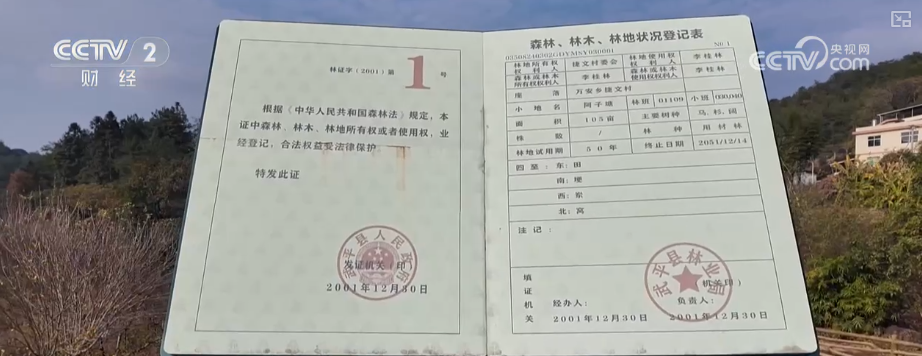
Group 1 - The central economic work conference emphasizes the need to adhere to "dual carbon" goals, promote comprehensive green transformation, strengthen the national carbon emission trading market, and implement the integration and optimization of natural protected areas [1] - Fujian Province is actively exploring pathways for realizing the value of ecological products and continuously promoting forestry carbon sink development through collective forest rights system reform and participation in carbon trading market construction [1][3] - The collective forest rights system reform in Wuping County has led to increased enthusiasm among farmers for managing their own forests, transforming resources into assets and assets into capital [3][8] Group 2 - The forest coverage rate in Wuping County has increased by 2.9 percentage points to 79.7% compared to before the reform, with 388 demonstration bases for under-forest economy established, covering over 1.6 million acres [8] - The new equity-type forest ticket system has become popular, with three batches sold out within 100 days, allowing farmers to use forest tickets for collateral and receive guaranteed returns [8][10] - The total output value of the forestry industry in Fujian Province is projected to reach 812.1 billion yuan in 2024, with a year-on-year growth of 6.1%, ranking among the top in the country [14][34] Group 3 - The integration of offshore photovoltaic power generation and ecological aquaculture in Dongshan County has led to a 14.1% increase in the proportion of clean energy generation, alleviating local power supply pressure [24] - The offshore photovoltaic project is expected to reduce carbon emissions equivalent to that of a small traditional thermal power unit annually, and has secured a biodiversity-friendly loan of 10 million yuan [26] - Fujian Province's green loan balance reached 1.3 trillion yuan by the end of the third quarter, growing by 15.7% compared to the beginning of the year, significantly higher than the average growth rate of all loans [26][34]
“十四五”时期珠海外贸进出口总额累计突破1.5万亿元
Nan Fang Ri Bao Wang Luo Ban· 2025-12-15 07:44
Group 1 - During the "14th Five-Year Plan" period, Zhuhai's industrial investment increased by over 60%, with the total industrial output value exceeding 500 billion yuan and 600 billion yuan consecutively [1] - The total foreign trade import and export volume reached over 1.5 trillion yuan, with cross-border e-commerce import and export scale growing at an annual rate of over 100% [1] - R&D expenditure in Zhuhai increased by over 80%, with the number of invention patents per 10,000 people doubling and the number of high-tech enterprises growing by over 40% [1] Group 2 - Over the past five years, Zhuhai has focused on the "Macau + Hengqin" new positioning, with over 30,000 Macau residents and more than 7,600 Macau-funded enterprises settling in Hengqin [2] - The Zhuhai port of the Hong Kong-Zhuhai-Macao Bridge has seen nearly 100 million passenger trips, with an import and export value exceeding 1.2 trillion yuan, highlighting the "Golden Passage" effect [2] - Zhuhai's foreign investment enterprises account for 9.67% of the total number of enterprises, and the city's major open platforms have continuously improved their capabilities [2]
向海图强,青春作答
Ren Min Wang· 2025-12-12 12:06
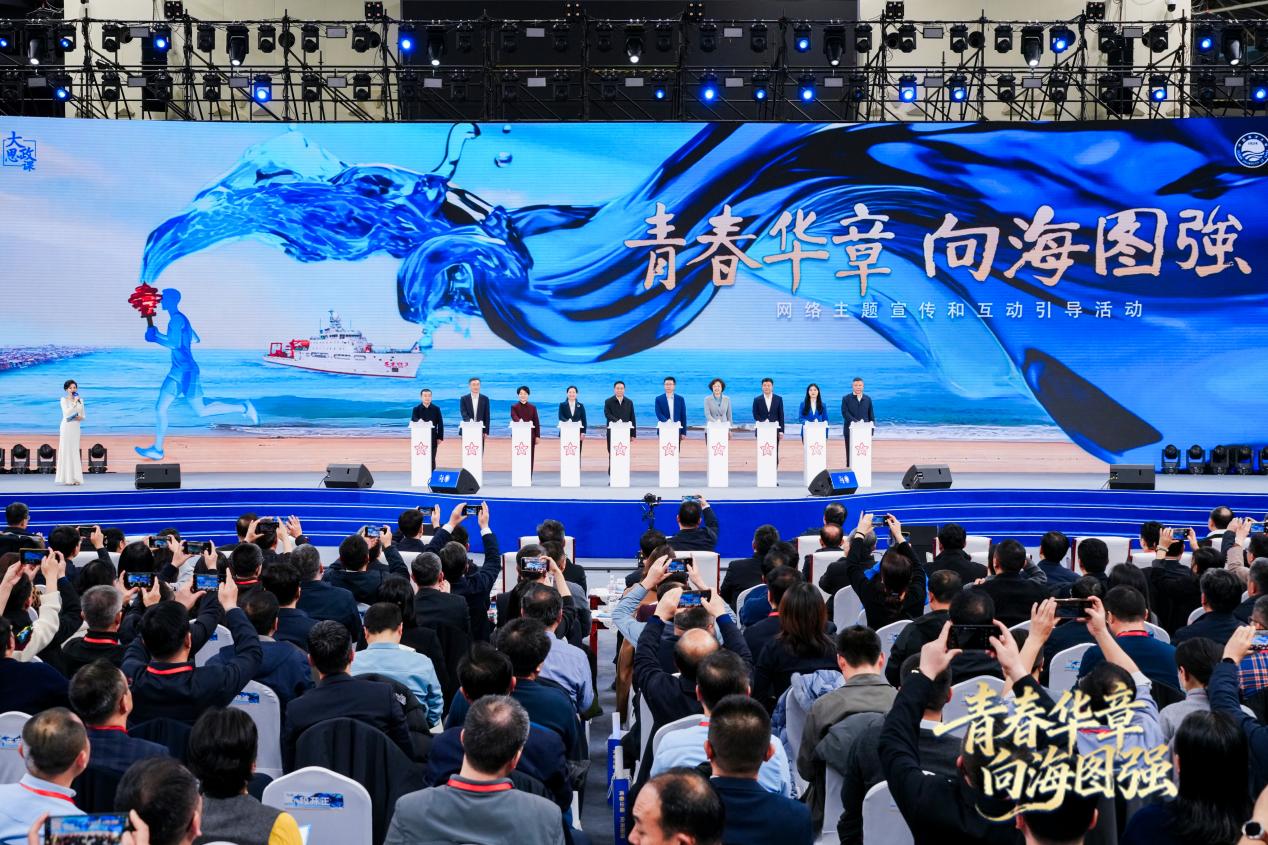
潮涌东方,激荡时代强音。12月10日,一场别开生面的"大思政课"在中国海洋大学拉开帷幕。由中央网信办网络传播局指导的"青春华章 向海图强"大思政 课网络主题宣传和互动引导活动,将思政课堂从校园延伸到蔚蓝深海,从历史纵深铺展至时代前沿。 这不仅仅是一堂课,更是在经略海洋、建设海洋强国的国家战略背景下,对新时代青年使命的深刻叩问与集体动员。它将个人理想、大学精神与国家发展熔 铸一体,在历史与现实的交响中,展开一幅向海图强的青春画卷。 百年问道:红色根脉与蓝色梦想的交响 "天下之水,莫大于海。"中国海洋大学党委书记李明在开篇致辞中说,从党的十八大吹响建设海洋强国的号角,到党的二十届四中全会将"加强海洋开发利 用保护"作为重要部署,海洋强国战略已深度融入中国式现代化进程。 当前,全国海洋生产总值突破10万亿元,完整产业体系逐步形成;"深海一号""深蓝1号"等大国重器彰显创新实力;红树林、珊瑚礁等典型生态保护卓有成 效;与50多个国家和地区建立的蓝色伙伴关系,更展现了中国共建海洋命运共同体的全球视野……这一切,共同勾勒出中国从海洋大国迈向海洋强国的壮阔 图景。 中国海洋大学,这所"以海为魂、与国同运"的百年学府,其命运 ...