
高铁建设

Search documents
视频丨上天入海、突破极限 2025大国工程实现重大跨越
Xin Lang Cai Jing· 2025-12-31 13:46
Group 1 - The opening of the Xi'an to Yan'an high-speed railway marks a significant milestone, pushing China's high-speed rail operational mileage to over 50,000 kilometers, enhancing convenience for citizens and boosting industrial development [1] - The completion of the Uwei Expressway reduces travel time from Urumqi to Korla from 7 hours to 3.5 hours, facilitating the timely market entry of seasonal products like Korla pears [3] - The Guizhou Huajiang Gorge Bridge, measuring 2,890 meters in length and 625 meters above water, drastically cuts travel time from over two hours to just two minutes, showcasing engineering advancements [5] Group 2 - The "artificial sun," a superconducting tokamak nuclear fusion experimental device, achieved a world record of 100 million degrees Celsius for 1,000 seconds, indicating a major leap from basic science to engineering practice in fusion energy research [7] - The Jiangmen neutrino experiment successfully completed the infusion of 20,000 tons of liquid scintillator and is now operational, becoming the world's first large-scale, high-precision neutrino facility [8]


高质量发展铺就幸福路
Xin Lang Cai Jing· 2025-12-28 06:03
Group 1 - The recent focus on high-quality development across various regions is creating new practices and improving livelihoods, paving the way for a happier society [1] - The full operation of the Baotou-Yinchuan high-speed railway significantly enhances travel convenience for local residents and injects strong momentum into the new pattern of western development [3][5] - The Kunming Technology City, co-built by Kunming Economic and Technological Development Zone and Shanghai Lingang Group, aims to develop advanced manufacturing, biomedicine, high-end service industries, industrial internet, and new materials [7] Group 2 - The technology city not only attracts physical manufacturing enterprises but also gathers digital economy companies, with half of the introduced enterprises coming from eastern regions [9] - In Chongqing's Fengjie County, local farmers are utilizing professional live-streaming platforms to sell their oranges directly to consumers, effectively addressing sales challenges [11] - Local officials and farmers have become "local anchors," reducing sales costs and enhancing consumer trust, injecting new vitality into this pillar industry [13] Group 3 - A smart elderly care system is currently operational on Huanggua Island in Putian City, creating an invisible safety net for this isolated community [15] - The integration of 5G and IoT technologies is transforming elderly care from reactive to proactive measures, enhancing the quality of life for residents [17] - The comprehensive approach to infrastructure empowerment, industrial upgrading, rural revitalization, and livelihood security showcases the tangible benefits of high-quality development [19]
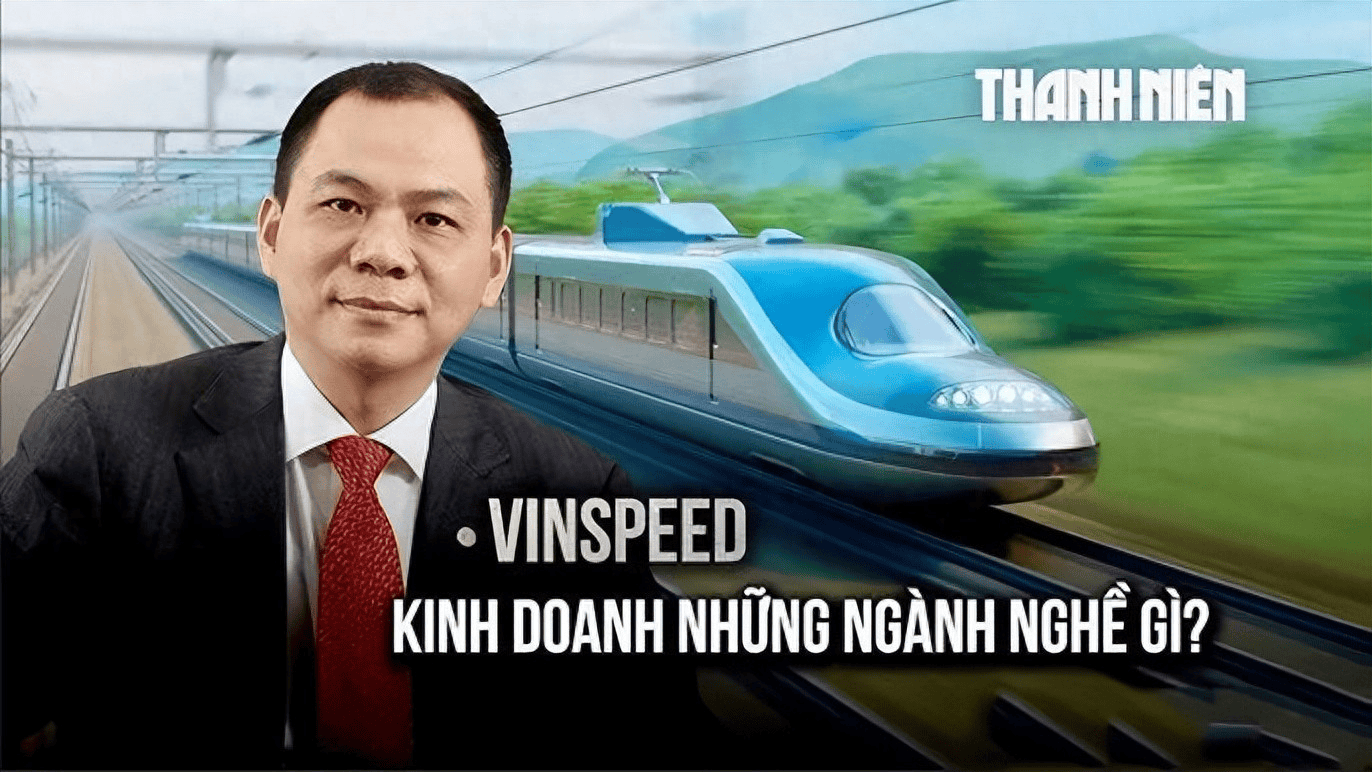
南北高铁8天梦碎,越南首富紧急撤回投资,这个天坑谁接谁破产
Sou Hu Cai Jing· 2025-12-28 03:19
Core Insights - The recent withdrawal of Vingroup from the Vietnam North-South High-Speed Rail project has raised significant concerns about the project's future viability and has introduced a high level of uncertainty in the region's infrastructure development [1][5][6] Project Background - The Vietnam North-South High-Speed Rail project was proposed in 2005 with the aim of enhancing regional economic activity and promoting coordinated development between the north and south of Vietnam [1][3] - Initial collaboration attempts with Japan failed due to high budget estimates and disagreements over technology transfer [1][3] Recent Developments - After multiple failed negotiations, a new plan was introduced in 2021, led by Vingroup and Long Hai Group, with hopes of leveraging German Siemens' technology to overcome previous challenges [3][5] - Vingroup's recent decision to withdraw investment, just eight days after signing a strategic cooperation agreement with Siemens, has dashed hopes for the project's realization [1][5] Market Dynamics - The challenges facing the high-speed rail project are not merely financial or technical but stem from a fundamental misalignment with market logic and economic realities [3][5] - The competitive landscape of Vietnam's aviation sector, dominated by low-cost carriers, presents a significant disadvantage for high-speed rail, which has high operational costs and ticket prices [3][5] Financial Considerations - The total investment required for the North-South High-Speed Rail project is estimated at $67 billion, which is nearly 90% of Vietnam's projected fiscal revenue for 2025, posing a substantial financial burden on the economy [5][6] - Vingroup's decision to withdraw is seen as a pragmatic response to the project's inherent risks, rather than a reflection of financial distress [5][6] Future Outlook - With Vingroup's exit, the North-South High-Speed Rail project is likely to face further delays, and its future remains uncertain [6][7] - Experts emphasize the importance of aligning infrastructure projects with market demand and caution against pursuing ambitious projects without a clear understanding of economic viability [6][7]
经济大省冲刺年度收官 全力以赴挑大梁
Zheng Quan Ri Bao Wang· 2025-12-25 02:59
Group 1 - Economic provinces are playing a crucial role in stabilizing and advancing economic growth, focusing on high-quality development through measures such as promoting consumption, expanding investment, and fostering emerging industries [1][3] - The "Guangdong Enjoys Warm Winter" consumption season will run from November 1, 2025, to March 31, 2026, with a budget of 3.5 billion yuan allocated for consumer vouchers to stimulate spending [1] - Major infrastructure projects are being accelerated, including the Chengdu-Dazhou-Wanzhou high-speed railway and significant water resource projects in Guangdong [1] Group 2 - The "Guangdong Provincial National Digital Economy Innovation Development Pilot Zone Construction Plan (2025-2027)" aims for the digital economy's core industry value-added to exceed 16% of GDP by 2027, with a target annual growth rate of over 15% for the data industry [2] - The plan also sets a goal for the artificial intelligence core industry to surpass 440 billion yuan and for over 60,000 industrial enterprises to undergo digital transformation [2] Group 3 - Economic provinces are expected to balance immediate actions with long-term development strategies, focusing on expanding domestic demand and optimizing economic structure to foster new growth drivers [3][4] - The central economic work conference emphasized the importance of supporting economic provinces in their role as a pillar of the national economy, highlighting their capacity to drive innovation and reduce regional disparities [3]
陕西深入推进重点项目建设
Shan Xi Ri Bao· 2025-12-01 22:44
Group 1 - The core viewpoint emphasizes the significant progress in major infrastructure projects in Shaanxi, which are crucial for driving economic and social development [3][4][5] - Key projects include the completion of the Xi'an to Shiyan high-speed railway and the ongoing construction of the Hanzhou-Mei Expressway, which is expected to enhance regional transportation [6][7] - The Shaanxi government has established a task force to ensure the timely progress of these projects, resulting in a stable increase in fixed asset investment, with a 2.9% growth in the first three quarters, surpassing the national average [7][13] Group 2 - The Shaanxi Coal Group's Yulin Chemical project is advancing, utilizing local coal resources to produce high-value materials, with an expected annual revenue of 134 billion yuan and profits exceeding 30 billion yuan [4][5] - The establishment of the PepsiCo production base in Shaanxi, with an investment of approximately 1.3 billion yuan, showcases the region's commitment to attracting high-quality projects and enhancing production capabilities [8][9][10] - The province has implemented reforms to streamline project approvals, significantly reducing the time required for necessary permits, thus fostering a more conducive environment for investment [12][13] Group 3 - Shaanxi's focus on attracting investment and developing key industrial chains has led to the establishment of numerous high-quality projects, contributing to the province's economic growth [14][16] - The province has seen a 7% increase in social capital investment, with private investment growing by 9.8%, indicating a robust investment climate [15] - The government has secured substantial funding for project construction, including 23.52 billion yuan from central budget investments, which is a record high, ensuring financial support for ongoing and future projects [17]


49.2%、500万、259.6万,利好积聚!多角度“数”看中国经济稳中有进
Yang Shi Wang· 2025-12-01 03:46
Group 1 - The Purchasing Managers' Index (PMI) for China's manufacturing sector in November is reported at 49.2%, an increase of 0.2 percentage points from the previous month, indicating a stabilization in manufacturing exports and an overall recovery in demand [3] - The production index for November stands at 50%, reflecting a rise of 0.3 percentage points from the previous month, with the equipment manufacturing, high-tech manufacturing, and consumer goods manufacturing sectors all remaining in the expansion zone [6] Group 2 - The Western Land-Sea New Channel has shipped over 5 million TEUs (Twenty-foot Equivalent Units) since its inception in 2017, with a significant year-on-year increase of 55.3% in shipments since 2025 [9] - The Ningbo-Zhoushan Port has achieved a container sea-rail intermodal business volume of 1.85 million TEUs in 2025, surpassing the total volume for the entire year of 2024, with a year-on-year growth of 9% [13] Group 3 - The entry and exit personnel at the Erenhot port in Inner Mongolia have reached a historical high of 2.596 million since 2025, marking a year-on-year increase of 9.2% [15] - The construction of the Qixingping Tunnel, the second longest tunnel of the Xiangyu High-speed Railway, has progressed to 80%, with a total excavation length exceeding 11,000 meters [17][18]
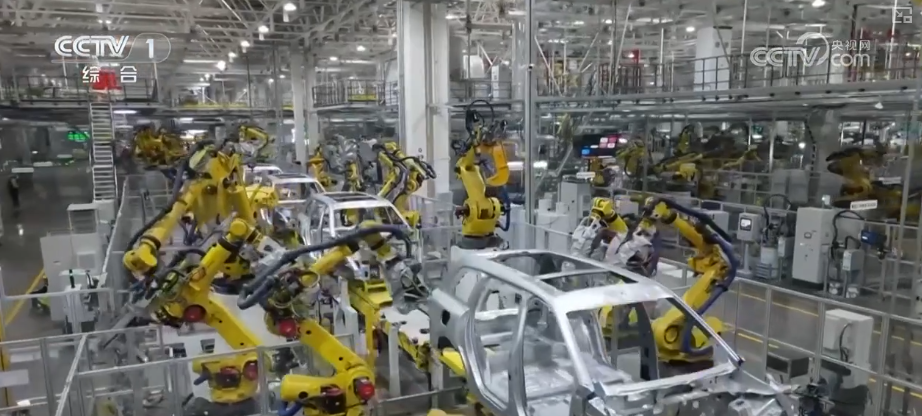
“机器人天团”“智能利器”加持重大工程建设 科技突破为经济发展注入“硬核”动力
Yang Shi Wang· 2025-10-26 03:58
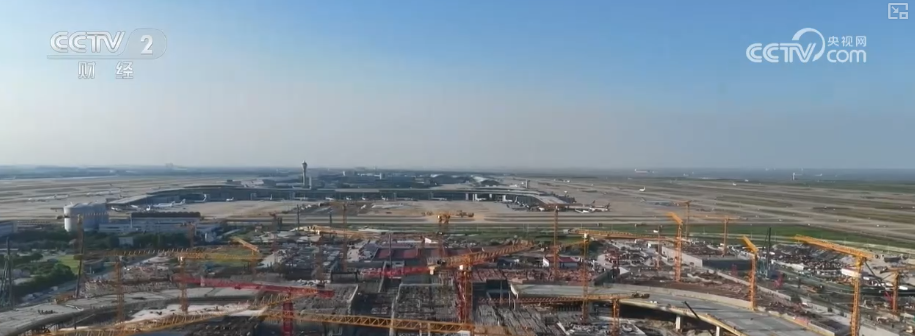
Core Insights - Shanghai is accelerating the establishment of a globally influential technology innovation hub, with significant breakthroughs injecting strong momentum into high-quality economic and social development [1] Group 1: Shanghai Pudong Airport Expansion - The fourth phase of the Pudong Airport expansion is under rapid construction, utilizing a team of over 100 robots to enhance construction speed and efficiency [3] - Three robots, referred to as the "three brothers" of concrete pouring, play a crucial role in the construction phase, achieving a height error control within 5 millimeters [5] - The robots utilize infrared sensors for real-time automatic adjustment of operational parameters, improving the average error from centimeters to millimeters [7] - The total construction area of the fourth phase is 1.96 million square meters, with nearly half of the area employing this robotic combination [7] - The project is expected to be completed by 2028, with the T3 terminal being the core component, involving 37 types of robots and a self-developed construction robot management platform [11] Group 2: Chongming Section of the Huhang Railway - The construction of the Chongming section of the Huhang Railway has made progress with the help of intelligent tools, particularly in the critical Chongtai Yangtze River Tunnel [13] - The Chongtai Yangtze River Tunnel, measuring 14.25 kilometers, is recognized as the highest construction standard, longest excavation distance, and largest scale world-class high-speed rail underwater tunnel [15] - Advanced technologies such as intelligent tunneling have enabled the "Navigator" shield machine to overcome significant challenges, including shallow cover starting, long-distance crossing of complex strata, and high water pressure excavation [15]

青岛打造北方高质量发展新增长极
Qi Lu Wan Bao· 2025-09-25 22:27
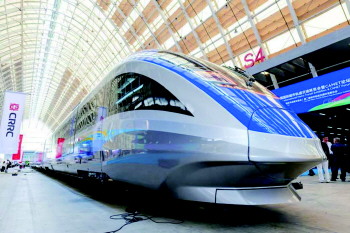
Economic Development - Qingdao's GDP is projected to reach 1,671.95 billion yuan in 2024, with a growth rate of 5.7%, ranking second among national sub-provincial cities [2] - The city is focusing on urban agglomeration construction to break administrative barriers and reshape the regional economic landscape, aiming for high-quality development in northern China [2] Transportation Infrastructure - Qingdao is enhancing its transportation infrastructure to create a "one-hour commuting circle," connecting various cities and significantly reducing travel times [3][4] - The completion of the Laiyong and Weiyang railways has established a high-speed rail network around the Jiaodong Peninsula, facilitating better connectivity [4] - The "Qingdao Urban Circle Transportation Integration Special Action Plan" outlines a comprehensive transportation network, including a high-speed rail and highway system [3][4] Industrial Collaboration - Qingdao is leveraging its central city status to optimize regional industrial layout and promote collaborative development, particularly in the marine economy [5] - The city has seen significant industrial cluster effects, with the shipbuilding and marine engineering industry cluster accounting for over 90% of the province's output [5] - Collaborative projects in virtual reality and automotive supply chains are enhancing cross-city industrial synergies [5] Innovation Ecosystem - Qingdao is fostering an innovation ecosystem through various initiatives, including the establishment of industrial internet platforms and agricultural IoT transformations [6] - The "Chain Ten Thousand Enterprises" platform is facilitating cooperation across multiple industries, enhancing technological collaboration [6] Public Services Integration - The Qingdao urban circle is implementing cross-regional public service integration, allowing for streamlined administrative processes and improved service delivery [7][8] - Initiatives such as the "Cloud Handshake" alliance are enabling efficient handling of business operations across city borders [7] Future Outlook - By 2025, Shandong is expected to become the first province in northern China to reach a GDP of 10 trillion yuan, with Qingdao playing a pivotal role in this transformation [9] - The Qingdao urban circle is redefining regional economic geography through enhanced connectivity and collaborative governance, aiming for a more integrated and competitive economic landscape [9]
印尼混乱经济学:暴动、怒火与热钱
虎嗅APP· 2025-09-18 10:27
Core Viewpoint - Indonesia, as the largest economy in Southeast Asia, faces significant social unrest due to wealth disparity and political centralization, which has led to violent protests and public dissatisfaction with government policies [5][10][12]. Group 1: Economic Overview - Indonesia has a population of 283 million and is the fourth most populous country globally, with a GDP per capita of approximately $4,940.55 in 2023, indicating a moderately high-income level [6][7]. - The country attracted $220.5 billion in foreign investment in 2023, with Singapore and China being the top two sources. Notably, a significant portion of Singapore's investments is from Chinese companies [7][8]. - The Indonesian government aims for an annual GDP growth rate of 8%, although the current rate is around 5% [7]. Group 2: Social Issues - The wealth gap in Indonesia is stark, with the richest 10% controlling 30% to 35% of the national income, while the poorest 40% hold only about 15% [10][12]. - The poverty rate in Indonesia is reported at 68.3% based on a daily consumption threshold, highlighting the significant portion of the population living in poverty [10][12]. - Corruption and centralization of power have historically exacerbated inequality, with the political system being described as one of the most centralized globally [11][12]. Group 3: Trade and Investment - Indonesia's trade history has shaped its culture, with a long-standing tradition of hospitality rooted in commercial interactions [14][15]. - Chinese investments have significantly impacted Indonesia's economy, particularly in sectors like nickel processing and infrastructure development, including the Jakarta-Bandung high-speed rail project [16][17]. - The Indonesian government has implemented reforms to improve the business environment, such as the Omnibus Law, which simplifies regulations and offers tax incentives [18]. Group 4: Future Outlook - The potential for a more developed Indonesia hinges on balancing social unrest with economic growth, as the country navigates its path towards becoming the fifth-largest economy by 2045 [7][18]. - The presence of Chinese enterprises in Indonesia is seen as both a risk and an opportunity, with their investments playing a crucial role in the country's development trajectory [18].

“1小时高铁圈”今年底成型,汉襄宜“金三角”含金量有多高
Di Yi Cai Jing· 2025-08-20 07:47
Core Insights - The formation of a "1-hour high-speed rail circle" among Wuhan, Xiangyang, and Yichang is expected to enhance the integrated benefits of the Han-Xiang-Yi "Golden Triangle" as the Han-Yi and Xiang-Jing high-speed rail lines are set to be completed by the end of this year [1] - Hubei has achieved its economic growth target for the 14th Five-Year Plan a year ahead of schedule, with a total economic output surpassing 6 trillion yuan, increasing its share of the central region's economy from 19.5% at the end of the 13th Five-Year Plan to an expected 20.9% by 2024 [1] Economic Development - The Wuhan metropolitan area has successfully addressed 32 bottleneck roads, establishing a dual hub for air passenger and cargo transport between Ezhou Huahu Airport and Wuhan Tianhe Airport, and is advancing the Optoelectronic Information Industry to a trillion-yuan scale [2] - By 2024, the economic output of the Wuhan metropolitan area is projected to reach 3.6 trillion yuan, increasing its share of the Yangtze River middle reaches urban agglomeration to 29% [2] Regional Collaboration - Wuhan is enhancing cooperation with other central provincial capitals such as Changsha, Hefei, and Nanchang in transportation, technology, industry, and public services [2] - The Xiangyang metropolitan area has seen its economic output jump from 500 billion yuan in 2021 to 600 billion yuan in 2024, ranking among the top non-provincial cities in Central China [3] Industrial Growth - Xiangyang is developing a collaborative automotive industry cluster with Wuhan, Shiyan, and Suizhou, while also establishing a national-level phosphate chemical circular industry cluster with Yichang, Jingmen, and Jingzhou [4] - Yichang is focusing on ecological and green development, with its GDP reaching 619.1 billion yuan, making it the top non-provincial city in Central China [4] County-Level Economic Development - Hubei has increased its number of top 100 counties to 8, ranking 4th nationally, with a breakthrough in the number of counties achieving a GDP of over 100 billion yuan [5] - The urbanization rate of the county's permanent population has reached 56.7%, an increase of 3.44 percentage points from the end of the 13th Five-Year Plan [5]