智能制造

Search documents
数据彰显活力 共振效应显现资本市场服务新质生产力打开新空间
Xin Lang Cai Jing· 2026-01-20 20:57
Core Insights - China's economy is exhibiting a clear characteristic of "moving towards new" with the continuous development of new productive forces, indicating a rapid formation of a virtuous cycle among technology, industry, and finance [1][5] Economic Performance - In 2025, China's R&D expenditure intensity reached 2.8%, surpassing the OECD average for the first time, with total R&D spending amounting to 39,262 billion yuan [2] - China ranked in the top ten globally for innovation index and became the first country with over 5 million valid domestic invention patents [2] - The production value of high-end equipment, green energy, and smart manufacturing sectors is increasing, with the added value of high-tech manufacturing reaching 17.1% of total industrial added value [3] Capital Market Dynamics - By the end of 2025, the market capitalization of the ChiNext and STAR Market accounted for 14.49% and 9.53% of the total A-share market, respectively, showing significant growth from 2020 [4] - High-tech industries, particularly in manufacturing and technology services, saw substantial market capitalization increases of 33.3% and 32.1%, respectively [4] - The technology electronics sector surpassed the banking sector to become the largest sector in the A-share market, reflecting a shift in economic structure towards high-tech and emerging industries [4] Relationship Between Capital Market and Economic Development - The relationship between the capital market's structural changes and the new productive forces is characterized by a dynamic coupling that enhances both sectors [5][6] - The capital market serves as a "multiplier" and "incubator" for new productive forces, providing lifecycle capital support through a unique mechanism of risk-sharing and benefit-sharing [6] Future Outlook for Capital Market - The China Securities Regulatory Commission aims to enhance the inclusiveness and adaptability of the multi-tiered equity market to better serve high-quality development [7] - Reforms in 2026 will focus on improving institutional adaptability and creating a new framework that attracts quality capital through high-level innovation [8][9] - Emphasis will be placed on fostering a market ecosystem that supports long-term capital investment and encourages innovation through improved disclosure and governance practices [9]
宁波均普智能制造股份有限公司关于中期票据和短期融资券获准注册的公告
Xin Lang Cai Jing· 2026-01-20 19:54
Core Viewpoint - Ningbo Junpu Intelligent Manufacturing Co., Ltd. has received approval for the registration of medium-term notes and short-term financing bonds, with a total issuance amount not exceeding RMB 800 million [1][2]. Group 1 - The company plans to issue up to RMB 800 million in medium-term notes and up to RMB 800 million in short-term financing bonds, with the total issuance amount not exceeding RMB 800 million [1][2]. - The registration for the medium-term notes and short-term financing bonds is valid for two years from the date of the acceptance notice issued by the trading association [2]. - Zheshang Bank Co., Ltd. will act as the lead underwriter for the issuance of these bonds [2]. Group 2 - The company will consider its funding needs and market conditions to determine the timing of the bond issuance within the registration validity period [2]. - The company is required to disclose the issuance results through channels recognized by the trading association after the completion of the issuance [2]. - The company will comply with relevant laws, regulations, and self-regulatory management rules during the issuance process [2].

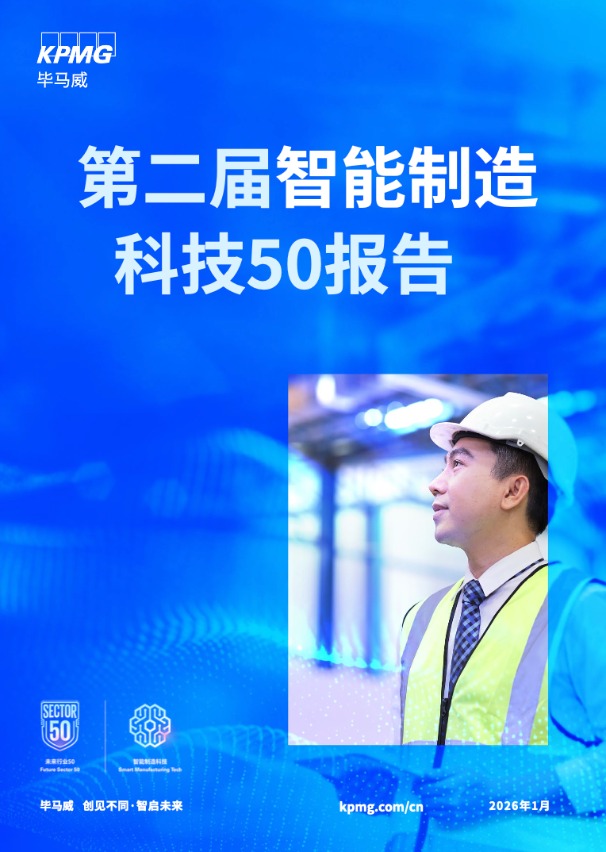
工业大模型已成智能化转型的核心引擎 毕马威“智能制造科技50”报告解码行业演进路径
Zhong Guo Jing Ying Bao· 2026-01-20 17:42
Core Insights - China's manufacturing industry is at a historical intersection of the "14th Five-Year Plan" and a deep restructuring of the global industrial landscape, with smart manufacturing as a key driver for transformation and upgrading [1] - The "14th Five-Year Plan" emphasizes the need for technological upgrades, promoting digital transformation in manufacturing, and developing smart, green, and service-oriented manufacturing [1] Group 1: Smart Manufacturing Trends - The "Smart Manufacturing Technology 50" selection aims to identify leading companies in the smart manufacturing sector, covering areas such as industrial IoT, smart manufacturing, intelligent robotics, and specialized "little giant" enterprises [3] - The evaluation process involves a rigorous assessment system and multiple rounds of expert reviews to select the most innovative and growth-oriented companies [3] Group 2: Industry Dynamics - Over 70% of the selected companies are from the smart manufacturing and intelligent robotics sectors, with nearly half being growth-stage companies established 6-10 years ago [4] - The report highlights a shift in the manufacturing industry towards high efficiency, intelligence, and sustainable development, particularly in the automotive sector, which is experiencing deep integration of electrification and intelligence [4] Group 3: Future Projections - The report identifies six major trends for smart manufacturing development by 2030, including the role of industrial large models as a core engine for intelligent transformation and the emergence of a "human-machine symbiosis" ecosystem [4] - The Chinese industrial robot market remains the largest globally, with collaborative robot shipments exceeding 40,000 units, indicating a shift towards more complex operational environments [5] - Companies that can integrate perception, decision-making, execution, and feedback into a cohesive system will define the competitive landscape of smart manufacturing by 2030 [5]

芯报丨伟腾半导体通过江苏省省级专精特新中小企业认定
Xin Lang Cai Jing· 2026-01-20 13:39
Group 1 - Wuyuan Control's wholly-owned subsidiary, Shenzhen Zhuotai Intelligent Robot Co., Ltd., plans to invest 30 million yuan in a fund focused on advanced manufacturing, representing 9.97% of the total fund commitment of 301 million yuan [1] - Suzhou Keda expects a net loss of 320 million to 480 million yuan for 2025, an increase in loss compared to the previous year's loss of 203 million yuan [2][3] - Luochang Technology anticipates a net loss of 75 million to 110 million yuan for 2025, compared to a loss of approximately 55.41 million yuan in the previous year [2][3] - Weiteng Semiconductor has been recognized as a provincial-level specialized and innovative small and medium-sized enterprise in Jiangsu Province [2][3] Group 2 - Thailand's investment promotion committee has approved a joint venture led by ZDT for a PCB project with an investment of 20.7 billion USD [2] - Japan and the US are advancing a 550 billion USD investment plan, with SoftBank's data center project included in the initial list of candidates [2] - Delivery times for certain Apple MacBook Pro models have been extended to two months, indicating a potential upcoming product release [2]



仲量联行:新经济动能支撑深圳办公楼租赁市场韧性
Zheng Quan Shi Bao Wang· 2026-01-20 10:59
Group 1: Shenzhen Grade A Office Market - In 2025, Shenzhen's Grade A office market will see a peak in supply with 15 new projects totaling nearly 1.16 million square meters, the highest level in three years, while the overall vacancy rate will rise by 1.8 percentage points to 26.2% [1] - The rental market is experiencing downward pressure, with new rental prices continuing to decline and lease negotiations increasingly favoring tenants, leading to a year-on-year rental drop of 11.1% [1] - The main drivers of rental demand in Shenzhen are the expansion of the consumer electronics sector, the acceleration of brand internationalization, and the growth of strategic emerging industries such as artificial intelligence and semiconductor [1] Group 2: Logistics and Real Estate Trends - Capital is increasingly flowing into hard technology sectors, fostering the growth of new productive forces, with a resurgence in demand for consumer electronics and accelerated applications of AI driving the need for R&D and operational spaces [2] - Office location decisions are shifting from a single price focus to a comprehensive evaluation of cost-effectiveness, property management, and supporting facilities, benefiting high-quality office spaces in core business districts and emerging areas with mature amenities [2] - Some ongoing and existing office projects are alleviating vacancy pressures by incorporating hotel operations, with high-end hotel average room rates in Shenzhen expected to rise by 5.3% to 1,078 yuan and occupancy rates increasing by 5.9 percentage points to 82.0% [2] Group 3: Hotel Market Insights - The national hotel market is anticipated to experience structural highlights, with the potential expansion of public REITs to commercial real estate by 2026, providing new capital operation and exit channels for mature high-quality hotel assets in Shenzhen [3]
三省“双子星”抢龙头,透视区域经济新格局|城市论
Sou Hu Cai Jing· 2026-01-20 10:23
Group 1: Economic Competition in Northeast China - In 2024, the GDP of Dalian and Shenyang surpassed 900 billion yuan, with Dalian reaching 951.69 billion yuan and Shenyang at 902.71 billion yuan, marking a significant competition for the title of "Northeast Champion" [3] - The gap between Shenyang and Dalian has narrowed to 489.8 billion yuan, with Shenyang showing a growth rate of 6.1% compared to Dalian's 6.0%, indicating a strong catching-up momentum [3][6] - Dalian's economic strength is rooted in its industrial base and port advantages, while Shenyang is leveraging its transportation hub status and rich educational resources to transition towards high-end manufacturing [5][6] Group 2: Economic Dynamics in Southeast China - The competition between Fuzhou and Quanzhou has been ongoing for over 20 years, with Fuzhou recently reclaiming its position as the leading city in Fujian province [7][8] - Fuzhou's economic growth has been bolstered by its digital economy, which exceeded 450 billion yuan, accounting for over 45% of its GDP by 2020 [7][8] - Quanzhou, while facing challenges in traditional manufacturing, is focusing on upgrading its industries and developing strategic emerging sectors such as artificial intelligence and new materials [8] Group 3: Economic Developments in Hebei Province - The competition between Shijiazhuang and Tangshan has lasted for 20 years, with Tangshan initially surpassing Shijiazhuang in GDP due to its strong industrial base [12][13] - In 2024, Tangshan's GDP reached over 1 trillion yuan, while Shijiazhuang's GDP was 820.34 billion yuan, indicating a shift towards a "dual trillion city" dynamic in Hebei [13][15] - Both cities are focusing on integrating with the Beijing-Tianjin-Hebei region and developing new industries, with a shared goal of enhancing their economic growth potential [15][16]

科技企业主导深圳写字楼市场需求,市场竞争预计维持高强度
Di Yi Cai Jing· 2026-01-20 09:31
Core Viewpoint - The overall vacancy rate of Grade A office buildings in Shenzhen rose to 26.2% in 2025, reflecting structural pressures in the market due to high new supply and a transformation in leasing demand from enterprises [1][2] Group 1: Market Overview - The Shenzhen Grade A office market is undergoing structural adjustments, with a "total pressure and structural differentiation" pattern emerging due to high levels of new supply and changes in leasing demand [1] - The technology sector dominates the market demand, accounting for nearly 30% of the transaction area, with the smart manufacturing sector showing particularly active leasing demand [1][2] Group 2: Demand Drivers - The main drivers of new leasing demand in Shenzhen's office market are threefold: expansion in the consumer electronics industry, accelerated overseas branding leading to increased demand for related professional services, and the rapid development of strategic emerging industries like artificial intelligence and semiconductor chips [2] - Approximately 30% of the new leasing demand in 2025 will come from expansions, upgrades, and new establishments in the aforementioned sectors [1] Group 3: Supply and Vacancy Trends - The overall vacancy rate for Grade A office buildings in Shenzhen increased by 1.8 percentage points year-on-year to 26.2% in 2025, indicating further structural pressure [2] - An estimated 1.5 million square meters of new supply is expected to enter the market in 2026, with short-term structural supply-demand contradictions likely to persist, maintaining high competition and pressure on rental prices [2] Group 4: Future Outlook - The demand for office space is anticipated to continue rising due to the recovery in consumer electronics demand and the accelerated application of artificial intelligence, which will drive the expansion of smart manufacturing and consumer electronics companies [2]
康冠科技:公司高度重视机器人与银发经济相结合所带来的发展机遇,并积极布局相关领域
Zheng Quan Shi Bao Wang· 2026-01-20 08:01
Core Viewpoint - The company emphasizes its strong technological foundation and manufacturing capabilities in the smart manufacturing sector, particularly focusing on the integration of robotics and the silver economy [1] Group 1: Company Developments - The company has obtained a total of 7 patents related to the integration of robotics and the silver economy [1] - Future product designs and functional validations will focus on scenarios such as elderly companionship and home care [1] - The company aims to enrich its product matrix of intelligent products that serve the silver economy [1]
盘古智能股价跌5.11%,东证资管旗下1只基金重仓,持有2.6万股浮亏损失4.47万元
Xin Lang Cai Jing· 2026-01-20 05:19
1月20日,盘古智能跌5.11%,截至发稿,报31.95元/股,成交1.20亿元,换手率6.10%,总市值48.07亿 元。 截至发稿,徐习佳累计任职时间6年176天,现任基金资产总规模70.23亿元,任职期间最佳基金回报 62.42%, 任职期间最差基金回报-1.94%。 资料显示,青岛盘古智能制造股份有限公司位于山东省青岛市高新区科海路77号,成立日期2012年7月 23日,上市日期2023年7月14日,公司主营业务涉及集中润滑系统及其核心部件研发、生产与销售。主 营业务收入构成为:润滑系统及配件65.56%,液压系统及配件25.54%,其他业务8.90%。 从基金十大重仓股角度 数据显示,东证资管旗下1只基金重仓盘古智能。东方红量化选股混合发起A(020803)三季度持有股 数2.6万股,占基金净值比例为2.5%,位居第九大重仓股。根据测算,今日浮亏损失约4.47万元。 东方红量化选股混合发起A(020803)成立日期2024年5月21日,最新规模2437.04万。今年以来收益 7.2%,同类排名2721/8848;近一年收益27.26%,同类排名4543/8093;成立以来收益30.12%。 东方红量 ...
厦门炬科启航二期基金启动
FOFWEEKLY· 2026-01-20 04:40
Group 1 - The core viewpoint of the article highlights the successful signing of the Xiamen Juke Qihang Phase II Fund, marking the completion of the first phase and the initiation of the second fund's operations [1] - The Xiamen Juke Qihang Phase II Fund has a scale of 100 million yuan, continuing the strategy of "technology value + industrial synergy" [1] - The fund will focus on strategic emerging industries and future industries, particularly in sectors such as new materials, semiconductors, intelligent manufacturing, and aerospace [1]