
光伏

Search documents
金辰股份称公司生产经营方面不存在应披露而未披露的重大事项
Bei Jing Shang Bao· 2026-01-27 14:13
Core Viewpoint - Jincheng Co., Ltd. (603396) experienced significant stock price fluctuations, with a cumulative increase of over 20% in closing prices over three consecutive trading days, indicating abnormal trading activity [1] Company Summary - On January 27, Jincheng Co., Ltd. closed at the limit-up price of 46.49 yuan per share, resulting in a total market capitalization of 6.44 billion yuan [1] - The company stated that its daily operations are normal and that there have been no significant changes in market conditions or industry policies [1] - Jincheng Co., Ltd. conducted a self-examination and found no media reports or market rumors that could significantly impact its stock price [1] Industry Summary - The recent surge in stock prices within the photovoltaic sector is attributed to speculation surrounding the "space photovoltaic" concept, leading to substantial gains for listed companies in this industry [1]

1个月内3家光伏企业被“追债”上亿元 原因何在
Di Yi Cai Jing· 2026-01-27 13:49
Core Insights - The photovoltaic industry is transitioning from assembly-based growth to a focus on technology, cost, and cash flow, leading to challenges in fulfilling expansion project commitments [1] - Local governments have historically supported the photovoltaic sector through financial subsidies, tax incentives, and land guarantees, but this has led to overcapacity and risks for companies [3][4] Group 1: Company-Specific Developments - *ST Muban (603398.SH) was ordered by the Wuzhou Municipal Government to return a total of 5.1 billion yuan in project financial subsidies and construction support funds due to delays in project construction [1] - Yijing Photovoltaic (600537.SH) faced a similar situation where its project in Chuzhou was at risk of being terminated, with a potential recovery of 140 million yuan from the company due to construction delays [1] - Bangjie Co., Ltd. (002634.SZ) is undergoing pre-restructuring initiated by a state-owned enterprise due to its inability to complete a buyback, leading to a claim of 326 million yuan [2] Group 2: Industry Trends and Challenges - The photovoltaic industry saw a significant boom in 2022, with total output value exceeding 1.4 trillion yuan, a year-on-year increase of over 95%, and production across the supply chain rising by more than 55% [2] - The rapid expansion of the industry has led to overcapacity issues, with calls for production cuts and concerns about excessive local government investment in the sector [4] - The industry is shifting from a phase of scale expansion to one dominated by technology, necessitating a change in local government strategies from providing incentives to selecting viable projects and managing risks [6] Group 3: Recommendations for Future Development - Experts suggest that local governments should transition from "universal subsidies" to "innovation incentives," focusing resources on advanced technologies and mature smart manufacturing enterprises [5] - There is a need for a shift from "administrative intervention" to "market guidance" to create a fair competitive environment and eliminate local protectionism [5] - The central government plans to establish clear guidelines for local governments regarding investment incentives to prevent excessive and inappropriate subsidies [6]


珈伟新能(300317.SZ):公司目前的光储一体化布局和技术暂未涉及太空光伏领域
Ge Long Hui· 2026-01-27 13:46
格隆汇1月27日丨珈伟新能(300317.SZ)在投资者互动平台表示,公司目前的光储一体化布局和技术暂未 涉及太空光伏领域。 ...

黄宏生「折腾」,创维「换挡」
36氪· 2026-01-27 13:39
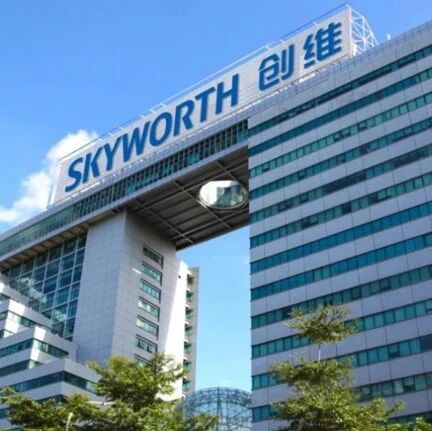
Core Viewpoint - The article discusses the strategic shift of Skyworth Group from traditional home appliances to the rapidly growing photovoltaic (solar energy) sector, highlighting the company's plans for privatization and the potential for significant growth in its solar business [5][9][43]. Group 1: Company Strategy and Actions - Skyworth Group announced plans for privatization and the listing of its solar subsidiary, Skyworth Solar, on the Hong Kong Stock Exchange [9][11]. - The company is implementing a share buyback plan to facilitate this transition, offering shareholders options for cash or shares in the new solar entity [22][23]. - Following the announcement, Skyworth's stock price surged, indicating strong market support for the company's strategic direction [12][25]. Group 2: Performance of Business Segments - Skyworth's traditional home appliance business has shown sluggish growth, with a revenue increase of only 9.4% year-on-year in the first half of 2025 [51]. - In contrast, the solar business has demonstrated remarkable growth, with revenues reaching 119.34 billion yuan in 2022, a 191% increase from the previous year [39]. - Projections indicate that by 2025, the solar business could surpass the revenue of the traditional television segment for the first time [31][42]. Group 3: Historical Context and Future Outlook - The founder, Huang Hongsheng, has a history of attempting to split off successful business units for independent growth, with previous efforts dating back to 2004 [15][19]. - Despite past challenges, including legal issues and market competition, Huang remains committed to pursuing ambitious growth targets, including a goal of achieving 100 billion yuan in revenue [49][50]. - The future of Skyworth's home appliance business remains uncertain, especially after the planned privatization, raising questions about its ability to compete in a challenging market [56].

1个月内3家光伏企业被“追债”上亿元,原因何在
Di Yi Cai Jing· 2026-01-27 13:39
Core Viewpoint - The photovoltaic (PV) industry is facing an oversupply issue starting in the second half of 2023, leading to calls for production cuts and a reevaluation of expansion projects that were previously signed during a period of rapid growth [1][2]. Group 1: Company-Specific Issues - *ST Muban (603398.SH) has been ordered by the Wuzhou Municipal Government to return a total of 510 million yuan in project financial subsidies and construction support funds due to delays in project construction [1]. - Yichin Photovoltaic (600537.SH) announced that its project in Chuzhou faced delays, prompting the local government to issue a notice to terminate the investment agreement and reclaim 140 million yuan [2]. - Bangjie Co., Ltd. (002634.SZ) is undergoing pre-restructuring due to a claim of 326 million yuan from a state-owned enterprise after failing to complete a buyback on time [2]. Group 2: Industry Trends and Government Support - The PV industry saw a total output value exceeding 1.4 trillion yuan in 2022, with a year-on-year increase of over 95%, and production across the supply chain increased by more than 55% [2]. - Local governments have been actively supporting the PV industry through financial subsidies, tax incentives, financing convenience, land guarantees, and industrial guidance, which have played a crucial role in the rapid scaling and technological iteration of the industry [3]. - However, the rapid push for projects has led to an oversight of the risks associated with overcapacity and the financial health of companies involved [4]. Group 3: Recommendations for Future Development - Experts suggest that local governments should shift from "universal subsidies" to "innovation incentives," focusing resources on cutting-edge technologies and mature intelligent manufacturing enterprises [5]. - There is a need for a transition from "administrative intervention" to "market guidance" to create a fair competitive environment and eliminate local protectionism [5]. - The central government plans to establish a list of encouraged and prohibited actions for local governments regarding investment incentives to prevent excessive and inappropriate subsidies [5].
中国消费拉不动的真相,不是没钱,而是不敢承认产能已饱和?
Sou Hu Cai Jing· 2026-01-27 13:11
中国经济这些年表面上看风光无限,GDP数字蹭蹭往上窜,可老百姓的钱包却越来越瘪。不少人抱怨消费拉不动,是因为大家没钱花,其实这话说对了一 半,深挖下去,问题出在产能堆得像山一样高,东西太多卖不出去,却没人愿意直面这个现实。 说起产能饱和,得从地方政府的玩法说起。中国经济过去几十年靠投资和出口拉动,地方政府之间像打比赛一样,比谁的GDP涨得快。最直接的招数就是上 大项目,建工厂,优惠政策一大堆,土地便宜,税收减免,配套设施齐全。 结果呢?同一个行业到处开花,比如光伏、新能源车,沿海到内陆,产业园一个接一个冒出来。供给端像打了鸡血,产能噌噌上涨,可市场需求没跟上,东 西卖不出去,企业只好打价格战,利润薄得像纸。 数据显示,2023年工业产能利用率在75%左右,有些行业更低,这意味着四分之一的产能闲着没事干。企业主一看不对劲,还得继续投钱抢份额,银行贷款 流水般进来,形成恶性循环。 老百姓手里钱有限,基本开支占大头,哪有余力买那些多出来的货?这不是缺钱那么简单,而是整个经济结构偏向生产端,消费端被挤到角落里去了。 工厂天天加班,仓库塞满货,可市场那边冷冷清清,这不就是典型的供给过剩吗?地方上还热衷于建厂拉投资,因为 ...
光伏反内卷攻坚,政企同心方得始终
第一财经· 2026-01-27 13:08
Core Viewpoint - The photovoltaic industry is undergoing a deep reform to combat internal competition, with regulatory measures and policy adjustments reflecting a commitment to high-quality development. However, many companies are still facing significant losses, indicating that this battle is not a short-term fix but a necessary step to resolve structural issues within the industry [2][5]. Industry Performance - Major companies like Tongwei Co., Ltd. and LONGi Green Energy are projected to incur substantial losses in 2025, with estimated net losses of 9 to 10 billion yuan and 6 to 6.5 billion yuan respectively. Other companies such as JA Solar, JinkoSolar, and Trina Solar are also expected to report significant losses, highlighting the severe challenges faced by the industry [2][3]. - The average gross margin for the entire industry is only 3.64%, with many companies trapped in a cycle of "production equals loss" due to oversupply and rising raw material costs [3][4]. Causes of Losses - The industry's performance crisis is primarily attributed to excessive homogenous production capacity and fierce price competition, compounded by soaring raw material costs. The supply of silicon materials is projected to exceed global demand by more than double over the next three years, leading to a significant imbalance [3][4]. - The price of silver, a key material in photovoltaic cells, has surged by 231% in 2025, pushing companies to adopt cost-cutting measures at the expense of technological innovation and quality [4][5]. Recommendations for Improvement - Companies must shift their focus from price competition to technological innovation and quality improvement, investing in advanced battery technologies such as TOPCon, BC, and ABC to enhance efficiency and reduce costs [4][6]. - The industry needs to establish self-regulatory standards to combat unfair competition practices, such as selling below cost and misrepresenting product capabilities, while promoting collaboration among companies to consolidate resources [4][6]. Government Role - Government policies and regulatory actions are crucial for supporting the industry's reform efforts. A unified and clear policy direction is necessary to stabilize market expectations and foster industry consensus [5][6]. - Regulatory bodies should enhance oversight on low-price dumping and set higher energy consumption and environmental standards for mature production stages, while also optimizing bidding rules to prioritize technology and quality over price [5][6]. Future Outlook - The photovoltaic industry is at a critical juncture, with the potential for recovery as companies begin to reduce losses and improve profitability. Analysts suggest that the industry may see a turning point in profitability by early 2026 [6][7]. - A collaborative effort between companies and government is essential to ensure that innovation becomes the cornerstone of industry development, allowing China to transition from a manufacturing hub to a center of innovation in the global energy transformation [7].






光伏大涨昙花一现,马斯克的“太空光伏”是大忽悠吗?
3 6 Ke· 2026-01-27 13:06
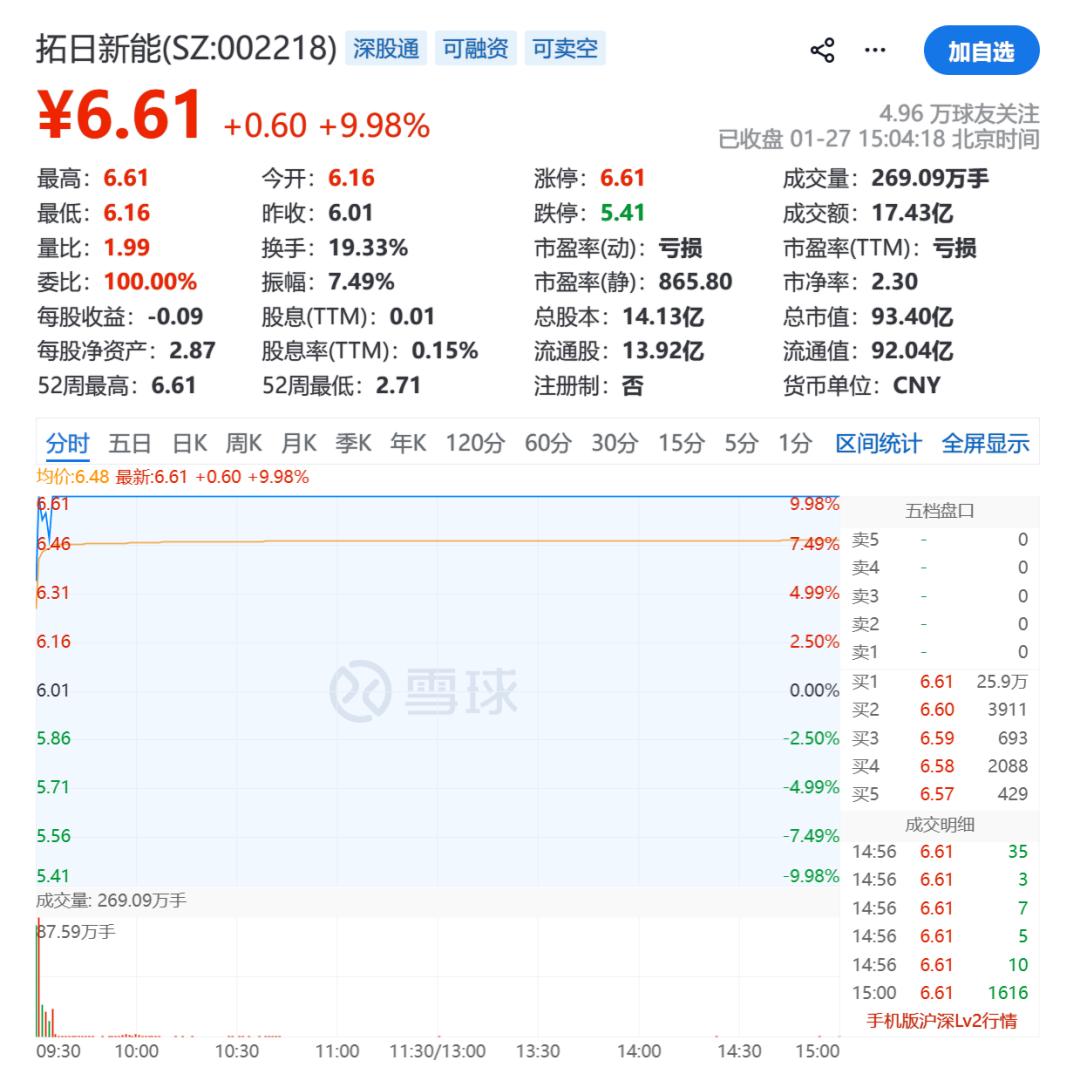
Core Viewpoint - The recent surge in the space photovoltaic sector is driven by optimism surrounding the potential of space-based solar energy, particularly in relation to AI and data centers in space, despite skepticism in overseas communities about its feasibility [1][4][6]. Market Performance - Space photovoltaic stocks experienced a significant increase last week, with stocks like Maiwei Co. reaching new highs, although the overall market sentiment fluctuated [1]. - The trading data for a specific stock shows a peak price of 6.61 CNY, a closing price of 6.01 CNY, and a total market capitalization of 93.40 billion CNY [2]. Influencing Factors - Elon Musk's ambitions to utilize solar energy for AI satellite operations and the acceleration of commercial space ventures are key drivers of market sentiment [4]. - The secondary market is looking for a compelling narrative around photovoltaics, especially after two and a half years of industry losses, which have severely impacted cash flow and net assets of many companies [4]. Market Potential - The potential market for low Earth orbit satellites is projected to reach approximately 29.5 billion CNY by 2030, with the space data center deployment phase potentially generating an annual market of 1.5 trillion CNY [7][9]. - If the space computing demand reaches 100GW, the solar wing market could also approach a trillion CNY, indicating a significant shift in market dynamics [9]. Cost Comparisons - A cost comparison between ground and space data centers shows that the total cost for a space data center is significantly lower, estimated at 8.2 million USD compared to 167 million USD for a ground data center over ten years [11]. Technological Advancements - The unique conditions in space, such as continuous sunlight and efficient cooling, make space photovoltaic systems potentially more effective than ground-based systems [12]. - Companies are exploring advanced materials and technologies, such as P-type HJT and perovskite solar cells, to meet the specific requirements of space applications [18][20]. Industry Dynamics - The space photovoltaic industry is characterized by a competitive landscape where companies are vying for technological leadership and market share, with significant investments in R&D and partnerships [21][24]. - The current state of the industry indicates that while there is enthusiasm for space photovoltaics, the supply chain and operational experience in space applications are still developing [22][25]. Future Directions - The next 3-5 years may see gradual scaling of space photovoltaic applications, with initial tests in low Earth orbit and the development of key materials for large-scale deployment [26]. - The rising silver prices are also a critical factor for the photovoltaic industry, with companies like Aisheng Co. and Longi Green Energy making progress in reducing silver usage [26].
弘元绿能(603185):超薄硅片破茧再造技术基石,光储协同并进点亮未来新篇
Guotou Securities· 2026-01-27 12:57
Investment Rating - The investment rating for the company is "Buy-A" with a 12-month target price of 42.00 CNY, while the current stock price is 29.50 CNY [5]. Core Insights - The company has successfully launched its first batch of 40μm ultra-thin silicon wafers, establishing a solid technological barrier and competitive advantage in the thin wafer sector [1]. - The company has achieved a market share exceeding 70% in the photovoltaic cutting equipment sector and has successfully replaced imported silicon carbide cutting equipment with domestic alternatives, achieving a market share of over 60% [2]. - The company has established a vertically integrated production capacity across the entire supply chain from silicon materials to wafers, batteries, and modules, which has helped it to counteract the severe price fluctuations in the industry and achieve profitability [3]. - The company is expanding its energy storage product matrix, focusing on integrated solar and storage solutions, with products designed for various applications, including residential and commercial energy storage [4]. Financial Performance - The company reported a significant increase in revenue, with a 86% year-on-year growth in Q3 2025, and a net profit of 2.35 billion CNY for the first three quarters of 2025, marking a 114% increase year-on-year [3]. - The projected net profits for 2025, 2026, and 2027 are 2.28 billion CNY, 11.49 billion CNY, and 16.93 billion CNY, respectively, indicating growth rates of 108.4%, 404.6%, and 47.4% [11]. - The company’s revenue is expected to grow from 8.26 billion CNY in 2025 to 12.55 billion CNY in 2026, and further to 15.92 billion CNY in 2027 [12]. Market Position - The company is positioned as a leader in the photovoltaic cutting equipment market, with a strong focus on technological advancements and a significant market share [2]. - The company’s strategic focus on energy storage solutions is expected to enhance its overall business value in response to growing market demand [4].

中泰国际每日晨讯-20260127
ZHONGTAI INTERNATIONAL SECURITIES· 2026-01-27 12:52
Market Overview - The Hang Seng Index rose by 0.1%, while the Hang Seng China Enterprises Index and the Hang Seng Tech Index fell by 0.2% and 1.2%, respectively[1] - International oil and gold prices surged, driven by geopolitical tensions and supply concerns, leading to gains in leading oil and gold stocks[1] - The latest CCL index reported at 145.54, a weekly increase of 0.63%, indicating a recovery in Hong Kong residential prices[1] Economic Indicators - The U.S. durable goods orders for November increased by 5.3%, surpassing Bloomberg's forecast of 3.1% and the previous value of -2.1%[3] - In China, the transaction volume of new homes in 30 major cities reached 1.19 million square meters, a year-on-year decline of 32.3%[3] Sector Performance - The pharmaceutical sector saw most stocks decline, while Junshi Biosciences (1877 HK) rose due to concerns over Nipah virus infections in India[4] - The automotive sector experienced a decline, with January retail sales expected to be around 1.8 million units, a month-on-month decrease of 20.4%[5] - Gold prices reached a new high, surpassing $5,000 per ounce, boosting demand for gold products and leading to gains in related stocks[5]