
电商

Search documents
朝闻国盛:2026年铜价展望:宏观与供需平衡共振,牛市有望加速
GOLDEN SUN SECURITIES· 2025-12-01 00:12
证券研究报告 | 朝闻国盛 gszqdatemark 2025 12 01 年 月 日 朝闻国盛 2026 年铜价展望:宏观与供需平衡共振,牛市有望加速 今日概览 ◼ 重磅研报 【宏观】PMI 连续 8 月处于线下的背后——20251130 【宏观】中央经济工作会议前瞻——20251129 【策略】12 月策略观点与金股推荐——20251130 【策略】一周市场表现与政策事件回顾(11.28 当周)——20251130 【金融工程】风格后续关注高低切——20251130 【金融工程】择时雷达六面图:本周估值面分数略下降——20251129 【固定收益】年末还有抢跑行情吗?——20251130 【固定收益】月末资金平稳,存单继续大幅净偿还——流动性和机构行 为跟踪——20251129 【固定收益】如何看待万科商讨展期对债市冲击——20251128 【海外】海外市场—关注资源品和 AI 应用——20251130 【有色金属】2026 年铜价展望:宏观与供需平衡共振,牛市有望加速— —20251130 【纺织服饰】申洲国际(02313.HK)-坚定长期主义,需求边际改善,龙 头优势凸显——20251130 ◼ 研究 ...
多家大厂驰援香港;阿里、美团、滴滴披露三季度财报|一周未来商业
Mei Ri Jing Ji Xin Wen· 2025-11-30 23:19
E-commerce and New Retail - Alibaba Group donated 20 million HKD following a fire in Hong Kong, while ByteDance and Didi contributed 10 million HKD each. Pinduoduo also donated 10 million HKD and launched a public welfare section for firefighting supplies [1] - Alibaba's Q2 revenue for FY2026 reached 247.8 billion CNY, a 5% year-on-year increase, with cloud revenue growing 34% and AI-related products seeing triple-digit growth for nine consecutive quarters [2] - JD Industrial has received approval for an IPO on the Hong Kong Stock Exchange, with projected revenues of 14.135 billion CNY in 2022, increasing to 20.4 billion CNY in 2024 [3] Logistics and Supply Chain - Jitu Express launched its first industrial-grade automated sorting system in Thailand, improving sorting efficiency by over 100% and achieving a sorting accuracy of over 99% [4] Life Services - Meituan reported a Q3 loss of 14.1 billion CNY in its core local business segment due to irrational competition in the food delivery industry, with expectations of continued losses in Q4 [5][6] - Didi's Q3 order volume reached 4.685 billion, a 13.8% year-on-year increase, with a net profit of 1.5 billion CNY [7] - Taobao Flash Sale announced the cancellation of late fee deductions, expanding to 60 cities, aiming to enhance rider protection and user experience [8] Innovation and Investment - Ruiyun Cold Chain completed nearly 100 million CNY in A+ round financing, focusing on digital capabilities and international expansion [9] - Soul App submitted a listing application to the Hong Kong Stock Exchange, reporting a revenue CAGR of over 15% from 2022 to 2024 and achieving stable profitability since 2023 [10][11]


中国货物供应遇阻,商品涨价影响支出,关税令美国人迎来更昂贵“黑五”
Huan Qiu Shi Bao· 2025-11-30 22:48
Core Insights - The "Black Friday" shopping season in the U.S. has seen record online sales of $11.8 billion, but rising prices and tariffs are dampening consumer demand [1][3] - The average online price of consumer goods has increased by 8% year-over-year, primarily due to tariffs on Chinese imports [4][5] - Consumer sentiment has shifted, with many shoppers prioritizing value and planning to reduce holiday spending due to economic uncertainty [6] Group 1: Sales and Pricing Trends - On "Black Friday," online sales reached a historic $11.8 billion, but the number of items purchased per transaction has decreased compared to last year [1] - Tariffs on Chinese goods have led to significant price increases, with toy prices rising from $20 to several dollars more due to a tax rate increase from 0% to 22% [3] - Despite apparent discounts during "Black Friday," many prices have merely returned to previous levels after earlier increases [3] Group 2: Consumer Behavior and Sentiment - A Deloitte survey indicates that holiday spending in Los Angeles is expected to decrease by 14% compared to last year, driven by pessimism about the economy [6] - Approximately 62% of surveyed consumers believe the economy will worsen in the next year, up from 34% the previous year [6] - Nearly 80% of respondents reported that almost all goods are experiencing price increases, leading to a reduction in planned holiday spending [6] Group 3: Retailer Challenges - Many small retailers are facing inventory shortages during the holiday season due to the impact of tariffs, with some companies opting to stick with Chinese suppliers despite high tariffs [4][5] - The uncertainty surrounding U.S.-China trade policies is forcing retailers to make difficult decisions between paying high tariffs or seeking more expensive alternatives [5] - The National Retail Federation forecasts a slowdown in holiday sales growth to between 3.7% and 4.2%, lower than the previous year's 4.3% [6]


美国“黑五”AI流量暴增600%!销售额同比增4.1%,通胀和“K型经济”依旧是主题
美股IPO· 2025-11-30 22:44
Group 1: Consumer Spending Trends - The current consumption pattern reflects the instability of the macro economy and highlights deep structural contradictions within the U.S. economy, where the wealthy continue to spend lavishly while ordinary families are forced to manage tighter budgets due to rising living costs [1][5] - U.S. retail sales on "Black Friday" showed a robust growth of 4.1% year-over-year, surpassing last year's 3.4% increase, indicating consumer resilience despite high inflation [4] - The overall spending increase is largely driven by rising prices rather than an increase in sales volume, suggesting that consumers are becoming more discerning and cautious in their purchasing decisions [4][11] Group 2: Economic Disparities - The U.S. economy exhibits a clear "K-shaped" trend, where spending among low- and middle-income consumers is declining, while high-income individuals continue to spend on luxury goods and travel [8][9] - Approximately 85% of consumers expect prices to rise further due to anticipated tariffs under President Trump's policies, which adds a psychological burden to their shopping experience [10] Group 3: E-commerce and AI Influence - Online shopping has become a major growth engine, with consumers spending $11.8 billion online, a 9.1% increase year-over-year, significantly outpacing the 1.7% growth in physical store sales [7] - The introduction of generative AI in consumer shopping decisions has led to a 600% increase in AI-related traffic to U.S. e-commerce sites, with 48% of surveyed consumers planning to use AI tools for online shopping [6] Group 4: Payment Trends and Future Outlook - The use of "Buy Now, Pay Later" payment options has surged, with projected transaction volumes reaching $20.2 billion from November 1 to December 31, indicating cash flow pressures among some consumers [11] - Despite cost-of-living pressures, consumer spending capacity remains, with expectations for "Cyber Monday" sales to reach $14.2 billion, a 6.3% increase, and overall retail sales for November and December projected to grow by 3.7% to 4.2% [11]

与世界各国共享机遇、共同发展
Ren Min Ri Bao· 2025-11-30 22:01
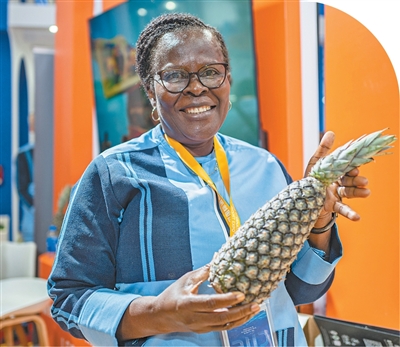
Core Viewpoint - China emphasizes the importance of promoting common development through international cooperation, aiming to share opportunities and benefits with countries worldwide, thereby injecting new momentum into global economic growth [1] Group 1: Trade Opportunities - The opening of the Chinese market has led to significant growth in exports from developing countries, such as Pakistan's pine nuts, which saw an export value of over $18 million in 2024, a 14% increase year-on-year [3] - South Africa's macadamia nuts are projected to have exports to China reach approximately 48% of their total production in 2024, highlighting China's role as a key partner in the macadamia industry [4] - The eighth China International Import Expo has facilitated the entry of products from least developed countries, with a 23.5% increase in participation from these nations, resulting in a cumulative intended transaction amount of $4.18 billion over seven years [5] Group 2: Economic Cooperation - China is actively enhancing trade facilitation measures, such as zero-tariff policies and streamlined customs processes, which significantly lower trade costs and barriers for developing countries [7] - The establishment of cross-border e-commerce platforms and improved logistics has created new opportunities for small and medium-sized enterprises from developing nations to access the Chinese market [7] - China's commitment to multilateralism and its role as a major trading partner for developing countries are recognized as crucial for global economic stability and growth [7]
2025年Q4电商行业战略动态调查报告——AI与即时零售重塑竞争格局
Sou Hu Cai Jing· 2025-11-30 17:12
Core Insights - The Chinese e-commerce industry has transitioned from a traffic-driven era to a "hardcore competition" phase focused on technology and ecosystem collaboration by Q4 2025 [1][22] - Key trends include the commercialization of AI technology, the intensification of instant retail, the deepening of omnichannel operations, and the evolution of competitive dimensions [3] Group 1: AI Technology Commercialization - AI has shifted from a technology reserve to a key growth driver for e-commerce giants, with Alibaba making significant investments leading to substantial revenue growth in AI-related products [4] - JD has applied AI extensively in marketing and service, achieving over 90% coverage in intelligent customer service and an 18% increase in conversion rates for core categories [4] - Smaller merchants benefit directly from AI, with Pinduoduo's AI selection system improving ROI by 40% for partners, while Douyin and Kuaishou have reduced content production cycles by 50% [4] Group 2: Instant Retail Market Competition - Instant retail has become a critical battleground for growth, with Alibaba, JD, and Meituan competing fiercely, aiming for a trillion-yuan transaction scale within three years [6] - In Q4, the transaction volume for instant retail reached 220 billion yuan, a 65% year-on-year increase, with Meituan holding a 45% market share [6] - The market is projected to exceed one trillion yuan by 2026, with front warehouse models contributing over 50% of transaction volume [6] Group 3: Omnichannel Operations - The fragmentation of traffic has driven platforms to transition towards "omnichannel collaboration," with Douyin e-commerce integrating advertising and e-commerce traffic pools [8] - Traditional platforms are accelerating their content transformation, with Alibaba and JD enhancing their content capabilities to complement their existing strengths [8] - Omnichannel operations have become a standard in the industry, moving away from single-channel strategies [8] Group 4: Shift from Price Wars to Value Wars - As customer acquisition costs rise, platforms are shifting from price competition to "value wars," focusing on quality and service [9] - Pinduoduo's "billion support plan" aims to enhance merchant quality, while JD emphasizes "quality retail" strategies [9] - The emergence of "heart-price ratio" reflects a consumer trend prioritizing product quality and service experience over mere pricing [9] Group 5: Company-Specific Strategies - Alibaba is focusing on AI and instant retail as dual drivers for growth, but faces short-term profit pressures due to significant investments [12] - JD is leveraging high-frequency delivery to expand into local life services, showing promising conversion rates but facing challenges with ongoing losses [13] - Pinduoduo remains the only major player with positive net profit growth, emphasizing cost-effectiveness and agricultural product sales [15] - Douyin e-commerce is rapidly increasing its market share through deep integration of content and commerce, but still needs to cultivate user habits for shelf-based e-commerce [16] Group 6: Future Trends - AI is expected to fundamentally reshape the e-commerce landscape, with intelligent systems becoming new traffic hubs [17] - Instant retail is projected to evolve into a core business model, with continuous innovations in operational models [17] - The integration of content and commerce will become standard, with platforms adopting a closed-loop system for user engagement [17] Group 7: Strategic Variables - The focus for the next year will be on breakthroughs in AI technology and instant retail profitability models by major players like Alibaba and JD [22] - The progress of content platforms like Douyin and Kuaishou in shelf-based e-commerce will be crucial for determining the final shape of omnichannel integration [22]



运营16年关停!跨境折扣电商巨头接连退场 行业洗牌加速
Nan Fang Du Shi Bao· 2025-11-30 16:07
Core Insights - The closure of NZSale and Ozsale highlights the survival crisis faced by traditional discount e-commerce platforms amid a rapidly changing global e-commerce landscape [1][2][4] - The global e-commerce market is undergoing significant consolidation, with major players dominating the market and smaller platforms struggling to compete [4] Company Summary - NZSale, a well-known flash sale platform in New Zealand, has officially ceased operations after 16 years, with its website no longer offering any products for sale [2] - Ozsale, NZSale's sister platform in Australia, is set to shut down all operations by January 27, 2026, affecting 12 regional websites [2] - Both platforms were part of a larger network that included 12 regional discount e-commerce sites, leveraging a membership-based flash sale model [2][3] Industry Summary - The operational model of NZSale and Ozsale, which included time-limited promotions and centralized procurement, has faced challenges due to long logistics cycles and declining product value [3] - The recent closures reflect a broader trend in the e-commerce sector, where platforms like WeMakePrice in South Korea have declared bankruptcy due to massive debts, and GrabOne in New Zealand has entered liquidation due to funding shortages [4] - The competitive landscape has shifted, with major players like Amazon capturing 65% of global e-commerce traffic, leading to increased pressure on regional platforms [4] - Consumer preferences have evolved from merely seeking low prices to demanding low prices, fast delivery, and high-quality experiences, which traditional discount models struggle to meet [4]
美团-W(03690):高客单核心壁垒稳固,Q4预计利润环比改善
Shenwan Hongyuan Securities· 2025-11-30 15:24
Investment Rating - The report maintains a "Buy" rating for Meituan [3][13] Core Insights - Meituan reported Q3 2025 revenue of Rmb95.5 billion, a 2.0% year-on-year increase, but below consensus expectations of Rmb97.5 billion. The operating profit was Rmb-19.76 billion, significantly lower than Rmb13.69 billion in the same period last year [8][9] - The report indicates that industry competition has peaked, with core local commerce experiencing significant losses in Q3 but expected sequential improvement in Q4. Core local commerce revenue declined by 2.8% year-on-year to Rmb67.4 billion, with an operating margin of -20.9% [9][10] - Meituan Instashopping achieved strong growth, leading the industry, with a focus on enhancing supply and user engagement. The platform launched "Branded Flagship InstaMart," which saw a 300% sales increase on its first day during the "11.11" shopping event [10][11] - New initiatives showed improved profitability, with revenue from new initiatives rising 15.9% year-on-year to Rmb28.0 billion, although operating losses widened to Rmb1.3 billion. Keeta, a new initiative, achieved profitability in Hong Kong ahead of schedule [11][12] Financial Summary - For 2023, Meituan's revenue is projected at Rmb276.7 billion, with a year-on-year growth rate of 25.8%. Adjusted net profit is expected to be Rmb23.3 billion [6][16] - The adjusted net profit forecast for 2025 has been revised down to Rmb-16.6 billion, reflecting the impact of intensified competition on short-term margins [13][16] - The report anticipates a long-term recovery in profitability, with a projected revenue of Rmb365.98 billion in 2025 and Rmb485.30 billion by 2027 [6][16]
稳中求进每月看 | 绘就笃行致远新图景——11月全国各地经济社会发展观察
Xin Hua She· 2025-11-30 13:51
Group 1: Agricultural Production - The focus is on enhancing winter wheat planting to ensure a strong foundation for summer grain production, with over 95% of winter wheat sown by November 20 [3] - Various regions are implementing advanced agricultural techniques and technologies to improve planting quality and efficiency, such as using high-performance precision seeders and organic fertilizers [2][3] - Local governments are actively supporting farmers with technical guidance and resources to mitigate the impact of adverse weather conditions on grain production [2][3] Group 2: Consumer Market Trends - The consumer market is evolving with innovative models such as drone delivery and automated transport, driven by a focus on creating dynamic and balanced ecosystems [4][5] - The government has initiated policies to enhance the adaptability of consumer goods supply and demand, with 19 key tasks outlined to promote new consumption scenarios and business models [4] - Platforms like Douyin and Taobao are leveraging technology to optimize supply chains and enhance consumer experiences, indicating a shift towards personalized and quality-driven consumption [4][5] Group 3: New Productive Forces - The integration of artificial intelligence in manufacturing is accelerating the development of new productive forces, exemplified by innovations in waterless dyeing technology [6][7] - Various regions are fostering the convergence of manufacturing and service industries, with significant advancements in digital economy initiatives [6][7] - The recent China International Import Expo showcased numerous new products and technologies, highlighting China's position as a rapidly innovating market [6][7] Group 4: Urban Renewal - Urban renewal initiatives are being implemented across the country, focusing on improving living conditions and upgrading infrastructure in old neighborhoods [8][9] - The government emphasizes a systematic approach to urban renewal, addressing planning, funding, and governance to ensure effective implementation [8][9] - Smart community management platforms are being introduced to enhance urban governance and improve residents' quality of life [9]
传媒互联网产业行业研究:逐步回归平静
SINOLINK SECURITIES· 2025-11-30 11:30
Investment Rating - The report maintains a positive outlook on the AI technology sector, emphasizing strong performance from leading tech companies like Google, META, Microsoft, Alibaba, and Tencent [3] Core Insights - The report highlights a gradual return to stability in the market, with reduced concerns over the Federal Reserve's interest rate cuts in December, leading to improved liquidity and risk appetite [3] - The AI industry is expected to continue its growth trajectory, with a focus on operational cash flow from leading tech firms and the application of AI in various sectors [3] - The cryptocurrency market faces short-term pressures but remains optimistic in the medium to long term, particularly regarding blockchain and decentralized payment technologies [3] - The Macau tourism sector is seen as a valuable investment opportunity, benefiting from a favorable supply-demand dynamic and expected growth during holiday periods [3] - The report expresses a bullish stance on trading platforms, viewing any short-term pullbacks as opportunities to increase positions [3] Summary by Sections 1.1 Consumer & Internet - **Education**: The education index rose by 1.41%, outperforming several major indices. The number of college graduates is projected to increase by 480,000 to 12.7 million by 2026 [11][18] - **Luxury Goods & Gambling**: The luxury goods index increased by 3.90%, with notable gains from Sands China and MGM China. Macau's tourism is recovering well [20][28] - **Coffee & Tea**: The coffee sector remains robust, while the tea sector faces challenges due to reduced subsidies from delivery platforms [5][29] - **E-commerce**: The e-commerce sector is under pressure, affected by the consumption environment and tax impacts on advertising [5][33] 1.2 Platforms & Technology - **Streaming Platforms**: The media index rose by 4.54%, with key players like Netflix and Tencent Music showing positive performance [43] - **Virtual Assets & Internet Brokers**: The global cryptocurrency market capitalization reached $319.68 billion, with Bitcoin and Ethereum prices increasing by 6.9% and 9.7%, respectively [49][52] - **Automotive Services**: Japan plans to achieve a fleet of 10,000 autonomous vehicles by 2030, indicating a significant push in the automotive sector [61] 1.3 Media - The report notes a record high of 184 game approvals in November, with the domestic gaming market expected to generate revenues of 31.36 billion yuan by October 2025, reflecting a year-on-year growth of 7.83% [5][12]