农产品销售

Search documents
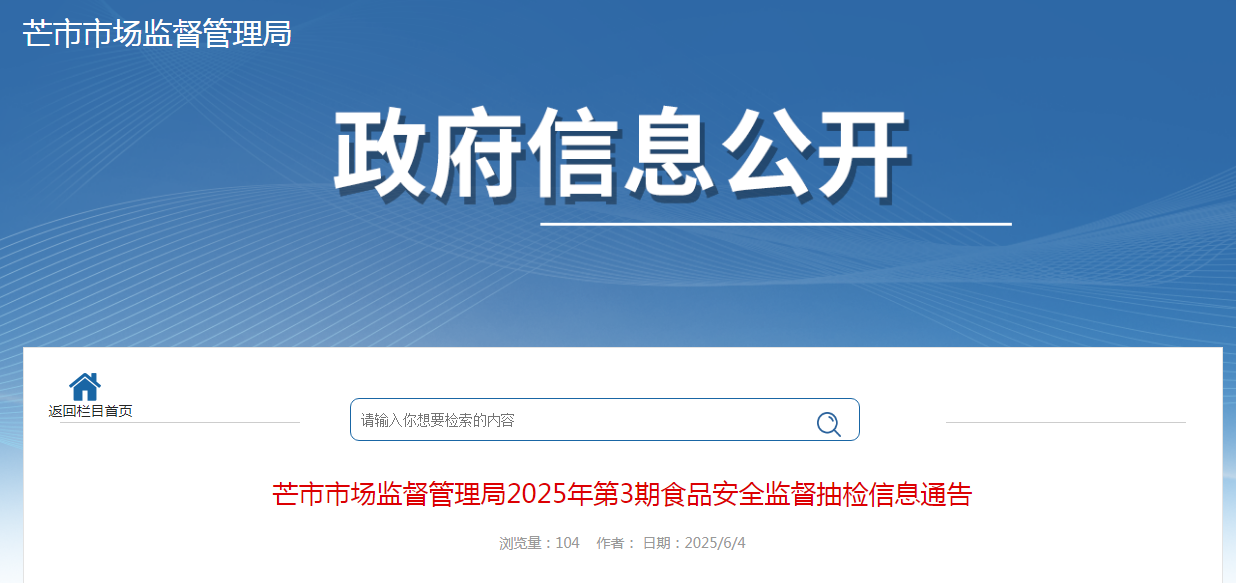
云南省芒市市场监督管理局2025年第3期食品安全监督抽检信息通告
Zhong Guo Zhi Liang Xin Wen Wang· 2025-06-09 08:24
Core Points - The announcement from the Mang City Market Supervision Administration details the results of the third food safety supervision and sampling inspection for 2025, focusing on edible agricultural products [3][4][5] - The inspection was conducted based on various national food safety standards, including maximum residue limits for pesticides and veterinary drugs [3] - A total of 30 batches of samples were found to be compliant with food safety standards [3] Summary by Category Inspection Standards - The inspection adhered to GB 2763-2021, GB 31650.1-2022, GB 2762-2022, and GB 31650-2019 standards, among others [3] - Specific substances tested included various pesticides and veterinary drug residues, such as dichlorvos, imidacloprid, and cadmium [3] Sample Results - The report lists 30 batches of edible agricultural products that passed the safety inspection, including fruits like apples, oranges, and mangoes, as well as vegetables like cucumbers and potatoes [4][5] - The samples were collected from various local vendors in Yunnan province, ensuring a broad representation of the market [4][5]

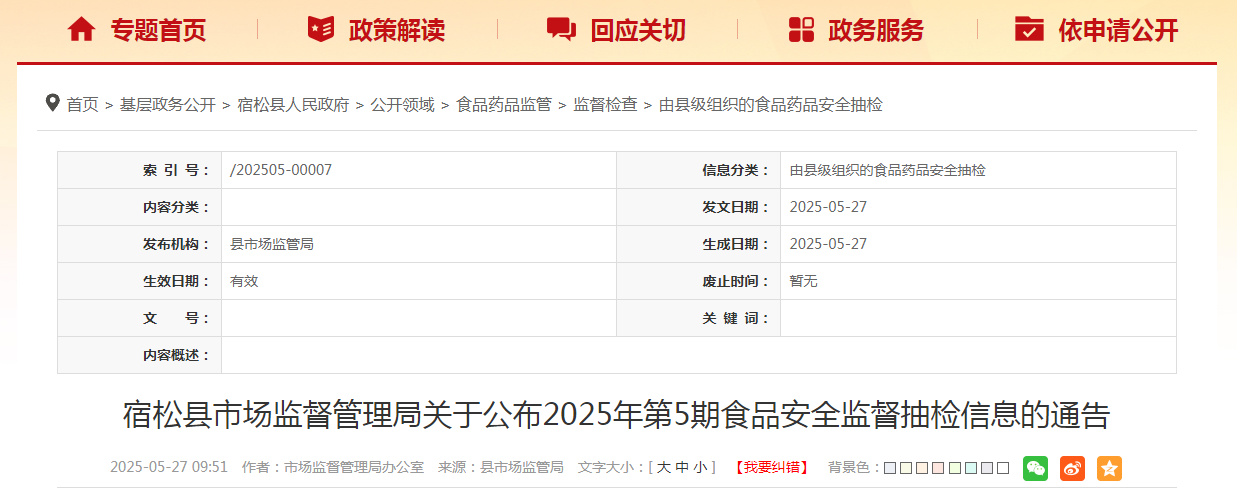
安徽省宿松县市场监督管理局关于公布2025年第5期食品安全监督抽检信息的通告
Zhong Guo Zhi Liang Xin Wen Wang· 2025-06-03 06:23
| 索 引 号: | /202505-00007 | 信息分类: | 由县级组织的食品药品安全抽检 | | --- | --- | --- | --- | | 内容分类: | | 发文日期: | 2025-05-27 | | 发布机构: | 县市场监管局 | 生成日期: | 2025-05-27 | | 生效日期: 有效 | | 废止时间: | 暫元 | | 文 号: 内容概述: | | 关键词: | | 二、皖西南市场周兰姣(地址:宿松县孚玉镇皖西南市场DT1-2号)销售的龙眼,二氧化硫残留量项目不符合GB 2760-2024《食品安全国家标准 食品添加剂 使用标准》要求。检验机构为安徽国泰众信检测技术有限公司。 三、宿松世纪华联置业发展有限公司超市分公司(地址:安徽省宿松县孚玉镇人民路130号)销售的龙眼,二氧化硫残留量项目不符合GB 2760-2024《食品 安全国家标准 食品添加剂使用标准》要求。检验机构为安徽国泰众信检测技术有限公司。 四、宿松县好又多惠民购物中心(地址:安徽省宿松县东北新城御园小区10号)销售的龙眼,二氧化硫残留量项目不符合GB 2760-2024《食品安全国家标准 食品添加剂使用 ...
高质量建设共富市集促进农产品销售的建议
Sou Hu Cai Jing· 2025-06-03 06:15
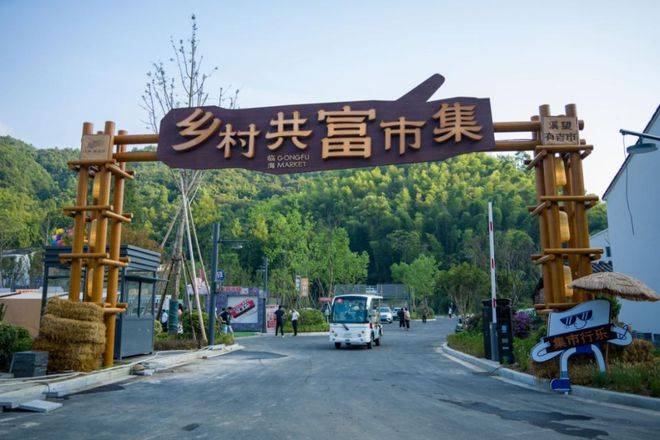
Core Viewpoint - The construction of high-quality "common prosperity markets" is a key initiative for rural revitalization, aimed at enhancing agricultural product sales and directly increasing farmers' income while narrowing the urban-rural gap [1][3]. Group 1: Market Construction and Economic Impact - The strategy integrates market construction with social welfare, achieving a balance between economic efficiency and social equity [1]. - The "short-chain system" reduces the circulation links of agricultural products from 6-8 to 2-3, resulting in a 35% income increase for farmers and an 18% decrease in urban fresh food prices [3]. - The establishment of a digital infrastructure, such as a "digital ID" for agricultural products, is projected to enhance sales conversion rates by over 20% [16][17]. Group 2: Social Relationships and Community Engagement - The integration of blockchain traceability and community trust mechanisms has increased consumer repurchase rates to 73%, compared to 41% through traditional channels [4]. - Initiatives like the "Silver-Youth Mutual Assistance Post" facilitate knowledge transfer between older and younger farmers, improving sales conversion rates by 2.4 times [5]. - The establishment of community markets enhances social trust and reduces poverty incidence, fostering entrepreneurial spirit among rural populations [17]. Group 3: Governance and Operational Models - A multi-stakeholder collaborative platform has been created, combining government oversight, enterprise operation, cooperative participation, and community evaluation, achieving a 91% success rate in resolving price disputes [6]. - The "common prosperity market" serves as a resilient urban model, with a standardized market network handling 37% of community supply tasks during emergencies [6]. Group 4: Cultural and Value Creation - The development of cultural products and experiences, such as the "24 Solar Terms Brewing Experience," has attracted 28% of young consumers, revitalizing traditional crafts [7]. - The integration of local cultural elements into market design has made certain markets cultural landmarks, with visitor spending accounting for 45% of total sales [7]. Group 5: Future Strategies and Projections - The implementation of the proposed strategies is expected to double the number of rural community organizations by 2027 and increase local cultural product SKUs by 150% [11][12]. - The establishment of a "market community" trust mechanism and the development of a three-tier brand system are critical for enhancing social capital and cultural value [10][14].

爱心助农迎端午,广东区域协作消费帮扶产品交易中心开展进机关展销活动
Nan Fang Nong Cun Bao· 2025-06-01 02:35
Core Viewpoint - The "Love Helping Farmers for Dragon Boat Festival" consumption assistance exhibition and sales event was successfully held in Guangdong, aiming to promote agricultural products and support local farmers [3][5]. Group 1: Event Overview - The event was organized by the Guangdong Regional Cooperation Consumption Assistance Product Trading Center in collaboration with the China County Expo Organizing Committee [2]. - The exhibition featured over 40 unique booths showcasing more than 400 high-quality agricultural products from both within and outside the province [6][7]. Group 2: Sales and Promotions - During the event, promotional measures included a "300 off 90" coupon and discounts through the Agricultural Bank of China’s Love Card, aimed at enhancing consumer engagement [7][8]. - Popular products included Dragon Boat Festival gift boxes, fresh lychees, Heilongjiang rice, and dried mushrooms, with fresh lychees being particularly well-received, selling over 1,000 pounds on-site [10][11]. Group 3: Future Plans and Strategies - The trading center has established 42 consumption assistance pavilions, covering 12 provinces and 36 cities, with over 10,000 products on display [12][13]. - The center aims to transform consumption assistance from a one-time event to a sustainable model, injecting new momentum into rural revitalization [16]. - Future plans include continuing the series of exhibition and sales events in government agencies and communities, focusing on improving the long-term mechanism for agricultural product sales [17][18].

跨界融合拓展路衍经济业态
Jing Ji Ri Bao· 2025-05-24 13:44
Core Insights - The article discusses the development of "road economy" in Hezhou, Guangxi, which transforms transportation infrastructure into a new platform for industrial development, integrating agricultural products into urban markets and industrial goods into rural areas [1] Group 1: Road Economy Development - Road economy relies on the natural attributes of extensive road networks to stimulate regional economic growth through the aggregation and diffusion of economic elements along transportation routes [1] - The strategy of integrating transportation and tourism is being explored, with the road economy beginning to take shape and driving the comprehensive output value of upstream and downstream industries [1][2] Group 2: Challenges and Solutions - Current challenges in road economy development include low industry collaboration, fragmented resource integration, outdated policy frameworks, insufficient resource guarantees, and a lack of technological empowerment [1][2] - To address these challenges, a supportive policy and operational system for cross-sector integration is necessary, requiring the establishment of a multi-party collaborative mechanism [2] Group 3: Innovative Integration Paths - The "transportation+" model is proposed to reconstruct industrial chains, integrating various sectors such as culture, tourism, and rural revitalization with transportation [2][3] - Technological empowerment is emphasized as a key to innovation in road economy, advocating for the deep application of technologies like 5G, IoT, and renewable energy [3]
邑帮扶江门馆揭牌开业!粤桂协作消费帮扶再启新篇
Nan Fang Nong Cun Bao· 2025-05-24 04:03
Core Viewpoint - The opening of the Yibangfu Jiangmen Pavilion marks a new chapter in the cooperation between Guangdong and Guangxi, focusing on consumer assistance and the integration of agricultural product circulation with rural revitalization [3][4][6]. Group 1: Pavilion Opening - The Yibangfu Jiangmen Pavilion was officially inaugurated on May 23, guided by the Jiangmen Municipal Agricultural and Rural Affairs Bureau [2][3]. - The pavilion serves as an important platform for Guangdong-Guangxi cooperation, showcasing local and targeted assistance agricultural products from Jiangmen and Chongzuo, Guangxi [6][8]. Group 2: Product Offering - The pavilion features over a hundred high-quality products, including Xinhui dried tangerine peel, Taishan rice, handmade brown sugar from Guangxi, and water buffalo milk, covering categories such as grains, fruits, and handicrafts [9][10]. - The pavilion aims to create an efficient bridge between farmers and consumers through an online and offline integration model [8]. Group 3: Future Development - Future efforts will focus on leveraging platform advantages, expanding market channels, and promoting the branding and industrialization of agricultural products [14][15].
重庆市铜梁区市场监督管理局关于109批次食品安全抽检情况的通告(2025年第2号)
Zhong Guo Zhi Liang Xin Wen Wang· 2025-05-23 09:08
Summary of Key Points Core Viewpoint - The Chongqing Tongliang District Market Supervision Administration conducted a food safety inspection of 109 batches of edible agricultural products, revealing that 107 batches passed while 2 batches failed the safety standards [2]. Group 1: Inspection Results - A total of 109 samples were tested, with 107 passing and 2 failing the safety standards [2]. - The specific failures included one sample of loach with enrofloxacin residue at 276 μg/kg, exceeding the standard limit of 100 μg/kg [2]. - Another failure involved longan with a sulfur dioxide residue of 0.181 g/kg, surpassing the permissible limit of 0.05 g/kg [2]. Group 2: Regulatory Actions - The local market supervision authority initiated legal actions against the non-compliant products as per the Food Safety Law of the People's Republic of China [2]. - Risk control measures were implemented, including tracing the product flow, recalling, and removing the non-compliant products from the market [2]. - The authorities are also analyzing the causes of the failures and enforcing corrective actions [2].
浙江省绍兴市市场监督管理局食品安全监督抽检信息公告(2025年第2期)
Zhong Guo Zhi Liang Xin Wen Wang· 2025-05-20 09:11
Summary of Key Points Core Viewpoint - The recent food safety inspection in Shaoxing City revealed that out of 178 food samples tested, 169 passed while 9 were found to be non-compliant, primarily due to excessive food additives and pesticide residues [3][4]. Group 1: Inspection Results - A total of 178 food samples were tested across 19 categories including beverages, frozen foods, and dairy products [3]. - 169 samples were deemed compliant with national food safety standards, while 9 samples failed the inspection [3][4]. Group 2: Non-compliance Issues - The non-compliant samples were primarily related to two issues: 1. Exceeding limits for food additives 2. Excessive pesticide and veterinary drug residues [3][4]. - Specific instances of non-compliance included: - Chili from a vegetable store with a pesticide residue of 1.96 mg/kg, exceeding the limit of 1 mg/kg [5]. - Longan from multiple fruit stores with sulfur dioxide residue levels significantly above the permissible limit of 0.05 g/kg [5][6]. Group 3: Regulatory Actions - The Shaoxing Market Supervision Administration has mandated local regulatory bodies to take immediate action, including product recalls and risk control measures [4]. - Local authorities are required to report back on the handling of non-compliant products within three months [4].
浙江省湖州市市场监督管理局食品安全监督抽检信息通告(2025年第6期)
Zhong Guo Zhi Liang Xin Wen Wang· 2025-05-20 07:51
Core Viewpoint - The recent food safety inspection in Huzhou revealed that out of 280 food samples tested, 270 passed while 10 were found to be non-compliant with national food safety standards, highlighting ongoing concerns regarding food safety in the region [2][3]. Summary by Categories Food Safety Inspection Results - A total of 280 food samples across 20 categories were tested, with 270 passing and 10 failing the safety standards [2][3]. - The non-compliant products were linked to issues such as illegal use of food additives, pesticide and veterinary drug residues exceeding limits, and contamination [2][3]. Specific Non-Compliant Products - **Illegal Use of Food Additives**: - A specific case involved rice wine from Huzhou Yangjiabu Town, which contained cyanide levels exceeding the national safety standards [2]. - **Pesticide Residues**: - Several products were flagged for pesticide residue violations, including: - Old ginger from Changxing with a residue of 1.07 mg/kg for imidacloprid, exceeding the limit of 0.5 mg/kg [3]. - Small mangoes from Changxing with a residue of 0.12 mg/kg for thiamethoxam, above the permissible level of 0.05 mg/kg [3]. - **Contamination Issues**: - Dried longan from Changxing was found to have a sulfur dioxide residue of 0.132 g/kg, surpassing the limit of 0.05 g/kg [3]. Regulatory Actions - The Huzhou Market Supervision Administration has mandated local regulatory bodies to take immediate action, including product recalls and risk control measures for the non-compliant items [2][3].
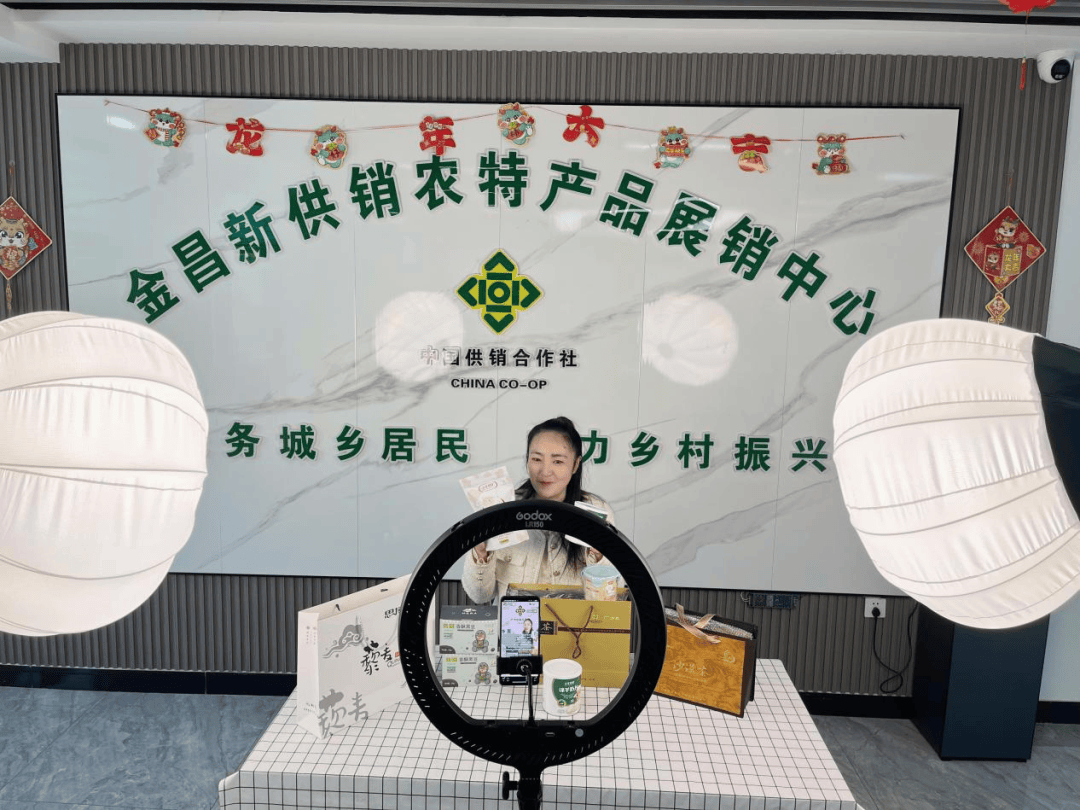
田间地头开直播!金昌供销社以电商助力乡村振兴
Sou Hu Cai Jing· 2025-05-17 10:53
Group 1 - The core viewpoint is that Jinchang City is leveraging the comprehensive reform of the supply and marketing cooperative to enhance its e-commerce presence and promote the digital transformation of traditional agriculture, injecting strong momentum into rural revitalization through new models like "Internet + Agriculture" [1] Group 2 - Jinchang's supply and marketing cooperative has innovatively launched a "direct sourcing live broadcast" model, allowing consumers to experience the growth environment of agricultural products through immersive scenes, which has effectively increased sales and consumer trust [3] - The cooperative has integrated its distribution network, production resources, and agricultural technology to create a one-stop service platform addressing issues like poor sales channels and information asymmetry, facilitating the sale of over 200 local quality agricultural products nationwide [5] Group 3 - In the first quarter of this year, the total sales of the Jinchang supply and marketing system reached 417 million yuan, a year-on-year increase of 13%, with agricultural product sales amounting to 65 million yuan, generating a profit of 350,000 yuan, which is a 34.62% increase compared to the previous year [7]