家电

Search documents
一文读懂华之杰:09W2026周报
CAITONG SECURITIES· 2026-03-03 07:25
Company Overview - Suzhou Huazhi Jie Electric Co., Ltd. focuses on the smart control industry, providing power management and drive solutions for lithium battery electric tools and consumer electronics[8] - The company has established a leading market position in the electric tool components sector, expanding into lithium-powered garden machinery, smart home, and new energy vehicles[14] Market Trends - The global electric tool market is projected to grow by 24.8% in 2024, reaching 566.4 billion USD, driven by the shift towards cordless and lithium-powered tools[32] - The outdoor power equipment market is expected to exceed 57 billion USD by 2032, benefiting from advancements in lithium battery technology and environmental concerns[33] - The consumer electronics market is forecasted to grow from 1.046 trillion USD in 2024 to 1.177 trillion USD by 2028[34] - The global new energy vehicle sales are anticipated to increase by 24.4% in 2024, reaching 18.236 million units, with a domestic penetration rate of 44.3%[34] Financial Performance - The company's revenue is projected to show significant growth, with a target of a 50% increase in 2026 compared to 2025[40] - The net profit growth target for 2026 is also set at a minimum of 50% compared to the previous year[40] Competitive Advantages - The company holds 303 patents, including 72 invention patents, and has established two provincial engineering technology research centers[26] - Huazhi Jie has a comprehensive supply capability for smart switches, controllers, and brushless motors, enhancing customer loyalty and market share[27] Risks - Potential risks include a downturn in the real estate market, exchange rate fluctuations, raw material price volatility, and underperformance of new product sales[4]
——金融工程市场跟踪周报20260303:短线重视资源品配置机会-20260303
EBSCN· 2026-03-03 05:46
- The report discusses a **quantitative timing model based on volume signals**, which evaluates market sentiment and timing by analyzing volume trends. The model's construction involves assessing the volume levels of major indices (e.g., Shanghai Composite, CSI 300, etc.) and assigning a cautious view when volume signals are weak. As of February 27, 2026, all major indices showed a "cautious" volume timing signal[24][25] - A **momentum sentiment indicator** is introduced, which calculates the proportion of stocks in the CSI 300 index with positive returns over a specific period (N days). The formula is: $ \text{CSI 300 N-day Upward Proportion} = \frac{\text{Number of CSI 300 stocks with positive returns in N days}}{\text{Total number of CSI 300 stocks}} $ This indicator is used to capture market sentiment, with higher values indicating optimism. As of February 27, 2026, the indicator was above 60%, reflecting high market sentiment[25][26][27] - A **momentum sentiment timing strategy** is applied by smoothing the momentum sentiment indicator using two moving averages (short-term and long-term). When the short-term average exceeds the long-term average, the model signals a bullish market view. Parameters used are N=230, N1=50, and N2=35. As of February 27, 2026, the short-term line was above the long-term line, maintaining a bullish outlook[27][29] - The report also introduces an **eight-moving-average sentiment indicator**, which evaluates the CSI 300 index's trend by comparing its closing price against eight moving averages (8, 13, 21, 34, 55, 89, 144, 233). The indicator assigns values based on the number of moving averages the index surpasses. If the index price exceeds more than five moving averages, the model signals a bullish view. As of February 27, 2026, the CSI 300 index was in a "sentiment prosperity zone," indicating positive sentiment[34][38] - **Cross-sectional volatility** is analyzed as a measure of alpha opportunities. The report highlights that cross-sectional volatility for CSI 300, CSI 500, and CSI 1000 stocks increased week-over-week, indicating an improved short-term alpha environment. Over the past quarter, cross-sectional volatility for CSI 300 and CSI 1000 was in the upper-middle range of the past six months, while CSI 500 was in the middle range[39][40] - **Time-series volatility** is also examined, showing a week-over-week decline for CSI 300, CSI 500, and CSI 1000 stocks, suggesting a deteriorating short-term alpha environment. Over the past quarter, time-series volatility for CSI 300 and CSI 500 was in the middle range of the past six months, while CSI 1000 was in the upper-middle range[40][43]


每日报告精选(2026-02-27 09:00——2026-03-02 15:00)-20260303
GUOTAI HAITONG SECURITIES· 2026-03-03 00:39
Group 1: Macro Overview - The macroeconomic environment shows a recovery in production post-holiday, with strong demand for travel and services, although construction and real estate recovery remains slow [6] - The geopolitical tensions in the Middle East have led to increased prices for precious metals and oil, with gold and silver prices rising significantly due to supply concerns [10][25] - The Chinese stock market is expected to remain stable despite external geopolitical pressures, with a focus on internal economic stability and growth [21][22] Group 2: Industry Insights - The steel industry is seeing a rise in social and factory inventories, but profitability is under pressure, with many companies still operating at a loss [39][40] - The logistics and warehousing sector is experiencing a recovery, particularly at the Ganqimaodu port, with significant increases in cargo volume and transportation activity [42] - The commercial aerospace sector is gaining momentum, with increased financing and government support for the development of commercial space industries [19] Group 3: Investment Opportunities - Strategic resources such as oil and rare earths are expected to see price increases due to geopolitical tensions, presenting investment opportunities in these sectors [16] - The urban renewal initiative in China is anticipated to stabilize the real estate market and boost domestic demand, with significant investment planned in infrastructure and housing [18] - The AI and technology sectors are poised for growth, driven by increased demand for domestic models and applications, with a focus on power and computing resources [17]
家电行业2026年3月投资策略:2026年以来大家电需求回暖,美关税降低有利家电出口
Guoxin Securities· 2026-03-02 14:42
Core Insights - The home appliance industry is expected to outperform the market due to a recovery in demand for major appliances since 2026, supported by reduced tariffs in the US which favor appliance exports [1][2] - The retail demand for major appliances in China has shown significant improvement, with a notable narrowing of the decline in retail sales [1][17] - The production of white goods in March 2026 has also seen a reduction in decline, indicating a positive trend in manufacturing [1][37] Market Performance - In February 2026, the home appliance sector achieved a relative return of +0.92%, outperforming the broader market [3][49] - The retail sales of major appliances in the US continued to grow, with a year-on-year increase of 2.6% in December 2025, indicating a steady recovery in consumer demand [2][43] Production and Sales Data - In March 2026, the total production of white goods in China reached 39.11 million units, with a year-on-year decline of 4%, showing improvement compared to previous quarters [1][37] - Specific categories such as refrigerators and washing machines have shown varied performance, with refrigerators experiencing a slight increase in production while washing machines faced some pressure due to high inventory levels [1][37] Recommendations for Key Companies - The report recommends several companies for investment, including Midea Group, Haier Smart Home, and TCL Smart Home in the white goods sector, and Stone Technology and Roborock in the small appliance sector, highlighting their strong growth potential and market positioning [3][12][66] - The report emphasizes the resilience of leading companies in the home appliance sector, suggesting that they are well-positioned to benefit from both domestic and international market improvements [11][12]






大消费行业2026年3月金股推荐
Changjiang Securities· 2026-03-02 13:33
Investment Rating - The report maintains a "Buy" rating for all recommended stocks in the consumer sector [6][10][11][12][13][16][17][18][19][21]. Core Insights - The report highlights nine advantageous sectors in the consumer industry, including agriculture, retail, social services, automotive, textile and apparel, light industry, food, home appliances, and pharmaceuticals, with key stock recommendations for March 2026 [3][6]. - The report emphasizes the importance of companies' competitive advantages, such as cost efficiency and cash flow, particularly in the agriculture sector, where capacity reduction is ongoing [9][10]. - The retail sector is expected to benefit from a favorable market environment in Beijing, with companies like Cai Bai Co. poised for growth due to their direct sales model and strong operational capabilities [11]. - The hospitality sector, represented by Jin Jiang Hotels, shows a significant recovery in guest numbers, indicating a positive trend for the company's future performance [12]. - In the automotive sector, BYD is positioned as a global leader in electric vehicles, with expectations for a new product cycle to enhance competitiveness and profitability [13]. - The textile and apparel sector, represented by Hailan Home, is expected to see revenue acceleration due to its direct sales model and expansion strategies [16]. - The IP toy industry, represented by Pop Mart, is anticipated to maintain high growth rates, supported by successful new product launches and market expansion [17]. - The food sector, represented by Weilong, is projected to continue its rapid growth, leveraging its leading position in spicy snacks [18]. - TCL Electronics is expected to benefit from industry trends towards larger and higher-end products, with a stable profit outlook [19]. - The pharmaceutical sector, represented by Zhaoyan New Drug, is expected to see significant demand recovery, driven by the innovation drug market and limited supply of experimental monkeys [21]. Summary by Sector Agriculture - Key recommendation: Dekang Agriculture [6] - Expected net profits for 2025-2027: 1.24 billion, 2.37 billion, 7.15 billion CNY, with corresponding PE ratios of 20, 11, and 4 [10][26]. Retail - Key recommendation: Cai Bai Co. [6] - Expected EPS for 2025-2027: 1.46, 1.75, 2.03 CNY, with PE ratios of 17, 14, and 12 [11][26]. Social Services - Key recommendation: Jin Jiang Hotels [6] - Expected net profits for 2025-2027: 0.95 billion, 1.06 billion, 1.16 billion CNY, with PE ratios of 32, 29, and 26 [12][26]. Automotive - Key recommendation: BYD [6] - Expected net profits for 2025-2026: 35 billion, 48.1 billion CNY, with PE ratios of 23.3 and 16.9 [13][26]. Textile and Apparel - Key recommendation: Hailan Home [6] - Expected net profits for 2025-2027: 2.08 billion, 2.33 billion, 2.58 billion CNY, with PE ratios of 15, 13, and 12 [16][26]. Light Industry - Key recommendation: Pop Mart [6] - Expected net profits for 2025-2027: 12.9 billion, 17.6 billion, 22.1 billion CNY, with PE ratios of 21, 16, and 12 [17][26]. Food - Key recommendation: Weilong [6] - Expected net profits for 2025-2027: 1.43 billion, 1.73 billion, 2.12 billion CNY, with PE ratios of 18, 15, and 12 [18][26]. Home Appliances - Key recommendation: TCL Electronics [6] - Expected net profits for 2025-2027: 2.55 billion, 3.05 billion, 3.39 billion HKD, with PE ratios of 12.12, 10.16, and 9.14 [19][26]. Pharmaceuticals - Key recommendation: Zhaoyan New Drug [6] - Expected net profits for 2025-2027: 0.38 billion, 0.53 billion, 1.02 billion CNY, with PE ratios of 367.3, 97.79, and 68.88 [21][26].





2026年3月金股月度金股:财通策略、多行业-20260302
CAITONG SECURITIES· 2026-03-02 11:58
Core Insights - The report emphasizes the shift towards "HALO trading" in both US and A-share markets, moving away from high-valuation tech stocks to lower-valuation, asset-heavy sectors due to concerns over tech valuations and potential AI disruptions [2][5][6] - The report identifies "HALO assets" as a strategic choice for long-term investors who prefer stability over chasing tech stocks, highlighting the importance of selecting high-quality investments within this category [6][7] - It suggests two investment strategies: offensive and defensive HALO approaches, allowing investors to diversify their portfolios while managing risk [6][7] A-share HALO Trading - A-share HALO assets are characterized by their cyclical, stable, and heavy manufacturing nature, which become attractive when their valuation advantages are clear [6] - The report advises careful selection within HALO investments, focusing on those with strong cash flows and solid long-term barriers to entry [6] Fund Grouping Perspective - The report outlines two strategies for fund grouping: defensive selections with low correlation to mainline stocks and offensive selections targeting sectors with potential growth catalysts [6] - Historical data indicates that a three-year investment horizon can yield significant excess returns when following these strategies [6] Configuration Directions - Offensive HALO investments include sectors benefiting from price increases and international expansion, such as agricultural chemicals, high-end manufacturing, and brokerage firms [7] - Defensive HALO investments focus on industries with low holdings, such as coal and construction, and sectors with low correlation to technology, like petrochemicals [7] Top Stock Picks - The report lists ten recommended stocks, including TCL Electronics, ShouLiu Hotel, Anjui Food, Muyuan Foods, Qibin Group, New Town Holdings, COSCO Shipping Energy, Daimai Co., Chipone Technology, and Lenovo Group, highlighting their potential for growth [3][4]


大消费行业周报(2月第4周):26年春节文旅市场向好
Century Securities· 2026-03-02 08:24
Investment Rating - The report does not explicitly state an investment rating for the industry, but it suggests a positive outlook for sectors such as hospitality and service consumption based on recent performance during the Spring Festival [1]. Core Insights - The Spring Festival tourism market showed significant improvement, with 596 million domestic trips taken, an increase of 95 million compared to the previous year, and total spending reaching 803.48 billion yuan, up 126.48 billion yuan [1]. - The restaurant industry experienced a recovery, with average daily sales for key retail and catering enterprises increasing by 5.7% year-on-year during the Spring Festival, and catering consumption rising by 31.2% [1]. - The report highlights the strong performance of specific stocks in the consumer sector, with notable increases in share prices for companies like Ziyuan Food (+22.18%) and Tongxing Technology (+27.36%) [1]. Summary by Sections Market Review - The consumer sector saw varied performance, with social services, home appliances, and food and beverage sectors experiencing declines, while tourism and hospitality sectors thrived during the Spring Festival [1][5]. Industry News and Key Company Announcements - The Ministry of Commerce reported a significant increase in sales of home appliances during the Spring Festival, with a 21.7% rise in sales of old-for-new products [14]. - Ctrip Group reported a 17% year-on-year increase in net revenue for 2025, driven by strong travel demand during the winter holiday season [18]. - Haidilao's dining reservations exceeded 50,000 tables on New Year's Eve, indicating robust consumer interest [18].
大消费行业周报(2月第4周):26年春节文旅市场向好-20260302
Century Securities· 2026-03-02 08:07
Investment Rating - The report does not explicitly state an investment rating for the industry, but it suggests a positive outlook for sectors such as hospitality and service consumption due to increased travel and spending during the Spring Festival [1]. Core Insights - The Spring Festival of 2026 saw a significant increase in domestic travel, with 596 million trips taken, an increase of 95 million compared to the previous year, and total spending reaching 803.48 billion yuan, up 126.48 billion yuan year-on-year, marking record highs in both visitor numbers and spending [1]. - The hospitality sector performed exceptionally well, with hotel occupancy rates and revenue per available room (RevPAR) showing substantial increases, indicating a strong recovery in the restaurant and tourism industries [1]. - The restaurant industry also experienced a robust recovery, with average daily sales for key retail and catering enterprises increasing by 5.7% year-on-year during the Spring Festival, and catering consumption rising by 31.2%, significantly outpacing overall consumption growth [1]. Summary by Sections Market Review - The consumer sector saw varied performance, with social services, home appliances, and food and beverage sectors experiencing different levels of growth and decline during the period from February 9 to February 27, 2026 [1]. - Notable stock performances included significant gains in companies like Ziyan Food (+22.18%) and Tongxing Technology (+27.36%), while declines were seen in companies like Richen Co. (-14.94%) and Hangzhou Jiebai (-21.71%) [1]. Industry News and Key Company Announcements - The Ministry of Commerce reported that during the Spring Festival, sales of home appliances under the old-for-new policy reached 5.106 million units, a 21.7% increase from the previous year [1]. - The report highlighted the strong performance of the travel sector, with significant increases in passenger numbers and spending at airports and tourist attractions during the Spring Festival [1]. - Companies like Ctrip and Haidilao reported substantial revenue growth, with Ctrip's net income for 2025 reaching 624 billion yuan, a 17% increase year-on-year, driven by strong travel demand [1].
消费核心资产的二次进化︱重阳来信2026年3月
重阳投资· 2026-03-02 07:33
Core Viewpoint - The article discusses the resilience of traditional consumer demand in China, highlighting the strong performance of consumption-related industries during the recent Spring Festival, despite a generally low stock price performance in the consumption sector post-holiday [2][5]. Group 1: Historical Context and Trends - Over the past two decades, China's real estate and manufacturing sectors have experienced rapid growth, leading to a significant increase in consumer spending, with retail sales growth entering double digits by 2003 [3]. - The white liquor industry saw substantial growth, with total production rising from 3.31 million tons in 2003 to 11.53 million tons in 2012, and high-end liquor prices increasing significantly [4]. - From 2015 to 2021, consumer sectors experienced a peak in total volume, structural upgrades, and increased concentration, with leading brands enjoying significant premium pricing [5]. Group 2: Recent Challenges and Shifts - Since 2021, rising U.S. Treasury yields and tightening global liquidity have led to a decline in consumer sentiment and a shift in purchasing behavior towards price sensitivity, impacting traditional consumer companies' pricing power and profitability [5][10]. - The traditional consumption sector is now viewed as "old assets," with significant capital outflows and a decline in the valuation of major consumer indices [5][10]. Group 3: Evolution and Adaptation - Companies are undergoing a second evolution, focusing on agile organization, flexible supply chains, and digital channels to adapt to changing consumer demands [6][10]. - Successful case studies include a liquor company that launched core products on its platform to reach middle-class consumers directly, demonstrating that high-quality products still attract demand even in a rational consumption environment [6][10]. - Another example is a seasoning leader that implemented comprehensive reforms to address inventory issues and adapt to market changes, resulting in a projected 10% profit growth from 2024 [7][10]. Group 4: Future Outlook and Investment Potential - Traditional consumer assets are showing stable returns in a low-interest-rate environment, with established brands maintaining strong market positions despite consumer demand fluctuations [11]. - Companies are increasingly willing to enhance shareholder returns, with many consumer firms expected to increase dividends and share buybacks starting in 2024, particularly in the food and beverage sector [11][12]. - The article suggests that identifying companies capable of adapting to new norms and delivering substantial returns could present valuable investment opportunities in an uncertain environment [12].


海尔智家启动“2026健康焕新节”:“五大政策”赋能专卖店发展
Jin Tou Wang· 2026-03-02 07:26
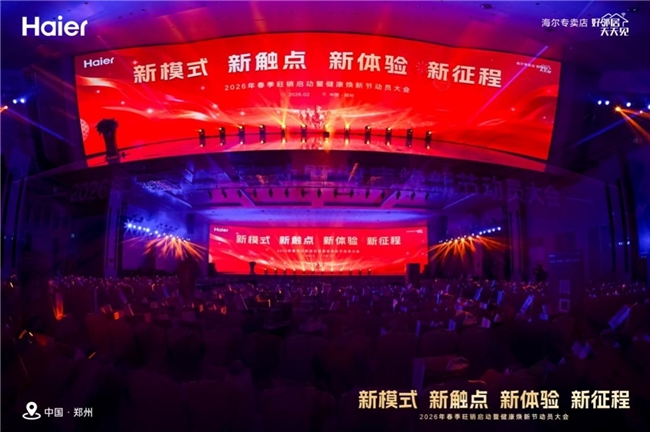
Core Viewpoint - The home appliance industry is currently facing a market downturn, but Haier's specialty stores have achieved impressive results by breaking through the challenges [1] Group 1: Haier's Initiatives - Haier Smart Home launched the 2026 Health Renewal Festival from February 25 to 26, starting in Zhengzhou and expanding nationwide [1] - To empower Haier specialty stores, the company introduced the "Five Good Policies," focusing on good products, good policies, good experiences, good models, and good activities [1] Group 2: Product Strategy - The good products initiative is based on stable pricing and supply, creating a differentiated product layout to address the issue of product homogeneity [3] - Key product series like "Zhijing" and "Mailang" cover various consumer tiers, enhancing the competitiveness of store offerings [3] Group 3: Policy and Operational Efficiency - The good policies aim to simplify complex store policies, ensuring that incentive benefits reach the end point directly [5] - Haier Smart Home focuses on comprehensive retail TC as a core directive, unifying policy formulation and achieving instant execution to improve store operational efficiency [5] Group 4: Customer Experience and Marketing - The good experience initiative leads service upgrades through standards, helping Haier specialty stores achieve comprehensive traffic generation and efficient customer acquisition [5] - By integrating online and offline channels and utilizing platforms like Douyin and Gaode, the brand's visibility is amplified, bringing more precise customer traffic to stores [5] Group 5: Operational Model - The good model emphasizes cost reduction and efficiency enhancement through a unified warehouse TC model, providing free warehousing and delivery services [5] - This model, combined with Haier Mall, facilitates an integrated online and offline operational approach, making business operations easier for stores [5] Group 6: Marketing Activities - The good activities ensure continuous marketing for Haier specialty stores throughout the year, maintaining sales momentum [5] - A "5+3" activity matrix is established to provide full-process material support for each event, ensuring successful execution and safeguarding sales [5] Group 7: Future Developments - The 2026 Health Renewal Festival will unfold across various regions, with Haier Smart Home leveraging its smart home strategy to introduce more AI products, scenarios, and lifestyles [7] - This initiative aims to further empower the operations of Haier specialty stores [7]