批发零售

Search documents
热点思考 | 居民如何“反内卷”?(申万宏观·赵伟团队)
申万宏源宏观· 2025-07-07 08:27
Group 1 - The phenomenon of "involution" is most pronounced among young people, with average weekly working hours increasing by over 4 hours in the past five years. The average weekly working hours for employees aged 25-34 rose from 46.7 hours in 2018 to 50.8 hours in 2023 [3][28] - The average daily working time in China increased by 21 minutes from 2018 to 2023, reaching 48.3 hours per week, while the time spent on purchasing goods and services dropped from 80 minutes per day to 43 minutes per day [2][9] - The "involution" trend is particularly evident in the manufacturing and productive service sectors, while the real estate and life service sectors have seen a decrease in working hours [2][21] Group 2 - Current policies to combat "involution" focus on encouraging flexible work arrangements and paid leave, but these measures primarily address symptoms rather than the root causes of prolonged working hours [4][35] - The root cause of "involution" is the uneven distribution of employment across industries, with excessive employment in manufacturing leading to "involution" and insufficient employment in the service sector [4][48] - There is a significant employment gap in the life service sector, with a potential to absorb more jobs, as the wage growth in this sector (18.1%) outpaces that of manufacturing (10.7%) [5][61] Group 3 - The long-term direction for combating "involution" involves aligning supply structures with changing demand structures, particularly as consumer demand trends towards services [6][85] - Global experiences indicate that as GDP per capita reaches between $10,000 and $30,000 and urbanization rates hit 70%, the proportion of service consumption in total consumption increases by approximately 0.6% annually [6][86] - The aging population is expected to drive service consumption, with each 1% increase in the aging rate correlating with a 1.3% increase in service consumption share [6][93]

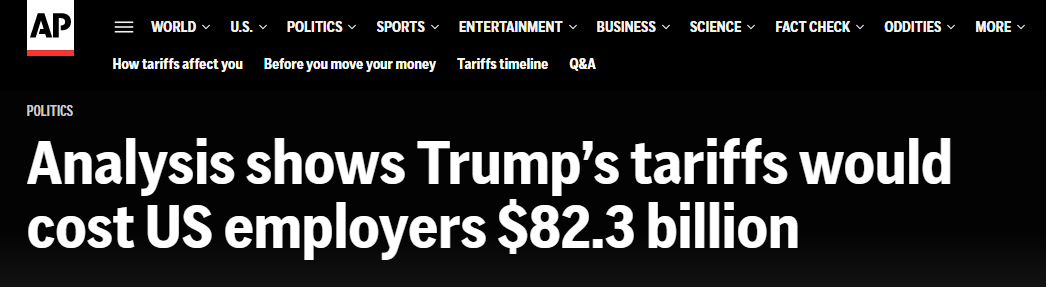
【世界说】摩根大通:关税带来高昂成本 或致美国雇主损失823亿美元
Sou Hu Cai Jing· 2025-07-04 07:41
Core Insights - The current tariff policy under the Trump administration imposes a direct cost pressure of up to $82.3 billion on a specific group of U.S. companies, which may lead to price increases, layoffs, hiring freezes, or profit margin compression [1][2][4] - The analysis quantifies the direct impact of tariffs on companies with annual revenues between $10 million and $1 billion, which employ about one-third of the private sector workforce in the U.S. [2] - Retail and wholesale sectors are particularly vulnerable to the impact of import taxes, contradicting the claim that foreign manufacturers would bear the tariff costs [2][4] Financial Implications - If the initial tariffs remain unchanged, the companies involved could face an additional cost of $187.6 billion [4] - The average cost burden of $82.3 billion translates to approximately $2,080 per employee, equating to 3.1% of the average annual salary [4] - Goldman Sachs estimates that companies may pass on 60% of the tariff costs to consumers, while the Atlanta Federal Reserve suggests that under 10% or 25% tariffs, companies might transfer about half of the costs to consumers [4] Market Reactions - The announcement of the "reciprocal tariff" policy in April led to panic in financial markets, followed by a 90-day negotiation period during which most imported goods faced a 10% baseline tax [4] - Major U.S. companies like Amazon, Costco, and Walmart have temporarily mitigated the impact of tariffs by stockpiling inventory before the implementation [2]

6月份中国制造业PMI继续回升 新订单指数回升至扩张区间
Guo Jia Tong Ji Ju· 2025-06-30 02:04
Group 1: Manufacturing PMI Overview - The manufacturing Purchasing Managers' Index (PMI) for June is 49.7%, an increase of 0.2 percentage points from the previous month, indicating continued improvement in manufacturing sentiment [2] - Large enterprises have a PMI of 51.2%, up 0.5 percentage points, while medium-sized enterprises have a PMI of 48.6%, up 1.1 percentage points, and small enterprises have a PMI of 47.3%, down 2.0 percentage points, all below the critical point [5] - Among the five sub-indices of the manufacturing PMI, the production index, new orders index, and supplier delivery time index are above the critical point, while the raw material inventory index and employment index are below the critical point [6] Group 2: Manufacturing Sub-Indices - The production index is at 51.0%, up 0.3 percentage points, indicating accelerated production activities in manufacturing [7] - The new orders index is at 50.2%, up 0.4 percentage points, suggesting an improvement in market demand for manufacturing [8] - The raw materials inventory index is at 48.0%, up 0.6 percentage points, indicating a continued narrowing of the decline in major raw material inventories [9] - The employment index is at 47.9%, down 0.2 percentage points, reflecting a slight decline in employment sentiment within manufacturing [10] - The supplier delivery time index is at 50.2%, up 0.2 percentage points, indicating faster delivery times from raw material suppliers compared to the previous month [11] Group 3: Non-Manufacturing PMI Overview - The non-manufacturing business activity index for June is 50.5%, an increase of 0.2 percentage points, indicating continued expansion in the non-manufacturing sector [14] - The construction industry business activity index is at 52.8%, up 1.8 percentage points, while the service industry business activity index is at 50.1%, down 0.1 percentage points [17] Group 4: Non-Manufacturing Sub-Indices - The new orders index for non-manufacturing is at 46.6%, up 0.5 percentage points, indicating a slight recovery in market demand [21] - The input prices index is at 49.9%, up 1.7 percentage points, suggesting stable input prices for non-manufacturing activities [21] - The sales prices index is at 48.8%, up 1.5 percentage points, indicating a narrowing decline in sales prices [21] - The employment index is at 45.5%, unchanged from the previous month, indicating continued weakness in employment sentiment in the non-manufacturing sector [21] Group 5: Comprehensive PMI Output Index - The comprehensive PMI output index for June is 50.7%, an increase of 0.3 percentage points, indicating an overall acceleration in production and business activities across enterprises [27]

晶采观察|服务消费迎新利好 释放哪些重要信息?
Yang Guang Wang· 2025-06-28 13:23
Core Viewpoint - The recent joint release of the "Guiding Opinions on Financial Support for Boosting and Expanding Consumption" by six Chinese government departments outlines a roadmap for enhancing consumer spending through 19 key measures aimed at various sectors of the economy [2][3]. Group 1: Financial Support Measures - The "Opinions" emphasize increasing credit support for sectors such as wholesale and retail, catering, housekeeping, and elderly care, particularly focusing on small and micro enterprises [3]. - A specific initiative includes providing low-interest long-term loans to elderly care institutions to improve living conditions and introduce advanced medical equipment, thereby promoting high-quality development in the elderly care industry [3]. Group 2: Service Consumption Focus - The document highlights the importance of service consumption, which is closely linked to high-value-added industries and daily life, including sectors like dining and tourism [2][4]. - The government aims to innovate financing models in cultural tourism, sports, entertainment, education, and housing services, extending loan terms and promoting various financing methods to stimulate service consumption [3][4]. Group 3: Economic Transition and Growth - China's economy is transitioning towards a demand-driven growth model, with service consumption becoming a key driver of domestic demand [4]. - In the first five months of the year, the growth rate of service retail sales outpaced that of goods retail sales, indicating a robust trend in service consumption [4]. Group 4: Payment Services Optimization - The "Opinions" propose enhancing payment services by focusing on key consumption scenarios such as food, housing, travel, and entertainment, aiming to improve the compatibility of various payment methods for a better consumer experience [4]. - There is a recognition that while service consumption has significant growth potential, the current proportion of service consumption in total household spending remains low, indicating room for development [4].
六部门联合出台指导意见 为提振和扩大消费注入金融动能
Ren Min Ri Bao Hai Wai Ban· 2025-06-27 23:56
Core Viewpoint - The People's Bank of China and five other departments have jointly issued guidelines to enhance financial support for consumption, aiming to stimulate high-quality consumption and unlock consumer potential through 19 key measures across six areas [1][2]. Group 1: Financial Support for Consumption - The guidelines emphasize financial support for key areas of consumption, including goods, services, and new types of consumption [2]. - For goods consumption, the focus is on innovating and optimizing consumer credit products to meet diverse consumer needs and enhancing financial support for foreign trade enterprises [2]. - In service consumption, the guidelines propose increased financing support for sectors like retail, hospitality, and elder care, while also promoting innovative financing models in cultural, sports, and educational services [2]. Group 2: Enhancing Financial Supply - The guidelines call for improved professional service capabilities among financial institutions, encouraging them to issue loans to key service sectors to enhance service quality [3]. - A specific loan quota of 500 billion yuan is set for service consumption and elderly care, allowing major financial institutions to apply for refinancing based on the principal of loans issued [3]. - The guidelines also highlight the importance of increasing residents' income levels as a key support for boosting consumption [3]. Group 3: Optimizing Consumption Environment - The guidelines propose that financial institutions focus on enhancing payment convenience across key consumption scenarios, improving compatibility among various payment methods [4]. - There is an emphasis on improving payment services for elderly individuals and foreign visitors, as well as promoting the trial implementation of digital currency in consumption [4].
提振扩大消费需要金融“活水”精准滴灌
Sou Hu Cai Jing· 2025-06-25 23:10
Core Viewpoint - The report emphasizes the importance of a multi-layered consumer finance service system in China, which includes banks, consumer finance companies, and auto finance companies, as a crucial support for stable consumer market development [1][2]. Group 1: Financial Support for Consumption - Six government departments, including the People's Bank of China, have jointly issued guidelines to enhance and expand consumption through 19 key measures, focusing on increasing consumer capacity and optimizing the consumption environment [1][2]. - The guidelines aim to strengthen financial services from both supply and demand sides, addressing diverse financing needs and promoting high-quality consumption supply [3][4]. Group 2: Economic Context and Challenges - The current economic environment is complex, with weak domestic demand and challenges in consumer willingness and ability to spend, necessitating effective financial strategies to stimulate consumption [3][5]. - The shift in consumer expectations from mere availability to quality highlights the need for improved supply of high-quality products and services [4]. Group 3: Financial Innovation and Product Development - Financial institutions are encouraged to innovate credit products and increase support for eligible consumption sectors, thereby lowering barriers for consumers and enhancing their willingness to spend [3][5]. - The guidelines advocate for targeted financial support in various sectors, including retail, hospitality, and recycling, to create a balanced approach between short-term stimulus and long-term supply improvements [4][5].
重大利好!六部门推动金融支持提振和扩大消费
Sou Hu Cai Jing· 2025-06-25 05:52
Core Viewpoint - The People's Bank of China and six other departments have jointly released guidelines to enhance financial support for consumption, aiming to stimulate economic growth through a series of 19 key measures focused on various aspects of consumer finance [1][3]. Group 1: Financial Support Measures - The guidelines propose a comprehensive support system for consumption through financial innovation, creating a virtuous cycle of "policy guidance - financial supply - consumption upgrade" [1]. - Key measures include enhancing consumer capacity, expanding financial supply in consumption sectors, and optimizing the consumption environment [1][3]. - A specific focus is placed on providing 500 billion yuan in low-interest loans (1.5%) to stimulate credit investment in service consumption and elderly care [1][3]. Group 2: Financing Channels - The guidelines emphasize the need to solidify the macroeconomic financial foundation by supporting employment and optimizing insurance coverage [3]. - Financial institutions are encouraged to issue loans to key service sectors such as retail, hospitality, and education, enhancing the quality and efficiency of service consumption [3][4]. - The guidelines also promote diversified financing channels, including bond and equity financing for qualified enterprises in the consumption sector [4]. Group 3: Consumer Potential Release - The new policies are seen as crucial for stabilizing economic growth amid global uncertainties and domestic economic pressures, with consumption being a key driver [5][6]. - Specific areas of focus for financial support include goods consumption, service consumption, and new consumption models [6][7]. - The guidelines advocate for personalized financial products tailored to the unique characteristics of service consumption [7]. Group 4: Strengthening Financial Services - The guidelines call for the optimization of payment services to enhance consumer experience across various payment methods [9]. - A robust credit system is to be established, leveraging national credit information platforms to improve the identification of consumer credit status [9]. - Consumer rights protection mechanisms will be strengthened to ensure transparency and compliance in financial services [9]. Group 5: Long-term Economic Impact - The policies aim to create a synergistic relationship between government guidance and market mechanisms, addressing supply-demand mismatches while facilitating industrial transformation [10]. - The anticipated outcome is a dual upgrade in supply and demand within the consumption market, contributing to high-quality economic development and improved living standards [10].
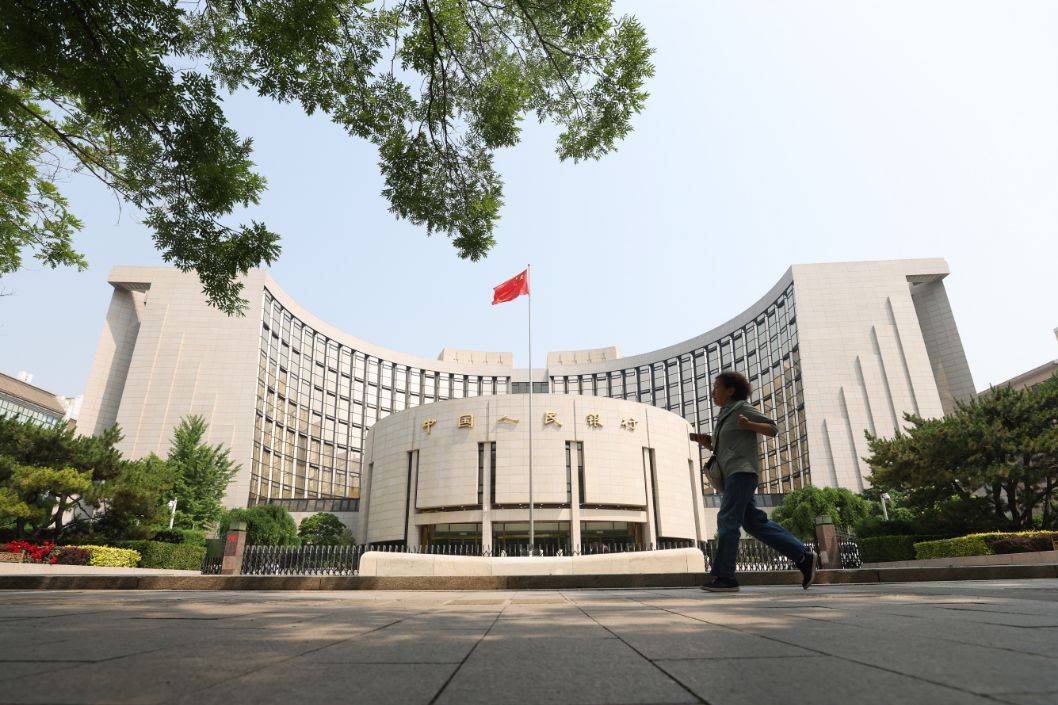
六部门联合发布指导意见明确方向重点—— 加大金融支持提振消费力度
Jing Ji Ri Bao· 2025-06-24 22:07
Core Viewpoint - The People's Bank of China and five other departments have issued guidelines to enhance financial support for consumption growth, aiming to build a multi-level financial service system to stimulate high-quality consumption and unleash consumer potential [1][2]. Group 1: Financial Support for Consumption - The guidelines emphasize the importance of boosting consumption as a key driver for domestic demand and economic stability, aligning with the central government's focus on expanding domestic demand [1][2]. - The document outlines 19 key measures across six areas, including enhancing consumer capacity, expanding financial supply, and tapping into consumer potential [1][2]. Group 2: Focus Areas for Consumption - The guidelines identify key areas for financial support, including goods consumption, service consumption, and new types of consumption, consistent with previous action plans [2][3]. - Goods consumption is currently robust, with durable goods spending reaching levels comparable to the U.S., while service consumption remains underdeveloped, accounting for only 18% of GDP compared to over 40% in developed countries [2][3]. Group 3: Service Consumption Development - Increased financing support will be directed towards sectors such as wholesale and retail, catering, and elder care to unlock basic service consumption potential [3]. - The People's Bank of China has allocated 500 billion yuan for service consumption and elderly care loans, encouraging financial institutions to enhance support for sectors like hospitality, entertainment, and education [3][4]. Group 4: New Consumption Models - The guidelines promote financial support for digital, green, and health-related consumption, encouraging innovation in financial products tailored to new consumption trends [3][4]. - Financial institutions are urged to collaborate with merchants to develop suitable financial products and services that cater to the characteristics of new consumption [3][4]. Group 5: Market Opportunities - The evolving market environment presents structural opportunities for consumer finance, with potential market expansion and optimization of market dynamics [4]. - Financial institutions are encouraged to adapt to market changes and leverage their strengths to pursue differentiated development strategies [4].
全面构建金融服务体系支持提振和扩大消费
Shang Hai Zheng Quan Bao· 2025-06-24 18:12
Group 1 - The core viewpoint of the articles emphasizes the importance of enhancing consumer capacity and supporting service consumption through financial measures [1][2][3] - The People's Bank of China has established a 500 billion yuan service consumption and elderly re-loan to encourage financial institutions to increase support for service consumption sectors [1] - The articles highlight the need for financial innovation to support new consumption models such as digital, green, and health consumption [1][2] Group 2 - The articles outline three important directions for financial support to boost and expand consumption: enhancing consumer capacity, improving supply efficiency, and strengthening basic financial services [2][3] - The focus on increasing household disposable income is seen as crucial for stimulating consumer potential and confidence [3] - The articles discuss the necessity of improving consumption infrastructure, including logistics and supply chain efficiency, to facilitate market expansion and quality [3]
利好来了!六部门联合印发
新华网财经· 2025-06-24 09:53
Core Viewpoint - The article discusses the joint issuance of guidelines by six Chinese government departments, including the People's Bank of China, aimed at enhancing financial support to boost and expand consumption, thereby stimulating economic growth [1][2][3]. Group 1: Overall Requirements - The guidelines emphasize the importance of financial services in supporting the real economy and enhancing consumption, aligning with the principles of Xi Jinping's thought [4]. - The approach combines optimizing supply with expanding demand, integrating the strategy of expanding domestic demand with deepening financial supply-side structural reforms [4]. - Financial innovation is encouraged, with a focus on market-oriented and legal compliance to provide diverse financial services tailored to consumption needs [4]. Group 2: Enhancing Consumption Capacity - The guidelines call for solidifying the macroeconomic foundation to stabilize consumer expectations, emphasizing the need for coordinated financial, fiscal, and industrial policies [6]. - Support for employment and income growth is highlighted, particularly for small and micro enterprises, to enhance consumer confidence [6]. - The development of financial products that cater to retirement and health insurance needs is encouraged to improve consumer willingness to spend [7]. Group 3: Expanding Financial Supply in Consumption - Financial institutions are urged to enhance their organizational structures and professional teams to provide efficient financial services in the consumption sector [8]. - The guidelines promote the use of structural monetary policy tools to support key service consumption sectors, with a specific focus on providing loans to various business entities [9]. - There is a push for increased bond market financing to support cultural, tourism, and educational sectors, as well as consumer finance companies [10]. Group 4: Supporting Key Consumption Areas - Financial institutions are encouraged to facilitate the recycling of consumer goods and provide credit support for essential consumer goods [11]. - The guidelines stress the importance of supporting service consumption, particularly in areas like hospitality, retail, and elder care, with tailored financial products [12]. - New consumption models, such as digital and green consumption, are to be explored, with financial institutions collaborating with merchants to develop suitable financial products [12]. Group 5: Strengthening Financial Infrastructure - The guidelines advocate for financial support in building consumption infrastructure, including facilities for tourism, healthcare, and communication [13]. - Support for the logistics and supply chain sectors is emphasized to enhance the efficiency of the commercial circulation system [14]. Group 6: Optimizing the Consumption Environment - Continuous improvement of payment services is highlighted, focusing on enhancing the compatibility of various payment methods to provide a better consumer experience [15]. - The establishment of a robust credit system in the consumption sector is encouraged to facilitate access to credit for consumers and businesses [16]. Group 7: Organizational Support - The guidelines call for enhanced coordination among local financial management departments and relevant industry authorities to effectively implement the consumption support policies [17]. - Monitoring and evaluation mechanisms are to be established to assess the effectiveness of financial support for consumption [17].