
信用评级

Search documents
美国衰落,不赖别人!早在50多年前,他们就给自己埋了一个大雷
Sou Hu Cai Jing· 2025-05-27 06:58
Group 1 - The core viewpoint is that the decline of the United States is evident, marked by the downgrade of U.S. debt ratings by major agencies, indicating a significant shift in its global standing [1][3] - The U.S. national debt has reached $36 trillion, with annual interest payments exceeding $1 trillion, projected to consume 6.7% of GDP by mid-century, highlighting an unsustainable debt situation [3][5] - The industrial hollowing out of the U.S. is irreversible, with its industrial output dropping from 40% of global production to 15%, significantly lagging behind China [3][5] Group 2 - The decline of the U.S. is both absolute and relative, with China's rapid industrialization and economic growth making the U.S. appear diminished in comparison [5][6] - The root causes of the U.S. decline are internal, particularly the unsustainable debt crisis and industrial hollowing, rather than external factors like China's rise [5][6] - The greed of capital is identified as a fundamental reason for the U.S. decline, stemming from the abandonment of the gold standard and the shift towards debt expansion [6][8] Group 3 - The U.S. faces inevitable trade deficits due to the need to maintain dollar hegemony, leading to increased borrowing and a worsening debt crisis [8] - The reliance on cheap currency for resource acquisition has contributed to the industrial hollowing out, making U.S. production less competitive [8] - The decline of the U.S. is deemed inevitable, with China's rise seen as a historical consequence rather than a primary cause [8]


东方金诚荣获2025(第九届)中国品牌博鳌峰会“年度(行业)最具价值品牌”称号
Xin Lang Cai Jing· 2025-05-26 09:50
Group 1 - The 2025 China Brand Boao Summit awarded Dongfang Jincheng the title of "2025 Annual (Industry) Most Valuable Brand" due to its professional and efficient brand image and high-quality research output [2][4] - Dongfang Jincheng aims to build a national credit rating agency brand by continuously optimizing rating methodologies, upgrading product services, and enhancing the effectiveness of services to the real economy [4] - The company has established a multi-layered brand communication matrix with national mainstream media and authoritative information platforms, resulting in nearly 1,000 media interviews and over 5,000 media exposures annually, with more than 50 reports exceeding one million views [4] Group 2 - Dongfang Jincheng plans to continue fulfilling its mission as a state-owned rating agency, emphasizing its role in supporting the development of the real economy [4] - The company will focus on key and hot issues in economic development, collaborating with major media, information platforms, and participants in the bond market to enhance its promotional efforts and brand connotation [4] - The goal is to create a credit rating agency brand with Chinese characteristics while improving service quality [4]

许安鸿:黄金上涨谨防回落,原油震荡难言多空
Sou Hu Cai Jing· 2025-05-26 05:43
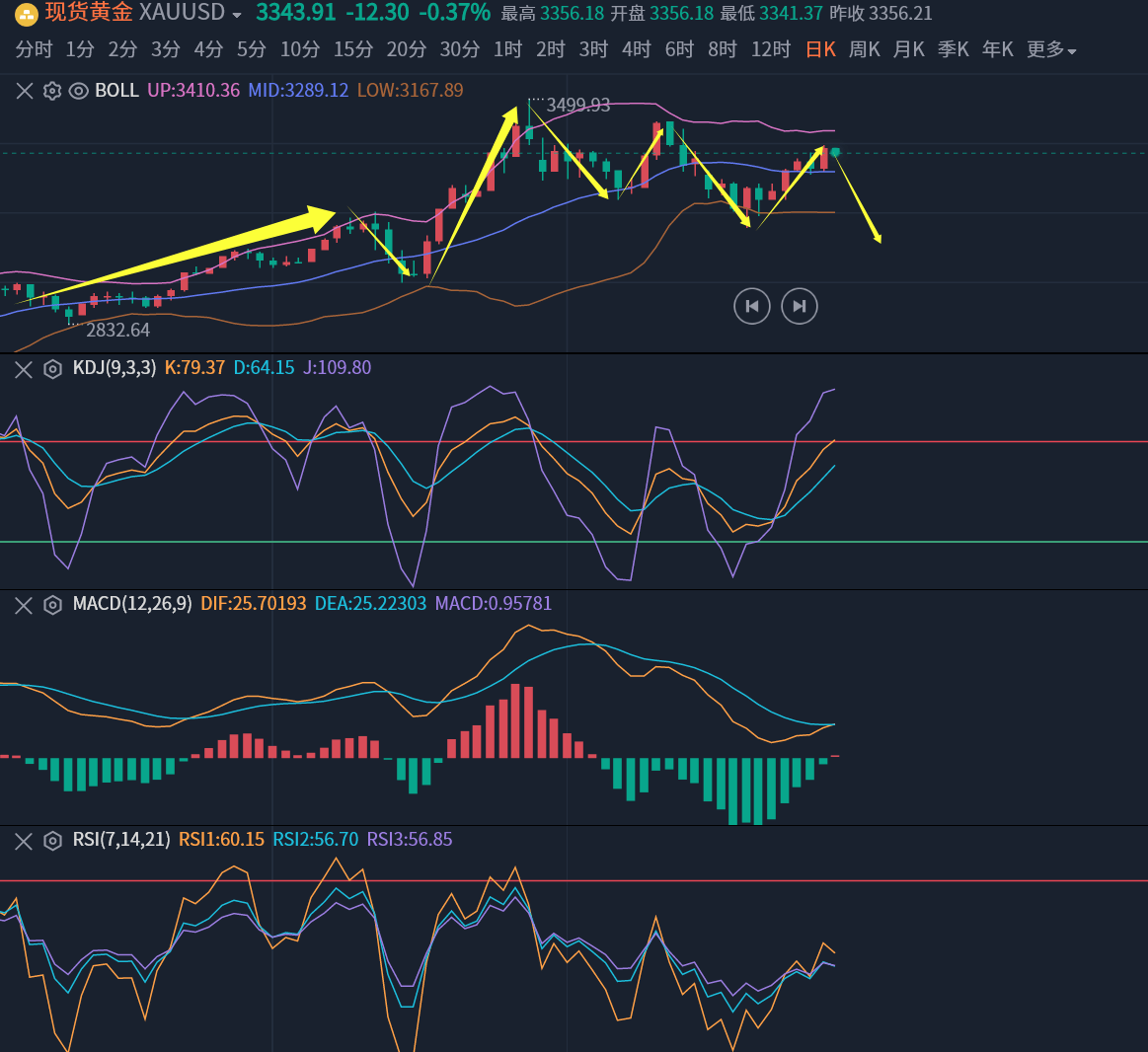
Group 1 - The U.S. President Trump has threatened to escalate the trade war by suggesting a 50% tariff on the EU starting June 1, which has led to a decline in the U.S. dollar index and increased demand for safe-haven assets like gold [1][3] - Gold prices surged over $150 last week due to various factors, including geopolitical tensions in the Middle East and a downgrade of the U.S. sovereign credit rating by Moody's, but the extension of the tariff deadline to July 9 may lead to a potential price correction [3][1] - The WTI crude oil futures experienced fluctuations, initially dropping but then rebounding to above $61 per barrel, influenced by OPEC+ production increases and geopolitical tensions in the Middle East [4][6] Group 2 - The gold market is currently showing signs of potential adjustment after reaching a high of $3365, with technical indicators suggesting a possible downward movement [3][1] - Oil prices are in a volatile state, with support observed at the $60 mark, and the market is expected to remain in a range-bound trading pattern unless significant news or data emerges [6][4] - The overall investment strategy emphasizes risk management, highlighting the importance of avoiding significant losses while navigating market fluctuations [6]
贵金属周报:关税威胁再现,金价受到提振-20250526
Tong Guan Jin Yuan Qi Huo· 2025-05-26 02:10
1. Report Industry Investment Rating - Not provided in the content 2. Core View of the Report - Last week, precious metal prices showed a volatile and slightly stronger trend. The prices of gold and silver were boosted by Moody's downgrade of the US sovereign credit rating, which weakened the US dollar index and increased global market risk aversion. Meanwhile, the tax reform bill promoted by US President Trump in Congress raised concerns about the expansion of the fiscal deficit. Trump's tariff threat on Friday further boosted precious metal prices [3][6]. - The US - EU trade negotiation is ongoing. Trump initially claimed to impose a 50% tariff on EU goods starting from June 1, but later postponed the deadline to July 9. Japan is considering accepting a US tariff reduction, and India and the US are discussing a "three - stage" trade agreement expected to reach a temporary agreement by early July [3][6]. - Although the US - China trade relationship has recently eased, there is still great uncertainty in the trade negotiations between the US and other economies such as the EU and Japan. The global economic outlook remains unclear, and geopolitical risks occur frequently. Investors tend to seek more stable asset allocations, so the short - term gold price is expected to maintain a volatile and slightly stronger trend [3][8]. 3. Summary by Relevant Catalogs 3.1 Last Week's Trading Data | Contract | Closing Price | Change | Change Rate (%) | Total Volume (Lots) | Total Open Interest (Lots) | Price Unit | | --- | --- | --- | --- | --- | --- | --- | | SHFE Gold | 780.10 | 28.30 | 3.76 | 220512 | 178255 | Yuan/gram | | Shanghai Gold T + D | 775.72 | 21.63 | 2.87 | 48148 | 210456 | Yuan/gram | | COMEX Gold | 3357.70 | 152.40 | 4.75 | - | - | US dollars/ounce | | SHFE Silver | 8263 | 162 | 2.00 | 522479 | 634627 | Yuan/kilogram | | Shanghai Silver T + D | 8244 | 131 | 1.61 | 372524 | 3454112 | Yuan/kilogram | | COMEX Silver | 33.64 | 1.21 | 3.73 | - | - | US dollars/ounce | [4] 3.2 Market Analysis and Outlook - The precious metal prices showed a volatile and slightly stronger trend last week due to Moody's downgrade of the US sovereign credit rating, the tax reform bill, and Trump's tariff threat [3][6]. - The US - EU trade negotiation is in progress. Trump postponed the tariff deadline for the EU to July 9. Japan may accept a US tariff reduction, and India and the US are expected to reach a temporary trade agreement by early July [3][6]. - The tax reform bill led by Trump will increase the federal debt by about $3.8 trillion in the next decade, causing concerns about fiscal sustainability and global bond market fluctuations. The bill will face challenges in the Senate vote [6]. - Fed officials emphasized patience in policy adjustment. The market expects a 90% probability of an ECB interest rate cut next month [6][7]. - Geopolitical risks include the ongoing Russia - Ukraine conflict negotiation and the "Gideon's Sword" operation by the Israeli Defense Forces [7]. - This week, focus on US economic data such as GDP and PCE, and events like the US trade negotiations, the Fed's May meeting minutes, and speeches by Fed officials [8]. 3.3 Important Data Information - In May, the US manufacturing PMI reached a three - month high of 52.3, and the service PMI was 52.3, with new orders growing at the fastest rate in a year. However, manufacturing export orders contracted for the second consecutive month, and the employment index declined [9]. - As of the week ending May 17, the number of initial jobless claims in the US decreased by 2000 to 227,000, a four - week low, indicating a stable employment market [9]. - In May, the eurozone manufacturing PMI improved slightly to 49.2, but the service PMI dropped to 48.9, a 16 - month low, dragging down the composite PMI to 49.5. The money market increased bets on further ECB interest rate cuts this year [9]. - In April, US new home sales reached the highest level since February 2022, with an annualized growth of nearly 11% to 743,000 units [9]. - In April, Japan's core CPI rose 3.5% year - on - year, and the price of rice increased by 98%, which may prompt the Bank of Japan to raise interest rates in October [10]. - In April, China's gold imports reached 127.5 metric tons, a 73% increase, a new high in 11 months [10]. - As of May 20, the total gold holdings of precious metal ETFs were 922.46 tons, an increase of 3.73 tons from last week. The silver holdings of ishare were 14217.50 tons, an increase of 302.60 tons from last week [10]. 3.4 Relevant Data Charts - The content provides multiple charts including SHFE and COMEX precious metal prices, inventory changes, non - commercial net long positions, and the relationship between precious metal prices and other economic indicators such as the US dollar, inflation, and interest rates [14][15][16]
江苏中诚信落户苏州工业园区 “ESG+信用”模式破局
Zhong Guo Zheng Quan Bao· 2025-05-25 21:08
薛东阳对中国证券报记者表示,江苏中诚信选择迁址到苏州工业园区,主要基于三方面考量。首先,苏 州工业园区已构建起相对完备的ESG政策体系,包括绿色金融激励政策、企业绿色低碳发展行动计划 等,推动ESG政策与园区产业发展相协同,这与中诚信的业务能力与战略布局相契合。 园区金融机构可参考企业ESG评级结果,针对绿色产业企业设计专属信贷产品,同时对于ESG表现优异 的企业,给予利率优惠、额度提升、审批流程简化等政策倾斜。 ■ ESG领航者 ● 本报记者 郑萃颖 日前,江苏中诚信信用管理有限公司落户苏州工业园区。江苏中诚信将与苏州工业园区合作,共同打 造"ESG+信用"特色服务体系,助力园区企业实现绿色转型,探索具有本土特色的ESG发展路径。 中诚信国际执行副总裁、中诚信绿金总裁薛东阳认为,国际社会正加速推动绿色金融与ESG标准相互融 合,同时绿色金融与实体经济也呈现出深度融合的发展趋势。绿色产业通过绿色金融工具实现产能扩 张,金融机构开展投资端ESG风险评估,推出可持续发展挂钩债等ESG金融工具,引导企业优化可持续 表现。未来江苏中诚信将在苏州工业园区开展绿色金融业务创新,探索推出多样化的绿色金融产品和服 务模式。 ...
美国失去顶级评级,白宫只能打肿脸充胖子
Sou Hu Cai Jing· 2025-05-23 04:49
大家都知道,6月底的时候,美国面临着巨额的6.6万多万亿美债到期的重大风险事件。如果不能够顺利借新还旧,美国将迎来前所未有的信用危机。 在美国要展期自己债券的重要节点上,世界三大评级机构之一的穆迪,把美国国家的信用评级由原来的3A降了一级,降到了Aa一级,并且把展望从负面调 整为了稳定。其实穆迪的这一次调降,已经是国际三大信用评级公司里面调降美国信用最晚的一家了,另外两家惠誉和标普早就下调了对于美国的评级。惠 誉是在2023年的8月1号调降的,而标普更是早在2011年的8月5号就把美国的信用评级调降到了次一级。 有人会问,这个信用评级是干什么的。简单来说,有点像咱们大家用的借款时的芝麻信用、淘宝的信用分这些东西。给你打的分越高,银行就可以以越低的 成本向你授予更高的信用额度。比如说,对于信用评级高的国家,给予的债券成本就会相对更低,大约3%;而同一时间,如果你的信用评级更低,可能给 你的债券成本就要到3.5%,甚至4%。 对于美国现在处在的关键时点来说,任何一点点在债券未来利率上可能的上调,都有可能是压死骆驼的稻草。毕竟,美债现在已经深陷到包括流动性危机以 及信任危机所交织在一起的收益率大幅上涨的行情中了。1 ...
美元颓势难挡,市场“唱衰”声浪高涨
Huan Qiu Wang· 2025-05-23 02:41
美国财政状况的持续恶化是美元走弱的重要原因之一。国际信用评级机构穆迪本月16日宣布,将美国主权信用评级从Aaa下调至Aa1,理由是美国 政府债务和利息支付比例增加。这一消息对市场信心造成冲击,在穆迪宣布降级后的首个交易日,30年期美国国债收益率盘中突破5%,美元对10 种非美货币汇率下跌。 【环球网财经综合报道】近期,金融市场美元走势备受关注,美元指数一路下挫,市场对美国经济及财政状况的担忧情绪不断升温。 22日晚间消息显示,美国30年期国债收益率短线拉升,日内上升逾2个基点,报5.123%,达到2023年10月以来的最高日内水平,距离2007年以来 的最高点越来越近。这反映出投资者对特朗普减税计划表示反对,对财政赤字的担忧开始对市场产生压力。 5月21日,衡量美元对六种主要货币的美元指数再次跌破100整数关口,这是其连续第三个交易日下跌。5月22日盘中,美元指数延续弱势震荡态 势,最低触及99.43。其中,美元兑日元汇率一度下跌0.6%至142.81,创下两周以来的新低。自今年1月达到高点以来,美元指数累计跌幅已接近 10%,市场看空情绪愈发浓厚。 彭博社援引相关指标指出,货币期权交易员对美元今后一年走势的 ...

美信用危机警示全球治理变革紧迫性
Jing Ji Ri Bao· 2025-05-22 21:58
Group 1 - Moody's downgraded the U.S. sovereign credit rating from Aaa to Aa1, changing the outlook from "negative" to "stable" [1] - The U.S. federal government debt has exceeded $36 trillion, with $6.5 trillion in bonds maturing in June alone [1] - The fiscal deficit for the first half of FY2025 has surpassed $1.3 trillion, marking the second-highest half-year deficit in history [1] Group 2 - The downgrade has led to a spike in bond yields, with 30-year Treasury yields exceeding 5% and 10-year yields rising above 4.5% [1] - The increase in U.S. borrowing costs is expected to raise global lending rates and exacerbate debt risks in emerging markets [2] - The downgrade reflects long-standing imbalances in U.S. economic governance, with political parties engaging in short-term fiscal policies [3] Group 3 - The U.S. government's reliance on tax cuts and increased spending has led to a projected $4 trillion increase in federal deficits over the next decade if the 2017 Tax Cuts and Jobs Act is extended [3] - The U.S. GDP contracted by 0.3% on a year-over-year basis in Q1, marking the worst quarterly performance since 2022 [3] - The downgrade serves as a reflection of the urgent need for reform in the global governance system, emphasizing the necessity for a multi-polar currency coordination mechanism [4]
桥水基金创始人:美国信用降级带来的风险将超乎想象
财富FORTUNE· 2025-05-22 14:07
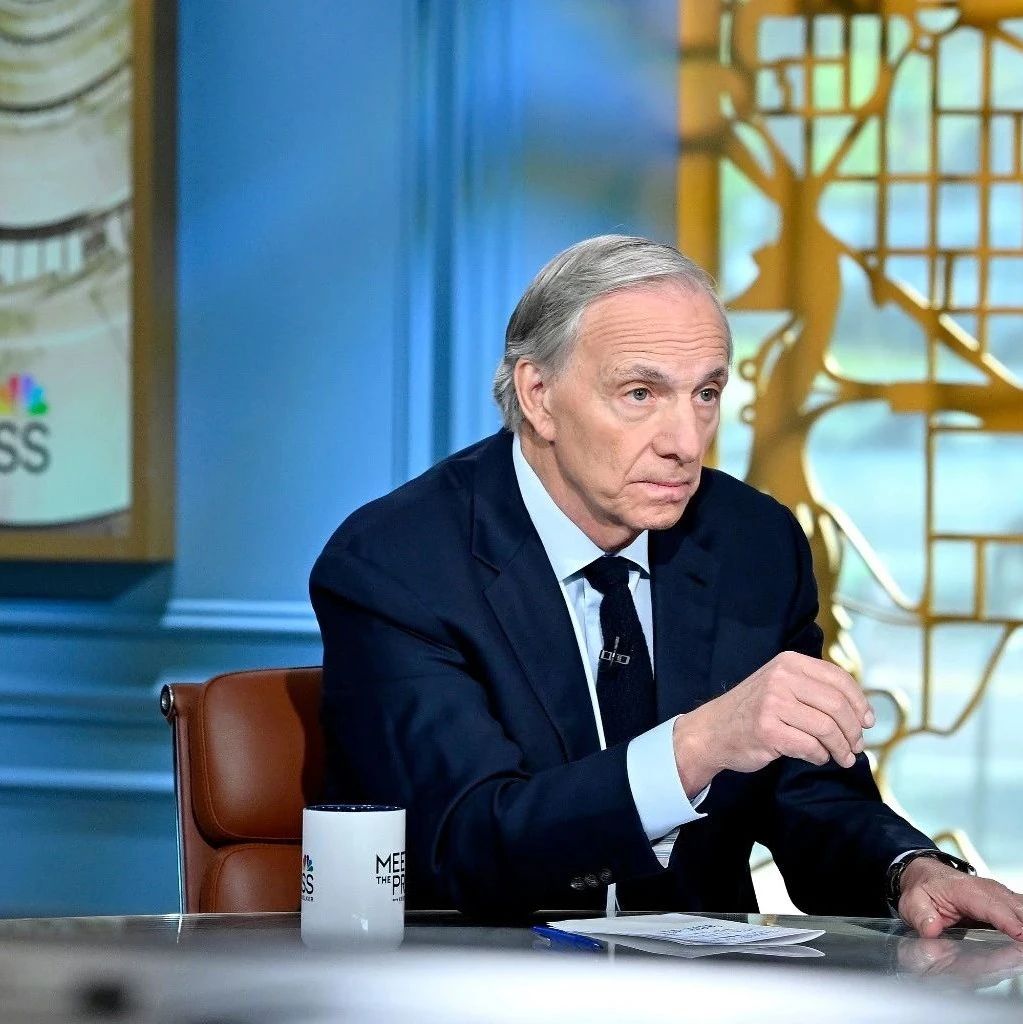
达利欧在X平台发文称:"关于美国债务降级,需知信用评级仅评价了政府违约风险,因而低估了信用 风险。" 上周,评级机构穆迪将美国评级从AAA下调至Aa1,理由是美国国债膨胀导致财政状况日益恶化。在穆 迪下调评级后,美国在三大评级机构中彻底失去最高评级。 穆迪表示,目前国会审议的预算法案只会进一步增加美国本就高企的债务与利息支出。 穆迪在声明中表示:"我们认为当前正在审议的财政提案不会在未来几年实质性地削减开支和缩小赤 字。" 然而,尽管穆迪认为美国违约拒绝偿债的情景目前不太可能出现,但达利欧认为存在一个更大的潜在风 险。他指出,美国失去顶级评级甚至未涵盖更危险的威胁:通过印钞偿债。 达里欧强调:"评级未涵盖负债国通过印钞偿债所带来的更大风险——此举将导致债券持有者因所获资 金的购买力下降(而非偿付金额减少)而蒙受损失。" 若美国单纯选择通过增发美元偿债,而非削减其他开支或增加财政收入,货币供应量激增将引发通胀。 在此情形下,债券持有者获得的收益因美元泛滥稀释,实际价值将大打折扣。 传奇投资人瑞·达利欧警告称,穆迪近期对美国信用评级的调降仅反映出债券持有者当前承受的部分风 险。 达里欧写道:"换言之,对于关注货币 ...
综述|美税改法案引市场担忧 美债收益率攀升美股遭抛售
Xin Hua She· 2025-05-22 08:06
Core Viewpoint - The U.S. Congress's tax reform proposal is raising concerns about significantly increasing the federal deficit, leading to a rise in U.S. Treasury yields and a sell-off in the stock market [1][2]. Group 1: Market Reactions - The U.S. stock market experienced a notable decline on May 21, with the Dow Jones Industrial Average dropping 816.80 points to close at 41,860.44, a decrease of 1.91% [1]. - The S&P 500 index fell by 95.85 points to 5,844.61, down 1.61%, while the Nasdaq Composite Index decreased by 270.07 points to 18,872.64, a drop of 1.41% [1]. - The auction of $16 billion in 20-year Treasury bonds saw weak demand, resulting in a rise in bond yields, which negatively impacted the stock market [1]. Group 2: Treasury Yields - The 30-year Treasury yield surpassed 5% for the second time that week, closing at 5.09%, marking the highest level since October 2023 [2]. - The 10-year Treasury yield increased by 11 basis points to 4.6% on the same day [2]. - The yield on the 20-year Treasury bond reached 5.047%, the first time it has exceeded 5% since October 2023, indicating a lack of interest in purchasing new bonds [1][2]. Group 3: Economic Concerns - The proposed tax reform is expected to increase the federal deficit by approximately $3 trillion over the next decade, raising the debt-to-GDP ratio from 100% to a record 125% [2]. - Moody's downgraded the U.S. sovereign credit rating from Aaa to Aa1 due to rising government debt and interest expenditures [2]. - Concerns about inflation control and debt management are contributing to the rise in Treasury yields, as noted by market analysts [3]. Group 4: Corporate Earnings Impact - Major retailers, including Target, have lowered their full-year earnings forecasts due to slowing consumer spending and declining confidence, further pressuring the stock market [3].

