电动汽车

Search documents
特朗普大动作!宣称对韩国加征关税;美股收涨藏隐忧,芯片股已现“疲软”信号,金银上演“过山车”行情
Jin Rong Jie· 2026-01-27 00:37
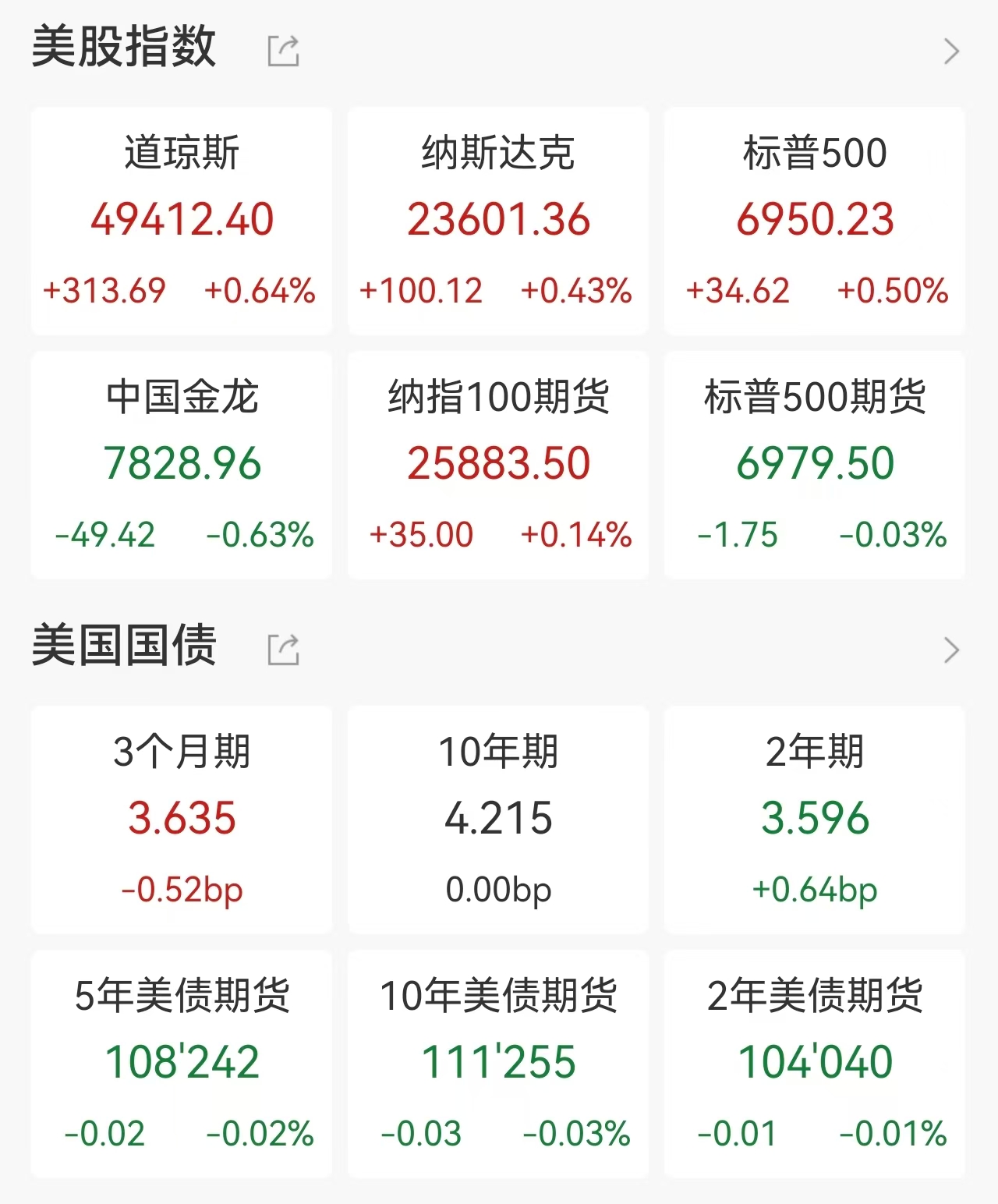
当地时间1月26日,美股三大指数在波动中集体收涨,道琼斯指数上涨313.69点,涨幅0.64%,报49412.40点;标普500指数涨0.50%,报6950.23点;纳斯达克 指数涨0.43%,报23601.36点。 | 道琼斯 | 纳斯达克 | 标普5( | | --- | --- | --- | | 49412.40 | 23601.36 | 6950.1 | | +313.69 +0.64% +100.12 +0.43% +34.62 + | | | | 中国金龙 | 纳指100期货 | 标普500 | | 7828.96 | 25883.50 | 6979 ! | | -49.42 -0.63% +35.00 +0.14% | | -1.75 | | 美国国债 | | | | 3个月期 | 10年期 | 2年前 | | 3.635 | 4.215 | 3.59 | | -0.52bp | 0.00bp | +0.64b | | 5年美债期货 | 10年美债期货 | 2年美债! | | 108'242 | 111'255 | 104'04 | | -0.02 -0.02% | -0.03 -0.03% ...

财经观察:中国电动汽车加速驶进英国市场
Huan Qiu Shi Bao· 2026-01-26 22:51
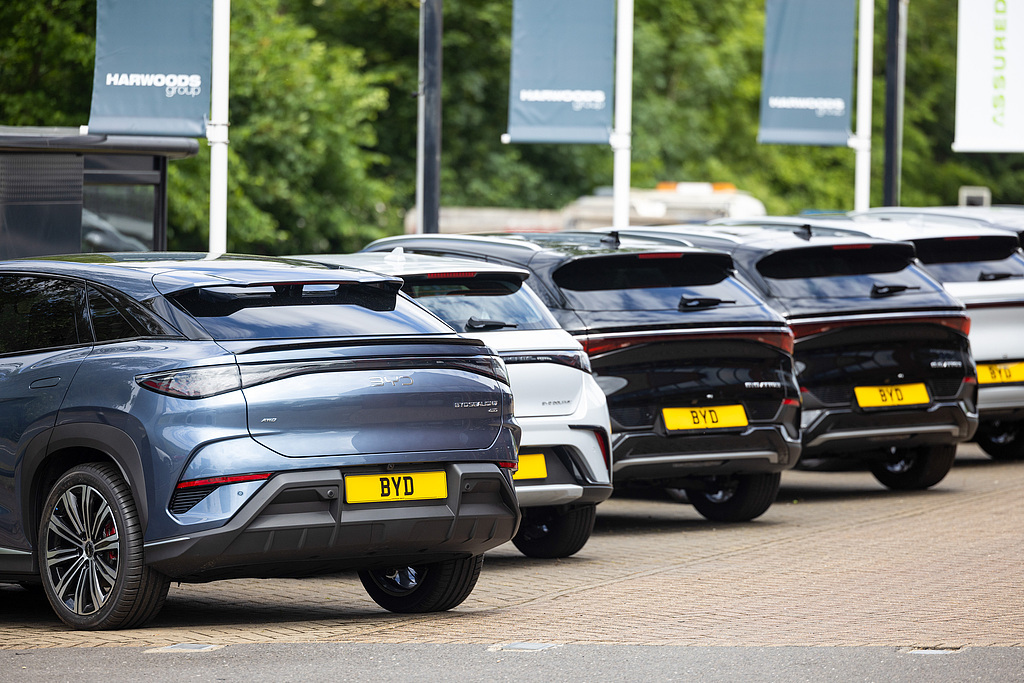
【环球时报驻英国特约记者 纪双城 环球时报记者 丁雅栀】"中国汽车制造商瞄准英国。"英国《金融时报》日前以此为题报道称,蔚来、埃安和 极氪在内的中国车企纷纷计划于今年在英国推出相关车型。报道认为,对于希望拓展海外市场的中国汽车制造商而言,英国市场至关重要,因为 英国并未对中国制造的电动汽车征收更高的关税。此外,由于缺乏本土的大众市场汽车制造商,英国消费者也更容易接受新品牌。 然而,前往英国市场对于中国车企来说也面临一些挑战,比如需要面临特斯拉、大众等欧美电动汽车的激烈竞争。另外,钟师提醒,中国新能源 车出口英国与出口欧洲其他国家并无本质区别,核心挑战仍集中在售后服务与文化融入层面。英国消费者对首次接触的中国品牌服务要求更高, 而日韩车企已在欧洲深耕多年,拥有成熟完善的服务体系,中国车企要想立足,需搭建起高效、到位的售后服务架构;同时,在市场推广、品牌 传播等方面,如何更好地结合当地文化,也是中国车企需要突破的重要课题。 为什么中国汽车厂商瞄准英国市场?汽车行业专家钟师26日接受《环球时报》记者采访时表示,英国脱欧后,其市场准入规则、监管体系及相关 流程已与欧盟形成一定的差异,拥有独立的政策考量和执行路径。此外 ...


马克龙受到奇耻大辱后,转头对中国提出两个请求,特朗普对华摊牌
Sou Hu Cai Jing· 2026-01-26 15:10
Group 1 - The core issue revolves around the escalating trade tensions between the US and France, particularly concerning a proposed 200% tariff on French wine and champagne, which could severely impact France's exports to the US [1] - France's wine and spirits exports to the US amounted to €2.4 billion in 2024, with champagne exports representing 20% of global exports, highlighting the significance of the US market for French producers [1] - The French Agriculture Minister condemned the proposed tariffs as "unacceptable and extremely brutal," indicating the potential economic repercussions for the French agricultural sector [1] Group 2 - In response to the US pressure, French President Macron has sought closer ties with China, requesting increased Chinese investment in key sectors such as electric vehicles, batteries, renewable energy, and digital technology [3][4] - Macron's shift towards China reflects a strategic move to reduce dependence on the US and enhance France's position within the EU, as he aims to leverage cooperation with China to counterbalance US influence [4] - The French approach to China includes a demand for technology transfer alongside investments, which has drawn criticism domestically for not fostering equal partnerships [5] Group 3 - The US is aware that deepening EU-China cooperation could undermine its global influence, prompting a dual strategy of engaging China while simultaneously pressuring Europe to assume greater security responsibilities [7][9] - The UK has also shown a willingness to strengthen ties with China, as evidenced by the approval of a new Chinese embassy project, indicating a broader trend of countries seeking economic partnerships with China amid US-EU tensions [9] - The evolving geopolitical landscape suggests a shift towards multilateralism, as countries reassess their alliances and economic strategies in light of the changing global power dynamics [9]

不许加拿大和中国达成贸易协议,外媒:特朗普再次拿出关税武器
Sou Hu Cai Jing· 2026-01-26 15:08
事实上,美国近年来多次利用关税这一武器威胁其贸易伙伴。2025年,美国就曾通过关税手段迫使日本、韩国和欧盟等国家和地区扩大对美投资,以换取美 国降低对其商品的关税税率。进入2026年,美国依旧没有放弃通过关税向加拿大施压的策略,特朗普在1月24日的言论中再次强调了加拿大与美国经济的紧 密联系。根据一些分析,正是由于这层紧密的经济捆绑关系,美国才会如此强硬地对待加拿大,试图通过强硬手段让加拿大回归对美国有利的贸易模式。 美国总统特朗普对于加拿大和中国达成的贸易协议反应强烈,公开表示愤怒,并且威胁要再次对加拿大商品加征关税。根据外媒的报道,特朗普在多次公开 场合批评加拿大,并提到如果加中之间的贸易协议继续下去,美国将对加拿大商品征收100%的关税。特朗普指出,不能允许加拿大成为中国产品进入美国 市场的"中转港",因为加拿大75%的出口商品是销往美国市场。特朗普的这一言论表露出美国希望掌控贸易的强烈意图,显然他在用"关税"这一工具打压加 拿大,试图通过这种方式迫使加方回到美国的"怀抱"。 加拿大总理卡尼在访问中国期间明确表达了加方愿意深化与中国的贸易合作的意图。在这次访问中,加拿大和中国签署了一系列重要的贸易协议, ...
载入史册的一周!“AI信仰” 迎超级大考!ICE引爆停摆危局,美联储降息悬念与日元干预谜团即将揭晓
Zhi Tong Cai Jing· 2026-01-26 13:58
Core Viewpoint - The market focus is shifting from geopolitical crises to macroeconomic factors, fiscal and monetary policies, and corporate earnings disclosures as the last trading week of January 2026 approaches. Key events include the Federal Reserve's interest rate decision and earnings reports from major tech companies like Tesla and Apple, alongside global storage leaders such as Samsung and SK Hynix [1] Economic and Market Overview - The S&P 500 index saw a slight increase of less than 0.1% on Friday but experienced a weekly decline of 0.4%. The Dow Jones Industrial Average fell by 0.7% for the week, while the Nasdaq Composite, primarily driven by tech stocks, also entered negative territory with an overall drop of approximately 0.1% [2] - A significant price surge occurred in the U.S. natural gas futures market, with prices skyrocketing by 75% over five trading days due to a winter storm impacting over 1.5 million people [2] - The World Economic Forum in Davos highlighted increasing divisions between the U.S. and its Western allies, alongside intense domestic political confrontations that could lead to a government shutdown [2] Federal Reserve and Monetary Policy - Investors expect the Federal Reserve to maintain the current interest rate range of 3.5%-3.75%, with a 98% probability of this outcome according to CME data. The focus will be on Chairman Powell's outlook on inflation, the job market, and future interest rate paths [6][18] - The nomination for the next Federal Reserve Chair is anticipated to be announced soon, with Rick Rieder from BlackRock emerging as a leading candidate [6][19] Corporate Earnings and Tech Sector - Approximately one-fifth of S&P 500 companies will report quarterly earnings this week, including four of the "Magnificent Seven" tech giants: Apple, Microsoft, Meta, and Tesla. This earnings season is crucial for assessing the continuation of the current bull market [5][10] - The tech sector has issued nearly $700 billion in investment-grade debt over the past quarter, reflecting a significant shift in the credit market driven by AI investments [8] - Analysts are closely monitoring the earnings reports from major storage companies like SanDisk, Western Digital, and Seagate, as well as semiconductor giants Samsung and SK Hynix, to gauge the impact on the overall market [9][15] Geopolitical and Regulatory Developments - The Senate Agriculture Committee is set to hold hearings on the CLARITY Act, a significant step in the U.S. cryptocurrency regulatory process, which has become increasingly complex amid election year dynamics [7] - The geopolitical landscape remains tense, with concerns about the U.S. dollar's status as a reserve currency and the potential for a more divided and dangerous geopolitical world [3] AI and Market Sentiment - The ongoing "AI faith" narrative is a driving force behind the current bull market, with significant investments in AI infrastructure and applications. The upcoming earnings reports from major tech companies will serve as a critical test for this narrative [10][11] - The market is particularly focused on how AI investments translate into actual productivity growth and revenue, with companies like Tesla and Meta under scrutiny for their AI-related revenue streams [12][13]


特朗普:中国正在“接管”加拿大!话音刚落扬起100%关税大棒
Sou Hu Cai Jing· 2026-01-26 13:12
美国新闻报道称,美国总统特朗普突然措辞激烈的发文称,"中国正在成功且彻底地接管加拿大,这让 我感到很难过,只希望他们能够别碰加拿大。" 很可笑的是,中加正常经贸合作,放在特朗普口中却成了所谓"接管",但深层分析下不难看出,这看似 荒诞的一幕,背后暗藏三重战略焦虑,经贸合作只是最浅显的。 (加拿大总理卡尼在访华期间,不仅签署多项协议,还明确表示,与中国打交道远比和美国更具可预测 性) 这件事,还要从加拿大总理卡尼访华说起。 这期间签署了有史以来第一份高水平合作文件——《中国-加拿大经贸合作路线图》,并决定重启高级 别经济财金战略对话、全面拓展各领域经贸合作,路线图涵盖农业、能源、新材料等。 当然,最具实质性的突破体现在电动汽车领域。加拿大政府宣布取消此前对中国电动汽车加征的100% 附加税,改为设立每年4.9万辆进口配额,配额内享受6.1%最惠国关税。 这一政策调整旨在为加拿大消费者提供更多选择,同时吸引中国车企在加投资设厂。按照预期,未来几 年内,中国品牌很可能占据加拿大电动汽车市场约10%的份额。 (特朗普发文称,加拿大与中国达成协议,相当于自取灭亡,届时美国将立即对其加征100%关税) 中加对外释放合作信 ...
Silver Price Vs BTC USD: Which Is a Better Investment in 2026?
Yahoo Finance· 2026-01-26 13:08
Core Insights - Silver prices have surged significantly, reaching the $90s-$110 range in 2026, with a year-to-date gain of approximately 53% on top of a 50% increase in 2025 [2] - Industrial demand is the primary driver of silver's price increase, with industrial consumption reaching around 680 million ounces in 2024, accounting for nearly 60% of total global demand [3] - The gold-silver ratio has decreased from approximately 120:1 in April 2025 to about 46:1 today, indicating a historical trend of silver outperforming other commodities and risk assets [6] Industry Dynamics - The current silver price rally is characterized as a physical short squeeze, with market analysts noting that mine supply has stagnated since peaking around 2016 [4] - Technical analysis shows that silver has decisively surpassed the $100 psychological level, with potential upside targets ranging from $200 to $375 based on historical breakouts [5] - Projections for solar PV installations in 2026 suggest a consumption of approximately 120-125 million ounces of silver, while electric vehicle production is expected to add another 70-75 million ounces [7]
白银缺口为何持续扩大?
虎嗅APP· 2026-01-26 10:26
以下文章来源于东针商略 ,作者东针商略 东针商略 . 聚焦科技趋势,分享商业新知,关注世界变化,一起思考有价值的内容,在沸腾的时代里,并肩成长。 本文来自微信公众号: 东针商略 ,作者:东针商略,题图来自:视觉中国 白银价格历史上首次突破每盎司100美元大关,年内涨幅超过44%,创下历史新高。这一剧烈波动背 后,是白银市场连续多年且持续扩大的供需缺口,标志着白银正从传统的金融附属品转向由实体产业 主导的关键战略资源。 根据世界白银协会数据,全球白银市场自2021年以来已陷入持续的结构性赤字。2025年供需缺口接 近3亿盎司,创下历史最高纪录,而2026年这一缺口预计将进一步扩大。 推动需求爆发的核心力量来自工业领域,尤其是光伏、电动汽车与AI基础设施的快速增长。目前工 业用银已占白银总需求的60%以上,其中光伏产业的需求在过去五年增长超过1.6倍,白银因其不可 替代的导电与稳定性,成为绿色能源转型中难以绕过的关键材料。 然而,与需求端的强劲增长形成尖锐矛盾的是,白银的供应体系却呈现刚性约束。 全球超过70%的白银产量来自铜、铅、锌等金属的伴生矿,其产量取决于主金属的投资周期,对银价 变化反应迟钝。 矿产银产量 ...

宁德时代再落子印尼!
起点锂电· 2026-01-26 10:11
Group 1 - CATL is expanding its overseas projects in smart chassis after establishing battery factories and energy storage projects [2] - CATL's subsidiary, Times Intelligent, signed a memorandum with Indonesian Battery Company (IBC) to explore integrated smart chassis for local electric vehicle development [2][3] - The integrated smart chassis platform developed by Times Intelligent incorporates key technologies such as battery, thermal management, electric drive, and intelligent controllers [2] Group 2 - The launch of the Rock Solid skateboard chassis significantly shortens the automotive manufacturing cycle and enhances industry efficiency while reducing vehicle development costs [3] - Times Intelligent has gained interest from several domestic automakers, with models expected to be launched on a large scale starting this year [3] - The collaboration in Indonesia aligns with CATL's nickel resource and battery industry chain project, which has a total investment of nearly $6 billion and aims to support 200,000 to 300,000 electric vehicles [3][4] Group 3 - The battery project in Indonesia includes a facility in West Java with an initial capacity of 6.9 GWh, designed to be highly intelligent [4] - The project has received attention from high-ranking Indonesian officials, including the President and various ministers, indicating strong governmental support [5] - CATL is also establishing a recycling system in Indonesia with a metal recovery rate exceeding 95%, capable of recycling approximately 20,000 tons [5] Group 4 - CATL signed an agreement with Vena Energy to provide a 4 GWh EnerX battery energy storage system for a project in Indonesia, which will help alleviate Singapore's electricity shortages [6] - The EnerX system utilizes CATL's 530Ah cells, achieving a 15% reduction in system lifecycle costs [6] - Indonesia's significant nickel and cobalt resources, along with its push for local industry development, make it a strategic location for CATL's investments [6][7] Group 5 - CATL's early investments in Indonesia aim to seize opportunities in the region, with plans for further developments in other Southeast Asian countries [7]


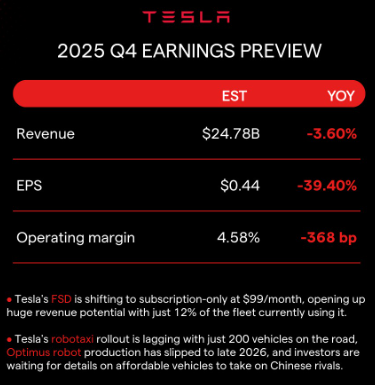
汽车业务承压,特斯拉(TSLA.US)高估值将由“AI与能源”叙事撑起?
Zhi Tong Cai Jing· 2026-01-26 08:35
Core Viewpoint - Tesla continues to be a highly controversial and closely watched stock, with polarized investor opinions regarding its future performance and valuation [1] Group 1: Financial Performance - In Q3, Tesla achieved record revenue of $28.1 billion, a 12% year-over-year increase, with deliveries reaching 497,099 vehicles [2] - Operating expenses surged by 50% year-over-year to $3.4 billion, leading to a contraction in operating margin to 5.8% [2] - Earnings per share (EPS) fell by 31% year-over-year to $0.50, below market expectations [2] Group 2: Future Projections - Q4 delivery volume is projected to decline by 15.6% year-over-year to 418,227 vehicles, indicating a slowdown in growth [3] - Analysts predict a 3.6% year-over-year revenue decline for Q4 2025, with total revenue for the fiscal year expected to decrease by 2.8% [5] - The automotive sales revenue is forecasted to reach $17.97 billion, reflecting a 3.7% year-over-year decline [5] Group 3: Business Segments - Tesla's energy storage segment showed significant growth, with a record deployment of 14.2 GWh in Q4 and a total of 46.7 GWh for the year, a 49% increase [3] - The energy business is becoming an increasingly important profit driver, with expected revenue of $3.66 billion, a 19.7% year-over-year increase [3] Group 4: Strategic Initiatives - Full Self-Driving (FSD) technology is transitioning to a subscription model, with a target of 10 million active subscribers, although current adoption is only at 12% [7] - The Optimus humanoid robot is a key part of Tesla's future strategy, with production timelines pushed to late 2026 [9] Group 5: Market Challenges - Tesla faces significant competition, particularly in Europe and China, where it is losing market share to local manufacturers [5] - The company's stock is currently valued at a high P/E ratio of 201, with analysts expressing caution regarding its valuation [12]