
白银供需缺口

Search documents
金信期货日刊-20260302
Jin Xin Qi Huo· 2026-03-02 01:01
1. Report's Industry Investment Rating - Not provided in the given content 2. Core View of the Report - The short - term trend of Shanghai Silver futures is high - volatility shock, with a mid - term bullish view. Do not blindly chase high prices. In the short term, operate with high - selling and low - buying and light positions with stop - loss. In the mid - term, due to the continuous supply - demand gap, the recovery of industrial demand, and the expected decline in real interest rates, gradually lay out long positions while strictly controlling positions and leverage risks [2][3][4] 3. Summary by Relevant Content Categories 3.1 Hot Focus - Shanghai Silver futures prices are rising. In the short term, it will follow London Silver to fluctuate widely in the range of $70 - 100 per ounce, with the core support for domestic prices at 19,000 yuan per kilogram and the strong pressure area at 25,000 yuan per kilogram. The mid - term logic is bullish, mainly due to factors such as the supply - demand gap, the recovery of industrial demand, and the expected decline in real interest rates [2][3][4] 3.2 Trading Reference | Variety | Code | Expected Range | Trend | Attention Direction | 7 - day ATR | | --- | --- | --- | --- | --- | --- | | Coking Coal | JM2605 | 1071 - 1102 | Oscillating bearish | Look short on rallies | 31 | | Iron Ore | I2605 | 746 - 758 | Oscillating bullish | Look long on dips | 12 | | Glass | FG605 | 1051 - 1073 | Oscillating | High - selling and low - buying | 22 | | Soda Ash | SA605 | 1187 - 1210 | Oscillating bullish | Look long on dips | 23 | | CSI 1000 | IM2603 | 8478 - 8620 | Oscillating bullish | Look long on dips | 142 | | SSE 50 | IF2603 | 4696 - 4752 | Oscillating bullish | Look long on dips | 56 | | Shanghai Gold | AU2604 | 1140 - 1165 | Oscillating bullish | Look long on dips | 25 | | Shanghai Silver | AG2604 | 22548 - 24117 | Oscillating bullish | Look long on dips | 1569 | | Alumina | AO2605 | 2690 - 2767 | Oscillating bearish | Look short on rallies | 77 | | Caustic Soda | SH605 | 2085 - 2141 | Oscillating bearish | Look short on rallies | 56 | | PTA | TA2605 | 5218 - 5328 | Oscillating bullish | Look long on dips | 110 | | Lithium Carbonate | LC2505 | 172580 - 184080 | Oscillating bullish | Look long on dips | 11500 | | Pulp | SP2605 | 5226 - 5292 | Oscillating bullish | Look long on dips | 66 | [6] 3.3 Technical Analysis 3.3.1 Stock Index Futures - Today, the Shanghai Composite Index opened lower and moved higher, oscillating upward throughout the day, while the ChiNext Index oscillated at a low level. Technically, the 60 - minute chart maintains the upper edge of the box - shaped oscillation, with a short - cycle downward trend. In operation, buy on dips and be cautious about chasing high prices [9][10] 3.3.2 Gold - Affected by the holiday rise in overseas markets, gold opened sharply higher and oscillated throughout the day, with an overall bullish - oscillating view [15] 3.3.3 Iron Ore - Australia and Brazil's shipments maintain a normal rhythm, and there is still an expectation of a loose supply in the medium - to - long - term due to the mine production capacity release cycle. On the demand side, steel mills resume production after the holiday, but the start of terminal demand still takes time. Technically, the trend remains unchanged, and a bearish view is maintained [17][18] 3.3.4 Glass - The daily melting volume slightly decreased, and during the seasonal off - season, the factory inventory increased again during the holiday. Attention should be paid to the resumption progress of deep - processing enterprises after the holiday. Technically, the recent trend is unclear, and it should be viewed as a wide - range oscillation [21][22] 3.3.5 Methanol - Methanol is difficult to continue to rise sharply after a spike. The core reason is that its supply - demand pattern does not support continuous price hikes. The domestic methanol plant operating rate remains high, and the supply - side pressure has not eased. There is an expectation of inventory accumulation at ports after the holiday, which suppresses prices [24] 3.3.6 Pulp - The trading sentiment in the pulp spot market is average, and the inventory at domestic ports continues to increase. It will take time to digest the port inventory after the holiday. Downstream paper mills are gradually resuming work, and some paper enterprises have issued price increase notices. The local price inversion of offset paper and coated paper is serious, and the futures market has shown an interval - oscillation consolidation trend recently [26]
金信期货日刊-20260227
Jin Xin Qi Huo· 2026-02-27 00:11
Report Summary 1. Report Industry Investment Rating No relevant information provided. 2. Core View of the Report - The short - term trend of Shanghai silver futures is high - volatility shock, and the medium - term strategy is to go long on dips without chasing high prices [3]. - A - shares showed an overall oscillating market, with shrinking trading volume, and the 60 - minute chart maintained a box - type oscillation [8]. - Gold should be treated as oscillating with a bullish bias [10]. - Iron ore should be viewed with a bearish bias, considering supply and demand and market trends [12][13]. - Glass should be viewed as a wide - range oscillation [16]. - Methanol is unlikely to continue a sharp rise due to its supply - demand pattern [18]. - Paper pulp has several potential positive factors, including the risk of a French pulp mill's bankruptcy, the rebound of European and American coniferous pulp prices, and the long - term positive drive of a new domestic national standard [21]. 3. Summary by Related Catalogs Shanghai Silver Futures - On February 25, the main contract of Shanghai silver opened high and closed with a gain of over 4.57%, mainly due to the sharp rise of the overseas market during the Spring Festival and the subsequent catch - up in the domestic market. In the short term, it will oscillate widely between 70 - 100 US dollars per ounce in the London silver market, corresponding to a core support of 19,000 yuan per kilogram and a strong resistance area of 25,000 yuan per kilogram in the domestic market. In the medium term, the logic is bullish, supported by the supply - demand gap, industrial demand recovery, and macro - economic factors [4][5]. A - shares - The overall A - share market showed an oscillating trend on the day, with shrinking trading volume, and the 60 - minute chart maintained a box - type oscillation [8]. Gold - Affected by the overseas market's rise during the holiday, gold opened significantly higher and oscillated throughout the day, and should be treated as oscillating with a bullish bias [10]. Iron Ore - Australia and Brazil's shipments are normal, and there is an expectation of loose supply in the long - term due to the mine's production capacity release. On the demand side, although steel mills' resumption of production after the festival may drive demand, the start of terminal demand still needs time. Technically, the bearish trend remains [12][13]. Glass - The daily melting volume has slightly decreased, and the factory inventory has increased again during the holiday due to the seasonal off - season. The resumption progress of deep - processing enterprises after the festival needs attention. The trend is unclear in the near term, and it should be viewed as a wide - range oscillation [16][17]. Methanol - Methanol is unlikely to continue a sharp rise because its supply - demand pattern does not support continuous price increases. The domestic methanol plant operating rate remains high, and there is an expectation of inventory accumulation at ports after the festival, which suppresses prices [18]. Paper Pulp - There are three positive factors for paper pulp: the potential bankruptcy of a French pulp mill (to be verified in March), the rebound of European and American coniferous pulp prices, and the long - term positive drive of a new domestic national standard [21].
金信期货日刊-20260226
Jin Xin Qi Huo· 2026-02-26 00:48
Report Overview - The report is the Goldtrust Futures Daily, written by the Goldtrust Futures Research Institute on February 26, 2026 [1] Industry Investment Rating - Not provided Core Viewpoints - The short - term trend of Shanghai silver futures is high - volatility shock, and the medium - term strategy is to go long on dips without chasing high prices [3] - A - shares continued to rise today with increased trading volume. Technically, the 60 - minute chart shows a box - shaped shock, and there is a downward adjustment requirement in the small - cycle tomorrow morning. It is recommended to go long on dips tomorrow [7] - Gold opened significantly higher due to the holiday rise in the overseas market, and the overall trend is treated as shock - biased upward [12] - For iron ore, the supply is expected to be loose in the medium - to - long term, and the terminal demand needs time to start. Technically, although the black series strengthened today driven by news, the trend remains bearish [15][16] - The short - term trend of glass is unclear, and it should be treated as a wide - range shock. Attention should be paid to the resumption progress of deep - processing enterprises after the holiday [19][20] - Methanol is difficult to continue a sharp rise after a spike because its supply - demand pattern does not support continuous price increases. The high domestic methanol plant operating rate and the expected accumulation of port inventory after the holiday put pressure on the price [22] - For pulp, there are potential positive factors such as the potential bankruptcy risk of a French pulp mill, the stabilization and rebound of European and American softwood pulp prices, and the long - term positive drive of the domestic new national standard draft [26] Summary by Related Catalogs Shanghai Silver Futures - On February 25, the main contract of Shanghai silver opened and closed higher, with a closing increase of over 4.57%. The main reason was the sharp rise in the overseas market during the Spring Festival due to the Middle East geopolitical conflict and the Fed's interest - rate cut expectation, and the domestic market made up for the rise after the holiday, with significant increase in capital inflow and trading volume [4] - In the short term, Shanghai silver will follow the London silver to fluctuate widely in the range of 70 - 100 US dollars per ounce, corresponding to the core support of the domestic price at 19,000 yuan per kilogram and the strong resistance area at 25,000 yuan per kilogram. Do not blindly chase high prices, and be wary of rapid corrections caused by the cooling of geopolitical sentiment or the rebound of the US dollar. The operation should focus on short - term high - selling and low - buying with light positions and stop - losses [4][5] - In the medium term, the logic remains bullish, mainly because of the continuous supply - demand gap of silver, the recovery of industrial demand in photovoltaic and AI servers, and the macro - positive factor of the downward trend of real interest rates under the Fed's interest - rate cut expectation. Deploy long positions in batches and strictly control position and leverage risks [5] A - shares - A - shares continued to rise today with increased trading volume. Technically, the 60 - minute chart shows a box - shaped shock, and there is a downward adjustment requirement in the small - cycle tomorrow morning. It is recommended to go long on dips tomorrow [7] Gold - Gold opened significantly higher due to the holiday rise in the overseas market, and the overall trend is treated as shock - biased upward [12] Iron Ore - The shipping from Australia and Brazil maintains a normal rhythm. In the medium - to - long term, it is in the period of mine production capacity release, and the expectation of loose supply still exists. On the demand side, although the resumption of production of steel mills after the holiday may have a certain driving effect, the start of terminal demand still needs time. Attention should be paid to the impact of policy and sentiment. Technically, although the black series strengthened today driven by news, the trend remains bearish [15][16] Glass - The short - term trend of glass is unclear, and it should be treated as a wide - range shock. The daily melting volume has a slight reduction, and the factory inventory has accumulated again during the holiday in the seasonal off - season. Attention should be paid to the resumption progress of deep - processing enterprises after the holiday [19][20] Methanol - Methanol is difficult to continue a sharp rise after a spike because its supply - demand pattern does not support continuous price increases. The high domestic methanol plant operating rate and the expected accumulation of port inventory after the holiday put pressure on the price [22] Pulp - There are potential positive factors for pulp: first, a French pulp mill has a potential bankruptcy risk, which needs to be verified in March; second, the prices of European and American softwood pulp have stabilized and rebounded, and attention should be paid to whether the consumption in Europe and America can improve earlier than that in China; third, the domestic new national standard draft has a long - term positive drive [26]
金信期货日刊-20260225
Jin Xin Qi Huo· 2026-02-25 01:17
Report Summary 1. Report Industry Investment Rating No relevant content provided. 2. Core View of the Report - The short - term trend of Shanghai silver futures is high - volatility shock, and the medium - term strategy is to go long on dips without chasing high prices [3][4]. - For A - shares, it is recommended to go long on dips the next day as the market has withstood external pressure and shows an upward trend in the short - term [6]. - Gold should be treated as a shock - biased - up market due to the impact of the holiday rise in the overseas market [10]. - Iron ore should be viewed with a bearish mindset as supply is expected to be loose and terminal demand has not fully started [12][13]. - Glass should be considered in a wide - range shock scenario, and attention should be paid to the resumption progress of deep - processing after the holiday [15][16]. - Methanol is unlikely to continue a sharp rise as its supply - demand pattern does not support continuous price increases [19]. - For pulp, there are several potential positive factors, including the bankruptcy risk of a French pulp mill, the rebound of coniferous pulp prices in Europe and America, and the long - term positive drive of a new national standard draft in China [22]. 3. Summary by Related Catalogs Shanghai Silver Futures - On February 24, the main contract of Shanghai silver opened and closed higher, with a closing increase of over 12.84%. The main reason was the sharp rise in the overseas market during the Spring Festival due to the Middle East geopolitical conflict and the Fed's interest - rate cut expectation, leading to a concentrated catch - up rise in the domestic market after the holiday [4]. - In the short term, it will follow the London silver to fluctuate widely in the range of $70 - 100 per ounce, with the core support for domestic prices at 19,000 yuan per kilogram and the strong pressure area at 25,000 yuan per kilogram. Operate with short - term high - selling and low - buying, and use light positions with stop - losses [4]. - In the medium term, the logic is still bullish, supported by the continuous supply - demand gap of silver, the recovery of industrial demand in photovoltaic and AI servers, and the macro - positive factor of the decline in real interest rates under the Fed's interest - rate cut expectation [4]. A - shares - A - shares had a good start, with increased trading volume. Technically, the large - cycle shows a box - shaped shock, and the small - cycle has an upward requirement in the early trading the next day. It is recommended to go long on dips [6]. Gold - Affected by the holiday rise in the overseas market, gold opened sharply higher and fluctuated throughout the day, and should be treated as a shock - biased - up market [10]. Iron Ore - The shipping from Australia and Brazil maintains a normal rhythm, and there is an expectation of loose supply in the medium - and long - term due to the mine capacity release cycle. The demand side needs time for the terminal demand to start, and attention should be paid to the impact of policies and sentiment. Technically, it shows a bearish trend on the daily - line level [12][13]. Glass - The daily melting shows a slight reduction, and the factory inventory has accumulated again during the holiday in the seasonal off - season. The short - term trend is unclear, and it should be considered in a wide - range shock scenario. Attention should be paid to the resumption progress of deep - processing after the holiday [15][16]. Methanol - Methanol is unlikely to continue a sharp rise as the domestic methanol plant operating rate remains high, the supply - side pressure has not been relieved, and there is an expectation of inventory accumulation at ports after the holiday, which suppresses prices [19]. Pulp - There are potential positive factors for pulp, including the possible bankruptcy of a French pulp mill (to be verified in March), the rebound of coniferous pulp prices in Europe and America (need to pay attention to whether European and American consumption can improve earlier than in China), and the long - term positive drive of a new national standard draft in China [22].
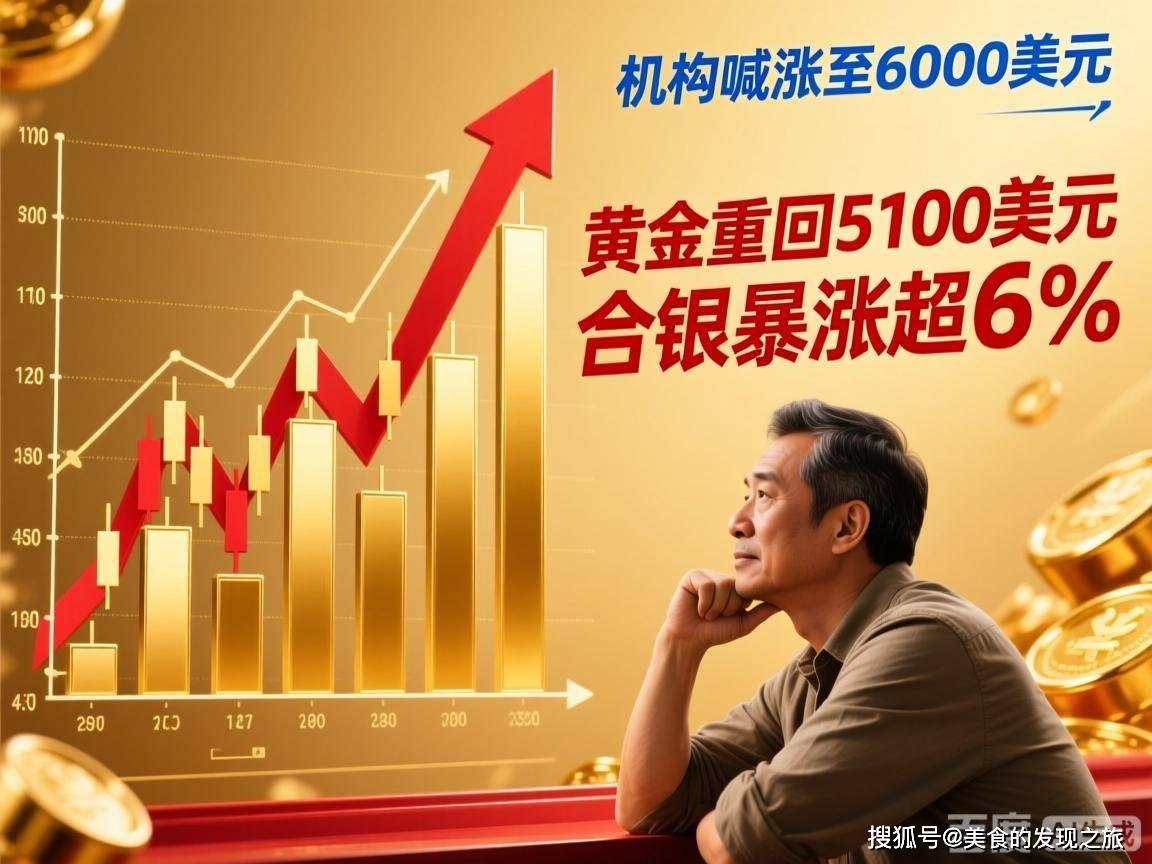
炸了!黄金重回5100美元、白银暴涨超6%,机构喊涨至6000美元,普通人该不该上车?
Sou Hu Cai Jing· 2026-02-12 04:00
Core Viewpoint - The recent surge in gold and silver prices is attributed to multiple factors, including expectations of interest rate cuts by the Federal Reserve, ongoing geopolitical risks, and strong fundamentals in the silver market, making it essential for investors to understand the underlying dynamics of this market movement [1][5][10]. Market Performance - On February 11, gold prices rose significantly, with London gold reaching over $5100 per ounce, marking a daily increase of 1.5%, while COMEX gold surged over 2% [3][4]. - Silver prices experienced an even more dramatic increase, with London silver rising over 6% to reach $86 per ounce, reflecting a daily increase of 3.79% [4][6]. Institutional Insights - Major financial institutions, including Societe Generale, Goldman Sachs, and Deutsche Bank, have raised their gold price targets, indicating a bullish outlook for the precious metals market [5][6]. - Societe Generale's commodity strategist David Wilson stated that the current gold price surge is justified due to persistent macroeconomic and geopolitical risks, predicting a potential rise to $6000 per ounce by year-end [6]. Economic Indicators - A key driver of the recent price surge was disappointing U.S. retail sales data, which raised expectations for potential interest rate cuts by the Federal Reserve, leading to a weaker dollar and increased attractiveness of gold and silver as safe-haven assets [7][9]. - The market adjusted its expectations for interest rate cuts, with a 30% probability of three cuts this year, influencing the demand for gold and silver [9][10]. Geopolitical Factors - Ongoing geopolitical tensions, including conflicts in the Middle East and uncertainties in Europe, have led to increased demand for gold and silver as safe-haven investments [10][11]. - Central banks globally have been increasing their gold reserves, with countries like China and Poland making significant purchases, signaling confidence in gold's long-term value [11]. Silver Market Dynamics - The silver market is experiencing a supply-demand gap, with projections indicating a shortfall of 67 million ounces by 2026, driven by industrial demand from sectors like solar energy and electric vehicles [12][13]. - The industrial demand for silver, which constitutes over 60% of total demand, is expected to continue growing, further supporting price increases [13]. Market Sentiment - Investor sentiment plays a crucial role in price movements, with many investors rushing to buy gold and silver amid fears of missing out on potential gains, amplifying the price surge [14][18]. - The emotional aspect of trading can lead to significant volatility, especially for inexperienced investors who may be tempted to follow market trends without proper analysis [18]. Investment Considerations - Investors are advised to approach gold and silver investments with caution, focusing on long-term value preservation rather than short-term speculation [25][27]. - Recommendations include diversifying investments, avoiding high-leverage trading, and being wary of potential scams in the precious metals market [20][22].

白银缺口为何持续扩大?
虎嗅APP· 2026-01-26 10:26
Core Viewpoint - The price of silver has historically surpassed $100 per ounce, with an annual increase of over 44%, driven by a persistent supply-demand gap in the silver market, indicating a shift from a financial asset to a critical strategic resource dominated by industrial demand [5][8]. Supply and Demand Dynamics - The global silver market has been in a structural deficit since 2021, with a projected supply-demand gap of nearly 300 million ounces by 2025, the highest on record, expected to widen further in 2026 [5][6]. - Industrial demand, particularly from the photovoltaic (solar), electric vehicle, and AI infrastructure sectors, now accounts for over 60% of total silver demand, with photovoltaic demand increasing by more than 1.6 times over the past five years [5][26]. - The supply of silver is constrained, with over 70% of production coming from by-products of copper, lead, and zinc mining, leading to a rigid supply response to price changes [6][21]. Inventory and Market Conditions - Global visible silver inventories are at multi-year lows, covering only about 1.2 months of consumption, significantly below the safety threshold of three months [27][28]. - The depletion of inventories is characterized by a one-way flow of silver into industrial applications rather than a return to the market, indicating a critical supply shortage [27][28]. Historical Context and Future Implications - The historical role of silver as a monetary asset is being challenged by its current industrial applications, leading to an identity crisis in the silver market [19][30]. - China has emerged as a dominant player in the silver market, being the largest producer of photovoltaic components, effectively locking in silver demand through industrial consumption rather than monetary accumulation [17][39]. Pricing Mechanisms and Market Dynamics - The traditional pricing mechanisms for silver, dominated by Western financial markets, are under pressure as the demand for physical silver increases, revealing vulnerabilities in the "paper silver" market [30][32]. - The Shanghai Futures Exchange's model, which mandates physical delivery, contrasts sharply with Western markets, leading to price discrepancies and highlighting the shift towards a more demand-driven pricing structure [32][34]. Future Scenarios - Several potential scenarios for the silver market's future include a "run on silver" leading to a price surge, technological breakthroughs reducing silver usage in industries, or strategic state control over silver resources reshaping market dynamics [45][46].
白银缺口为何持续扩大?
3 6 Ke· 2026-01-26 04:40
Core Insights - Silver prices have historically surpassed $100 per ounce for the first time, with a year-to-date increase of over 44%, marking a record high. This volatility is attributed to a persistent supply-demand gap in the silver market, indicating a shift from a financial asset to a critical strategic resource driven by industrial demand [1][3][19] - The global silver market has been in a structural deficit since 2021, with a projected supply-demand gap of nearly 300 million ounces by 2025, expected to widen further in 2026 [1][11] - Industrial demand, particularly from the photovoltaic (solar), electric vehicle, and AI infrastructure sectors, is the primary driver of this demand surge, with industrial silver consumption now accounting for over 60% of total demand [1][15] Supply Dynamics - Over 70% of global silver production comes from by-products of copper, lead, and zinc mining, making silver supply rigid and slow to respond to price changes. Silver production has declined for five consecutive years, with no immediate increase expected [1][11][12] - The average silver content in mined ore has decreased by 30% over the past two decades, leading to higher extraction costs and lower efficiency [12] Demand Trends - The photovoltaic industry has seen a significant increase in silver consumption, with demand growing over 1.6 times in the past five years. Despite technological advancements reducing silver usage per solar panel, the overall market growth has led to increased total silver consumption [15][16] - Electric vehicles require significantly more silver than traditional vehicles, with an average of 30 to 40 grams per electric vehicle compared to 15 to 20 grams for conventional cars, indicating a structural shift in demand [16] Inventory Levels - Global visible silver inventories are at multi-year lows, covering only about 1.2 months of consumption, which is below the safe threshold of three months [2][17] - The current inventory depletion is characterized by a one-way flow of silver into industrial applications rather than being stored for future market return, leading to a critical shortage [18] Pricing Power Shift - The traditional pricing power of silver has been held by Western financial centers, but the rise of Eastern markets, particularly China, is changing this dynamic. China has classified silver as a strategic material and implemented strict export controls [19][21] - Shanghai's silver futures market, which mandates physical delivery, has shown stronger price rigidity compared to the paper silver market in the West, reflecting a fundamental clash between financial and physical silver demand [20][23] Future Scenarios - Three potential scenarios for the silver market's future include a "run on the bank" bull market due to trust issues in the paper silver system, technological breakthroughs in reducing silver usage, and sovereign control reshaping market dynamics through strategic alliances and resource management [30][34][35]
“穷人的黄金”,爆了
投中网· 2026-01-26 02:12
Core Viewpoint - Silver is transitioning from being perceived as "poor man's gold" to a critical industrial material due to a persistent supply-demand gap driven by key industries like photovoltaics and electrification [5][6][48]. Group 1: Silver's Market Dynamics - Historically, silver was undervalued due to its abundant supply and diverse applications, leading to a lack of serious market consideration for its scarcity [5][6]. - Since 2021, the global silver market has experienced a physical supply-demand gap, primarily driven by rapid demand growth in industries such as photovoltaics and high-end electronics, while supply has struggled to keep pace [6][44]. - Over 70% of global silver production comes from by-products of other metals, making its supply response to price signals slow and limited [7][38]. Group 2: Demand Structure - In 2024, global silver demand is projected to reach 1.164 billion ounces (approximately 3.62 million tons), with industrial demand accounting for 681 million ounces (about 58%), jewelry and silverware demand at 263 million ounces (around 23%), and investment demand at 191 million ounces (approximately 16%) [15]. - The behavior of these demand categories is distinct: industrial demand is tied to the industrial cycle, jewelry demand is highly price-sensitive, and investment demand fluctuates with macroeconomic sentiment [16]. Group 3: Industrial Applications - The photovoltaic sector is a key driver of silver demand, with actual demand expected to reach 198 million ounces in 2024, a 1.6-fold increase since 2019, representing about 17% of total silver demand [27]. - Electric vehicles and AI infrastructure are also contributing to silver demand, with the average silver usage in a traditional vehicle being 15-20 grams, while a new energy vehicle typically uses 30-40 grams [30]. Group 4: Supply Constraints - Global silver mine production is estimated at 820 million ounces in 2024, with a year-on-year growth rate of less than 1% [37]. - The structure of silver supply has remained largely unchanged over the past two decades, with primary silver production accounting for only about 228 million ounces, or less than 30% of total production [39]. Group 5: Market Repositioning - Silver is no longer just a shadow of gold; it is now recognized as a critical material with real and sustained demand, difficult-to-replace applications, and highly constrained supply growth [48][50]. - The market's perception of silver is shifting from a financial asset to a key functional material, reflecting its importance in various industrial applications [49].
白银周报:短线波动加剧,地缘支撑较强-20260118
Hua Lian Qi Huo· 2026-01-18 13:20
1. Report Overview - Report Name: Hualian Futures Silver Weekly Report [1] - Date: January 18, 2025 [1] - Author: Zeng Ke [1] - Transaction Consultation Number: Z0022773 [1] - Qualification Number: F03118676 [1] 2. Market Performance - Price Increase: In 2025, the cumulative increases were 148% and 129% respectively [1] - Spread: Last week, the spread between domestic and foreign silver futures continued to climb, closing at a maximum spread of 2330; the London spot gold - silver ratio fell below 50 during the week and finally closed at 51.02 [1] 3. US Economic Indicators - Manufacturing PMI: In December, the US manufacturing PMI was 47.9, lower than the expected 48.4 and the previous value of 48.2 [1] - Employment: In December, non - farm payrolls increased by 50,000, lower than the expected 65,000, and the data for the previous two months was significantly revised downward; the unemployment rate dropped to 4.4%, lower than the expected 4.5% [1] - Inflation: In December, the US CPI rose 2.7% year - on - year, the same as in November, in line with market expectations; the core CPI rose 2.6% year - on - year, the slowest growth rate since early 2021, the same as in November, lower than the expected 2.7% [1] - Interest Rate: Last week, the yield on the 10 - year US Treasury note rose 6 basis points, and the US dollar index continued to strengthen [1] 4. Silver Supply and Demand - Supply - demand Gap: In 2025, the global silver market's supply - demand gap is expected to exceed 100 million ounces, with the market in a state of supply shortage for the fifth consecutive year [1] - Investment Demand: As of January 16, 2026, the holdings of the world's largest silver ETF, SLV, were 16,070 tons, a week - on - week decrease of 1.444% [1] - Inventory: The LBMA inventory has dropped to a historical low. As of December, there were about 27,817 tons of silver inventory, but most of it is silver physically linked to ETFs and cannot be freely circulated, so the available inventory is tight [1] 5. Market Views and Strategies - View: Last week, silver rose strongly and then adjusted, remaining at a high level overall. The market's safe - haven demand support remains strong. The supply side of silver has significant growth difficulties, while the demand side has obvious increments. The structural trend of silver has not changed, and the medium - to - long - term trend is expected to remain strong [9] - Strategy: It is recommended to hold long positions in AG2604 in the medium term [9] 6. Risk and Disclaimer - Risk: The report reminds investors to carefully judge the accuracy and integrity of the information and bear investment risks independently [1][11][13] - Disclaimer: The information in the report comes from publicly available information, and the report does not guarantee the completeness and authenticity of the information. It does not constitute the final basis for buying or selling relevant futures varieties [91]
今日银价,今日白银最新价格(2026年01月12日)
Sou Hu Cai Jing· 2026-01-12 02:04
Core Viewpoint - The silver market has experienced a significant surge, driven by multiple factors, indicating its potential as a strong investment opportunity in the current economic climate [2][6]. Group 1: Market Performance - International spot silver reached $79.819 per ounce (approximately 19.20 yuan per gram), with a daily increase of 4.11% [4]. - Domestic silver (T+D) prices hit 19,400 yuan per kilogram (19.40 yuan per gram), rising by 4.53% [4]. - The Shanghai Futures silver contract surged to 19,438 yuan per kilogram (19.44 yuan per gram), marking a 6.19% increase, leading the market [4]. Group 2: Driving Factors - The expectation of a Federal Reserve interest rate cut has increased, leading to a weaker dollar and enhancing silver's appeal as a precious metal [4]. - Heightened global geopolitical risks, particularly in the Middle East and Europe, have driven investors towards silver as a safe haven [4]. - A historical supply-demand gap in the silver market, with a reported deficit of 320 million ounces in 2025, particularly due to surging demand from the photovoltaic and new energy sectors, has provided strong fundamental support for silver prices [4]. - Speculative funds have significantly increased their positions in the futures market and silver ETFs, reflecting a surge in retail investor enthusiasm [4]. Group 3: Investment Strategies - For aggressive investors, it is advised to avoid blindly chasing prices and to consider entering positions when prices pull back to the range of 19.0-19.2 yuan per gram [3]. - Conservative investors are encouraged to adopt a dollar-cost averaging approach by investing in silver ETFs or physical silver bars monthly to smooth out costs and benefit from long-term industry growth [8]. - For consumers and collectors, it is recommended to purchase silver bars with S999 purity from reputable sources and to be cautious with silver jewelry due to high craftsmanship costs [8]. Group 4: Future Scenarios - Optimistic Scenario (40% probability): If interest rate cuts are implemented and geopolitical tensions persist, silver prices may challenge new highs above 20.5 yuan per gram [8]. - Volatile Scenario (50% probability): The most likely outcome is that silver prices will oscillate between 19.0 and 20.0 yuan per gram, digesting recent gains while awaiting new directional signals [8]. - Downward Scenario (10% probability): In the event of a significant macroeconomic shift, silver prices could retreat below 18 yuan per gram for a deeper correction [8].