软件

Search documents
“AI末日报告”作者发声:市场恐慌超预期,呼吁征收“AI税”来应对失业
Hua Er Jie Jian Wen· 2026-02-24 07:36
Core Insights - A report on the impact of AI has triggered a global market sell-off, with the co-author Alap Shah acknowledging that the market reaction exceeded expectations and calling for government taxation on AI to address potential mass unemployment [1][2] Group 1: Market Reaction - The report, released by Citrini Research, combined with warnings from Nassim Taleb and statements from AI startup Anthropic, led to significant market sell-offs, including IBM's stock dropping 13%, the largest single-day decline in 25 years [2] - Shah expressed surprise at the magnitude of the market reaction, which he initially expected to be minor, noting that the AI trading environment has been bullish for over three and a half years, leaving few incremental buyers [2] Group 2: Employment Impact - Shah highlighted that the U.S. has not created any significant white-collar jobs in the past three years, predicting that AI will replace many positions, particularly in information-related roles, with an expected 15% unemployment rate among white-collar workers within 18 months if no policy interventions are made [3] - The report suggests that the impact of AI on white-collar employment will be most pronounced in the U.S. due to its dynamic labor market, where layoffs are easier compared to other regions [3] Group 3: Proposal for AI Tax - Shah urged the government to consider taxing the incremental or unexpected gains from AI to protect consumer demand and mitigate the economic risks associated with job displacement [4][5] - He warned that failing to tax AI could undermine the consumer economy, which is critical for overall economic stability [5] Group 4: Industry Differentiation - The benefits of AI are becoming unevenly distributed across industries, with the software sector facing significant sell-offs due to fears of AI disruption [6] - Shah indicated that intermediary industries, such as finance and insurance, are at risk, as AI could eliminate transaction fees charged by companies like Mastercard and Visa, fundamentally altering the payment industry [6] - In terms of investment strategy, Shah mentioned a focus on shorting companies likely to be disrupted by AI while holding semiconductor stocks expected to benefit from AI advancements [6]
AI恐慌愈演愈烈,“黑天鹅之父”警告:软件行业或迎破产潮
Jin Shi Shu Ju· 2026-02-24 06:31
Group 1 - Nassim Taleb warns that the software industry must prepare for increased volatility and potential bankruptcies as AI-driven markets enter a more fragile phase [1] - Taleb believes that the market is underestimating structural risks while overestimating the resilience of current AI leaders, suggesting that historical pioneers in AI may be replaced by newcomers [1][2] - The S&P 500 index recently dropped by approximately 1%, reflecting ongoing sell-off trends and investor anxiety regarding tariff uncertainties and conflicting narratives surrounding the AI sector [1] Group 2 - Taleb highlights that the recent stock market gains have largely been driven by a few AI-related stocks, indicating that a shift in leadership could render the broader market vulnerable [2] - He emphasizes that tail risks across various industries are structurally underestimated, warning that the risks involve not just minor corrections but significant downturns [2] - Taleb's firm, Universa Investments, focuses on tail risk hedging strategies and achieved over 100% annual capital return last year [2] Group 3 - Taleb notes a structural shift in the market, particularly with gold, which has surged approximately 30% since October of last year amid concerns over the sustainability of AI-driven market trends and geopolitical tensions [3] Group 4 - The increase in gold prices is attributed to ongoing U.S. fiscal deficits and concerns about the "weaponization" of the dollar through sanctions, leading to a diminishing willingness to store wealth in dollars [4] - Taleb argues that predictable tariff policies could be effective, but erratic enforcement would deter investment, as businesses lose motivation to allocate capital under unpredictable conditions [4] - He warns that tariffs act as regressive taxes disproportionately impacting low-income consumers, exacerbating inequality [4] Group 5 - Taleb expresses concern over the risk of oil supply disruptions related to U.S.-Iran tensions, indicating that the global economy cannot withstand another oil shock similar to that of the 1970s [4] - He states that commodity-driven stagflation is difficult to resolve through monetary policy, suggesting that even the most capable economists would struggle to address such issues [5]
金银价格大涨
Sou Hu Cai Jing· 2026-02-24 06:27
当地时间周一,美国三大股指集体收跌。其中,道指下跌1.66%,标普500指数下跌1.04%,纳指跌幅为1.13%。国际金价突破每盎司5200美元整数关口, 为三周来最高水平,银价大涨超5%。 个股方面,丹麦药企诺和诺德周一公布的数据显示,在临床试验中,该公司新一代减肥药的减重效果,不及竞争对手礼来的相关产品。华尔街知名投行杰 富瑞的分析认为,这一试验结果令诺和诺德新一代减肥药的商业前景面临很大不确定性,根据此前的预测,到2030年这款药的销售额约占诺和诺德总营收 的15%-25%。受以上消息影响,诺和诺德在哥本哈根交易的股票价格周一大跌超16%,当天,礼来股价则上涨近4.9%。 当地时间周一,在美国海关停止征收被最高法院裁定违法的关税前夕,美国总统特朗普再度发出新的关税威胁,全球贸易摩擦可能再起,打击市场风险偏 好。另外,人工智能引发的软件板块抛售潮仍在延续,拖累美国三大股指当天集体收跌。其中,道指下跌1.66%,标普500指数下跌1.04%,纳指跌幅为 1.13%。 核心业务遭AI冲击 23日IBM股价大跌超13% 公司方面,美国人工智能初创公司Anthropic日前表示,其Claude Code产品的新功 ...


中国市场强势回归!一则消息引爆“AI恐慌交易”,特朗普关税拉锯战开启
Sou Hu Cai Jing· 2026-02-24 06:01
周二(2月24日)亚洲股市小幅走高,未受美国市场走弱的明显拖累。美国股市下跌主要源于投资者担忧 人工智能对企业利润的冲击;而在亚洲,投资者押注本地区的芯片制造商将通过为AI建设潮提供关键 供给而受益。 韩国股市上涨1.5%,资金涌入芯片股,投资者将其视为AI供应链的"挖铲人"。中国股市在春节假期后 复市也走强,带动MSCI亚太指数抹去早前跌幅,转而上涨0.2%。 周二,韩国SK海力士股价上涨4.2%,并触及每股100万韩元这一心理关口;台积电上涨3.2%;三星电子 上涨2.3%,实现九连涨并创历史新高。 标普500指数期货上涨0.3%,显示在周一现货指数下跌后,市场情绪有所回稳。随着风险偏好改善,黄 金在连续四天上涨后回落;美国国债也回吐上一交易日的涨幅——此前投资者因避险需求买入传统避险 资产。比特币则交投于65,000美元下方。 2026年以来,亚洲股市表现突出,MSCI地区指数年内上涨12%,而标普500指数基本持平。这也使得亚 洲指数相对美国基准指数录得"有记录以来最强"的年度开局。 在美国,软件公司成为跌幅最深的板块之一;但保险经纪、私募信贷公司、网络安全,甚至房地产服务 类股票,也都卷入所谓的"A ...
未知机构:光大宏观假期海外地缘局势动荡全球权益市场多数上涨港股能源半导体软件表-20260224
未知机构· 2026-02-24 04:25
Summary of Key Points Industry Overview - The report discusses the global equity markets, highlighting that most markets experienced an increase despite geopolitical tensions during the holiday period. The Hong Kong stock market showed strong performance in sectors such as energy, semiconductors, and software [1][2]. Core Insights and Arguments - There is a notable divergence in commodity prices, with gold, silver, and oil all rising. However, the strengthening of the US dollar has put pressure on the Hong Kong stock market [1][2]. - The appreciation of the Chinese yuan and the visit of former President Trump to China have contributed to an overall increase in risk appetite in the equity markets following the holiday [1][2]. Additional Important Content - The strong inflation and economic data from the US are creating challenges for interest rate cut expectations, leading to volatility in short-term interest rate trading [2].
华尔街最新押注的是具有人工智能免疫力的“光环”公司
阿尔法工场研究院· 2026-02-24 04:05
Core Viewpoint - Investors are shifting towards companies that are likely to remain resilient amid the AI revolution, favoring "hard asset, low obsolescence" firms like McDonald's and ExxonMobil, while abandoning those perceived as potential victims of AI disruption [1] Group 1: Market Trends - The S&P 500 index has seen strong performance in industrial, materials, utilities, and consumer staples sectors, significantly outperforming the broader market, while the information technology sector has declined [1] - The consumer staples sector achieved its best year-to-date performance ever as of February 20 [1] - A recent example includes AI company Anthropic's release of tools that led to a market value evaporation of approximately $300 billion in software and financial data sectors [2] Group 2: Investment Behavior - Investors are increasingly avoiding sectors they believe face significant disruption threats, leading to a rotation towards "real economy stocks" [2] - There is a notable divergence within the same industry, as seen with Delta Airlines' stock rising by 5.4% while Expedia's stock fell by 23% during the same period [3] - Despite the recent sell-off, there remains a strong influx of investment into the AI sector, with companies like Seagate and Western Digital performing well in the S&P 500 [3] Group 3: Future Outlook - Upcoming earnings reports from key players like Nvidia, Salesforce, and Home Depot are anticipated to be critical in assessing the AI investment landscape [4] - The recent volatility and concerns over excessive spending by large tech companies indicate an evolution in the AI investment frenzy, with a shift towards more discerning investment strategies [4]

新一轮AI焦虑正在吞噬市场:从华尔街到亚洲,软件股为何一跌再跌?
Sou Hu Cai Jing· 2026-02-24 04:01
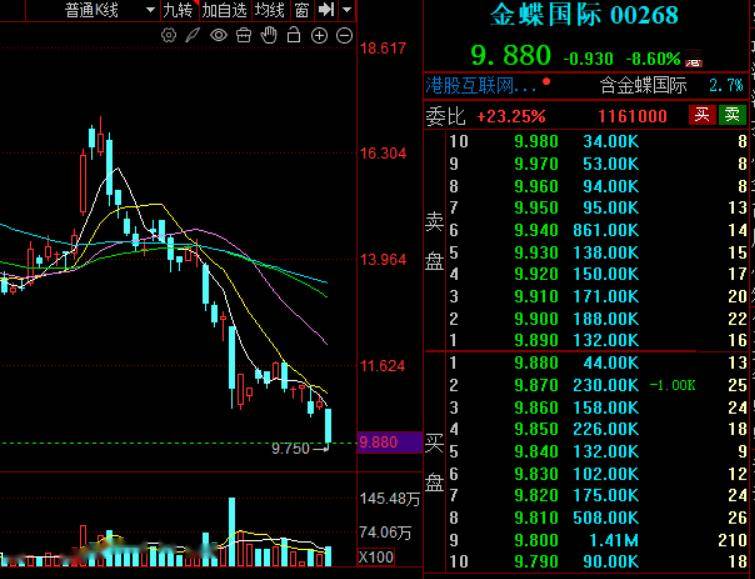
Group 1 - Asian software stocks faced downward pressure on Tuesday, continuing the decline seen in the US market, driven by renewed investor anxiety over the impact of AI technology on white-collar salary structures [1][3] - In Hong Kong, the software sector was particularly weak, with Kingdee International experiencing a nearly 10% drop, while AI company SenseTime fell over 6% and Kingsoft dropped about 4%, significantly affecting market sentiment [1] - Japanese IT service giant NEC and Oracle Japan both saw a 6% decline, while SoftBank Group fell by 5%. Australian software stocks also struggled, with Xero down 3%, Technology One down 4%, and WiseTech Global down 3% [3] Group 2 - The recent decline was ignited by a report from Citrini Research warning that technological changes could lead to a competitive decrease in white-collar salaries, causing significant drops in stocks of software giants like Datadog, CrowdStrike, and Zscaler, which fell over 9% in a single day [3] - This is not the first instance of AI-related concerns affecting the market; earlier in February, anxiety over corporate AI capital expenditure plans led to a widespread decline in Asian tech stocks [3] - Current AI anxieties, combined with geopolitical and tariff risks, are triggering a typical flight to safety, lowering global bond yields and increasing gold prices, with expectations of continued volatility in specific tech sub-industries as new AI tools are released [3]
每日投资策略-20260224
Zhao Yin Guo Ji· 2026-02-24 03:48
Global Market Overview - The Hang Seng Index closed at 27,082, up 2.53% for the day and 5.66% year-to-date, driven by strong performances from major stocks like Tencent and Hong Kong Exchanges [3] - The Hang Seng Technology Index rose by 3.34%, indicating a renewed interest in technology stocks [3] - Southbound capital saw a net inflow of approximately HKD 20.2 billion, highlighting a shift towards "core assets + technology" allocation [3] - The offshore RMB strengthened, breaking through 6.89, nearing a three-year high, amidst calls from the Ministry of Commerce for the U.S. to lift unilateral tariffs [3] Sector Performance - The Hang Seng Financial Index increased by 2.29%, with a year-to-date rise of 8.12% [2] - The Hang Seng Industrial Index rose by 2.77%, reflecting a year-to-date increase of 3.03% [2] - The Hang Seng Real Estate Index saw a 2.25% increase, with a significant year-to-date rise of 23.95% [2] - The Hang Seng Utilities Index gained 0.90%, with a year-to-date increase of 9.27% [2] U.S. Market Reaction - Major U.S. indices, including the Dow Jones, S&P 500, and Nasdaq, all fell over 1%, influenced by renewed tariff uncertainties and concerns over AI impacts [3] - The 10-year U.S. Treasury yield dropped over 5 basis points to 4.02%, marking a near three-month low as investors sought safe-haven assets [3] - Gold prices surged over 2%, while silver rose approximately 4%, reflecting a flight to safety amid market volatility [3] Investment Sentiment - The report indicates a cautious sentiment among investors due to the resurgence of tariff risks and AI-related fears, leading to significant sell-offs in high-valuation sectors [3] - The uncertainty surrounding trade policies has weakened investor confidence in U.S. assets, contributing to a decline in the U.S. dollar index over two consecutive days [3]
AI冲击波卷土重来 应用软件股普遍下挫 聚水潭跌超9%
Zhi Tong Cai Jing· 2026-02-24 03:05
Core Viewpoint - The resurgence of AI impacts the Hong Kong application software sector, leading to significant declines in stock prices of several companies amid a broader sell-off in software stocks in the US market [1] Group 1: Stock Performance - New New Technology (09600) saw a decline of 9.52%, trading at 0.285 HKD [1] - Jushuitan (06687) dropped by 9.37%, with a price of 19.54 HKD [1] - Inspur Digital Enterprise (00596) fell by 7.9%, now priced at 3.73 HKD [1] Group 2: Market Context - Major US tech stocks experienced a downturn, contributing to the sell-off in software stocks [1] - AI startup Anthropic introduced its "Claude Code" tool, which now supports COBOL language systems, automating complex tasks in modernizing legacy systems and significantly reducing labor costs and time [1] Group 3: Research Insights - Citrini Research released a report titled "Scenario Analysis as of June 2028," clarifying that it is not a prediction but a thought experiment [1] - The report hypothesizes that by 2028, accelerated AI penetration in white-collar jobs could lead to job displacement, income decline, reduced consumption, and increased credit asset risks, potentially dragging the economy into a contraction phase [1]
资讯早间报:隔夜夜盘市场走势-20260224
Guan Tong Qi Huo· 2026-02-24 03:04
Report Summary 1. Report's Industry Investment Rating No relevant information provided. 2. Core Viewpoints - Global financial markets are affected by multiple factors including geopolitical tensions, tariff policies, and corporate earnings, leading to significant fluctuations in various asset classes. For example, the US stock market declined due to Trump's tariff plan and EU's suspension of the trade - agreement approval, while the precious metals market rose due to increased risk - aversion [5][6]. - The energy market is influenced by the Iran - US nuclear negotiation, with expectations of increased Iranian oil supply putting downward pressure on oil prices [7]. 3. Summary by Directory Overnight Night - Market Trends - **Stock Markets**: US major indices (Dow, S&P 500, Nasdaq) fell, with IBM and American Express leading the decline. European indices (DAX, CAC40, FTSE 100) also closed lower. The reasons include Trump's tariff plan and EU's suspension of trade - agreement approval [5]. - **Precious Metals**: COMEX gold and silver futures rose due to increased risk - aversion from geopolitical tensions, tariff policy changes, and other factors [6]. - **Energy**: US crude oil and Brent oil futures fell as the Iran - US nuclear negotiation showed signs of progress, increasing the expectation of more Iranian oil supply [7]. - **Base Metals**: Most London base metals declined, except for LME tin which rose [7]. Important News Macro News - Shanghai Export Container Settlement Freight Index for European routes dropped 2.1%. The US will stop collecting certain illegal tariffs. There is still a risk of US military strikes against Iran. India postponed a trade delegation plan. China is assessing the impact of US tariff rulings and urges the US to cancel unilateral tariffs. The EU suspended the approval of a trade agreement with the US. The Trump administration is considering new "national security tariffs" [9][11]. Energy Futures - Saudi Aramco sold condensate oil. Methanol supply in Southeast Asia is restricted due to planned maintenance. Goldman Sachs and Morgan Stanley have different forecasts for oil prices, with Goldman Sachs raising price forecasts for Q4 2026 and 2027, and Morgan Stanley expecting a short - term increase followed by a decline [14][16][18]. Metal Futures - The US energy storage market is expected to grow 21%. Lebanon may sell part of its gold reserves. UBS is positive on gold, with a target price of $6200/ounce [20][21]. Black - Series Futures - China's iron ore arrivals decreased, but global iron ore shipments increased. Vietnam plans to build a large - scale steel plant. The blast furnace capacity utilization rate of Chinese pig - iron enterprises decreased, and inventory increased [23][25]. Agricultural Products Futures - Malaysian palm oil production and exports decreased in February. Argentina's soybean moisture conditions improved, and the production forecast remains unchanged [27][28]. Financial Markets Financial - 143 companies have submitted IPO applications in the Hong Kong stock market in 2026. Deloitte predicts a better performance in the Hong Kong IPO market this year [30]. Industry - Payment transactions on Chinese New Year's Eve increased. The real - estate market may show more stabilization signals. China's AI governance system is maturing [31]. Overseas - The US may adjust tariff application methods and continue steel - aluminum tariffs. The Fed has about 75 basis - points to reach the neutral rate. India plans to invest $200 billion in AI. The Australian central bank may tighten policy. UK unemployment reached a new high [32][34][35]. International Stock Markets - US and European stock markets rose, while the Japanese market fell. High - end companies made significant stock - position adjustments. The UK may adjust accounting rules to attract Chinese companies. Australia simplifies corporate governance rules. Some companies announced major transactions or reported good earnings [36][38][41]. Commodities - Precious metals, oil, and most base metals futures fell due to factors such as progress in the Iran - US nuclear negotiation and reduced risk - aversion [43]. Bonds - US Treasury yields had mixed changes. Japanese bonds rose, and the 2029 fiscal - year bond issuance may increase [45]. Foreign Exchange - The US dollar index rose slightly, and most non - US currencies fell [46]. Upcoming Economic Data and Events - **Economic Data**: Include Japan's trade balance, UK's inflation and housing - price index, US's new - home construction, and other data [48]. - **Events**: New Zealand's central - bank rate decision, European Central Bank officials' speeches, and the Fed's release of meeting minutes [50]. - **Market Closures**: Chinese, South Korean, and Vietnamese stock markets are closed due to the Spring Festival [52].