手机

Search documents
小米手机收入与均价下滑,高管回应内存涨价影响
Di Yi Cai Jing· 2025-11-18 13:51
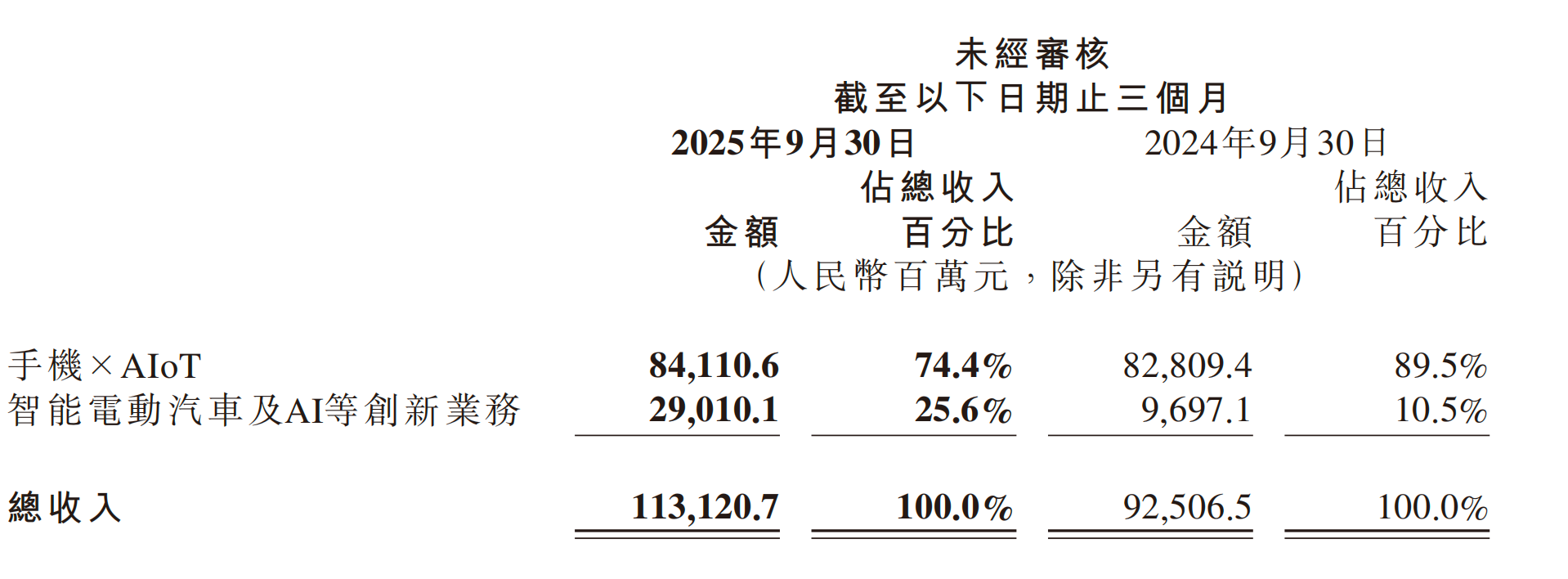
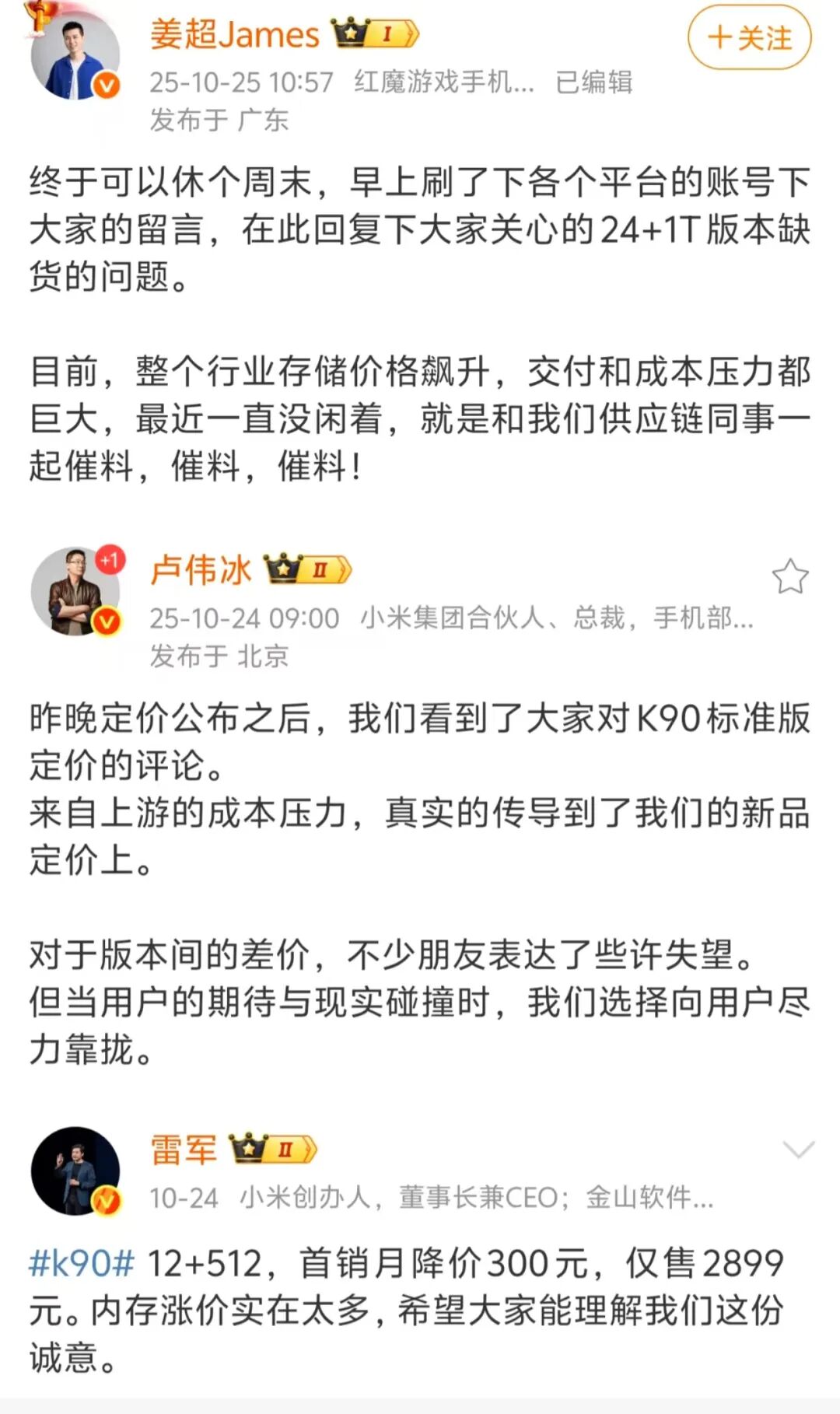
Core Insights - Xiaomi Group reported Q3 2025 revenue of 113.12 billion yuan, a year-on-year increase of 22.3%, and an adjusted net profit of 11.31 billion yuan, up 80.9% [2] - The smartphone and AIoT segment generated revenue of 84.11 billion yuan, a 1.6% increase, accounting for 74.4% of total revenue, while the innovative business segment, including smart electric vehicles and AI, saw revenue of 29.01 billion yuan, a 199.2% increase, making up 25.6% of total revenue [2] - Smartphone revenue decreased by 3.1% year-on-year to 46 billion yuan, primarily due to a 3.6% drop in average selling price (ASP) from 1,102.2 yuan to 1,062.8 yuan, despite a slight increase in shipment volume [2] Business Segment Analysis - The smartphone segment's shipment volume increased by 0.5% year-on-year to 43.3 million units, driven by growth in overseas markets [2] - The global memory market has experienced significant price increases across all categories since 2025, affecting the smartphone industry due to high storage costs [2][3] - The current memory price cycle is driven by AI-related high-performance computing (HPC) demand, leading to prolonged and substantial price increases, with expectations for further increases in Q4 [3] Market Dynamics - The memory price increases are expected to impact industry costs and gross margins, particularly for products with high storage cost components like smartphones, tablets, and laptops [3] - Xiaomi's president indicated that if retail prices for smartphones rise, the overall smartphone market will likely decline, although quantifying the exact impact is challenging [3] - The domestic smartphone market remains unsettled, with the current memory price increases intensifying competition among manufacturers, testing their financial strength and supply chain influence [4]

手机产业链全线走低 多家手机厂商暂缓存储芯片采购 存储涨价或冲击手机出货量
Zhi Tong Cai Jing· 2025-11-18 07:19
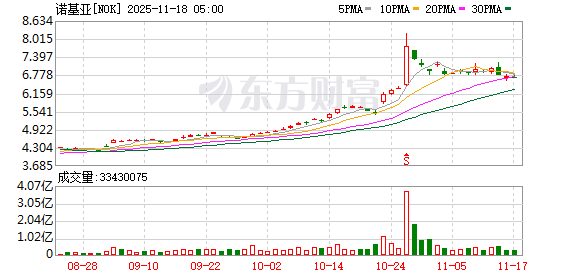
Core Viewpoint - The mobile industry chain is experiencing a significant downturn, with major companies like Q Technology, GoerTek, and BYD Electronics seeing substantial stock price declines due to a recent halt in storage chip procurement by several smartphone manufacturers [1] Group 1: Market Performance - Q Technology (01478) shares fell by 7.12%, trading at HKD 9.91 [1] - GoerTek (01415) shares decreased by 4.8%, trading at HKD 27.36 [1] - Hong Teng Precision (06088) shares dropped by 4.64%, trading at HKD 4.93 [1] - BYD Electronics (00285) shares declined by 3.24%, trading at HKD 32.9 [1] Group 2: Supply Chain Dynamics - Since the second half of 2025, the global storage chip industry has entered a rare uptrend, leading to increased costs for complete devices [1] - Major smartphone manufacturers like OPPO and vivo have low inventory levels, with some DRAM stocks below three weeks, causing hesitation in accepting price increases of nearly 50% from suppliers [1] Group 3: Forecast Adjustments - TrendForce has revised down its production shipment forecasts for global smartphones and laptops for 2026, from a growth of 0.1% and 1.7% to declines of 2% and 2.4%, respectively [1] - There is a risk of further downward adjustments in production forecasts if the imbalance in storage supply and demand worsens or if the increase in terminal prices exceeds expectations [1]

老人机成为诺基亚、金立们的“最后堡垒” 但中国3亿多“银发族”正涌入数字生活
Mei Ri Jing Ji Xin Wen· 2025-11-18 04:53
品牌商与消费者双向奔赴、全民狂欢的"双11"电商节在全网热度中徐徐落幕。 今年"双11",手机仍是竞争最激烈的产品品类,各大手机厂商均在"双11"之前就做足准备。此刻,谁是 此次较量的最终赢家成为市场关注焦点。京东发布的手机竞速排行榜显示,苹果、小米、vivo位列前 三,包揽品牌销量累计榜前三。在智能机"厮杀"的主战场之外,飞利浦、天语等主打功能机业务的手机 品牌也跻身TOP10。 智能手机的普及,曾让功能机一度退居"老人机"赛道。如今,这片最后的阵地也正面临来自智能终端的 渗透与重塑。 李大爷的手机又坏了,家人匆匆在电商平台下单,买来一台百元左右的"老人机"——功能极其简单、字 体大、音量高、待机时间长。熟悉智能设备的张大姐则花两千多元买了部智能手机,能刷短视频、视频 通话、扫码支付…… 两位老人、两种选择,既是生活片段,也是当下中国老年通信市场的缩影:一端是仍有刚性需求的低价 老年机阵地;另一端是越来越多银发用户(通常指60岁及以上的老年用户)主动拥抱智能化终端。 移动互联网的普及正悄然重塑老年用户的行为习惯。 QuestMobile(北京贵士信息科技有限公司)指出,截至2024年9月,银发人群(通常指6 ...
英伟达扇扇翅膀,2026年中国手机要涨价
36氪· 2025-11-17 08:59
Core Insights - The article discusses the anticipated challenges in the Chinese smartphone industry due to rising storage costs and supply chain disruptions, predicting price increases and reduced specifications for smartphones in 2026 [4][7][30]. Group 1: Industry Dynamics - Nvidia's founder Jensen Huang is strengthening ties with Samsung to secure HBM storage capacity, which is critical for AI applications [5][6]. - Samsung has suspended quotes for LPDDR5 due to capacity constraints, indicating a shift in focus towards HBM for AI model training [6][11]. - The storage industry is experiencing a significant price surge, with LPDDR4X prices increasing from $6 to $25, a rise of over 300% [11]. Group 2: Impact on Smartphone Manufacturers - Smartphone manufacturers are facing a "super cycle" in the storage market, leading to a shift in the supply chain dynamics where demand may not be fully met [22][30]. - Major smartphone brands are expected to increase prices or reduce specifications in response to rising storage costs, with predictions of flagship models seeing price hikes of several hundred yuan [26][30]. - The trend of high memory configurations is declining, with flagship models now typically featuring a maximum of 16GB of RAM [25]. Group 3: Market Predictions - The storage supply-demand gap is expected to persist until at least 2027, with manufacturers struggling to secure necessary components [19][30]. - The rising costs are likely to delay consumer upgrade cycles, particularly affecting mid-range and low-end products, which may see reduced product lines and shipment volumes [30]. - Consumers are advised to purchase smartphones sooner rather than later to avoid higher prices in the future [31].


价值投资的终极路线--理解社会大趋势
雪球· 2025-11-17 08:10
Core Viewpoint - The article discusses the investment philosophy of Warren Buffett, emphasizing that his investment in Google is not merely about supporting AI but rather about recognizing the potential for Google to remain resilient amidst rapid AI developments or potential market bubbles [4][11]. Group 1: Value Investment Understanding - Value investment is categorized into three levels: basic metrics like PB, PE, and PS; intermediate factors such as industry position, ROE, competitive advantages, growth potential, and free cash flow; and the ultimate understanding of future societal, economic, and industry changes [7][9][10]. - Many investors misunderstand value investment by equating it solely with purchasing leading companies in various sectors, such as consumer stocks or household appliances, without grasping the broader implications of Buffett's investment strategies [10][11]. Group 2: Misconceptions in Value Investment - Common misconceptions among value investors include linear thinking, excessive research, lack of understanding of major trends, and inefficiencies in research [12][13]. - Investors often mistakenly believe their understanding of industries and companies surpasses that of institutions and the market, leading to poor investment decisions [14][15]. Group 3: Investment Strategy Insights - The article highlights the importance of recognizing cyclical stocks versus growth stocks, stating that cycles are eternal while growth is temporary [14]. - It points out that many investors make errors by focusing too much on minute differences in valuation, especially when entering positions at high prices, which can lead to unfavorable odds [15][16].


国常会部署进一步促进消费政策措施!三分钟看完周末发生了什么
Sou Hu Cai Jing· 2025-11-17 06:05
01 市场回顾 | | | 全球大类资产本周表现(2025/11/10-2025/11/14) | | | | | --- | --- | --- | --- | --- | --- | | 全球指数 | 涨跌幅 | A股领涨行业 | 涨跌幅 | 外汇 | 涨跌幅 | | 法国CAC40 | 2.77% | 综合 | 6.99% | 美元兑日元 | 0.72% | | 巴西IBOVESPA指数 | 2.39% | 纺织服饰 | 4.41% | 澳元兑美元 | 0.63% | | 印度SENSEX30 | 1.62% | 商贸零售 | 4.06% | 欧元兑美元 | 0.48% | | 韩国综合指数 | 1.46% | 美容护理 | 3.75% | 欧元兑人民币 | 0.00% | | 多伦多300 | 1.41% | 医药生物 | 3.29% | 美元兄港元 | -0.06% | | 德国DAX | 1.30% | A股领跌行业 | 涨跌幅 | 美元兑英镑 | -0.11% | | 恒生指数 | 1.26% | 通信 | -4.77% | 美元兑加元 | -0.14% | | 富时新加坡海峡指数 | 1.20 ...

英伟达扇扇翅膀,2026年中国手机要涨价
3 6 Ke· 2025-11-17 05:18
Core Insights - The meeting between Nvidia's founder Jensen Huang and Samsung's chairman Lee Jae-Yong in Seoul is expected to impact the smartphone industry significantly, leading to potential shortages and price increases in 2026 due to Nvidia's acquisition of HBM storage capacity [1][2][3] - The rising costs of storage components, particularly LPDDR and HBM, are anticipated to force smartphone manufacturers to either raise prices or reduce specifications in their products [2][4][10] Group 1: Nvidia and Samsung Collaboration - Jensen Huang's visit to Samsung aimed to strengthen ties and secure HBM storage capacity, which is crucial for AI applications [1] - Nvidia's aggressive procurement strategy, including prepayments to suppliers, has disrupted the traditional supply chain dynamics, favoring Nvidia over smartphone manufacturers [7][10] Group 2: Impact on Smartphone Manufacturers - The smartphone industry is facing a "super cycle" of storage shortages, with predictions that the supply-demand gap may persist until at least 2027 [10][11] - Major smartphone brands are experiencing significant pressure on storage availability, leading to reduced orders and potential product line adjustments [11][13] Group 3: Price Increases and Market Adjustments - The cost of LPDDR storage has surged dramatically, with prices increasing from $6 to $25, reflecting a threefold rise [4] - Predictions indicate that flagship smartphones will see price increases, while mid-range and low-end products may face reduced specifications or even discontinuation [14]
双11”收官 国货凭实力“圈粉
Zheng Quan Ri Bao Wang· 2025-11-16 10:45
Group 1 - The core observation is that during the 2025 "Double 11" shopping season, domestic brands dominated sales across multiple platforms, indicating a significant shift in consumer preference towards local products [1] - Data from Tmall shows that the Chinese brand Proya ranked first in beauty sales, while two out of the top three positions in apparel sales were also occupied by Chinese brands [1] - According to JD's data, Chinese brands held two of the top three positions in cumulative mobile phone sales, and Douyin reported that domestic brands topped the lists for trendy menswear and fashionable womenswear [1] Group 2 - The change in consumer preferences is supported by a report from Accenture, which indicates that around 60% of consumers now prefer domestic products, a significant increase from previous years [1] - In the home appliance category, the preference for domestic brands rose from 55% in 2021 to 69% in 2025, while in the beauty and skincare category, the preference increased from approximately 12% to 43% during the same period [1] - This trend reflects a broader shift in consumption patterns from international brand dominance to a comprehensive rise of domestic products, marking the "Double 11" event as a natural culmination of these changes [1] Group 3 - The performance of domestic brands during "Double 11" is attributed to changes in consumption structure and industrial upgrades, with consumers prioritizing quality and experience [2] - The success of domestic brands is also linked to continuous investments in brand enhancement and R&D, which have been ongoing for several years [2] - The growth in brand orders has stimulated demand for local components, materials, and manufacturing services, creating a positive cycle that enhances domestic economic momentum [2] Group 4 - Industry experts believe that domestic brands have transitioned from being "alternatives" to competing on equal footing with international brands, driven by sustained investments in quality, technology, and branding [3] - Future success for domestic brands will depend on continuous improvements in product strength, innovation, and global capabilities, rather than relying solely on promotional events [3]

“双11”收官 国货凭实力“圈粉”
Zheng Quan Ri Bao· 2025-11-16 10:19
本报记者谢若琳见习记者何成浩 2025年"双11"购物季正式收官,其间多平台榜单上国产品牌占据"C位"。例如,天猫相关数据显示,美 妆销售额榜单中国品牌珀莱雅位列第一,服饰销售榜单中国品牌占得前三中的两个席位。京东相关数据 显示,手机品牌累计销量排名中,中国品牌占得前三中的两个席位。抖音相关数据显示,趋势男装及时 尚女装品牌榜中,第一皆为国产品牌。在业内人士看来,今年的"国货热"并非偶然,而是过去几年消费 结构变化在"双11"场景下的一次集中体现。 埃森哲《美好生活新主张—中国消费者洞察》报告显示,近五年来,中国消费者的品牌偏好正在悄然改 变,进口品牌不再是"优先项",六成左右的消费者现在会选择国货。如家用电器品类,在2021年,55% 的消费者会优先选择国际品牌,而2025年,69%的消费者会优先选择国产品牌。美妆护肤品类,从2021 年的约12%优先选择国产品牌提升至2025年的43%。 袁帅认为,从宏观层面看,国货在"双11"的表现,折射出消费端与供给端的一系列深层变化:一方面, 消费侧更重视品质与体验,愿意为"好国货"反复买单;另一方面,供给侧通过技术投入和供应链改造, 不断增强产品竞争力。"这一轮' ...
从11月份开始,国内或将迎来5大降价潮,建议大家做好准备!
Sou Hu Cai Jing· 2025-11-15 14:54
Group 1: Price Trends in Consumer Goods - Recent years have seen significant price increases in essential consumer goods such as cooking oil, sanitary paper, and shower gel, with monthly living expenses rising noticeably for residents [2] - Starting from November, five major consumer goods are experiencing a concentrated price drop, which is expected to save consumers money [2] Group 2: Real Estate Market - The second-hand housing market is experiencing a continuous decline, with the average price in September at 13,381 yuan per square meter, a year-on-year decrease of 7.38% [4] - The decline in second-hand housing prices is attributed to three main factors: a cumulative price drop exceeding 30%, stagnant or declining household income, and a more rational approach to home buying post-pandemic [4] Group 3: Automotive Market - A price war has erupted in the domestic automotive market, with numerous brands participating in price reductions, including a 1.5 million yuan drop for a domestic electric vehicle and 2.5-3 million yuan for popular joint venture brands [6] - The reasons for the automotive price drop include year-end sales targets, increased competition from new energy vehicles, and the entry of tech companies into the automotive sector [6] Group 4: Mobile Phone Market - The mobile phone market has also seen significant price reductions, with average discounts ranging from 10% to 20% across various brands [8] - Factors contributing to the price drop include rapid product turnover, lack of significant technological advantages among brands, and a decrease in consumer purchasing due to stagnant income [8] Group 5: Pork Prices - Pork prices have entered a downward trend, with prices dropping below 20 yuan per jin, currently around 17-18 yuan per jin [11] - The decline is driven by an oversupply in the market due to increased pig farming and a shift in consumer preference towards healthier meat options [11] Group 6: Rental Market - The rental market is experiencing a downward trend, with rental prices in cities like Shanghai decreasing from 6,000 yuan to 5,500 yuan per month [14] - The decline in rental prices is influenced by reduced demand due to job scarcity in cities and declining local incomes [14]