
生物制造

Search documents
未来产业周报第1期:量子万比特芯片技术突破,核聚变国际协作升级-20251214
Shenwan Hongyuan Securities· 2025-12-14 14:42
Quantum Technology - The report highlights the release of the world's first 3D-extended architecture 10,000-qubit quantum processor VIO-40K by QuantWare, which aims to overcome the scaling bottleneck of quantum processors and is compatible with NVIDIA's NVQLink platform [3][7][8] - The 2025 Zhongguancun Quantum Conference announced 16 quantum technology achievements and a 500 million yuan investment fund to support quantum entrepreneurship, showcasing advancements in quantum computing and applications in energy [3][13][14] Biomanufacturing - Levinthal Biotech completed a multi-million Pre-A round financing to accelerate the development of its AI-driven full-atom model protein design platform Pallatom, which addresses the design challenges of cyclic peptides [3][15][16] - Aopu Mai's acquisition of 100% of Pengli Biotechnology was approved, enhancing its capabilities in cell culture media and CDMO services, thereby expanding its market position [3][20][21] - Baiaosaitu has established a dual-platform listing strategy with its recent listing on the STAR Market, focusing on innovative drug development driven by gene editing technology [3][23][24] Hydrogen Energy and Nuclear Fusion - The report notes the deepening international cooperation in nuclear fusion, with a Chinese expert set to chair the ITPA Coordination Committee from 2026 to 2028, and the signing of a contract for the mass production of the ITER first wall [3][28][29] - Snowman Group's metal plate fuel cell stack project has passed final acceptance, marking a significant step in the commercialization of hydrogen energy technology [3][30][31] Brain-Computer Interface - Neuralink has demonstrated a significant efficiency breakthrough with its new surgical robot, reducing the electrode implantation time from 17 seconds to 1.5 seconds, showcasing advancements in surgical precision and safety [3][34][46] - The report emphasizes the competitive landscape, with the U.S. leading in invasive technologies while China excels in non-invasive applications, highlighting the ongoing developments in both sectors [3][48][49] Embodied Intelligence - Beijing Humanoid Robotics has launched the first fully autonomous humanoid robot tour guide solution, integrating IoT capabilities for various applications in exhibition halls and shopping malls [3][50][51] - The Shanghai humanoid robot pilot alliance was established to enhance the supply chain for humanoid robots, indicating a collaborative effort to scale the industry [3][53][54] - Yushu Technology has introduced a humanoid robot App Store, allowing users to upload and share action models, further promoting the commercialization of humanoid robotics [3][55]


中央经济工作会议后,市场如何表现?
Soochow Securities· 2025-12-13 11:08
Core Insights - The report indicates that the 2025 Central Economic Work Conference is more focused on "structural adjustment," suggesting a potential for a structural market trend in the upcoming year [4][6][26] - Historical patterns show that years emphasizing "stabilizing growth" typically lead to stronger market performance, favoring large-cap stocks over small-cap and value stocks over growth stocks [2][10] - Conversely, years focused on "structural adjustment" tend to exhibit market volatility, with large-cap stocks remaining flat while small-cap stocks weaken [2][10] Summary by Sections Historical Performance Post-Central Economic Work Conference - The report categorizes past conferences into two themes: "stabilizing growth" and "structural adjustment," with specific years identified for each theme [1][2] - Years with a "stabilizing growth" focus include 2014, 2018, 2019, 2021, 2022, and 2024, characterized by economic slowdowns and policies aimed at maintaining stability [1][2] - Years emphasizing "structural adjustment" include 2013, 2015, 2016, 2017, 2020, and 2023, where the focus was on addressing structural issues and risks [2] Market Behavior and Style Preferences - In "stabilizing growth" years, the market index typically strengthens, with large-cap stocks outperforming small-cap stocks and value stocks outperforming growth stocks [2][10] - In "structural adjustment" years, the market tends to be more volatile, with large-cap stocks showing flat performance and small-cap stocks declining [2][10] Industry Performance Insights - The report notes that the focus of the Central Economic Work Conference influences the following year's market trends, with specific industry policies guiding investment directions [3][4] - For instance, the emphasis on "innovation-driven" policies in 2012 led to a TMT boom in 2013, while the focus on "new consumption" and "new infrastructure" in 2018 shaped market trends in 2019 [3] 2025 Conference Insights - The 2025 conference highlights a "supply strong, demand weak" scenario, indicating a need to balance supply and demand dynamics [4][6] - The report suggests that monetary policy will prioritize economic stability and reasonable price recovery, which could lead to improved corporate profitability if inflation expectations rise [6] - Expanding domestic demand is a key focus, with policies aimed at increasing consumer income and stabilizing investment to counteract previous declines in fixed asset investment growth [6] Market Outlook and Sector Allocation - The report anticipates a structural market trend in 2025, with specific sectors recommended for investment, including AI applications, semiconductor, and renewable energy sectors [7] - The report emphasizes the importance of monitoring macroeconomic conditions and policy developments to inform investment strategies in the upcoming year [7]
生物制造:以生命为动力的未来工厂(院士讲科普)
Ren Min Ri Bao· 2025-12-12 22:00
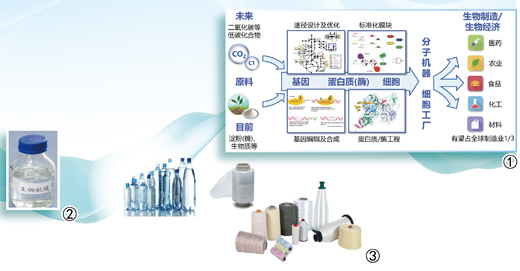
Core Viewpoint - Biomanufacturing is emerging as a transformative industry that utilizes living organisms to produce essential materials, marking a shift from traditional manufacturing methods reliant on fossil fuels to more sustainable practices using renewable resources [5][6]. Group 1: Definition and Importance of Biomanufacturing - Biomanufacturing involves using microorganisms, animal, or plant cells to produce desired substances by designing and controlling their metabolic pathways [5]. - This industry combines traditional fermentation techniques with synthetic biology, allowing for the production of pharmaceuticals, flavors, plastics, and fuels from renewable resources like sugar and carbon dioxide [5][6]. - It is considered a future industry because it represents a new manufacturing path driven by life, rather than an extension of traditional industries [5]. Group 2: Environmental and Economic Impact - Biomanufacturing is crucial for achieving carbon neutrality goals, as it utilizes renewable resources instead of fossil fuels, enabling a "carbon cycle" approach [6]. - Predictions suggest that by 2050, approximately 60% of industrial products could be produced through biomanufacturing, potentially generating an economic value exceeding $30 trillion [6]. Group 3: Current Developments in China - China is accelerating its biomanufacturing industry, with government reports emphasizing the need to cultivate new growth engines, including biomanufacturing [7]. - The country has established leading advantages in fermentation capacity, industrial scale, and engineering experience, positioning itself favorably in the future development of this industry [7]. Group 4: Innovations and Applications - Biomanufacturing is reshaping traditional production logic, enabling the cultivation of lab-grown meat and the production of microbial proteins and synthetic dairy products without livestock [8]. - In the fashion industry, biomanufacturing offers sustainable alternatives, such as bio-silk and mycelium leather, which can replace petroleum-based textiles [8]. - In construction, "bio-bricks" made from fungal mycelium and mineral particles can self-repair and absorb carbon dioxide, contributing to eco-friendly building practices [8]. Group 5: Challenges and Future Trends - Key challenges include the need for foundational capabilities in gene editing, strain design algorithms, and metabolic pathway databases, which are currently weak in China [10]. - The transition from laboratory success to industrial application faces hurdles, including process complexity and cost control [11]. - Future trends indicate a convergence of artificial intelligence with biomanufacturing, enhancing the design of living organisms, and a shift towards carbon circular manufacturing, where factories can utilize carbon dioxide as a raw material [12].

70个民企产业项目在福州集中签约 总投资逾千亿元
Zhong Guo Xin Wen Wang· 2025-12-12 12:11
Core Insights - The event in Fuzhou led to the signing of 70 major industrial projects with a total investment of 112.39 billion RMB, aimed at enhancing high-quality connections between private enterprises and promoting deep integration of industries between Fujian and Taiwan [1][2] Group 1: Project Overview - The signed projects include 57 emerging industry projects in sectors such as new energy, new materials, integrated circuits, and biomanufacturing [1] - Notable projects include a 12-inch high-end analog integrated circuit chip manufacturing facility in Xiamen and a 5.57 million ton annual integrated expansion project in Zhangpu, both valued at over 10 billion RMB [1] - The projects are expected to generate an additional annual output value of over 130 billion RMB for Fujian Province once operational [2] Group 2: Participation and Scope - The event attracted over 500 representatives from various regions, including nearly 70 Taiwanese enterprises, highlighting the strong interest in biopharmaceutical cooperation [1] - The projects cover a wide range of fields, including advanced sectors like AI, robotics, and low-altitude economy, as well as traditional industries such as green chemicals and modern textiles [2] - Since the beginning of the year, Fujian Province has facilitated the connection of 2,220 private enterprise projects with a planned total investment of 400.9 billion RMB, achieving an 83.3% commencement rate for manufacturing projects [2]
湖南“十五五”规划建议:推进国家中药材种质研究重大科技基础设施、飞行器起降安全实验设施等建设
Zheng Quan Shi Bao Wang· 2025-12-12 10:46
Core Viewpoint - The proposal emphasizes the need for strengthening original innovation and tackling key core technologies in Hunan Province's economic and social development plan for the 15th Five-Year period [1] Group 1: Innovation and Research Investment - The plan calls for increased investment in R&D across society, encouraging enterprises to enhance their basic research efforts [1] - It aims to achieve breakthroughs in critical core technologies in key areas such as integrated circuits, advanced materials, future energy, and biomanufacturing to address significant challenges [1] Group 2: Infrastructure and Laboratory Development - The proposal includes the construction of major scientific infrastructure for traditional Chinese medicine and flight safety experimental facilities [1] - It advocates for the establishment of a task-oriented laboratory system and aims to create more national key laboratories [1] Group 3: Innovation Platforms and Management - The plan promotes the deepening of the Chang-Zhu-Tan National Independent Innovation Demonstration Zone [1] - It focuses on cultivating national technology innovation centers, industrial technology engineering centers, and manufacturing innovation centers as national-level innovation platforms [1] - The proposal suggests improving the management mechanism for innovation platform bases to build an efficient, open, and collaborative innovation platform system [1]
巩固壮大实体经济根基|为推进强国建设提供坚实物质支撑
Zhong Guo Jing Ji Wang· 2025-12-12 07:31
Core Viewpoint - The modernization of the industrial system is the material and technical foundation of Chinese-style modernization, emphasizing the importance of strengthening the real economy and optimizing traditional industries while fostering emerging and future industries [1][2]. Group 1: Traditional Industries - Traditional industries account for approximately 80% of the value added in manufacturing, highlighting their foundational role in the industrial system [2]. - The "14th Five-Year Plan" emphasizes the need to optimize and upgrade traditional industries, which will support the development of new and future industries by providing diverse application scenarios and market space [2][3]. - Significant advancements have been made in traditional manufacturing, with over 230 exemplary smart factories and 1,260 5G factories established since the "14th Five-Year Plan" began, and the comprehensive energy consumption of products like steel and cement reaching world-leading levels [2]. Group 2: Emerging and Future Industries - The National Development and Reform Commission estimates that approximately 10 trillion yuan of market space will be added in the next five years, indicating strong growth potential for traditional industries [3]. - Emerging industries, such as new energy vehicles and biomanufacturing, have shown remarkable growth, with the production scale of the biomanufacturing industry nearing 1 trillion yuan [5]. - The "14th Five-Year Plan" aims to cultivate and strengthen emerging and future industries, which are crucial for maintaining economic stability and fostering new productive forces [6][7]. Group 3: Service Industry - The service industry is a vital component of the national economy, with its value added increasing from 24.5 trillion yuan in 2012 to 76.6 trillion yuan in 2024, contributing 60.7% to national economic growth [8][9]. - Despite significant growth, challenges remain in the service sector, particularly in specialized and high-end services, which require further development to meet diverse consumer needs [9][10]. - The focus on high-quality and efficient development in the service industry is essential for building a modern industrial system and meeting the evolving expectations of the population [10]. Group 4: Infrastructure Development - The modernization of infrastructure is crucial for economic and social development, with significant advancements made in transportation, energy, and communication systems since the "14th Five-Year Plan" [11][12]. - The comprehensive transportation network has exceeded 6 million kilometers, and the modern information communication system is the largest globally, facilitating efficient resource allocation [11]. - Future infrastructure development must address existing shortcomings, such as regional coordination and intelligent integration, to support high-quality industrial development [12][13].
经济地理丨广东:在量子竞赛中打造“大湾区方案”
Sou Hu Cai Jing· 2025-12-12 05:42
Core Viewpoint - The article emphasizes the importance of seizing opportunities in future industries, particularly in quantum technology, biotechnology, hydrogen energy, and nuclear fusion, as outlined in China's 15th Five-Year Plan [1] Group 1: Quantum Technology Development - Guangdong has established a clear strategic layout for quantum technology, aiming to create a world-class quantum information technology innovation platform and a southern base for quantum information industry [4][13] - The first large-scale dedicated optical quantum computer manufacturing plant in Shenzhen marks a significant transition from laboratory principles to engineering mass production, filling a global gap in the industry [5][14] - The Guangdong-Hong Kong-Macau Greater Bay Area is forming a robust "innovation magnetic field," with increased activity in quantum technology, including forums and collaborative events among universities and enterprises [6][14] Group 2: Sustainable Quantum Innovation Ecosystem - A comprehensive development framework covering basic research, technology breakthroughs, platform construction, and industry cultivation is rapidly taking shape in the Greater Bay Area [8][15] - Guangdong is implementing open talent recruitment plans and enhancing quantum information science education in key universities to support the growth of the quantum ecosystem [15] - The unique "one country, two systems, three tariff zones" structure of the Greater Bay Area is fostering a distinct path for quantum technology development, focusing on international research, industry demand, and regional collaboration [15] Group 3: Future Industries in Other Regions - In Hubei, the hydrogen energy industry is being developed with a comprehensive approach, aiming for a total industry chain output value of 100 billion yuan by 2027 [23] - Hubei has established a full-chain innovation matrix in biotechnology, with several products leading globally in market share [21] - The province is also advancing in 6G communication technology, with significant investments and developments aimed at becoming a leader in the global 6G landscape [20][22]
承前启后开新局 提质增效谱新篇
Qi Huo Ri Bao Wang· 2025-12-12 00:40
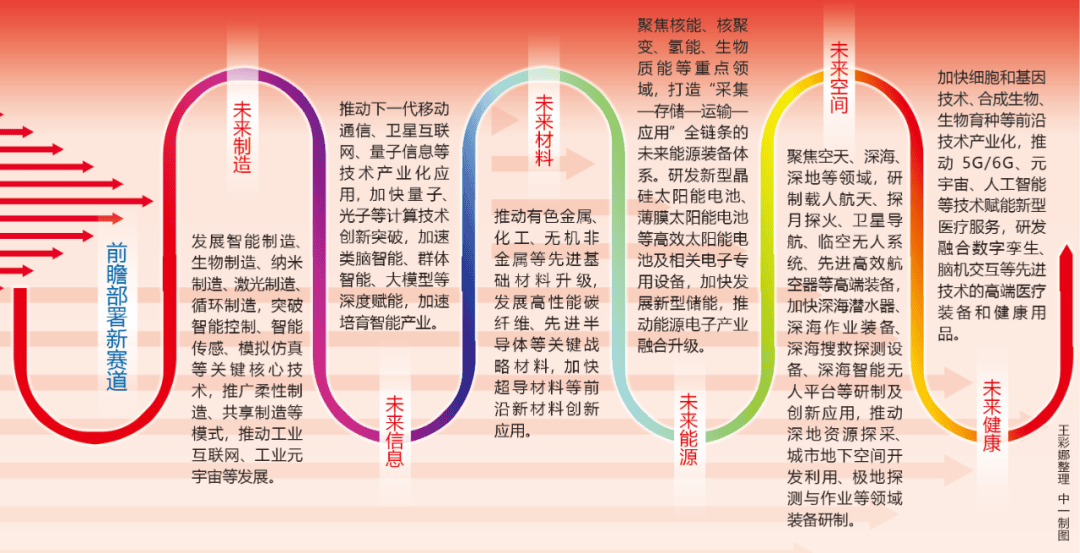
Core Viewpoint - The meeting of the Central Political Bureau on December 8 outlined the economic work for 2026, emphasizing a strategic approach to high-quality development and modernization in China, marking a transition from the "14th Five-Year Plan" to the "15th Five-Year Plan" [2][3]. Group 1: Economic Performance and Achievements - The meeting acknowledged significant achievements in economic and social development during the "14th Five-Year Plan," highlighting a stable economic operation with progress in new productive forces and reforms [3]. - It emphasized the historical accomplishments of the "14th Five-Year Plan" period, including enhanced hard and soft power, which lays a solid foundation for the second centenary goal [3]. Group 2: Strategic Direction for the "15th Five-Year Plan" - The meeting set the tone for the "15th Five-Year Plan," focusing on balancing short-term growth with long-term structural adjustments, which is crucial for achieving mid- to long-term development goals [4]. - The core message of "stability while seeking progress, and improving quality and efficiency" reflects a shift in focus from mere growth speed to sustainable and quality-driven development [5][6]. Group 3: Macro Policy Adjustments - The meeting called for a more proactive macro policy approach, advocating for a combination of active fiscal policies and moderately loose monetary policies to enhance economic governance [6]. - Market analysts expect the economic growth target for 2026 to be around 5%, necessitating sustained policy support, particularly in technology innovation and green transformation [6]. Group 4: High-Quality Development Framework - The meeting outlined "eight persistences" as a comprehensive action framework for high-quality development, emphasizing the importance of domestic demand, innovation, reform, and green transformation [7][8]. - It highlighted the need to enhance consumer capacity and willingness, promote innovation in strategic emerging industries, and deepen international cooperation [7][8]. Group 5: Governance and Leadership - The meeting stressed the importance of the Party's centralized leadership as a fundamental guarantee for implementing economic policies, ensuring alignment with the central government's decisions [9]. - It called for practical measures to address public concerns, such as employment and social security, while maintaining a focus on risk management in key areas [9]. Group 6: Future Economic Outlook - The strategic deployment from the meeting aims to address current challenges while fostering new productive forces for future advantages, ensuring a solid start for the "15th Five-Year Plan" [10].

“十年内,中国生物科技企业将取得重大突破”
Guan Cha Zhe Wang· 2025-12-11 13:08
Core Viewpoint - Chinese biotechnology companies are expanding into global markets after achieving success domestically, with significant breakthroughs expected in the next decade due to strengthened manufacturing bases and supply chains, alongside growing global demand for biotechnology [1][2]. Industry Development - The domestic biomanufacturing industry has rapidly developed, producing a variety of daily products from cosmetics to pharmaceuticals, with the government recognizing biomanufacturing as a key future industry [1]. - The total scale of China's biomanufacturing industry is nearly 1 trillion yuan, with fermentation capacity accounting for over 70% of the global total [1]. - The 2025 China Biomanufacturing Technology Innovation Forum highlighted the importance of biomanufacturing in China's industrial landscape, while also acknowledging challenges such as the need for improved data quality and algorithm models [6]. Global Expansion - Companies like WuXi Biologics are actively pursuing international expansion, as evidenced by their strategic partnership with Qatar Free Zones Authority to establish a comprehensive contract research and manufacturing center in the Middle East [1]. - Overseas orders constitute about 50% of sales for some companies, indicating a strong demand for closer supply chains and production facilities in international markets [2]. Innovation and Intellectual Property - Companies must innovate to maintain competitive advantages as they expand globally, moving beyond traditional focuses on scale and cost efficiency [5]. - The number of patent applications from major biomanufacturing companies in China has surged, with 13,680 patents filed in the last five years, representing 52.2% of the historical total [5]. - The importance of patent protection and technological independence is emphasized, as companies face potential legal challenges and trade barriers in foreign markets [5]. Policy and Support - The Ministry of Industry and Information Technology plans to enhance policy support and top-level design for biomanufacturing, focusing on innovation and collaborative mechanisms to overcome key technological challenges [6].
锚定生物制造未来:华熙生物赵燕畅谈“十五五”下企业的创新与标准“破壁”
Jin Rong Jie· 2025-12-11 10:27
十五五规划建议明确提出"加快打造新兴支柱产业、大力提振消费",这不仅是产业升级的号角,更是品 牌创新与品质创新的重要契机。近日,在央视《对话·创新中国行》节目现场,华熙生物董事长赵燕围 绕企业在透明质酸(玻尿酸)领域的创新突破、全球竞争策略及产业升维思考展开深度分享。 谈及十五五规划建议提出的"推动产业绿色智能融合发展",赵燕指出,中国企业实现产业升维的突破点 在于三大核心:一是筑高技术创新壁垒,建立持续创新体系,引领行业发展;二是强化质量标准建设, 筑牢品质根基;三是主导制定评价标准,联合国家权威部门与行业协会构建行业标准体系,掌握话语 权。"只有拥有标准话语权,在国际上才有同等对话的权利,才能真正实现从中国制造到中国创造的跨 越。" 赵燕强调,华熙生物的实践正是如此,从突破透明质酸规模化生产技术,到如今布局细胞外基质 (ECM)等前沿研究,通过单点技术突破将单一物质做到全球第一,再推动技术转化为国家标准物 质,构筑起行业技术标准的话语权,奠定核心技术壁垒进而实现系统布局。 对于未来3-5年的核心目标,赵燕聚焦生物制造产业的关键短板:持续筑牢中国的合成生物中试转换平 台。她表示,华熙生物致力于打通产学研,将 ...
