具身智能

Search documents
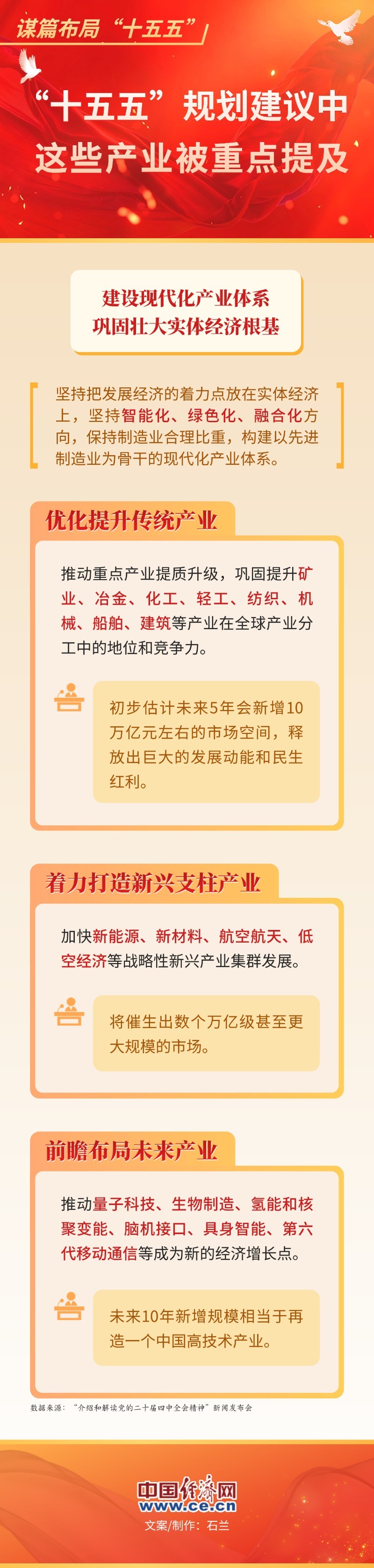
【图解】谋篇布局“十五五”|“十五五”规划建议中,这些产业被重点提及
Zhong Guo Jing Ji Wang· 2025-11-05 07:17
Core Viewpoint - The article emphasizes the importance of developing a modern industrial system focused on strengthening the real economy, with a commitment to intelligent, green, and integrated development, while maintaining a reasonable proportion of manufacturing [3][5]. Group 1: Modern Industrial System - The focus is on consolidating and expanding the foundation of the real economy by prioritizing the development of the real economy [3]. - There is a commitment to maintaining a reasonable proportion of manufacturing and constructing a modern industrial system centered on advanced manufacturing [3]. Group 2: Traditional Industry Optimization - The article discusses the need to enhance traditional industries such as mining, metallurgy, chemicals, light industry, textiles, machinery, shipping, and construction to improve their global competitiveness [5]. - An estimated market space of around 10 trillion yuan is expected to be added over the next five years, releasing significant development momentum and benefits for people's livelihoods [5]. Group 3: Emerging Pillar Industries - There is a push to accelerate the development of strategic emerging industries such as new energy, new materials, aerospace, and low-altitude economy [6]. - This initiative is expected to create several trillion-level markets or even larger scales [7]. Group 4: Future Industry Layout - The article highlights the importance of forward-looking layouts for future industries, promoting quantum technology, biomanufacturing, hydrogen energy, nuclear fusion energy, brain-computer interfaces, embodied intelligence, and sixth-generation mobile communication as new economic growth points [8]. - The anticipated scale of new high-tech industries over the next decade is comparable to recreating an entire high-tech industry in China [8].

上市公司投身产业实践 绘制昂扬向上科创曲线
Zhong Guo Zheng Quan Bao· 2025-11-04 20:17
Core Insights - The "14th Five-Year Plan" has laid a solid foundation for China's technological strength, with a projected R&D investment exceeding 3.6 trillion yuan in 2024, marking a 48% increase from 2020 [1] - A-shares listed companies are pivotal in transforming policy blueprints into industrial practices, with a total R&D investment of 1.16 trillion yuan in the first three quarters of 2025, reflecting a 3.88% year-on-year growth [1] - The focus on key areas such as integrated circuits, advanced materials, and biomanufacturing is expected to drive significant breakthroughs in core technologies during the "15th Five-Year Plan" [2] Group 1: Technological Breakthroughs - The "15th Five-Year Plan" emphasizes the need for decisive breakthroughs in critical core technologies across various sectors, including integrated circuits and high-end instruments [2] - Companies like Zhichun Technology are transitioning from equipment suppliers to solution partners, enhancing their competitive edge in the semiconductor industry [2] - The continuous increase in R&D investment by listed companies is crucial for enhancing their global market competitiveness [2] Group 2: Emerging and Future Industries - The development of strategic emerging industries such as new energy, aerospace, and low-altitude economy is highlighted as essential for economic growth [3] - Companies are actively engaging in the development of AMOLED display technologies, with a projected shipment area of nearly 8.8 million square meters in 2024 [3] - The rise of low-altitude economy is seen as a transition from policy-driven to technology-driven growth, with companies focusing on safety and efficiency [3] Group 3: Capital Market and Innovation Ecosystem - The capital market is undergoing reforms to support emerging industries, with companies like Yushu Technology and Blue Arrow Aerospace advancing their IPO processes [4] - The integration of innovation resources is being promoted, with companies forming innovation alliances to enhance collaboration across various sectors [5] - Artificial intelligence is identified as a key accelerator for the integration of technological and industrial innovation, with significant growth in AI applications [6]
国际青年英才汇聚海南 共话自贸港数字经济机遇
Zhong Guo Xin Wen Wang· 2025-11-04 12:16
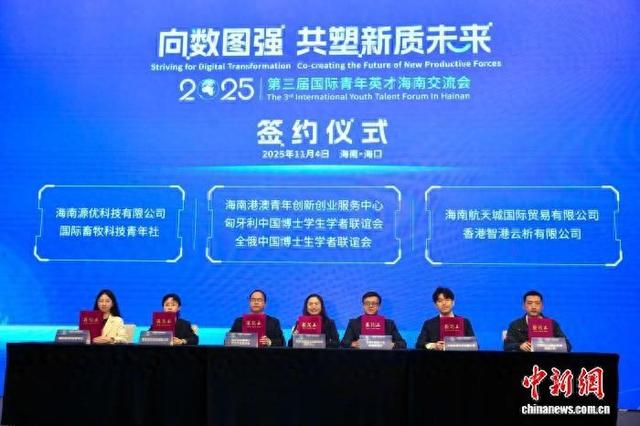
Core Insights - The third International Youth Talent Exchange Conference was held in Haikou, focusing on the role and opportunities for youth in the construction of Hainan Free Trade Port in the digital economy era [1][3]. Group 1: Event Overview - The conference gathered 50 youth representatives from 15 countries and regions, including the US, UK, France, Russia, and Singapore, to discuss the potential of Hainan as an innovative hub [1]. - The theme of the conference was "Striving for Digital Strength, Co-creating a New Quality Future" [1]. Group 2: Policy and Economic Environment - Hainan's Free Trade Port policies, international business environment, and strategic location connecting ASEAN and the global market provide a unique foundation for youth entrepreneurship, technological innovation, and industrial upgrading [1][3]. - The Hainan provincial government encourages international youth talents to participate in the development of the Free Trade Port, sharing the benefits of "zero tariffs, low tax rates, and simplified tax systems" [3]. Group 3: Industry Focus - The conference highlighted the alignment between Hainan's digital economy and the field of embodied intelligence, emphasizing the potential for embodied intelligence to enhance tourism, agriculture, and smart manufacturing in Hainan [3]. - The event included visits to key sites such as the Wenchang International Space City Satellite Super Factory and the Hainan Ecological Software Park, showcasing Hainan's digital infrastructure [3].
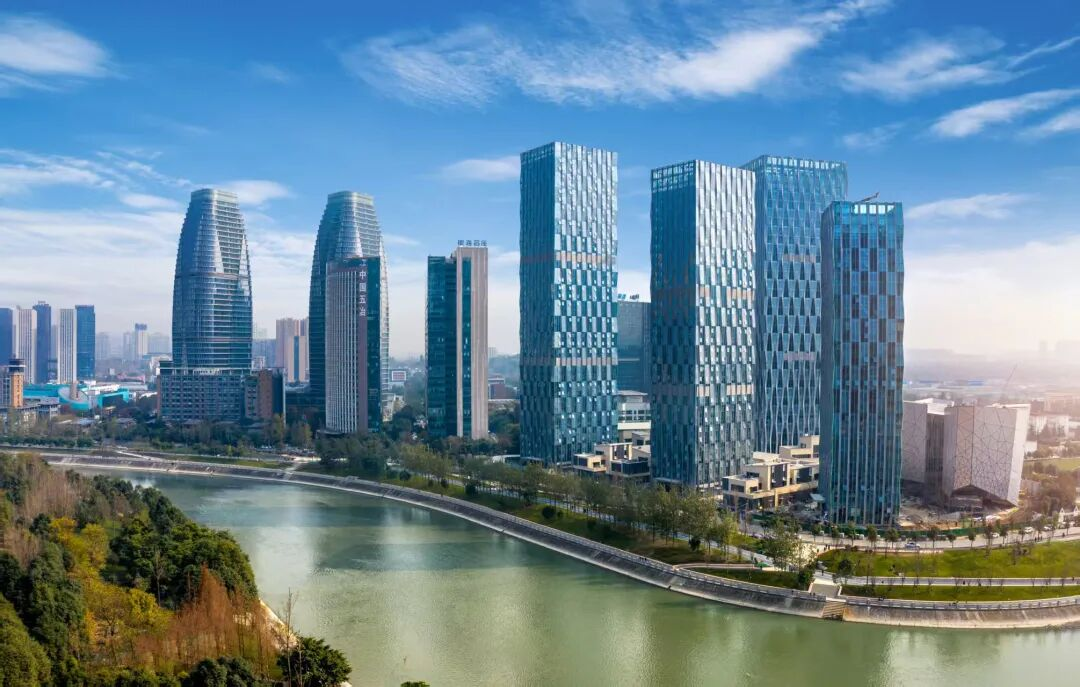
成都锦江区构建“1+6+2”未来产业发展新格局
Zhong Guo Fa Zhan Wang· 2025-11-04 11:01
Core Viewpoint - The Jinjiang District is actively promoting the development of future industries, focusing on six key sectors, to drive high-quality regional growth and innovation [1][3][4]. Group 1: Future Industry Development - The "14th Five-Year Plan" emphasizes the acceleration of future industry layout, with Jinjiang District aligning its strategies to build a modern industrial system [3][4]. - Jinjiang District aims to establish a "100 billion-level future industry pilot zone" and attract over 1,000 high-growth enterprises by 2027 [9][12]. Group 2: Key Sectors - The six key sectors identified for development include: - **Intelligent 6G**: Focus on semantic communication and integrated sensing, with plans to incubate over 10 key projects [8][15]. - **Brain-Computer Interface**: Establishing a research system to attract leading enterprises and produce globally influential innovations [11][15]. - **Quantum Technology**: Promoting the integration of technology breakthroughs with industry applications [12][15]. - **Embodied Intelligence**: Launching the world's first dual-legged robot for specific applications, enhancing the "Jinjiang-made" brand [12][15]. - **Low-altitude Economy**: Developing a drone theme park and promoting various application scenarios [12][15]. - **Intelligent Connected Vehicles**: Completing initial smart road upgrades to support integrated applications [12][15]. Group 3: Strategic Initiatives - Jinjiang District is implementing innovative administrative models to enhance collaboration across departments and support future industry development [12][15]. - The district is diversifying investment paths, including "fund + direct investment" models, to provide comprehensive financial support for innovative enterprises [12][15]. - High-standard infrastructure is being developed, including specialized buildings for 6G and embodied intelligence, to support industry growth [12][15]. Group 4: Policy Support - A comprehensive policy toolkit has been introduced to support future industry development, including incentives for startups, original research, talent acquisition, and enterprise growth [17]. - The district is committed to fostering a new ecosystem for future industries by integrating key resources such as talent and research [17].
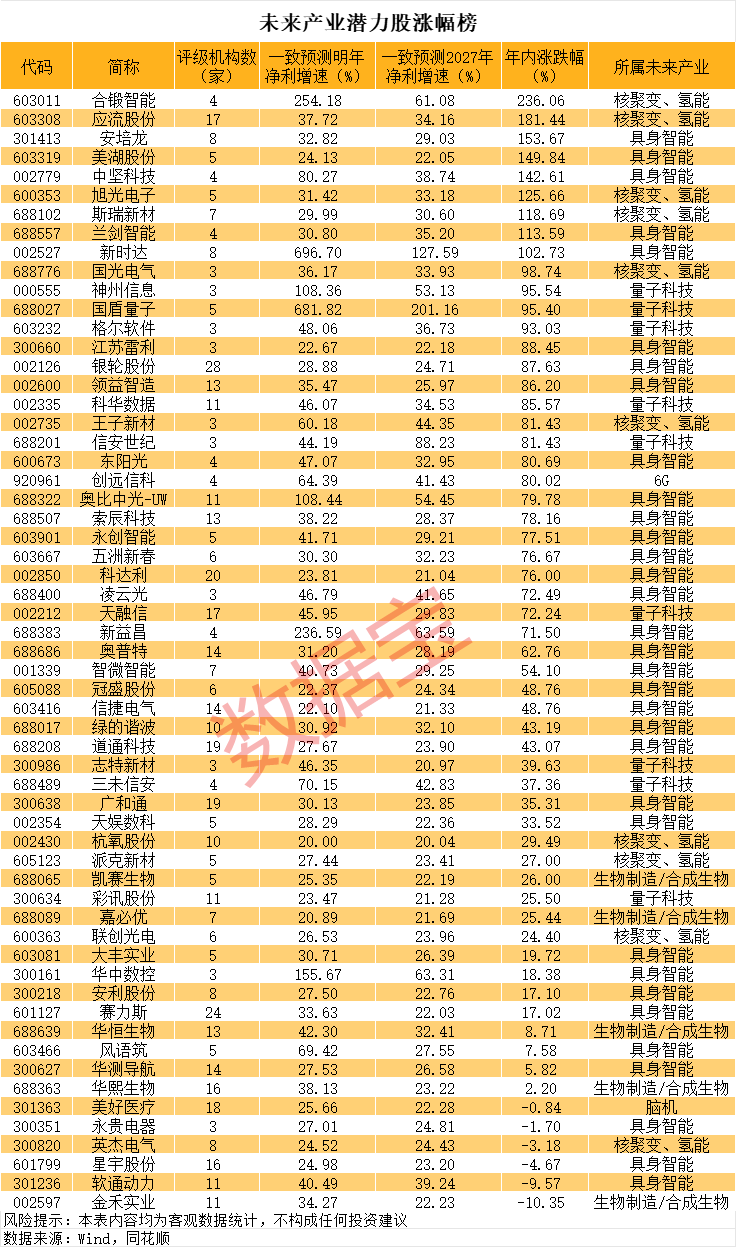
“十五五”未来产业潜力股,揭秘!
Zheng Quan Shi Bao· 2025-11-04 10:37
Group 1 - The core viewpoint of the articles highlights the strong performance of technology stocks in 2023, particularly in sectors related to AI, precious metals, robotics, and innovative pharmaceuticals, with significant gains observed in various indices and concept stocks [1][2]. - The "14th Five-Year Plan" emphasizes the strategic development of future industries, including quantum technology, biomanufacturing, hydrogen energy, nuclear fusion, brain-computer interfaces, embodied intelligence, and 6G technology, as new economic growth points [2][3]. - A total of 142 stocks have been identified by institutions as related to future industries, with 66 stocks specifically linked to embodied intelligence, indicating a growing interest and investment potential in this area [3][4]. Group 2 - Companies such as GuoDun Quantum and XinShiDa are projected to have net profit growth rates exceeding 100% over the next two years, reflecting strong market expectations for these firms [5][6]. - The average stock price increase for the identified potential stocks is approximately 62% year-to-date, significantly outperforming the broader market, with several stocks experiencing price doubling [5][6]. - The report lists specific stocks with high growth potential, including HeZuo Intelligent, YingLiu Technology, and AnPei Long, which are associated with future industries like nuclear fusion and embodied intelligence, showcasing their robust growth forecasts [6][8].



朝阳区成立具身智能产业投资基金
FOFWEEKLY· 2025-11-04 09:59
Group 1 - The core viewpoint of the article is the establishment of the Embodied Intelligence Industry Investment Fund, initiated by Chaoyang District's Science and Technology Innovation Fund and Shoucheng Holdings, with a target scale of 300 million yuan, focusing on core technologies, key components, and demonstration projects in the embodied intelligence sector [1] - Embodied intelligence is recognized as a future industry with strategic importance, and Chaoyang District aims to leverage this sector as a breakthrough for cultivating new productive forces [1] - The fund aims to create a comprehensive ecosystem from "basic research + technological breakthroughs" to "results transformation + industrial cultivation," effectively converting regional policy advantages and industrial foundations into tangible development outcomes [1] Group 2 - The fund operates under the principles of "government guidance, market operation, and professional management," collaborating with municipal fund management platforms to establish a nurturing mechanism for embodied intelligence enterprises [1] - Shoucheng Holdings plans to utilize its comprehensive advantages in industrial investment and resource integration to build a system that combines "investment + incubation + scenarios" [1] - The Chaoyang Park Management Committee will leverage the district's rich innovation resources and scenario advantages to create a virtuous ecological service cycle, promoting project aggregation, industrial growth, and park strengthening [1]

关键词读懂“十五五”|未来产业,如何塑造中国发展新未来
Yang Guang Wang· 2025-11-04 02:55
Core Insights - The 20th Central Committee's Fourth Plenary Session approved the "Suggestions on Formulating the 15th Five-Year Plan for National Economic and Social Development," emphasizing the exploration of diverse technological routes and business models to drive economic growth through future industries such as quantum technology, biomanufacturing, hydrogen energy, nuclear fusion, brain-computer interfaces, embodied intelligence, and 6G mobile communication [1][2] Group 1: Future Industries and Economic Growth - Future industries are seen as crucial for reshaping China's economic landscape and enhancing its innovation capabilities, with a focus on building a modern industrial system and strengthening the real economy [2][3] - The "three new" economy's contribution to GDP is projected to exceed 18% in 2024, with significant breakthroughs in biomanufacturing and quantum technology indicating strong growth potential for future industries [2] Group 2: Policy and Urban Development - The growth of future industries is supported by policies and urban planning, with the Ministry of Industry and Information Technology proposing mechanisms for investment growth in sectors like brain-computer interfaces and quantum information [4] - Local governments are actively implementing policies to foster future industries, with cities like Beijing, Shanghai, and Guangzhou developing tailored strategies to leverage their unique advantages [4] Group 3: Technological Advancements and Education - Breakthroughs in 6G technology, such as the establishment of the world's first 6G test network, highlight China's leading position in future communication technologies [5] - The development of future industries is transforming the "industry-university-research" model, with universities adjusting their research focus to align with emerging technologies like brain-computer interfaces [6][7] - The demand for interdisciplinary talent that combines technical skills with social understanding is increasing, reflecting the broader impact of future industries on education and daily life [7]
21评论丨为何要保持制造业合理比重?
2 1 Shi Ji Jing Ji Bao Dao· 2025-11-03 22:35
Core Insights - The recent proposal by the Central Committee emphasizes the importance of a modern industrial system as the material and technological foundation for Chinese-style modernization, focusing on the real economy and aiming for intelligent, green, and integrated development [2][3] Group 1: Strategic Focus - The primary strategic task for the 15th Five-Year Plan has shifted from technological innovation to industrial system construction and real economy development, with technology now serving as a supporting role [2][3] - The dual motivations for this strategic shift include the transition of development stages and the evolution of competitive paradigms, highlighting the need for innovation to be rooted in the industrial context to enhance economic resilience and competitiveness [3] Group 2: Manufacturing Sector Importance - The proposal underscores the critical role of maintaining a reasonable proportion of manufacturing in the economy, which is essential for strengthening the foundation of the real economy [3][4] - Historical data indicates that countries like Japan and Germany maintain a stable manufacturing value-added ratio of around 20% of GDP, which supports their international competitiveness [4] Group 3: Development Pathways - The construction of a modern industrial system should focus on four key areas: optimizing the manufacturing tier, promoting service industry development, solidifying infrastructure, and enhancing the market environment [5][6] - Specific actions include upgrading traditional industries, fostering new industries as core pillars, and innovating regulatory frameworks to support future industries [5][6] - The service sector is to be expanded and improved, integrating with advanced manufacturing and modern agriculture to enhance overall economic efficiency [6]
五部门发文 深化智慧城市发展
Mei Ri Jing Ji Xin Wen· 2025-11-02 13:37
Core Insights - The "Action Plan" aims to accelerate the development of smart cities and promote comprehensive digital transformation by fostering a data factor market and integrating data-intensive industries such as low-altitude economy, unmanned driving, and embodied intelligence [1][2][3] Group 1: Overall Objectives - By the end of 2027, significant progress is expected in data-enabled urban economic and social development, with the establishment of over 50 fully digitally transformed cities [1][5] - Major cities will lead in creating a new system for smart and efficient governance, implementing advanced and controllable urban models [1][5] Group 2: Innovation and Testing - Cities are positioned as "innovation testing grounds," providing real-world scenarios for new technologies and industries to be tested and iterated [2][3] - The "Action Plan" facilitates the creation of urban-level application scenarios for emerging industries, enhancing the integration of autonomous vehicles into a broader intelligent transportation system [3] Group 3: Data as a Core Element - The plan emphasizes the importance of data as a core production factor, aiming to break down data barriers at the urban level to promote efficient data circulation [3][4] - A positive feedback loop is envisioned where data-driven industrial innovation enhances the value of data [3][4] Group 4: Integrated Innovation Ecosystem - The ultimate goal is to foster cross-industry collaboration, creating synergies that exceed the sum of individual contributions [4] - Examples include the integration of low-altitude economy logistics with embodied intelligence for efficient urban management [4] Group 5: Public Data Integration - The "Action Plan" highlights the need for unified digital infrastructure to achieve comprehensive urban governance and management [6] - It aims to ensure that digitalization permeates all aspects of urban life, creating a cohesive "smart organism" [6] Group 6: Strategic Framework - The "Action Plan" serves as a detailed implementation guide under the broader strategic framework established by previous guidelines, setting specific targets for urban digital transformation [7] - The rapid development of technologies like AI and marketization of data factors is seen as an opportunity to enhance urban digital transformation efforts [7]

电动车巨头做LP,进军低空经济 | 融中投融资周报
Sou Hu Cai Jing· 2025-11-01 11:51
Group 1 - The Central Enterprise Strategic Emerging Industry Development Special Fund (央企战新基金) was launched with an initial fundraising of 51 billion RMB, aimed at supporting state-owned enterprises in enhancing their industrial capabilities and innovation [2] - The fund is initiated by China Guoxin and includes contributions from major state-owned enterprises such as China Mobile, Sinopec, and China National Petroleum [2] - Aima Technology Group announced an investment of 32.4 million RMB in a venture capital partnership, focusing on opportunities in the low-altitude economy sector [2] Group 2 - The Baoding Electric New Venture Capital Fund has been established with a scale of 200 million RMB to support the development of high-end, intelligent, and green electric power and new energy equipment [4] - The fund aims to invest in technology projects within the electric equipment and new energy sectors, particularly in solid-state batteries and other key areas [4] - The Zhejiang Social Security Science and Technology Innovation Fund was launched with an initial scale of 50 billion RMB, aimed at promoting innovation and supporting the development of a modern industrial system in Zhejiang [5] Group 3 - Chongqing Chang'an Automobile announced a partnership to establish a private equity investment fund with a total commitment of 1 billion RMB, focusing on smart projects in the automotive industry [6] - The fund will invest in the entire automotive supply chain, including new energy and advanced manufacturing projects [7] - 58 Intelligent Technology completed a strategic financing round of approximately 500 million RMB, aimed at accelerating the development of core technologies in embodied intelligence [8] Group 4 - Shanghai Longsen Pharmaceutical completed a financing round of several hundred million RMB, focusing on advancing key clinical research and global expansion of its innovative drug products [8] - JBD, a company in the MicroLED display sector, raised over 1 billion RMB in a B2 round of financing, setting a record for single financing in the MicroLED field [9] - The funds raised by JBD will be used to accelerate innovation and product iteration in MicroLED technology and to build a consumer-grade AR ecosystem [9]